Rigveda 5.4: To Agni
Introduction
Rigveda 5.4 is a hymn of 11 verses addressed to Agni. It stands in book (maṇḍala) 5, the family book of the Atri clan. The Rigveda is the oldest collection of Sanskrit hymns, composed in the second half of the second millennium BCE and handed down orally for many centuries before it was written down.
The manuscript shown is Penn Ms. Coll. 390 Item 41 (University of Pennsylvania), an undated paper manuscript of the padapāṭha (the word-by-word recitation text, in which every word is written separately and compounds are split) of the whole Ṛgveda in Devanāgarī, 884 leaves in fascicles, 7-9 lines to the page, accents in red; this hymn stands on fol. 322v-324r. Each section below gives the verses that end on one page; the page boundaries were read on the images (the opening words of every page), not counted out. Where the manuscript is a padapāṭha (the word-by-word recitation text), the section shows Aufrecht's continuous (saṃhitā) text first and, as the edition text, the padapāṭha of the same verses, which is the form written on the page.
How was this verified? (Provenance)
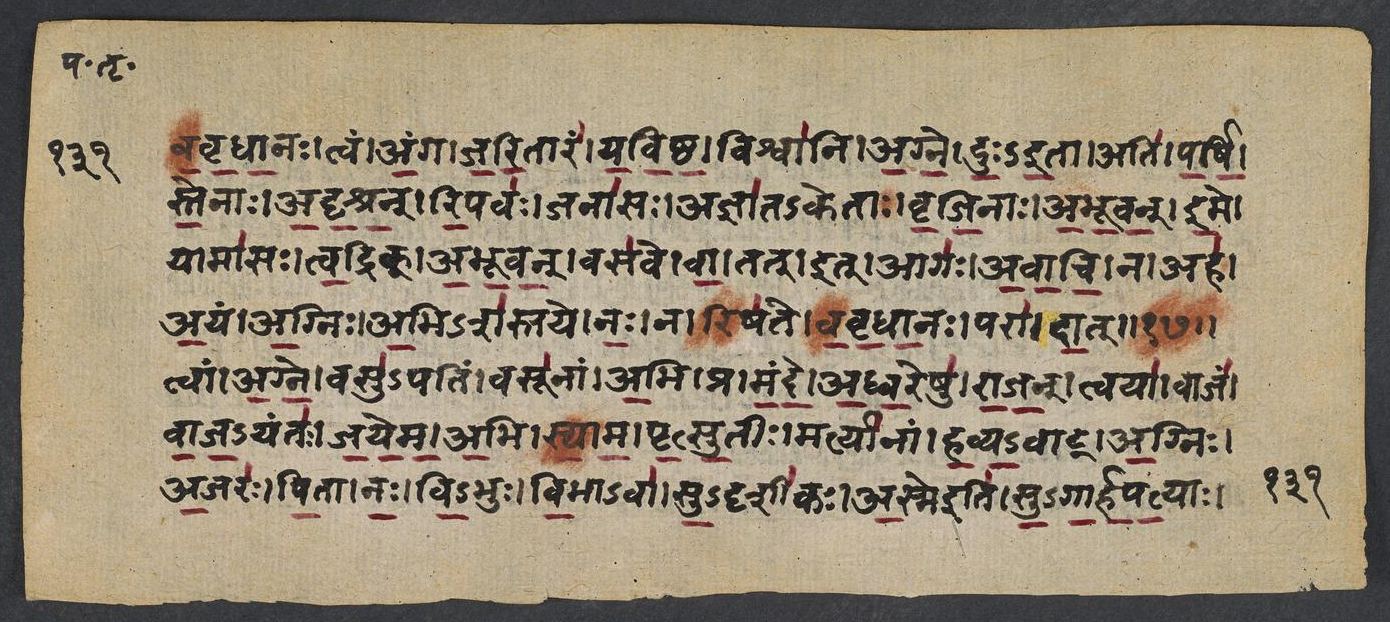
Where on the image
Penn Ms. Coll. 390 Item 41, fol. 322v (numbered 131v by the scribe) (OPenn image 323, upper leaf). Checked on the image: the Rigveda text on this page begins in RV 5.3.10 ‹vavṛdhānaḥ›. The next page with Rigveda text, fol. 323r (numbered 132r by the scribe), begins in RV 5.4.2 ‹sam iṣaḥ didīhi asmadryak›. Verse 5.4.1 ends on this page.
1tvām a̍gne̱ vasu̍pati̱ṁ vasū̍nām a̱bhi pra ma̍nde adhva̱reṣu̍ rājan | tvayā̱ vāja̍ṁ vāja̱yanto̍ jayemā̱bhi ṣyā̍ma pṛtsu̱tīr martyā̍nām ||
Compare: Padapāṭha (word-by-word text written in the manuscript; Sansknet e-text via GRETIL)
1tvām | agne | vasu-patim | vasūnām | abhi | pra | mande | adhvareṣu | rājan | tvayā | vājam | vāja-yantaḥ | jayema | abhi | syāma | pṛtsutīḥ | martyānām
1O AGNI, King and Lord of wealth and treasures, in thee is my delight at sacrifices. Through thee may we obtain the strength we long for, and overcome the fierce attacks of mortals.
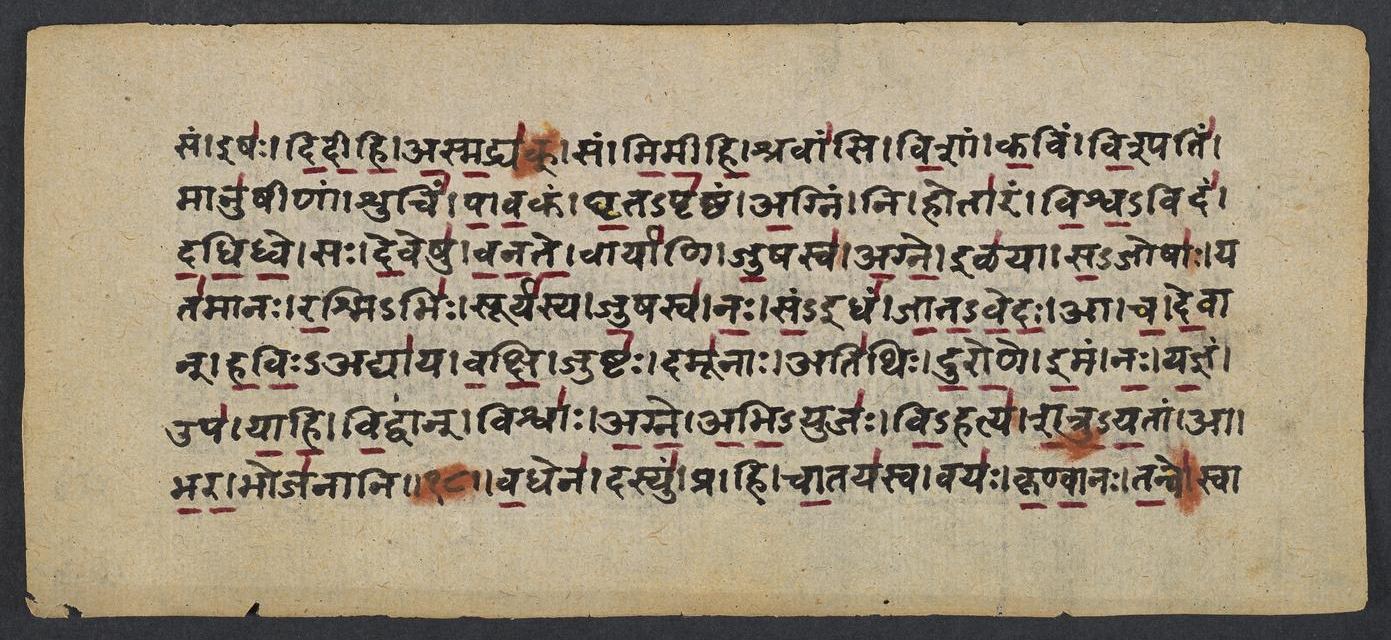
Where on the image
Penn Ms. Coll. 390 Item 41, fol. 323r (numbered 132r by the scribe) (OPenn image 323, lower leaf). Checked on the image: the Rigveda text on this page begins in RV 5.4.2 ‹sam iṣaḥ didīhi asmadryak›. The next page with Rigveda text, fol. 323v (numbered 132v by the scribe), begins in RV 5.4.6 ‹-svāyai piparṣi yat sahasaḥ›. Verses 5.4.2-5 end on this page; 5.4.2 begins on fol. 322v (numbered 131v by the scribe).
2ha̱vya̱vāḻ a̱gnir a̱jara̍ḥ pi̱tā no̍ vi̱bhur vi̱bhāvā̍ su̱dṛśī̍ko a̱sme | su̱gā̱rha̱pa̱tyāḥ sam iṣo̍ didīhy asma̱drya1̱̍k sam mi̍mīhi̱ śravā̍ṁsi ||
3vi̱śāṁ ka̱viṁ vi̱śpati̱m mānu̍ṣīṇā̱ṁ śuci̍m pāva̱kaṁ ghṛ̱tapṛ̍ṣṭham a̱gnim | ni hotā̍raṁ viśva̱vida̍ṁ dadhidhve̱ sa de̱veṣu̍ vanate̱ vāryā̍ṇi ||
4ju̱ṣasvā̍gna̱ iḻa̍yā sa̱joṣā̱ yata̍māno ra̱śmibhi̱ḥ sūrya̍sya | ju̱ṣasva̍ naḥ sa̱midha̍ṁ jātaveda̱ ā ca̍ de̱vān ha̍vi̱radyā̍ya vakṣi ||
5juṣṭo̱ damū̍nā̱ ati̍thir duro̱ṇa i̱maṁ no̍ ya̱jñam upa̍ yāhi vi̱dvān | viśvā̍ agne abhi̱yujo̍ vi̱hatyā̍ śatrūya̱tām ā bha̍rā̱ bhoja̍nāni ||
Compare: Padapāṭha (word-by-word text written in the manuscript; Sansknet e-text via GRETIL)
2havya-vāṭ | agniḥ | ajaraḥ | pitā | naḥ | vi-bhuḥ | vibhāvā | su-dṛśīkaḥ | asme iti | su-gārhapatyāḥ | sam | iṣaḥ | didīhi | asmadryak | sam | mimīhi | śravāṃsi
3viśām | kavim | viśpatim | mānuṣīṇām | śucim | pāvakam | ghṛta-pṛṣṭham | agnim | ni | hotāram | viśva-vidam | dadhidhve | saḥ | deveṣu | vanate | vāryāṇi
4juṣasva | agne | iḷayā | sa-joṣāḥ | yatamānaḥ | raśmi-bhiḥ | sūryasya | juṣasva | naḥ | sam-idham | jāta-vedaḥ | ā | ca | devān | haviḥ-adyāya | vakṣi
5juṣṭaḥ | damūnāḥ | atithiḥ | duroṇe | imam | naḥ | yajñam | upa | yāhi | vidvān | viśvā | agne | abhi-yujaḥ | vi-hatya | śatru-yatām | ā | bhara | bhojanāni
2Agni, Eternal Father, offering- bearer, fair to behold, far-reaching, far-refulgent, From well-kept household fire beam food to feed us, and measure out to us abundant glory.
3The Sage of men, the Lord of human races, pure, purifying Agni, balmed with butter, Him the Omniscient as your Priest ye stablish: he wins among the Gods things worth the choosing.
4Agni, enjoy, of one accord with Iḷâ, striving in rivalry with beams of Sarya, Enjoy, O Jâtavedas, this our fuel, and bring the Gods to us to taste oblations.
5As dear House-Friend, guest welcome in the dwelling, to this our sacrifice come thou who knowest. And, Agni, having scattered all assailants, bring to us the possessions of our foemen.
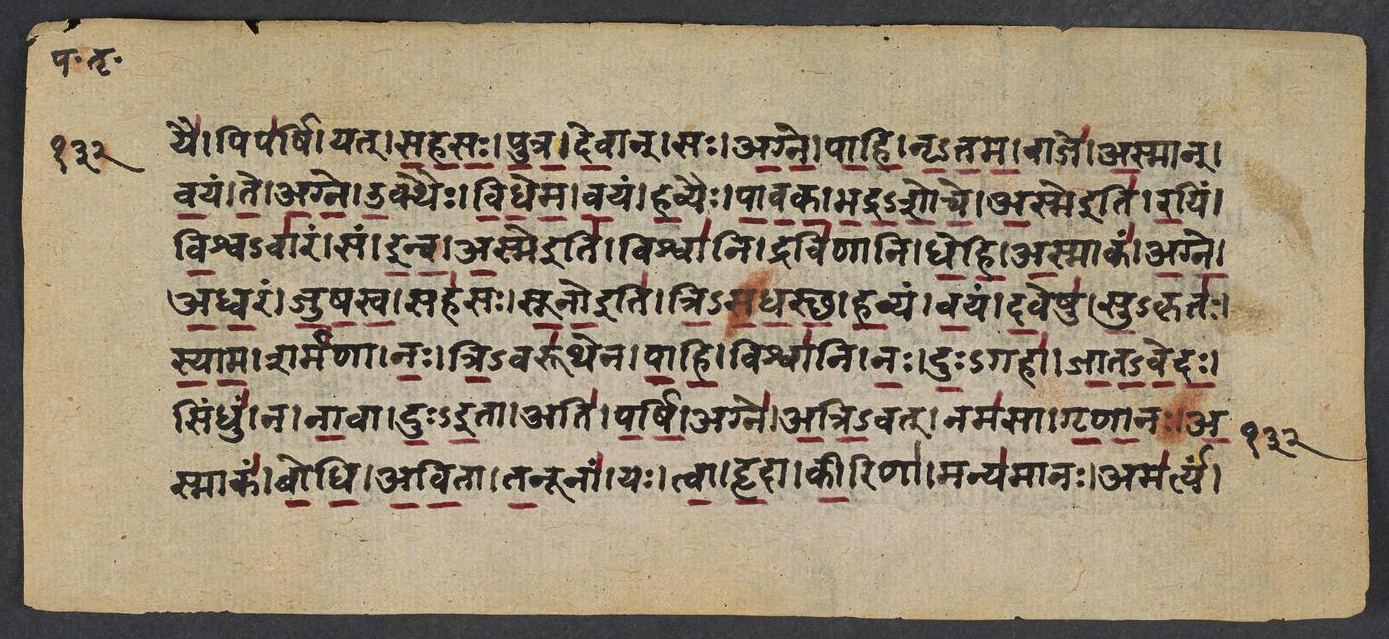
Where on the image
Penn Ms. Coll. 390 Item 41, fol. 323v (numbered 132v by the scribe) (OPenn image 324, upper leaf). Checked on the image: the Rigveda text on this page begins in RV 5.4.6 ‹-svāyai piparṣi yat sahasaḥ›. The next page with Rigveda text, fol. 324r (numbered 133r by the scribe), begins in RV 5.4.10 ‹amaryaḥ johavīmi jāta-vedaḥ yaśaḥ›. Verses 5.4.6-9 end on this page; 5.4.6 begins on fol. 323r (numbered 132r by the scribe).
6va̱dhena̱ dasyu̱m pra hi cā̱taya̍sva̱ vaya̍ḥ kṛṇvā̱nas ta̱nve̱3̱̍ svāyai̍ | pipa̍rṣi̱ yat sa̍hasas putra de̱vānt so a̍gne pāhi nṛtama̱ vāje̍ a̱smān ||
7va̱yaṁ te̍ agna u̱kthair vi̍dhema va̱yaṁ ha̱vyaiḥ pā̍vaka bhadraśoce | a̱sme ra̱yiṁ vi̱śvavā̍ra̱ṁ sam i̍nvā̱sme viśvā̍ni̱ dravi̍ṇāni dhehi ||
8a̱smāka̍m agne adhva̱raṁ ju̍ṣasva̱ saha̍saḥ sūno triṣadhastha ha̱vyam | va̱yaṁ de̱veṣu̍ su̱kṛta̍ḥ syāma̱ śarma̍ṇā nas tri̱varū̍thena pāhi ||
9viśvā̍ni no du̱rgahā̍ jātaveda̱ḥ sindhu̱ṁ na nā̱vā du̍ri̱tāti̍ parṣi | agne̍ atri̱van nama̍sā gṛṇā̱no̱3̱̍ 'smāka̍m bodhy avi̱tā ta̱nūnā̍m ||
Compare: Padapāṭha (word-by-word text written in the manuscript; Sansknet e-text via GRETIL)
6vedhena | dasyum | pra | hi | cātayasva | vayaḥ | kṛṇvānaḥ | tanve | svāyai | piparṣi | yat | sahasaḥ | putra | devān | saḥ | agne | pāhi | nṛ-tama | vāje | asmān
7vayam | te | agne | ukthaiḥ | vidhema | vayam | havyaiḥ | pāvaka | bhadra-śoce | asme iti | rayim | viśva-vāram | sam | inva | asme iti | viśvāni | draviṇāni | dhehi
8asmākam | agne | adhvaram | juṣasva | sahasaḥ | sūno iti | tri-sadhastha | havyam | vayam | deveṣu | su-kṛtaḥ | syāma | śarmaṇā | naḥ | tri-varūthena | pāhi
9viśvāni | naḥ | duḥ-gahā | jāta-vedaḥ | sindhum | na | nāvā | duḥ-itā | ati | parṣi | agne | atri-vat | namasā | gṛṇānaḥ | asmākam | bodhi | avitā | tanūnām
6Drive thou away the Dasyu with thy weapon. As, gaining vital power for thine own body, O Son of Strength, the Gods thou satisfiest, so in fight save us, most heroic Agni.
7May we, O Agni, with our lauds adore thee, and with our gifts, fair-beaming Purifier! Send to us wealth containing all things precious: bestow upon us every sort of riches.
8Son of Strength, Agni, dweller in three regions, accept our sacrifice and our oblation. Among the Gods may we be counted pious: protect us with a triply-guarding shelter.
9Over all woes and dangers, Jâtavedas, bear us as in a boat across a river. Praised with our homage even as Atri praised thee, O Agni, be the guardian of our bodies.
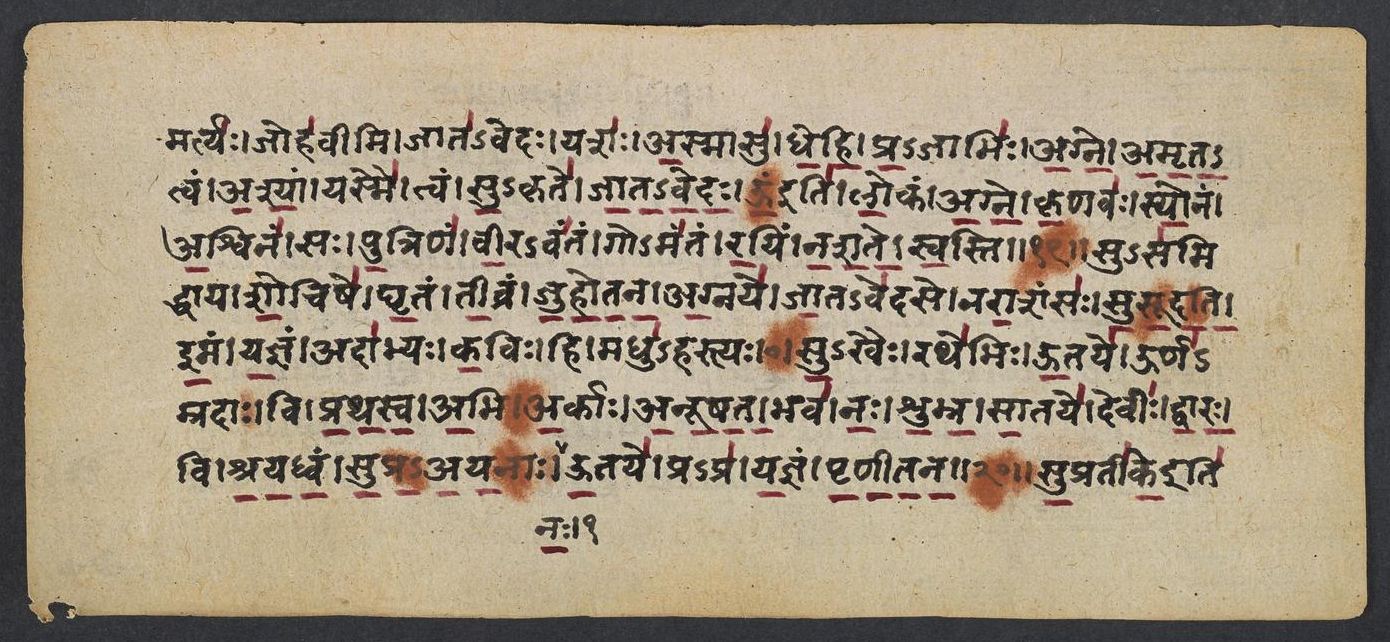
Where on the image
Penn Ms. Coll. 390 Item 41, fol. 324r (numbered 133r by the scribe) (OPenn image 324, lower leaf). Checked on the image: the Rigveda text on this page begins in RV 5.4.10 ‹amaryaḥ johavīmi jāta-vedaḥ yaśaḥ›. The next page with Rigveda text, fol. 324v (numbered 133v by the scribe), begins in RV 5.5.6 ‹-itisu-pratīke vayaḥ-vṛdhā yahvī ṛtasya›. Verses 5.4.10-11 end on this page; 5.4.10 begins on fol. 323v (numbered 132v by the scribe).
10yas tvā̍ hṛ̱dā kī̱riṇā̱ manya̍mā̱no 'ma̍rtya̱m martyo̱ joha̍vīmi | jāta̍vedo̱ yaśo̍ a̱smāsu̍ dhehi pra̱jābhi̍r agne amṛta̱tvam a̍śyām ||
11yasmai̱ tvaṁ su̱kṛte̍ jātaveda u lo̱kam a̍gne kṛ̱ṇava̍ḥ syo̱nam | a̱śvina̱ṁ sa pu̱triṇa̍ṁ vī̱rava̍nta̱ṁ goma̍ntaṁ ra̱yiṁ na̍śate sva̱sti ||
Compare: Padapāṭha (word-by-word text written in the manuscript; Sansknet e-text via GRETIL)
10yaḥ | tvā | hṛdā | kīriṇā | manyamānaḥ | amaryaḥ | johavīmi | jāta-vedaḥ | yaśaḥ | asmāsu | dhehi | pra-jābhiḥ | agne | amṛta-tvam | aśyām
11yasmai | tvam | su-kṛte | jāta-vedaḥ | oṃ iti | lokam | agne | kṛṇavaḥ | syonam | aśvinam | saḥ | putriṇam | vīra-vantam | go--mantam | rayim | naśate | svasti
10As I, remembering thee with grateful spirit, a mortal, call with might on thee Immortal, Vouchsafe us high renown, O Jâtavedas, and may I be immortal by my children.
11The pious man, O Jâtavedas Agni, to whom thou grantest ample room and pleasure, Gaineth abundant wealth with sons and horses, with heroes and with kine for his well-being.
Notes
- Sanskrit: Aufrecht's edition (1877) with the Vedic accents, as entered by van Nooten and Holland (GRETIL).
- English: Ralph T. H. Griffith, The Hymns of the Rigveda (1889-1892; 2nd ed. 1896-1897), from the VedaWeb digital text; OCR slips in that text were corrected against the printed 2nd edition (data/sources/rigveda/griffith_errata.json).
- Padapāṭha (edition text): Sansknet e-text via GRETIL (CC BY-NC-SA 4.0).
Cite
Sources
- Source: Penn Ms. Coll. 390 Item 41 (undated (catalogued with Penn's 18th-19th c. Vedic manuscripts)), OPenn, Public Domain Mark + Aufrecht's accented text (GRETIL) + Griffith's English (VedaWeb) (holding institution)
- Critical edition: Aufrecht (1877), accented e-text via GRETIL
← previous · → next · v cycle view · l back to library