Rigveda 5.31: To Indra
Introduction
Rigveda 5.31 is a hymn of 13 verses addressed to Indra. It stands in book (maṇḍala) 5, the family book of the Atri clan. The Rigveda is the oldest collection of Sanskrit hymns, composed in the second half of the second millennium BCE and handed down orally for many centuries before it was written down.
The manuscript shown is Penn Ms. Coll. 390 Item 41 (University of Pennsylvania), an undated paper manuscript of the padapāṭha (the word-by-word recitation text, in which every word is written separately and compounds are split) of the whole Ṛgveda in Devanāgarī, 884 leaves in fascicles, 7-9 lines to the page, accents in red; this hymn stands on fol. 343r-344v. Each section below gives the verses that end on one page; the page boundaries were read on the images (the opening words of every page), not counted out. Where the manuscript is a padapāṭha (the word-by-word recitation text), the section shows Aufrecht's continuous (saṃhitā) text first and, as the edition text, the padapāṭha of the same verses, which is the form written on the page.
How was this verified? (Provenance)
Where on the image
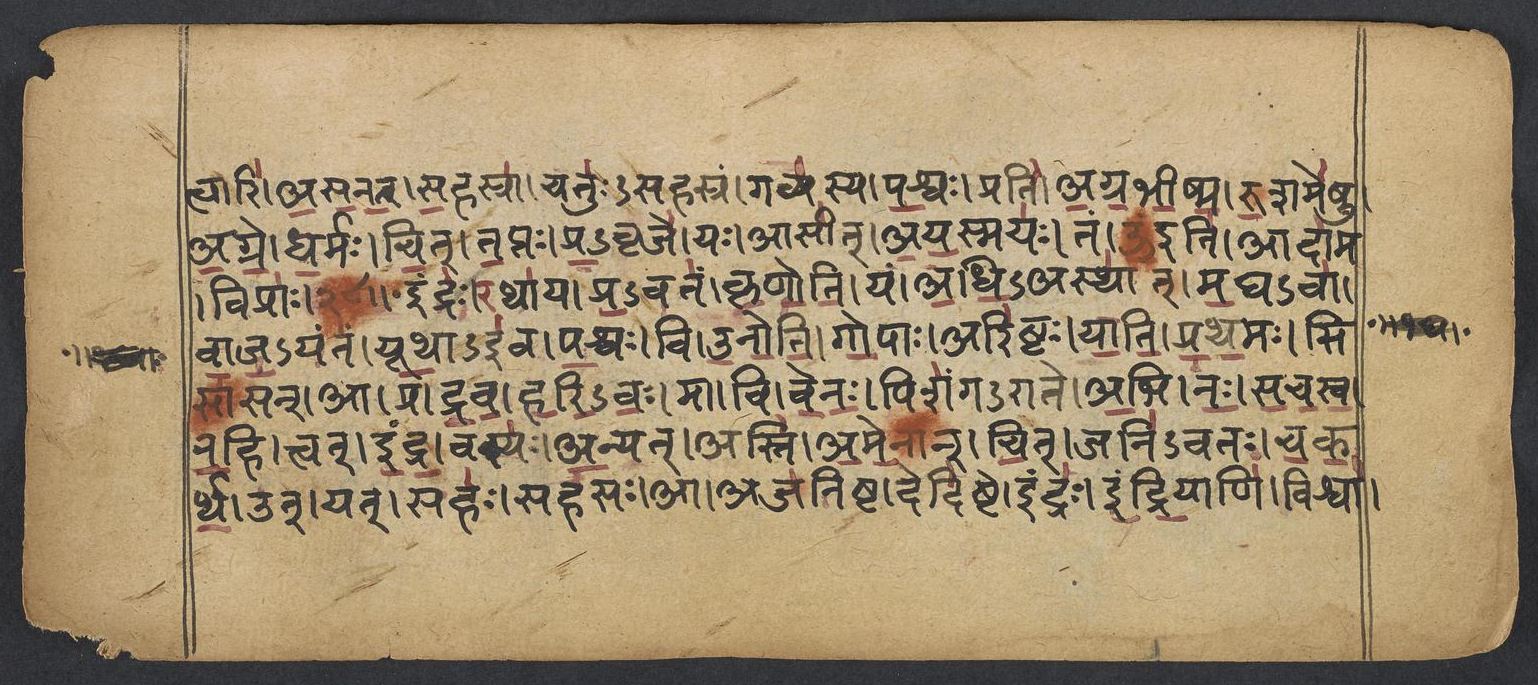
Penn Ms. Coll. 390 Item 41, fol. 343r (numbered 16r by the scribe) (OPenn image 343, lower leaf). Checked on the image: the Rigveda text on this page begins in RV 5.30.14 ‹-catvāri asanat sahasrā›. The next page with Rigveda text, fol. 343v (numbered 16v by the scribe), begins in RV 5.31.3 ‹pra acodayat su-dughāḥ vavre›. Verses 5.31.1-2 end on this page.
1indro̱ rathā̍ya pra̱vata̍ṁ kṛṇoti̱ yam a̱dhyasthā̍n ma̱ghavā̍ vāja̱yanta̍m | yū̱theva̍ pa̱śvo vy u̍noti go̱pā ari̍ṣṭo yāti pratha̱maḥ siṣā̍san ||
2ā pra dra̍va harivo̱ mā vi ve̍na̱ḥ piśa̍ṅgarāte a̱bhi na̍ḥ sacasva | na̱hi tvad i̍ndra̱ vasyo̍ a̱nyad asty a̍me̱nām̐ś ci̱j jani̍vataś cakartha ||
Compare: Padapāṭha (word-by-word text written in the manuscript; Sansknet e-text via GRETIL)
1indraḥ | rathāya | pra-vatam | kṛṇoti | yam | adhi-asthāt | magha-vā | vja-yantam | yūthāiva | paśvaḥ | vi | unoti | gopāḥ | ariṣṭaḥ | yāti | prathamaḥ | sisāsan
2ā | pra | drava | hari-vaḥ | mā | vi | venaḥ | piśaṅga-rāte | abhi | naḥ | sacasva | nahi | tvat | indra vasyaḥ | anyat | asti | amemān | cit | jani-vataḥ | cakartha
1MAGHAVAN Indra turns his chariot downward, the strength-displaying car which he hath mounted. Even as a herdsman driveth forth his cattle, he goeth, first, uninjured, fain for treasure.
2Haste to us, Lord of Bays; be not ungracious: visit us, lover of gold-hued oblation. There is naught else better than thou art, Indra: e'en to the wifeless hast thou given spouses.
Where on the image
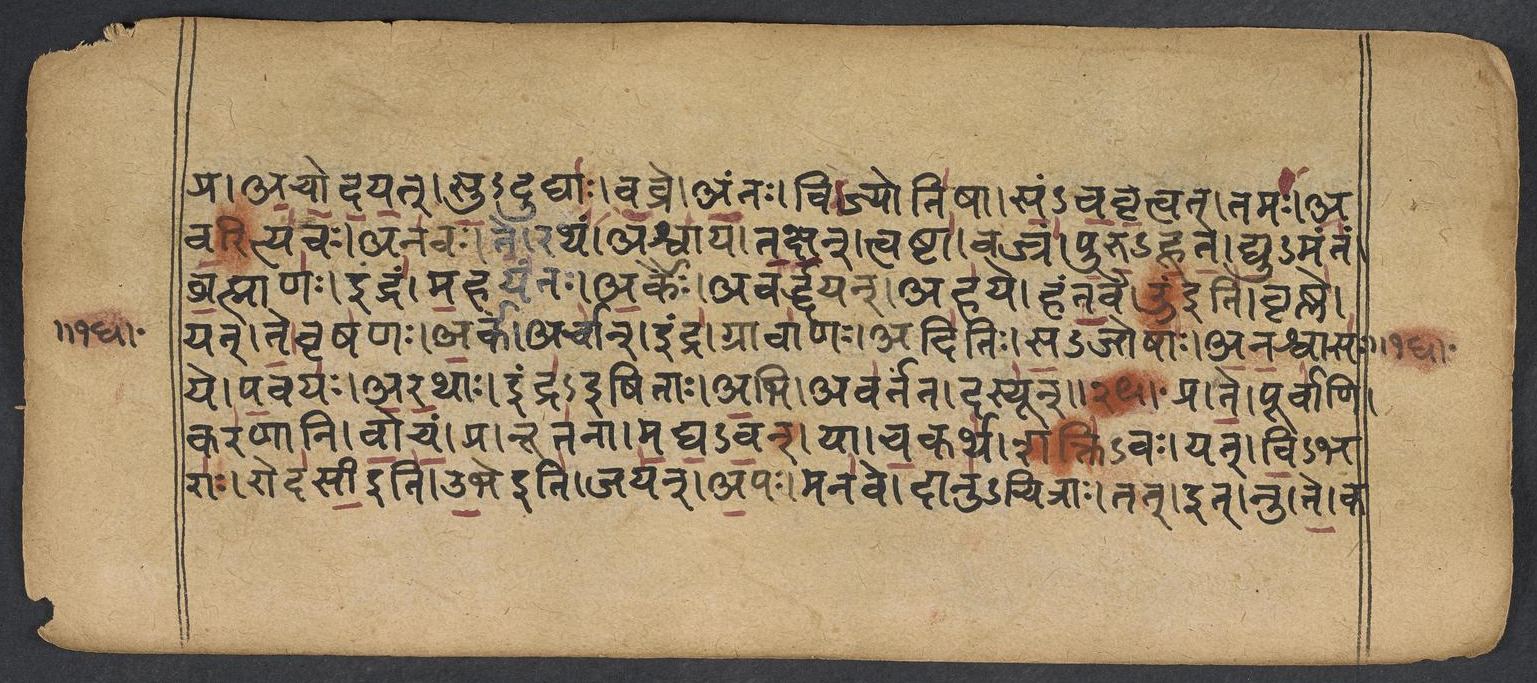
Penn Ms. Coll. 390 Item 41, fol. 343v (numbered 16v by the scribe) (OPenn image 344, upper leaf). Checked on the image: the Rigveda text on this page begins in RV 5.31.3 ‹pra acodayat su-dughāḥ vavre›. The next page with Rigveda text, fol. 344r (numbered 17r by the scribe), begins in RV 5.31.7 ‹-karaṇam dasma vipra ahim›. Verses 5.31.3-6 end on this page; 5.31.3 begins on fol. 343r (numbered 16r by the scribe).
3ud yat saha̱ḥ saha̍sa̱ āja̍niṣṭa̱ dedi̍ṣṭa̱ indra̍ indri̱yāṇi̱ viśvā̍ | prāco̍dayat su̱dughā̍ va̱vre a̱ntar vi jyoti̍ṣā saṁvavṛ̱tvat tamo̍ 'vaḥ ||
4ana̍vas te̱ ratha̱m aśvā̍ya takṣa̱n tvaṣṭā̱ vajra̍m puruhūta dyu̱manta̍m | bra̱hmāṇa̱ indra̍m ma̱haya̍nto a̱rkair ava̍rdhaya̱nn aha̍ye̱ hanta̱vā u̍ ||
5vṛṣṇe̱ yat te̱ vṛṣa̍ṇo a̱rkam arcā̱n indra̱ grāvā̍ṇo̱ adi̍tiḥ sa̱joṣā̍ḥ | a̱na̱śvāso̱ ye pa̱vayo̍ 'ra̱thā indre̍ṣitā a̱bhy ava̍rtanta̱ dasyū̍n ||
6pra te̱ pūrvā̍ṇi̱ kara̍ṇāni voca̱m pra nūta̍nā maghava̱n yā ca̱kartha̍ | śaktī̍vo̱ yad vi̱bharā̱ roda̍sī u̱bhe jaya̍nn a̱po mana̍ve̱ dānu̍citrāḥ ||
Compare: Padapāṭha (word-by-word text written in the manuscript; Sansknet e-text via GRETIL)
3ut | yat | sahaḥ | sahasaḥ | ā | ajaniṣṭa | dediṣṭe | indraḥ | indriyāṇi | viśvā | pra | acodayat | su-dughāḥ | vavre | antaḥ | vi | jyotiṣā | sam-vavṛtvat | tamaḥ | avar ity avaḥ
4anavaḥ | te | ratham | aśvāya | takṣan | tvaṣṭā | vajram | puru-hūta | dyu-mantam | brahmāṇaḥ | indram | mahayantaḥ | arkaiḥ | avardhayan | ahaye | hantavai | oṃ iti
5vṛṣṇe | yat | te | vṛṣaṇaḥ | arkam | arcān | indra | grāvāṇaḥ | aditiḥ | sa-joṣāḥ | anaśvāsaḥ | ye | pavayaḥ | arathāḥ | indra-iṣitāḥ | abhi | avartanta | dasyūn
6pra | te | pūrvāṇi | karaṇāni | vocam | pra | nūtanā | magha-van | yā | cakartha | śakt i-vaḥ | yat | vi-bharāḥ | rodasī iti | ubhe iti | jayan | apaḥ | manave | dānu-citrāḥ
3When out of strength arose the strength that conquers, Indra displayed all powers that he possesses. Forth from the cave he drove the milky mothers, and with the light laid bare investing darkness.
4Anus have wrought a chariot for thy Courser, and Tvashṭar, Much-invoked! thy bolt that glitters. The Brahmans with their songs exalting Indra increased his strength that he might slaughter Ahi.
5When heroes sang their laud to thee the Hero, Indra! and stones and Aditi accordant, Without or steed or chariot were the fellies which, sped by Indra, rolled upon the Dasytis.
6I will declare thine exploits wrought aforetime, and, Maghavan, thy deeds of late achievement, When, Lord of Might, thou sunderedst earth and heaven, winning for man the moistly-gleaming waters.
Where on the image
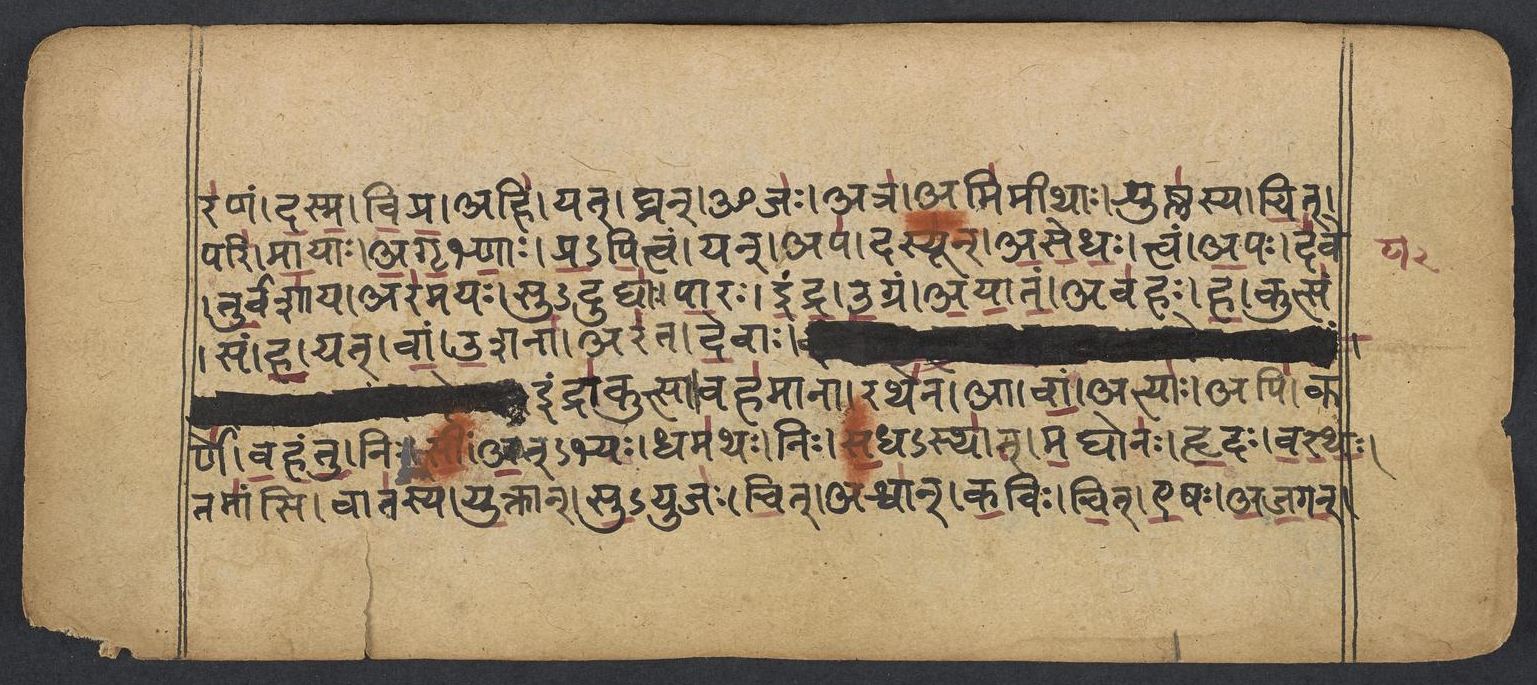
Penn Ms. Coll. 390 Item 41, fol. 344r (numbered 17r by the scribe) (OPenn image 344, lower leaf). Checked on the image: the Rigveda text on this page begins in RV 5.31.7 ‹-karaṇam dasma vipra ahim›. The next page with Rigveda text, fol. 344v (numbered 17v by the scribe), begins in RV 5.31.10 ‹avasyuḥ viśve te atra›. Verses 5.31.7-9 end on this page; 5.31.7 begins on fol. 343v (numbered 16v by the scribe).
7tad in nu te̱ kara̍ṇaṁ dasma vi̱prāhi̱ṁ yad ghnann ojo̱ atrāmi̍mīthāḥ | śuṣṇa̍sya ci̱t pari̍ mā̱yā a̍gṛbhṇāḥ prapi̱tvaṁ yann apa̱ dasyū̍m̐r asedhaḥ ||
8tvam a̱po yada̍ve tu̱rvaśā̱yāra̍mayaḥ su̱dughā̍ḥ pā̱ra i̍ndra | u̱gram a̍yāta̱m ava̍ho ha̱ kutsa̱ṁ saṁ ha̱ yad vā̍m u̱śanāra̍nta de̱vāḥ ||
9indrā̍kutsā̱ vaha̍mānā̱ rathe̱nā vā̱m atyā̱ api̱ karṇe̍ vahantu | niḥ ṣī̍m a̱dbhyo dhama̍tho̱ niḥ ṣa̱dhasthā̍n ma̱ghono̍ hṛ̱do va̍ratha̱s tamā̍ṁsi ||
Compare: Padapāṭha (word-by-word text written in the manuscript; Sansknet e-text via GRETIL)
7tat | it | nu | te | karaṇam | dasma | vipra | ahim | yat | ghnan | ojaḥ | atra | abhimīthāḥ | śuṣṇasya | cit | pari | māyāḥ | agṛbhṇāḥ | pra-pitvam | yan | apa | dasyūn | asedhaḥ
8tvam | apaḥ | yadave | turvaśāya | aramayaḥ | su-dughāḥ | pāraḥ | indra | ugram | ayātam | avahaḥ | ha | kutsam | sam | ha | yat | vām | uśanā | aranta | devāḥ
9indrākutsā | vahamānā | rathena | ā | vām | atyāḥ | api | karṇe | vahantu | niḥ | sīm | at-bhyaḥ | dhamathaḥ | niḥ | sadha-sthāt | maghonaḥ | hṛdaḥ | varathaḥ | tamāṃsi
7This is thy deed, e'en this, Wonderful! Singer! that, slaying Ahi, here thy strength thou showedst, Didst check and stay e'en Ṣushṇa's wiles and magic, and, drawing nigh, didst chase away the Dasytis.
8Thou, Indra, on the farther bank forYadu and Turvaga didst stay the gushing waters. Ye both assailed the fierce: thou barest Kutsa: when Gods and Uṣanâ came to you together.
9Let the steeds bring you both, Indra and Kutsa, borne on the chariot within hearing-distance. Ye blew him from the waters, from his dwelling, and chased the darkness from the noble's spirit.
Where on the image
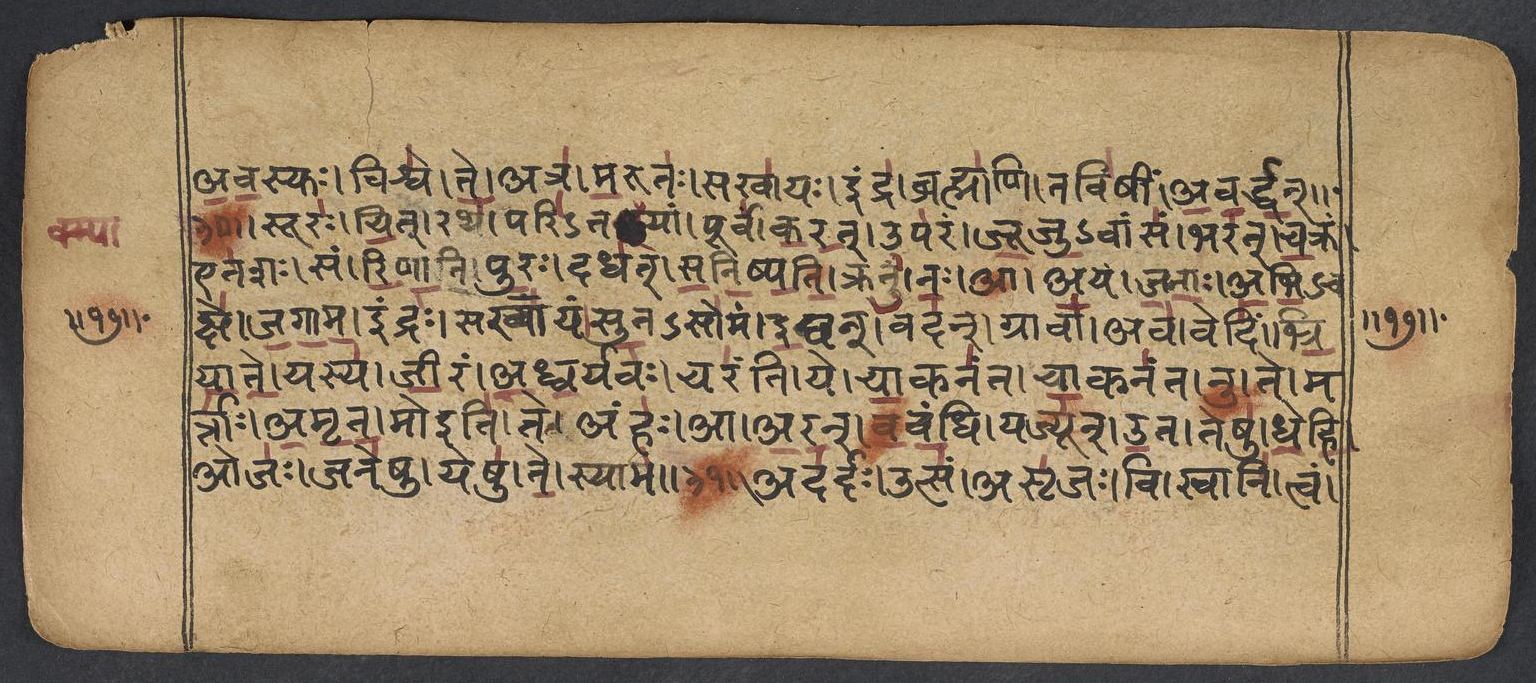
Penn Ms. Coll. 390 Item 41, fol. 344v (numbered 17v by the scribe) (OPenn image 345, upper leaf). Checked on the image: the Rigveda text on this page begins in RV 5.31.10 ‹avasyuḥ viśve te atra›. The next page with Rigveda text, fol. 345r (numbered 18r by the scribe), begins in RV 5.32.1 ‹arṇavān badbadhānān aramṇāḥ mahāntam›. Verses 5.31.10-13 end on this page; 5.31.10 begins on fol. 344r (numbered 17r by the scribe).
10vāta̍sya yu̱ktān su̱yuja̍ś ci̱d aśvā̍n ka̱viś ci̍d e̱ṣo a̍jagann ava̱syuḥ | viśve̍ te̱ atra̍ ma̱ruta̱ḥ sakhā̍ya̱ indra̱ brahmā̍ṇi̱ tavi̍ṣīm avardhan ||
11sūra̍ś ci̱d ratha̱m pari̍takmyāyā̱m pūrva̍ṁ kara̱d upa̍raṁ jūju̱vāṁsa̍m | bhara̍c ca̱kram eta̍śa̱ḥ saṁ ri̍ṇāti pu̱ro dadha̍t saniṣyati̱ kratu̍ṁ naḥ ||
12āyaṁ ja̍nā abhi̱cakṣe̍ jagā̱mendra̱ḥ sakhā̍yaṁ su̱taso̍mam i̱cchan | vada̱n grāvāva̱ vedi̍m bhriyāte̱ yasya̍ jī̱ram a̍dhva̱ryava̱ś cara̍nti ||
13ye cā̱kana̍nta cā̱kana̍nta̱ nū te martā̍ amṛta̱ mo te aṁha̱ āra̍n | vā̱va̱ndhi yajyū̍m̐r u̱ta teṣu̍ dhe̱hy ojo̱ jane̍ṣu̱ yeṣu̍ te̱ syāma̍ ||
Compare: Padapāṭha (word-by-word text written in the manuscript; Sansknet e-text via GRETIL)
10vātasya | yuktān | su-yujaḥ | cit | aśvān | kaviḥ | cit | eṣaḥ | ajagan | avasyuḥ | viśve | te | atra | marutaḥ | sakhāyaḥ | indra | brahmāṇi | taviṣīm | avardhan
11sūraḥ | cit | ratham | pari-takmyāyām | pūrvam | karat | uparam | jūju-vāṃsam | bharat | cakram | etaśaḥ | sam | riṇāti | puraḥ | dadhat | saniṣyati | kratum | naḥ
12ā | ayam | janāḥ | abhi-cakṣe | jagāma | indraḥ | sakhāyam | suta-somam | icchan | vadan | grāvā | ava | vedim | bhriyāte | yasya | jīram | adhvaryavaḥ | caranti
13ye | cākananta | cākananta | nu | te | martāḥ | amṛta | mo iti | te | aṃhaḥ | ā | aran | vavandhi | yajyūn | uta | teṣu | dhehi | ojaḥ | janeṣu | yeṣu | te | syāma
10Even this sage hath come looking for succour even to Vâta's docile harnessed horses. Here are the Maruts, all, thy dear companions: prayers have increased thy power and might, O Indra.
11When night was near its close he carried forward e'en the Sun's chariot backward in its running. Etaṣa brought his wheel and firmly stays it: setting it eastward he shall give us courage.
12This Indra, O ye men, hath come to see you, seeking a friend who hath expressed the Soma. The creaking stone is laid upon the altar, and the Adhvaryus come to turn it quickly.
13Let mortals who were happy still be happy; let them not come to sorrow, O Immortal. Love thou the pious, and to these thy people-with whom may we be numbered-give thou vigour.
Notes
- Sanskrit: Aufrecht's edition (1877) with the Vedic accents, as entered by van Nooten and Holland (GRETIL).
- English: Ralph T. H. Griffith, The Hymns of the Rigveda (1889-1892; 2nd ed. 1896-1897), from the VedaWeb digital text; OCR slips in that text were corrected against the printed 2nd edition (data/sources/rigveda/griffith_errata.json).
- Padapāṭha (edition text): Sansknet e-text via GRETIL (CC BY-NC-SA 4.0).
Cite
Sources
- Source: Penn Ms. Coll. 390 Item 41 (undated (catalogued with Penn's 18th-19th c. Vedic manuscripts)), OPenn, Public Domain Mark + Aufrecht's accented text (GRETIL) + Griffith's English (VedaWeb) (holding institution)
- Critical edition: Aufrecht (1877), accented e-text via GRETIL
← previous · → next · v cycle view · l back to library