Rigveda 5.32: To Indra
Introduction
Rigveda 5.32 is a hymn of 12 verses addressed to Indra. It stands in book (maṇḍala) 5, the family book of the Atri clan. The Rigveda is the oldest collection of Sanskrit hymns, composed in the second half of the second millennium BCE and handed down orally for many centuries before it was written down.
The manuscript shown is Penn Ms. Coll. 390 Item 41 (University of Pennsylvania), an undated paper manuscript of the padapāṭha (the word-by-word recitation text, in which every word is written separately and compounds are split) of the whole Ṛgveda in Devanāgarī, 884 leaves in fascicles, 7-9 lines to the page, accents in red; this hymn stands on fol. 344v-346v. Each section below gives the verses that end on one page; the page boundaries were read on the images (the opening words of every page), not counted out. Where the manuscript is a padapāṭha (the word-by-word recitation text), the section shows Aufrecht's continuous (saṃhitā) text first and, as the edition text, the padapāṭha of the same verses, which is the form written on the page.
How was this verified? (Provenance)
Where on the image
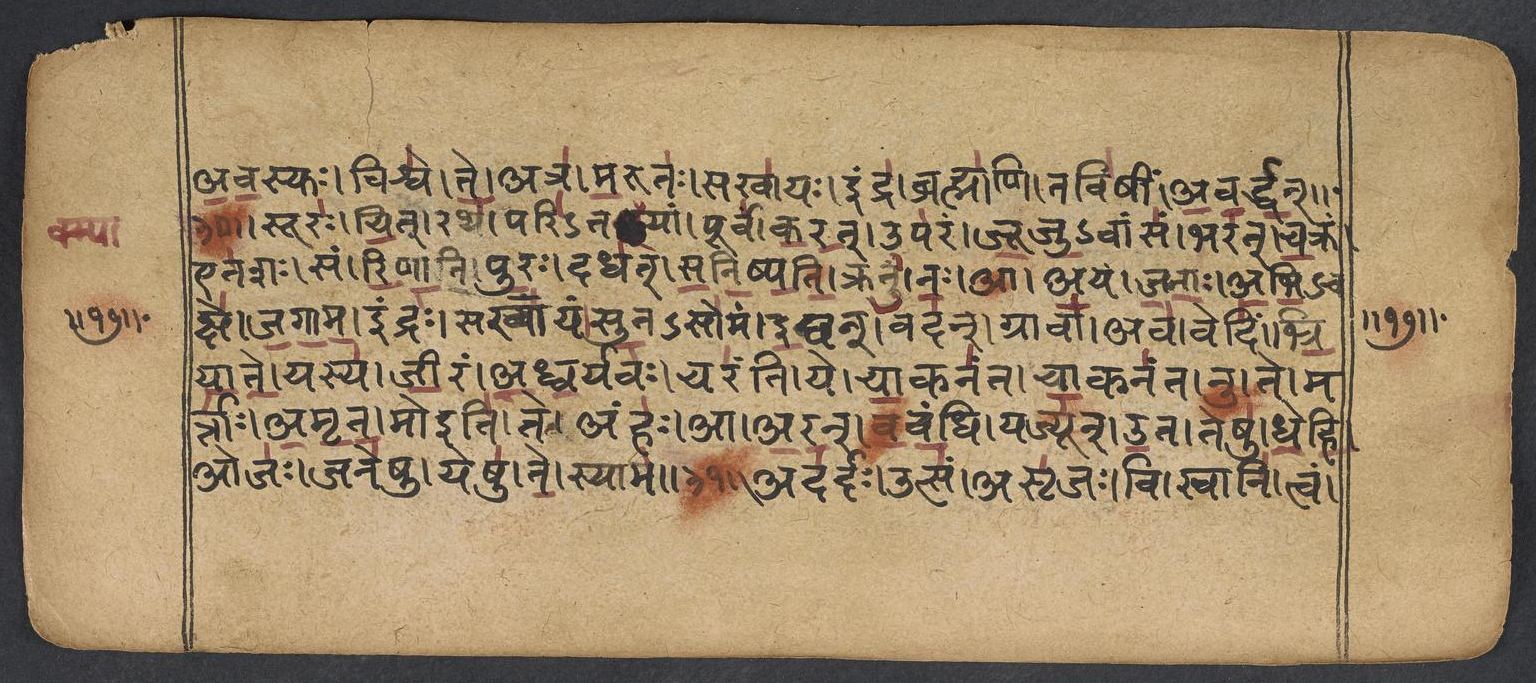
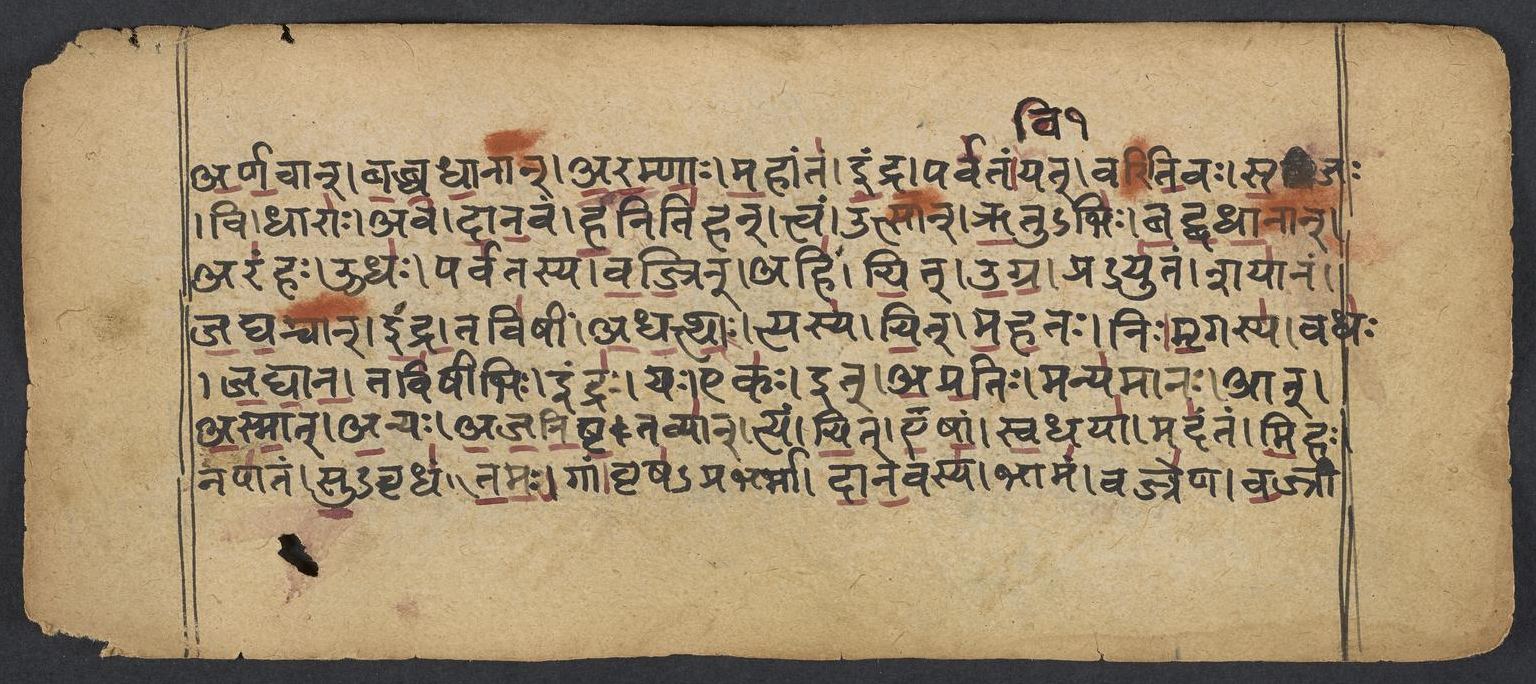
Penn Ms. Coll. 390 Item 41, fol. 345r (numbered 18r by the scribe) (OPenn image 345, lower leaf). Checked on the image: the Rigveda text on this page begins in RV 5.32.1 ‹arṇavān badbadhānān aramṇāḥ mahāntam›. The next page with Rigveda text, fol. 345v (numbered 18v by the scribe), begins in RV 5.32.4 ‹ni jaghāna śuṣṇam›. Verses 5.32.1-3 end on this page; 5.32.1 begins on fol. 344v (numbered 17v by the scribe).
1ada̍rda̱r utsa̱m asṛ̍jo̱ vi khāni̱ tvam a̍rṇa̱vān ba̍dbadhā̱nām̐ a̍ramṇāḥ | ma̱hānta̍m indra̱ parva̍ta̱ṁ vi yad vaḥ sṛ̱jo vi dhārā̱ ava̍ dāna̱vaṁ ha̍n ||
2tvam utsā̍m̐ ṛ̱tubhi̍r badbadhā̱nām̐ ara̍ṁha̱ ūdha̱ḥ parva̍tasya vajrin | ahi̍ṁ cid ugra̱ prayu̍ta̱ṁ śayā̍naṁ jagha̱nvām̐ i̍ndra̱ tavi̍ṣīm adhatthāḥ ||
3tyasya̍ cin maha̱to nir mṛ̱gasya̱ vadha̍r jaghāna̱ tavi̍ṣībhi̱r indra̍ḥ | ya eka̱ id a̍pra̱tir manya̍māna̱ ād a̍smād a̱nyo a̍janiṣṭa̱ tavyā̍n ||
Compare: Padapāṭha (word-by-word text written in the manuscript; Sansknet e-text via GRETIL)
1adardaḥ | utsam | asṛjaḥ | vi | khāni | tvam | arṇavān | badbadhānān | aramṇāḥ | mahāntam | indra | parvatam | vi | yat | varitivaḥ | sṛjaḥ | vi | dhārāḥ | ava | dānavam | hannitihan
2tvam | utsān | ṛtu-bhiḥ | badbadhānān | araṃhaḥ | ūdhaḥ | parvatasya | vajri n | ahim | cit | ugra | pra-yutam | śayānam | jaghanvān | indra | taviṣīm | adhatthāḥ
3tyasya | cit | mahataḥ | niḥ | mṛgasya | vadhaḥ | jaghāna | taviṣībhiḥ | indraḥ | yaḥ | ekaḥ | it | apratiḥ | manyamānaḥ | āt | asmāt | anyaḥ | ajaniṣṭa | tavyān
1THE well thou clavest, settest free the fountains, and gavest rest to floods that were obstructed. Thou, Indra, laying the great mountain open, slaying the Dânava, didst loose the torrents.
2The fountain-depths obstructed in their seasons, thou, Thunderer! madest flow, the mountain's udder. Strong Indra, thou by slaying e'en the Dragon that lay extended there hast shown thy vigour.
3Indra with violence smote down the weapon, yea, even of that wild and mighty creature. Although he deemed himself alone unequalled, another had been born e'en yet more potent.
Where on the image
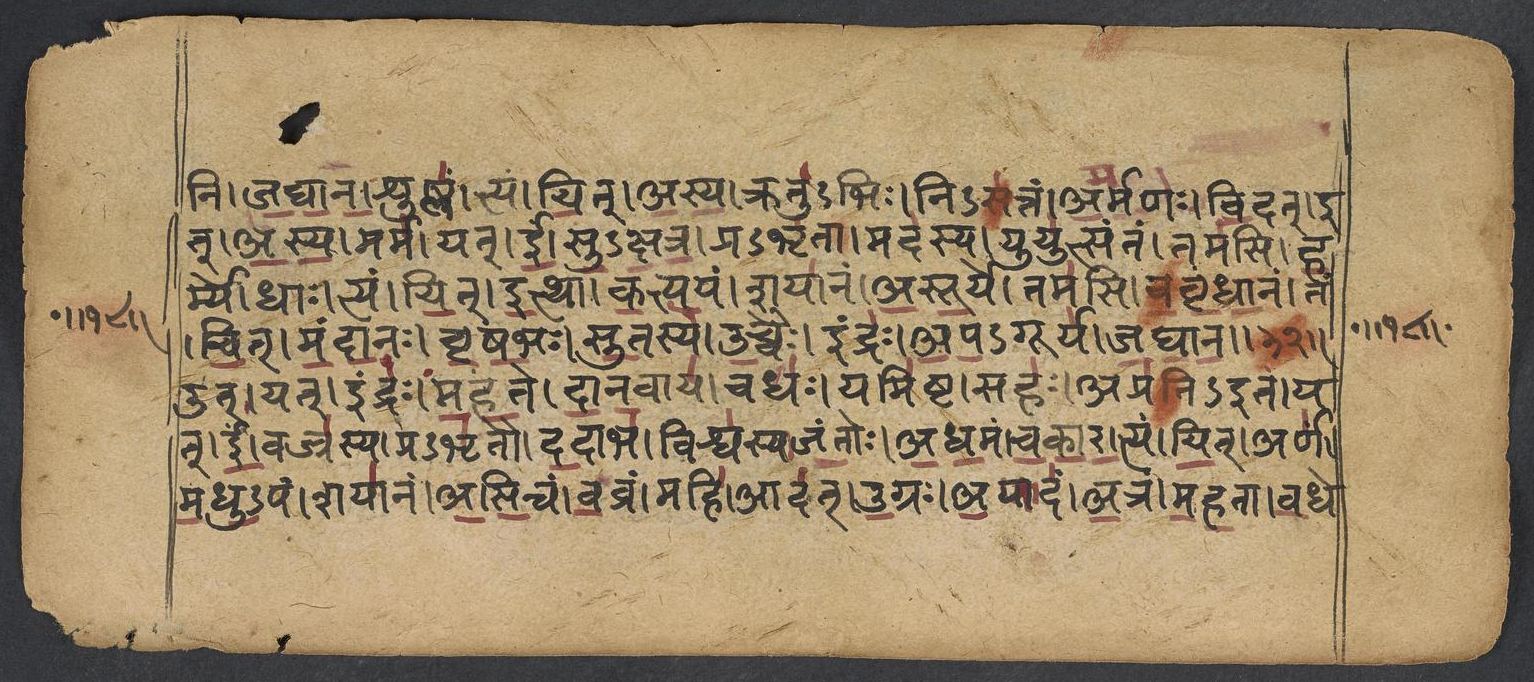
Penn Ms. Coll. 390 Item 41, fol. 345v (numbered 18v by the scribe) (OPenn image 346, upper leaf). Checked on the image: the Rigveda text on this page begins in RV 5.32.4 ‹ni jaghāna śuṣṇam›. The next page with Rigveda text, fol. 346r (numbered 19r by the scribe), begins in RV 5.32.8 ‹-vadhena ni duryoṇe avṛṇak›. Verses 5.32.4-7 end on this page; 5.32.4 begins on fol. 345r (numbered 18r by the scribe).
4tyaṁ ci̍d eṣāṁ sva̱dhayā̱ mada̍ntam mi̱ho napā̍taṁ su̱vṛdha̍ṁ tamo̱gām | vṛṣa̍prabharmā dāna̱vasya̱ bhāma̱ṁ vajre̍ṇa va̱jrī ni ja̍ghāna̱ śuṣṇa̍m ||
5tyaṁ ci̍d asya̱ kratu̍bhi̱r niṣa̍ttam ama̱rmaṇo̍ vi̱dad id a̍sya̱ marma̍ | yad ī̍ṁ sukṣatra̱ prabhṛ̍tā̱ mada̍sya̱ yuyu̍tsanta̱ṁ tama̍si ha̱rmye dhāḥ ||
6tyaṁ ci̍d i̱tthā ka̍tpa̱yaṁ śayā̍nam asū̱rye tama̍si vāvṛdhā̱nam | taṁ ci̍n mandā̱no vṛ̍ṣa̱bhaḥ su̱tasyo̱ccair indro̍ apa̱gūryā̍ jaghāna ||
7ud yad indro̍ maha̱te dā̍na̱vāya̱ vadha̱r yami̍ṣṭa̱ saho̱ apra̍tītam | yad ī̱ṁ vajra̍sya̱ prabhṛ̍tau da̱dābha̱ viśva̍sya ja̱ntor a̍dha̱maṁ ca̍kāra ||
Compare: Padapāṭha (word-by-word text written in the manuscript; Sansknet e-text via GRETIL)
4tyam | cit | eṣām | svadhayā | madantam | mihaḥ | napātam | su-vṛdham | tamaḥ-gām | vṛṣa-prabharmā | dānavasya | bhāmam | vajreṇa | vajrī | ni | jaghāna | śuṣṇam
5tyam | cit | asya | kratu-bhiḥ | ni-sattam | amarmaṇaḥ | vidat | it | asya | marma | yat | īm | su-kṣatra | pra-bhṛtā | madasya | yuyutsantam | tamasi | harmye | dhāḥ
6tyam | cit | itthā | katpayam | śayānam | asūrye | tamasi | vavṛdhānam | tam | cit | mandānaḥ | vṛṣabhaḥ | sutasya | uccaiḥ | indraḥ | apa-gūrya | jaghāna
7ut | yat | indraḥ | mahate | dānavāya | vadhaḥ | yamiṣṭa | sahaḥ | aprati-itam | yat | īm | vajrasya | pra-bhṛtau | dadābha | viśvasya | jantoḥ | adhamam | cakāra
4Him, whom the heavenly food of these delighted, child of the mist, strong waxing, couched in darkness, Him the bolt-hurling Thunderer with his lightning smote down and slew, the Dânava's wrath-fire, Ṣushṇa.
5Though he might ne'er be wounded still his vitals felt that, the God's bolt, which his powers supported, When, after offered draughts, Strong Lord, thou laidest him, fain to battle, in the pit in darkness.
6Him as he lay there huge in length extended, still waxing in the gloom which no sun lightened, Him, after loud-voiced threats, the Hero Indra, rejoicing in the poured libation, slaughtered.
7When 'gainst the mighty Dânava his weapon Indra uplifted, power which none could combat, When at the hurling of his bolt he smote him, he made him lower than all living creatures.
Where on the image
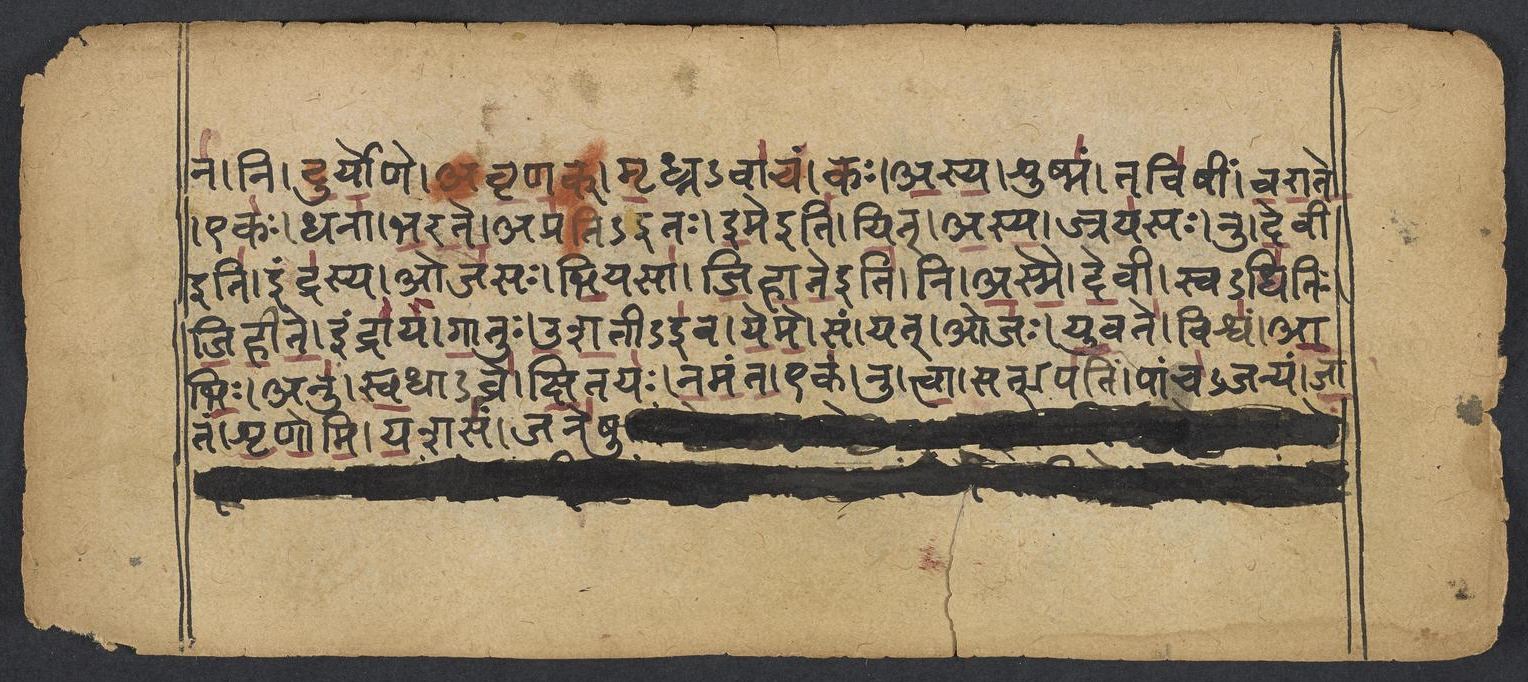
Penn Ms. Coll. 390 Item 41, fol. 346r (numbered 19r by the scribe) (OPenn image 346, lower leaf). Checked on the image: the Rigveda text on this page begins in RV 5.32.8 ‹-vadhena ni duryoṇe avṛṇak›. The next page with Rigveda text, fol. 346v (numbered 19v by the scribe), begins in RV 5.32.11 ‹-janeṣu tam me jagṛbhre›. Verses 5.32.8-10 end on this page; 5.32.8 begins on fol. 345v (numbered 18v by the scribe).
8tyaṁ ci̱d arṇa̍m madhu̱paṁ śayā̍nam asi̱nvaṁ va̱vram mahy āda̍d u̱graḥ | a̱pāda̍m a̱tram ma̍ha̱tā va̱dhena̱ ni du̍ryo̱ṇa ā̍vṛṇaṅ mṛ̱dhravā̍cam ||
9ko a̍sya̱ śuṣma̱ṁ tavi̍ṣīṁ varāta̱ eko̱ dhanā̍ bharate̱ apra̍tītaḥ | i̱me ci̍d asya̱ jraya̍so̱ nu de̱vī indra̱syauja̍so bhi̱yasā̍ jihāte ||
10ny a̍smai de̱vī svadhi̍tir jihīta̱ indrā̍ya gā̱tur u̍śa̱tīva̍ yeme | saṁ yad ojo̍ yu̱vate̱ viśva̍m ābhi̱r anu̍ sva̱dhāvne̍ kṣi̱tayo̍ namanta ||
Compare: Padapāṭha (word-by-word text written in the manuscript; Sansknet e-text via GRETIL)
8tyam | cit | arṇam | madhu-pam | śayānam | asinvam | vavram | mahi | ādat | ugraḥ | apādam | atram | mahatā | vadhena | ni | duryoṇe | avṛṇak | mṛdhra-vācam
9kaḥ | asya | śuṣmam | taviṣīm | varāte | ekaḥ | dhanā | bharate | aprati-itaḥ | ime | cit | asya | jrayasaḥ | nu | devī iti | indrasya | ojasaḥ | bhiyasā | jihāteiti
10ni | asmai | devī | sva-dhitiḥ | jihīte | indrāya | gātuḥ | uśatī-iva | yeme | sam | yat | ojaḥ | yuvate | viśvam | ābhiḥ | anu | svadhāvne | kṣitayaḥ | namanta
8The fierce God seized that huge and restless coiler, insatiate, drinker of the sweets, recumbent, And with his mighty weapon in his dwelling smote down the footless evil-speaking ogre.
9Who may arrest his strength or check his vigour? Alone, resistless, he bears off all riches. Even these Twain, these Goddesses, through terror of Indra's might, retire from his dominion.
10E'en the Celestial Axe bows down before him, and the Earth, lover-like, gives way to Indra. As he imparts all vigour to these people, straightway the folk bend them to him the Godlike.
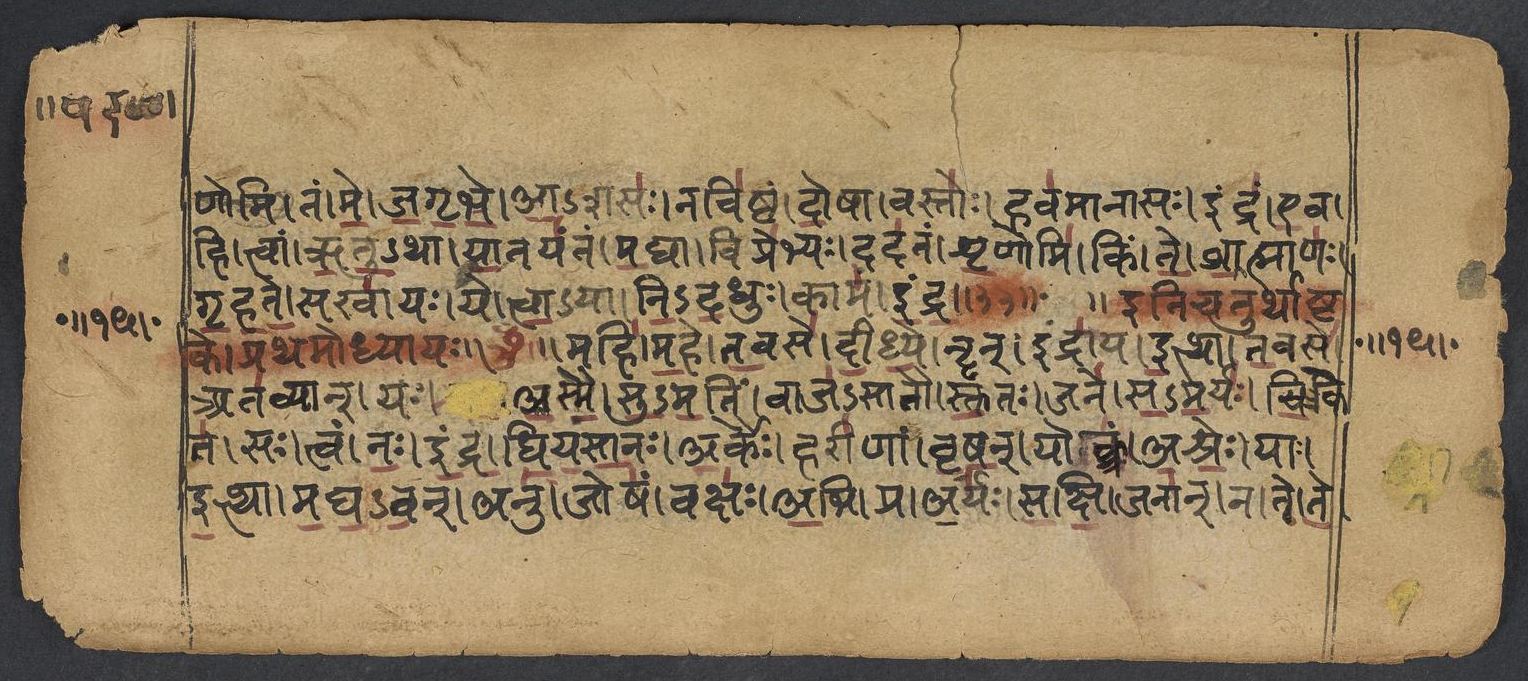
Where on the image
Penn Ms. Coll. 390 Item 41, fol. 346v (numbered 19v by the scribe) (OPenn image 347, upper leaf). Checked on the image: the Rigveda text on this page begins in RV 5.32.11 ‹-janeṣu tam me jagṛbhre›. The next page with Rigveda text, fol. 347r (numbered 20r by the scribe), begins in RV 5.33.3 ‹indra abhi asmat ṛṣva›. Verses 5.32.11-12 end on this page; 5.32.11 begins on fol. 346r (numbered 19r by the scribe).
11eka̱ṁ nu tvā̱ satpa̍ti̱m pāñca̍janyaṁ jā̱taṁ śṛ̍ṇomi ya̱śasa̱ṁ jane̍ṣu | tam me̍ jagṛbhra ā̱śaso̱ navi̍ṣṭhaṁ do̱ṣā vasto̱r hava̍mānāsa̱ indra̍m ||
12e̱vā hi tvām ṛ̍tu̱thā yā̱taya̍ntam ma̱ghā vipre̍bhyo̱ dada̍taṁ śṛ̱ṇomi̍ | kiṁ te̍ bra̱hmāṇo̍ gṛhate̱ sakhā̍yo̱ ye tvā̱yā ni̍da̱dhuḥ kāma̍m indra ||
Compare: Padapāṭha (word-by-word text written in the manuscript; Sansknet e-text via GRETIL)
11ekam | nu | tvā | sat-patim | pāñca-janyam | jātam | śṛṇomi | yaśasam | janeṣu | tam | me | jagṛbhre | āśasaḥ | naviṣṭham | doṣā | vastoḥ | havamānāsaḥ | indram
12eva | hi | tvām | ṛtu-thā | yātayantam | maghā | viprebhyaḥ | dadatam | śṛṇomi | kim | te | brahmāṇaḥ | gṛhate | sakhāyaḥ | ye | tvāyā | ni-dadhuḥ | kāmam | indra
11I hear that thou wast born sole Lord of heroes of the Five Races, famed among the people. As such my wishes have most lately grasped him, invoking Indra both at eve and morning.
12So, too, I hear of thee as in due season urging to action and enriching singers. What have thy friends received from thee, the Brahmans who, faithful, rest their hopes on thee, O Indra?
Notes
- Sanskrit: Aufrecht's edition (1877) with the Vedic accents, as entered by van Nooten and Holland (GRETIL).
- English: Ralph T. H. Griffith, The Hymns of the Rigveda (1889-1892; 2nd ed. 1896-1897), from the VedaWeb digital text; OCR slips in that text were corrected against the printed 2nd edition (data/sources/rigveda/griffith_errata.json).
- Padapāṭha (edition text): Sansknet e-text via GRETIL (CC BY-NC-SA 4.0).
Cite
Sources
- Source: Penn Ms. Coll. 390 Item 41 (undated (catalogued with Penn's 18th-19th c. Vedic manuscripts)), OPenn, Public Domain Mark + Aufrecht's accented text (GRETIL) + Griffith's English (VedaWeb) (holding institution)
- Critical edition: Aufrecht (1877), accented e-text via GRETIL
← previous · → next · v cycle view · l back to library