Rigveda 5.33: To Indra
Introduction
Rigveda 5.33 is a hymn of 10 verses addressed to Indra. It stands in book (maṇḍala) 5, the family book of the Atri clan. The Rigveda is the oldest collection of Sanskrit hymns, composed in the second half of the second millennium BCE and handed down orally for many centuries before it was written down.
The manuscript shown is Penn Ms. Coll. 390 Item 41 (University of Pennsylvania), an undated paper manuscript of the padapāṭha (the word-by-word recitation text, in which every word is written separately and compounds are split) of the whole Ṛgveda in Devanāgarī, 884 leaves in fascicles, 7-9 lines to the page, accents in red; this hymn stands on fol. 346v-348r. Each section below gives the verses that end on one page; the page boundaries were read on the images (the opening words of every page), not counted out. Where the manuscript is a padapāṭha (the word-by-word recitation text), the section shows Aufrecht's continuous (saṃhitā) text first and, as the edition text, the padapāṭha of the same verses, which is the form written on the page.
How was this verified? (Provenance)
Where on the image
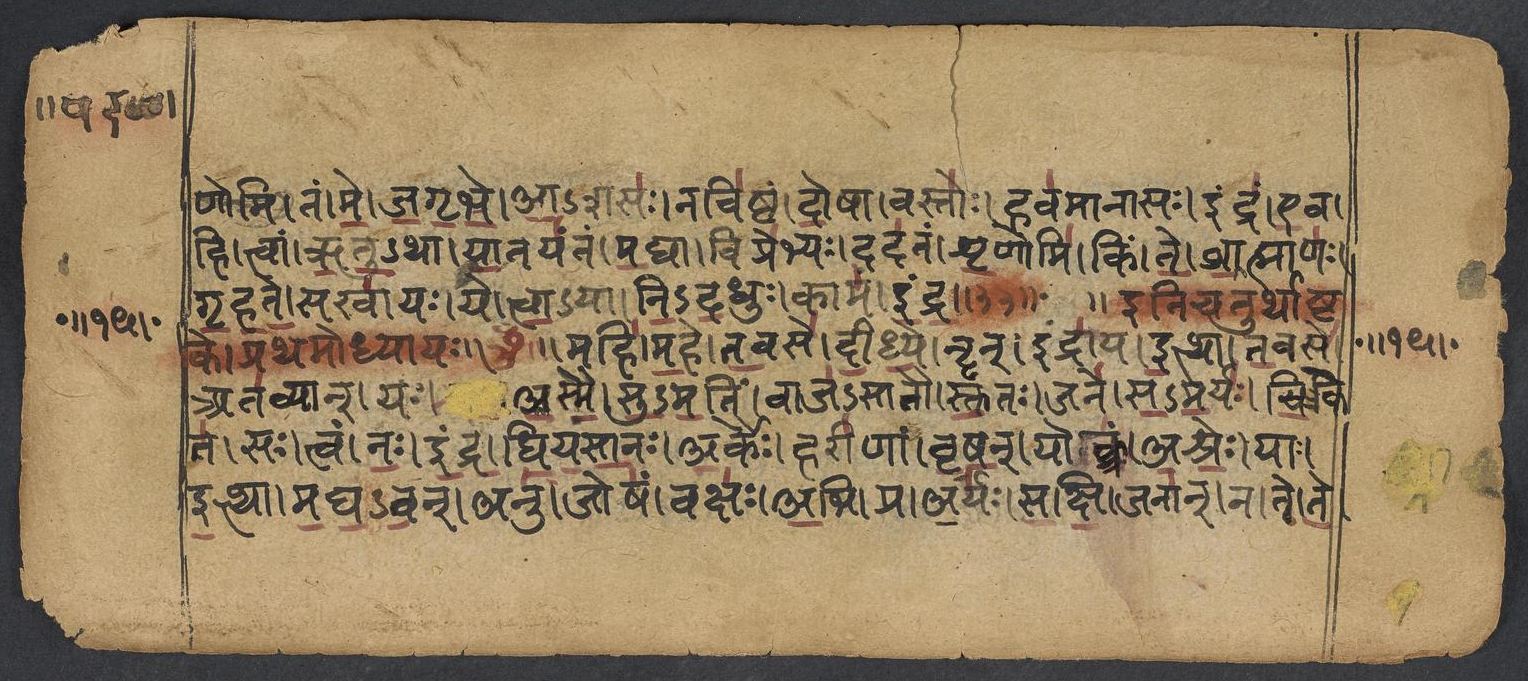
Penn Ms. Coll. 390 Item 41, fol. 346v (numbered 19v by the scribe) (OPenn image 347, upper leaf). Checked on the image: the Rigveda text on this page begins in RV 5.32.11 ‹-janeṣu tam me jagṛbhre›. The next page with Rigveda text, fol. 347r (numbered 20r by the scribe), begins in RV 5.33.3 ‹indra abhi asmat ṛṣva›. Verses 5.33.1-2 end on this page.
1mahi̍ ma̱he ta̱vase̍ dīdhye̱ nṝn indrā̍ye̱tthā ta̱vase̱ ata̍vyān | yo a̍smai suma̱tiṁ vāja̍sātau stu̱to jane̍ sama̱rya̍ś ci̱keta̍ ||
2sa tvaṁ na̍ indra dhiyasā̱no a̱rkair harī̍ṇāṁ vṛṣa̱n yoktra̍m aśreḥ | yā i̱tthā ma̍ghava̱nn anu̱ joṣa̱ṁ vakṣo̍ a̱bhi prāryaḥ sa̍kṣi̱ janā̍n ||
Compare: Padapāṭha (word-by-word text written in the manuscript; Sansknet e-text via GRETIL)
1mahi | mahe | tavase | dīdhye | nṝn | indrāya | itthā | tavase | atavyān | yaḥ | asmai | su-matim | vāja-sātau | stutaḥ | jane | sa-maryaḥ | ciketa
2saḥ | tvam | naḥ | indra | dhiyasānaḥ | arkaiḥ | harīṇām | vṛṣan | yoktram | aśreḥ | yāḥ | itthā | magha-van | anu | joṣam | vakṣaḥ | abhi | pra | aryaḥ | sakṣi | janān
1GREAT praise to Indra, great and strong mid heroes, I ponder thus, the feeble to the Mighty, Who with his band shows favour to this people, when lauded, in the fight where spoil is gathered.
2So made attentive by our hymns, Steer! Indra! thou fastenedst the girth of thy Bay Coursers, Which, Maghavan, at thy will thou drivest hither. With these subdue for us the men who hate us.
Where on the image
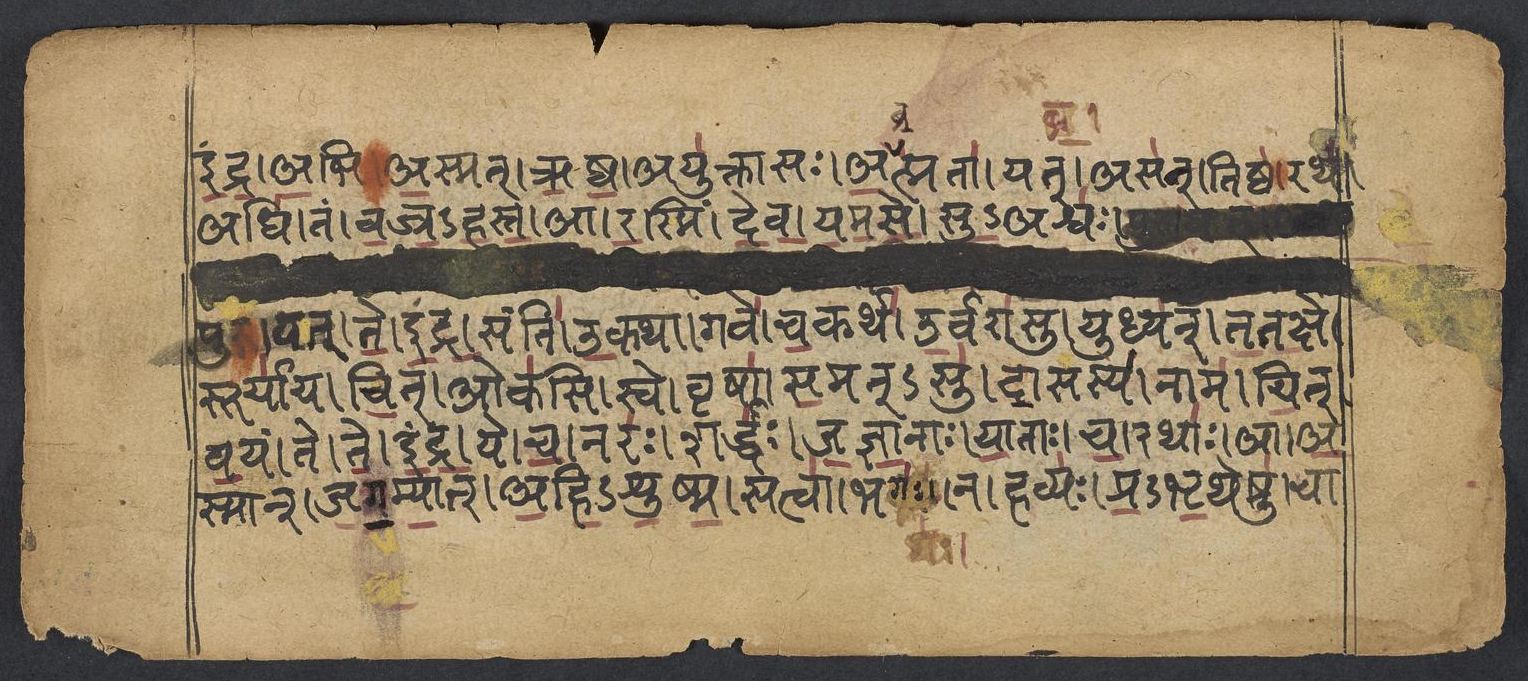
Penn Ms. Coll. 390 Item 41, fol. 347r (numbered 20r by the scribe) (OPenn image 347, lower leaf). Checked on the image: the Rigveda text on this page begins in RV 5.33.3 ‹indra abhi asmat ṛṣva›. The next page with Rigveda text, fol. 347v (numbered 20v by the scribe), begins in RV 5.33.5 ‹-cāruḥ›. Verses 5.33.3-4 end on this page; 5.33.3 begins on fol. 346v (numbered 19v by the scribe).
3na te ta̍ indrā̱bhy a1̱̍smad ṛ̱ṣvāyu̍ktāso abra̱hmatā̱ yad asa̍n | tiṣṭhā̱ ratha̱m adhi̱ taṁ va̍jraha̱stā ra̱śmiṁ de̍va yamase̱ svaśva̍ḥ ||
4pu̱rū yat ta̍ indra̱ santy u̱kthā gave̍ ca̱kartho̱rvarā̍su̱ yudhya̍n | ta̱ta̱kṣe sūryā̍ya ci̱d oka̍si̱ sve vṛṣā̍ sa̱matsu̍ dā̱sasya̱ nāma̍ cit ||
Compare: Padapāṭha (word-by-word text written in the manuscript; Sansknet e-text via GRETIL)
3na | te | te | indra | abhi | asmat | ṛṣva | ayuktāsaḥ | abrahmatā | yat | asan | ti ṣṭha | ratham | adhi | tam | vajra-hasta | ā | raśmim | deva | yamase | su-aśvaḥ
4puru | yat | te | indra | santi | ukthā | gave | cakartha | urvarāsu | yudhyan | tatakṣe | sūryāya | cit | okasi | sve | vṛṣā | samat-su | dāsasya | nāma | cit
3They were not turned to us-ward, lofty Indra! while yet through lack of prayer they stood unharnessed. Ascend this chariot, thou whose hand wields thunder, and draw the rein, O Lord of noble horses.
4Thou, because many lauds are thine, O Indra, wast active warring in the fields for cattle. For Sûrya in his own abode thou, Hero, formedst in fights even a Dâsa's nature.
Where on the image
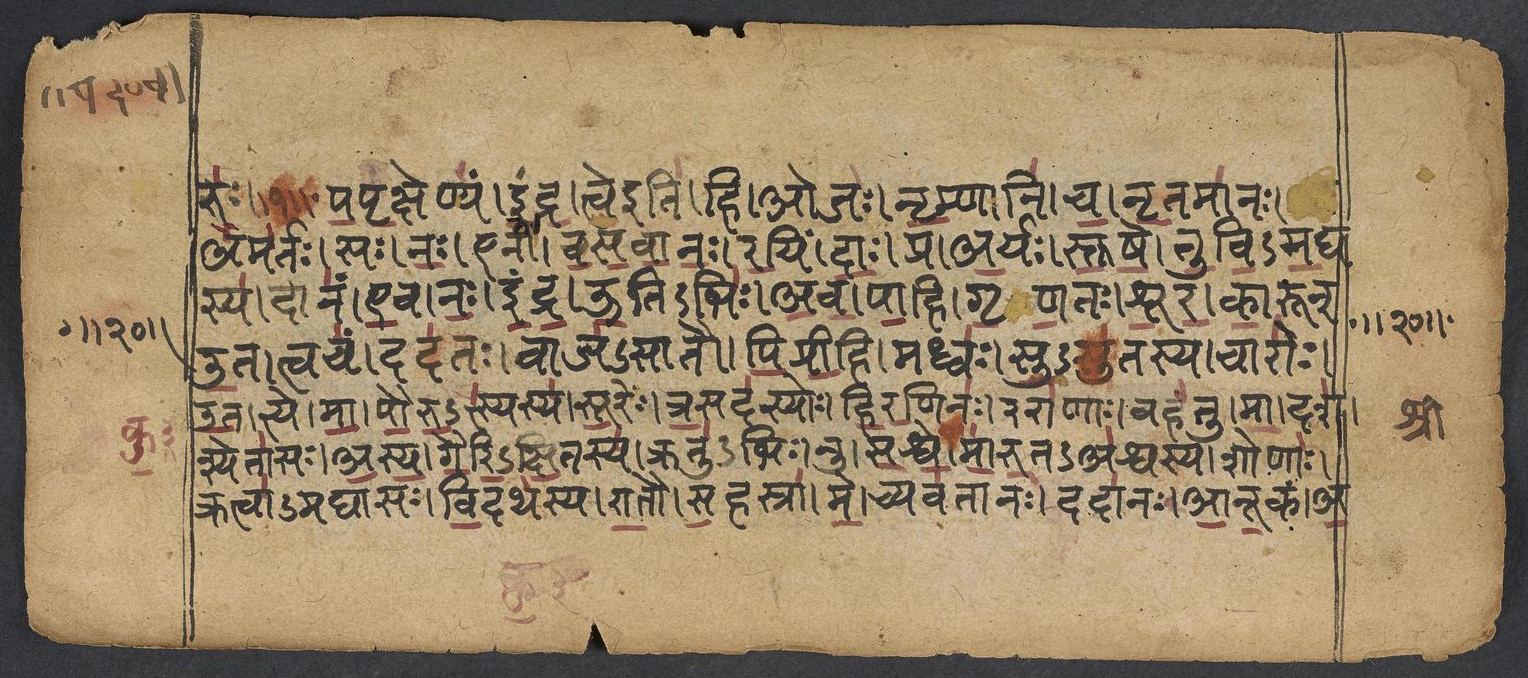
Penn Ms. Coll. 390 Item 41, fol. 347v (numbered 20v by the scribe) (OPenn image 348, upper leaf). Checked on the image: the Rigveda text on this page begins in RV 5.33.5 ‹-cāruḥ›. The next page with Rigveda text, fol. 348r (numbered 21r by the scribe), begins in RV 5.33.9 ‹-aryaḥ vapuṣe na ārcat›. Verses 5.33.5-8 end on this page; 5.33.5 begins on fol. 347r (numbered 20r by the scribe).
5va̱yaṁ te ta̍ indra̱ ye ca̱ nara̱ḥ śardho̍ jajñā̱nā yā̱tāś ca̱ rathā̍ḥ | āsmāñ ja̍gamyād ahiśuṣma̱ satvā̱ bhago̱ na havya̍ḥ prabhṛ̱theṣu̱ cāru̍ḥ ||
6pa̱pṛ̱kṣeṇya̍m indra̱ tve hy ojo̍ nṛ̱mṇāni̍ ca nṛ̱tamā̍no̱ ama̍rtaḥ | sa na̱ enī̍ṁ vasavāno ra̱yiṁ dā̱ḥ prāryaḥ stu̍ṣe tuvima̱ghasya̱ dāna̍m ||
7e̱vā na̍ indro̱tibhi̍r ava pā̱hi gṛ̍ṇa̱taḥ śū̍ra kā̱rūn | u̱ta tvaca̱ṁ dada̍to̱ vāja̍sātau piprī̱hi madhva̱ḥ suṣu̍tasya̱ cāro̍ḥ ||
8u̱ta tye mā̍ pauruku̱tsyasya̍ sū̱res tra̱sada̍syor hira̱ṇino̱ rarā̍ṇāḥ | vaha̍ntu mā̱ daśa̱ śyetā̍so asya gairikṣi̱tasya̱ kratu̍bhi̱r nu sa̍śce ||
Compare: Padapāṭha (word-by-word text written in the manuscript; Sansknet e-text via GRETIL)
5vayam | te | te | indra | ye | ca | naraḥ | śardhaḥ | jajñānāḥ | yātāḥ | ca | rathāḥ | ā | asmān | jagamyāt | ahi-śuṣma | satvā | bhagaḥ | na | havyaḥ | pra-bhṛtheṣu | cāruḥ
6papṛkṣeṇyam | indra | tve iti | hi | ojaḥ | nṛmṇāni | ca | nṛtamānaḥ | amartaḥ | saḥ | naḥ | enīm | vasavānaḥ | rayim | dāḥ | pra | aryaḥ | stuṣe | tuvi-maghasya | dānam
7eva | naḥ | indra | ūti-bhiḥ | ava | pāhi | gṛṇataḥ | śūra | karūn | uta | tvacam | dadataḥ | vāja-sātau | piprīhi | madhvaḥ | su-sutasya | cāroḥ
8uta | tye | mā | pauru-kutasyasya | sūreḥ | trasadasyoḥ | hiraṇinaḥ | rarāṇāḥ | vahantu | mā | daśa | śyetāsaḥ | asya | gairi-kṣitasya | kratu-bhiḥ | nu | saśce
5Thine are we, Indra; thine are all these people, conscious of might, whose cars are set in motion. Some hero come to us, O Strong as Ahi beauteous in war, to be invoked like Bhaga.
6Strength much to be desired is in thee, Indra: the Immortal dances forth his hero exploits. Such, Lord of Treasure, give us splendid riches. I praise the Friend's gift, his whose wealth is mighty.
7Thus favour us, O Indra, with thy succour; Hero, protect the bards who sing thy praises. Be friendly in the fray to those who offer the skin of beautiful and well-pressed Soma.
8And these ten steeds which Trasadasyu gives me, the goldrich chief, the son of Purukutsa, Resplendent in their brightness shall convey me. Gairikshita willed it and so came I hither.
Where on the image
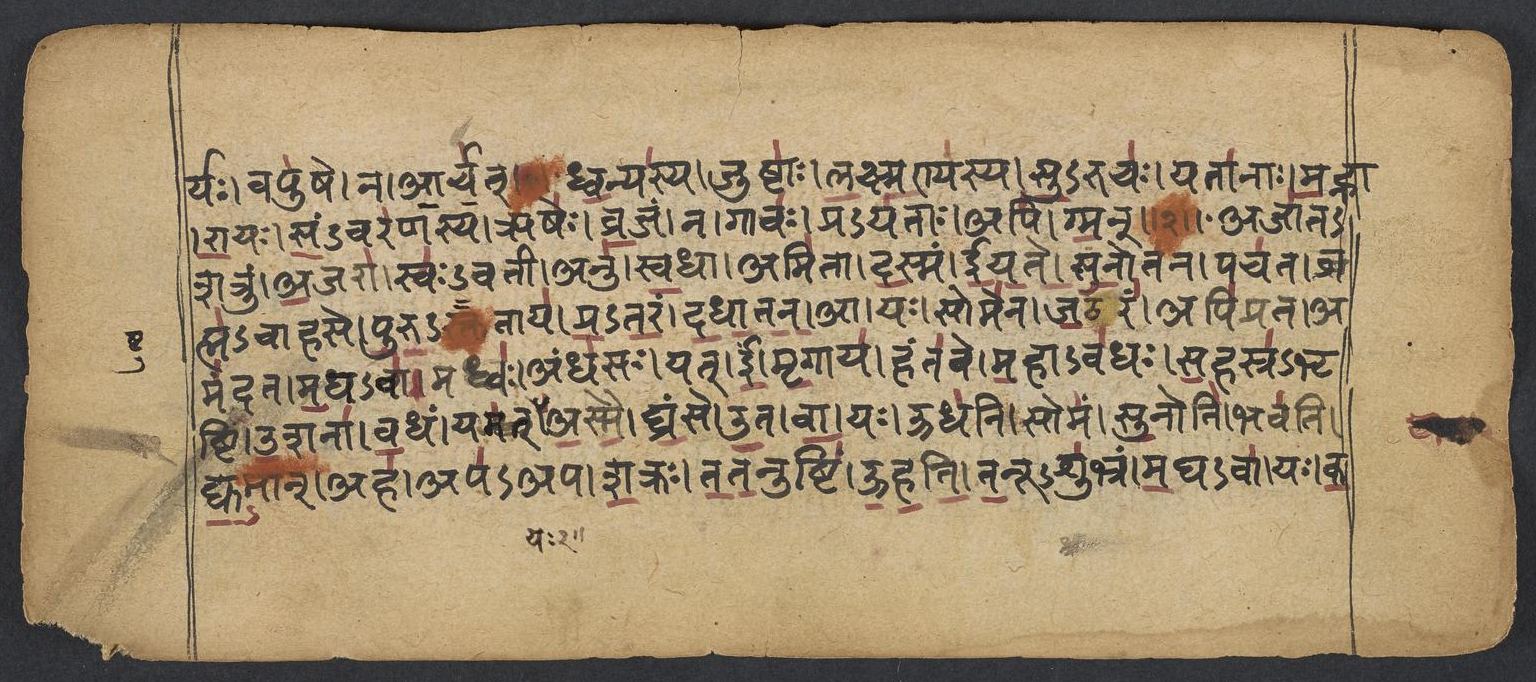
Penn Ms. Coll. 390 Item 41, fol. 348r (numbered 21r by the scribe) (OPenn image 348, lower leaf). Checked on the image: the Rigveda text on this page begins in RV 5.33.9 ‹-aryaḥ vapuṣe na ārcat›. The next page with Rigveda text, fol. 348v (numbered 21v by the scribe), begins in RV 5.34.3 ‹-kava-sakhaḥ›. Verses 5.33.9-10 end on this page; 5.33.9 begins on fol. 347v (numbered 20v by the scribe).
9u̱ta tye mā̍ māru̱tāśva̍sya̱ śoṇā̱ḥ kratvā̍maghāso vi̱datha̍sya rā̱tau | sa̱hasrā̍ me̱ cyava̍tāno̱ dadā̍na ānū̱kam a̱ryo vapu̍ṣe̱ nārca̍t ||
10u̱ta tye mā̍ dhva̱nya̍sya̱ juṣṭā̍ lakṣma̱ṇya̍sya su̱ruco̱ yatā̍nāḥ | ma̱hnā rā̱yaḥ sa̱ṁvara̍ṇasya̱ ṛṣe̍r vra̱jaṁ na gāva̱ḥ praya̍tā̱ api̍ gman ||
Compare: Padapāṭha (word-by-word text written in the manuscript; Sansknet e-text via GRETIL)
9uta | tye | mā | māruta-aśvasya | śoṇāḥ | kratvāmaghāsaḥ | vidathasya | rātau | sahasrā | me | cyavatānaḥ | dadānaḥ | ānūkam | aryaḥ | vapuṣe | na | ārcat
10uta | tye | mā | dhvanyasya | juṣṭāḥ | lakṣmaṇyasya | su-rucaḥ | yatānāḥ | mahnā | rāyaḥ | sam-varaṇasya | ṛṣeḥ | vrajam | na | gāvaḥ | pra-yatāḥ | api | gman
9And these, bestowed as sacrificial guerdon, the powerful tawny steeds of Mârutâṣva; And thousands which kind Chyavatâna gave me, abundantly bestowed for my adornment.
10And these commended horses, bright and active, by Dhvanya son of Lakshmaṇa presented, Came unto me, as cows into the R̥ishi Samvaraṇa's stall, with magnitude of riches.
Notes
- Sanskrit: Aufrecht's edition (1877) with the Vedic accents, as entered by van Nooten and Holland (GRETIL).
- English: Ralph T. H. Griffith, The Hymns of the Rigveda (1889-1892; 2nd ed. 1896-1897), from the VedaWeb digital text; OCR slips in that text were corrected against the printed 2nd edition (data/sources/rigveda/griffith_errata.json).
- Padapāṭha (edition text): Sansknet e-text via GRETIL (CC BY-NC-SA 4.0).
Cite
Sources
- Source: Penn Ms. Coll. 390 Item 41 (undated (catalogued with Penn's 18th-19th c. Vedic manuscripts)), OPenn, Public Domain Mark + Aufrecht's accented text (GRETIL) + Griffith's English (VedaWeb) (holding institution)
- Critical edition: Aufrecht (1877), accented e-text via GRETIL
← previous · → next · v cycle view · l back to library