Rigveda 5.34: To Indra
Introduction
Rigveda 5.34 is a hymn of 9 verses addressed to Indra. It stands in book (maṇḍala) 5, the family book of the Atri clan. The Rigveda is the oldest collection of Sanskrit hymns, composed in the second half of the second millennium BCE and handed down orally for many centuries before it was written down.
The manuscript shown is Penn Ms. Coll. 390 Item 41 (University of Pennsylvania), an undated paper manuscript of the padapāṭha (the word-by-word recitation text, in which every word is written separately and compounds are split) of the whole Ṛgveda in Devanāgarī, 884 leaves in fascicles, 7-9 lines to the page, accents in red; this hymn stands on fol. 348r-349r. Each section below gives the verses that end on one page; the page boundaries were read on the images (the opening words of every page), not counted out. Where the manuscript is a padapāṭha (the word-by-word recitation text), the section shows Aufrecht's continuous (saṃhitā) text first and, as the edition text, the padapāṭha of the same verses, which is the form written on the page.
How was this verified? (Provenance)
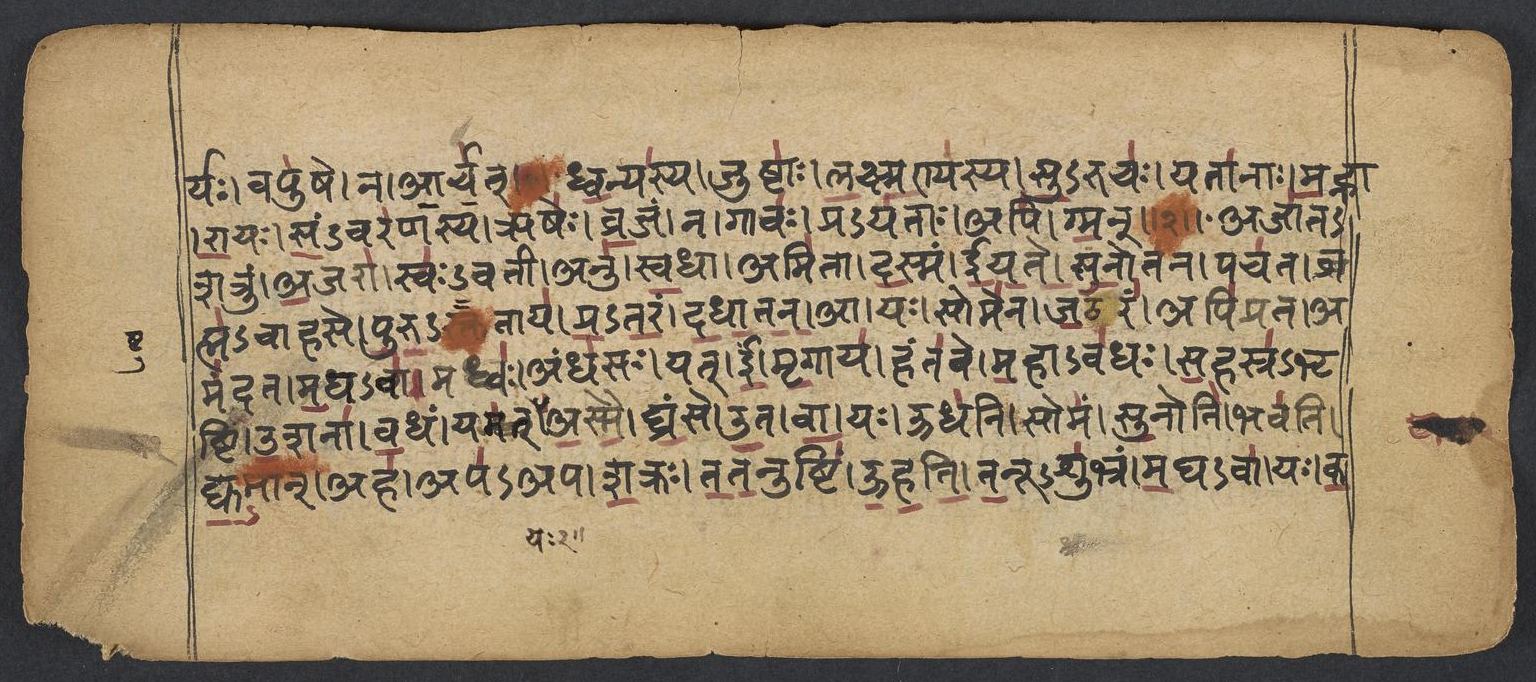
Where on the image
Penn Ms. Coll. 390 Item 41, fol. 348r (numbered 21r by the scribe) (OPenn image 348, lower leaf). Checked on the image: the Rigveda text on this page begins in RV 5.33.9 ‹-aryaḥ vapuṣe na ārcat›. The next page with Rigveda text, fol. 348v (numbered 21v by the scribe), begins in RV 5.34.3 ‹-kava-sakhaḥ›. Verses 5.34.1-2 end on this page.
1ajā̍taśatrum a̱jarā̱ sva̍rva̱ty anu̍ sva̱dhāmi̍tā da̱smam ī̍yate | su̱nota̍na̱ paca̍ta̱ brahma̍vāhase puruṣṭu̱tāya̍ prata̱raṁ da̍dhātana ||
2ā yaḥ some̍na ja̱ṭhara̱m api̍pra̱tāma̍ndata ma̱ghavā̱ madhvo̱ andha̍saḥ | yad ī̍m mṛ̱gāya̱ hanta̍ve ma̱hāva̍dhaḥ sa̱hasra̍bhṛṣṭim u̱śanā̍ va̱dhaṁ yama̍t ||
Compare: Padapāṭha (word-by-word text written in the manuscript; Sansknet e-text via GRETIL)
1ajāta-śatrum | ajarā | svaḥ-vatī | anu | svadhā | amitā | dasmam | īyate | sunotana | pacata | brahma-vāhase | puru-stutāya | pra-taram | dadhātana
2ā | yaḥ | somena | jaṭharam | apiprata | amandata | magha-vā | madhvaḥ | andhasaḥ | yat | īm | mṛgāya | hantave | mahāvadhaḥ | sahasra-bhṛṣṭim | uśanā | vadham | yamat
1BOUNDLESS and wasting not, the heavenly food of Gods goes to the foeless One, doer of wondrous deeds. Press out, make ready, offer gifts with special zeal to him whom many laud, accepter of the prayer.
2He who filled full his belly with the Soma's juice, Maghavan, was delighted with the meath's sweet draught, When Uṣanâ, that he might slay the monstrous beast, gave him the mighty weapon with a thousand points.
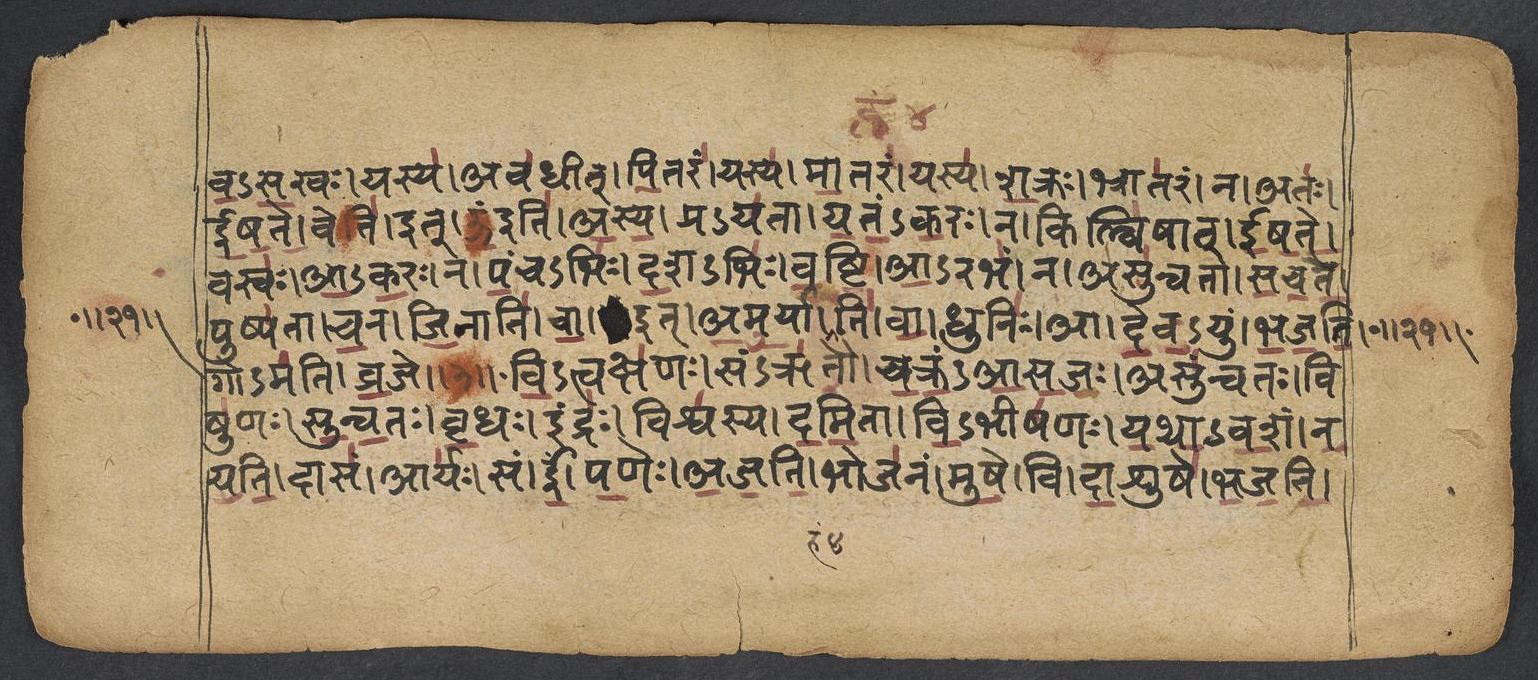
Where on the image
Penn Ms. Coll. 390 Item 41, fol. 348v (numbered 21v by the scribe) (OPenn image 349, upper leaf). Checked on the image: the Rigveda text on this page begins in RV 5.34.3 ‹-kava-sakhaḥ›. The next page with Rigveda text, fol. 349r (numbered 22r by the scribe), begins in RV 5.34.7 ‹sūnaram vasu duḥ-ge cana›. Verses 5.34.3-6 end on this page; 5.34.3 begins on fol. 348r (numbered 21r by the scribe).
3yo a̍smai ghra̱ṁsa u̱ta vā̱ ya ūdha̍ni̱ soma̍ṁ su̱noti̱ bhava̍ti dyu̱mām̐ aha̍ | apā̍pa śa̱kras ta̍ta̱nuṣṭi̍m ūhati ta̱nūśu̍bhram ma̱ghavā̱ yaḥ ka̍vāsa̱khaḥ ||
4yasyāva̍dhīt pi̱tara̱ṁ yasya̍ mā̱tara̱ṁ yasya̍ śa̱kro bhrāta̍ra̱ṁ nāta̍ īṣate | vetīd v a̍sya̱ praya̍tā yataṁka̱ro na kilbi̍ṣād īṣate̱ vasva̍ āka̱raḥ ||
5na pa̱ñcabhi̍r da̱śabhi̍r vaṣṭy ā̱rabha̱ṁ nāsu̍nvatā sacate̱ puṣya̍tā ca̱na | ji̱nāti̱ ved a̍mu̱yā hanti̍ vā̱ dhuni̱r ā de̍va̱yum bha̍jati̱ goma̍ti vra̱je ||
6vi̱tvakṣa̍ṇa̱ḥ samṛ̍tau cakramāsa̱jo 'su̍nvato̱ viṣu̍ṇaḥ sunva̱to vṛ̱dhaḥ | indro̱ viśva̍sya dami̱tā vi̱bhīṣa̍ṇo yathāva̱śaṁ na̍yati̱ dāsa̱m ārya̍ḥ ||
Compare: Padapāṭha (word-by-word text written in the manuscript; Sansknet e-text via GRETIL)
3yaḥ | asmai | ghraṃse | uta | vā | yaḥ | ūdhani | somam | sunoti | bhavati | dyu-mān | aha | apa-apa | sakraḥ | tatanuṣṭim | ūhati | tanū-śubhram | magha-vā | yaḥ | kava-sakhaḥ
4yasya | avadhīt | pitaram | yasya | mātaram | yasya | śakroaḥ | bhrātaram | na | ataḥ | īṣate | veti | it | oṃ iti | asya | pra-yatā | yatam-karaḥ | na | kilbiṣāt | īṣate | vasvaḥ | ākaraḥ
5na | pañca-bhiḥ | daśa-bhiḥ | vaṣṭi | ārabham | na | asunvatā | sacate | puṣyatā | cana | jināti | vā | it | amuyā | hanti | vā | dhuniḥ | ā | deva-yum | bhajati | go--mati | vraje
6vi-tvakṣaṇaḥ | sam-ṛtau | cakram-āsajaḥ | asunvataḥ | viṣuṇaḥ | sunvataḥ | vṛdhaḥ | indraḥ | viśvasya | damitā | vi-bhīṣaṇaḥ | yathāvaśam | nayati | dāsam | āryaḥ
3Illustrious is the man whoever presseth out Soma for him in sunshine or in cloud and rain. The mighty Maghavan who is the sage's Friend advanceth more and more his beauteous progeny.
4The Strong God doth not flee away from him whose sire, whose mother or whose brother he hath done to death. He, the Avenger, seeketh this man's offered gifts: this God, the source of riches, doth not flee from sin.
5He seeks no enterprise with five or ten to aid, nor stays with him who pours no juice though prospering well. The Shaker conquers or slays in this way or that, and to the pious gives a stable full of kine.
6Exceeding strong in war he stays the chariot wheel, and, hating him who pours not, prospers him who pours. Indra the terrible, tamer of every man, as Ârya leads away the Dâsa at his will.
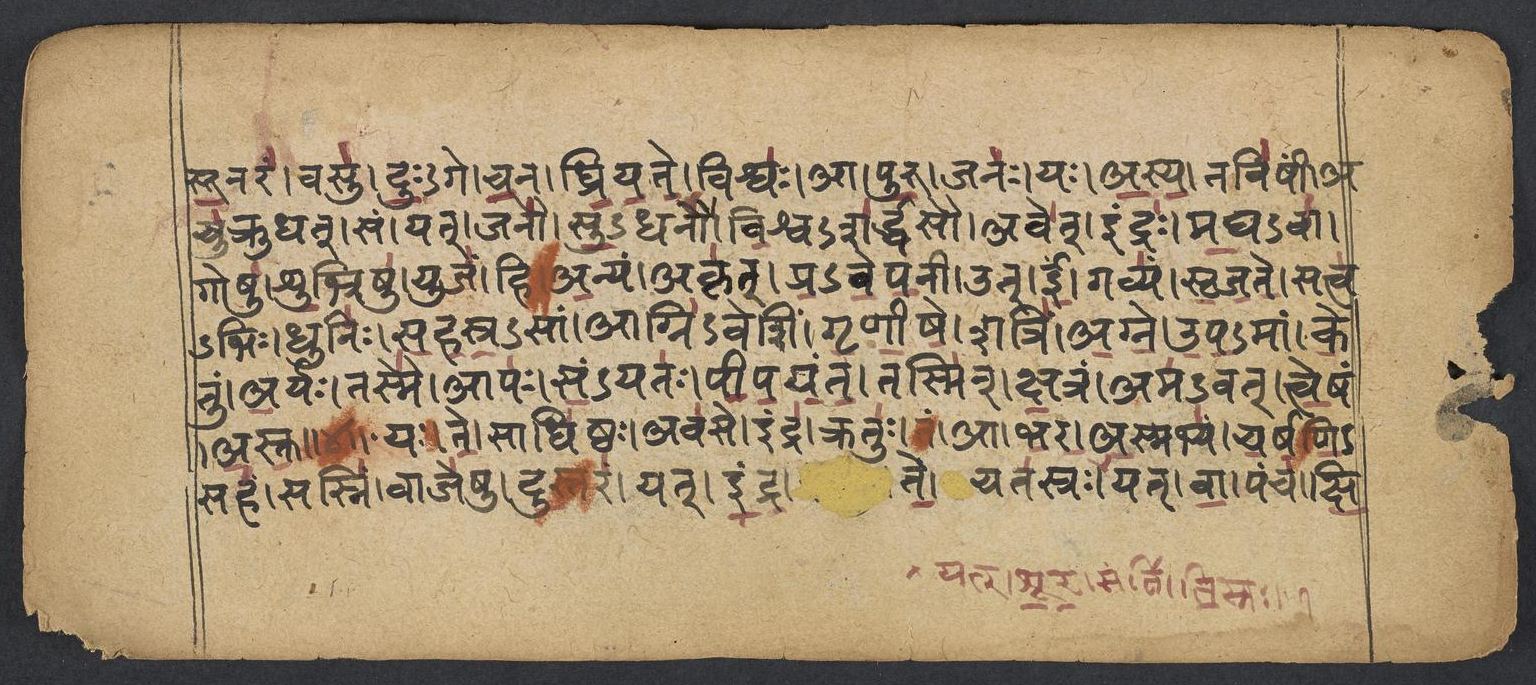
Where on the image
Penn Ms. Coll. 390 Item 41, fol. 349r (numbered 22r by the scribe) (OPenn image 349, lower leaf). Checked on the image: the Rigveda text on this page begins in RV 5.34.7 ‹sūnaram vasu duḥ-ge cana›. The next page with Rigveda text, fol. 349v (numbered 22v by the scribe), begins in RV 5.35.2 ‹-kṣitīnām avaḥ tat su›. Verses 5.34.7-9 end on this page; 5.34.7 begins on fol. 348v (numbered 21v by the scribe).
7sam ī̍m pa̱ṇer a̍jati̱ bhoja̍nam mu̱ṣe vi dā̱śuṣe̍ bhajati sū̱nara̱ṁ vasu̍ | du̱rge ca̱na dhri̍yate̱ viśva̱ ā pu̱ru jano̱ yo a̍sya̱ tavi̍ṣī̱m acu̍krudhat ||
8saṁ yaj janau̍ su̱dhanau̍ vi̱śvaśa̍rdhasā̱v ave̱d indro̍ ma̱ghavā̱ goṣu̍ śu̱bhriṣu̍ | yuja̱ṁ hy a1̱̍nyam akṛ̍ta pravepa̱ny ud ī̱ṁ gavya̍ṁ sṛjate̱ satva̍bhi̱r dhuni̍ḥ ||
9sa̱ha̱sra̱sām āgni̍veśiṁ gṛṇīṣe̱ śatri̍m agna upa̱māṁ ke̱tum a̱ryaḥ | tasmā̱ āpa̍ḥ sa̱ṁyata̍ḥ pīpayanta̱ tasmi̍n kṣa̱tram ama̍vat tve̱ṣam a̍stu ||
Compare: Padapāṭha (word-by-word text written in the manuscript; Sansknet e-text via GRETIL)
7sam | īm | paṇeḥ | ajati | bhojanam | muṣe | vi | dāśuṣe | bhajati | sūnaram | vasu | duḥ-ge | cana | dhriyate | viśvaḥ | ā | puru | janaḥ | yaḥ | asya | taviṣīm | acukrudhat
8sam | yat | janau | su-dhanau | viśva-śardhasau | avet | indraḥ | magha-vā | goṣu | śubhriṣu | yujam | hi | anyam | akṛta | pra-vepanī | ut | īm | gavyam | sṛjate | satva-bhiḥ | dhuniḥ
9sahasra-sām | āgni-veśim | gṛṇīṣe | śatrim | agne | upa-mām | ketum | aryaḥ | tasmai | āpaḥ | sam-yataḥ | pīpayanta | tasmin | kṣatram | ama-vat | tveṣam | astu
7He gathers up for plunder all the niggard's gear: excellent wealth he gives to him who offers gifts. Not even in wide stronghold may all the folk stand firm who have provoked to anger his surpassing might.
8When Indra Maghavan hath marked two wealthy men fighting for beauteous cows with all their followers, He who stirs all things takes one as his close ally, and, Shaker, with his Heroes, sends the kine to him.
9Agni! I laud the liberal Âgniveṣi, Ṣatri the type and standard of the pious. May the collected waters yield him plenty, and his be powerful and bright dominion.
Notes
- Sanskrit: Aufrecht's edition (1877) with the Vedic accents, as entered by van Nooten and Holland (GRETIL).
- English: Ralph T. H. Griffith, The Hymns of the Rigveda (1889-1892; 2nd ed. 1896-1897), from the VedaWeb digital text; OCR slips in that text were corrected against the printed 2nd edition (data/sources/rigveda/griffith_errata.json).
- Padapāṭha (edition text): Sansknet e-text via GRETIL (CC BY-NC-SA 4.0).
Cite
Sources
- Source: Penn Ms. Coll. 390 Item 41 (undated (catalogued with Penn's 18th-19th c. Vedic manuscripts)), OPenn, Public Domain Mark + Aufrecht's accented text (GRETIL) + Griffith's English (VedaWeb) (holding institution)
- Critical edition: Aufrecht (1877), accented e-text via GRETIL
← previous · → next · v cycle view · l back to library