Rigveda 5.36: To Indra
Introduction
Rigveda 5.36 is a hymn of 6 verses addressed to Indra. It stands in book (maṇḍala) 5, the family book of the Atri clan. The Rigveda is the oldest collection of Sanskrit hymns, composed in the second half of the second millennium BCE and handed down orally for many centuries before it was written down.
The manuscript shown is Penn Ms. Coll. 390 Item 41 (University of Pennsylvania), an undated paper manuscript of the padapāṭha (the word-by-word recitation text, in which every word is written separately and compounds are split) of the whole Ṛgveda in Devanāgarī, 884 leaves in fascicles, 7-9 lines to the page, accents in red; this hymn stands on fol. 350r-350v. Each section below gives the verses that end on one page; the page boundaries were read on the images (the opening words of every page), not counted out. Where the manuscript is a padapāṭha (the word-by-word recitation text), the section shows Aufrecht's continuous (saṃhitā) text first and, as the edition text, the padapāṭha of the same verses, which is the form written on the page.
How was this verified? (Provenance)
Where on the image
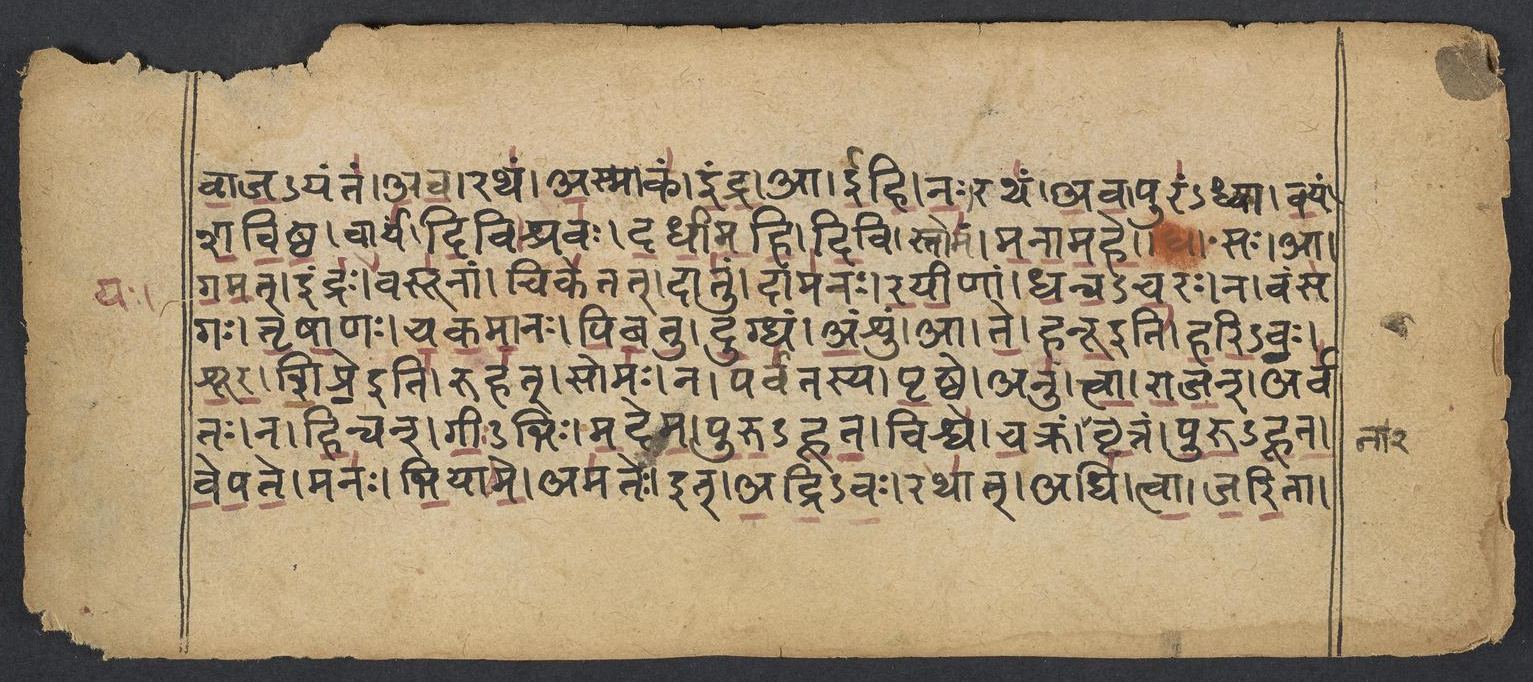
Penn Ms. Coll. 390 Item 41, fol. 350r (numbered 23r by the scribe) (OPenn image 350, lower leaf). Checked on the image: the Rigveda text on this page begins in RV 5.35.7 ‹vāja-yantam ava ratham›. The next page with Rigveda text, fol. 350v (numbered 23v by the scribe), begins in RV 5.36.3 ‹sadāvṛdha kuvit nu stoṣam›. Verses 5.36.1-2 end on this page.
1sa ā ga̍ma̱d indro̱ yo vasū̍nā̱ṁ cike̍ta̱d dātu̱ṁ dāma̍no rayī̱ṇām | dha̱nva̱ca̱ro na vaṁsa̍gas tṛṣā̱ṇaś ca̍kamā̱naḥ pi̍batu du̱gdham a̱ṁśum ||
2ā te̱ hanū̍ harivaḥ śūra̱ śipre̱ ruha̱t somo̱ na parva̍tasya pṛ̱ṣṭhe | anu̍ tvā rāja̱nn arva̍to̱ na hi̱nvan gī̱rbhir ma̍dema puruhūta̱ viśve̍ ||
Compare: Padapāṭha (word-by-word text written in the manuscript; Sansknet e-text via GRETIL)
1saḥ | ā | gamat | indraḥ | yaḥ | vasūnām | ciketat | dātum | dāmanaḥ | rayīṇām | dhanva-caraḥ | na | vaṃsa-gaḥ | tṛṣāṇaḥ | cakamānaḥ | pibatu | dugdham | aṃśum
2ā | te | hanūiti | hari-vaḥ | śūra | śipreiti | ruhat | somaḥ | na | parvatasya | pṛṣṭhe | anu | tvā | rājan | arvataḥ | na | hinvan | gīḥ-bhiḥ | madema | puru-hūta | viśve
1MAY Indra come to us, he who knows rightly to give forth treasures from his store of riches. Even as a thirsty steer who roams the deserts may he drink eagerly the milked-out Soma.
2Lord of Bay Horses, Hero, may the Soma rise to thy cheeks and jaws like mountain-ridges. May we, O King, as he who driveth coursers, all joy in thee with hymns, invoked of many!
Where on the image
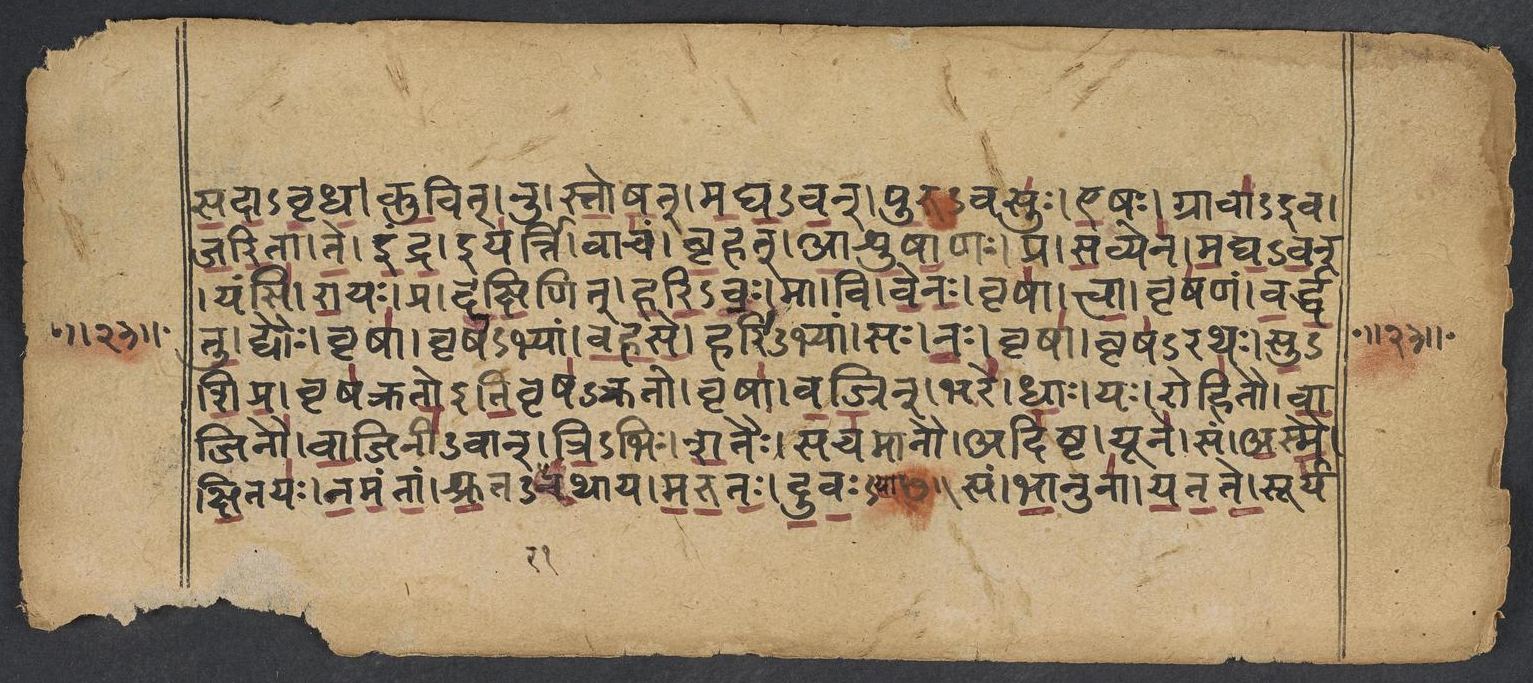
Penn Ms. Coll. 390 Item 41, fol. 350v (numbered 23v by the scribe) (OPenn image 351, upper leaf). Checked on the image: the Rigveda text on this page begins in RV 5.36.3 ‹sadāvṛdha kuvit nu stoṣam›. The next page with Rigveda text, fol. 351r (numbered 24r by the scribe), begins in RV 5.37.1 ‹-sūryasya ājuhvānaḥ ghṛta-pṛṣṭhaḥ su-añcāḥ›. Verses 5.36.3-6 end on this page; 5.36.3 begins on fol. 350r (numbered 23r by the scribe).
3ca̱kraṁ na vṛ̱ttam pu̍ruhūta vepate̱ mano̍ bhi̱yā me̱ ama̍te̱r id a̍drivaḥ | rathā̱d adhi̍ tvā jari̱tā sa̍dāvṛdha ku̱vin nu sto̍ṣan maghavan purū̱vasu̍ḥ ||
4e̱ṣa grāve̍va jari̱tā ta̍ i̱ndreya̍rti̱ vāca̍m bṛ̱had ā̍śuṣā̱ṇaḥ | pra sa̱vyena̍ maghava̱n yaṁsi̍ rā̱yaḥ pra da̍kṣi̱ṇid dha̍rivo̱ mā vi ve̍naḥ ||
5vṛṣā̍ tvā̱ vṛṣa̍ṇaṁ vardhatu̱ dyaur vṛṣā̱ vṛṣa̍bhyāṁ vahase̱ hari̍bhyām | sa no̱ vṛṣā̱ vṛṣa̍rathaḥ suśipra̱ vṛṣa̍krato̱ vṛṣā̍ vajri̱n bhare̍ dhāḥ ||
6yo rohi̍tau vā̱jinau̍ vā̱jinī̍vān tri̱bhiḥ śa̱taiḥ saca̍mānā̱v adi̍ṣṭa | yūne̱ sam a̍smai kṣi̱tayo̍ namantāṁ śru̱tara̍thāya maruto duvo̱yā ||
Compare: Padapāṭha (word-by-word text written in the manuscript; Sansknet e-text via GRETIL)
3cakram | na | vṛttam | puru-hūta | vepate | manaḥ | bhiyā | me | amateḥ | it | adri-vaḥ | rathāt | adhi | tvā | jaritā | sadāvṛdha | kuvit | nu | stoṣam | magha-van | puru-vasuḥ
4eṣaḥ | grāvāiva | jaritā | te | indra | iyarti | vācam | bṛhat | āśuṣāṇaḥ | pra | sevyena | magha-van | yaṃsi | rāyaḥ | pra | dakṣiṇit | hari-vaḥ | mā | vi | venaḥ
5vṛṣā | tvā | vṛṣaṇam | vardhatu | dyauḥ | vṛṣā | vṛṣa-bhyām | vahase | hari-bhyām | saḥ | naḥ | vṛṣā | vṛṣa-rathaḥ | su-śipra | vṛṣakrato itivṛṣa-krato | vṛṣā | vajrin | bhare | dhāḥ
6yaḥ | rohitau | vājinau | vājinī-vān | tri-bhiḥ | śataiḥ | sacamānau | adiṣṭa | yūne | sam | asmai | kṣitayaḥ | namantām | śruta-rathāya | marutaḥ | duvaḥ-yā
3Invoked of many, Caster of the Stone my heart quakes like a rolling wheel for fear of penury. Shall not Purûvasu the singer give thee praise, O ever-prospering Maghavan, mounted on thy car?
4Like the press-stone is this thy praiser, Indra. Loudly he lifts his voice with strong endeavour. With thy left hand, O Maghavan, give us riches: with thy right, Lord of Bays, be not reluctant.
5May the strong Heaven make thee the Strong wax stronger: Strong, thou art borne by thy two strong Bay Horses. So, fair of cheek, with mighty chariot, mighty, uphold us, strong-willed, thunderarmed, in battle.
6Maruts, let all the people in obeisance bow down before this youthful Ṣrutaratha, Who, rich in steeds, gave me two dark red horses together with three hundred head of cattle.
Notes
- Sanskrit: Aufrecht's edition (1877) with the Vedic accents, as entered by van Nooten and Holland (GRETIL).
- English: Ralph T. H. Griffith, The Hymns of the Rigveda (1889-1892; 2nd ed. 1896-1897), from the VedaWeb digital text; OCR slips in that text were corrected against the printed 2nd edition (data/sources/rigveda/griffith_errata.json).
- Padapāṭha (edition text): Sansknet e-text via GRETIL (CC BY-NC-SA 4.0).
Cite
Sources
- Source: Penn Ms. Coll. 390 Item 41 (undated (catalogued with Penn's 18th-19th c. Vedic manuscripts)), OPenn, Public Domain Mark + Aufrecht's accented text (GRETIL) + Griffith's English (VedaWeb) (holding institution)
- Critical edition: Aufrecht (1877), accented e-text via GRETIL
← previous · → next · v cycle view · l back to library