Rigveda 5.37: To Indra
Introduction
Rigveda 5.37 is a hymn of 5 verses addressed to Indra. It stands in book (maṇḍala) 5, the family book of the Atri clan. The Rigveda is the oldest collection of Sanskrit hymns, composed in the second half of the second millennium BCE and handed down orally for many centuries before it was written down.
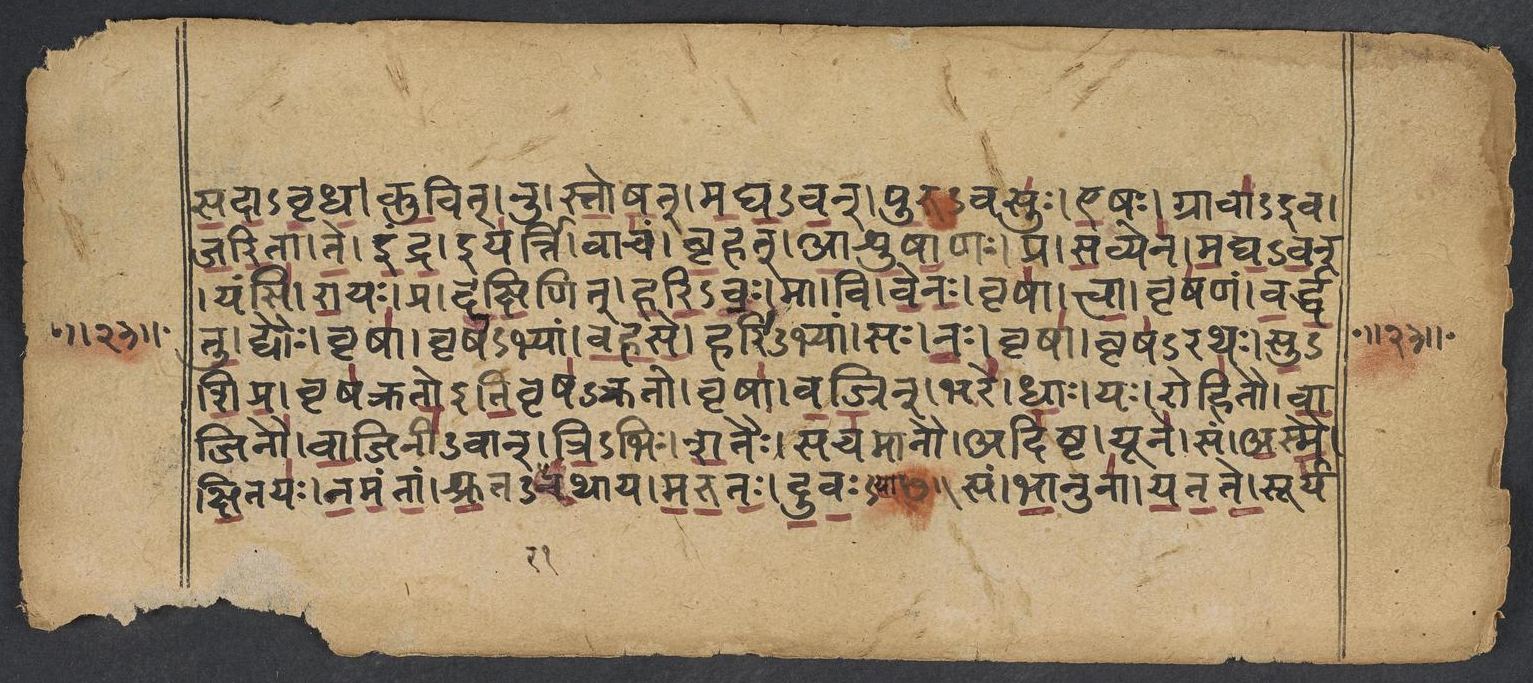
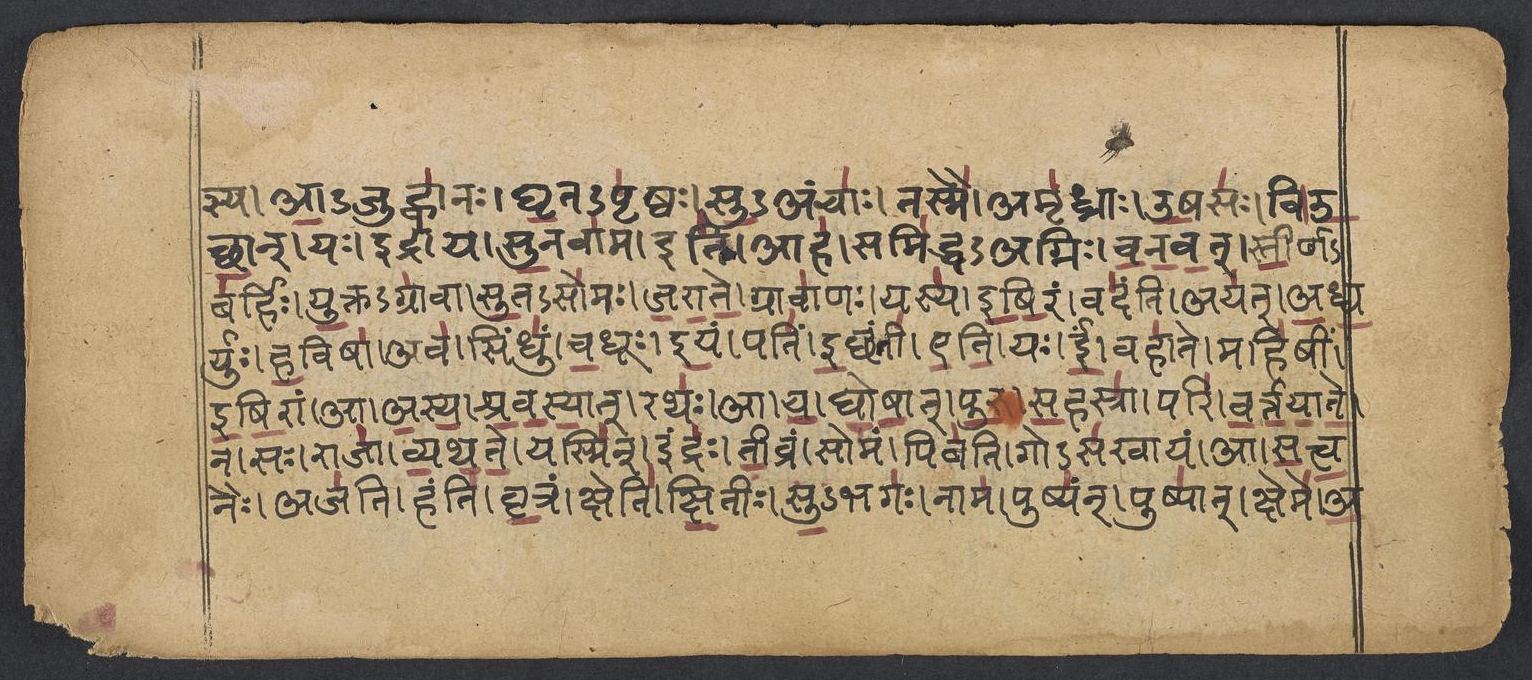
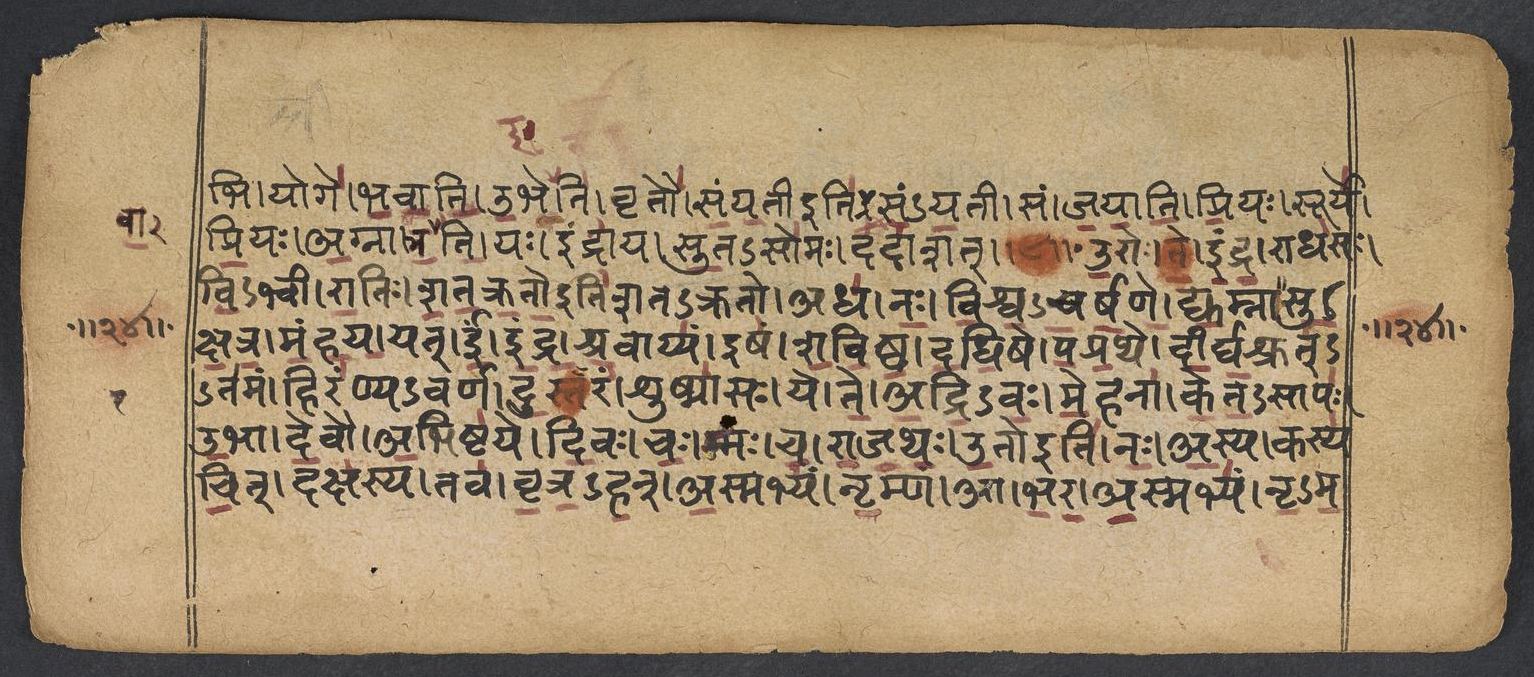
The manuscript shown is Penn Ms. Coll. 390 Item 41 (University of Pennsylvania), an undated paper manuscript of the padapāṭha (the word-by-word recitation text, in which every word is written separately and compounds are split) of the whole Ṛgveda in Devanāgarī, 884 leaves in fascicles, 7-9 lines to the page, accents in red; this hymn stands on fol. 350v-351v. Each section below gives the verses that end on one page; the page boundaries were read on the images (the opening words of every page), not counted out. Where the manuscript is a padapāṭha (the word-by-word recitation text), the section shows Aufrecht's continuous (saṃhitā) text first and, as the edition text, the padapāṭha of the same verses, which is the form written on the page.
How was this verified? (Provenance)
Where on the image
Penn Ms. Coll. 390 Item 41, fol. 351r (numbered 24r by the scribe) (OPenn image 351, lower leaf). Checked on the image: the Rigveda text on this page begins in RV 5.37.1 ‹-sūryasya ājuhvānaḥ ghṛta-pṛṣṭhaḥ su-añcāḥ›. The next page with Rigveda text, fol. 351v (numbered 24v by the scribe), begins in RV 5.37.5 ‹-abhi yoge bhavāti ubhe›. Verses 5.37.1-4 end on this page; 5.37.1 begins on fol. 350v (numbered 23v by the scribe).
1sam bhā̱nunā̍ yatate̱ sūrya̍syā̱juhvā̍no ghṛ̱tapṛ̍ṣṭha̱ḥ svañcā̍ḥ | tasmā̱ amṛ̍dhrā u̱ṣaso̱ vy u̍cchā̱n ya indrā̍ya su̱navā̱mety āha̍ ||
2sami̍ddhāgnir vanavat stī̱rṇaba̍rhir yu̱ktagrā̍vā su̱taso̍mo jarāte | grāvā̍ṇo̱ yasye̍ṣi̱raṁ vada̱nty aya̍d adhva̱ryur ha̱viṣāva̱ sindhu̍m ||
3va̱dhūr i̱yam pati̍m i̱cchanty e̍ti̱ ya ī̱ṁ vahā̍te̱ mahi̍ṣīm iṣi̱rām | āsya̍ śravasyā̱d ratha̱ ā ca̍ ghoṣāt pu̱rū sa̱hasrā̱ pari̍ vartayāte ||
4na sa rājā̍ vyathate̱ yasmi̱nn indra̍s tī̱vraṁ soma̱m piba̍ti̱ gosa̍khāyam | ā sa̍tva̱nair aja̍ti̱ hanti̍ vṛ̱traṁ kṣeti̍ kṣi̱tīḥ su̱bhago̱ nāma̱ puṣya̍n ||
Compare: Padapāṭha (word-by-word text written in the manuscript; Sansknet e-text via GRETIL)
1sam | bhānunā | yatate | sūryasya | ājuhvānaḥ | ghṛta-pṛṣṭhaḥ | su-añcāḥ | tasmai | amṛdhrāḥ | uṣasaḥ | vi | ucchān | yaḥ | indrāya | sunavāma | iti | āha
2samiddha-agniḥ | vanavat | stīrṇa-barhiḥ | yukta-grāvā | suta-somaḥ | jarāte | grāvāṇaḥ | yasya | iṣiram | vadanti | ayat | adhvaryuḥ | haviṣā | ava | sindhum
3vadhūḥ | iyam | patim | icchantī | eti | yaḥ | īm | vahāte | mahiṣīm | iṣirām | ā | asya | śravasyāt | rathaḥ | ā | ca | ghoṣāt | puru | sahasrā | pari | vartayāte
4na | saḥ | rājā | vyathate | yasmin | indraḥ | tīvram | somam | pibati | go--sakhāyam | ā | satvanaiḥ | ajati | hanti | vṛtram | kṣeti | kṣitīḥ | su-bhagaḥ | nāma | puṣyan
1BEDEWED with holy oil and meetly worshipped, the Swift One vies with Sûrya's beam in splendour. For him may mornings dawn without cessation who saith, Let us press Soma out for Indra.
2With kindled fire and strewn grass let him worship, and, Soma-presser, sing with stones adjusted: And let the priest whose press-stones ring forth loudly, go down with his oblation to the river.
3This wife is coming near who loves her husband who carries to his home a vigorous consort. Here may his car seek fame, here loudly thunder, and his wheel make a thousand revolutions.
4No troubles vex that King in whose home Indra drinks the sharp Soma juice with milk commingled. With heroes he drives near, he slays the foeman: Blest, cherishing that name, he guards his people.
Where on the image
Penn Ms. Coll. 390 Item 41, fol. 351v (numbered 24v by the scribe) (OPenn image 352, upper leaf). Checked on the image: the Rigveda text on this page begins in RV 5.37.5 ‹-abhi yoge bhavāti ubhe›. The next page with Rigveda text, fol. 352r (numbered 25r by the scribe), begins in RV 5.38.4 ‹-nṛ-manasyase›. Verse 5.37.5 ends on this page; 5.37.5 begins on fol. 351r (numbered 24r by the scribe).
5puṣyā̱t kṣeme̍ a̱bhi yoge̍ bhavāty u̱bhe vṛtau̍ saṁya̱tī saṁ ja̍yāti | pri̱yaḥ sūrye̍ pri̱yo a̱gnā bha̍vāti̱ ya indrā̍ya su̱taso̍mo̱ dadā̍śat ||
Compare: Padapāṭha (word-by-word text written in the manuscript; Sansknet e-text via GRETIL)
5puṣyāt | kṣeme | abhi | yoge | bhavāti | ubhe iti | vṛtau | saṃyatī itisam-yatī | sam | jayāti | priyaḥ | sūrye | priyaḥ | agnā | bhavāti | yaḥ | indrāya | suta-somaḥ | dadāśat
5May he support in peace and win in battle: he masters both the hosts that meet together. Dear shall he be to Sûrya, dear to Agni, who with pressed Soma offers gifts to India.
Notes
- Sanskrit: Aufrecht's edition (1877) with the Vedic accents, as entered by van Nooten and Holland (GRETIL).
- English: Ralph T. H. Griffith, The Hymns of the Rigveda (1889-1892; 2nd ed. 1896-1897), from the VedaWeb digital text; OCR slips in that text were corrected against the printed 2nd edition (data/sources/rigveda/griffith_errata.json).
- Padapāṭha (edition text): Sansknet e-text via GRETIL (CC BY-NC-SA 4.0).
Cite
Sources
- Source: Penn Ms. Coll. 390 Item 41 (undated (catalogued with Penn's 18th-19th c. Vedic manuscripts)), OPenn, Public Domain Mark + Aufrecht's accented text (GRETIL) + Griffith's English (VedaWeb) (holding institution)
- Critical edition: Aufrecht (1877), accented e-text via GRETIL
← previous · → next · v cycle view · l back to library