Rigveda 5.5: Apri hymn
Introduction
Rigveda 5.5 is a hymn of 11 verses addressed to Apri hymn. It stands in book (maṇḍala) 5, the family book of the Atri clan. The Rigveda is the oldest collection of Sanskrit hymns, composed in the second half of the second millennium BCE and handed down orally for many centuries before it was written down.
The manuscript shown is Penn Ms. Coll. 390 Item 41 (University of Pennsylvania), an undated paper manuscript of the padapāṭha (the word-by-word recitation text, in which every word is written separately and compounds are split) of the whole Ṛgveda in Devanāgarī, 884 leaves in fascicles, 7-9 lines to the page, accents in red; this hymn stands on fol. 324r-324v. Each section below gives the verses that end on one page; the page boundaries were read on the images (the opening words of every page), not counted out. Where the manuscript is a padapāṭha (the word-by-word recitation text), the section shows Aufrecht's continuous (saṃhitā) text first and, as the edition text, the padapāṭha of the same verses, which is the form written on the page.
How was this verified? (Provenance)
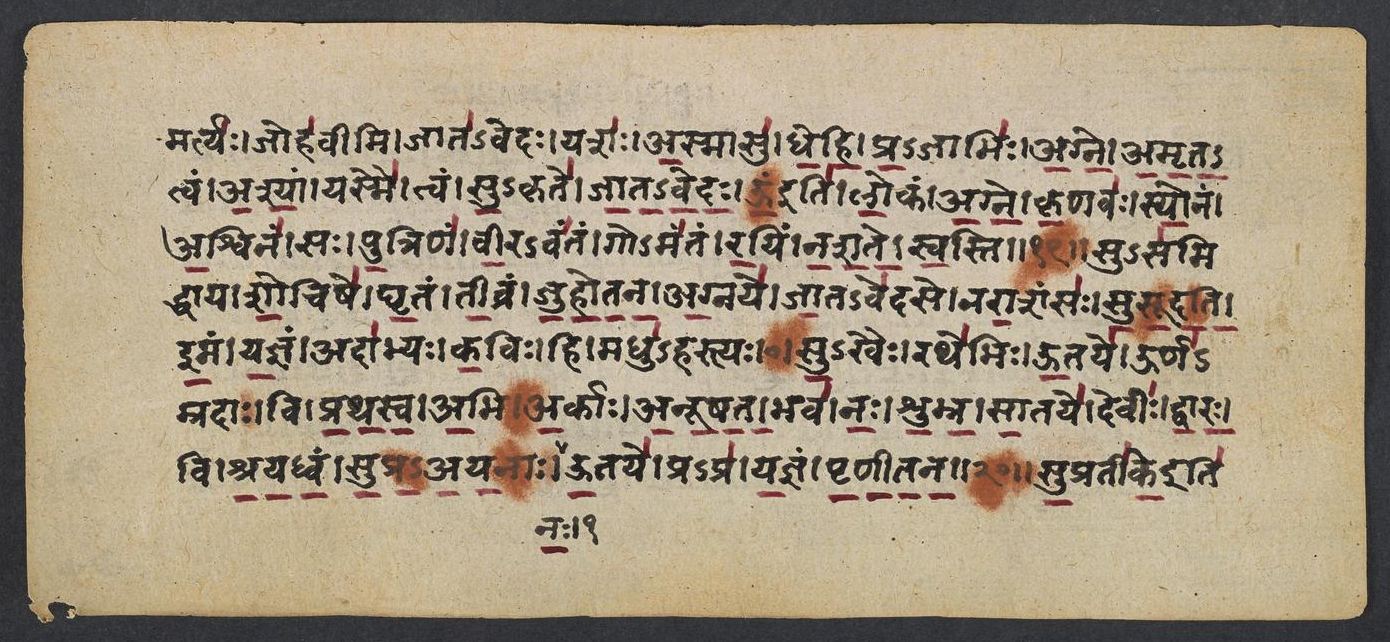
Where on the image
Penn Ms. Coll. 390 Item 41, fol. 324r (numbered 133r by the scribe) (OPenn image 324, lower leaf). Checked on the image: the Rigveda text on this page begins in RV 5.4.10 ‹amaryaḥ johavīmi jāta-vedaḥ yaśaḥ›. The next page with Rigveda text, fol. 324v (numbered 133v by the scribe), begins in RV 5.5.6 ‹-itisu-pratīke vayaḥ-vṛdhā yahvī ṛtasya›. Verses 5.5.1-5 end on this page.
1susa̍middhāya śo̱ciṣe̍ ghṛ̱taṁ tī̱vraṁ ju̍hotana | a̱gnaye̍ jā̱tave̍dase ||
2narā̱śaṁsa̍ḥ suṣūdatī̱maṁ ya̱jñam adā̍bhyaḥ | ka̱vir hi madhu̍hastyaḥ ||
3ī̱ḻi̱to a̍gna̱ ā va̱hendra̍ṁ ci̱tram i̱ha pri̱yam | su̱khai rathe̍bhir ū̱taye̍ ||
4ūrṇa̍mradā̱ vi pra̍thasvā̱bhy a1̱̍rkā a̍nūṣata | bhavā̍ naḥ śubhra sā̱taye̍ ||
5devī̍r dvāro̱ vi śra̍yadhvaṁ suprāya̱ṇā na̍ ū̱taye̍ | pra-pra̍ ya̱jñam pṛ̍ṇītana ||
Compare: Padapāṭha (word-by-word text written in the manuscript; Sansknet e-text via GRETIL)
1su-samiddhāya | śociṣe | ghṛtam | tīvram | juhotana | agnaye | jāta-vedase
2narāśaṃsaḥ | susūdati | imam | yajñam | adābhyaḥ | kaviḥ | hi | madhu-hastyaḥ
3īḷitaḥ | agne | ā | vaha | indram | citram | iha | priyam | su-khaiḥ | rathebhiḥ | ūtaye
4ūrṇa-mradāḥ | vi | prathasva | abhi | arkāḥ | anūṣata | bhava | naḥ | śubhra | sātaye
5devīḥ | dvāraḥ | vi | śrayadhvam | supra-ayanāḥ | naḥ | ūtaye | pra-pra | yajñam | pṛṇītana
1To Agni, Jâtavedas, to the flame, the well-enkindled God, Offer thick sacrificial oil.
2He, Narâṣansa, ne'er beguiled, inspiriteth this sacrifice: For sage is he, with sweets in hand.
3Adored, O Agni, hither bring Indra the Wonderful, the Friend, On lightly-rolling car to aid.
4Spread thyself out, thou soft as wool The holy hymns have sung to thee. Bring gain to us, O beautiful!
5Open yourselves, ye Doors Divine, easy of access for our aid: Fill, more and more, the sacrifice.
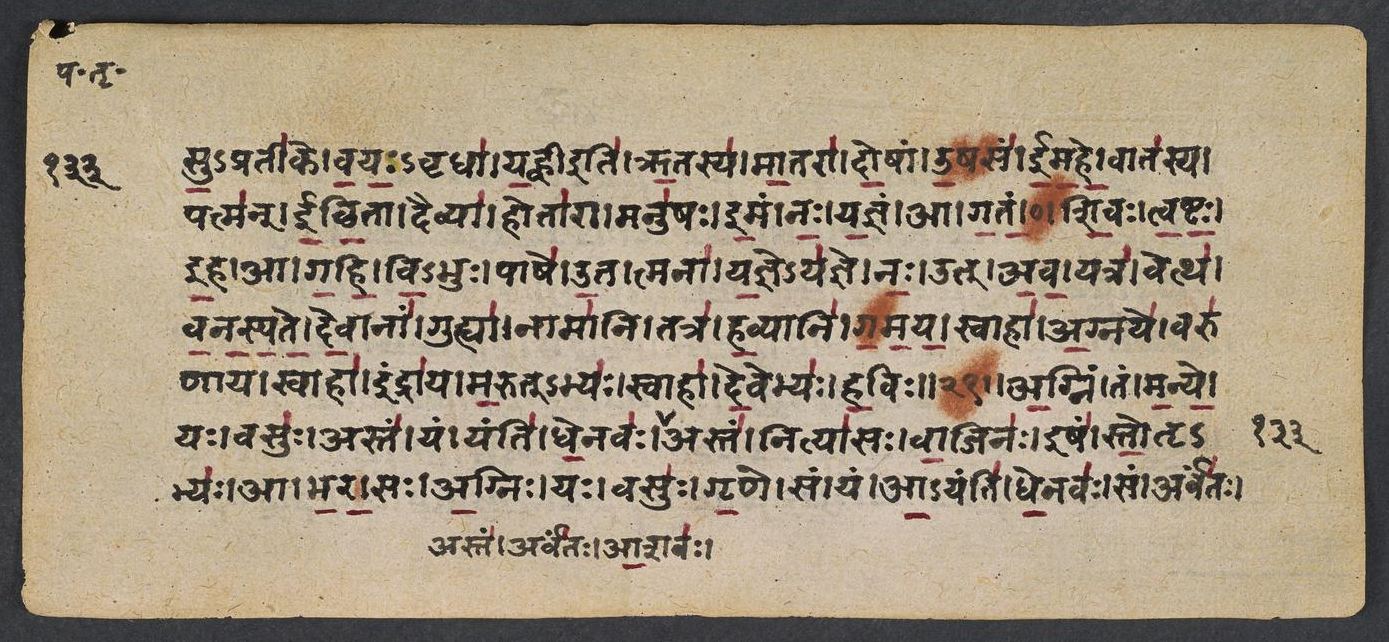
Where on the image
Penn Ms. Coll. 390 Item 41, fol. 324v (numbered 133v by the scribe) (OPenn image 325, upper leaf). Checked on the image: the Rigveda text on this page begins in RV 5.5.6 ‹-itisu-pratīke vayaḥ-vṛdhā yahvī ṛtasya›. The next page with Rigveda text, fol. 325r (numbered 134r by the scribe), begins in RV 5.6.2 ‹raghu-druvaḥ sam su-jātāsaḥ sūraya›. Verses 5.5.6-11 end on this page; 5.5.6 begins on fol. 324r (numbered 133r by the scribe).
6su̱pratī̍ke vayo̱vṛdhā̍ ya̱hvī ṛ̱tasya̍ mā̱tarā̍ | do̱ṣām u̱ṣāsa̍m īmahe ||
7vāta̍sya̱ patma̍nn īḻi̱tā daivyā̱ hotā̍rā̱ manu̍ṣaḥ | i̱maṁ no̍ ya̱jñam ā ga̍tam ||
8iḻā̱ sara̍svatī ma̱hī ti̱sro de̱vīr ma̍yo̱bhuva̍ḥ | ba̱rhiḥ sī̍dantv a̱sridha̍ḥ ||
9śi̱vas tva̍ṣṭar i̱hā ga̍hi vi̱bhuḥ poṣa̍ u̱ta tmanā̍ | ya̱jñe-ya̍jñe na̱ ud a̍va ||
10yatra̱ vettha̍ vanaspate de̱vānā̱ṁ guhyā̱ nāmā̍ni | tatra̍ ha̱vyāni̍ gāmaya ||
11svāhā̱gnaye̱ varu̍ṇāya̱ svāhendrā̍ya ma̱rudbhya̍ḥ | svāhā̍ de̱vebhyo̍ ha̱viḥ ||
Compare: Padapāṭha (word-by-word text written in the manuscript; Sansknet e-text via GRETIL)
6supratīke itisu-pratīke | vayaḥ-vṛdhā | yahvī | ṛtasya | mātarā | doṣām | uṣasam | īmahe
7vātasya | patman | īḷitā | daivyā | hotārā | manuṣaḥ | imam | naḥ | yajñam | ā | gatam
8iḷā | sarasvatī | mahī | tisraḥ | devīḥ | mayaḥ-bhuvaḥ | barhiḥ | sīdantu | asri dhah
9śivaḥ | tvaṣṭaḥ | iha | ā | gahi | vi-bhuḥ | poṣe | uta | tmanā | yajñe--yajñe | naḥ | ut | ava
10yatra | vettha | vanaspate | devānām | guhyā | nāmāni | tatra | havyāni | gamaya
11svāhā | agnaye | varuṇāya | svāhā | indrāya | marut-bhyaḥ | svāhā | devebhyaḥ | haviḥ
6Fair strengtheners of vital power, young Mothers of eternal Law, Morning and Night we supplicate.
7On the wind's flight come, glorified, ye two celestial Priests of man Come ye to this our sacrifice.
8lḷâ, Sarasvatî, Mahî, three Goddesses who bring us weal, Be seated harmless on the grass.
9Rich in all plenty, Tvashṭar, come auspicious of thine own accord Help us in every sacrifice.
10Vanaspati, wherever thou knowest the Gods' mysterious names, Send our oblations thitherward.
11To Agni and to Varuṇa, Indra, the Maruts, and the Gods, With Svâhâ be oblation brought.
Notes
- Sanskrit: Aufrecht's edition (1877) with the Vedic accents, as entered by van Nooten and Holland (GRETIL).
- English: Ralph T. H. Griffith, The Hymns of the Rigveda (1889-1892; 2nd ed. 1896-1897), from the VedaWeb digital text; OCR slips in that text were corrected against the printed 2nd edition (data/sources/rigveda/griffith_errata.json).
- Padapāṭha (edition text): Sansknet e-text via GRETIL (CC BY-NC-SA 4.0).
Cite
Sources
- Source: Penn Ms. Coll. 390 Item 41 (undated (catalogued with Penn's 18th-19th c. Vedic manuscripts)), OPenn, Public Domain Mark + Aufrecht's accented text (GRETIL) + Griffith's English (VedaWeb) (holding institution)
- Critical edition: Aufrecht (1877), accented e-text via GRETIL
← previous · → next · v cycle view · l back to library