Rigveda 5.40: To Indra, Surya and Atri
Introduction
Rigveda 5.40 is a hymn of 9 verses addressed to Indra, Surya and Atri. It stands in book (maṇḍala) 5, the family book of the Atri clan. The Rigveda is the oldest collection of Sanskrit hymns, composed in the second half of the second millennium BCE and handed down orally for many centuries before it was written down.
The manuscript shown is Penn Ms. Coll. 390 Item 41 (University of Pennsylvania), an undated paper manuscript of the padapāṭha (the word-by-word recitation text, in which every word is written separately and compounds are split) of the whole Ṛgveda in Devanāgarī, 884 leaves in fascicles, 7-9 lines to the page, accents in red; this hymn stands on fol. 352v-353v. Each section below gives the verses that end on one page; the page boundaries were read on the images (the opening words of every page), not counted out. Where the manuscript is a padapāṭha (the word-by-word recitation text), the section shows Aufrecht's continuous (saṃhitā) text first and, as the edition text, the padapāṭha of the same verses, which is the form written on the page.
How was this verified? (Provenance)
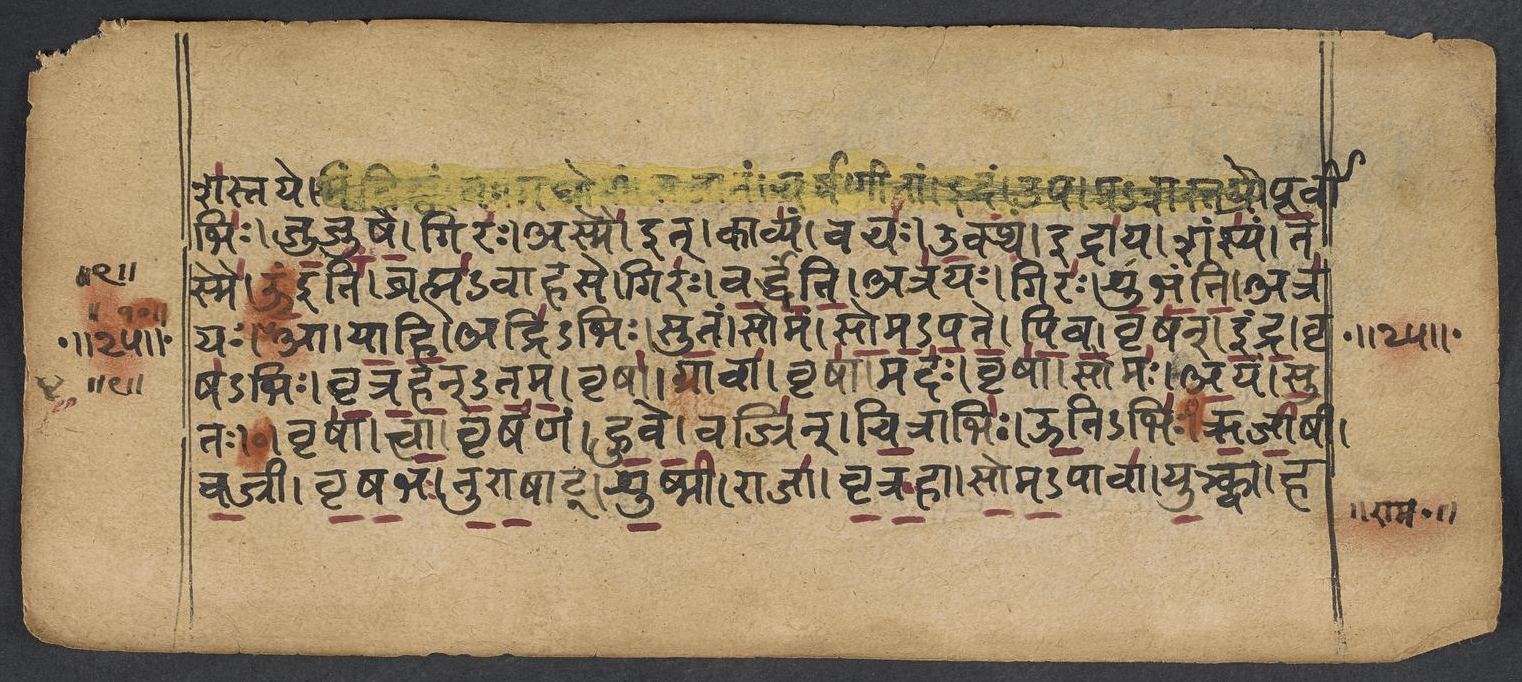
Where on the image
Penn Ms. Coll. 390 Item 41, fol. 352v (numbered 25v by the scribe) (OPenn image 353, upper leaf). Checked on the image: the Rigveda text on this page begins in RV 5.39.4 ‹-pra-śastaye pūrvībhiḥ jujuṣe giraḥ›. The next page with Rigveda text, fol. 353r (numbered 26r by the scribe), begins in RV 5.40.4 ‹-hari-bhyām upa yāsat arvāṅ›. Verses 5.40.1-3 end on this page.
1ā yā̱hy adri̍bhiḥ su̱taṁ soma̍ṁ somapate piba | vṛṣa̍nn indra̱ vṛṣa̍bhir vṛtrahantama ||
2vṛṣā̱ grāvā̱ vṛṣā̱ mado̱ vṛṣā̱ somo̍ a̱yaṁ su̱taḥ | vṛṣa̍nn indra̱ vṛṣa̍bhir vṛtrahantama ||
3vṛṣā̍ tvā̱ vṛṣa̍ṇaṁ huve̱ vajri̍ñ ci̱trābhi̍r ū̱tibhi̍ḥ | vṛṣa̍nn indra̱ vṛṣa̍bhir vṛtrahantama ||
Compare: Padapāṭha (word-by-word text written in the manuscript; Sansknet e-text via GRETIL)
1ā | yāhi | adri-bhiḥ | sutam | somam | soma-pate | piba | vṛṣan | indra | vṛṣa-bhi ḥ | vṛtrahan-tama
2vṛṣā | grāvā | vṛṣā | madaḥ | vṛṣā | somaḥ | ayam | sutaḥ | vṛṣan | indra | vṛṣa-bhiḥ | vṛtrahan-tama
3vṛṣā | tvā | vṛṣaṇam | huve | vajrin | citrābhiḥ | ūti-bhiḥ | vṛṣan | indra | vṛṣa-bhiḥ | vṛtrahan-tama
1COME thou to what the stones have pressed, drink Soma, O thou Soma's Lord, Indra best Vr̥itra-slayer Strong One, with the Strong.
2Strong is the stone, the draught is strong, strong is this Soma that is pressed, Indra, best Vr̥itra-slayer, Strong One with the Strong.
3As strong I call on thee the Strong, O Thunder-armed, with various aids, Indra, best Vr̥itra-slayer, Strong One with the Strong.
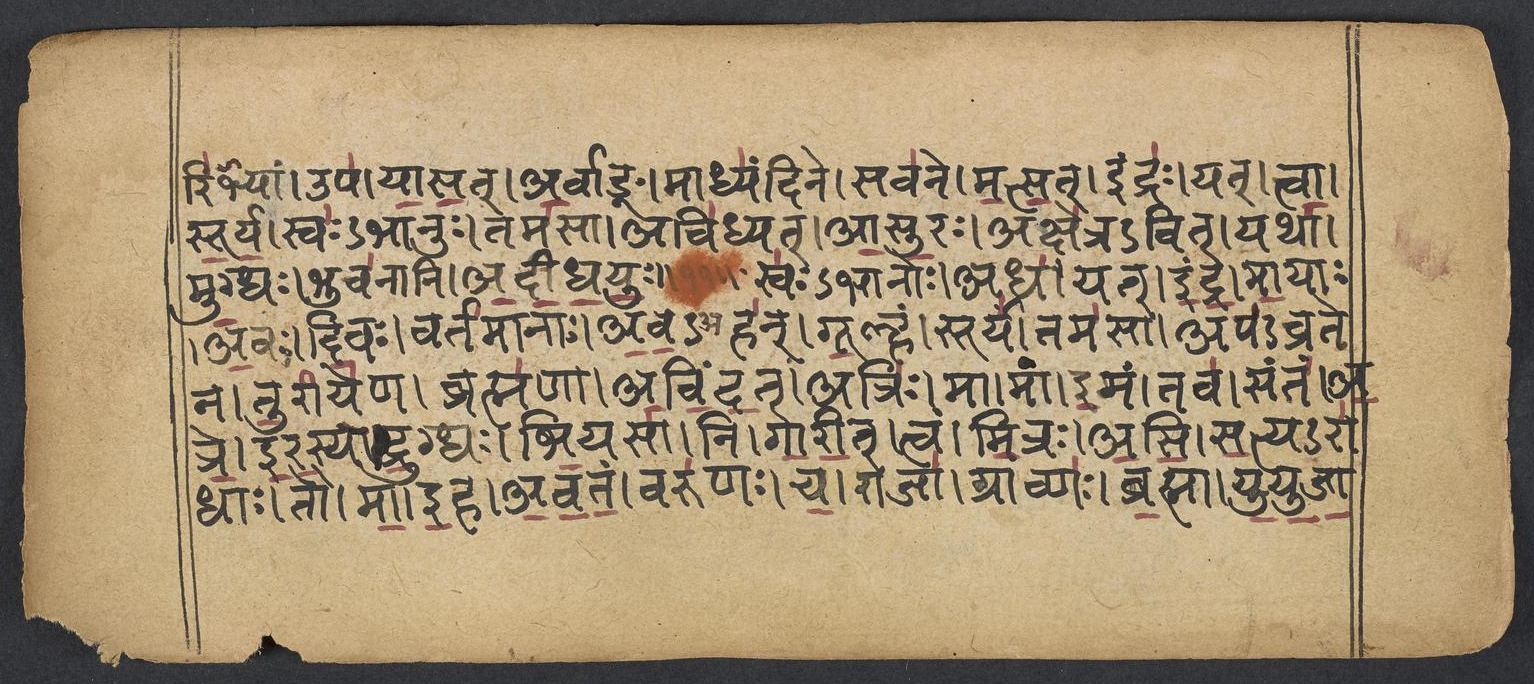
Where on the image
Penn Ms. Coll. 390 Item 41, fol. 353r (numbered 26r by the scribe) (OPenn image 353, lower leaf). Checked on the image: the Rigveda text on this page begins in RV 5.40.4 ‹-hari-bhyām upa yāsat arvāṅ›. The next page with Rigveda text, fol. 353v (numbered 26v by the scribe), begins in RV 5.40.8 ‹-yuyujānaḥ saparyan kīriṇā devān›. Verses 5.40.4-7 end on this page; 5.40.4 begins on fol. 352v (numbered 25v by the scribe).
4ṛ̱jī̱ṣī va̱jrī vṛ̍ṣa̱bhas tu̍rā̱ṣāṭ chu̱ṣmī rājā̍ vṛtra̱hā so̍ma̱pāvā̍ | yu̱ktvā hari̍bhyā̱m upa̍ yāsad a̱rvāṅ mādhya̍ṁdine̱ sava̍ne matsa̱d indra̍ḥ ||
5yat tvā̍ sūrya̱ sva̍rbhānu̱s tama̱sāvi̍dhyad āsu̱raḥ | akṣe̍travi̱d yathā̍ mu̱gdho bhuva̍nāny adīdhayuḥ ||
6sva̍rbhāno̱r adha̱ yad i̍ndra mā̱yā a̱vo di̱vo varta̍mānā a̱vāha̍n | gū̱ḻhaṁ sūrya̱ṁ tama̱sāpa̍vratena tu̱rīye̍ṇa̱ brahma̍ṇāvinda̱d atri̍ḥ ||
7mā mām i̱maṁ tava̱ santa̍m atra ira̱syā dru̱gdho bhi̱yasā̱ ni gā̍rīt | tvam mi̱tro a̍si sa̱tyarā̍dhā̱s tau me̱hāva̍ta̱ṁ varu̍ṇaś ca̱ rājā̍ ||
Compare: Padapāṭha (word-by-word text written in the manuscript; Sansknet e-text via GRETIL)
4ṛjīṣī | vajrī | vṛṣabhaḥ | turāṣāṭ | śuṣmī | rājā | vṛtra-hā | sama-pāvā | yuktvā | hari-bhyām | upa | yāsat | arvāṅ | mādhyandine | savane | matsat | indraḥ
5yat | tvā | sūrya | svaḥ-bhānuḥ | tamasā | avidhyat | āsuraḥ | akṣetra-vit | yathā | mugdhaḥ | bhuvanāni | adīdhayuḥ
6svaḥ-bhānoḥ | adha | yat | indra | māyā | avaḥ | divaḥ | vartamānāḥ | ava-ahan | gūḷham | sūryam | tamasā | apa-vratena | turīyeṇa | brahmaṇā | avindat | atri ḥ
7mā | mām | imam | tava | santam | atre | irasyā | drugdhaḥ | bhiyasā | ni | gārīt | tvam | mitraḥ | asi | satya-rādhāḥ | tau | mā | iha | avatam | varuṇaḥ | ca | rājā
4Impetuous, Thunderer, Strong, quelling the mighty, King, potent, Vr̥itra-slayer, Soma-drinker, May he come hither with his yoked Bay Horses; may Indra gladden him at the noon libation.
5O Sûrya, when the Asura's descendant Svarbhânu, pierced thee through and through with darkness, All creatures looked like one who is bewildered, who knoweth not the place where he is standing.
6What time thou smotest down Svarbhânu's magic that spread itself beneath the sky, O Indra, By his fourth sacred prayer Atri discovered Sûrya concealed in gloom that stayed his function.
7Let not the oppressor with this dread, through anger swallow me up, for I am thine, O Atri. Mitra art thou, the sender of true blessings: thou and King Varuṇa be both my helpers.
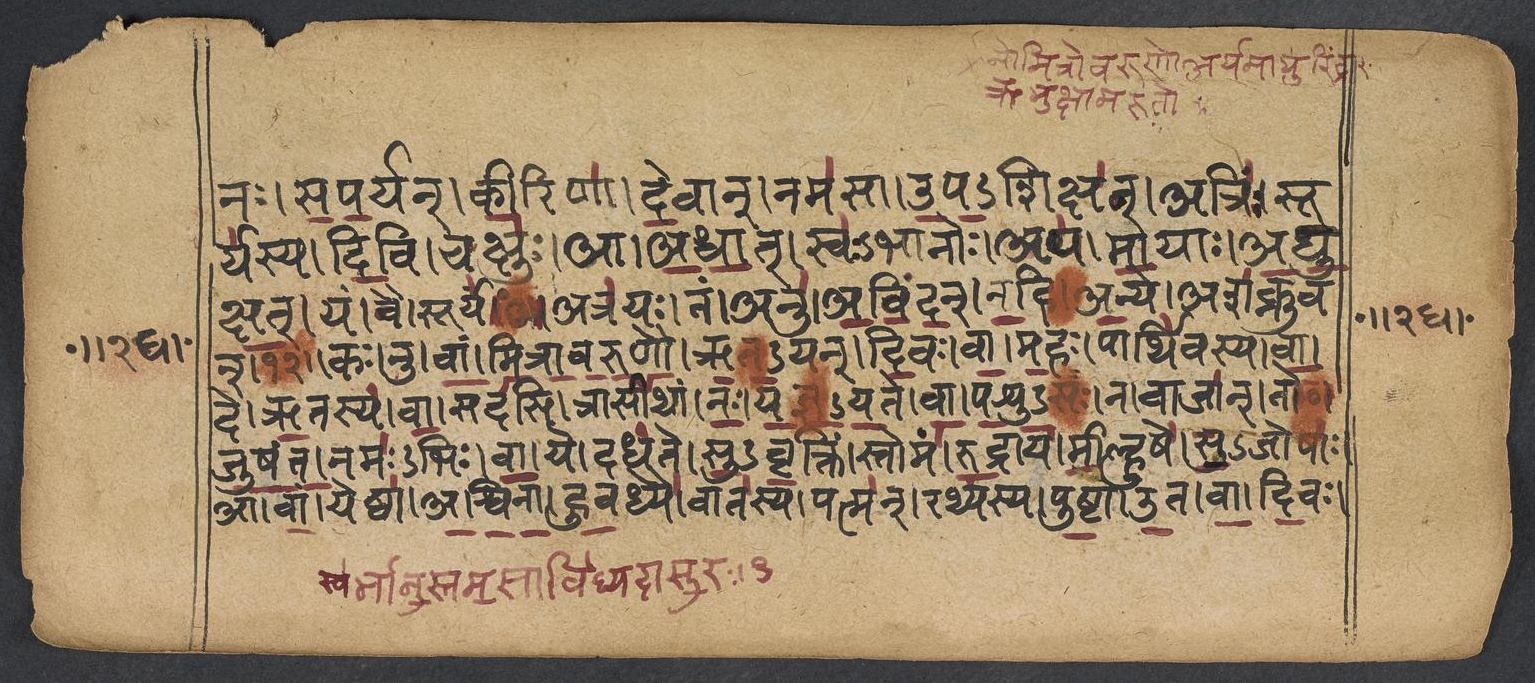
Where on the image
Penn Ms. Coll. 390 Item 41, fol. 353v (numbered 26v by the scribe) (OPenn image 354, upper leaf). Checked on the image: the Rigveda text on this page begins in RV 5.40.8 ‹-yuyujānaḥ saparyan kīriṇā devān›. The next page with Rigveda text, fol. 354r (numbered 27r by the scribe), begins in RV 5.41.3 ‹asurāya manma pra andhāṃsi-iva›. Verses 5.40.8-9 end on this page; 5.40.8 begins on fol. 353r (numbered 26r by the scribe).
8grāvṇo̍ bra̱hmā yu̍yujā̱naḥ sa̍pa̱ryan kī̱riṇā̍ de̱vān nama̍sopa̱śikṣa̍n | atri̱ḥ sūrya̍sya di̱vi cakṣu̱r ādhā̱t sva̍rbhāno̱r apa̍ mā̱yā a̍ghukṣat ||
9yaṁ vai sūrya̱ṁ sva̍rbhānu̱s tama̱sāvi̍dhyad āsu̱raḥ | atra̍ya̱s tam anv a̍vindan na̱hy a1̱̍nye aśa̍knuvan ||
Compare: Padapāṭha (word-by-word text written in the manuscript; Sansknet e-text via GRETIL)
8grāvṇaḥ | brahmā | yuyujānaḥ | saparyan | kīriṇā | devān | namasā | upa-śikṣan | atriḥ | sūryasya | divi | cakṣuḥ | ā | adhāt | svaḥ-bhānoḥ | apa | māyā | adhukṣat
9yam | vai | sūryam | svaḥ-bhānuḥ | tamasā | avidhyat | āsuraḥ | atrayaḥ | tam | anu | avindan | nahi | anye | aśaknuvan
8The Brahman Atri, as he set the press-stones, serving the Gods with praise and adoration, Established in the heaven the eye of Sûrya, and caused Svarbhânu's magic arts to vanish.
9The Atris found the Sun again, him whom Svarbhânu of the brood Of Asuras had pierced with gloom. This none besides had power to do.
Notes
- Sanskrit: Aufrecht's edition (1877) with the Vedic accents, as entered by van Nooten and Holland (GRETIL).
- English: Ralph T. H. Griffith, The Hymns of the Rigveda (1889-1892; 2nd ed. 1896-1897), from the VedaWeb digital text; OCR slips in that text were corrected against the printed 2nd edition (data/sources/rigveda/griffith_errata.json).
- Padapāṭha (edition text): Sansknet e-text via GRETIL (CC BY-NC-SA 4.0).
Cite
Sources
- Source: Penn Ms. Coll. 390 Item 41 (undated (catalogued with Penn's 18th-19th c. Vedic manuscripts)), OPenn, Public Domain Mark + Aufrecht's accented text (GRETIL) + Griffith's English (VedaWeb) (holding institution)
- Critical edition: Aufrecht (1877), accented e-text via GRETIL
← previous · → next · v cycle view · l back to library