Rigveda 5.41: To all the gods
Introduction
Rigveda 5.41 is a hymn of 20 verses addressed to all the gods. It stands in book (maṇḍala) 5, the family book of the Atri clan. The Rigveda is the oldest collection of Sanskrit hymns, composed in the second half of the second millennium BCE and handed down orally for many centuries before it was written down.
The manuscript shown is Penn Ms. Coll. 390 Item 41 (University of Pennsylvania), an undated paper manuscript of the padapāṭha (the word-by-word recitation text, in which every word is written separately and compounds are split) of the whole Ṛgveda in Devanāgarī, 884 leaves in fascicles, 7-9 lines to the page, accents in red; this hymn stands on fol. 353v-356r. Each section below gives the verses that end on one page; the page boundaries were read on the images (the opening words of every page), not counted out. Where the manuscript is a padapāṭha (the word-by-word recitation text), the section shows Aufrecht's continuous (saṃhitā) text first and, as the edition text, the padapāṭha of the same verses, which is the form written on the page.
How was this verified? (Provenance)
Where on the image
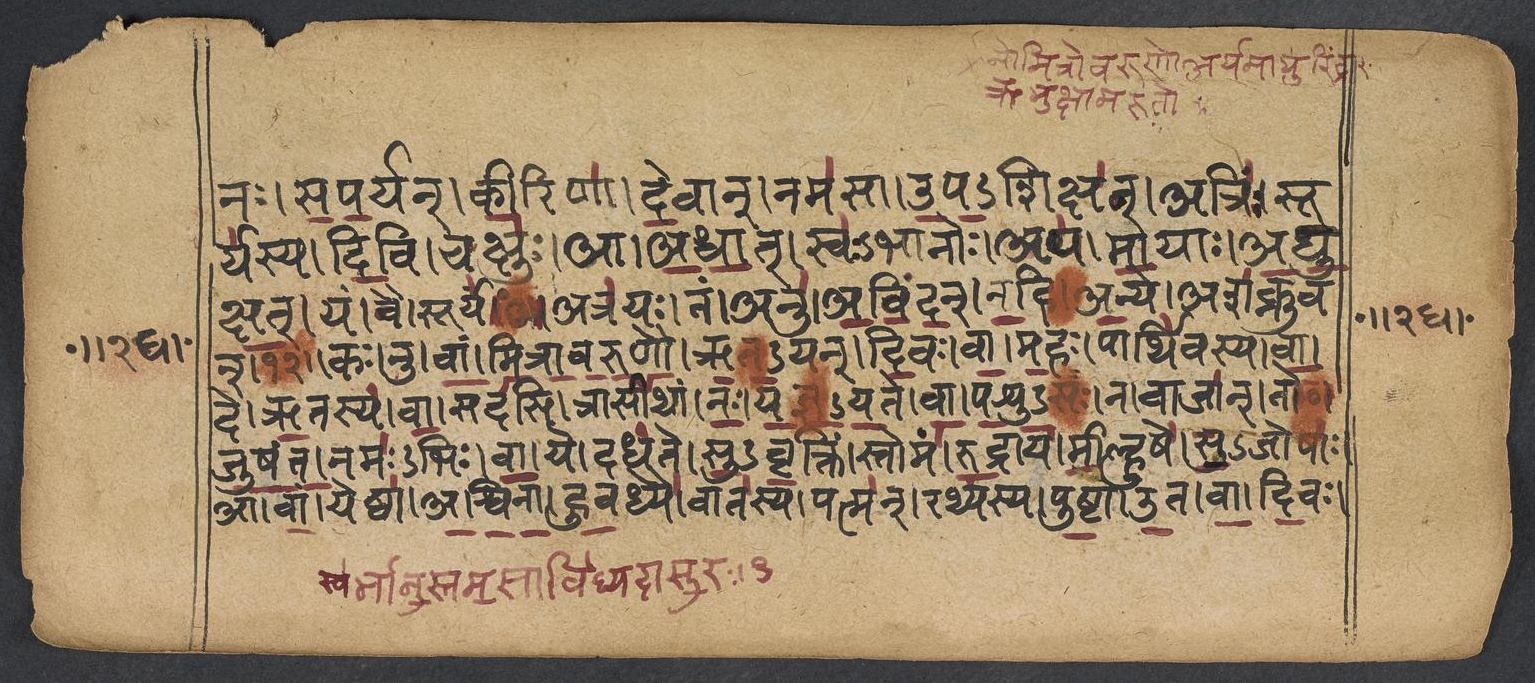
Penn Ms. Coll. 390 Item 41, fol. 353v (numbered 26v by the scribe) (OPenn image 354, upper leaf). Checked on the image: the Rigveda text on this page begins in RV 5.40.8 ‹-yuyujānaḥ saparyan kīriṇā devān›. The next page with Rigveda text, fol. 354r (numbered 27r by the scribe), begins in RV 5.41.3 ‹asurāya manma pra andhāṃsi-iva›. Verses 5.41.1-2 end on this page.
1ko nu vā̍m mitrāvaruṇāv ṛtā̱yan di̱vo vā̍ ma̱haḥ pārthi̍vasya vā̱ de | ṛ̱tasya̍ vā̱ sada̍si̱ trāsī̍thāṁ no yajñāya̱te vā̍ paśu̱ṣo na vājā̍n ||
2te no̍ mi̱tro varu̍ṇo arya̱māyur indra̍ ṛbhu̱kṣā ma̱ruto̍ juṣanta | namo̍bhir vā̱ ye dadha̍te suvṛ̱ktiṁ stoma̍ṁ ru̱drāya̍ mī̱ḻhuṣe̍ sa̱joṣā̍ḥ ||
Compare: Padapāṭha (word-by-word text written in the manuscript; Sansknet e-text via GRETIL)
1kaḥ | nu | vām | mitrāvaruṇau | ṛta-yan | divaḥ | vā | mahaḥ | pārthivasya | vā | de | ṛtasya | vā | sadasi | trāsīthām | naḥ | yajña-yate | vā | paśu-saḥ | na | vājān
2te | naḥ | mitraḥ | varuṇaḥ | aryamā | āyuḥ | indraḥ | ṛbhukṣāḥ | marutaḥ | juṣanta | namaḥ-bhiḥ | vā | ye | dadhate | su-vṛktim | stomam | rudrāya | mīḷhuṣe | sa-joṣāḥ
1WHO, Mitra-Varuṇa, is your pious servant to give you gifts from earth or mighty heaven? Preserve us in the seat of holy Order, and give the offerer power that winneth cattle.
2May Mitra, Varuṇa, Aryaman, and Âyu, Indra R̥ibhukshan, and the Maruts, love us, And they who of one mind with bounteous Rudra accept the hymn and laud with adorations.
Where on the image
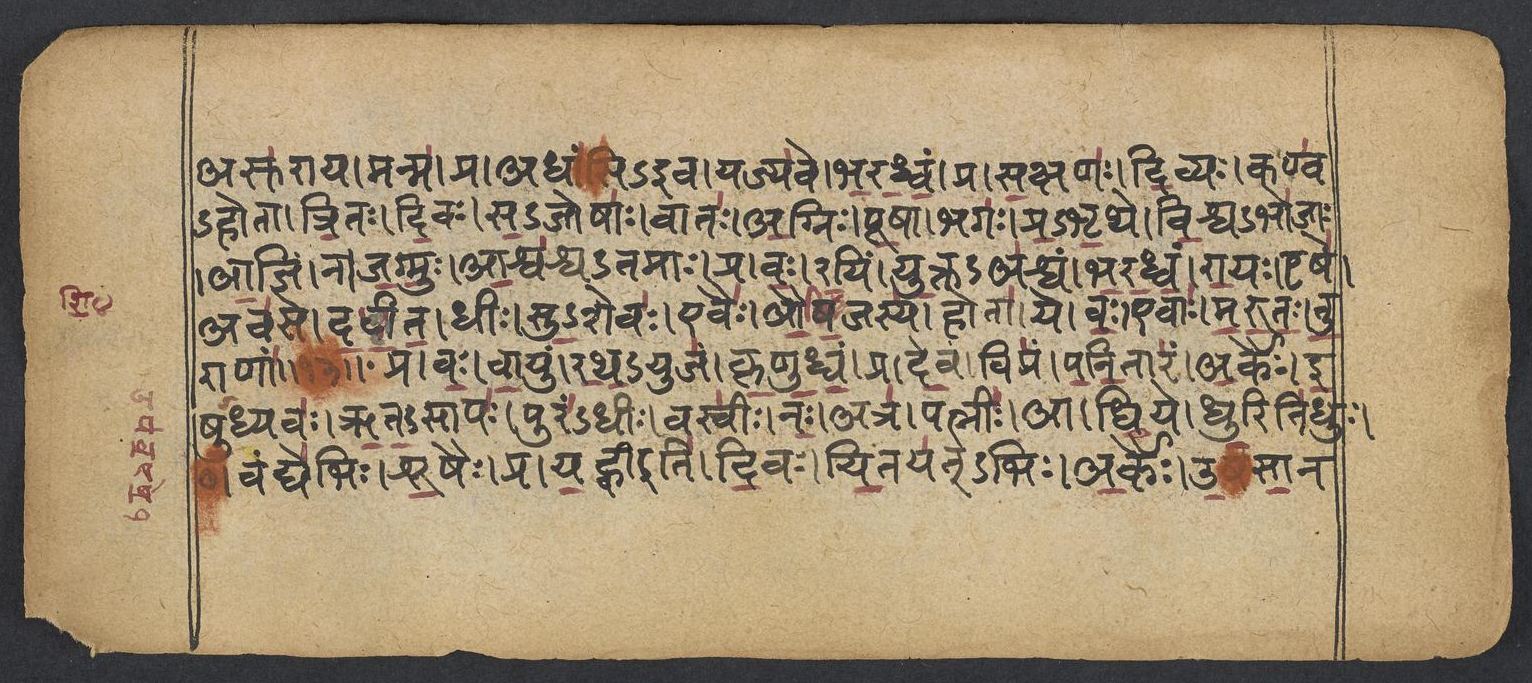
Penn Ms. Coll. 390 Item 41, fol. 354r (numbered 27r by the scribe) (OPenn image 354, lower leaf). Checked on the image: the Rigveda text on this page begins in RV 5.41.3 ‹asurāya manma pra andhāṃsi-iva›. The next page with Rigveda text, fol. 354v (numbered 27v by the scribe), begins in RV 5.41.7 ‹-uṣasānaktā viduṣīivetividuṣī-iva viśvam ā›. Verses 5.41.3-6 end on this page; 5.41.3 begins on fol. 353v (numbered 26v by the scribe).
3ā vā̱ṁ yeṣṭhā̍śvinā hu̱vadhyai̱ vāta̍sya̱ patma̱n rathya̍sya pu̱ṣṭau | u̱ta vā̍ di̱vo asu̍rāya̱ manma̱ prāndhā̍ṁsīva̱ yajya̍ve bharadhvam ||
4pra sa̱kṣaṇo̍ di̱vyaḥ kaṇva̍hotā tri̱to di̱vaḥ sa̱joṣā̱ vāto̍ a̱gniḥ | pū̱ṣā bhaga̍ḥ prabhṛ̱the vi̱śvabho̍jā ā̱jiṁ na ja̍gmur ā̱śva̍śvatamāḥ ||
5pra vo̍ ra̱yiṁ yu̱ktāśva̍m bharadhvaṁ rā̱ya eṣe 'va̍se dadhīta̱ dhīḥ | su̱śeva̱ evai̍r auśi̱jasya̱ hotā̱ ye va̱ evā̍ marutas tu̱rāṇā̍m ||
6pra vo̍ vā̱yuṁ ra̍tha̱yuja̍ṁ kṛṇudhva̱m pra de̱vaṁ vipra̍m pani̱tāra̍m a̱rkaiḥ | i̱ṣu̱dhyava̍ ṛta̱sāpa̱ḥ pura̍ṁdhī̱r vasvī̍r no̱ atra̱ patnī̱r ā dhi̱ye dhu̍ḥ ||
Compare: Padapāṭha (word-by-word text written in the manuscript; Sansknet e-text via GRETIL)
3ā | vām | yeṣṭhā | aśvinā | huvadhyai | vātasya | patman | rathyasya | puṣṭau | uta | vā | divaḥ | asurāya | manma | pra | andhāṃsi-iva | yajyave | bharadhvam
4pra | sakṣaṇaḥ | divyaḥ | kaṇva-hotā | tritaḥ | divaḥ | sa-joṣāḥ | vātaḥ | agniḥ | pūṣā | bhagaḥ | pra-bhṛthe | viśva-bhojāḥ | ājim | na | jagmuḥ | āśvaśva-tamāḥ
5pra | vaḥ | rayim | yukta-aśvam | bharadhvam | rāyaḥ | eṣe | avase | dadhīta | dhīḥ | su-śevaḥ | evaiḥ | auśijasya | hotā | ye | vaḥ | evāḥ | marutaḥ | turāṇām
6pra | vaḥ | vāyum | ratha-yujam | kṛṇudhvam | pra | devam | vipram | panitāram | arkaiḥ | iṣudhyavaḥ | ṛta-sāpaḥ | puram-dhīḥ | vasvīḥ | naḥ | atra | patnīḥ | ā | dhiye | dhuritidhuḥ
3You will I call to feed the car-horse, Aṣvins, with the wind's flight swiftest of those who travel: Or also to the Asura of heaven, Worshipful, bring a hymn as 'twere libation.
4The heavenly Victor, he whose priest is Kaṇva, Trita with Dyaus accordant, Vâta, Agni, All-feeding Pûshan, Bhaga sought the oblation, as they whose steeds are fleetest seek the contest.
5Bring ye your riches forward borne on horses: let thought be framed for help and gain of treasure. Blest he the priest of Auṣija through courses, the courses which are yours the fleet, O Maruts.
6Bring hither him who yokes the car, your Vâyu, who praises with his songs, the God and Singer; And, praying and devout, noble and prudent, may the Gods' Spouses in their thoughts retain us.
Where on the image
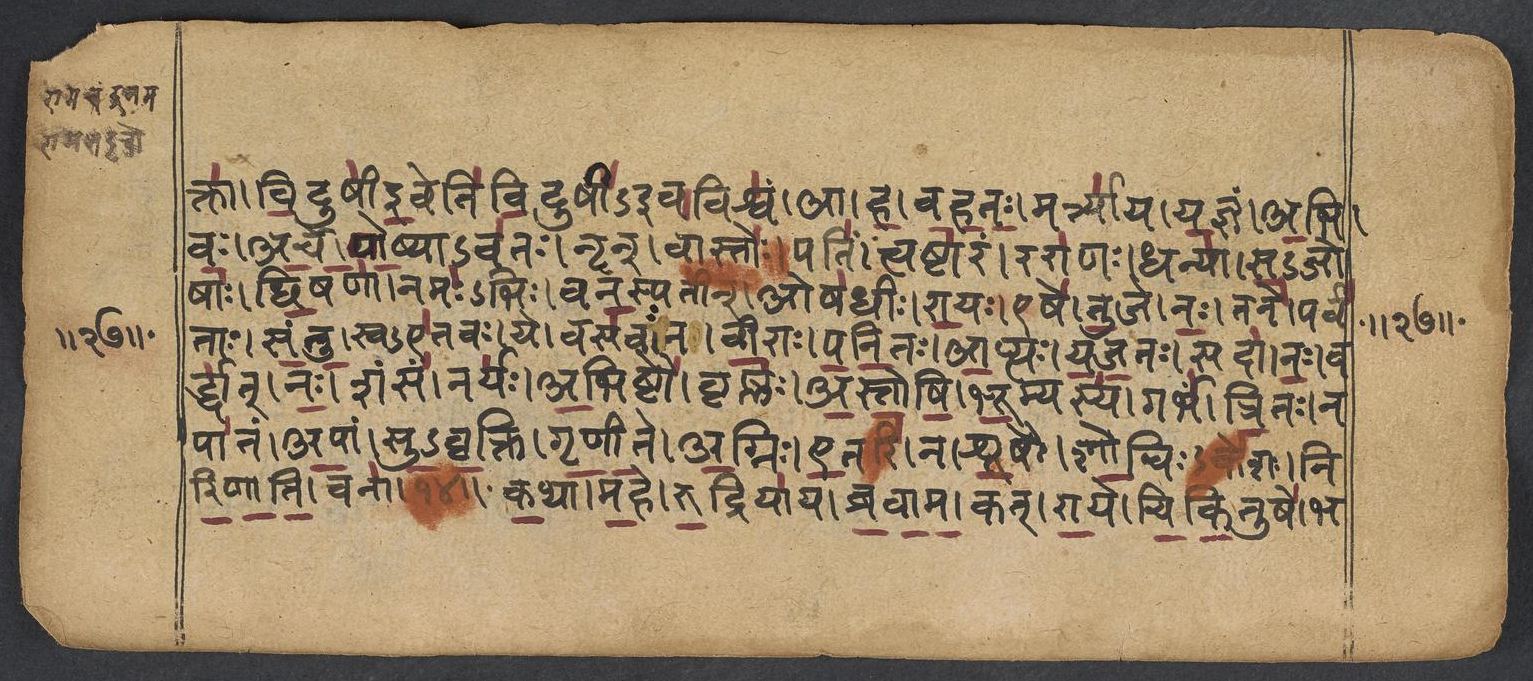
Penn Ms. Coll. 390 Item 41, fol. 354v (numbered 27v by the scribe) (OPenn image 355, upper leaf). Checked on the image: the Rigveda text on this page begins in RV 5.41.7 ‹-uṣasānaktā viduṣīivetividuṣī-iva viśvam ā›. The next page with Rigveda text, fol. 355r (numbered 28r by the scribe), begins in RV 5.41.11 ‹bhagāya āpaḥ oṣadhīḥ uta›. Verses 5.41.7-10 end on this page; 5.41.7 begins on fol. 354r (numbered 27r by the scribe).
7upa̍ va̱ eṣe̱ vandye̍bhiḥ śū̱ṣaiḥ pra ya̱hvī di̱vaś ci̱taya̍dbhir a̱rkaiḥ | u̱ṣāsā̱naktā̍ vi̱duṣī̍va̱ viśva̱m ā hā̍ vahato̱ martyā̍ya ya̱jñam ||
8a̱bhi vo̍ arce po̱ṣyāva̍to̱ nṝn vāsto̱ṣ pati̱ṁ tvaṣṭā̍ra̱ṁ rarā̍ṇaḥ | dhanyā̍ sa̱joṣā̍ dhi̱ṣaṇā̱ namo̍bhi̱r vana̱spatī̱m̐r oṣa̍dhī rā̱ya eṣe̍ ||
9tu̱je na̱s tane̱ parva̍tāḥ santu̱ svaita̍vo̱ ye vasa̍vo̱ na vī̱rāḥ | pa̱ni̱ta ā̱ptyo ya̍ja̱taḥ sadā̍ no̱ vardhā̍n na̱ḥ śaṁsa̱ṁ naryo̍ a̱bhiṣṭau̍ ||
10vṛṣṇo̍ astoṣi bhū̱myasya̱ garbha̍ṁ tri̱to napā̍tam a̱pāṁ su̍vṛ̱kti | gṛ̱ṇī̱te a̱gnir e̱tarī̱ na śū̱ṣaiḥ śo̱ciṣke̍śo̱ ni ri̍ṇāti̱ vanā̍ ||
Compare: Padapāṭha (word-by-word text written in the manuscript; Sansknet e-text via GRETIL)
7upa | vaḥ | eṣe | vandyebhiḥ | śūṣaiḥ | pra | yahvī iti | divaḥ | citayat-bhiḥ | arkaiḥ | uṣasānaktā | viduṣīivetividuṣī-iva | viśvam | ā | ha | vahataḥ | martyāya | yajñam
8abhi | vaḥ | arce | poṣyāvataḥ | nṝn | vāstoḥ | patim | tvaṣṭāram | rarāṇaḥ | dhanyā | sa-joṣāḥ | dhiṣaṇā | namaḥ-bhiḥ | vanaspatīn | oṣadhīḥ | rāyaḥ | eṣe
9tuje | naḥ | tane | parvatāḥ | santu | sva-etavaḥ | ye | vasavaḥ | na | vīrāḥ | panitaḥ | āptyaḥ | yajataḥ | sadā | naḥ | vardhāt | naḥ | śaṃsam | naryaḥ | abhiṣṭau
10vṛṣṇaḥ | astoṣi | bhūmyasya | garbham | tritaḥ | napātam | apām | su-vṛkti | gṛṇīte | agniḥ | etari | na | śūṣaiḥ | śociḥ-keśaḥ | ni | riṇāti | vanā
7I speed to you with powers that should be honoured, with songs distinguishing Heaven's mighty Daughters, Morning and Night, the Two, as 'twere all-knowing: these bring the sacrifice unto the mortal.
8You I extol, the nourishers of heroes bringing you gifts, Vâstoshpati and Tvashṭar- Rich Dhishaṇâ accords through our obeisance – andTrees and Plants, for the swift gain of riches.
9Ours be the Parvatas, even they, for offspring, free-moving, who are Heroes like the Vasus. May holy Âptya, Friend of man, exalted, strengthen our word for ever and be near us.
10Trita praised him, germ of the earthly hero, with pure songs him the Offspring of the Waters. Agn; with might neighs loudly like a charger: he of the flaming hair destroys the forests.
Where on the image
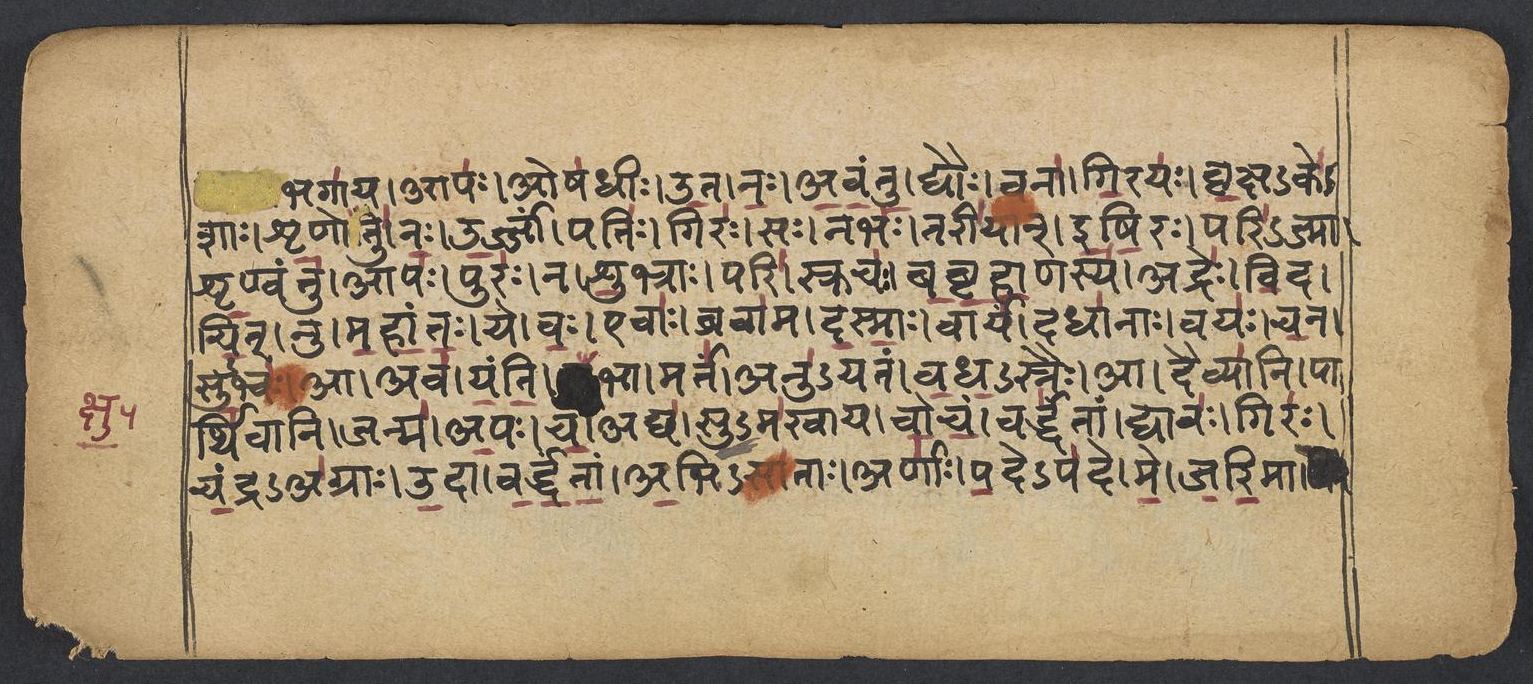
Penn Ms. Coll. 390 Item 41, fol. 355r (numbered 28r by the scribe) (OPenn image 355, lower leaf). Checked on the image: the Rigveda text on this page begins in RV 5.41.11 ‹bhagāya āpaḥ oṣadhīḥ uta›. The next page with Rigveda text, fol. 355v (numbered 28v by the scribe), begins in RV 5.41.15 ‹ni dhāyi varūtrī vā›. Verses 5.41.11-14 end on this page; 5.41.11 begins on fol. 354v (numbered 27v by the scribe).
11ka̱thā ma̱he ru̱driyā̍ya bravāma̱ kad rā̱ye ci̍ki̱tuṣe̱ bhagā̍ya | āpa̱ oṣa̍dhīr u̱ta no̍ 'vantu̱ dyaur vanā̍ gi̱rayo̍ vṛ̱kṣake̍śāḥ ||
12śṛ̱ṇotu̍ na ū̱rjām pati̱r gira̱ḥ sa nabha̱s tarī̍yām̐ iṣi̱raḥ pari̍jmā | śṛ̱ṇvantv āpa̱ḥ puro̱ na śu̱bhrāḥ pari̱ sruco̍ babṛhā̱ṇasyādre̍ḥ ||
13vi̱dā ci̱n nu ma̍hānto̱ ye va̱ evā̱ bravā̍ma dasmā̱ vārya̱ṁ dadhā̍nāḥ | vaya̍ś ca̱na su̱bhva1̱̍ āva̍ yanti kṣu̱bhā marta̱m anu̍yataṁ vadha̱snaiḥ ||
14ā daivyā̍ni̱ pārthi̍vāni̱ janmā̱paś cācchā̱ suma̍khāya vocam | vardha̍ntā̱ṁ dyāvo̱ gira̍ś ca̱ndrāgrā̍ u̱dā va̍rdhantām a̱bhiṣā̍tā̱ arṇā̍ḥ ||
Compare: Padapāṭha (word-by-word text written in the manuscript; Sansknet e-text via GRETIL)
11kathā | mahe | rudriyāya | bravāma | kat | rāye | cikituṣe | bhagāya | āpaḥ | oṣadhīḥ | uta | naḥ | avantu | dyauḥ | vanā | girayaḥ | vṛkṣa-keśāḥ
12śṛṇotu | naḥ | ūrjām | patiḥ | giraḥ | saḥ | nabhaḥ | tarīyān | iṣiraḥ | pari-jmā | śṛṇvantu | āpaḥ | puraḥ | na | śubhrāḥ | pari | srucaḥ | babṛhāṇasya | adreḥ
13vida | cit | nu | mahāntaḥ | ye | vaḥ | evāḥ | bravāma | dasmāḥ | vāryam | dadhānāḥ | vayaḥ | cana | su-bhvaḥ | ā | ava | yanti | kṣubhā | martam | anu-yatam | vadha-snaiḥ
14ā | daivyāni | pārthivāni | janma | apaḥ | ca | accha | su-makhāya | vocam | vardhantām | dyāvaḥ | giraḥ | candra-agrāḥ | udā | vardhantām | abhi-sātāḥ | arṇāḥ
11How shall we speak to the great might of Rudra? How speak to Bhaga who takes thought for riches? May Plants, the Waters, and the Sky preserve us, and Woods and Mountains with their trees for tresses.
12May the swift Wanderer, Lord of refreshments listen to our songs, who speeds through cloudy heaven: And may the Waters, bright like castles, hear us, as they flow onward from the cloven mountain.
13We know your ways, ye Mighty Ones receiving choice meed, ye Wonderful, we will proclaim it. Even strong birds descend not to the mortal who strives to reach them with swift blow and weapons.
14Celestial and terrestrial generations, and Waters will I summon to the feasting. May days with bright dawns cause my songs to prosper, and may the conquered streams increase their waters.
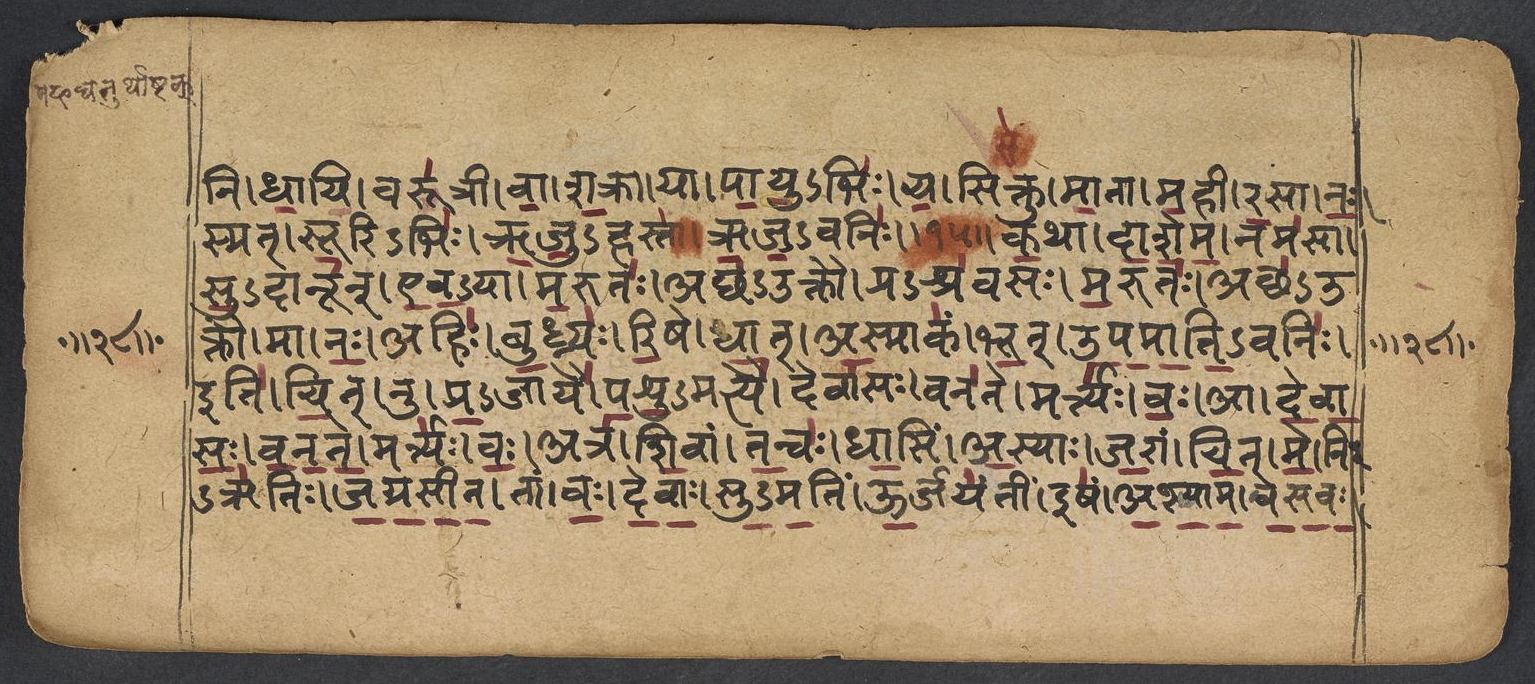
Where on the image
Penn Ms. Coll. 390 Item 41, fol. 355v (numbered 28v by the scribe) (OPenn image 356, upper leaf). Checked on the image: the Rigveda text on this page begins in RV 5.41.15 ‹ni dhāyi varūtrī vā›. The next page with Rigveda text, fol. 356r (numbered 29r by the scribe), begins in RV 5.41.18 ‹śasā goḥ sā naḥ›. Verses 5.41.15-17 end on this page; 5.41.15 begins on fol. 355r (numbered 28r by the scribe).
15pa̱de-pa̍de me jari̱mā ni dhā̍yi̱ varū̍trī vā śa̱krā yā pā̱yubhi̍ś ca | siṣa̍ktu mā̱tā ma̱hī ra̱sā na̱ḥ smat sū̱ribhi̍r ṛju̱hasta̍ ṛju̱vani̍ḥ ||
16ka̱thā dā̍śema̱ nama̍sā su̱dānū̍n eva̱yā ma̱ruto̱ accho̍ktau̱ praśra̍vaso ma̱ruto̱ accho̍ktau | mā no 'hi̍r bu̱dhnyo̍ ri̱ṣe dhā̍d a̱smāka̍m bhūd upamāti̱vani̍ḥ ||
17iti̍ ci̱n nu pra̱jāyai̍ paśu̱matyai̱ devā̍so̱ vana̍te̱ martyo̍ va̱ ā de̍vāso vanate̱ martyo̍ vaḥ | atrā̍ śi̱vāṁ ta̱nvo̍ dhā̱sim a̱syā ja̱rāṁ ci̍n me̱ nirṛ̍tir jagrasīta ||
Compare: Padapāṭha (word-by-word text written in the manuscript; Sansknet e-text via GRETIL)
15pade--pade | me | jarimā | ni | dhāyi | varūtrī | vā | śakrā | yā | pāyu-bhiḥ | ca | sisaktu | mātā | mahī | rasā | naḥ | smat | sūri-bhiḥ | ṛju-hastā | ṛju-vaniḥ
16kathā | dāśema | namasā | su-dānūn | eva-yā | marutaḥ | accha-uktau | pra-śravasaḥ | marutaḥ | accha-uktau | mā | naḥ | ahiḥ | budhnyaḥ | riṣe | dhāt | asmākam | bhūt | upamāti-vaniḥ
17iti | cit | nu | pra-jāyai | paśu-matyai | devāsaḥ | vanate | martyaḥ | vaḥ | ā | devāsaḥ | vanate | martyaḥ | vaḥ | atra | śivām | tanvaḥ | dhāsim | asyāḥ | jarām | c it | me | niḥ-ṛtiḥ | jagrasīta
15Duly to each one hath my laud been offered. Strong be Varûtrî with her powers to succour. May the great Mother Rasâ here befriend us, straight-handed, with the princes, striving forward.
16How may we serve the Liberal Ones with worship, the Maruts swift of course in invocation, the Maruts far-renowned in invocation? Let not the Dragon of the Deep annoy us, and gladly may he welcome our addresses.
17Thus thinking, O ye Gods, the mortal wins you to give him increase of his herds of cattle: the mortal wins him, O ye Gods, your favour. Here he wins wholesome food to feed this body: as for mine old age, Nirr̥iti consume it
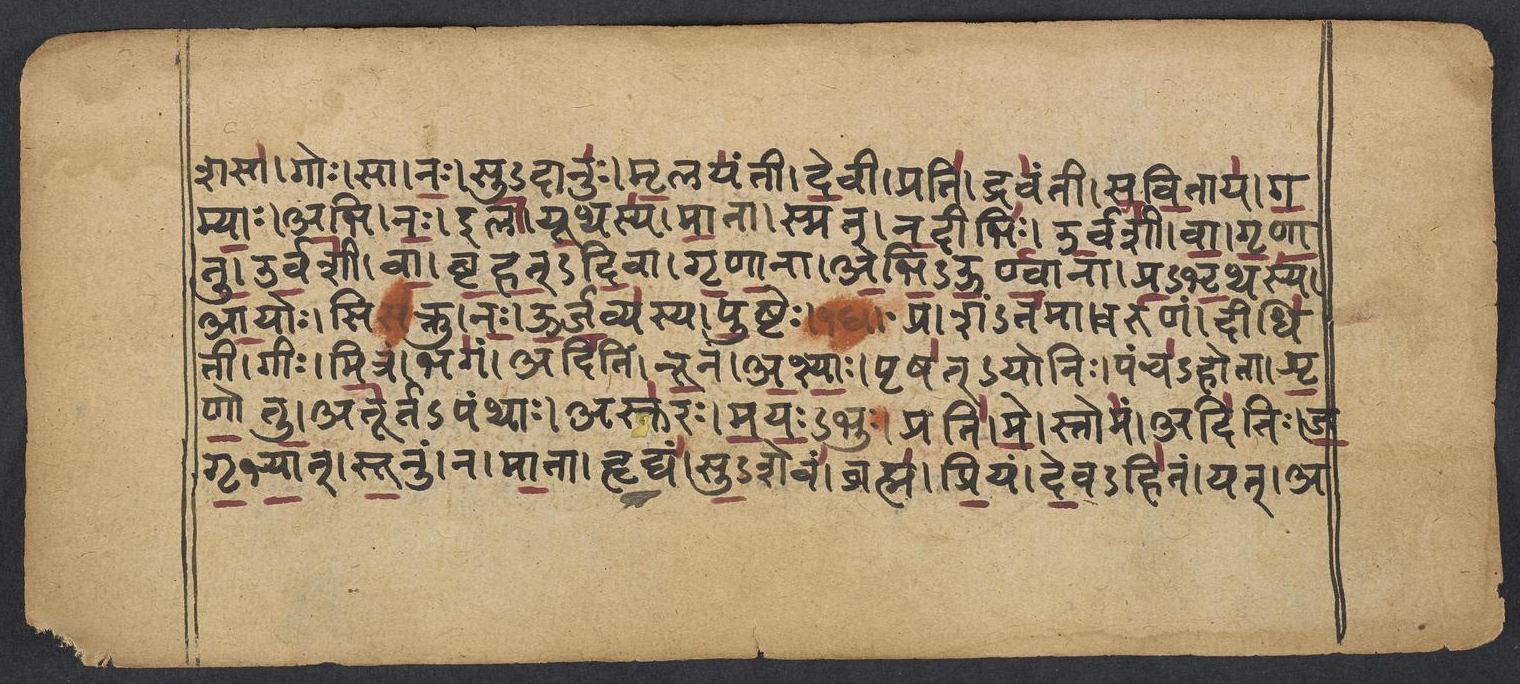
Where on the image
Penn Ms. Coll. 390 Item 41, fol. 356r (numbered 29r by the scribe) (OPenn image 356, lower leaf). Checked on the image: the Rigveda text on this page begins in RV 5.41.18 ‹śasā goḥ sā naḥ›. The next page with Rigveda text, fol. 356v (numbered 29v by the scribe), begins in RV 5.42.2 ‹-asti aham mitre varuṇe›. Verses 5.41.18-20 end on this page; 5.41.18 begins on fol. 355v (numbered 28v by the scribe).
18tāṁ vo̍ devāḥ suma̱tim ū̱rjaya̍ntī̱m iṣa̍m aśyāma vasava̱ḥ śasā̱ goḥ | sā na̍ḥ su̱dānu̍r mṛ̱ḻaya̍ntī de̱vī prati̱ drava̍ntī suvi̱tāya̍ gamyāḥ ||
19a̱bhi na̱ iḻā̍ yū̱thasya̍ mā̱tā sman na̱dībhi̍r u̱rvaśī̍ vā gṛṇātu | u̱rvaśī̍ vā bṛhaddi̱vā gṛ̍ṇā̱nābhyū̍rṇvā̱nā pra̍bhṛ̱thasyā̱yoḥ ||
20siṣa̍ktu na ūrja̱vya̍sya pu̱ṣṭeḥ ||
Compare: Padapāṭha (word-by-word text written in the manuscript; Sansknet e-text via GRETIL)
18tām | vaḥ | devāḥ | su-matim | ūrjayantīm | iṣam | aśyāma | vasavaḥ | śasā | goḥ | sā | naḥ | su-dānuḥ | mṛḷayantī | devī | prati | dravantī | suvitāya | gamyāḥ
19abhi | naḥ | iḷā | yūthasya | mātā | smat | nadībhiḥ | urvaśī | vā | gṛṇātu | urvaśī | vā | bṛhat-divā | gṛṇanā | abhi-ūrṇvānā | pra-bhṛthasya | āyoḥ
20sisaktu | naḥ | ūrjavyasya | puṣṭeḥ
18O Gods, may we obtain from you this favour, strengthening food through the Cow's praise, ye Vasus. May she who gives good gifts, the gracious Goddes. s, come speeding nigh to us for our well-being.
19May Iḷâ, Mother of the herds of cattle, and Urvaṣî with all the streams accept us; May Urvaṣî in lofty heaven accepting, as she partakes the oblation of the living,
20Visit us while she shares Ûrjavya's food.
Notes
- Sanskrit: Aufrecht's edition (1877) with the Vedic accents, as entered by van Nooten and Holland (GRETIL).
- English: Ralph T. H. Griffith, The Hymns of the Rigveda (1889-1892; 2nd ed. 1896-1897), from the VedaWeb digital text; OCR slips in that text were corrected against the printed 2nd edition (data/sources/rigveda/griffith_errata.json).
- Padapāṭha (edition text): Sansknet e-text via GRETIL (CC BY-NC-SA 4.0).
Cite
Sources
- Source: Penn Ms. Coll. 390 Item 41 (undated (catalogued with Penn's 18th-19th c. Vedic manuscripts)), OPenn, Public Domain Mark + Aufrecht's accented text (GRETIL) + Griffith's English (VedaWeb) (holding institution)
- Critical edition: Aufrecht (1877), accented e-text via GRETIL
← previous · → next · v cycle view · l back to library