Rigveda 5.42: To all the gods
Introduction
Rigveda 5.42 is a hymn of 18 verses addressed to all the gods. It stands in book (maṇḍala) 5, the family book of the Atri clan. The Rigveda is the oldest collection of Sanskrit hymns, composed in the second half of the second millennium BCE and handed down orally for many centuries before it was written down.
The manuscript shown is Penn Ms. Coll. 390 Item 41 (University of Pennsylvania), an undated paper manuscript of the padapāṭha (the word-by-word recitation text, in which every word is written separately and compounds are split) of the whole Ṛgveda in Devanāgarī, 884 leaves in fascicles, 7-9 lines to the page, accents in red; this hymn stands on fol. 356r-358v. Each section below gives the verses that end on one page; the page boundaries were read on the images (the opening words of every page), not counted out. Where the manuscript is a padapāṭha (the word-by-word recitation text), the section shows Aufrecht's continuous (saṃhitā) text first and, as the edition text, the padapāṭha of the same verses, which is the form written on the page.
How was this verified? (Provenance)
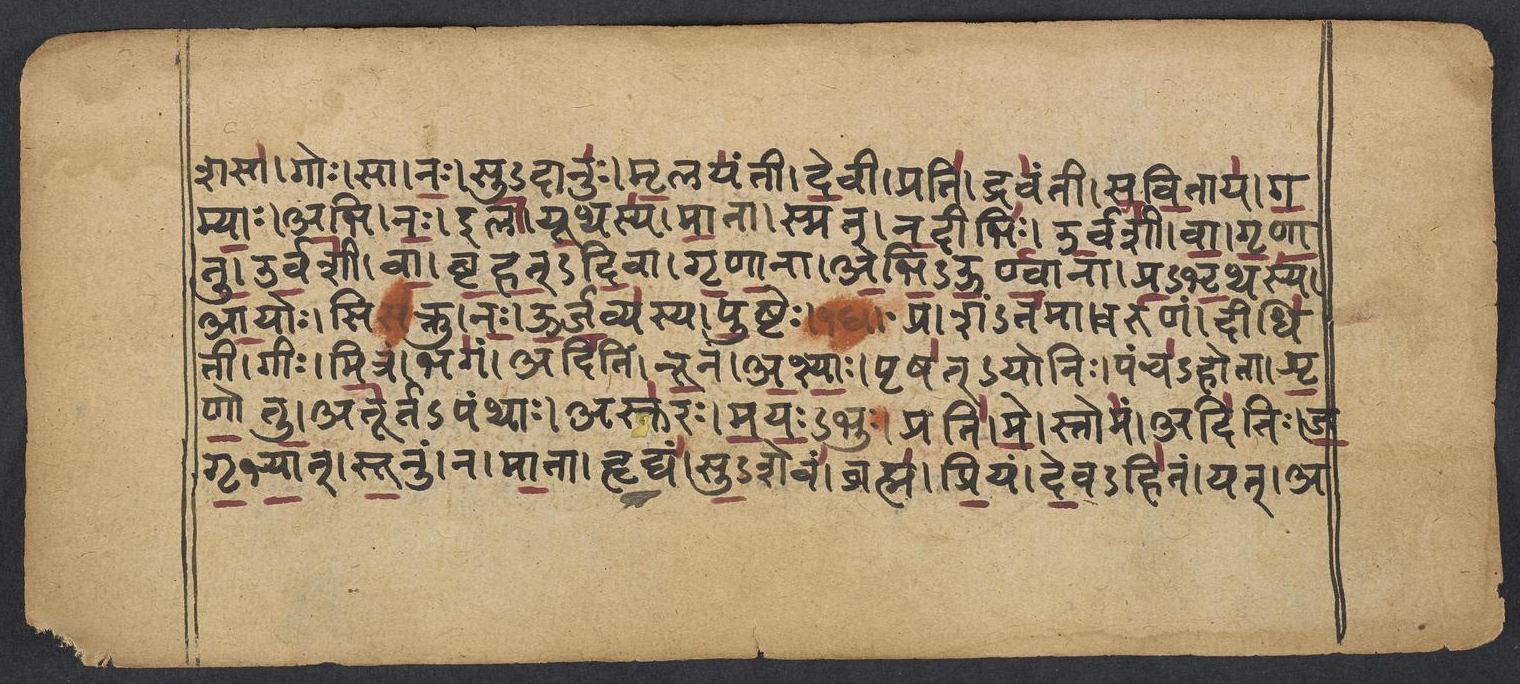
Where on the image
Penn Ms. Coll. 390 Item 41, fol. 356r (numbered 29r by the scribe) (OPenn image 356, lower leaf). Checked on the image: the Rigveda text on this page begins in RV 5.41.18 ‹śasā goḥ sā naḥ›. The next page with Rigveda text, fol. 356v (numbered 29v by the scribe), begins in RV 5.42.2 ‹-asti aham mitre varuṇe›. Verse 5.42.1 ends on this page.
1pra śaṁta̍mā̱ varu̍ṇa̱ṁ dīdhi̍tī̱ gīr mi̱tram bhaga̱m adi̍tiṁ nū̱nam a̍śyāḥ | pṛṣa̍dyoni̱ḥ pañca̍hotā śṛṇo̱tv atū̍rtapanthā̱ asu̍ro mayo̱bhuḥ ||
Compare: Padapāṭha (word-by-word text written in the manuscript; Sansknet e-text via GRETIL)
1pra | śam-tamā | varuṇam | dīdhitī | gīḥ | mitram | bhagam | aditim | nūnam | aśyāḥ | pṛṣat-yoniḥ | pañca-hotā | śṛṇotu | atūrta-panthāḥ | asuraḥ | mayaḥ-bhuḥ
1Now may our sweetest song with deep devotion reach Varuṇa, Mitra, Aditi, and Bhaga. May the Five Priests' Lord, dwelling in oblations, bliss-giving Asura, hear, whose paths are open.
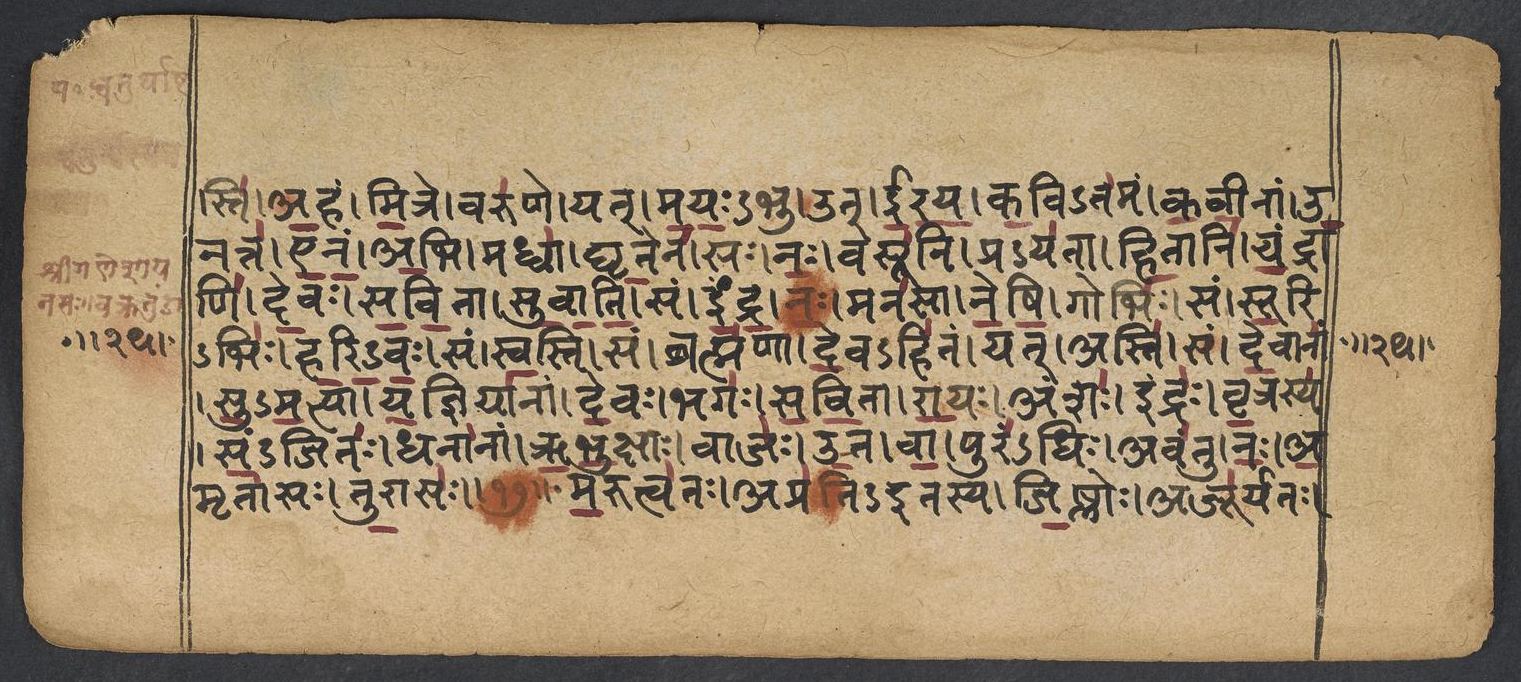
Where on the image
Penn Ms. Coll. 390 Item 41, fol. 356v (numbered 29v by the scribe) (OPenn image 357, upper leaf). Checked on the image: the Rigveda text on this page begins in RV 5.42.2 ‹-asti aham mitre varuṇe›. The next page with Rigveda text, fol. 357r (numbered 30r by the scribe), begins in RV 5.42.6 ‹pra bravāma kṛtāni na›. Verses 5.42.2-5 end on this page; 5.42.2 begins on fol. 356r (numbered 29r by the scribe).
2prati̍ me̱ stoma̱m adi̍tir jagṛbhyāt sū̱nuṁ na mā̱tā hṛdya̍ṁ su̱śeva̍m | brahma̍ pri̱yaṁ de̱vahi̍ta̱ṁ yad asty a̱ham mi̱tre varu̍ṇe̱ yan ma̍yo̱bhu ||
3ud ī̍raya ka̱vita̍maṁ kavī̱nām u̱nattai̍nam a̱bhi madhvā̍ ghṛ̱tena̍ | sa no̱ vasū̍ni̱ praya̍tā hi̱tāni̍ ca̱ndrāṇi̍ de̱vaḥ sa̍vi̱tā su̍vāti ||
4sam i̍ndra ṇo̱ mana̍sā neṣi̱ gobhi̱ḥ saṁ sū̱ribhi̍r hariva̱ḥ saṁ sva̱sti | sam brahma̍ṇā de̱vahi̍ta̱ṁ yad asti̱ saṁ de̱vānā̍ṁ suma̱tyā ya̱jñiyā̍nām ||
5de̱vo bhaga̍ḥ savi̱tā rā̱yo aṁśa̱ indro̍ vṛ̱trasya̍ sa̱ṁjito̱ dhanā̍nām | ṛ̱bhu̱kṣā vāja̍ u̱ta vā̱ pura̍ṁdhi̱r ava̍ntu no a̱mṛtā̍sas tu̱rāsa̍ḥ ||
Compare: Padapāṭha (word-by-word text written in the manuscript; Sansknet e-text via GRETIL)
2prati | me | stomam | aditiḥ | jagṛbhyāt | sūnum | na | mātā | hṛdyam | su-śevam | brahma | priyam | deva-hitam | yat | asti | aham | mitre | varuṇe | yat | mayaḥ-bhuḥ
3ut | īraya | kavi-tamam | kavīnām | unatta | enam | abhi | madhvā | ghṛtena | saḥ | naḥ | vasūni | pra-yatā | hitāni | candrāṇi | devaḥ | savitā | suvāti
4sam | indra | ṇaḥ | manasā | neṣi | gobhiḥ | sam | sūri-bhiḥ | hari-vaḥ | sam | svasti | sam | brahmaṇā | deva-hitam | yat | asti | sam | devānām | su-matyā | yajñ iyānām
5devaḥ | bhagaḥ | savitā | rāyaḥ | aṃśaḥ | indraḥ | vṛtrasya | sam-jitaḥ | dhanānām | ṛbhukṣāḥ | vājaḥ | uta | vā | puram-dhiḥ | avantu | naḥ | amṛtāsaḥ | turāsaḥ
2May Aditi welcome, even as a mother her dear heart-gladdening son, my song that lauds her. The prayer they love, bliss-giving, God-appointed, I offer unto Varuṇa and Mitra.
3In spirit him, the Sagest of the Sages; with sacrificial oil and meath bedew him So then let him, God Savitar, provide us excellent, ready, and resplendent treasures.
4With willing mind, Indra, vouchsafe us cattle, prosperity, Lord of Bays! and pious patrons; And, with the sacred prayer by Gods appointed, give us the holy Deities' lovingkindness.
5God Bhaga, Savitar who deals forth riches, Indra, and they who conquer Vr̥itra's treasures, And Vâja and R̥ibhukshan and Purandhi, the Mighty and Immortal Ones, protect us!
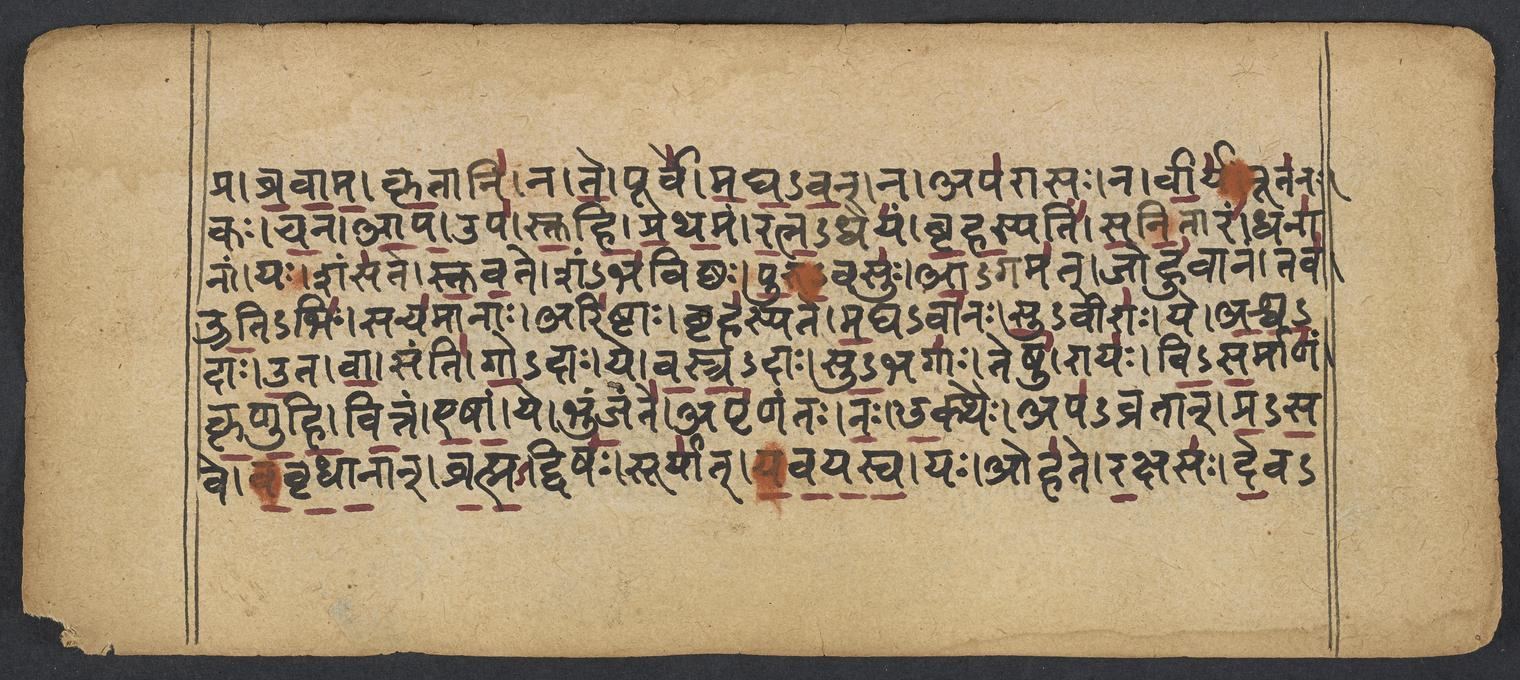
Where on the image
Penn Ms. Coll. 390 Item 41, fol. 357r (numbered 30r by the scribe) (OPenn image 357, lower leaf). Checked on the image: the Rigveda text on this page begins in RV 5.42.6 ‹pra bravāma kṛtāni na›. The next page with Rigveda text, fol. 357v (numbered 30v by the scribe), begins in RV 5.42.10 ‹-deva-vītau acakrebhiḥ tam marutaḥ›. Verses 5.42.6-9 end on this page; 5.42.6 begins on fol. 356v (numbered 29v by the scribe).
6ma̱rutva̍to̱ apra̍tītasya ji̱ṣṇor ajū̍ryata̱ḥ pra bra̍vāmā kṛ̱tāni̍ | na te̱ pūrve̍ maghava̱n nāpa̍rāso̱ na vī̱rya1̱̍ṁ nūta̍na̱ḥ kaś ca̱nāpa̍ ||
7upa̍ stuhi pratha̱maṁ ra̍tna̱dheya̱m bṛha̱spati̍ṁ sani̱tāra̱ṁ dhanā̍nām | yaḥ śaṁsa̍te stuva̱te śambha̍viṣṭhaḥ purū̱vasu̍r ā̱gama̱j johu̍vānam ||
8tavo̱tibhi̱ḥ saca̍mānā̱ ari̍ṣṭā̱ bṛha̍spate ma̱ghavā̍naḥ su̱vīrā̍ḥ | ye a̍śva̱dā u̱ta vā̱ santi̍ go̱dā ye va̍stra̱dāḥ su̱bhagā̱s teṣu̱ rāya̍ḥ ||
9vi̱sa̱rmāṇa̍ṁ kṛṇuhi vi̱ttam e̍ṣā̱ṁ ye bhu̱ñjate̱ apṛ̍ṇanto na u̱kthaiḥ | apa̍vratān prasa̱ve vā̍vṛdhā̱nān bra̍hma̱dviṣa̱ḥ sūryā̍d yāvayasva ||
Compare: Padapāṭha (word-by-word text written in the manuscript; Sansknet e-text via GRETIL)
6marutvataḥ | aprati-itasya | jiṣṇoḥ | ajūryataḥ | pra | bravāma | kṛtāni | na | te | pūrve | magha-van | na | aparāsaḥ | na | vīryam | nūtanaḥ | kaḥ | cana | āpa
7upa | stuhi | prathamam | ratna-dheyam | bṛhaspatim | sanitāram | dhanānām | yaḥ | śaṃsate | stuvate | śam-bhaviṣṭhaḥ | puru-vasuḥ | āgamat | johuvānam
8tava | ūti-bhiḥ | sacamānāḥ | ariṣṭāḥ | bṛhaspate | magha-vānaḥ | su-vīrāḥ | ye | aśva-dāḥ | uta | vā | santi | go--dāḥ | ye | vastra-dāḥ | su-bhagāḥ | teṣu | rāyaḥ
9vi-sarmāṇam | kṛṇuhi | vittam | eṣām | ye | bhuñjate | apṛṇantaḥ | naḥ | ukthaiḥ | apa-vratān | pra-save | vavṛdhānān | brahma-dviṣaḥ | sūryāt | yavayasva
6Let us declare his deeds, the undecaying unrivalled Victor whom the Maruts follow. None of old times, O Maghavan, nor later, none of these days hath reached thy hero prowess.
7Praise him the Chief who gives the boon of riches, Br̥ihaspati distributer of treasures, Who, blessing most the man who sings and praises, comes with abundant wealth to his invoker.
8Tended, Br̥ihaspati, with thy protections, the princes are unharmed and girt by heroes. Wealth that brings bliss is found among the givers of horses and of cattle and of raiment.
9Make their wealth flee who, through our hymns enjoying their riches, yield us not an ample guerdon. Far from the sun keep those who hate devotion, the godless, prospering in their vocation.
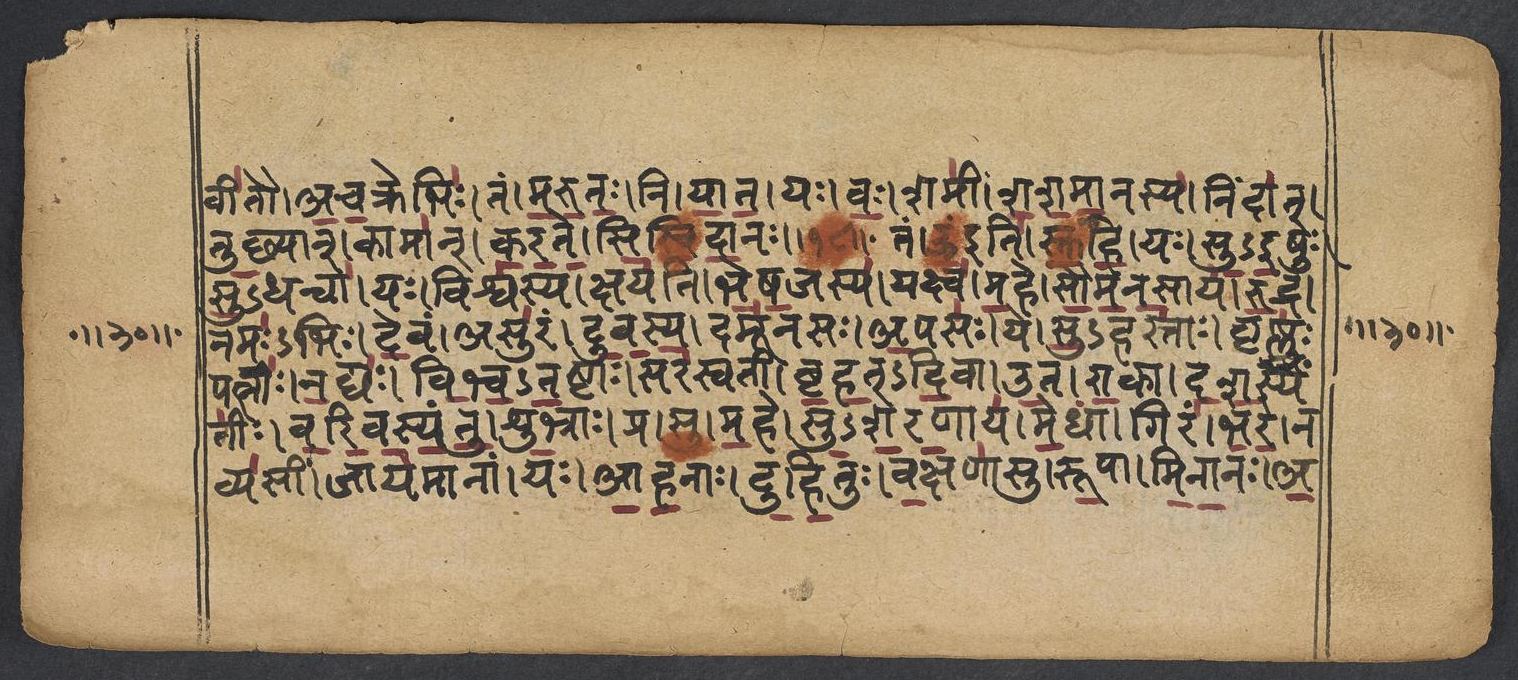
Where on the image
Penn Ms. Coll. 390 Item 41, fol. 357v (numbered 30v by the scribe) (OPenn image 358, upper leaf). Checked on the image: the Rigveda text on this page begins in RV 5.42.10 ‹-deva-vītau acakrebhiḥ tam marutaḥ›. The next page with Rigveda text, fol. 358r (numbered 31r by the scribe), begins in RV 5.42.13 ‹-akṛṇot idam naḥ›. Verses 5.42.10-12 end on this page; 5.42.10 begins on fol. 357r (numbered 30r by the scribe).
10ya oha̍te ra̱kṣaso̍ de̱vavī̍tāv aca̱krebhi̱s tam ma̍ruto̱ ni yā̍ta | yo va̱ḥ śamī̍ṁ śaśamā̱nasya̱ nindā̍t tu̱cchyān kāmā̍n karate siṣvidā̱naḥ ||
11tam u̍ ṣṭuhi̱ yaḥ svi̱ṣuḥ su̱dhanvā̱ yo viśva̍sya̱ kṣaya̍ti bheṣa̱jasya̍ | yakṣvā̍ ma̱he sau̍mana̱sāya̍ ru̱draṁ namo̍bhir de̱vam asu̍raṁ duvasya ||
12damū̍naso a̱paso̱ ye su̱hastā̱ vṛṣṇa̱ḥ patnī̍r na̱dyo̍ vibhvata̱ṣṭāḥ | sara̍svatī bṛhaddi̱vota rā̱kā da̍śa̱syantī̍r varivasyantu śu̱bhrāḥ ||
Compare: Padapāṭha (word-by-word text written in the manuscript; Sansknet e-text via GRETIL)
10yaḥ | ohate | rakṣasaḥ | deva-vītau | acakrebhiḥ | tam | marutaḥ | ni | yāta | yaḥ | vaḥ | samīm | śaśamānasya | nindāt | tucchyān | kāmān | karate | sisvidānaḥ
11tam | oṃ iti | stuhi | yaḥ | su-iṣuḥ | su-dhanvā | yaḥ | viśvasya | kṣayati | bheṣajasya | yakṣva | mahe | saumanasāya | rudram | namaḥ-bhiḥ | devam | asuram | duvasya
12damūnasaḥ | apasaḥ | ye | su-hastāḥ | vṛṣṇaḥ | patnīḥ | nadyaḥ | vibhva-taṣṭāḥ | sarasvatī | bṛhat-divā | uta | rākā | daśasyantīḥ | varivasyantu | śubhrāḥ
10With wheelless chariots drive down him, O Maruts, who at the feasts of Gods regards the demons. May he, though bathed in sweat, form empty wishes, who blames his sacred rite who toils to serve you.
11Praise him whose bow is strong and sure his arrow, him who is Lord of every balm that bealeth. Worship thou Rudra for his great good favour: adore the Asura, God, with salutations.
12May the House-friends, the cunning-handed Artists, may the Steer's Wives, the streams carved out by Vibhvan, And may the fair Ones honour and befriend us, Sarasvatî, Br̥ihaddiva, and Râkâ.
Where on the image
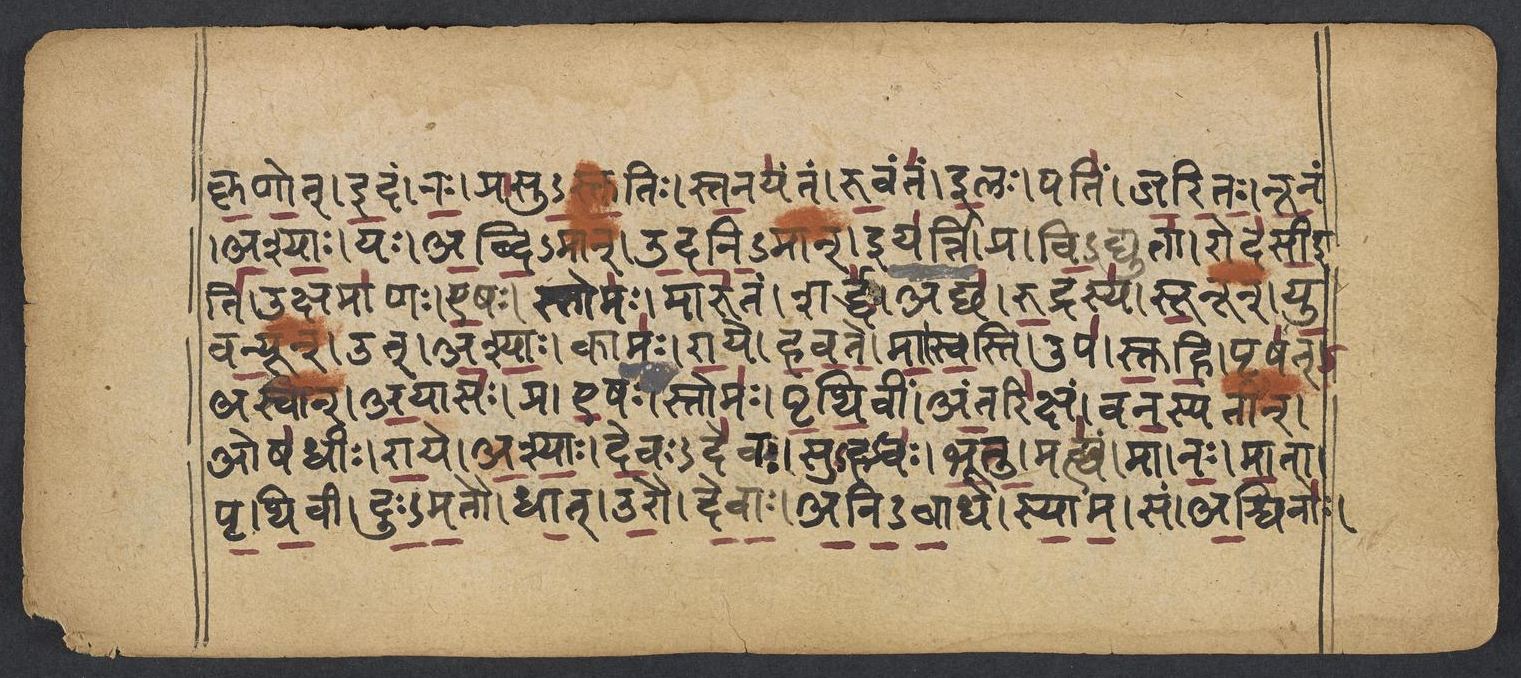
Penn Ms. Coll. 390 Item 41, fol. 358r (numbered 31r by the scribe) (OPenn image 358, lower leaf). Checked on the image: the Rigveda text on this page begins in RV 5.42.13 ‹-akṛṇot idam naḥ›. The next page with Rigveda text, fol. 358v (numbered 31v by the scribe), begins in RV 5.42.18 ‹avasā nūtanena mayaḥ-bhuvā su-pranītī›. Verses 5.42.13-17 end on this page; 5.42.13 begins on fol. 357v (numbered 30v by the scribe).
13pra sū ma̱he su̍śara̱ṇāya̍ me̱dhāṁ gira̍m bhare̱ navya̍sī̱ṁ jāya̍mānām | ya ā̍ha̱nā du̍hi̱tur va̱kṣaṇā̍su rū̱pā mi̍nā̱no akṛ̍ṇod i̱daṁ na̍ḥ ||
14pra su̍ṣṭu̱tiḥ sta̱naya̍ntaṁ ru̱vanta̍m i̱ḻas pati̍ṁ jaritar nū̱nam a̍śyāḥ | yo a̍bdi̱mām̐ u̍dani̱mām̐ iya̍rti̱ pra vi̱dyutā̱ roda̍sī u̱kṣamā̍ṇaḥ ||
15e̱ṣa stomo̱ māru̍ta̱ṁ śardho̱ acchā̍ ru̱drasya̍ sū̱nūm̐r yu̍va̱nyūm̐r ud a̍śyāḥ | kāmo̍ rā̱ye ha̍vate mā sva̱sty upa̍ stuhi̱ pṛṣa̍daśvām̐ a̱yāsa̍ḥ ||
16praiṣa stoma̍ḥ pṛthi̱vīm a̱ntari̍kṣa̱ṁ vana̱spatī̱m̐r oṣa̍dhī rā̱ye a̍śyāḥ | de̱vo-de̍vaḥ su̱havo̍ bhūtu̱ mahya̱m mā no̍ mā̱tā pṛ̍thi̱vī du̍rma̱tau dhā̍t ||
17u̱rau de̍vā anibā̱dhe syā̍ma ||
Compare: Padapāṭha (word-by-word text written in the manuscript; Sansknet e-text via GRETIL)
13pra | su | mahe | suśaraṇāya | medhām | giram | bhare | navyasīm | jāyamānām | yaḥ | āhanāḥ | duhituḥ | vakṣaṇāsu | rūpā | minānaḥ | akṛṇot | idam | naḥ
14pra | suṣṭutiḥ stanayantaṃ ruvantam iḷas patiñ jaritar nūnam aśyāḥ | yo abdimāṃm iyartipra vidyutā rodasī ukṣamāṇaḥ
15eṣaḥ | stomaḥ | mārutam | śardhaḥ | accha | rudrasya | sūnūn | yuvanyūn | ut | aśyāḥ | kāmaḥ | rāye | havate | mā | svasti | upa | stuhi | pṛṣat-aśvān | ayāsaḥ
16pra | eṣaḥ | stomaḥ | pṛthivīm | antarikṣam | vanaspatīn | oṣadhīḥ | rāye | aśyāḥ | devaḥ-devaḥ | su-havaḥ | bhūtu | mahyam | mā | naḥ | mātā | pṛthivī | duḥ-matau | dhāt
17urau | devāḥ | ani-bādhe | syāma
13My newest song, thought that now springs within me, I offer to the Great, the Sure Protector, Who made for us this All, in fond love laying each varied form within his Daughter's bosom.
14Now, even now, may thy fair praise, O Singer, attain Idaspati who roars and thunders, Who, rich in clouds and waters with his lightning speeds forth bedewing both the earth and heaven.
15May this my laud attain the troop of Maruts, those who are youths in act, the Sons of Rudra. The wish calls me to riches and well-being: praise the unwearied Ones whose steeds are dappled.
16May this my laud reach earth and air's mid-region, and forest trees and plants to win me riches. May every Deity be swift to listen, and Mother Earth with no ill thought regard me.
17Gods, may we dwell in free untroubled bliss.
Where on the image
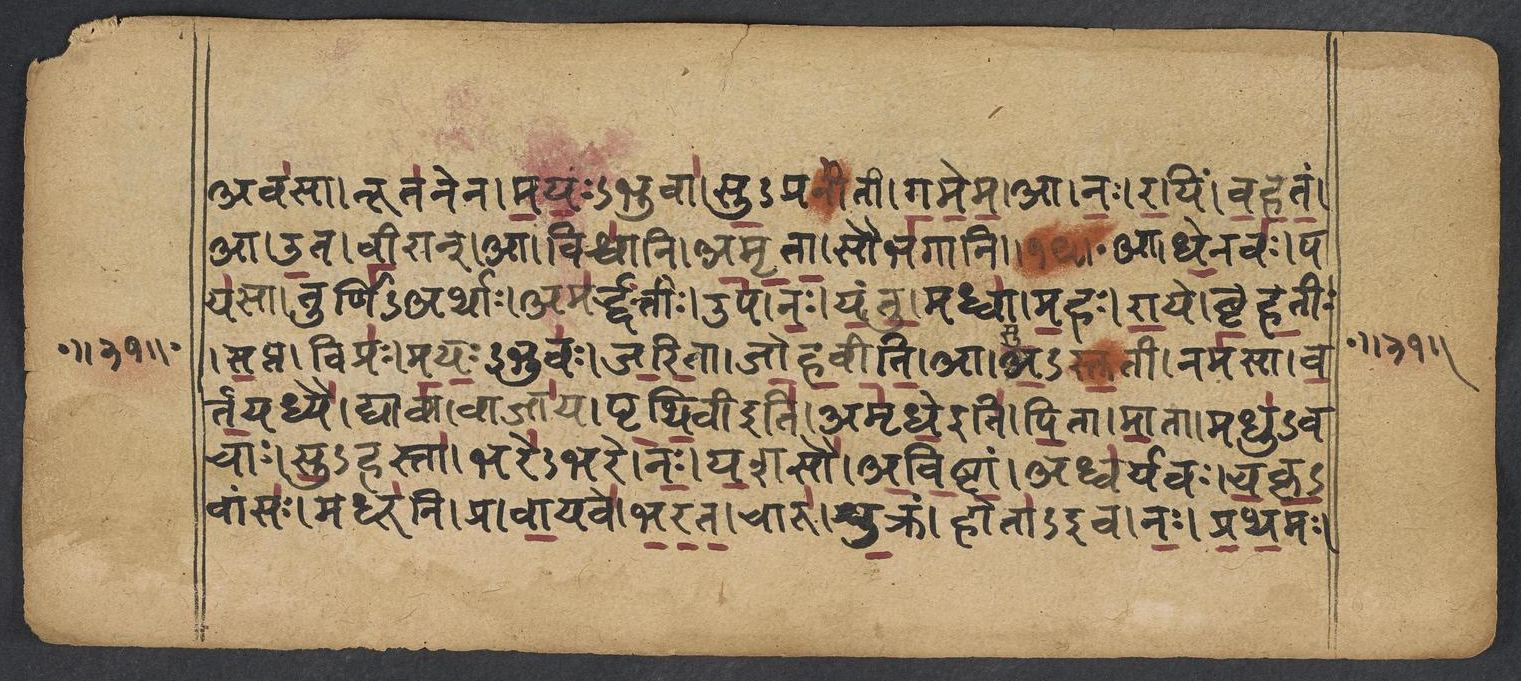
Penn Ms. Coll. 390 Item 41, fol. 358v (numbered 31v by the scribe) (OPenn image 359, upper leaf). Checked on the image: the Rigveda text on this page begins in RV 5.42.18 ‹avasā nūtanena mayaḥ-bhuvā su-pranītī›. The next page with Rigveda text, fol. 359r (numbered 32r by the scribe), begins in RV 5.43.3 ‹pāhi asya deva madhvaḥ›. Verse 5.42.18 ends on this page; 5.42.18 begins on fol. 358r (numbered 31r by the scribe).
18sam a̱śvino̱r ava̍sā̱ nūta̍nena mayo̱bhuvā̍ su̱praṇī̍tī gamema | ā no̍ ra̱yiṁ va̍hata̱m ota vī̱rān ā viśvā̍ny amṛtā̱ saubha̍gāni ||
Compare: Padapāṭha (word-by-word text written in the manuscript; Sansknet e-text via GRETIL)
18sam | aśvinoḥ | avasā | nūtanena | mayaḥ-bhuvā | su-pranītī | gamema | ā | naḥ | rayim | vahatam | ā | uta | vīrān | ā | viśvāni | amṛtā | saubhagāni
18May we obtain the Aṣvins' newest favour, and gain their health-bestowing happy guidance. Bring riches hither unto us, and heroes, and all felicity and joy, Immortals!
Notes
- Sanskrit: Aufrecht's edition (1877) with the Vedic accents, as entered by van Nooten and Holland (GRETIL).
- English: Ralph T. H. Griffith, The Hymns of the Rigveda (1889-1892; 2nd ed. 1896-1897), from the VedaWeb digital text; OCR slips in that text were corrected against the printed 2nd edition (data/sources/rigveda/griffith_errata.json).
- Padapāṭha (edition text): Sansknet e-text via GRETIL (CC BY-NC-SA 4.0).
Cite
Sources
- Source: Penn Ms. Coll. 390 Item 41 (undated (catalogued with Penn's 18th-19th c. Vedic manuscripts)), OPenn, Public Domain Mark + Aufrecht's accented text (GRETIL) + Griffith's English (VedaWeb) (holding institution)
- Critical edition: Aufrecht (1877), accented e-text via GRETIL
← previous · → next · v cycle view · l back to library