Rigveda 5.43: To all the gods
Introduction
Rigveda 5.43 is a hymn of 17 verses addressed to all the gods. It stands in book (maṇḍala) 5, the family book of the Atri clan. The Rigveda is the oldest collection of Sanskrit hymns, composed in the second half of the second millennium BCE and handed down orally for many centuries before it was written down.
The manuscript shown is Penn Ms. Coll. 390 Item 41 (University of Pennsylvania), an undated paper manuscript of the padapāṭha (the word-by-word recitation text, in which every word is written separately and compounds are split) of the whole Ṛgveda in Devanāgarī, 884 leaves in fascicles, 7-9 lines to the page, accents in red; this hymn stands on fol. 358v-360v. Each section below gives the verses that end on one page; the page boundaries were read on the images (the opening words of every page), not counted out. Where the manuscript is a padapāṭha (the word-by-word recitation text), the section shows Aufrecht's continuous (saṃhitā) text first and, as the edition text, the padapāṭha of the same verses, which is the form written on the page.
How was this verified? (Provenance)
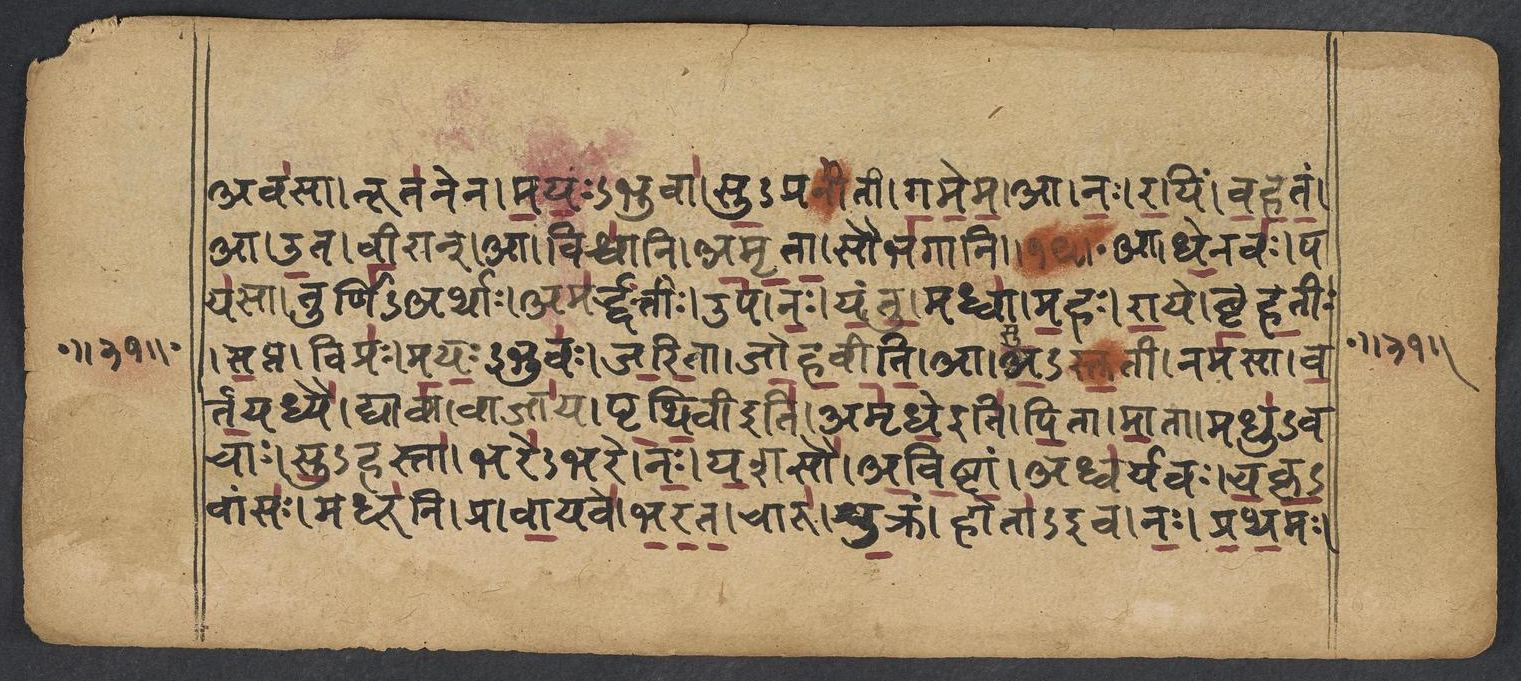
Where on the image
Penn Ms. Coll. 390 Item 41, fol. 358v (numbered 31v by the scribe) (OPenn image 359, upper leaf). Checked on the image: the Rigveda text on this page begins in RV 5.42.18 ‹avasā nūtanena mayaḥ-bhuvā su-pranītī›. The next page with Rigveda text, fol. 359r (numbered 32r by the scribe), begins in RV 5.43.3 ‹pāhi asya deva madhvaḥ›. Verses 5.43.1-2 end on this page.
1ā dhe̱nava̱ḥ paya̍sā̱ tūrṇya̍rthā̱ ama̍rdhantī̱r upa̍ no yantu̱ madhvā̍ | ma̱ho rā̱ye bṛ̍ha̱tīḥ sa̱pta vipro̍ mayo̱bhuvo̍ jari̱tā jo̍havīti ||
2ā su̍ṣṭu̱tī nama̍sā varta̱yadhyai̱ dyāvā̱ vājā̍ya pṛthi̱vī amṛ̍dhre | pi̱tā mā̱tā madhu̍vacāḥ su̱hastā̱ bhare̍-bhare no ya̱śasā̍v aviṣṭām ||
Compare: Padapāṭha (word-by-word text written in the manuscript; Sansknet e-text via GRETIL)
1ā | dhenavaḥ | payasā | tūrṇi-arthāḥ | amardhantīḥ | upa | naḥ | yantu | madhvā | mahaḥ | rāye | bṛhatīḥ | sapta | vipraḥ | mayaḥ-bhuvaḥ | jaritā | johavīti
2ā | su-stutī | namasā | vartayadhyai | dyāvā | vājāya | pṛthivī iti | amṛdhreiti | pitā | mātā | madhu-vacāḥ | su-hastā | bhare--bhare | naḥ | yaśasau | aviṣṭām
1MAY the Milch-cows who hasten to their object come harmless unto us with liquid sweetness. The Singer, lauding, calls, for ample riches, the Seven Mighty Ones who bring enjoyment.
2With reverence and fair praise will I bring hither, for sake of strength, exhaustless Earth and Heaven. Father and Mother, sweetof speech, fairhanded, may they, far-famed, in every fight protect us.
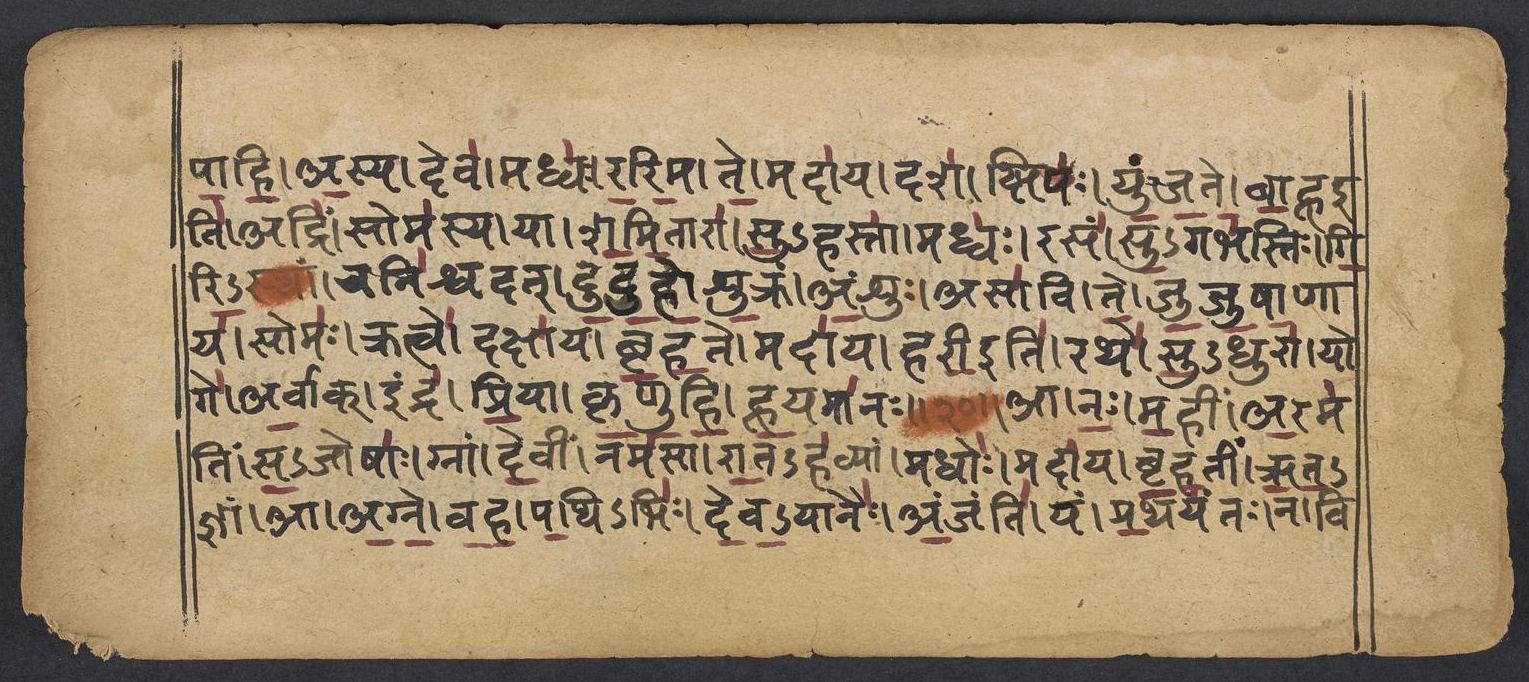
Where on the image
Penn Ms. Coll. 390 Item 41, fol. 359r (numbered 32r by the scribe) (OPenn image 359, lower leaf). Checked on the image: the Rigveda text on this page begins in RV 5.43.3 ‹pāhi asya deva madhvaḥ›. The next page with Rigveda text, fol. 359v (numbered 32v by the scribe), begins in RV 5.43.7 ‹-viprāḥ vapāvantam na agninā›. Verses 5.43.3-6 end on this page; 5.43.3 begins on fol. 358v (numbered 31v by the scribe).
3adhva̍ryavaś cakṛ̱vāṁso̱ madhū̍ni̱ pra vā̱yave̍ bharata̱ cāru̍ śu̱kram | hote̍va naḥ pratha̱maḥ pā̍hy a̱sya deva̱ madhvo̍ rari̱mā te̱ madā̍ya ||
4daśa̱ kṣipo̍ yuñjate bā̱hū adri̱ṁ soma̍sya̱ yā śa̍mi̱tārā̍ su̱hastā̍ | madhvo̱ rasa̍ṁ su̱gabha̍stir giri̱ṣṭhāṁ cani̍ścadad duduhe śu̱kram a̱ṁśuḥ ||
5asā̍vi te jujuṣā̱ṇāya̱ soma̱ḥ kratve̱ dakṣā̍ya bṛha̱te madā̍ya | harī̱ rathe̍ su̱dhurā̱ yoge̍ a̱rvāg indra̍ pri̱yā kṛ̍ṇuhi hū̱yamā̍naḥ ||
6ā no̍ ma̱hīm a̱rama̍tiṁ sa̱joṣā̱ gnāṁ de̱vīṁ nama̍sā rā̱taha̍vyām | madho̱r madā̍ya bṛha̱tīm ṛ̍ta̱jñām āgne̍ vaha pa̱thibhi̍r deva̱yānai̍ḥ ||
Compare: Padapāṭha (word-by-word text written in the manuscript; Sansknet e-text via GRETIL)
3adhvaryavaḥ | cakṛ-vāṃsaḥ | madhūni | pra | vāyave | bharata | cāru | śukram | hotāiva | naḥ | prathamaḥ | pāhi | asya | deva | madhvaḥ | rarima | te | madāya
4daśa | kṣipaḥ | yuñjate | bāhū iti | adrim | somasya | yā | śamitārā | su-hastā | madhvaḥ | rasam | su-gabhastiḥ | giri-sthām | caniścadat | duduhe | śukram | aṃśuḥ
5asāvi | te | jujuṣāṇāya | somaḥ | kratve | dakṣāya | bṛhate | madāya | harī iti | rathe | su-dhurā | yoge | arvāk | indra | priyā | kṛṇuhi | hūyamānaḥ
6ā | naḥ | mahīm | aramatim | sa-joṣāḥ | gnām | devīm | namasā | rāta-havyām | madhoḥ | madāya | bṛhatīm | ṛta-jñām | ā | agne | vaha | pathi-bhiḥ | deva-yānaiḥ
3Adhvaryus, make the sweet libations ready, and bring the beautiful bright juice to Vâyu. God, as our Priest, be thou the first to drink it: we give thee of the mead to make thee joyful.
4Two arms-the Soma's dexterous immo. lators-and the ten fingers set and fix the press-stone. The stalk hath poured, fair with its spreading branches, the mead's bright glittering juice that dwells on mountains.
5The Soma hath been pressed for thee, its lover, to give thee power and might and high enjoyment. Invoked, turn hither in thy car, O Indra, at need, thy two well-trained and dear Bay Horses.
6Bring by God-traversed paths, accordant, Agni, the great Aramati, Celestial Lady, Exalted, worshipped with our gifts and homage, who knoweth holy Law, to drink sweet Soma.
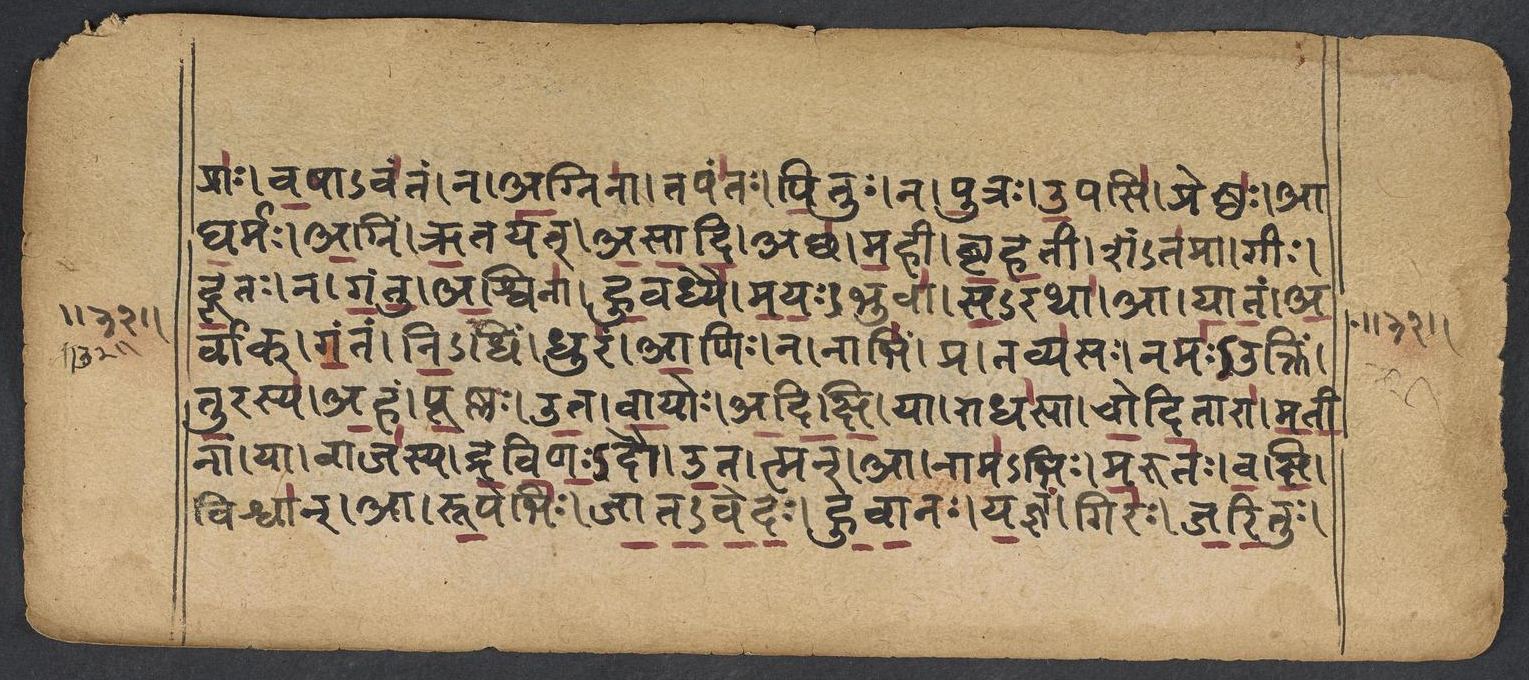
Where on the image
Penn Ms. Coll. 390 Item 41, fol. 359v (numbered 32v by the scribe) (OPenn image 360, upper leaf). Checked on the image: the Rigveda text on this page begins in RV 5.43.7 ‹-viprāḥ vapāvantam na agninā›. The next page with Rigveda text, fol. 360r (numbered 33r by the scribe), begins in RV 5.43.10 ‹su-stutim ca viśve ganta›. Verses 5.43.7-9 end on this page; 5.43.7 begins on fol. 359r (numbered 32r by the scribe).
7a̱ñjanti̱ yam pra̱thaya̍nto̱ na viprā̍ va̱pāva̍nta̱ṁ nāgninā̱ tapa̍ntaḥ | pi̱tur na pu̱tra u̱pasi̱ preṣṭha̱ ā gha̱rmo a̱gnim ṛ̱taya̍nn asādi ||
8acchā̍ ma̱hī bṛ̍ha̱tī śaṁta̍mā̱ gīr dū̱to na ga̍ntv a̱śvinā̍ hu̱vadhyai̍ | ma̱yo̱bhuvā̍ sa̱rathā yā̍tam a̱rvāg ga̱ntaṁ ni̱dhiṁ dhura̍m ā̱ṇir na nābhi̍m ||
9pra tavya̍so̱ nama̍üktiṁ tu̱rasyā̱ham pū̱ṣṇa u̱ta vā̱yor a̍dikṣi | yā rādha̍sā codi̱tārā̍ matī̱nāṁ yā vāja̍sya draviṇo̱dā u̱ta tman ||
Compare: Padapāṭha (word-by-word text written in the manuscript; Sansknet e-text via GRETIL)
7añjanti | yam | prathayantaḥ | na | viprāḥ | vapāvantam | na | agninā | tapantaḥ | pituḥ | na | putraḥ | upasi | preṣṭhaḥ | ā | gharmaḥ | agnim | ṛtayan | asādi
8accha | mahī | bṛhatī | śam-tamā | gīḥ | dūtaḥ | na | gantu | aśvinā | huvadhyai | mayaḥ-bhuvā | sarathā | ā | yātam | arvāk | gantam | ni-dhim | dhuram | āṇiḥ | na | nābhim
9pra | tavyasaḥ | namaḥ-uktim | turasya | aham | pūṣṇaḥ | uta | vāyoḥ | adikṣi | yā | rādhasā | coditārā | matīnām | yā | vājasya | draviṇaḥ-dau | uta | tman
7As on his father's lap the son, the darling, so on the fire is set the sacred caldron, Which holy singers deck, as if extending and heating that which holds the fatty membrane.
8Hither, as herald to invite the Aṣvins, come the great lofty song, most sweet and pleasant! Come in one car, joy-givers! to the banquet, like the bolt binding pole and nave, come hither.
9I have declared this speech of adoration to mightiest Pûshan and victorious Vâyu, Who by their bounty are the hymns' inspirers, and of themselves give power as a possession.
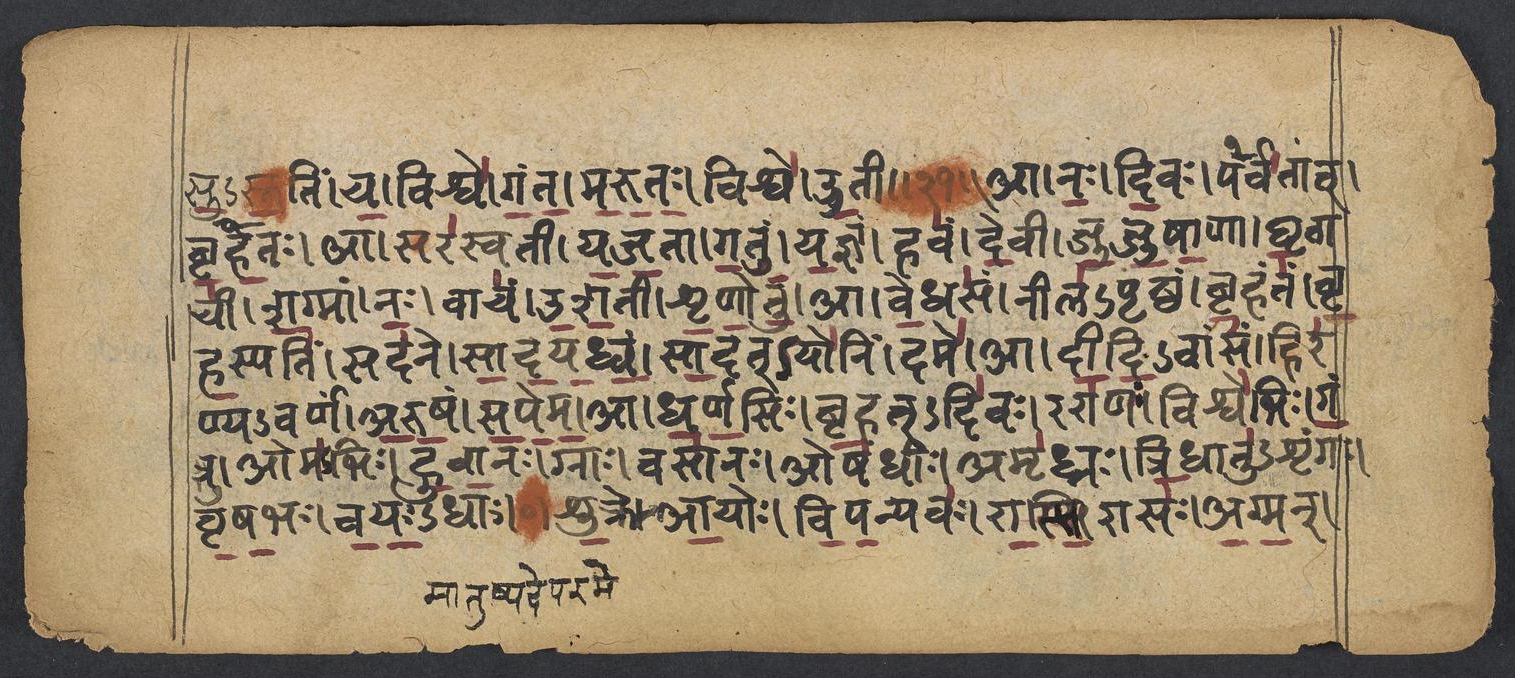
Where on the image
Penn Ms. Coll. 390 Item 41, fol. 360r (numbered 33r by the scribe) (OPenn image 360, lower leaf). Checked on the image: the Rigveda text on this page begins in RV 5.43.10 ‹su-stutim ca viśve ganta›. The next page with Rigveda text, fol. 360v (numbered 33v by the scribe), begins in RV 5.43.14 ‹su-śevyam namasā rāta-havyāḥ śiśum›. Verses 5.43.10-13 end on this page; 5.43.10 begins on fol. 359v (numbered 32v by the scribe).
10ā nāma̍bhir ma̱ruto̍ vakṣi̱ viśvā̱n ā rū̱pebhi̍r jātavedo huvā̱naḥ | ya̱jñaṁ giro̍ jari̱tuḥ su̍ṣṭu̱tiṁ ca̱ viśve̍ ganta maruto̱ viśva̍ ū̱tī ||
11ā no̍ di̱vo bṛ̍ha̱taḥ parva̍tā̱d ā sara̍svatī yaja̱tā ga̍ntu ya̱jñam | hava̍ṁ de̱vī ju̍juṣā̱ṇā ghṛ̱tācī̍ śa̱gmāṁ no̱ vāca̍m uśa̱tī śṛ̍ṇotu ||
12ā ve̱dhasa̱ṁ nīla̍pṛṣṭham bṛ̱hanta̱m bṛha̱spati̱ṁ sada̍ne sādayadhvam | sā̱dadyo̍ni̱ṁ dama̱ ā dī̍di̱vāṁsa̱ṁ hira̍ṇyavarṇam aru̱ṣaṁ sa̍pema ||
13ā dha̍rṇa̱sir bṛ̱haddi̍vo̱ rarā̍ṇo̱ viśve̍bhir ga̱ntv oma̍bhir huvā̱naḥ | gnā vasā̍na̱ oṣa̍dhī̱r amṛ̍dhras tri̱dhātu̍śṛṅgo vṛṣa̱bho va̍yo̱dhāḥ ||
Compare: Padapāṭha (word-by-word text written in the manuscript; Sansknet e-text via GRETIL)
10ā | nāma-bhiḥ | marutaḥ | vakṣi | viśvān | ā | rūpebhiḥ | jāta-vedaḥ | huvānaḥ | yajñam | giraḥ | jarituḥ | su-stutim | ca | viśve | ganta | marutaḥ | viśve | ūtī
11ā | naḥ | divaḥ | bṛhataḥ | parvatāt | ā | sarasvatī | yajatā | gantu | yajñam | havam | devī | jujuṣāṇā | ghṛtācī | śagmām | naḥ | vācam | uśatī | śṛṇotu
12ā | vedhasam | nīla-pṛṣṭham | bṛhantam | bṛhaspatim | sadane | sādayadhvam | sādat-yonim | dame | ā | dīdi-vāṃsam | hiraṇya-varṇam | aruṣam | sapema
13ā | dharṇasiḥ | bṛhat-divaḥ | rarāṇaḥ | viśvebhiḥ | gantu | oma-bhiḥ | huvānaḥ | gnāḥ | vasānaḥ | oṣadhīḥ | amṛdhraḥ | tridhātu-śṛṅgaḥ | vṛṣabhaḥ | vayaḥ-dhāḥ
10Invoked by us bring hither, Jâtavedas the Maruts all under their names and figures. Come to the sacrifice with aid all Maruts, all to the songs and praises of the singer!
11From high heaven may Sarasvatî the Holy visit our sacrifice, and from the mountain. Eager, propitious, may the balmy Goddess hear our effectual speech, our invocation.
12Set in his seat the God whose back is dusky, Br̥ihaspati the lofty, the Disposer. Him let us worship, set within the dwelling, the red, the golden-hued, the allresplendent.
13May the Sustainer, high in heaven, come hither, the Bounteous One, invoked, with all his favours, Dweller with Dames divine, with plants, unwearied, the Steer with triple horn, the life-bestower.
Where on the image
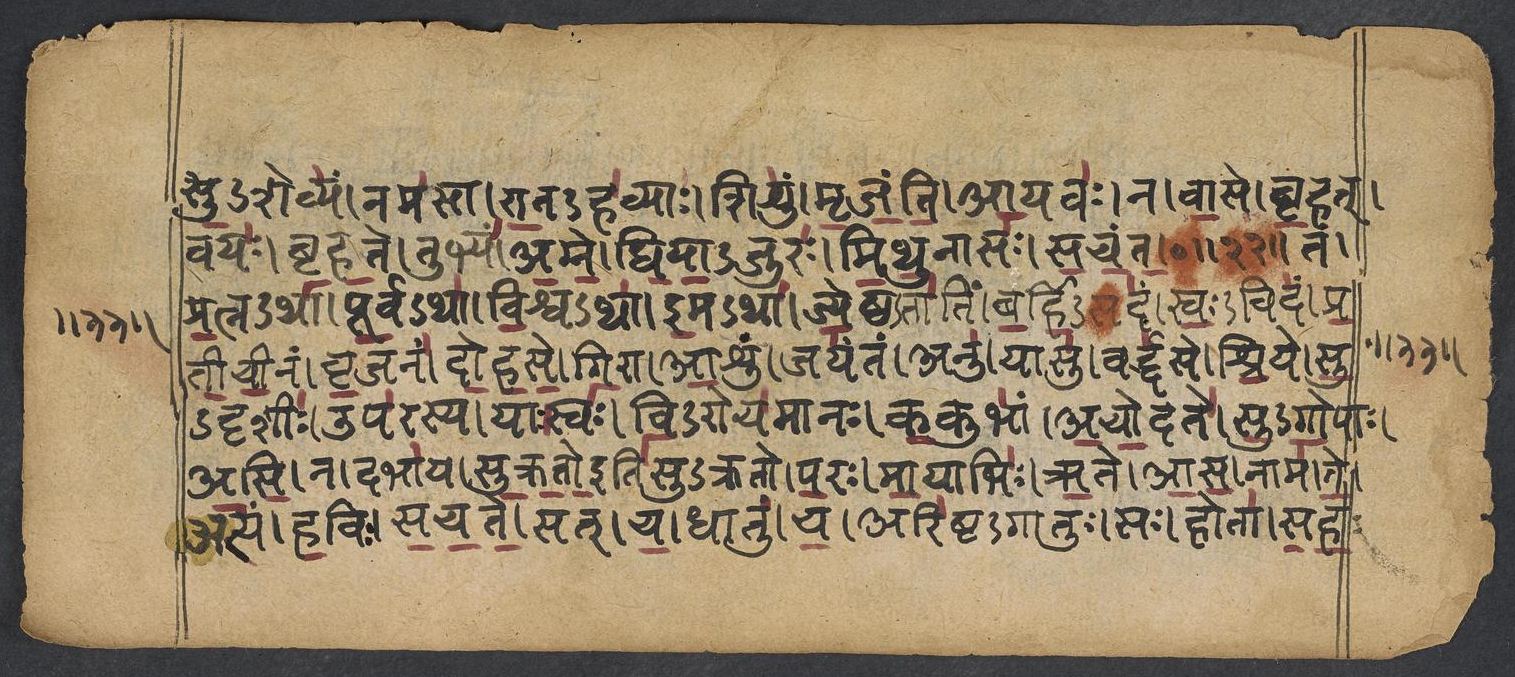
Penn Ms. Coll. 390 Item 41, fol. 360v (numbered 33v by the scribe) (OPenn image 361, upper leaf). Checked on the image: the Rigveda text on this page begins in RV 5.43.14 ‹su-śevyam namasā rāta-havyāḥ śiśum›. The next page with Rigveda text, fol. 361r (numbered 34r by the scribe), begins in RV 5.44.3 ‹-sahaḥ-bhariḥ pra-sarsrāṇaḥ anu barhiḥ›. Verses 5.43.14-17 end on this page; 5.43.14 begins on fol. 360r (numbered 33r by the scribe).
14mā̱tuṣ pa̱de pa̍ra̱me śu̱kra ā̱yor vi̍pa̱nyavo̍ rāspi̱rāso̍ agman | su̱śevya̱ṁ nama̍sā rā̱taha̍vyā̱ḥ śiśu̍m mṛjanty ā̱yavo̱ na vā̱se ||
15bṛ̱had vayo̍ bṛha̱te tubhya̍m agne dhiyā̱juro̍ mithu̱nāsa̍ḥ sacanta | de̱vo-de̍vaḥ su̱havo̍ bhūtu̱ mahya̱m mā no̍ mā̱tā pṛ̍thi̱vī du̍rma̱tau dhā̍t ||
16u̱rau de̍vā anibā̱dhe syā̍ma ||
17sam a̱śvino̱r ava̍sā̱ nūta̍nena mayo̱bhuvā̍ su̱praṇī̍tī gamema | ā no̍ ra̱yiṁ va̍hata̱m ota vī̱rān ā viśvā̍ny amṛtā̱ saubha̍gāni ||
Compare: Padapāṭha (word-by-word text written in the manuscript; Sansknet e-text via GRETIL)
14mātuḥ | pade | parame | śukre | āyoḥ | vipanyavaḥ | rāspirāsaḥ | agman | su-śevyam | namasā | rāta-havyāḥ | śiśum | mṛjanti | āyavaḥ | na | vāse
15bṛhat | vayaḥ | bṛhate | tubhyam | agne | dhiyājuraḥ | mithunāsaḥ | sacanta | devaḥ-devaḥ | su-havaḥ | bhūtu | mahyam | mā | naḥ | mātā | pṛthivī | duḥ-matau | dhāt
16urau | devāḥ | ani-bādhe | syāma
17sam | aśvinoḥ | avasā | nūtanena | mayaḥ-bhuvā | su-pranītī | gamema | ā | naḥ | rayim | vahatam | ā | uta | vīrān | ā | viśvāni | amṛtā | saubhagāni
14The tuneful eloquent priests of him who liveth have sought the Mother's bright and loftiest station. As living men, with offered gifts and homage they deck the most auspicious Child to clothe him.
15Agni, great vital power is thine, the mighty: pairs waxing old in their devotion seek thee. May every Deity be swift to listen, and Mother Earth with no ill thought regard me.
16Gods, may we dwell in free untroubled bliss.
17May we obtain the Aṣvins' newest favour, and gain their health-bestowing happy guidance. Bring riches hither unto us, and heroes, and all felicity and joy, Immortals!
Notes
- Sanskrit: Aufrecht's edition (1877) with the Vedic accents, as entered by van Nooten and Holland (GRETIL).
- English: Ralph T. H. Griffith, The Hymns of the Rigveda (1889-1892; 2nd ed. 1896-1897), from the VedaWeb digital text; OCR slips in that text were corrected against the printed 2nd edition (data/sources/rigveda/griffith_errata.json).
- Padapāṭha (edition text): Sansknet e-text via GRETIL (CC BY-NC-SA 4.0).
Cite
Sources
- Source: Penn Ms. Coll. 390 Item 41 (undated (catalogued with Penn's 18th-19th c. Vedic manuscripts)), OPenn, Public Domain Mark + Aufrecht's accented text (GRETIL) + Griffith's English (VedaWeb) (holding institution)
- Critical edition: Aufrecht (1877), accented e-text via GRETIL
← previous · → next · v cycle view · l back to library