Rigveda 6.17: To Indra
Introduction
Rigveda 6.17 is a hymn of 15 verses addressed to Indra. It stands in book (maṇḍala) 6, the family book of Bharadvāja. The Rigveda is the oldest collection of Sanskrit hymns, composed in the second half of the second millennium BCE and handed down orally for many centuries before it was written down.
The manuscript shown is Penn Ms. Coll. 390 Item 41 (University of Pennsylvania), an undated paper manuscript of the padapāṭha (the word-by-word recitation text, in which every word is written separately and compounds are split) of the whole Ṛgveda in Devanāgarī, 884 leaves in fascicles, 7-9 lines to the page, accents in red; this hymn stands on fol. 422v-424v. Each section below gives the verses that end on one page; the page boundaries were read on the images (the opening words of every page), not counted out. Where the manuscript is a padapāṭha (the word-by-word recitation text), the section shows Aufrecht's continuous (saṃhitā) text first and, as the edition text, the padapāṭha of the same verses, which is the form written on the page.
How was this verified? (Provenance)
Where on the image
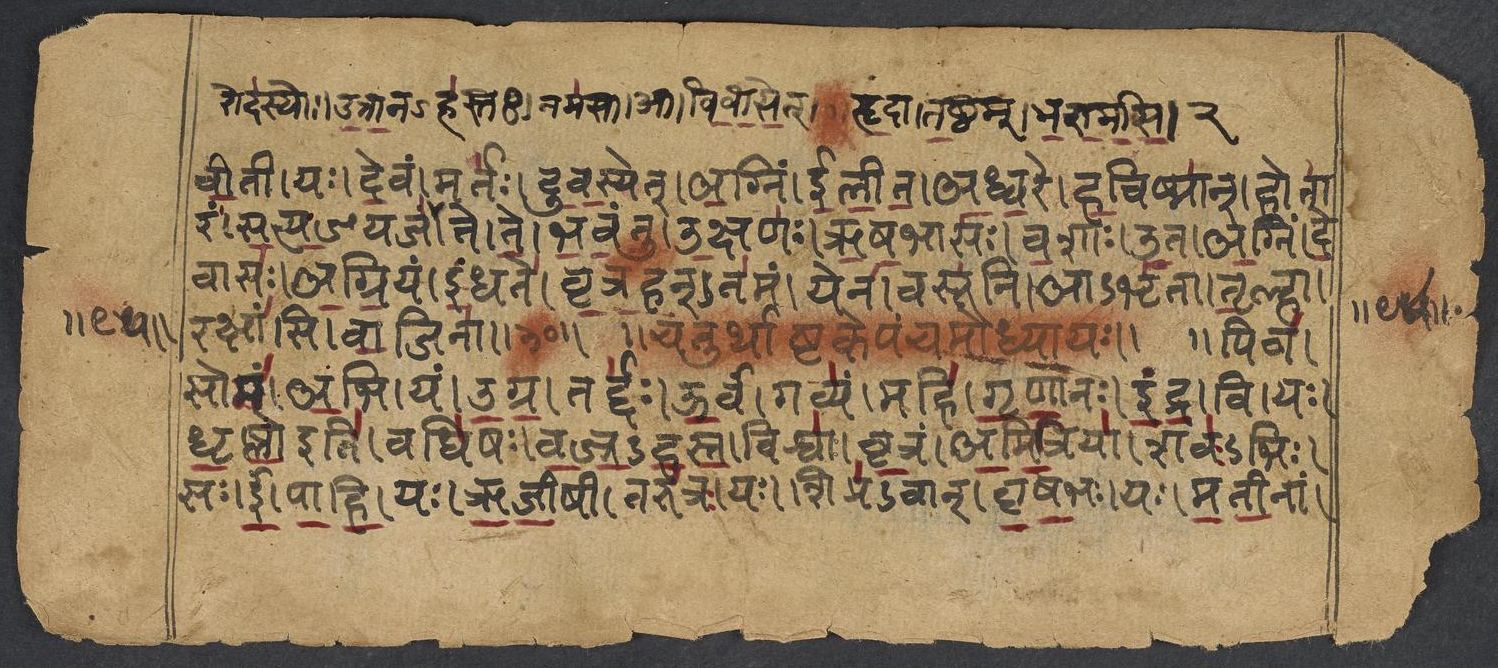
Penn Ms. Coll. 390 Item 41, fol. 422v (numbered 95v by the scribe) (OPenn image 423, upper leaf). Checked on the image: the Rigveda text on this page begins in RV 6.16.46 ‹vītī yaḥ devam martaḥ›. The next page with Rigveda text, fol. 423r (numbered 96r by the scribe), begins in RV 6.17.2 ‹yaḥ gotra-bhit vajra-bhṛt yaḥ›. Verse 6.17.1 ends on this page.
1pibā̱ soma̍m a̱bhi yam u̍gra̱ tarda̍ ū̱rvaṁ gavya̱m mahi̍ gṛṇā̱na i̍ndra | vi yo dhṛ̍ṣṇo̱ vadhi̍ṣo vajrahasta̱ viśvā̍ vṛ̱tram a̍mi̱triyā̱ śavo̍bhiḥ ||
Compare: Padapāṭha (word-by-word text written in the manuscript; Sansknet e-text via GRETIL)
1piba | somam | abhi | yam | ugra | tardaḥ | ūrvam | gavyam | mahi | gṛṇānaḥ | indra | vi | yaḥ | dhṛṣṇo iti | vadhiṣaḥ | vajra-hasta | viśvā | vṛtram | amitriyā | śavaḥ-bhiḥ
1DRINK Soma, Mighty One, for which, when lauded, thou breakest through the cattle-stall, O Indra; Thou who, O Bold One, armed with thunder smotest Vr̥itra with might, and every hostile being.
Where on the image
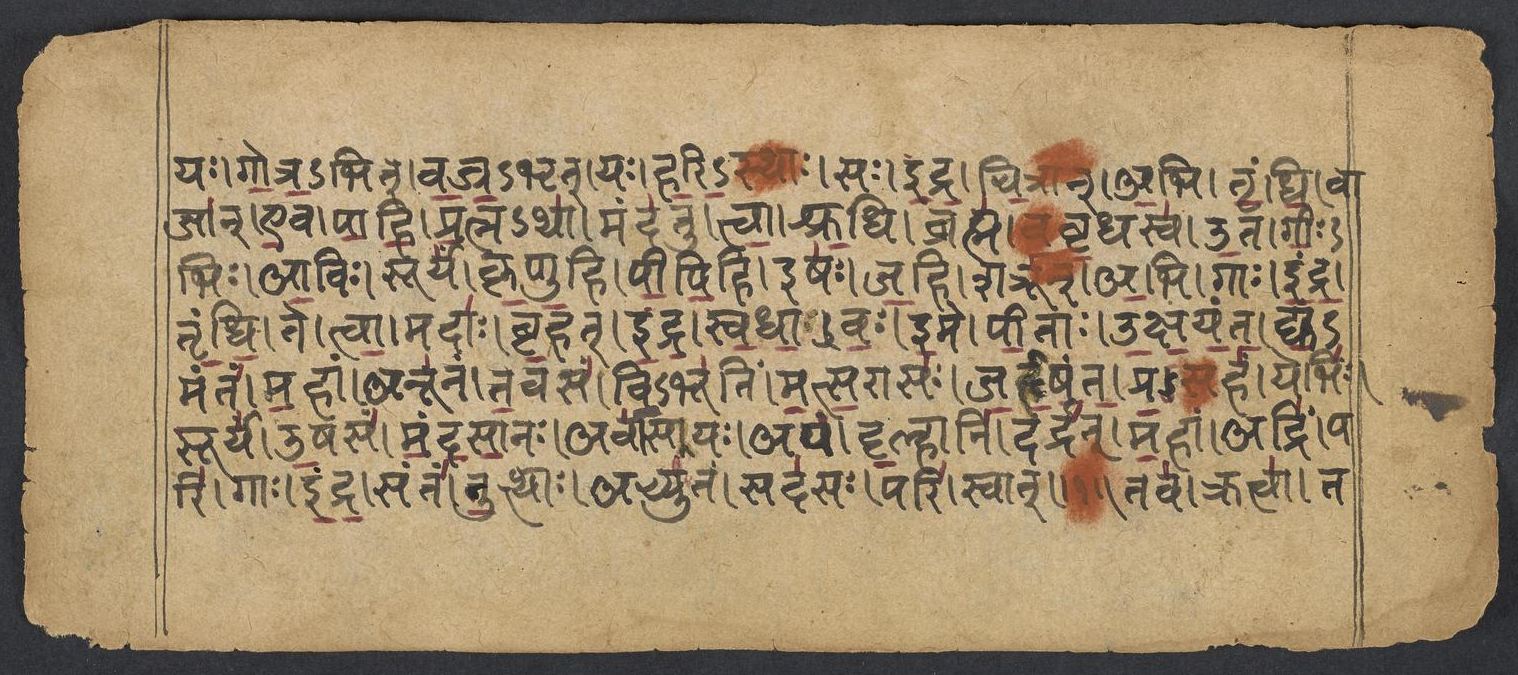
Penn Ms. Coll. 390 Item 41, fol. 423r (numbered 96r by the scribe) (OPenn image 423, lower leaf). Checked on the image: the Rigveda text on this page begins in RV 6.17.2 ‹yaḥ gotra-bhit vajra-bhṛt yaḥ›. The next page with Rigveda text, fol. 423v (numbered 96v by the scribe), begins in RV 6.17.6 ‹-tava tat daṃsanābhiḥ āmāsu›. Verses 6.17.2-5 end on this page; 6.17.2 begins on fol. 422v (numbered 95v by the scribe).
2sa ī̍m pāhi̱ ya ṛ̍jī̱ṣī taru̍tro̱ yaḥ śipra̍vān vṛṣa̱bho yo ma̍tī̱nām | yo go̍tra̱bhid va̍jra̱bhṛd yo ha̍ri̱ṣṭhāḥ sa i̍ndra ci̱trām̐ a̱bhi tṛ̍ndhi̱ vājā̍n ||
3e̱vā pā̍hi pra̱tnathā̱ manda̍tu tvā śru̱dhi brahma̍ vāvṛ̱dhasvo̱ta gī̱rbhiḥ | ā̱viḥ sūrya̍ṁ kṛṇu̱hi pī̍pi̱hīṣo̍ ja̱hi śatrū̍m̐r a̱bhi gā i̍ndra tṛndhi ||
4te tvā̱ madā̍ bṛ̱had i̍ndra svadhāva i̱me pī̱tā u̍kṣayanta dyu̱manta̍m | ma̱hām anū̍naṁ ta̱vasa̱ṁ vibhū̍tim matsa̱rāso̍ jarhṛṣanta pra̱sāha̍m ||
5yebhi̱ḥ sūrya̍m u̱ṣasa̍m mandasā̱no 'vā̍sa̱yo 'pa̍ dṛ̱ḻhāni̱ dardra̍t | ma̱hām adri̱m pari̱ gā i̍ndra̱ santa̍ṁ nu̱tthā acyu̍ta̱ṁ sada̍sa̱s pari̱ svāt ||
Compare: Padapāṭha (word-by-word text written in the manuscript; Sansknet e-text via GRETIL)
2saḥ | īm | pāhi | yaḥ | ṛjīṣī | tarutraḥ | yaḥ | śipra-vān | vṛṣabhaḥ | yaḥ | matīnām | yaḥ | gotra-bhit | vajra-bhṛt | yaḥ | hari-sthāḥ | saḥ | indra | citrān | abhi | tṛndhi | vājān
3eva | pāhi | pratna-thā | mandatu | tvā | śrudhi | brahma | vavṛdhasva | uta | gīḥ-bhiḥ | āviḥ | sūryam | kṛṇuhi | pīpihīṣaḥ | jahi | śatrūn | abhi | gāḥ | indra | tṛndhi
4te | tvā | madāḥ | bṛhat | indra | svadhāvaḥ | ime | pītāḥ | ukṣayanta | dyu-mantam | mahām | anūnam | tavasam | vi-bhūtim | matsarāsaḥ | jarhṛṣanta | pra-sāham
5yebhiḥ | sūryam | uṣasam | mandasānaḥ | avāsayaḥ | apa | dṛḷhāni | dardrat | mahām | adrim | pari | gāḥ | indra | santam | nutthāḥ | acyutam | sadasaḥ | pari | svāt
2Drink it thou God who art impetuous victor, Lord of our hymns, with beauteousjaws, the Hero, Render of kine-stalls, car-borne, thunder-wielding, so pierce thy way to wondrous strength, O Indra.
3Drink as of old, and let the draught delight thee. hear thou our prayer and let our songs exalt thee. Make the Sun visible, make food abundant, slaughter the foes, pierce through and free the cattle.
4These gladdening drops, O Indra, Self-sustainer, quaffed shall augment thee in thy mighty splendour. Yea, let the cheering drops delight thee greatly, great, perfect, strong, powerful, all-subduing.
5Gladdened whereby, bursting the firm enclosures, thou gavest splendour to the Sun and Morning. The mighty rock that compassed in the cattle, ne'er moved, thou shookest from its seat, O Indra.
Where on the image
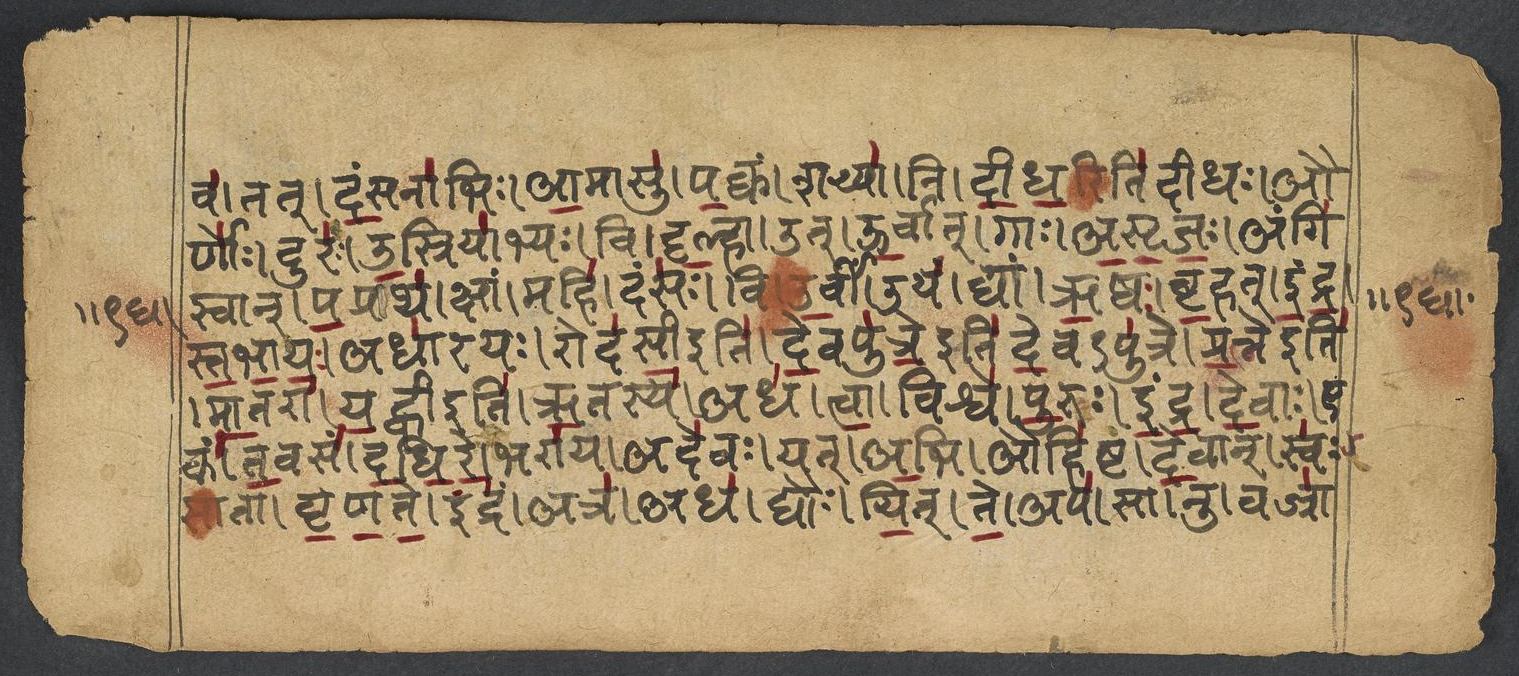
Penn Ms. Coll. 390 Item 41, fol. 423v (numbered 96v by the scribe) (OPenn image 424, upper leaf). Checked on the image: the Rigveda text on this page begins in RV 6.17.6 ‹-tava tat daṃsanābhiḥ āmāsu›. The next page with Rigveda text, fol. 424r (numbered 97r by the scribe), begins in RV 6.17.9 ‹-vajrāt dvitā anamat bhiyasā›. Verses 6.17.6-8 end on this page; 6.17.6 begins on fol. 423r (numbered 96r by the scribe).
6tava̱ kratvā̱ tava̱ tad da̱ṁsanā̍bhir ā̱māsu̍ pa̱kvaṁ śacyā̱ ni dī̍dhaḥ | aurṇo̱r dura̍ u̱sriyā̍bhyo̱ vi dṛ̱ḻhod ū̱rvād gā a̍sṛjo̱ aṅgi̍rasvān ||
7pa̱prātha̱ kṣām mahi̱ daṁso̱ vy u1̱̍rvīm upa̱ dyām ṛ̱ṣvo bṛ̱had i̍ndra stabhāyaḥ | adhā̍rayo̱ roda̍sī de̱vapu̍tre pra̱tne mā̱tarā̍ ya̱hvī ṛ̱tasya̍ ||
8adha̍ tvā̱ viśve̍ pu̱ra i̍ndra de̱vā eka̍ṁ ta̱vasa̍ṁ dadhire̱ bharā̍ya | ade̍vo̱ yad a̱bhy auhi̍ṣṭa de̱vān sva̍rṣātā vṛṇata̱ indra̱m atra̍ ||
Compare: Padapāṭha (word-by-word text written in the manuscript; Sansknet e-text via GRETIL)
6tava | kratvā | tava | tat | daṃsanābhiḥ | āmāsu | pakvam | śacyā | ni | dīdharitidīdhaḥ | aurṇoḥ | duraḥ | usriyābhyaḥ | vi | dṛḷhā | ut | ūrvāt | gāḥ | asṛjaḥ | aṅgirasvān
7paprātha | kṣām | mahi | daṃsaḥ | vi | urvīm | upa | dyām | ṛṣvaḥ | bṛhat | indra | stabhāyaḥ | adhārayaḥ | rodasī iti | devaputreitideva-putre | pratne iti | mātarā | yahvī iti | ṛtasya
8adha | tvā | viśve | puraḥ | indra | devāḥ | ekam | tavasam | dadhire | bharāya | adevaḥ | yat | abhi | auhiṣṭa | devān | svaḥ-sātā | vṛṇate | indram | atra
6Thou with thy wisdom, power, and works of wonder, hast stored the ripe milk in the raw cows' udders Unbarred the firm doors for the kine of Morning, and, with the Angirases, set free the cattle.
7Thou hast spread out wide earth, a mighty marvel, and, high thyself, propped lofty heaven, O Indra. Both worlds, whose Sons are Gods, thou hast supported, young, Mothers from old time ofholy Order.
8Yea, Indra, all the Deities installed thee their one strong Champion in the van for battle. What time the godless was the Gods' assailant, Indra they chose to win the light of heaven.
Where on the image
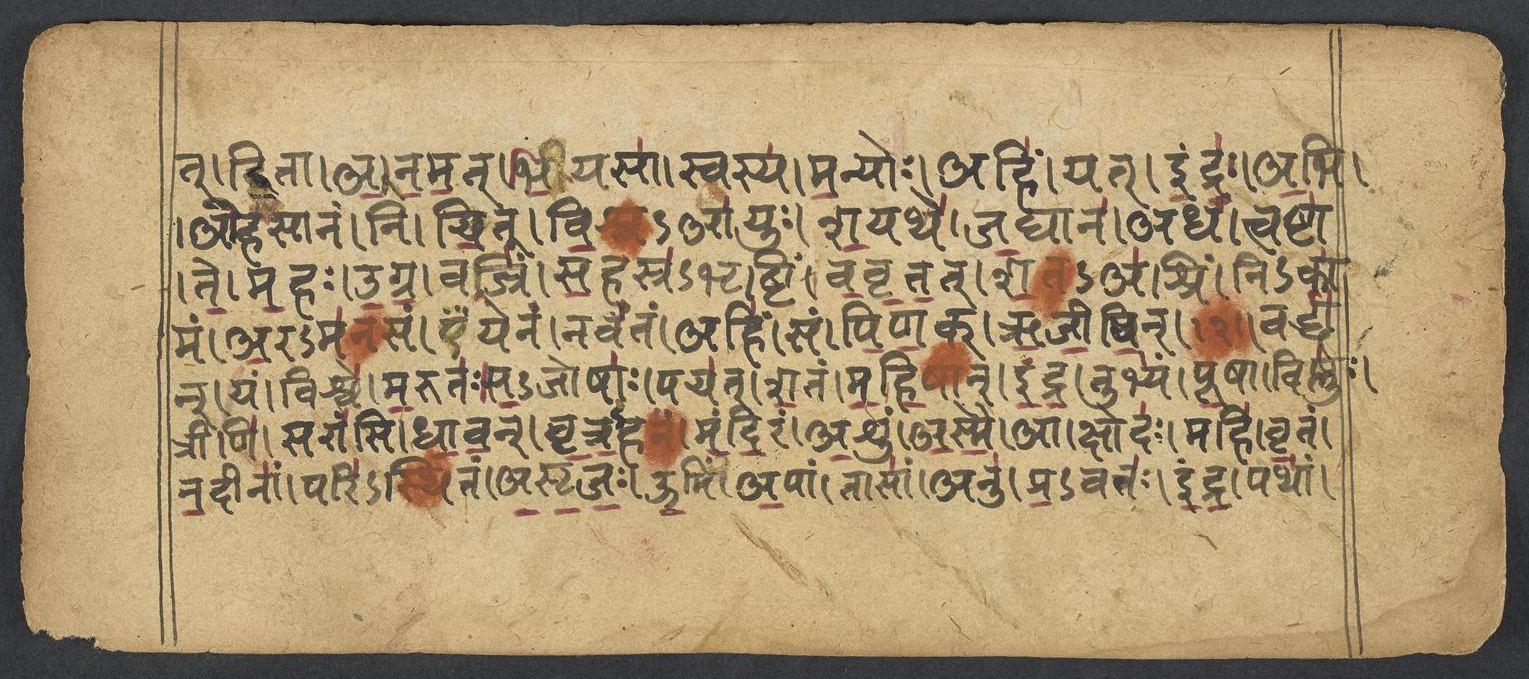
Penn Ms. Coll. 390 Item 41, fol. 424r (numbered 97r by the scribe) (OPenn image 424, lower leaf). Checked on the image: the Rigveda text on this page begins in RV 6.17.9 ‹-vajrāt dvitā anamat bhiyasā›. The next page with Rigveda text, fol. 424v (numbered 97v by the scribe), begins in RV 6.17.12 ‹pra ārdayaḥ nīcīḥ apasaḥ›. Verses 6.17.9-11 end on this page; 6.17.9 begins on fol. 423v (numbered 96v by the scribe).
9adha̱ dyauś ci̍t te̱ apa̱ sā nu vajrā̍d dvi̱tāna̍mad bhi̱yasā̱ svasya̍ ma̱nyoḥ | ahi̱ṁ yad indro̍ a̱bhy oha̍sāna̱ṁ ni ci̍d vi̱śvāyu̍ḥ śa̱yathe̍ ja̱ghāna̍ ||
10adha̱ tvaṣṭā̍ te ma̱ha u̍gra̱ vajra̍ṁ sa̱hasra̍bhṛṣṭiṁ vavṛtac cha̱tāśri̍m | nikā̍mam a̱rama̍ṇasa̱ṁ yena̱ nava̍nta̱m ahi̱ṁ sam pi̍ṇag ṛjīṣin ||
11vardhā̱n yaṁ viśve̍ ma̱ruta̍ḥ sa̱joṣā̱ḥ paca̍c cha̱tam ma̍hi̱ṣām̐ i̍ndra̱ tubhya̍m | pū̱ṣā viṣṇu̱s trīṇi̱ sarā̍ṁsi dhāvan vṛtra̱haṇa̍m madi̱ram a̱ṁśum a̍smai ||
Compare: Padapāṭha (word-by-word text written in the manuscript; Sansknet e-text via GRETIL)
9adha | dyauḥ | cit | te | apa | sā | nu | vajrāt | dvitā | anamat | bhiyasā | svasya | manyoḥ | ahim | yat | indraḥ | abhi | ohasānam | ni | cit | viśva-āyuḥ | śayathe | jaghāna
10adha | tvaṣṭā | te | mahaḥ | ugra | vajram | sahasra-bhṛṣṭim | vavṛtat | śata-aśrim | ni-kāmam | ara-manasam | yena | navantam | ahim | sam | piṇak | ṛjīṣin
11vardhān | yam | viśve | marutaḥ | sa-joṣāḥ | pacat | śatam | mahiṣān | indra | tubhyam | pūṣā | viṣṇuḥ | trīṇi | sarāṃsi | dhāvan | vṛtra-hanam | madiram | aṃśum | asmai
9Yea, e'en that heaven itself of old bent backward before thy bolt, in terror of its anger, When Indra, life of every living creature, smote down within his lair the assailing Dragon.
10Yea, Strong One! Tvashṭar turned for thee, the Mighty, the bolt with thousand spikes and hundred edges, Eager and prompt at will, wherewith thou crushedst the boasting Dragon, O impetuous Hero.
11He dressed a hundred buffaloes, O Indra, for thee whom all accordant Maruts strengthen. He, Pûshan Vishṇu, poured forth three great vessels to him, the juice that cheers, that slaughters Vr̥itra.
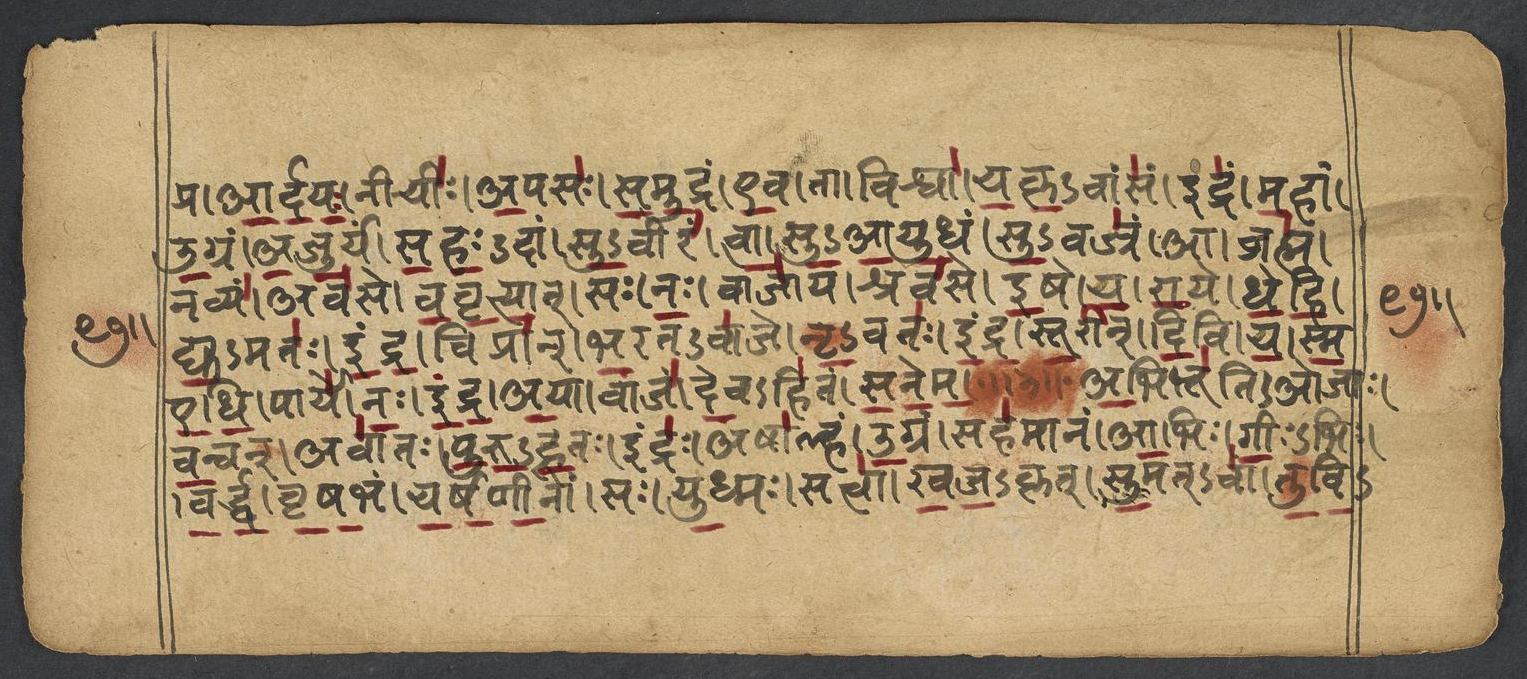
Where on the image
Penn Ms. Coll. 390 Item 41, fol. 424v (numbered 97v by the scribe) (OPenn image 425, upper leaf). Checked on the image: the Rigveda text on this page begins in RV 6.17.12 ‹pra ārdayaḥ nīcīḥ apasaḥ›. The next page with Rigveda text, fol. 425r (numbered 98r by the scribe), begins in RV 6.18.2 ‹-tuvi-mrakṣaḥ nadanu-mān ṛjīṣī bṛhat-reṇuḥ›. Verses 6.17.12-15 end on this page; 6.17.12 begins on fol. 424r (numbered 97r by the scribe).
12ā kṣodo̱ mahi̍ vṛ̱taṁ na̱dīnā̱m pari̍ṣṭhitam asṛja ū̱rmim a̱pām | tāsā̱m anu̍ pra̱vata̍ indra̱ panthā̱m prārda̍yo̱ nīcī̍r a̱pasa̍ḥ samu̱dram ||
13e̱vā tā viśvā̍ cakṛ̱vāṁsa̱m indra̍m ma̱hām u̱gram a̍ju̱ryaṁ sa̍ho̱dām | su̱vīra̍ṁ tvā svāyu̱dhaṁ su̱vajra̱m ā brahma̱ navya̱m ava̍se vavṛtyāt ||
14sa no̱ vājā̍ya̱ śrava̍sa i̱ṣe ca̍ rā̱ye dhe̍hi dyu̱mata̍ indra̱ viprā̍n | bha̱radvā̍je nṛ̱vata̍ indra sū̱rīn di̱vi ca̍ smaidhi̱ pārye̍ na indra ||
15a̱yā vāja̍ṁ de̱vahi̍taṁ sanema̱ made̍ma śa̱tahi̍māḥ su̱vīrā̍ḥ ||
Compare: Padapāṭha (word-by-word text written in the manuscript; Sansknet e-text via GRETIL)
12ā | kṣodaḥ | mahi | vṛtam | nadīnām | pari-sthitam | asṛjaḥ | ūrmim | apām | tāsām | anu | pra-vataḥ | indra | panthām | pra | ārdayaḥ | nīcīḥ | apasaḥ | samudram
13eva | tā | viśvā | cakṛ-vāṃsam | indram | mahām | ugram | ajuryam | sahaḥ-dām | su-vīram | tvā | su-āyudham | su-vajram | ā | brahma | navyam | avase | vavṛtyāt
14saḥ | naḥ | vājāya | śravase | iṣe | ca | rāye | dhehi | dyu-mataḥ | indra | viprān | bharat-vāje | nṛ-vataḥ | indra | sūrīn | divi | ca | sma | edhi | pārye | naḥ | indra
15ayā | vājam | deva-hitam | sanema | madema | śata-himāḥ | su-vīrāḥ
12Thou settest free the rushing wave of waters, the floods' great swell encompassed and obstructed. Along steep slopes their course thou tumedst, Indra, directed downward, speeding to the ocean.
13So may our new prayer bring thee to protect us, thee well-armed Hero with thy bolt of thunder, Indra, who made these worlds, the Strong, the ty, who never groweth old, the victory-giver.
14So, Indra, form us brilliant holy singers for strength, for glory, and for food and riches. Give Bharadvâja hero patrons, Indra Indra, be ours upon the day of trial.
15With this may we obtain strength God-appointed, and brave sons gladden us through a hundred winters.
Notes
- Sanskrit: Aufrecht's edition (1877) with the Vedic accents, as entered by van Nooten and Holland (GRETIL).
- English: Ralph T. H. Griffith, The Hymns of the Rigveda (1889-1892; 2nd ed. 1896-1897), from the VedaWeb digital text; OCR slips in that text were corrected against the printed 2nd edition (data/sources/rigveda/griffith_errata.json).
- Padapāṭha (edition text): Sansknet e-text via GRETIL (CC BY-NC-SA 4.0).
Cite
Sources
- Source: Penn Ms. Coll. 390 Item 41 (undated (catalogued with Penn's 18th-19th c. Vedic manuscripts)), OPenn, Public Domain Mark + Aufrecht's accented text (GRETIL) + Griffith's English (VedaWeb) (holding institution)
- Critical edition: Aufrecht (1877), accented e-text via GRETIL
← previous · → next · v cycle view · l back to library