Rigveda 6.18: To Indra
Introduction
Rigveda 6.18 is a hymn of 15 verses addressed to Indra. It stands in book (maṇḍala) 6, the family book of Bharadvāja. The Rigveda is the oldest collection of Sanskrit hymns, composed in the second half of the second millennium BCE and handed down orally for many centuries before it was written down.
The manuscript shown is Penn Ms. Coll. 390 Item 41 (University of Pennsylvania), an undated paper manuscript of the padapāṭha (the word-by-word recitation text, in which every word is written separately and compounds are split) of the whole Ṛgveda in Devanāgarī, 884 leaves in fascicles, 7-9 lines to the page, accents in red; this hymn stands on fol. 424v-427r. Each section below gives the verses that end on one page; the page boundaries were read on the images (the opening words of every page), not counted out. Where the manuscript is a padapāṭha (the word-by-word recitation text), the section shows Aufrecht's continuous (saṃhitā) text first and, as the edition text, the padapāṭha of the same verses, which is the form written on the page.
How was this verified? (Provenance)
Where on the image
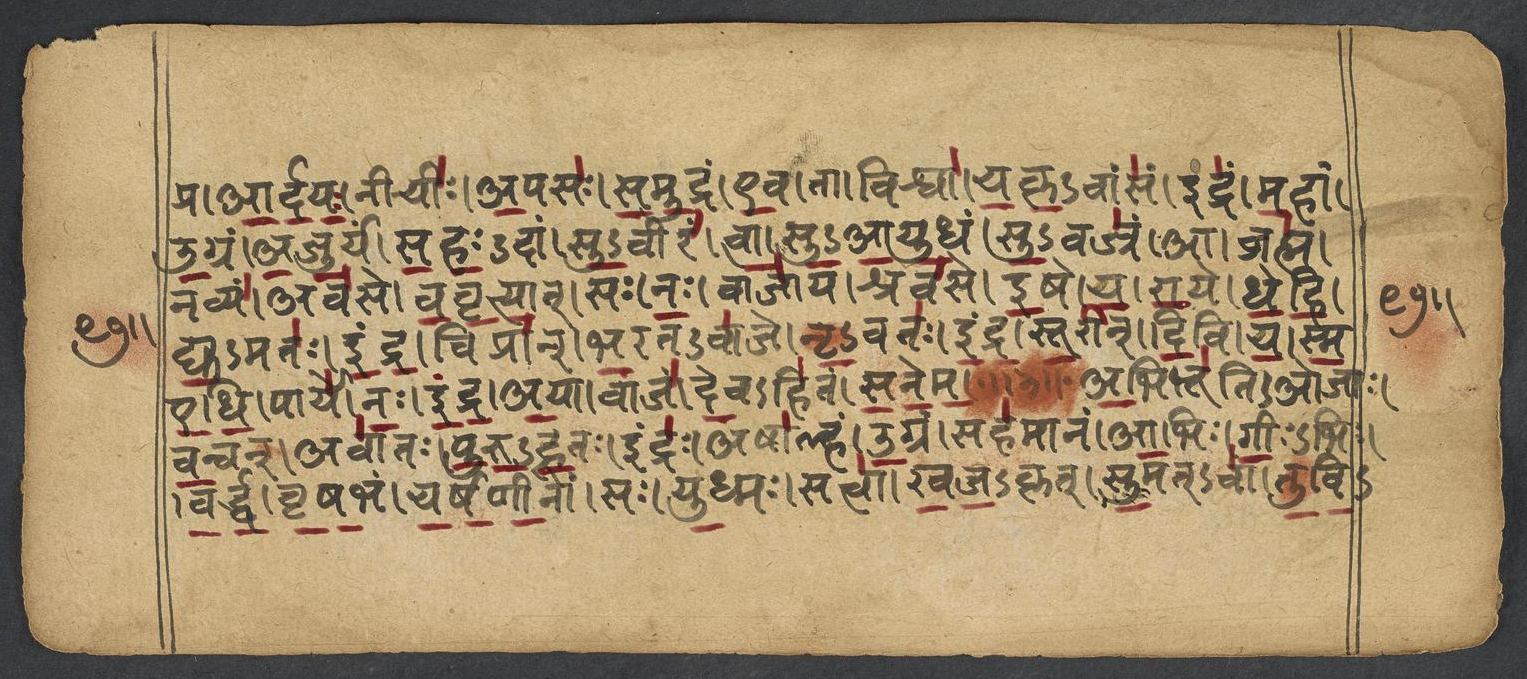
Penn Ms. Coll. 390 Item 41, fol. 424v (numbered 97v by the scribe) (OPenn image 425, upper leaf). Checked on the image: the Rigveda text on this page begins in RV 6.17.12 ‹pra ārdayaḥ nīcīḥ apasaḥ›. The next page with Rigveda text, fol. 425r (numbered 98r by the scribe), begins in RV 6.18.2 ‹-tuvi-mrakṣaḥ nadanu-mān ṛjīṣī bṛhat-reṇuḥ›. Verse 6.18.1 ends on this page.
1tam u̍ ṣṭuhi̱ yo a̱bhibhū̍tyojā va̱nvann avā̍taḥ puruhū̱ta indra̍ḥ | aṣā̍ḻham u̱graṁ saha̍mānam ā̱bhir gī̱rbhir va̍rdha vṛṣa̱bhaṁ ca̍rṣaṇī̱nām ||
Compare: Padapāṭha (word-by-word text written in the manuscript; Sansknet e-text via GRETIL)
1tam | oṃ iti | stuhi | yaḥ | abhibhūti-ojāḥ | vanvan | avātaḥ | puru-hūtaḥ | indraḥ | aṣāḷham | ugram | sahamānam | ābhiḥ | gīḥ-bhiḥ | vardha | vṛṣabham | carṣaṇīnām
1GLORIFY him whose might is all-surpassing, Indra the much-invoked who fights uninjured. Magnify with these songs the never-vanquished, the Strong, the Bull of men, the Mighty Victor.
Where on the image
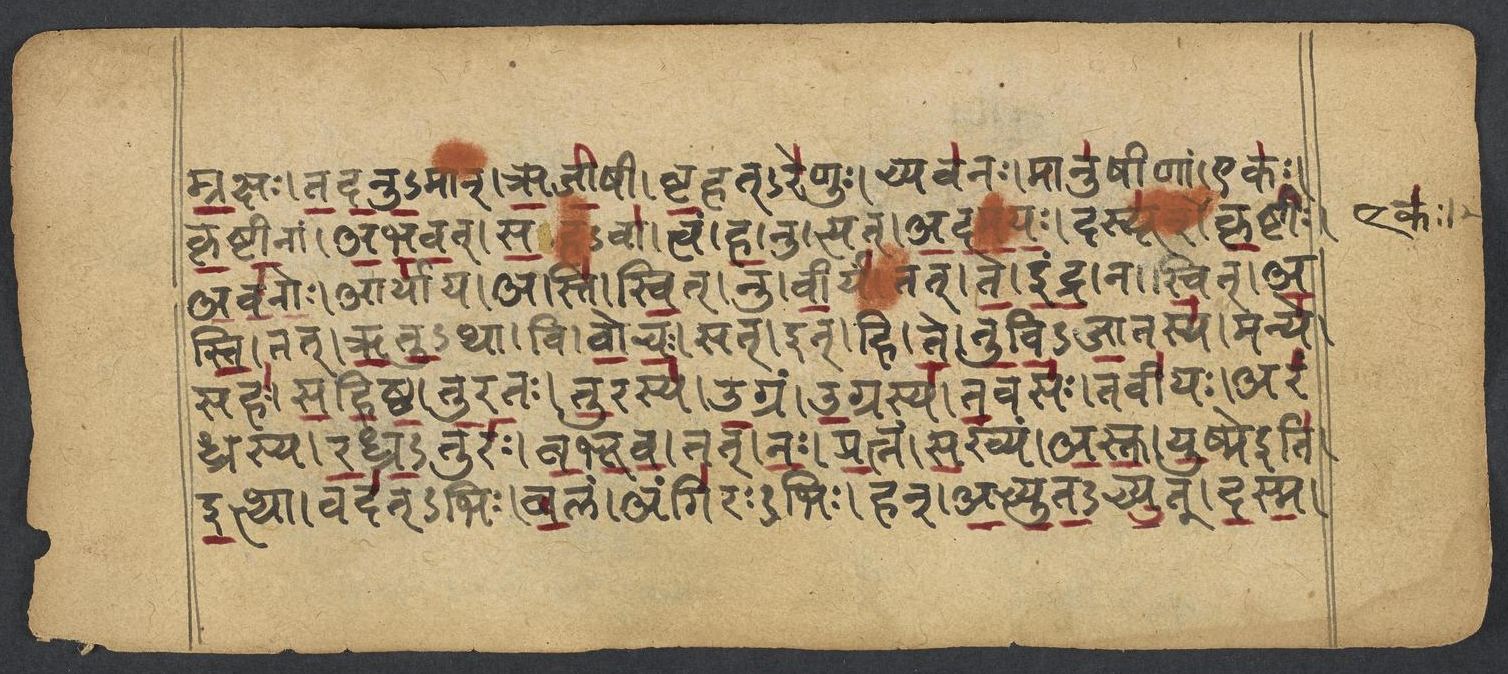
Penn Ms. Coll. 390 Item 41, fol. 425r (numbered 98r by the scribe) (OPenn image 425, lower leaf). Checked on the image: the Rigveda text on this page begins in RV 6.18.2 ‹-tuvi-mrakṣaḥ nadanu-mān ṛjīṣī bṛhat-reṇuḥ›. The next page with Rigveda text, fol. 425v (numbered 98v by the scribe), begins in RV 6.18.5 ‹iṣayantam ṛṇoḥ puraḥ vi›. Verses 6.18.2-4 end on this page; 6.18.2 begins on fol. 424v (numbered 97v by the scribe).
2sa yu̱dhmaḥ satvā̍ khaja̱kṛt sa̱madvā̍ tuvimra̱kṣo na̍danu̱mām̐ ṛ̍jī̱ṣī | bṛ̱hadre̍ṇu̱ś cyava̍no̱ mānu̍ṣīṇā̱m eka̍ḥ kṛṣṭī̱nām a̍bhavat sa̱hāvā̍ ||
3tvaṁ ha̱ nu tyad a̍damāyo̱ dasyū̱m̐r eka̍ḥ kṛ̱ṣṭīr a̍vano̱r āryā̍ya | asti̍ svi̱n nu vī̱rya1̱̍ṁ tat ta̍ indra̱ na svi̍d asti̱ tad ṛ̍tu̱thā vi vo̍caḥ ||
4sad id dhi te̍ tuvijā̱tasya̱ manye̱ saha̍ḥ sahiṣṭha tura̱tas tu̱rasya̍ | u̱gram u̱grasya̍ ta̱vasa̱s tavī̱yo 'ra̍dhrasya radhra̱turo̍ babhūva ||
Compare: Padapāṭha (word-by-word text written in the manuscript; Sansknet e-text via GRETIL)
2saḥ | yudhmaḥ | satvā | khaja-kṛt | samat-vā | tuvi-mrakṣaḥ | nadanu-mān | ṛjīṣī | bṛhat-reṇuḥ | cyavanaḥ | mānuṣīṇām | ekaḥ | kṛṣṭīnām | abhavat | saha-vā
3tvam | ha | nu | tyat | adamayaḥ | dasyūn | ekaḥ | kṛṣṭīḥ | avanoḥ | āryāya | asti | svit | nu | vīryam | tat | te | indra | na | svit | asti | tat | ṛtu-thā | vi | vocaḥ
4sat | it | hi | te | tuvi-jātasya | manye | sahaḥ | sahiṣṭha | turataḥ | turasya | ugram | ugrasya | tavasaḥ | tavīyaḥ | aradhrasya | radhra-turaḥ | babhūva
2He, Champion, Hero, Warrior, Lord of battles, impetuous, loudly roaring, great destroyer, Who whirls the dust on high, alone, oerthrower, hath made all races of mankind his subjects.
3Thou, thou alone, hast tamed the Dasyus; singly thou hast subdued the people for the Ârya. In this, or is it not, thine hero exploit, Indra? Declare it at the proper season.
4For true, I deem, thy strength is, thine the Mighty, thine, O Most Potent, thine the Conquering Victor; Strong, of the strong, Most Mighty, of the mighty, thine, driver of the churl to acts of bounty.
Where on the image
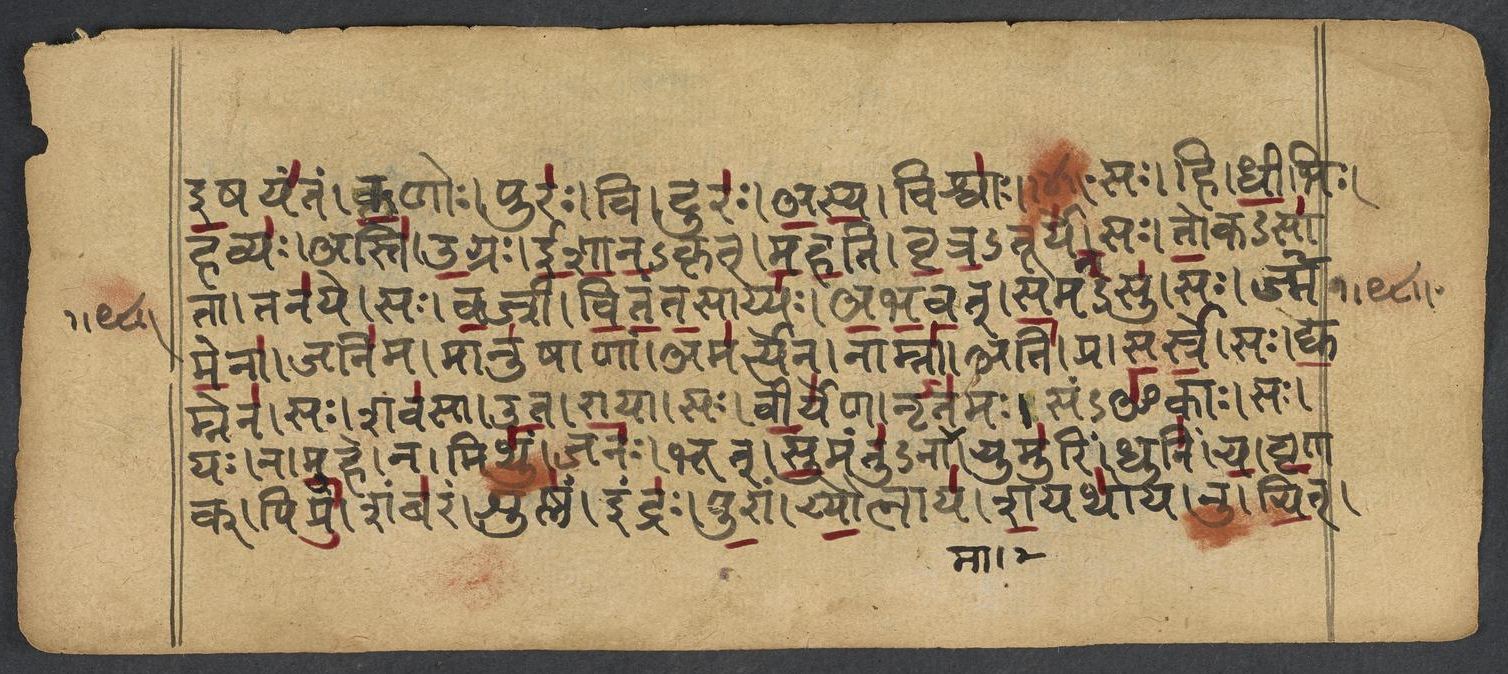
Penn Ms. Coll. 390 Item 41, fol. 425v (numbered 98v by the scribe) (OPenn image 426, upper leaf). Checked on the image: the Rigveda text on this page begins in RV 6.18.5 ‹iṣayantam ṛṇoḥ puraḥ vi›. The next page with Rigveda text, fol. 426r (numbered 99r by the scribe), begins in RV 6.18.9 ‹ut-avatā tvakṣasā panyasā ca›. Verses 6.18.5-8 end on this page; 6.18.5 begins on fol. 425r (numbered 98r by the scribe).
5tan na̍ḥ pra̱tnaṁ sa̱khyam a̍stu yu̱ṣme i̱tthā vada̍dbhir va̱lam aṅgi̍robhiḥ | hann a̍cyutacyud dasme̱ṣaya̍ntam ṛ̱ṇoḥ puro̱ vi duro̍ asya̱ viśvā̍ḥ ||
6sa hi dhī̱bhir havyo̱ asty u̱gra ī̍śāna̱kṛn ma̍ha̱ti vṛ̍tra̱tūrye̍ | sa to̱kasā̍tā̱ tana̍ye̱ sa va̱jrī vi̍tanta̱sāyyo̍ abhavat sa̱matsu̍ ||
7sa ma̱jmanā̱ jani̍ma̱ mānu̍ṣāṇā̱m ama̍rtyena̱ nāmnāti̱ pra sa̍rsre | sa dyu̱mnena̱ sa śava̍so̱ta rā̱yā sa vī̱rye̍ṇa̱ nṛta̍ma̱ḥ samo̍kāḥ ||
8sa yo na mu̱he na mithū̱ jano̱ bhūt su̱mantu̍nāmā̱ cumu̍ri̱ṁ dhuni̍ṁ ca | vṛ̱ṇak pipru̱ṁ śamba̍ra̱ṁ śuṣṇa̱m indra̍ḥ pu̱rāṁ cyau̱tnāya̍ śa̱yathā̍ya̱ nū ci̍t ||
Compare: Padapāṭha (word-by-word text written in the manuscript; Sansknet e-text via GRETIL)
5tat | naḥ | pratnam | sakhyam | astu | yuṣme iti | itthā | vadat-bhiḥ | valam | aṅgiraḥ-bhiḥ | han | acyuta-cyut | dasma | iṣayantam | ṛṇoḥ | puraḥ | vi | duraḥ | asya | viśvāḥ
6saḥ | hi | dhībhiḥ | havyaḥ | asti | ugraḥ | īśāna-kṛt | mahati | vṛtra-tūrye | saḥ | toka-sātā | tanaye | saḥ | vajrī | vitantasāyyaḥ | abhavat | samat-su
7saḥ | majmanā | janima | mānuṣāṇām | amartyena | nāmnā | ati | pra | sarsre | saḥ | dyumnena | saḥ | śavasā | uta | rāyā | saḥ | vīryeṇa | nṛ-tamaḥ | sam-okāḥ
8saḥ | yaḥ | na | muhe | na | mithu | janaḥ | bhūt | sumantu-nāmā | / cumurim | dhunim | ca | vṛṇak | piprum | śambaram | śuṣṇam | indraḥ | purām | cyautnāya | śayathāya | nu | cit
5Be this our ancient bond of friendship with you and with Angirases here who speak of Vala. Thou, Wondrous, Shaker of things firm, didst smite him in his fresh strength, and force his doors and castles.
6With holy thoughts must he be called, the Mighty, showing his power in the great fight with Vr̥itra. He must be called to give us seed and offspring, the Thunderer must he moved and sped to battle.
7He in his might, with name that lives for ever, hath far surpassed all human generations. He, most heroic, hath his home with splendour, with glory and with riches and with valour.
8Stranger to guile, who ne'er was false or faithless, bearing a name that may be well remembered, Indra crushed Chumuri, Dhuni, Ṣambara, Pipru, and Ṣushṇa, that their castles fell in ruin.
Where on the image
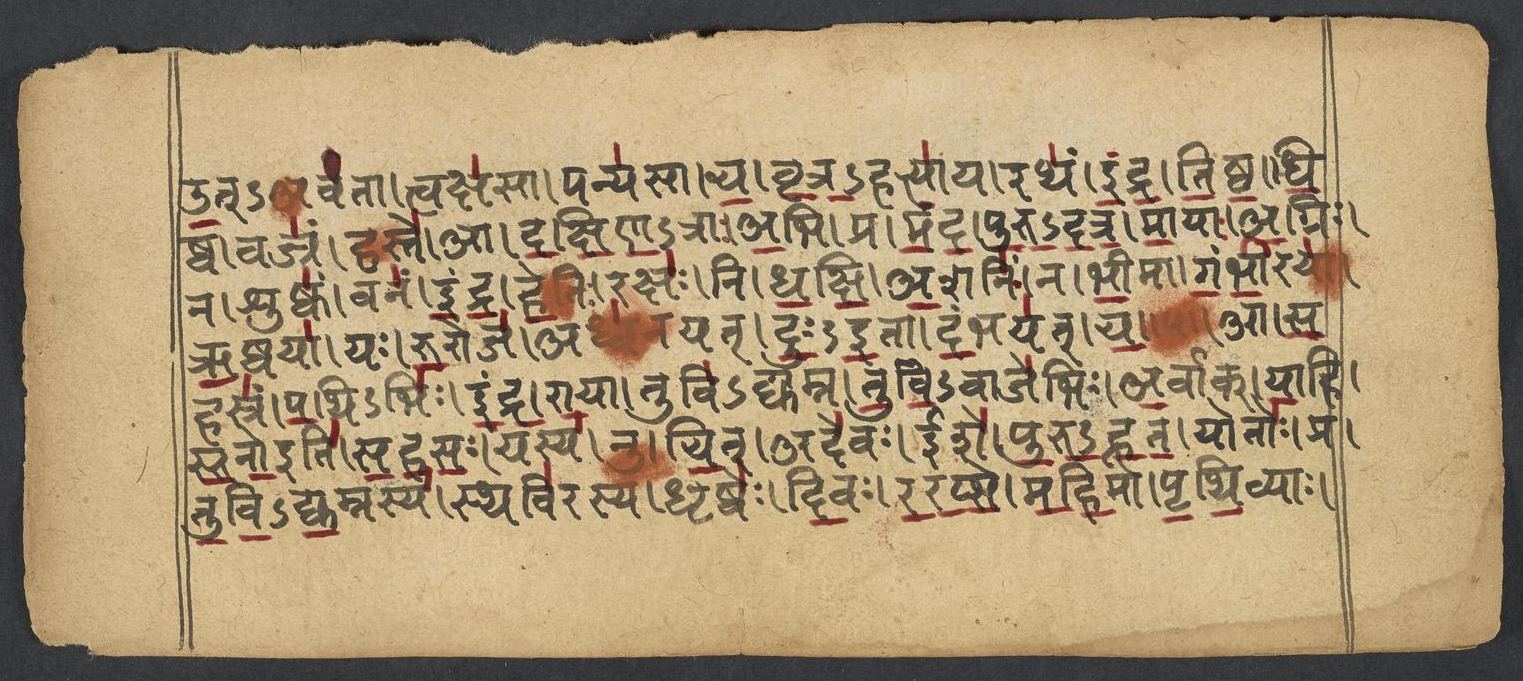
Penn Ms. Coll. 390 Item 41, fol. 426r (numbered 99r by the scribe) (OPenn image 426, lower leaf). Checked on the image: the Rigveda text on this page begins in RV 6.18.9 ‹ut-avatā tvakṣasā panyasā ca›. The next page with Rigveda text, fol. 426v (numbered 99v by the scribe), begins in RV 6.18.12 ‹na asya śatruḥ na›. Verses 6.18.9-11 end on this page.
9u̱dāva̍tā̱ tvakṣa̍sā̱ panya̍sā ca vṛtra̱hatyā̍ya̱ ratha̍m indra tiṣṭha | dhi̱ṣva vajra̱ṁ hasta̱ ā da̍kṣiṇa̱trābhi pra ma̍nda purudatra mā̱yāḥ ||
10a̱gnir na śuṣka̱ṁ vana̍m indra he̱tī rakṣo̱ ni dha̍kṣy a̱śani̱r na bhī̱mā | ga̱mbhī̱raya̍ ṛ̱ṣvayā̱ yo ru̱rojādhvā̍nayad duri̱tā da̱mbhaya̍c ca ||
11ā sa̱hasra̍m pa̱thibhi̍r indra rā̱yā tuvi̍dyumna tuvi̱vāje̍bhir a̱rvāk | yā̱hi sū̍no sahaso̱ yasya̱ nū ci̱d ade̍va̱ īśe̍ puruhūta̱ yoto̍ḥ ||
Compare: Padapāṭha (word-by-word text written in the manuscript; Sansknet e-text via GRETIL)
9ut-avatā | tvakṣasā | panyasā | ca | vṛtra-hatyāya | ratham | indra | tiṣṭha | dhi ṣva | vajram | haste | ā | dakṣiṇa-trā | abhi | pra | manda | puru-datra | māyāḥ
10agniḥ | na | śuṣkam | vanam | indra | hetī | rakṣaḥ | ni | dhakṣi | aśaniḥ | na | bhīmā | gambhīrayā | ṛṣvayā | yaḥ | ruroja | sdhvanayat | duḥ-itā | dambhayat | ca
11ā | sahasram | pathi-bhiḥ | indra | rāyā | tuvi-dyumna | tuvi-vājebhiḥ | arvāk | yāhi | sūno iti | sahasaḥ | yasya | nu | cit | adevaḥ | īśe | puru-hūta | yotoḥ
9With saving might that must be praised and lauded, Indra, ascend thy car to smite down Vr̥itra. In thy right hand hold fast thy bolt of thunder, and weaken, Bounteous Lord, his art and magic.
10As Agni, as the dart burns the dry forest, like the dread shaft burn down the fiends, O Indra; Thou who with high deep-reaching spear hast broken, hast covered over mischief and destroyed it.
11With wealth, by thousand paths come hither, Agni, paths that bring ample strength, O thou Most Splendid. Come, Son of Strength, o'er whom, Invoked of many! the godless hath no power to keep thee distant.
Where on the image
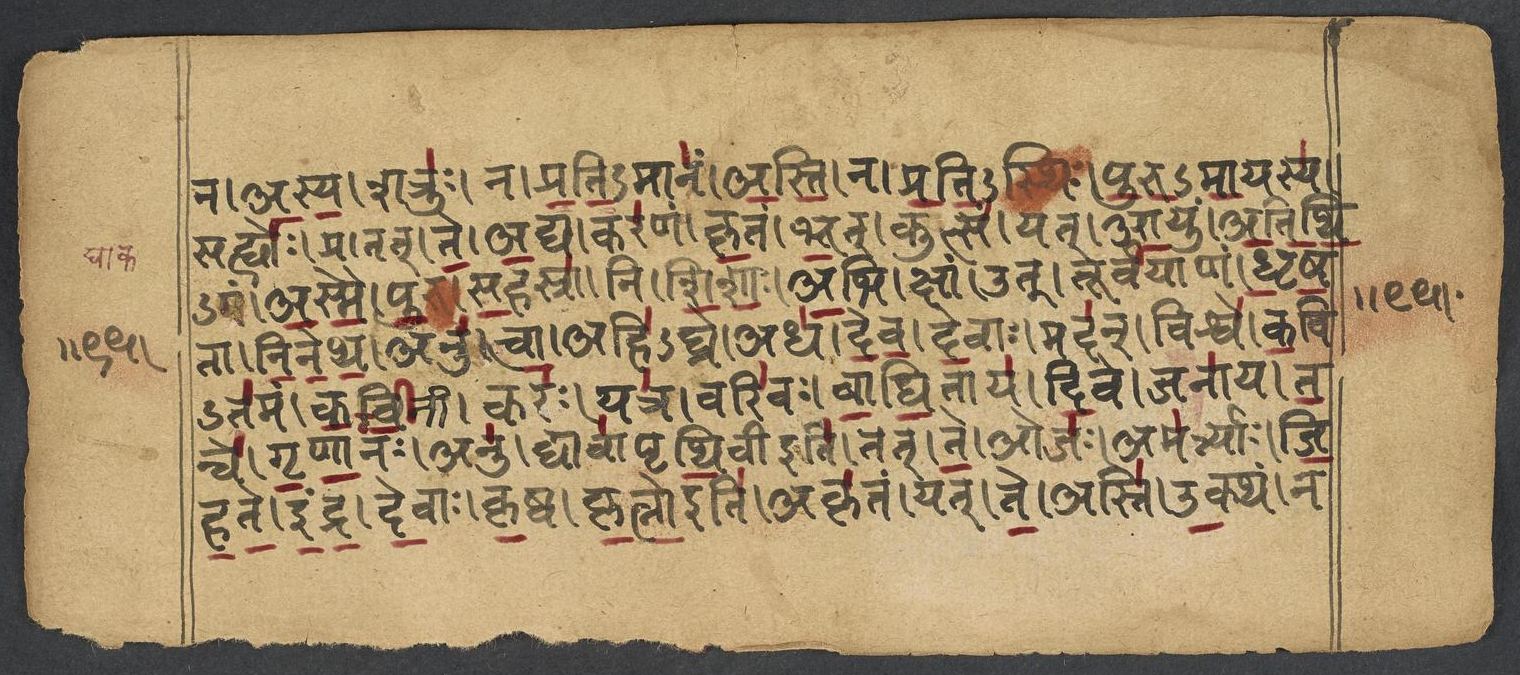
Penn Ms. Coll. 390 Item 41, fol. 426v (numbered 99v by the scribe) (OPenn image 427, upper leaf). Checked on the image: the Rigveda text on this page begins in RV 6.18.12 ‹na asya śatruḥ na›. The next page with Rigveda text, fol. 427r (numbered 100r by the scribe), begins in RV 6.18.15 ‹navīyaḥ janayasva yajñaiḥ›. Verses 6.18.12-14 end on this page; 6.18.12 begins on fol. 426r (numbered 99r by the scribe).
12pra tu̍vidyu̱mnasya̱ sthavi̍rasya̱ ghṛṣve̍r di̱vo ra̍rapśe mahi̱mā pṛ̍thi̱vyāḥ | nāsya̱ śatru̱r na pra̍ti̱māna̍m asti̱ na pra̍ti̱ṣṭhiḥ pu̍rumā̱yasya̱ sahyo̍ḥ ||
13pra tat te̍ a̱dyā kara̍ṇaṁ kṛ̱tam bhū̱t kutsa̱ṁ yad ā̱yum a̍tithi̱gvam a̍smai | pu̱rū sa̱hasrā̱ ni śi̍śā a̱bhi kṣām ut tūrva̍yāṇaṁ dhṛṣa̱tā ni̍netha ||
14anu̱ tvāhi̍ghne̱ adha̍ deva de̱vā mada̱n viśve̍ ka̱vita̍maṁ kavī̱nām | karo̱ yatra̱ vari̍vo bādhi̱tāya̍ di̱ve janā̍ya ta̱nve̍ gṛṇā̱naḥ ||
Compare: Padapāṭha (word-by-word text written in the manuscript; Sansknet e-text via GRETIL)
12pra | tuvi-dyumnasya | sthavirasya | ghṛṣveḥ | divaḥ | rarapśe | mahimā | pṛthi vyāḥ | na | asya | śatruḥ | na | prati-mānam | asti | na | prati-sthiḥ | puruymāyasya | sahyoḥ
13pra | tat | te | adya | karaṇam | kṛtam | bhūt | kutsam | yat | āyum | atithi-gvam | asmai | puru | sahasrā | ni | śiśāḥ | abhi | kṣām | ut | tūrvayāṇam | dhṛṣatā | ninetha
14anu | tvā | ahi-ghne | adha | deva | devāḥ | madan | viśve | kavi-tamam | kavīnām | karaḥ | yatra | varivaḥ | bādhitāya | dive | janāya | tanve | gṛṇānaḥ
12From heaven, from earth is bruited forth the greatness of him the firm, the fiery, the resplendent. No foe hath he, no counterpart, no refuge is there from him the Conqueror full of wisdom
13This day the deed that thou hast done is famous, when thou, for him, with many thousand others Laidest low Kutsa, Âyu, Âtithigva, and boldly didst deliver Tûrvayâṇa.
14In thee, O God, the wisest of the Sages, all Gods were joyful when thou slewest Ahi. When lauded for thyself, thou gavest freedom to sore-afflicted Heaven and to the people.
Where on the image
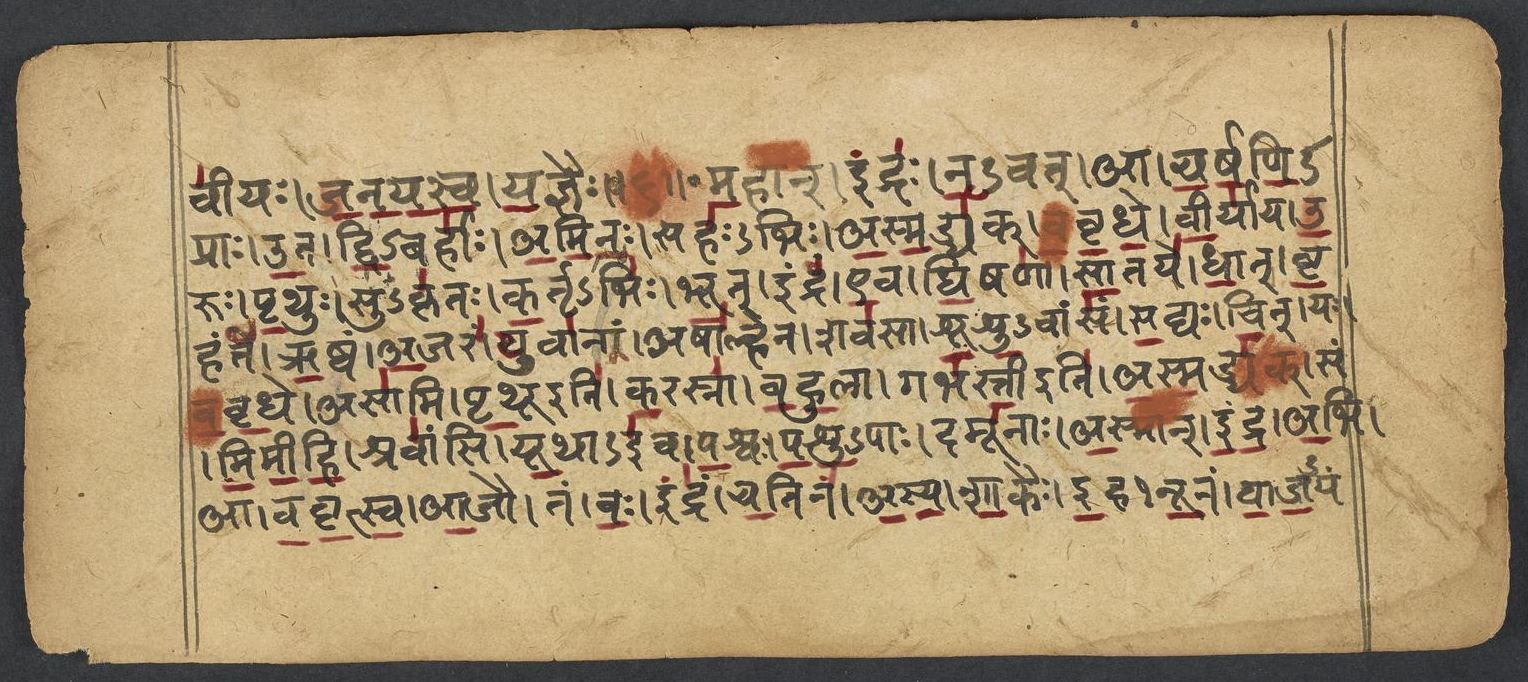
Penn Ms. Coll. 390 Item 41, fol. 427r (numbered 100r by the scribe) (OPenn image 427, lower leaf). Checked on the image: the Rigveda text on this page begins in RV 6.18.15 ‹navīyaḥ janayasva yajñaiḥ›. The next page with Rigveda text, fol. 427v (numbered 100v by the scribe), begins in RV 6.19.4 ‹-vāja-yantaḥ huvema yathā cit›. Verse 6.18.15 ends on this page; 6.18.15 begins on fol. 426v (numbered 99v by the scribe).
15anu̱ dyāvā̍pṛthi̱vī tat ta̱ ojo 'ma̍rtyā jihata indra de̱vāḥ | kṛ̱ṣvā kṛ̍tno̱ akṛ̍ta̱ṁ yat te̱ asty u̱kthaṁ navī̍yo janayasva ya̱jñaiḥ ||
Compare: Padapāṭha (word-by-word text written in the manuscript; Sansknet e-text via GRETIL)
15anu | dyāvāpṛthivī iti | tat | te | ojaḥ | amartyāḥ | jihate | indra | devāḥ | kṛṣva | kṛtno iti | akṛtam | yat | te | asti | uktham | navīyaḥ | janayasva | yajñaiḥ
15This power of thine both heaven and earth acknowledge, the deathless Gods acknowledge it, O Indra. Do what thou ne'er hast done, O Mighty Worker: beget a new hymn at thy sacrifices.
Notes
- Sanskrit: Aufrecht's edition (1877) with the Vedic accents, as entered by van Nooten and Holland (GRETIL).
- English: Ralph T. H. Griffith, The Hymns of the Rigveda (1889-1892; 2nd ed. 1896-1897), from the VedaWeb digital text; OCR slips in that text were corrected against the printed 2nd edition (data/sources/rigveda/griffith_errata.json).
- Padapāṭha (edition text): Sansknet e-text via GRETIL (CC BY-NC-SA 4.0).
Cite
Sources
- Source: Penn Ms. Coll. 390 Item 41 (undated (catalogued with Penn's 18th-19th c. Vedic manuscripts)), OPenn, Public Domain Mark + Aufrecht's accented text (GRETIL) + Griffith's English (VedaWeb) (holding institution)
- Critical edition: Aufrecht (1877), accented e-text via GRETIL
← previous · → next · v cycle view · l back to library