Rigveda 6.19: To Indra
Introduction
Rigveda 6.19 is a hymn of 13 verses addressed to Indra. It stands in book (maṇḍala) 6, the family book of Bharadvāja. The Rigveda is the oldest collection of Sanskrit hymns, composed in the second half of the second millennium BCE and handed down orally for many centuries before it was written down.
The manuscript shown is Penn Ms. Coll. 390 Item 41 (University of Pennsylvania), an undated paper manuscript of the padapāṭha (the word-by-word recitation text, in which every word is written separately and compounds are split) of the whole Ṛgveda in Devanāgarī, 884 leaves in fascicles, 7-9 lines to the page, accents in red; this hymn stands on fol. 427r-428v. Each section below gives the verses that end on one page; the page boundaries were read on the images (the opening words of every page), not counted out. Where the manuscript is a padapāṭha (the word-by-word recitation text), the section shows Aufrecht's continuous (saṃhitā) text first and, as the edition text, the padapāṭha of the same verses, which is the form written on the page.
How was this verified? (Provenance)
Where on the image
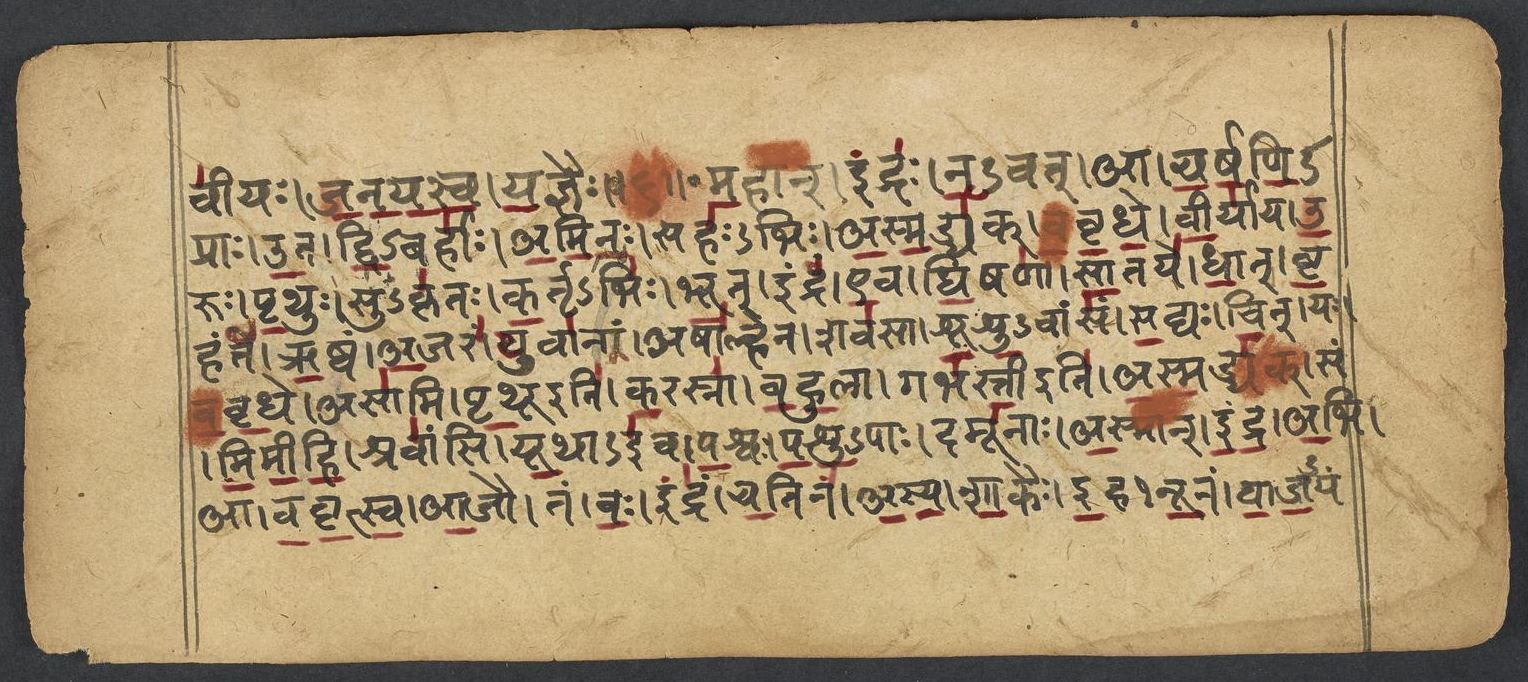
Penn Ms. Coll. 390 Item 41, fol. 427r (numbered 100r by the scribe) (OPenn image 427, lower leaf). Checked on the image: the Rigveda text on this page begins in RV 6.18.15 ‹navīyaḥ janayasva yajñaiḥ›. The next page with Rigveda text, fol. 427v (numbered 100v by the scribe), begins in RV 6.19.4 ‹-vāja-yantaḥ huvema yathā cit›. Verses 6.19.1-3 end on this page.
1ma̱hām̐ indro̍ nṛ̱vad ā ca̍rṣaṇi̱prā u̱ta dvi̱barhā̍ ami̱naḥ saho̍bhiḥ | a̱sma̱drya̍g vāvṛdhe vī̱ryā̍yo̱ruḥ pṛ̱thuḥ sukṛ̍taḥ ka̱rtṛbhi̍r bhūt ||
2indra̍m e̱va dhi̱ṣaṇā̍ sā̱taye̍ dhād bṛ̱hanta̍m ṛ̱ṣvam a̱jara̱ṁ yuvā̍nam | aṣā̍ḻhena̱ śava̍sā śūśu̱vāṁsa̍ṁ sa̱dyaś ci̱d yo vā̍vṛ̱dhe asā̍mi ||
3pṛ̱thū ka̱rasnā̍ bahu̱lā gabha̍stī asma̱drya1̱̍k sam mi̍mīhi̱ śravā̍ṁsi | yū̱theva̍ pa̱śvaḥ pa̍śu̱pā damū̍nā a̱smām̐ i̍ndrā̱bhy ā va̍vṛtsvā̱jau ||
Compare: Padapāṭha (word-by-word text written in the manuscript; Sansknet e-text via GRETIL)
1mahān | indraḥ | nṛ-vat | ā | carṣaṇi-prāḥ | uta | dvi-barhāḥ | aminaḥ | sahaḥ-bhiḥ | asmadryak | vavṛdhe | vīryāya | uruḥ | pṛthuḥ | su-kṛtaḥ | kartṛ-bhiḥ | bhūt
2indram | eva | dhiṣaṇā | sātaye | dhāt | bṛhantam | ṛṣvam | ajaram | yuvānam | aṣāḷhena | śavasā | śūsu-vāṃsam | sadyaḥ | cit | yaḥ | vavṛdhe | asāmi
3pṛthū iti | karasnā | bahulā | gabhastī iti | asmadryak | sam | mimīhi | śravāṃsi | yūthāiva | paśvaḥ | paśu-pāḥ | damūnāḥ | asmān | indra | abhi | ā | vavṛtsva | ājau
1GREAT, hero-like controlling men is Indra, unwasting in his powers, doubled in vastness. He, turned to us, hath grown to hero vigour: broad, wide, he hath been decked by those who serve him.
2The bowl made Indra swift to gather booty, the High, the Lofty, Youthful, Undecaying, Him who hath waxed by strength which none may conquer, and even at once grown to complete perfection.
3Stretch out those hands of thine, extend to us-ward thy wide capacious arms, and grant us glory. Like as the household herdsman guards the cattle, so move thou round about us in the combat.
Where on the image
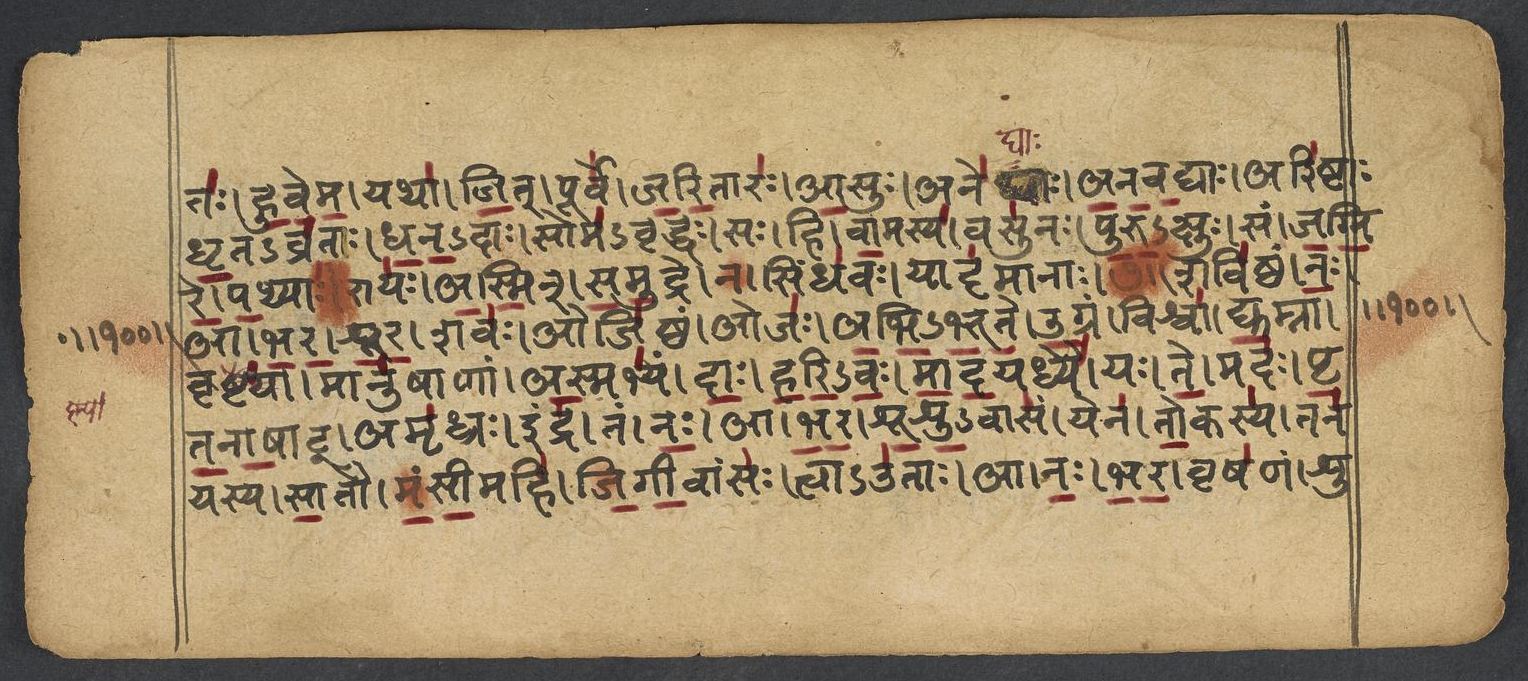
Penn Ms. Coll. 390 Item 41, fol. 427v (numbered 100v by the scribe) (OPenn image 428, upper leaf). Checked on the image: the Rigveda text on this page begins in RV 6.19.4 ‹-vāja-yantaḥ huvema yathā cit›. The next page with Rigveda text, fol. 428r (numbered 101r by the scribe), begins in RV 6.19.8 ‹-śuṣmam indra dhana-spṛtam śūśu-vāṃsam›. Verses 6.19.4-7 end on this page; 6.19.4 begins on fol. 427r (numbered 100r by the scribe).
4taṁ va̱ indra̍ṁ ca̱tina̍m asya śā̱kair i̱ha nū̱naṁ vā̍ja̱yanto̍ huvema | yathā̍ ci̱t pūrve̍ jari̱tāra̍ ā̱sur ane̍dyā anava̱dyā ari̍ṣṭāḥ ||
5dhṛ̱tavra̍to dhana̱dāḥ soma̍vṛddha̱ḥ sa hi vā̱masya̱ vasu̍naḥ puru̱kṣuḥ | saṁ ja̍gmire pa̱thyā̱3̱̍ rāyo̍ asmin samu̱dre na sindha̍vo̱ yāda̍mānāḥ ||
6śavi̍ṣṭhaṁ na̱ ā bha̍ra śūra̱ śava̱ oji̍ṣṭha̱m ojo̍ abhibhūta u̱gram | viśvā̍ dyu̱mnā vṛṣṇyā̱ mānu̍ṣāṇām a̱smabhya̍ṁ dā harivo māda̱yadhyai̍ ||
7yas te̱ mada̍ḥ pṛtanā̱ṣāḻ amṛ̍dhra̱ indra̱ taṁ na̱ ā bha̍ra śūśu̱vāṁsa̍m | yena̍ to̱kasya̱ tana̍yasya sā̱tau ma̍ṁsī̱mahi̍ jigī̱vāṁsa̱s tvotā̍ḥ ||
Compare: Padapāṭha (word-by-word text written in the manuscript; Sansknet e-text via GRETIL)
4tam | vaḥ | indram | catinam | asya | śākaiḥ | iha | nūnam | vāja-yantaḥ | huvema | yathā | cit | pūrve | jaritāraḥ | āsuḥ | anedyāḥ | anavadyāḥ | ariṣṭāḥ
5dhṛta-vrataḥ | dhana-dāḥ | soma-vṛddhaḥ | saḥ | hi | vāmasya | vasunaḥ | puru-kṣuḥ | sam | jigmire | pathyāḥ | rāyaḥ | asmin | samudre | na | sindhavaḥ | yādamānāḥ
6śaviṣṭham | naḥ | ā | bhara | śūra | śavaḥ | ojiṣṭham | ojaḥ | abhi-bhūte | ugram | viśvā | dyumnā | vṛṣṇyā | mānuṣāṇām | asmbhyam | dāḥ | hari-vaḥ | mādayadhyai
7yaḥ | te | madaḥ | pṛtanāṣāṭ | amṛdhraḥ | indra | tam | naḥ | ā | bhara | śūśu-vāṃsam | yena | tokasya | tanayasya | sātau | maṃsīmahi | jigīvāṃsaḥ | tvāūtāḥ
4Now, fain for strength, let us invite your Indra hither, who lieth hidden with his Heroes,– Free from all blame, without reproach, uninjured, e'en as were those who sang, of old, his praises.
5With steadfast laws, wealth-giver, strong through Soma, he hath much fair and precious food to feed us. In him unite all paths that lead to riches, like rivers that commingle with the ocean.
6Bring unto us the mightiest might, O Hero, strong and most potent force, thou great Subduer! All splendid vigorous powers of men vouchsafe us, Lord of Bay Steeds, that they may make us joyful.
7Bring us, grown mighty in its strength, O Indra, thy friendly rapturous joy that wins the battle, Wherewith by thee assisted and triumphant, we may laud thee in gaining seed and offspring.
Where on the image
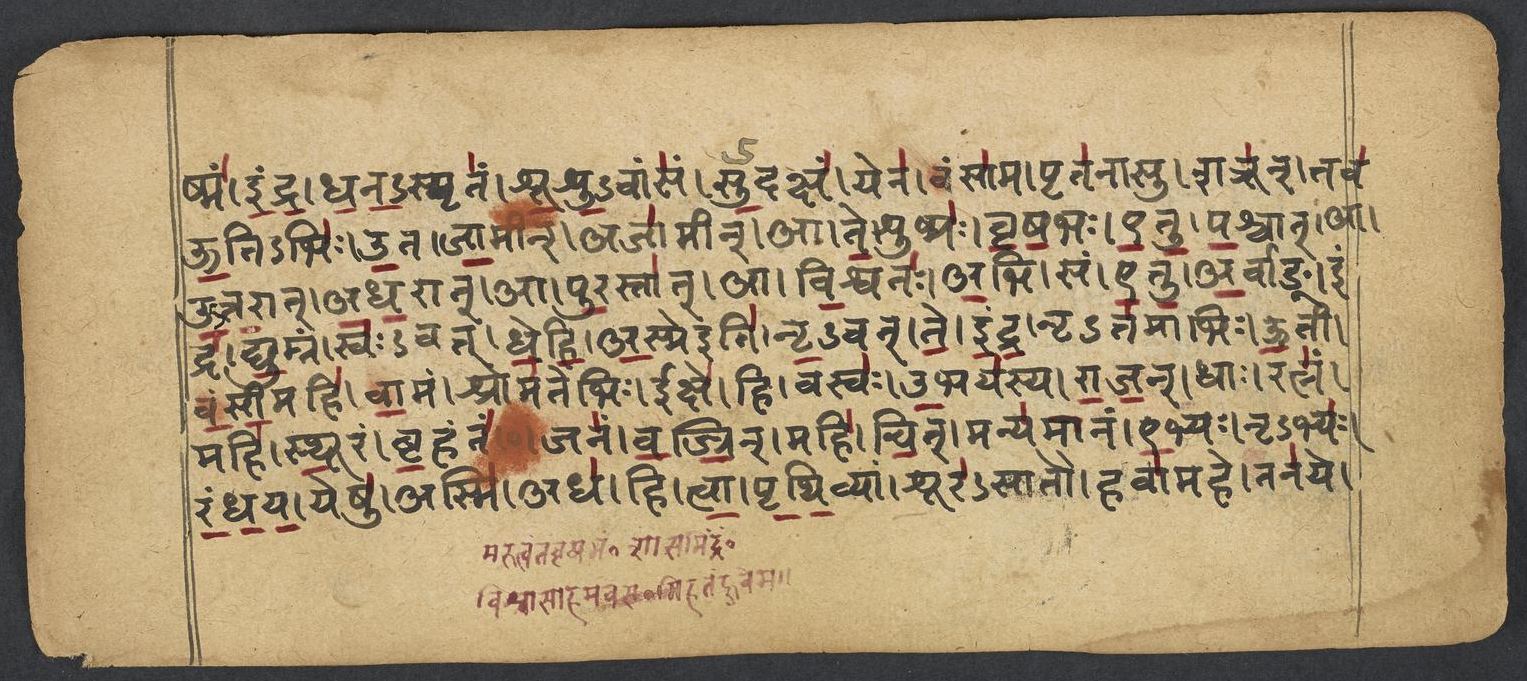
Penn Ms. Coll. 390 Item 41, fol. 428r (numbered 101r by the scribe) (OPenn image 428, lower leaf). Checked on the image: the Rigveda text on this page begins in RV 6.19.8 ‹-śuṣmam indra dhana-spṛtam śūśu-vāṃsam›. The next page with Rigveda text, fol. 428v (numbered 101v by the scribe), begins in RV 6.19.12 ‹goṣu ap-su›. Verses 6.19.8-11 end on this page; 6.19.8 begins on fol. 427v (numbered 100v by the scribe).
8ā no̍ bhara̱ vṛṣa̍ṇa̱ṁ śuṣma̍m indra dhana̱spṛta̍ṁ śūśu̱vāṁsa̍ṁ su̱dakṣa̍m | yena̱ vaṁsā̍ma̱ pṛta̍nāsu̱ śatrū̱n tavo̱tibhi̍r u̱ta jā̱mīm̐r ajā̍mīn ||
9ā te̱ śuṣmo̍ vṛṣa̱bha e̍tu pa̱ścād otta̱rād a̍dha̱rād ā pu̱rastā̍t | ā vi̱śvato̍ a̱bhi sam e̍tv a̱rvāṅ indra̍ dyu̱mnaṁ sva̍rvad dhehy a̱sme ||
10nṛ̱vat ta̍ indra̱ nṛta̍mābhir ū̱tī va̍ṁsī̱mahi̍ vā̱maṁ śroma̍tebhiḥ | īkṣe̱ hi vasva̍ u̱bhaya̍sya rāja̱n dhā ratna̱m mahi̍ sthū̱ram bṛ̱hanta̍m ||
11ma̱rutva̍ntaṁ vṛṣa̱bhaṁ vā̍vṛdhā̱nam aka̍vāriṁ di̱vyaṁ śā̱sam indra̍m | vi̱śvā̱sāha̱m ava̍se̱ nūta̍nāyo̱graṁ sa̍ho̱dām i̱ha taṁ hu̍vema ||
Compare: Padapāṭha (word-by-word text written in the manuscript; Sansknet e-text via GRETIL)
8ā | naḥ | bhara | vṛṣaṇam | śuṣmam | indra | dhana-spṛtam | śūśu-vāṃsam | su-dakṣam | yena | vaṃsāma | pṛtanāsu | śatrūn | tava | ūti-bhiḥ | uta | jāmīn | ajāmīn
9ā | te | śuṣmaḥ | vṛṣabhaḥ | etu | paścāt | ā | uttarāt | adharāt | ā | purastāt | ā | viśvataḥ | abhi | sam | etu | arvāṅ | indra | dyumnam | svaḥ-vat | dhehi | asme iti
10nṛ-vat | te | indra | nṛ-tamābhiḥ | ūtī | vaṃsīmahi | vāmam | śromatebhiḥ | īkṣe | h i | vasvaḥ | ubhayasya | rājan | dhāḥ | ratnam | mahi | sthūram | bṛhantam
11marutvantam | vṛṣabham | vavṛdhānam | akava-arim | divyam | śāsam | indram | viśva-saham | avase | nūtanāya | ugram | sahaḥ-dām | iha | tam | huvema
8Indra, bestow on us the power heroic skilled and exceeding strong, that wins the booty, Wherewith, by thine assistance, we may conquer our foes in battle, be they kin or stranger.
9Let thine heroic strength come from behind us, before us, from above us or below us. From every side may it approach us, Indra. Give us the glory of the realm of splendour.
10With most heroic aid from thee, like heroes Indra, may we win wealth by deeds glory. Thou, King, art Lord of earthly, heavenly treasure: vouchsafe us riches vast, sublime, and lasting.
11The Bull, whose strength hath waxed, whom Maruts follow, free-giving Indra, the Celestial Ruler, Mighty, all-conquering, the victory-giver, him let us call to grant us new protection.
Where on the image
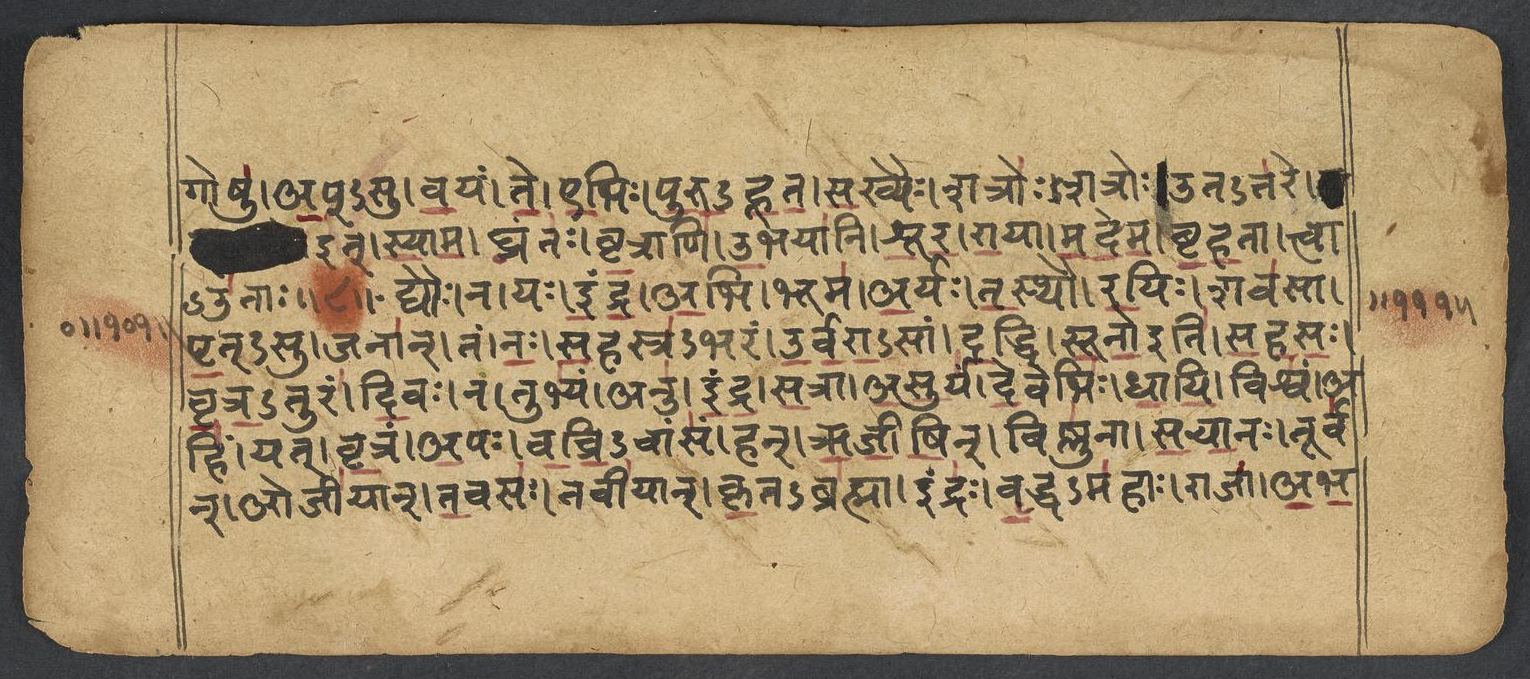
Penn Ms. Coll. 390 Item 41, fol. 428v (numbered 101v by the scribe) (OPenn image 429, upper leaf). Checked on the image: the Rigveda text on this page begins in RV 6.19.12 ‹goṣu ap-su›. The next page with Rigveda text, fol. 429r (numbered 102r by the scribe), begins in RV 6.20.3 ‹-abhavat madhunaḥ somyasya viśvāsām›. Verses 6.19.12-13 end on this page; 6.19.12 begins on fol. 428r (numbered 101r by the scribe).
12jana̍ṁ vajri̱n mahi̍ ci̱n manya̍mānam e̱bhyo nṛbhyo̍ randhayā̱ yeṣv asmi̍ | adhā̱ hi tvā̍ pṛthi̱vyāṁ śūra̍sātau̱ havā̍mahe̱ tana̍ye̱ goṣv a̱psu ||
13va̱yaṁ ta̍ e̱bhiḥ pu̍ruhūta sa̱khyaiḥ śatro̍ḥ-śatro̱r utta̍ra̱ it syā̍ma | ghnanto̍ vṛ̱trāṇy u̱bhayā̍ni śūra rā̱yā ma̍dema bṛha̱tā tvotā̍ḥ ||
Compare: Padapāṭha (word-by-word text written in the manuscript; Sansknet e-text via GRETIL)
12janam | vajrin | mahi | cit | manyamānam | ebhyaḥ | nṛ-bhyaḥ | randhaya | yeṣu | asmi | adha | hi | tvā | pṛthivyām | śūra-sātau | havāmahe | tanaye | goṣu | ap-su
13vayam | te | ebhiḥ | puru-hūta | sakhyaiḥ | śatroḥ-śatroḥ | ut-tare | it | syāma | ghnantaḥ | vṛtrāṇi | ubhayāni | śūra | rāyā | madema | bṛhatā | tvāūtāḥ
12Give up the people who are high and haughty to these men and to me, O Thunder-wielder! Therefore upon the earth do we invoke thee, where heroes win, for sons and kine and waters.
13Through these thy friendships, God invoked of many! may we be victors over every foeman. Slaying both kinds of foe, may we, O Hero, be happy, helped by thee, with ample riches.
Notes
- Sanskrit: Aufrecht's edition (1877) with the Vedic accents, as entered by van Nooten and Holland (GRETIL).
- English: Ralph T. H. Griffith, The Hymns of the Rigveda (1889-1892; 2nd ed. 1896-1897), from the VedaWeb digital text; OCR slips in that text were corrected against the printed 2nd edition (data/sources/rigveda/griffith_errata.json).
- Padapāṭha (edition text): Sansknet e-text via GRETIL (CC BY-NC-SA 4.0).
Cite
Sources
- Source: Penn Ms. Coll. 390 Item 41 (undated (catalogued with Penn's 18th-19th c. Vedic manuscripts)), OPenn, Public Domain Mark + Aufrecht's accented text (GRETIL) + Griffith's English (VedaWeb) (holding institution)
- Critical edition: Aufrecht (1877), accented e-text via GRETIL
← previous · → next · v cycle view · l back to library