Rigveda 6.20: To Indra
Introduction
Rigveda 6.20 is a hymn of 13 verses addressed to Indra. It stands in book (maṇḍala) 6, the family book of Bharadvāja. The Rigveda is the oldest collection of Sanskrit hymns, composed in the second half of the second millennium BCE and handed down orally for many centuries before it was written down.
The manuscript shown is Penn Ms. Coll. 390 Item 41 (University of Pennsylvania), an undated paper manuscript of the padapāṭha (the word-by-word recitation text, in which every word is written separately and compounds are split) of the whole Ṛgveda in Devanāgarī, 884 leaves in fascicles, 7-9 lines to the page, accents in red; this hymn stands on fol. 428v-430r. Each section below gives the verses that end on one page; the page boundaries were read on the images (the opening words of every page), not counted out. Where the manuscript is a padapāṭha (the word-by-word recitation text), the section shows Aufrecht's continuous (saṃhitā) text first and, as the edition text, the padapāṭha of the same verses, which is the form written on the page.
How was this verified? (Provenance)
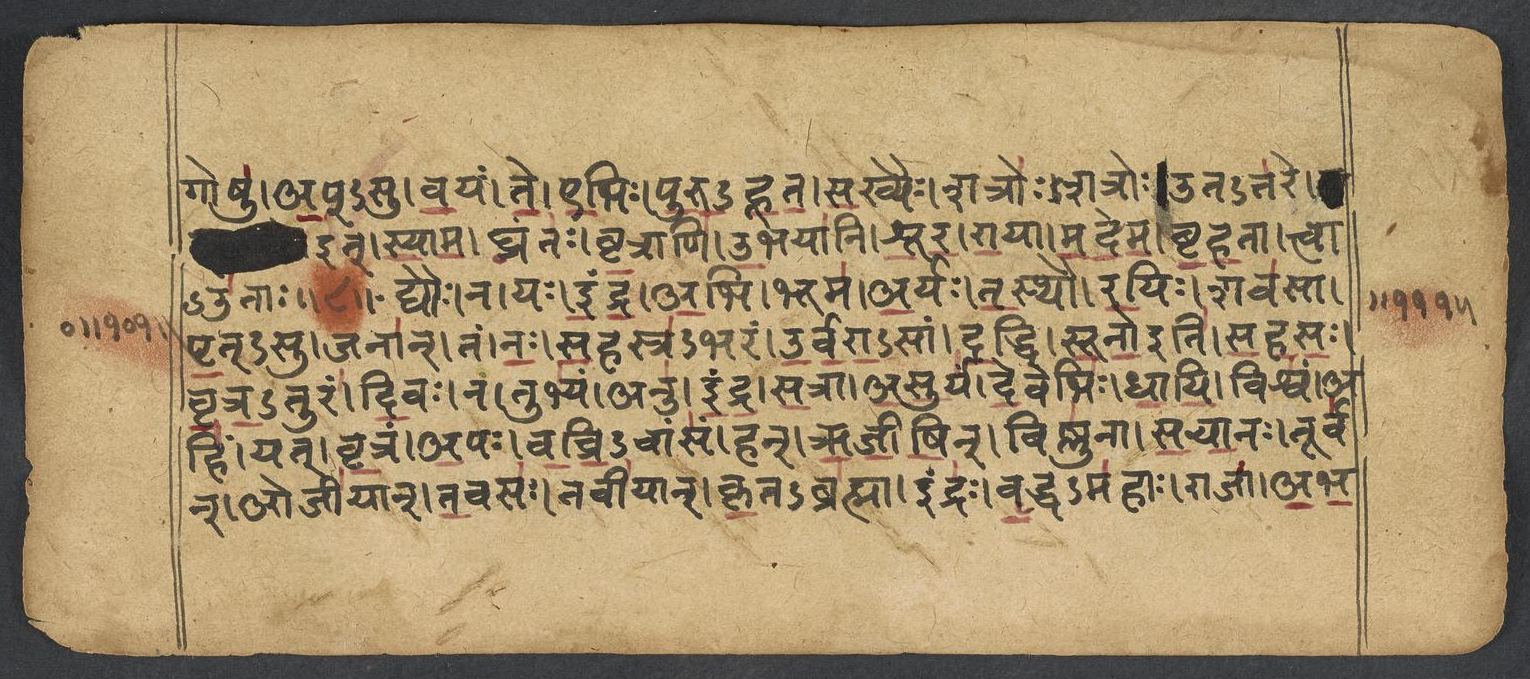
Where on the image
Penn Ms. Coll. 390 Item 41, fol. 428v (numbered 101v by the scribe) (OPenn image 429, upper leaf). Checked on the image: the Rigveda text on this page begins in RV 6.19.12 ‹goṣu ap-su›. The next page with Rigveda text, fol. 429r (numbered 102r by the scribe), begins in RV 6.20.3 ‹-abhavat madhunaḥ somyasya viśvāsām›. Verses 6.20.1-2 end on this page.
1dyaur na ya i̍ndrā̱bhi bhūmā̱ryas ta̱sthau ra̱yiḥ śava̍sā pṛ̱tsu janā̍n | taṁ na̍ḥ sa̱hasra̍bharam urvarā̱sāṁ da̱ddhi sū̍no sahaso vṛtra̱tura̍m ||
2di̱vo na tubhya̱m anv i̍ndra sa̱trāsu̱rya̍ṁ de̱vebhi̍r dhāyi̱ viśva̍m | ahi̱ṁ yad vṛ̱tram a̱po va̍vri̱vāṁsa̱ṁ hann ṛ̍jīṣi̱n viṣṇu̍nā sacā̱naḥ ||
Compare: Padapāṭha (word-by-word text written in the manuscript; Sansknet e-text via GRETIL)
1dyauḥ | na | yaḥ | indra | abhi | bhūma | aryaḥ | tasthau | rayiḥ | śavasā | pṛt-su | janān | tam | naḥ | sahasra-bharam | urvarāsām | daddhi | sūno iti | sahasaḥ | vṛtra-turam
2divaḥ | na | tubhyam | anu | indra | satrā | asuryam | devebhiḥ | dhāyi | viśvam | ahi m | yat | vṛtram | apaḥ | vavri-vāṃsam | han | ṛjīṣin | viṣṇunā | sacānaḥ
1GIVE us wealth, Indra, that with might, as heaven o'ertops the earth, o'ercomes our foes in battle Wealth that brings thousands and that wins the corn-lands, wealth, Son of Strength! that vanquishes the foeman.
2Even as the power of Dyaus, to thee, O Indra, all Asura sway was by the Gods entrusted, When thou, Impetuous! leagued with Vishṇu, slewest Vr̥itra the Dragon who enclosed the waters.
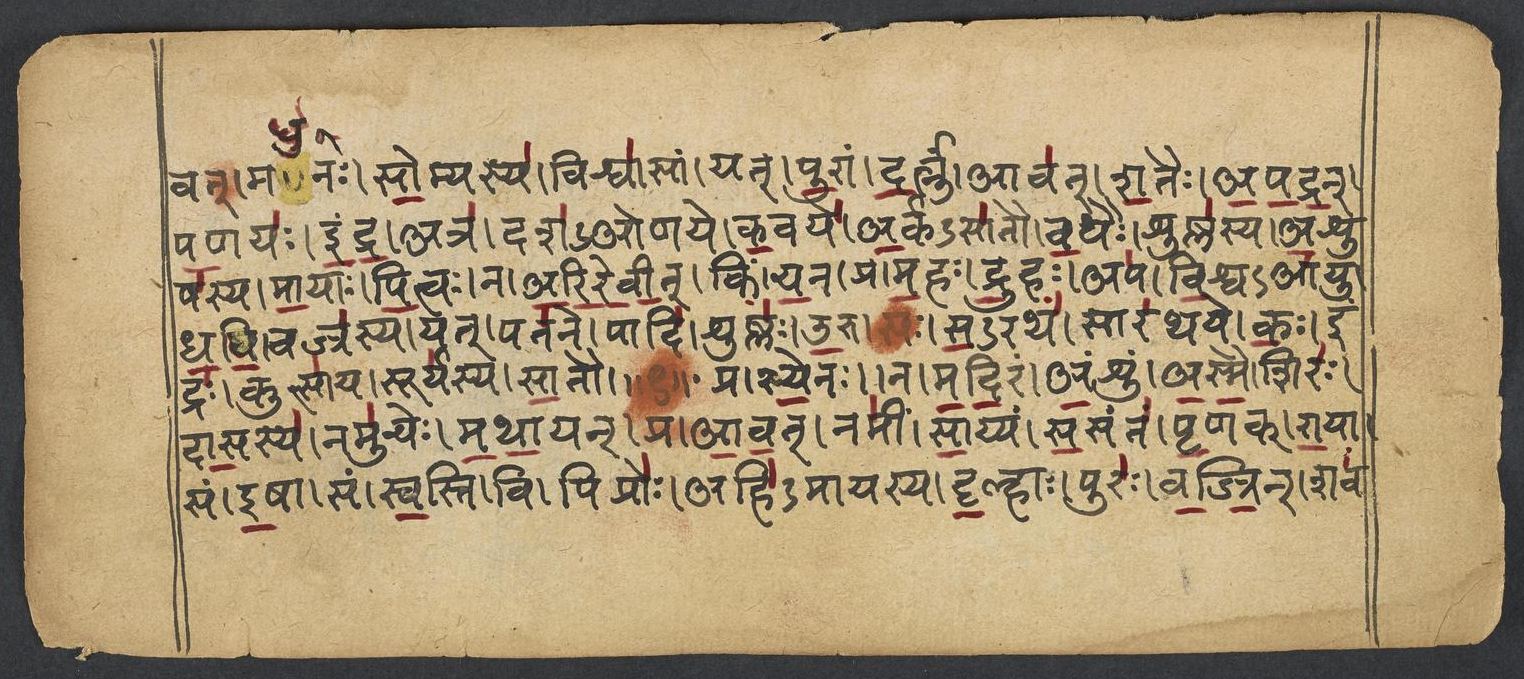
Where on the image
Penn Ms. Coll. 390 Item 41, fol. 429r (numbered 102r by the scribe) (OPenn image 429, lower leaf). Checked on the image: the Rigveda text on this page begins in RV 6.20.3 ‹-abhavat madhunaḥ somyasya viśvāsām›. The next page with Rigveda text, fol. 429v (numbered 102v by the scribe), begins in RV 6.20.7 ‹-śavasā na dardaritidardaḥ su-dāman›. Verses 6.20.3-6 end on this page; 6.20.3 begins on fol. 428v (numbered 101v by the scribe).
3tūrva̱nn ojī̍yān ta̱vasa̱s tavī̍yān kṛ̱tabra̱hmendro̍ vṛ̱ddhama̍hāḥ | rājā̍bhava̱n madhu̍naḥ so̱myasya̱ viśvā̍sā̱ṁ yat pu̱rāṁ da̱rtnum āva̍t ||
4śa̱tair a̍padran pa̱ṇaya̍ i̱ndrātra̱ daśo̍ṇaye ka̱vaye̱ 'rkasā̍tau | va̱dhaiḥ śuṣṇa̍syā̱śuṣa̍sya mā̱yāḥ pi̱tvo nāri̍recī̱t kiṁ ca̱na pra ||
5ma̱ho dru̱ho apa̍ vi̱śvāyu̍ dhāyi̱ vajra̍sya̱ yat pata̍ne̱ pādi̱ śuṣṇa̍ḥ | u̱ru ṣa sa̱ratha̱ṁ sāra̍thaye ka̱r indra̱ḥ kutsā̍ya̱ sūrya̍sya sā̱tau ||
6pra śye̱no na ma̍di̱ram a̱ṁśum a̍smai̱ śiro̍ dā̱sasya̱ namu̍cer mathā̱yan | prāva̱n namī̍ṁ sā̱pyaṁ sa̱santa̍m pṛ̱ṇag rā̱yā sam i̱ṣā saṁ sva̱sti ||
Compare: Padapāṭha (word-by-word text written in the manuscript; Sansknet e-text via GRETIL)
3tūrvan | ojīyān | tavasaḥ | tavīyān | kṛta-brahmā | indraḥ | vṛddha-mahāḥ | rājā | abhavat | madhunaḥ | somyasya | viśvāsām | yat | purām | datnurm | āvat
4śataiḥ | apadran | paṇayaḥ | indra | atra | daśa-oṇaye | kavaye | arka-sātau | vadhaiḥ | śuṣṇasya | aśuṣasya | māyāḥ | pitvaḥ | na | arirecīt | kim | cana | pra
5mahaḥ | druhaḥ | apa | viśva-āyu | dhāyi | vajrasya | yat | patane | pādi | śuṣṇaḥ | uru | saḥ | sa-ratham | sārathaye | kaḥ | indraḥ | kutsāya | sūryasya | sātau
6pra | śyenaḥ | na | madiram | aṃśum | asmai | śiraḥ | dāsasya | namuceḥ | mathāyan | pra | āvat | namīm | sāpyam | sasantam | pṛṇak | rāyā | sam | iṣā | sam | svast i
3Indra, Strong, Victor, Mightier than the mighty, addressed with prayer and perfect in his splendour, Lord of the bolt that breaketh forts in pieces, became the King of the sweet juice of Soma..
4There, Indra, while the light was won, the Paṇis fled, 'neath a hundred blows, for wise Dasoni, And greedy Ṣushṇa's magical devices nor left he any of their food remaining.
5What time the thunder fell and Ṣushṇa perished, all life's support from the great Druh was taken. Indra made room for his car-drivcr Kutsa who sate beside him, when he gained the sunlight.
6As the Hawk rent for him the stalk that gladdens, he wrenched the head from Namuci the Dâsa. He guarded Namî, Sayya's son, in slumber, and sated him with food, success, and riches.
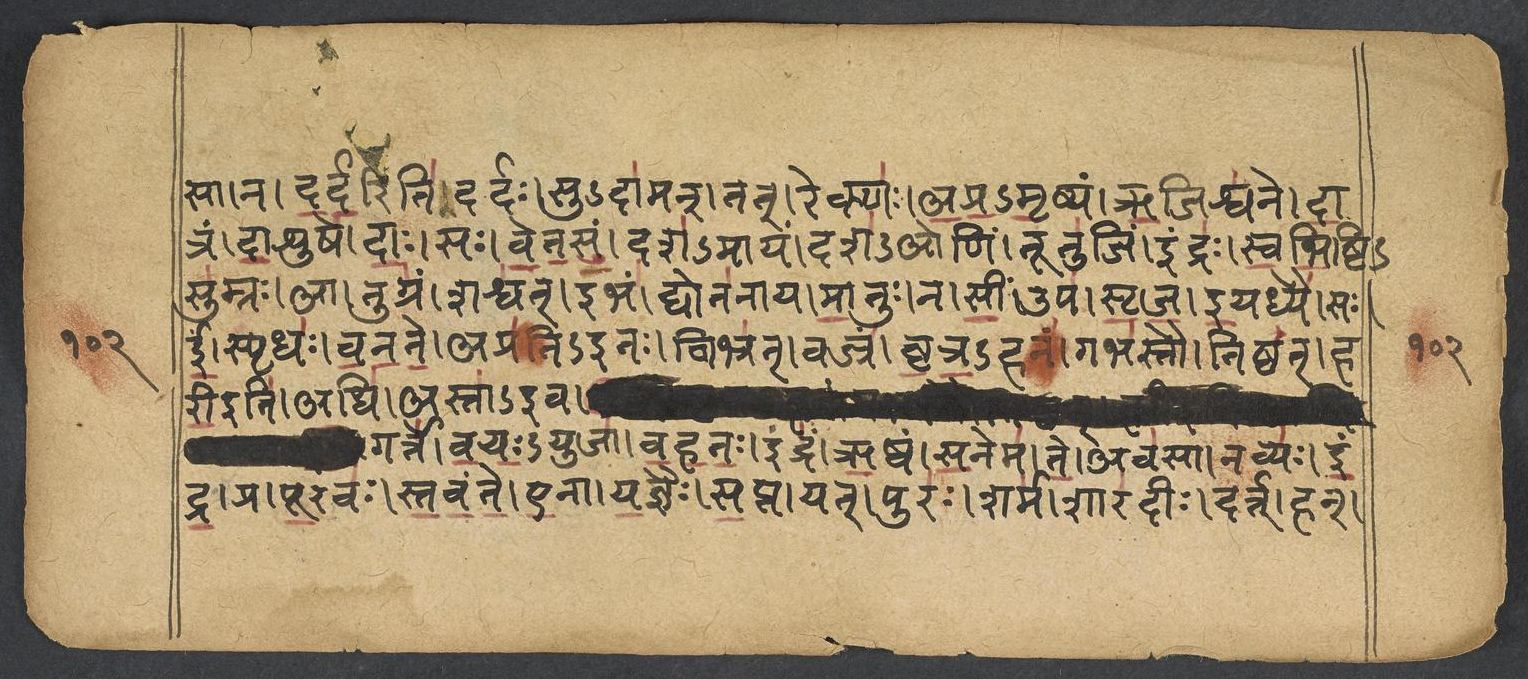
Where on the image
Penn Ms. Coll. 390 Item 41, fol. 429v (numbered 102v by the scribe) (OPenn image 430, upper leaf). Checked on the image: the Rigveda text on this page begins in RV 6.20.7 ‹-śavasā na dardaritidardaḥ su-dāman›. The next page with Rigveda text, fol. 430r (numbered 103r by the scribe), begins in RV 6.20.10 ‹dāsīḥ puru-kutsāya śikṣan›. Verses 6.20.7-9 end on this page; 6.20.7 begins on fol. 429r (numbered 102r by the scribe).
7vi pipro̱r ahi̍māyasya dṛ̱ḻhāḥ puro̍ vajri̱ñ chava̍sā̱ na da̍rdaḥ | sudā̍ma̱n tad rekṇo̍ apramṛ̱ṣyam ṛ̱jiśva̍ne dā̱traṁ dā̱śuṣe̍ dāḥ ||
8sa ve̍ta̱suṁ daśa̍māya̱ṁ daśo̍ṇi̱ṁ tūtu̍ji̱m indra̍ḥ svabhi̱ṣṭisu̍mnaḥ | ā tugra̱ṁ śaśva̱d ibha̱ṁ dyota̍nāya mā̱tur na sī̱m upa̍ sṛjā i̱yadhyai̍ ||
9sa ī̱ṁ spṛdho̍ vanate̱ apra̍tīto̱ bibhra̱d vajra̍ṁ vṛtra̱haṇa̱ṁ gabha̍stau | tiṣṭha̱d dharī̱ adhy aste̍va̱ garte̍ vaco̱yujā̍ vahata̱ indra̍m ṛ̱ṣvam ||
Compare: Padapāṭha (word-by-word text written in the manuscript; Sansknet e-text via GRETIL)
7vi | piproḥ | ahi-māyasya | dṛḷhāḥ | puraḥ | vajrin | śavasā | na | dardaritidardaḥ | su-dāman | tat | rekṇaḥ | apra-mṛṣyam | ṛjiśvane | dātram | dāśuṣe | dāḥ
8saḥ | vetasum | daśa-māyam | daśa-oṇim | tūtujim | indraḥ | svabhiṣṭi-sumnaḥ | ā | tugram | śaśvat | ibham | dyotanāya | mātuḥ | na | sīm | upa | sṛja | iyadhyai
9saḥ | īm | spṛdhaḥ | vanate | aprati-itaḥ | bibhrat | vajram | vṛtra-hanam | gabhastau | tiṣṭhat | harī iti | adhi | astāiva | garte | vacaḥ-yujā | vahataḥ | indram | ṛṣvam
7Thou, thunder-armed, with thy great might hast shattered Pipru's strong forts who knew the wiles of serpents. Thou gavest to thy worshipper R̥ijiṣvan imperishable Wealth, O Bounteous Giver.
8The crafty Vetasu, the swift Dasni, and Tugra speedily with all his servants, Hath Indra, gladdening with strong assistance, forced near as 'twere to glorify the Mother.
9Resistless, with the hosts he battles, bearing in both his arms the Vr̥itra-slaying thunder. He mounts his Bays, as the car-seat an archer: yoked at a word they bear the lofty Indra.
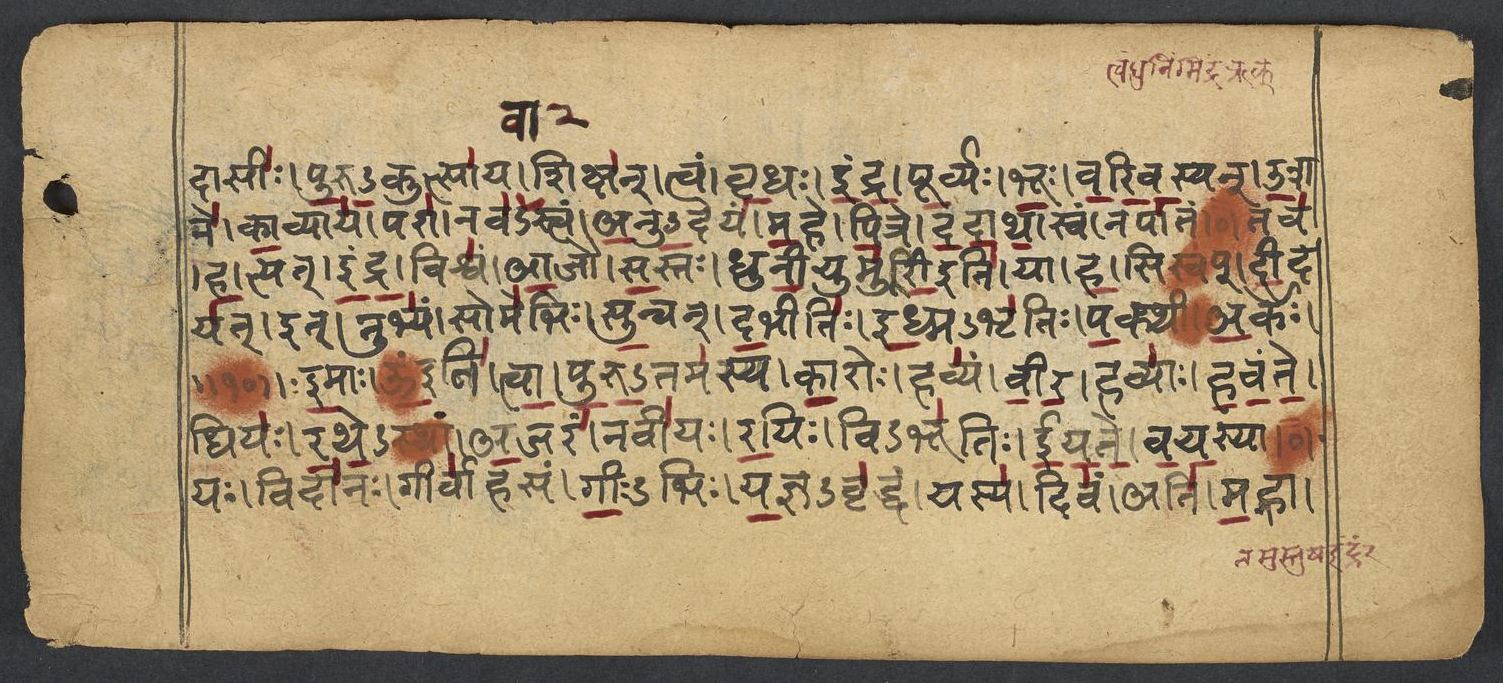
Where on the image
Penn Ms. Coll. 390 Item 41, fol. 430r (numbered 103r by the scribe) (OPenn image 430, lower leaf). Checked on the image: the Rigveda text on this page begins in RV 6.20.10 ‹dāsīḥ puru-kutsāya śikṣan›. The next page with Rigveda text, fol. 430v (numbered 103v by the scribe), begins in RV 6.21.2 ‹pṛthivyāḥ puru-māyasya ririce mahi-tvam›. Verses 6.20.10-13 end on this page; 6.20.10 begins on fol. 429v (numbered 102v by the scribe).
10sa̱nema̱ te 'va̍sā̱ navya̍ indra̱ pra pū̱rava̍ḥ stavanta e̱nā ya̱jñaiḥ | sa̱pta yat pura̱ḥ śarma̱ śāra̍dī̱r dard dhan dāsī̍ḥ puru̱kutsā̍ya̱ śikṣa̍n ||
11tvaṁ vṛ̱dha i̍ndra pū̱rvyo bhū̍r variva̱syann u̱śane̍ kā̱vyāya̍ | parā̱ nava̍vāstvam anu̱deya̍m ma̱he pi̱tre da̍dātha̱ svaṁ napā̍tam ||
12tvaṁ dhuni̍r indra̱ dhuni̍matīr ṛ̱ṇor a̱paḥ sī̱rā na srava̍ntīḥ | pra yat sa̍mu̱dram ati̍ śūra̱ parṣi̍ pā̱rayā̍ tu̱rvaśa̱ṁ yadu̍ṁ sva̱sti ||
13tava̍ ha̱ tyad i̍ndra̱ viśva̍m ā̱jau sa̱sto dhunī̱cumu̍rī̱ yā ha̱ siṣva̍p | dī̱daya̱d it tubhya̱ṁ some̍bhiḥ su̱nvan da̱bhīti̍r i̱dhmabhṛ̍tiḥ pa̱kthy a1̱̍rkaiḥ ||
Compare: Padapāṭha (word-by-word text written in the manuscript; Sansknet e-text via GRETIL)
10sanema | te | avasā | navyaḥ | indra | pra | pūravaḥ | stavante | enā | yajñaiḥ | sapta | yat | puraḥ | śarma | śāradīḥ | darta | han | dāsīḥ | puru-kutsāya | śikṣan
11tvam | vṛdhaḥ | indra | pūrvyaḥ | bhūḥ | varivasyan | uśane | kāvyāya | parā | nava-vāstvam | anu-deyam | mahe | pitre | dadātha | svam | napātam
12tvam | dhuniḥ | indra | dhuni-matīḥ | ṛṇoḥ | apaḥ | sīrāḥ | na | sravantīḥ | pra | yat | samudram | ati | śūra | parṣi | pāraya | turvaśam | yadum | svasti
13tava | ha | tyat | indra | viśvam | ājau | sastaḥ | dhunīcumurī iti | yā | ha | sisvap | dīdayat | it | tubhyam | somebhiḥ | sunvan | dabhītiḥ | idhma-bhṛtiḥ | pakthī | arkaiḥ
10May we, O Indra, gain by thy new favour: so Pûrus laud thee, with their sacrifices, That thou hast wrecked seven autumn forts, their shelter, slain Dâsa tribes and aided Purukutsa.
11Favouring Uṣanâ the son of Kavi, thou wast his ancient strengthener, O Indra. Thou gavest Navavâstva. as a present, to the great father gavest back his grandson.
12Thou, roaring Indra, dravest on the waters that made a roaring sound like rushing rivers, What time, O Hero, o'er the sea thou broughtest, in safety broughtest Turvaṣa and Yadu.
13This Indra, was thy work in war: thou sentest Dhuni and Chumuri to sleep and slumber. Dabhîti lit the flame for thee, and worshipped with fuel, hymns, poured Soma, dressed oblations.
Notes
- Sanskrit: Aufrecht's edition (1877) with the Vedic accents, as entered by van Nooten and Holland (GRETIL).
- English: Ralph T. H. Griffith, The Hymns of the Rigveda (1889-1892; 2nd ed. 1896-1897), from the VedaWeb digital text; OCR slips in that text were corrected against the printed 2nd edition (data/sources/rigveda/griffith_errata.json).
- Padapāṭha (edition text): Sansknet e-text via GRETIL (CC BY-NC-SA 4.0).
Cite
Sources
- Source: Penn Ms. Coll. 390 Item 41 (undated (catalogued with Penn's 18th-19th c. Vedic manuscripts)), OPenn, Public Domain Mark + Aufrecht's accented text (GRETIL) + Griffith's English (VedaWeb) (holding institution)
- Critical edition: Aufrecht (1877), accented e-text via GRETIL
← previous · → next · v cycle view · l back to library