Rigveda 6.3: To Agni
Introduction
Rigveda 6.3 is a hymn of 8 verses addressed to Agni. It stands in book (maṇḍala) 6, the family book of Bharadvāja. The Rigveda is the oldest collection of Sanskrit hymns, composed in the second half of the second millennium BCE and handed down orally for many centuries before it was written down.
The manuscript shown is Penn Ms. Coll. 390 Item 41 (University of Pennsylvania), an undated paper manuscript of the padapāṭha (the word-by-word recitation text, in which every word is written separately and compounds are split) of the whole Ṛgveda in Devanāgarī, 884 leaves in fascicles, 7-9 lines to the page, accents in red; this hymn stands on fol. 404v-405v. Each section below gives the verses that end on one page; the page boundaries were read on the images (the opening words of every page), not counted out. Where the manuscript is a padapāṭha (the word-by-word recitation text), the section shows Aufrecht's continuous (saṃhitā) text first and, as the edition text, the padapāṭha of the same verses, which is the form written on the page.
How was this verified? (Provenance)
Where on the image
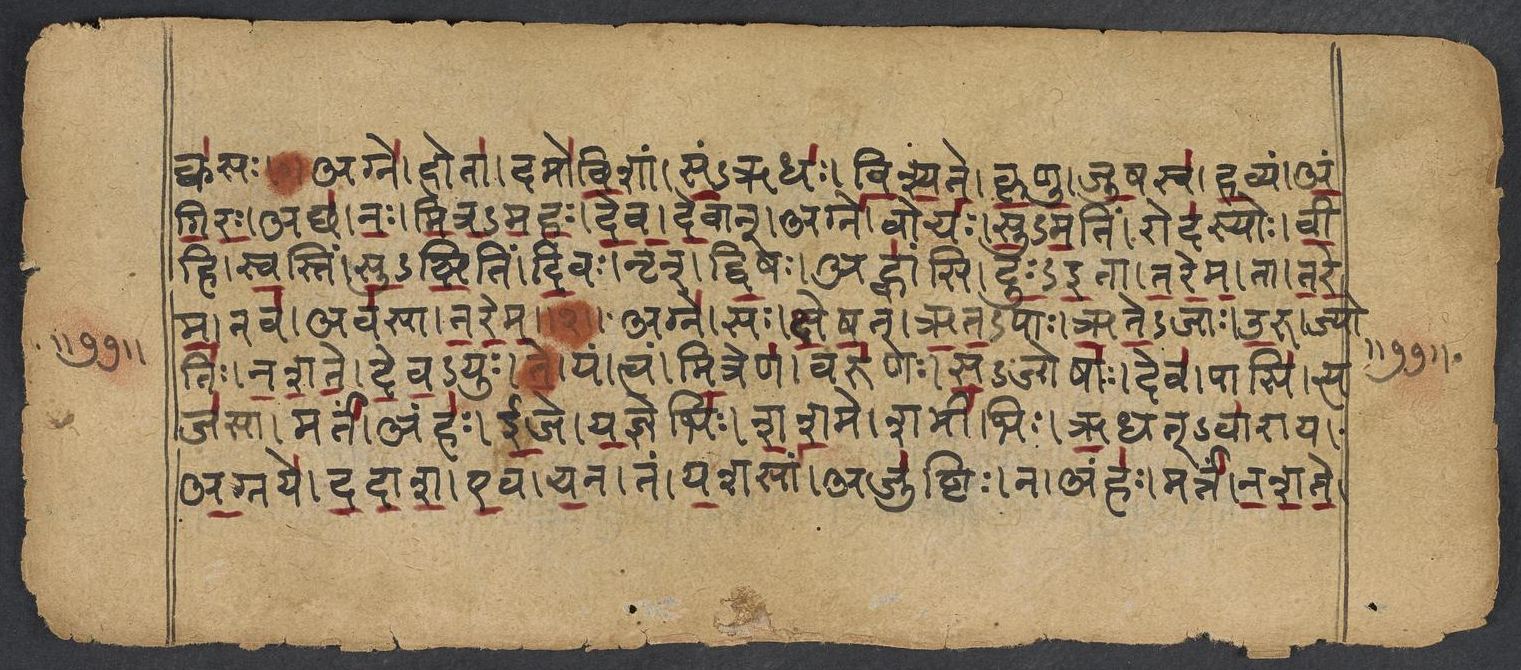
Penn Ms. Coll. 390 Item 41, fol. 404v (numbered 77v by the scribe) (OPenn image 405, upper leaf). Checked on the image: the Rigveda text on this page begins in RV 6.2.10 ‹-adhvari-yatām agne hotā dame›. The next page with Rigveda text, fol. 405r (numbered 78r by the scribe), begins in RV 6.3.2 ‹na pra-dṛptiḥ›. Verse 6.3.1 ends on this page.
1agne̱ sa kṣe̍ṣad ṛta̱pā ṛ̍te̱jā u̱ru jyoti̍r naśate deva̱yuṣ ṭe̍ | yaṁ tvam mi̱treṇa̱ varu̍ṇaḥ sa̱joṣā̱ deva̱ pāsi̱ tyaja̍sā̱ marta̱m aṁha̍ḥ ||
Compare: Padapāṭha (word-by-word text written in the manuscript; Sansknet e-text via GRETIL)
1agne | saḥ | kṣeṣat | ṛta-pāḥ | ṛte--jāḥ | uru | jyotiḥ | naśate | deva-yuḥ | te | yam | tvam | mitreṇa | varuṇaḥ | sa-joṣāḥ | deva | pāsi | tyajasā | martam | aṃhaḥ
1TRUE, guardian of the Law, thy faithful servant wins ample light and dwells in peace, O Agni, Whom thou, as Varuṇa in accord with Mitra, guardest, O God, by banishing his trouble.
Where on the image
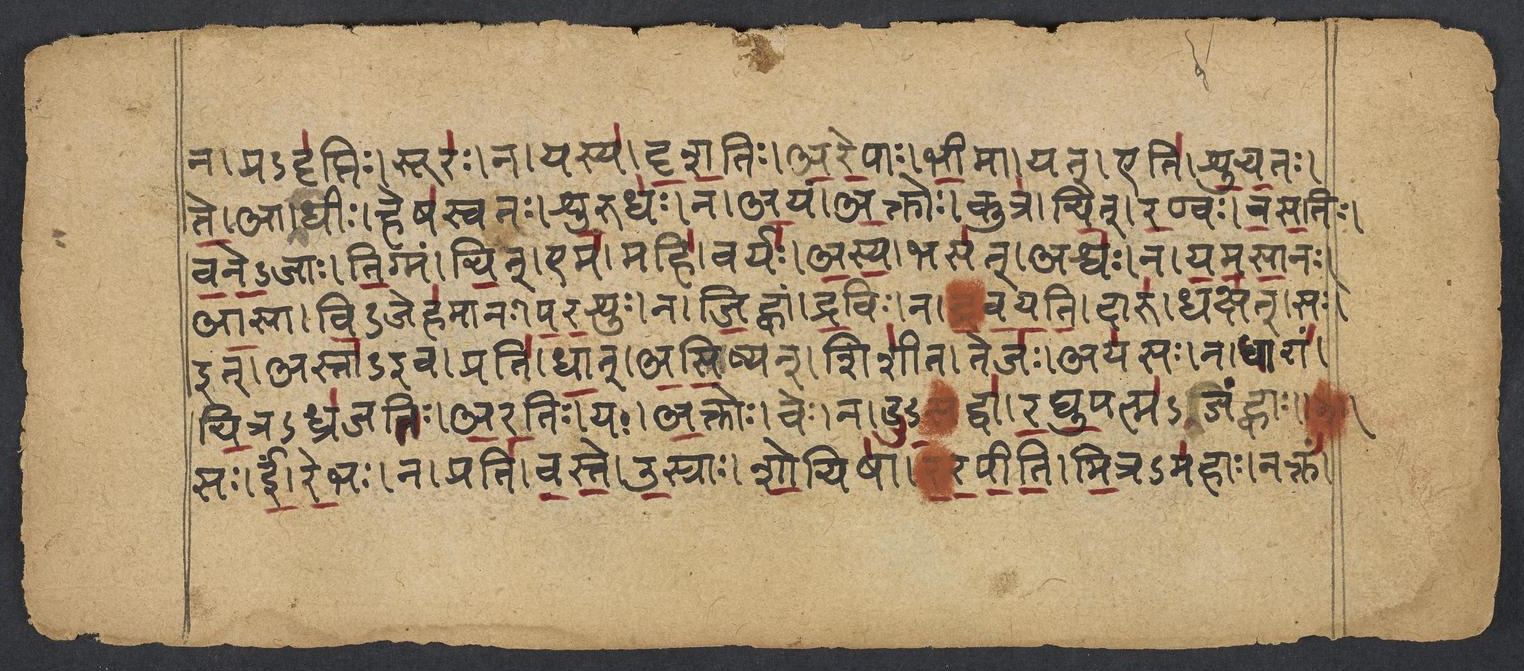
Penn Ms. Coll. 390 Item 41, fol. 405r (numbered 78r by the scribe) (OPenn image 405, lower leaf). Checked on the image: the Rigveda text on this page begins in RV 6.3.2 ‹na pra-dṛptiḥ›. The next page with Rigveda text, fol. 405v (numbered 78v by the scribe), begins in RV 6.3.6 ‹yaḥ īm aruṣaḥ yaḥ›. Verses 6.3.2-5 end on this page; 6.3.2 begins on fol. 404v (numbered 77v by the scribe).
2ī̱je ya̱jñebhi̍ḥ śaśa̱me śamī̍bhir ṛ̱dhadvā̍rāyā̱gnaye̍ dadāśa | e̱vā ca̱na taṁ ya̱śasā̱m aju̍ṣṭi̱r nāṁho̱ marta̍ṁ naśate̱ na pradṛ̍ptiḥ ||
3sūro̱ na yasya̍ dṛśa̱tir a̍re̱pā bhī̱mā yad eti̍ śuca̱tas ta̱ ā dhīḥ | heṣa̍svataḥ śu̱rudho̱ nāyam a̱ktoḥ kutrā̍ cid ra̱ṇvo va̍sa̱tir va̍ne̱jāḥ ||
4ti̱gmaṁ ci̱d ema̱ mahi̱ varpo̍ asya̱ bhasa̱d aśvo̱ na ya̍masā̱na ā̱sā | vi̱jeha̍mānaḥ para̱śur na ji̱hvāṁ dra̱vir na drā̍vayati̱ dāru̱ dhakṣa̍t ||
5sa id aste̍va̱ prati̍ dhād asi̱ṣyañ chiśī̍ta̱ tejo 'ya̍so̱ na dhārā̍m | ci̱tradhra̍jatir ara̱tir yo a̱ktor ver na dru̱ṣadvā̍ raghu̱patma̍jaṁhāḥ ||
Compare: Padapāṭha (word-by-word text written in the manuscript; Sansknet e-text via GRETIL)
2īje | yajñebhiḥ | śaśame | śamībhiḥ | ṛdhat-vārāya | agnaye | dadāśa | eva | cana | tam | yaśasām | ajuṣṭiḥ | na | aṃhaḥ | martam | naśate | na | pra-dṛptiḥ
3sūraḥ | na | yasya | dṛśatiḥ | arepāḥ | bhīmā | yat | eti | śucataḥ | te | ā | dhīḥ | heṣasvataḥ | śurudhaḥ | na | ayam | aktoḥ | kutrāa | cit | raṇvaḥ | vasatiḥ | vane--jāḥ
4tigmam | cit | ema | mahi | varpaḥ | asya | bhasat | aśvaḥ | na | yamasāna | āsā | vi-jehamānaḥ | paraśuḥ | na | jihvām | draviḥ | na | dravayati | dāru | dhakṣat
5saḥ | it | astāiva | prati | dhāt | asiṣyan | śiśīta | tejaḥ | ayasaḥ | na | dhārām | citra-dhrajatiḥ | aratiḥ | yaḥ | aktoḥ | veḥ | na | dru-sadvā | raghupatma-jaṃhāḥ
2He hath paid sacrifices, toiled in worship, and offered gifts to wealth-increasing Agni. Him the displeasure of the famous moves not, outrage and scorn affect not such a mortal.
3Bright God, whose look is free from stain like Sûrya's, thou, swift, what time thou earnestly desirest, Hast gear to give us. Come with joy at evening, where, Child of Wood, thou mayest also tarry.
4Fierce is his gait and vast his wondrous body: he champeth like a horse with bit and bridle, And, darting forth his tongue, as 'twere a hatchet, burning the woods, smelteth them like a smelter.
5Archer-like, fain toshoot, he sets his arrow, and whets his splendour like the edge of iron: The messenger of night with brilliant pathway, like a tree-roosting bird of rapid pinion.
Where on the image
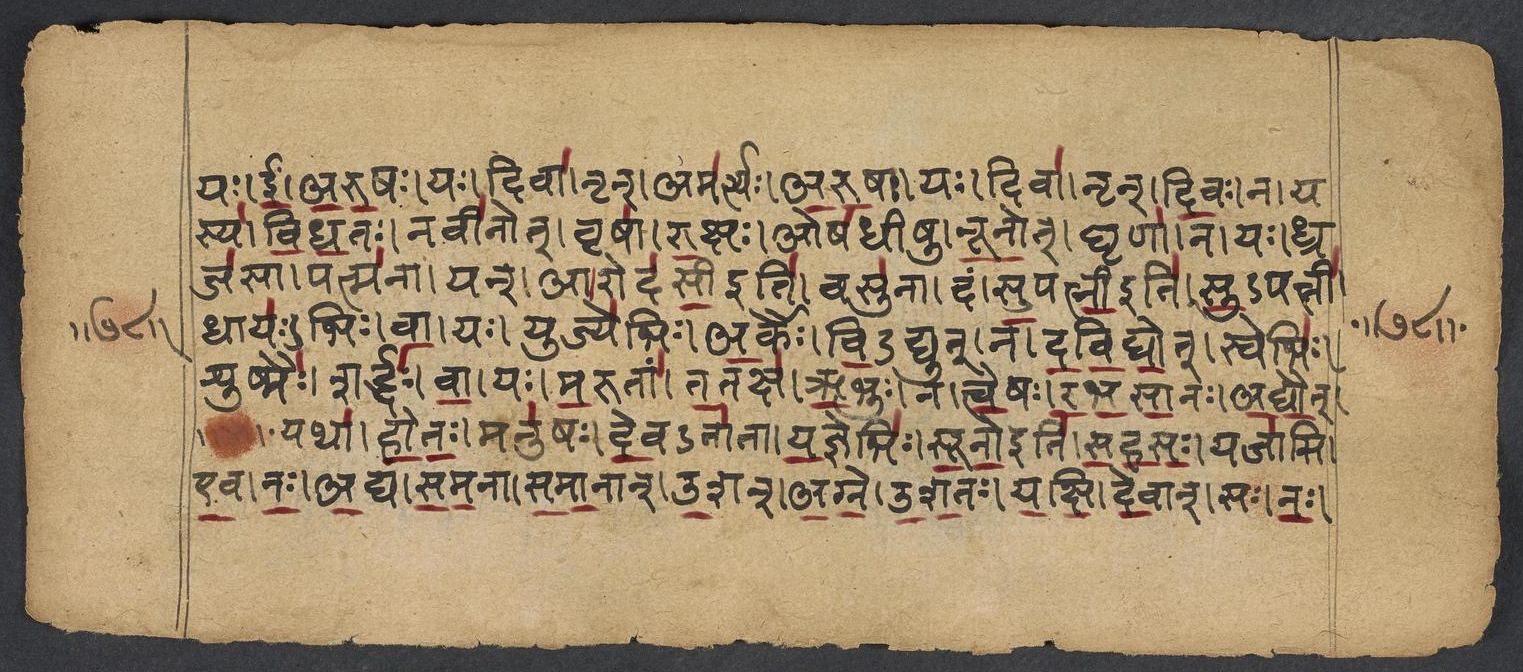
Penn Ms. Coll. 390 Item 41, fol. 405v (numbered 78v by the scribe) (OPenn image 406, upper leaf). Checked on the image: the Rigveda text on this page begins in RV 6.3.6 ‹yaḥ īm aruṣaḥ yaḥ›. The next page with Rigveda text, fol. 406r (numbered 79r by the scribe), begins in RV 6.4.2 ‹vibhāvā cakṣaṇiḥ na vastoḥ›. Verses 6.3.6-8 end on this page; 6.3.6 begins on fol. 405r (numbered 78r by the scribe).
6sa ī̍ṁ re̱bho na prati̍ vasta u̱srāḥ śo̱ciṣā̍ rārapīti mi̱trama̍hāḥ | nakta̱ṁ ya ī̍m aru̱ṣo yo divā̱ nṝn ama̍rtyo aru̱ṣo yo divā̱ nṝn ||
7di̱vo na yasya̍ vidha̱to navī̍no̱d vṛṣā̍ ru̱kṣa oṣa̍dhīṣu nūnot | ghṛṇā̱ na yo dhraja̍sā̱ patma̍nā̱ yann ā roda̍sī̱ vasu̍nā̱ daṁ su̱patnī̍ ||
8dhāyo̍bhir vā̱ yo yujye̍bhir a̱rkair vi̱dyun na da̍vidyo̱t svebhi̱ḥ śuṣmai̍ḥ | śardho̍ vā̱ yo ma̱rutā̍ṁ ta̱takṣa̍ ṛ̱bhur na tve̱ṣo ra̍bhasā̱no a̍dyaut ||
Compare: Padapāṭha (word-by-word text written in the manuscript; Sansknet e-text via GRETIL)
6saḥ | īm | rebhaḥ | na | prati | vaste | usrāḥ | śociṣā | rarapīti | mitr-amahāḥ | naktam | yaḥ | īm | aruṣaḥ | yaḥ | divā | nṝn | amartyaḥ | aruṣaḥ | yaḥ | divā | nṝn
7divaḥ | na | yasya | vidhataḥ | navīnot | vṛṣā | rukṣaḥ | oṣadhīṣu | nūnot | ghṛṇā | na | yaḥ | dhrajasā | patmanā | yan | ā | rodasī iti | vasunā | dam | supatnī itisu-patnī
8dhāyaḥ-bhiḥ | vā | yaḥ | yujyebhiḥ | arkaiḥ | vidyut | na | davidyot | svebhiḥ | śuṣmaiḥ | śardhaḥ | vā | yaḥ | marutām | tatakṣa | ṛbhuḥ | na | tveṣaḥ | rabhasānaḥ | adyaut
6In beams of morn he clothes him like the singer, and bright as Mitra with his splendour crackles. Red in the night, by day the men's possession: red, he belongs to men by day, Immortal.
7Like Heaven's when scattering beams his voice was uttered: among the plants the radiant Hero shouted, Who with his glow in rapid course came hither to fill both worlds, well-wedded Dames, with treasure.
8Who, with supporting streams and rays that suit him, hath flashed like lightning with his native vigour. Like the deft Maker of the band of Maruts, the bright impetuous One hath shone refulgent.
Notes
- Sanskrit: Aufrecht's edition (1877) with the Vedic accents, as entered by van Nooten and Holland (GRETIL).
- English: Ralph T. H. Griffith, The Hymns of the Rigveda (1889-1892; 2nd ed. 1896-1897), from the VedaWeb digital text; OCR slips in that text were corrected against the printed 2nd edition (data/sources/rigveda/griffith_errata.json).
- Padapāṭha (edition text): Sansknet e-text via GRETIL (CC BY-NC-SA 4.0).
Cite
Sources
- Source: Penn Ms. Coll. 390 Item 41 (undated (catalogued with Penn's 18th-19th c. Vedic manuscripts)), OPenn, Public Domain Mark + Aufrecht's accented text (GRETIL) + Griffith's English (VedaWeb) (holding institution)
- Critical edition: Aufrecht (1877), accented e-text via GRETIL
← previous · → next · v cycle view · l back to library