Rigveda 6.21: To Indra
Introduction
Rigveda 6.21 is a hymn of 12 verses addressed to Indra. It stands in book (maṇḍala) 6, the family book of Bharadvāja. The Rigveda is the oldest collection of Sanskrit hymns, composed in the second half of the second millennium BCE and handed down orally for many centuries before it was written down.
The manuscript shown is Penn Ms. Coll. 390 Item 41 (University of Pennsylvania), an undated paper manuscript of the padapāṭha (the word-by-word recitation text, in which every word is written separately and compounds are split) of the whole Ṛgveda in Devanāgarī, 884 leaves in fascicles, 7-9 lines to the page, accents in red; this hymn stands on fol. 430r-431v. Each section below gives the verses that end on one page; the page boundaries were read on the images (the opening words of every page), not counted out. Where the manuscript is a padapāṭha (the word-by-word recitation text), the section shows Aufrecht's continuous (saṃhitā) text first and, as the edition text, the padapāṭha of the same verses, which is the form written on the page.
How was this verified? (Provenance)
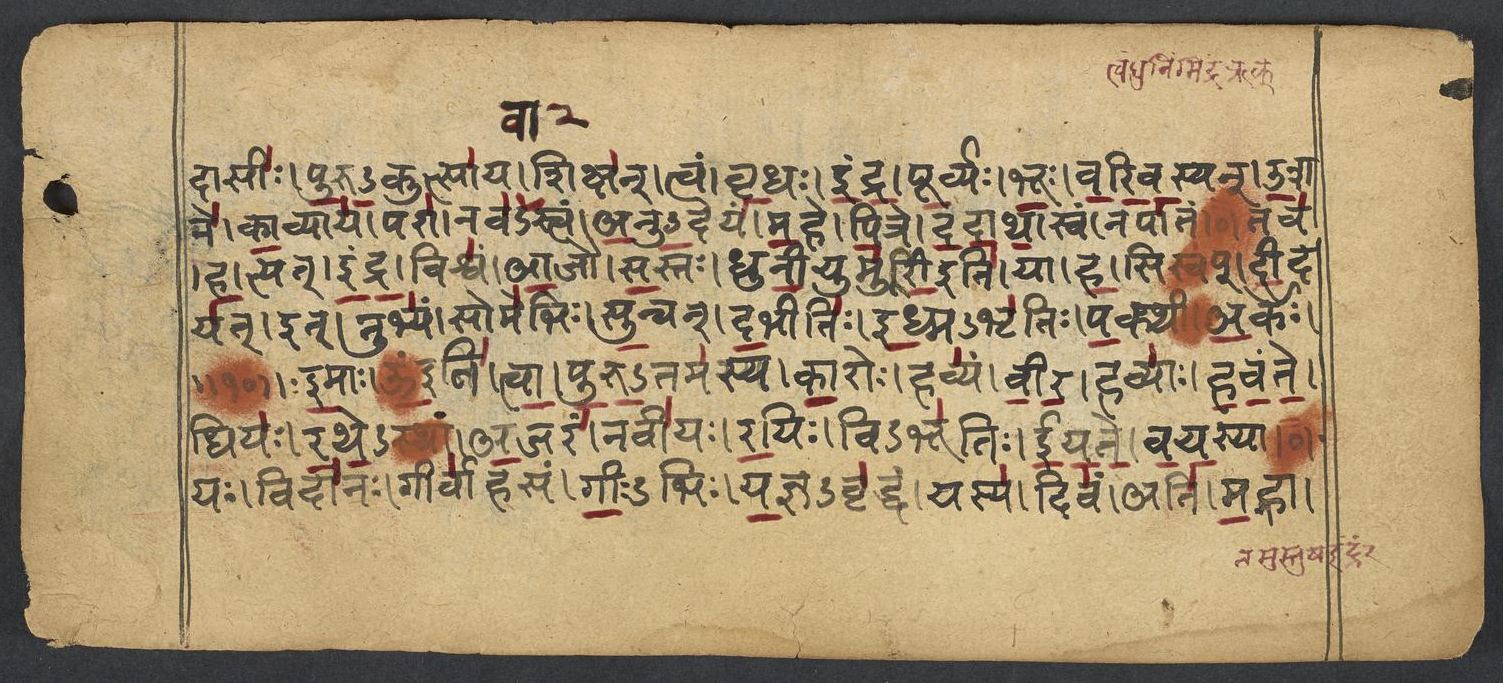
Where on the image
Penn Ms. Coll. 390 Item 41, fol. 430r (numbered 103r by the scribe) (OPenn image 430, lower leaf). Checked on the image: the Rigveda text on this page begins in RV 6.20.10 ‹dāsīḥ puru-kutsāya śikṣan›. The next page with Rigveda text, fol. 430v (numbered 103v by the scribe), begins in RV 6.21.2 ‹pṛthivyāḥ puru-māyasya ririce mahi-tvam›. Verse 6.21.1 ends on this page.
1i̱mā u̍ tvā puru̱tama̍sya kā̱ror havya̍ṁ vīra̱ havyā̍ havante | dhiyo̍ rathe̱ṣṭhām a̱jara̱ṁ navī̍yo ra̱yir vibhū̍tir īyate vaca̱syā ||
Compare: Padapāṭha (word-by-word text written in the manuscript; Sansknet e-text via GRETIL)
1imāḥ | oṃ iti | tvā | puru-tamasya | kāroḥ | havyam | vīra | havyāḥ | havante | dhiyaḥ | rathe--sthām | ajaram | navīyaḥ | rayiḥ | vi-bhūtiḥ | īyate | vacasyā
1THESE the most constant singer's invocations call thee who art to be invoked, O Hero; Hymns call anew the chariot-borne, Eternal: by eloquence men gain abundant riches.
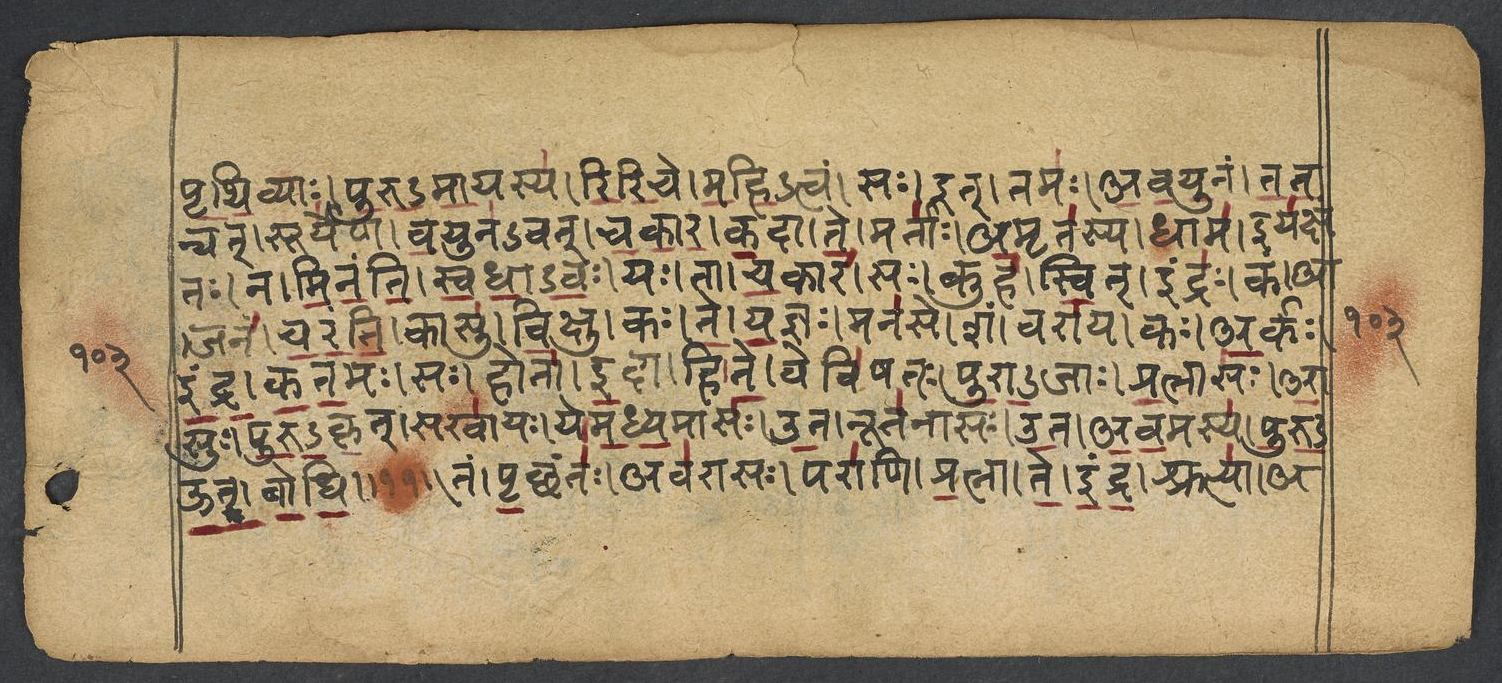
Where on the image
Penn Ms. Coll. 390 Item 41, fol. 430v (numbered 103v by the scribe) (OPenn image 431, upper leaf). Checked on the image: the Rigveda text on this page begins in RV 6.21.2 ‹pṛthivyāḥ puru-māyasya ririce mahi-tvam›. The next page with Rigveda text, fol. 431r (numbered 104r by the scribe), begins in RV 6.21.6 ‹-anu yemuḥ arcāmasi vīra›. Verses 6.21.2-5 end on this page; 6.21.2 begins on fol. 430r (numbered 103r by the scribe).
2tam u̍ stuṣa̱ indra̱ṁ yo vidā̍no̱ girvā̍hasaṁ gī̱rbhir ya̱jñavṛ̍ddham | yasya̱ diva̱m ati̍ ma̱hnā pṛ̍thi̱vyāḥ pu̍rumā̱yasya̍ riri̱ce ma̍hi̱tvam ||
3sa it tamo̍ 'vayu̱naṁ ta̍ta̱nvat sūrye̍ṇa va̱yuna̍vac cakāra | ka̱dā te̱ martā̍ a̱mṛta̍sya̱ dhāmeya̍kṣanto̱ na mi̍nanti svadhāvaḥ ||
4yas tā ca̱kāra̱ sa kuha̍ svi̱d indra̱ḥ kam ā jana̍ṁ carati̱ kāsu̍ vi̱kṣu | kas te̍ ya̱jño mana̍se̱ śaṁ varā̍ya̱ ko a̱rka i̍ndra kata̱maḥ sa hotā̍ ||
5i̱dā hi te̱ vevi̍ṣataḥ purā̱jāḥ pra̱tnāsa̍ ā̱suḥ pu̍rukṛ̱t sakhā̍yaḥ | ye ma̍dhya̱māsa̍ u̱ta nūta̍nāsa u̱tāva̱masya̍ puruhūta bodhi ||
Compare: Padapāṭha (word-by-word text written in the manuscript; Sansknet e-text via GRETIL)
2tam | oṃ iti | stuṣe | indram | yaḥ | vidānaḥ | girvāhasam | gīḥ-bhiḥ | yajña-vṛddham | yasya | divam | ati | mahnā | pṛthivyāḥ | puru-māyasya | ririce | mahi-tvam
3saḥ | it | tamaḥ | avayunam | tatanvat | sūryeṇa | vayuna-vat | cakāra | kadā | te | martāḥ | amṛtasya | dhāma | iyakṣantaḥ | na | minanti | svadhāvaḥ
4yaḥ | tā | cakāra | saḥ | kuha | svit | indraḥ | kam | ā | janam | carati | kāsu | vikṣu | kaḥ | te | yajñaḥ | manase | śam | varāya | kaḥ | arkaḥ | indra | katamaḥ | saḥ | hotā
5idā | hi | te | veviṣataḥ | purājāḥ | pratnāsaḥ | āsuḥ | puru-kṛt | sakhāyaḥ | ye | madyamāsaḥ | uta | nūtanāsaḥ | uta | avamasya | puru-hūta | bodhi
2I praise that Indra, known to all men, honoured with songs, extolled with hymns at sacrifices, Whose majesty, rich in wondrous arts, surpasseth the magnitude of earth, and heaven in greatness.
3He hath made pathways, with the Sun to aid him, throughout the darkness that extended pathless. Mortals who yearn to worship ne'er dishonour, O Mighty God, thy Law who art Immortal.
4And he who did these things, where is that Indra? among what tribes? what people doth he visit? What sacrifice contents thy mind , and wishes? What priest among them all? what hymn, O Indra?
5Yea, here were they who, born of old, have served thee, thy friends of ancient time, thou active Worker. Bethink thee now of these, Invoked of many! the midmost and the recent, and the youngest.
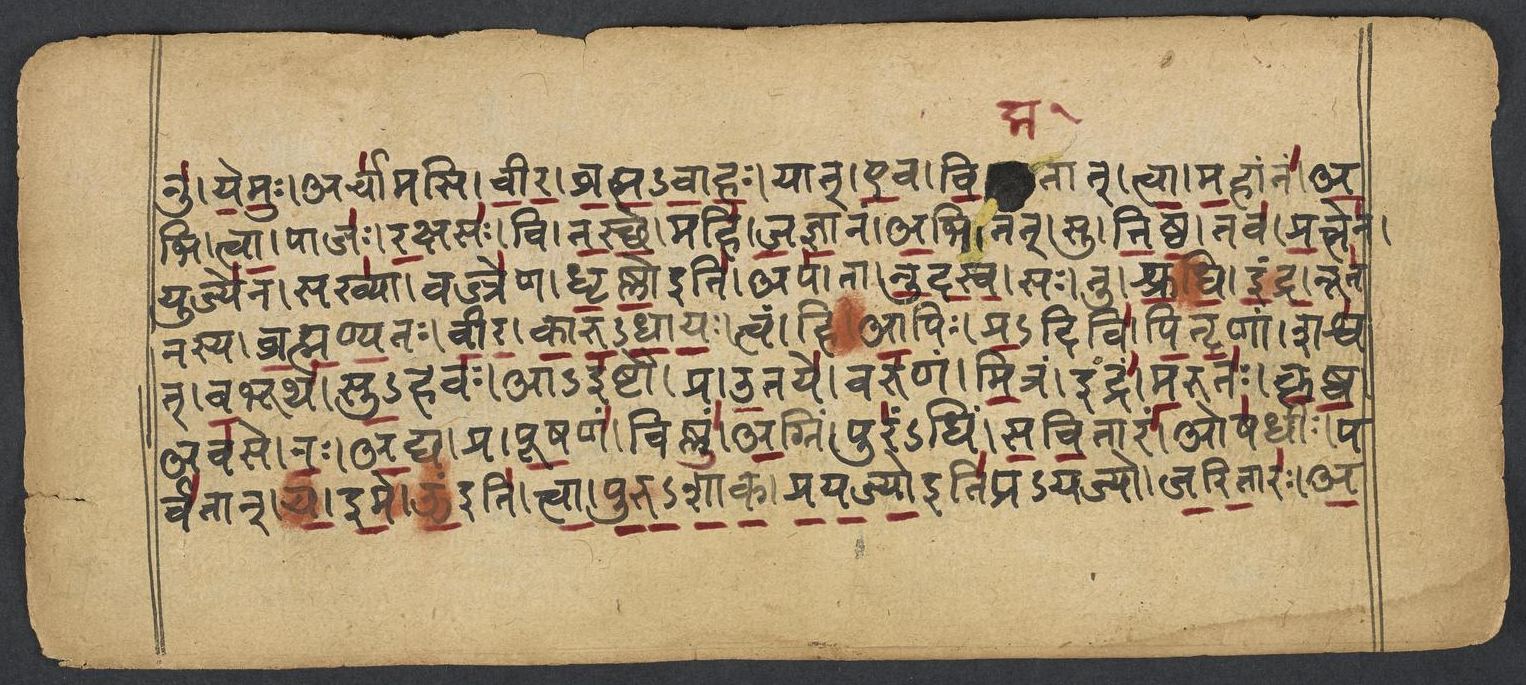
Where on the image
Penn Ms. Coll. 390 Item 41, fol. 431r (numbered 104r by the scribe) (OPenn image 431, lower leaf). Checked on the image: the Rigveda text on this page begins in RV 6.21.6 ‹-anu yemuḥ arcāmasi vīra›. The next page with Rigveda text, fol. 431v (numbered 104v by the scribe), begins in RV 6.21.10 ‹-abhi arcanti arkaiḥ śrudhi›. Verses 6.21.6-9 end on this page; 6.21.6 begins on fol. 430v (numbered 103v by the scribe).
6tam pṛ̱cchanto 'va̍rāsa̱ḥ parā̍ṇi pra̱tnā ta̍ indra̱ śrutyānu̍ yemuḥ | arcā̍masi vīra brahmavāho̱ yād e̱va vi̱dma tāt tvā̍ ma̱hānta̍m ||
7a̱bhi tvā̱ pājo̍ ra̱kṣaso̱ vi ta̍sthe̱ mahi̍ jajñā̱nam a̱bhi tat su ti̍ṣṭha | tava̍ pra̱tnena̱ yujye̍na̱ sakhyā̱ vajre̍ṇa dhṛṣṇo̱ apa̱ tā nu̍dasva ||
8sa tu śru̍dhīndra̱ nūta̍nasya brahmaṇya̱to vī̍ra kārudhāyaḥ | tvaṁ hy ā̱3̱̍piḥ pra̱divi̍ pitṝ̱ṇāṁ śaśva̍d ba̱bhūtha̍ su̱hava̱ eṣṭau̍ ||
9protaye̱ varu̍ṇam mi̱tram indra̍m ma̱ruta̍ḥ kṛ̱ṣvāva̍se no a̱dya | pra pū̱ṣaṇa̱ṁ viṣṇu̍m a̱gnim pura̍ṁdhiṁ savi̱tāra̱m oṣa̍dhī̱ḥ parva̍tām̐ś ca ||
Compare: Padapāṭha (word-by-word text written in the manuscript; Sansknet e-text via GRETIL)
6tam | pṛcchantaḥ | avarāsaḥ | parāṇi | pratnā | te | indra | śrutyā | anu | yemuḥ | arcāmasi | vīra | brahma-vāhaḥ | yāt | eva | vidma | tāt | tvā | mahāntam
7abhi | tvā | pājaḥ | rakṣasaḥ | vi | tasthe | mahi | jajñānam | abhi | tat | su | tiṣṭha | tava | pratnena | yujyena | sakhyā | vajreṇa | dhṛṣṇo iti | apa | tā | nudasva
8saḥ | tu | śrudhi | indra | nūtanasya | brahmaṇyataḥ | vīra | kāru-dhāyaḥ | tvam | hi | āpiḥ | pra-divi | pitṝṇām | śaśvat | babhūtha | su-havaḥ | āiṣṭau
9pra | ūtaye | varuṇam | mitram | indram | marutaḥ | kṛṣva | avase | naḥ | adya | pra | pūṣaṇam | viṣṇum | agnim | puram-dhim | savitāram | oṣadhīḥ | parvatān | ca
6Inquiring after him, thy later servants, Indra, have gained thy former old traditions. Hero, to whom the prayer is brought, we praise thee as great for that wherein we know thee mighty.
7The demon's strength is gathered fast against thee: great as that strength hath grown, go forth to meet it. With thine own ancient friend and companion, the thunderbolt, brave Champion! drive it backward.
8Hear, too, the prayer of this thy present beadsman, O Indra, Hero, cherishing the singer. For thou wast aye our fathers' Friend aforetime, still swift to listen to their supplication.
9Bring to our help this day, for our protection, Varuṇa, Mitra , Indra, and the Maruts, Pûshan and Vishṇu, Agni and Purandhi, Savitar also, and the Plants and Mountains.
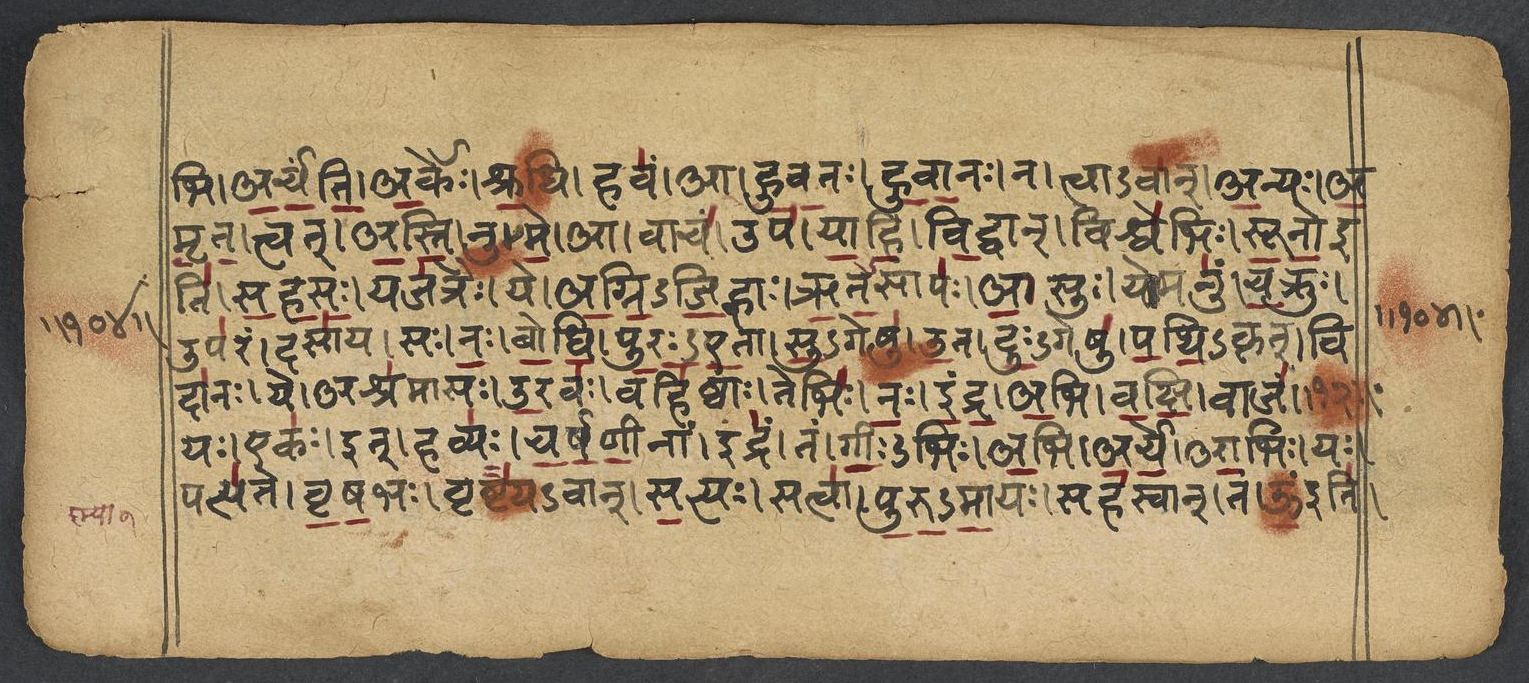
Where on the image
Penn Ms. Coll. 390 Item 41, fol. 431v (numbered 104v by the scribe) (OPenn image 432, upper leaf). Checked on the image: the Rigveda text on this page begins in RV 6.21.10 ‹-abhi arcanti arkaiḥ śrudhi›. The next page with Rigveda text, fol. 432r (numbered 105r by the scribe), begins in RV 6.22.2 ‹naḥ pūrve pitaraḥ nava-gvāḥ›. Verses 6.21.10-12 end on this page; 6.21.10 begins on fol. 431r (numbered 104r by the scribe).
10i̱ma u̍ tvā puruśāka prayajyo jari̱tāro̍ a̱bhy a̍rcanty a̱rkaiḥ | śru̱dhī hava̱m ā hu̍va̱to hu̍vā̱no na tvāvā̍m̐ a̱nyo a̍mṛta̱ tvad a̍sti ||
11nū ma̱ ā vāca̱m upa̍ yāhi vi̱dvān viśve̍bhiḥ sūno sahaso̱ yaja̍traiḥ | ye a̍gniji̱hvā ṛ̍ta̱sāpa̍ ā̱sur ye manu̍ṁ ca̱krur upa̍ra̱ṁ dasā̍ya ||
12sa no̍ bodhi purae̱tā su̱geṣū̱ta du̱rgeṣu̍ pathi̱kṛd vidā̍naḥ | ye aśra̍māsa u̱ravo̱ vahi̍ṣṭhā̱s tebhi̍r na indrā̱bhi va̍kṣi̱ vāja̍m ||
Compare: Padapāṭha (word-by-word text written in the manuscript; Sansknet e-text via GRETIL)
10ime | oṃ iti | tvā | puru-śāka | prayajyo itipra-yajyo | jaritāraḥ | abhi | arcanti | arkaiḥ | śrudhi | havam | ā | huvataḥ | huvānaḥ | na | tvāvān | anyaḥ | amṛta | tvat | asti
11nu | me | ā | vācam | upa | yāhi | vidvān | viśvebhiḥ | sūno iti | sahasaḥ | yajatraiḥ | ye | agni-jihvāḥ | ṛta-sāpaḥ | āsuḥ | ye | manum | cakruḥ | uparam | dasāya
12saḥ | naḥ | bodhi | puraḥ-etā | su-geṣu | uta | duḥ-geṣu | pathi-kṛt | vidānaḥ | ye | aśramāsaḥ | uravaḥ | vahiṣṭhāḥ | tebhiḥ | naḥ | indra | abhi | vakṣi | vājam
10The singers here exalt with hymns and praises thee who art very Mighty and Most Holy. Hear, when invoked, the invoker's invocation. Beside thee there is nonelike thee, Immortal!
11Now to my words come quickly thou who knowest, O Son of Strength, with all who claim our worship, Who visit sacred rites, whose tongue is Agni, Gods who made Manu stronger than the Dasyu.
12On good and evil ways be thou our Leader, thou who art known to all as Path-preparer. Bring power to us, O Indra, with thy Horses, Steeds that are best to draw, broad-backed, unwearied.
Notes
- Sanskrit: Aufrecht's edition (1877) with the Vedic accents, as entered by van Nooten and Holland (GRETIL).
- English: Ralph T. H. Griffith, The Hymns of the Rigveda (1889-1892; 2nd ed. 1896-1897), from the VedaWeb digital text; OCR slips in that text were corrected against the printed 2nd edition (data/sources/rigveda/griffith_errata.json).
- Padapāṭha (edition text): Sansknet e-text via GRETIL (CC BY-NC-SA 4.0).
Cite
Sources
- Source: Penn Ms. Coll. 390 Item 41 (undated (catalogued with Penn's 18th-19th c. Vedic manuscripts)), OPenn, Public Domain Mark + Aufrecht's accented text (GRETIL) + Griffith's English (VedaWeb) (holding institution)
- Critical edition: Aufrecht (1877), accented e-text via GRETIL
← previous · → next · v cycle view · l back to library