Rigveda 6.22: To Indra
Introduction
Rigveda 6.22 is a hymn of 11 verses addressed to Indra. It stands in book (maṇḍala) 6, the family book of Bharadvāja. The Rigveda is the oldest collection of Sanskrit hymns, composed in the second half of the second millennium BCE and handed down orally for many centuries before it was written down.
The manuscript shown is Penn Ms. Coll. 390 Item 41 (University of Pennsylvania), an undated paper manuscript of the padapāṭha (the word-by-word recitation text, in which every word is written separately and compounds are split) of the whole Ṛgveda in Devanāgarī, 884 leaves in fascicles, 7-9 lines to the page, accents in red; this hymn stands on fol. 431v-433r. Each section below gives the verses that end on one page; the page boundaries were read on the images (the opening words of every page), not counted out. Where the manuscript is a padapāṭha (the word-by-word recitation text), the section shows Aufrecht's continuous (saṃhitā) text first and, as the edition text, the padapāṭha of the same verses, which is the form written on the page.
How was this verified? (Provenance)
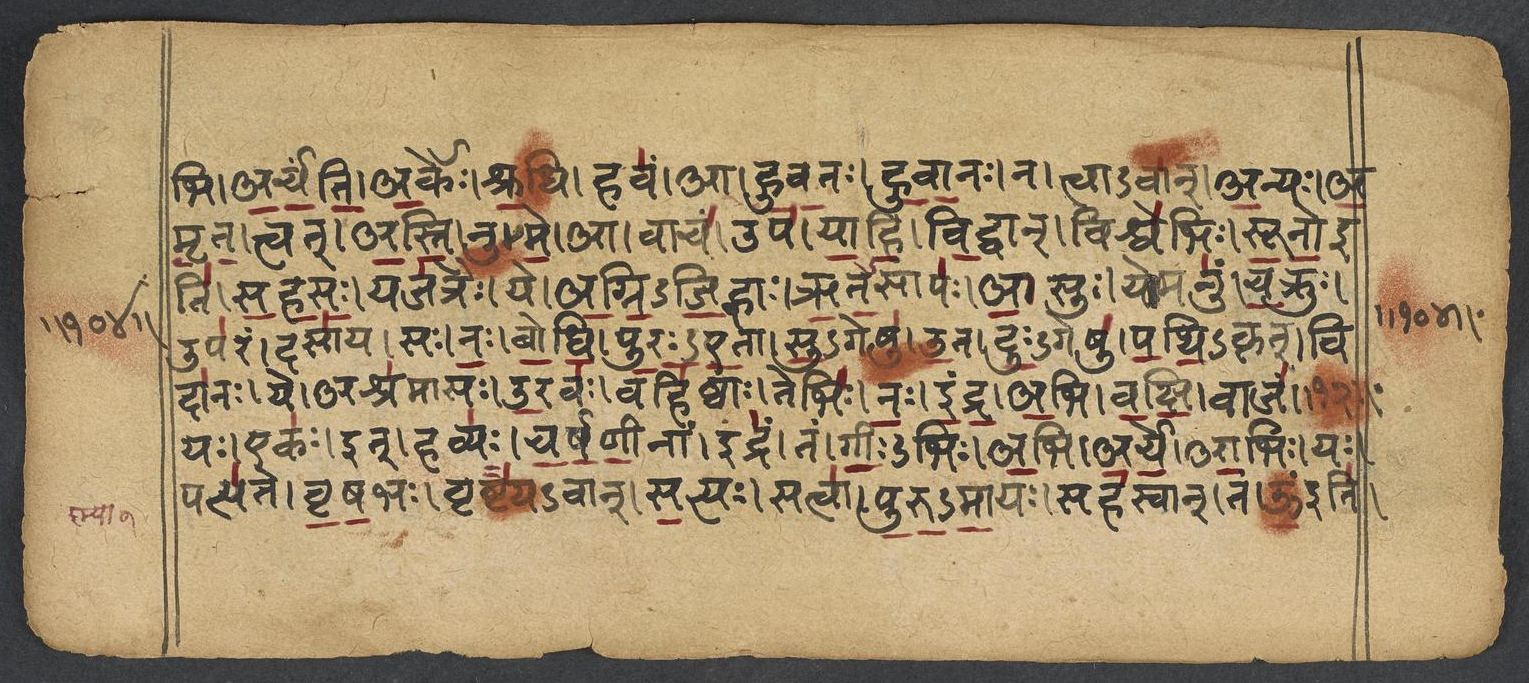
Where on the image
Penn Ms. Coll. 390 Item 41, fol. 431v (numbered 104v by the scribe) (OPenn image 432, upper leaf). Checked on the image: the Rigveda text on this page begins in RV 6.21.10 ‹-abhi arcanti arkaiḥ śrudhi›. The next page with Rigveda text, fol. 432r (numbered 105r by the scribe), begins in RV 6.22.2 ‹naḥ pūrve pitaraḥ nava-gvāḥ›. Verse 6.22.1 ends on this page.
1ya eka̱ id dhavya̍ś carṣaṇī̱nām indra̱ṁ taṁ gī̱rbhir a̱bhy a̍rca ā̱bhiḥ | yaḥ patya̍te vṛṣa̱bho vṛṣṇyā̍vān sa̱tyaḥ satvā̍ purumā̱yaḥ saha̍svān ||
Compare: Padapāṭha (word-by-word text written in the manuscript; Sansknet e-text via GRETIL)
1yaḥ | ekaḥ | it | havyaḥ | carṣaṇīnām | indram | tam | gīḥ-bhiḥ | abhi | arce | ābhiḥ | yaḥ | patyate | vṛṣabhaḥ | vṛṣṇya-vān | satyaḥ | satvā | puru-māyaḥ | sahasvān
1WITH these my hymns I glorify that Indra who is alone to be invoked by mortals, The Lord, the Mighty One, of manly vigour, victorious, Hero, true, and full of wisdom.
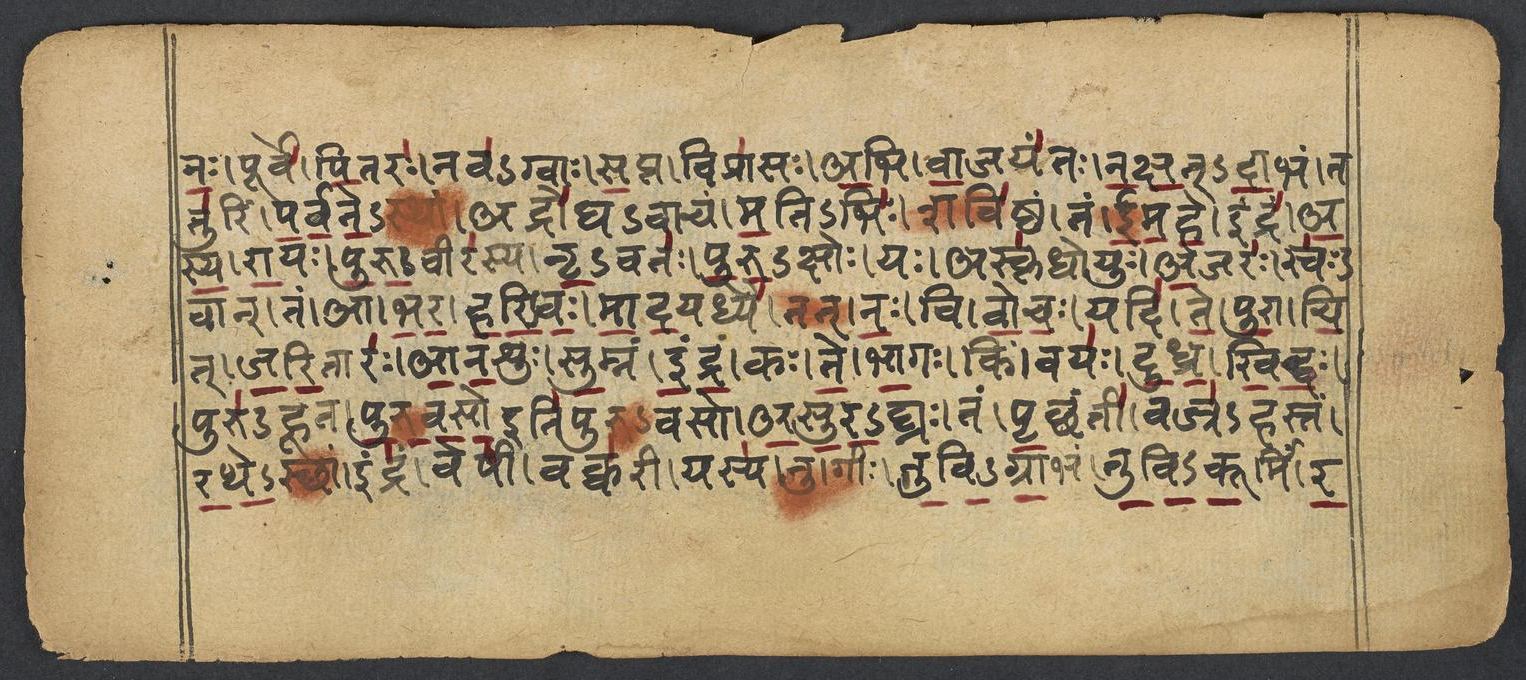
Where on the image
Penn Ms. Coll. 390 Item 41, fol. 432r (numbered 105r by the scribe) (OPenn image 432, lower leaf). Checked on the image: the Rigveda text on this page begins in RV 6.22.2 ‹naḥ pūrve pitaraḥ nava-gvāḥ›. The next page with Rigveda text, fol. 432v (numbered 105v by the scribe), begins in RV 6.22.5 ‹-rabhaḥ-dām gātum iṣe nakṣate›. Verses 6.22.2-4 end on this page; 6.22.2 begins on fol. 431v (numbered 104v by the scribe).
2tam u̍ na̱ḥ pūrve̍ pi̱taro̱ nava̍gvāḥ sa̱pta viprā̍so a̱bhi vā̱jaya̍ntaḥ | na̱kṣa̱ddā̱bhaṁ tatu̍rim parvate̱ṣṭhām adro̍ghavācam ma̱tibhi̱ḥ śavi̍ṣṭham ||
3tam ī̍maha̱ indra̍m asya rā̱yaḥ pu̍ru̱vīra̍sya nṛ̱vata̍ḥ puru̱kṣoḥ | yo askṛ̍dhoyur a̱jara̱ḥ sva̍rvā̱n tam ā bha̍ra harivo māda̱yadhyai̍ ||
4tan no̱ vi vo̍co̱ yadi̍ te pu̱rā ci̍j jari̱tāra̍ āna̱śuḥ su̱mnam i̍ndra | kas te̍ bhā̱gaḥ kiṁ vayo̍ dudhra khidva̱ḥ puru̍hūta purūvaso 'sura̱ghnaḥ ||
Compare: Padapāṭha (word-by-word text written in the manuscript; Sansknet e-text via GRETIL)
2tam | oṃ iti | naḥ | pūrve | pitaraḥ | nava-gvāḥ | sapta | viprāsaḥ | abhi | vājayantaḥ | nakṣat-dābham | taturim | parvate--sthām | adrogha-vācam | mati-bhiḥ | śaviṣṭham
3tam | īmahe | indram | asya | rāyaḥ | puru-vīrasya | nṛ-vataḥ | puru-kṣoḥ | yaḥ | askṛdhoyuḥ | ajaraḥ | svaḥ-vān | tam | ā | bhara | hari-vaḥ | mādayadhyai
4tat | naḥ | vi | vocaḥ | yadi | te | purā | cit | jaritāraḥ | ānaśuḥ | sumnam | indra | kaḥ | te | bhāgaḥ | kim | vayaḥ | dudhra | khidvaḥ | puru-hūta | puruvaso itipuru-vaso | asura-ghnaḥ
2Our sires of old,. Navagvas, sages seven, while urging him to show his might, extolled him, Dwelling on heights, swift, smiting down opponents, guileless in word, and in his thoughts most mighty.
3We seek that Indra to obtain his riches that bring much food, and men, and store of heroes. Bring us, Lord of Bay Steeds, to make us joyful, celestial wealth, abundant, undecaying.
4Tell thou us this, if at thy hand aforetime the earlier singers have obtained good fortune, What is thy share and portion, Strong Subduer, Asura-slayer, rich, invoked of many?
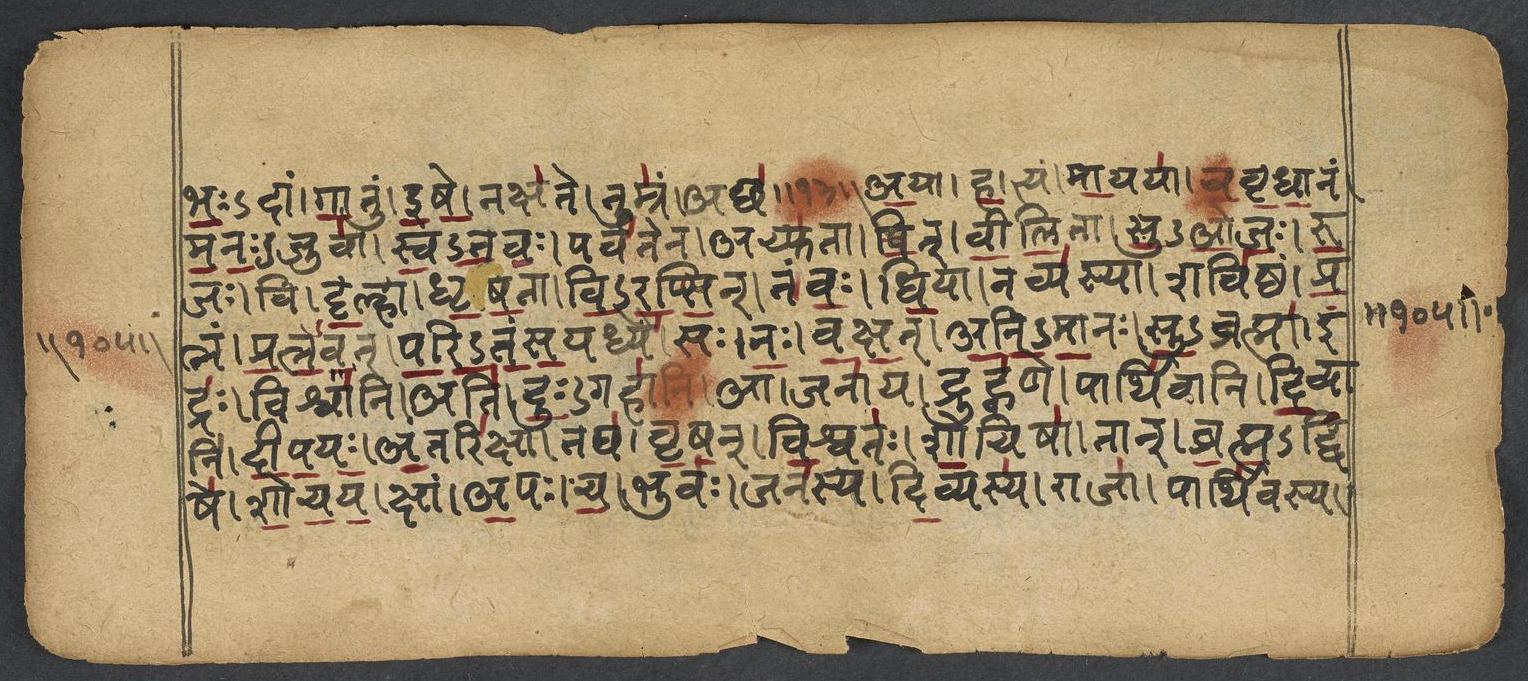
Where on the image
Penn Ms. Coll. 390 Item 41, fol. 432v (numbered 105v by the scribe) (OPenn image 433, upper leaf). Checked on the image: the Rigveda text on this page begins in RV 6.22.5 ‹-rabhaḥ-dām gātum iṣe nakṣate›. The next page with Rigveda text, fol. 433r (numbered 106r by the scribe), begins in RV 6.22.9 ‹jagataḥ tveṣa-sandṛk dhiṣva vajram›. Verses 6.22.5-8 end on this page; 6.22.5 begins on fol. 432r (numbered 105r by the scribe).
5tam pṛ̱cchantī̱ vajra̍hastaṁ rathe̱ṣṭhām indra̱ṁ vepī̱ vakva̍rī̱ yasya̱ nū gīḥ | tu̱vi̱grā̱bhaṁ tu̍vikū̱rmiṁ ra̍bho̱dāṁ gā̱tum i̍ṣe̱ nakṣa̍te̱ tumra̱m accha̍ ||
6a̱yā ha̱ tyam mā̱yayā̍ vāvṛdhā̱nam ma̍no̱juvā̍ svatava̱ḥ parva̍tena | acyu̍tā cid vīḻi̱tā svo̍jo ru̱jo vi dṛ̱ḻhā dhṛ̍ṣa̱tā vi̍rapśin ||
7taṁ vo̍ dhi̱yā navya̍syā̱ śavi̍ṣṭham pra̱tnam pra̍tna̱vat pa̍ritaṁsa̱yadhyai̍ | sa no̍ vakṣad animā̱naḥ su̱vahmendro̱ viśvā̱ny ati̍ du̱rgahā̍ṇi ||
8ā janā̍ya̱ druhva̍ṇe̱ pārthi̍vāni di̱vyāni̍ dīpayo̱ 'ntari̍kṣā | tapā̍ vṛṣan vi̱śvata̍ḥ śo̱ciṣā̱ tān bra̍hma̱dviṣe̍ śocaya̱ kṣām a̱paś ca̍ ||
Compare: Padapāṭha (word-by-word text written in the manuscript; Sansknet e-text via GRETIL)
5tam | pṛcchantī | vajra-hastam | rathe--sthām | indram | vepī | vakvarī | yasya | nu | gīḥ | tuvi-grābham | tuvi-kūrmim | rabhaḥ-dām | gātum | iṣe | nakṣate | tumram | accha
6ayā | ha | tyam | māyayā | vavṛdhānam | manaḥ-juvā | sva-tavaḥ | parvatena | acyutā | cit | vīḷitā | su-ojaḥ | rujaḥ | vi | dṛḷhā | dhṛṣatā | vi-rapśin
7tam | vaḥ | dhiyā | navyasyā | śaviṣṭham | pratnam | pratna-vat | pari-taṃsayadhyai | saḥ | naḥ | vakṣat | ani-mānaḥ | su-vahnā | indraḥ | viśvāni | ati | duḥ-gahāṇi
8ā | janāya | druhvaṇe | pārthivāni | divyāni | dīpayaḥ | antarikṣā | tapa | vṛṣan | viśvataḥ | śociṣā | tān | brahma-dviṣe | śocaya | kṣām | apaḥ | ca
5He who for car-borne Indra, armed with thunder, hath a hymn, craving, deeply-piercing, fluent, Who sends a song effectual, firmly-grasping, and strength-bestowing, he comes near the mighty.
6Strong of thyself, thou by this art hast shattered, with thought-swift Parvata, him who waxed against thee, And, Mightiest! roaring! boldly rent in pieces things that were firmly fixed and never shaken.
7Him will we fit for you with new devotion, the strongest Ancient One, in ancient manner. So may that Indra, boundless, faithful Leader, conduct us o'er all places hard to traverse.
8Thou for the people who oppress hast kindled the earthly firmament and that of heaven. With heat, O Bull, on every side consume them: heat earth and flood for him who hates devotion.
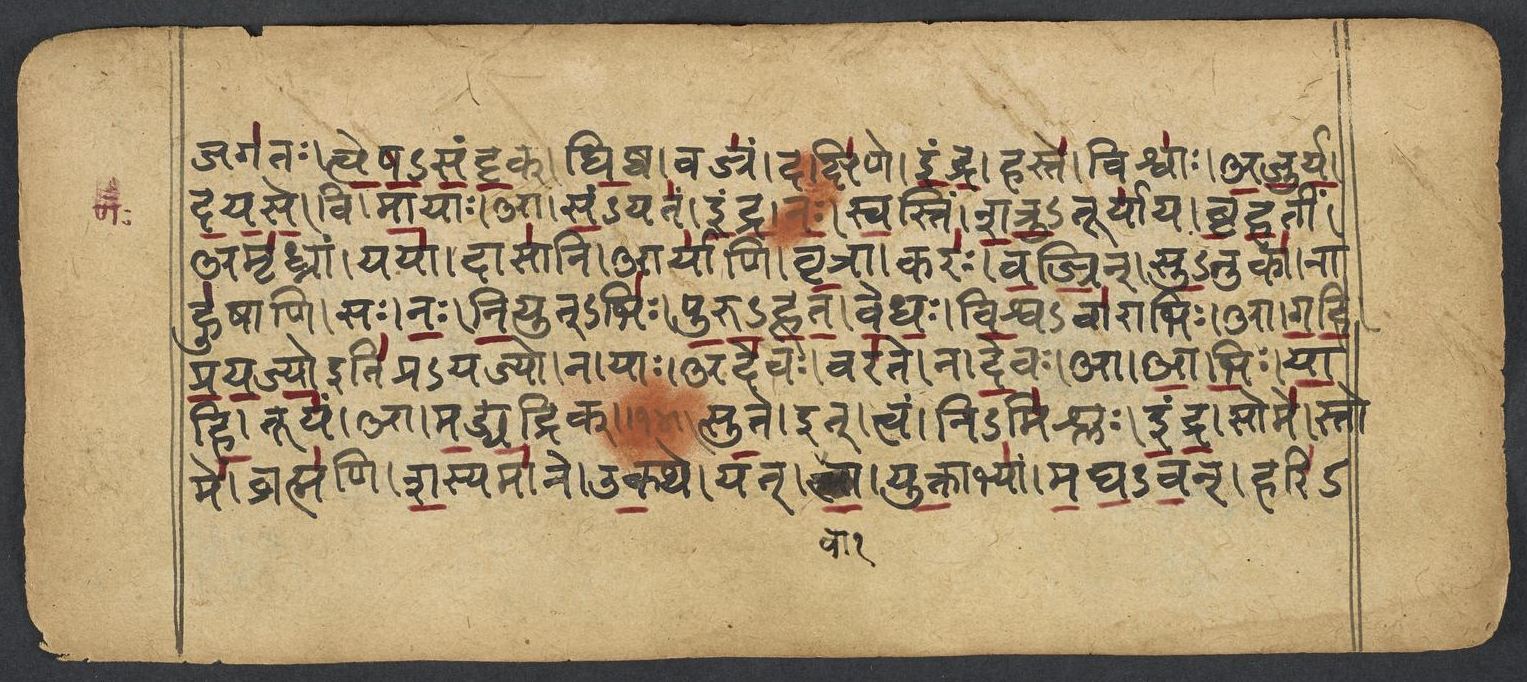
Where on the image
Penn Ms. Coll. 390 Item 41, fol. 433r (numbered 106r by the scribe) (OPenn image 433, lower leaf). Checked on the image: the Rigveda text on this page begins in RV 6.22.9 ‹jagataḥ tveṣa-sandṛk dhiṣva vajram›. The next page with Rigveda text, fol. 433v (numbered 106v by the scribe), begins in RV 6.23.1 ‹-hari-bhyām bibhrat vajram bāhvoḥ›. Verses 6.22.9-11 end on this page; 6.22.9 begins on fol. 432v (numbered 105v by the scribe).
9bhuvo̱ jana̍sya di̱vyasya̱ rājā̱ pārthi̍vasya̱ jaga̍tas tveṣasaṁdṛk | dhi̱ṣva vajra̱ṁ dakṣi̍ṇa indra̱ haste̱ viśvā̍ ajurya dayase̱ vi mā̱yāḥ ||
10ā sa̱ṁyata̍m indra ṇaḥ sva̱stiṁ śa̍tru̱tūryā̍ya bṛha̱tīm amṛ̍dhrām | yayā̱ dāsā̱ny āryā̍ṇi vṛ̱trā karo̍ vajrin su̱tukā̱ nāhu̍ṣāṇi ||
11sa no̍ ni̱yudbhi̍ḥ puruhūta vedho vi̱śvavā̍rābhi̱r ā ga̍hi prayajyo | na yā ade̍vo̱ vara̍te̱ na de̱va ābhi̍r yāhi̱ tūya̱m ā ma̍drya̱drik ||
Compare: Padapāṭha (word-by-word text written in the manuscript; Sansknet e-text via GRETIL)
9bhuvaḥ | janasya | divyasya | rājā | pārthivasya | jagataḥ | tveṣa-sandṛk | dhiṣva | vajram | dakṣiṇe | indra | haste | viśvā | ajurya | dayase | vi | māyāḥ
10ā | sam-yatam | indra | ṇaḥ | svastim | śatru-tūryāya | bṛhatīm | amṛdhrām | yayā | dāsāni | āryāṇi | vṛtrā | karaḥ | vajrin | su-tukā | nāhuṣāṇi
11saḥ | naḥ | niyut-bhiḥ | puru-hūta | vedhaḥ | viśva-vārābhiḥ | ā | gahi | prayajyo itipra-yajyo | na | yāḥ | adevaḥ | varate | na | devaḥ | ā | ābhiḥ | yāhi | tūyam | ā | madryadrik
9Of all the Heavenly Folk, of earthly creatures thou art the King, O God of splendid aspect. In thy right hand, O Indra, grasp die thunder: Eternal! thou destroyest all enchantments.
10Give us confirmed prosperity, O Indra, vast and exhaustless for the foe's subduing. Strengthen therewith the Arya's hate and Dâsa's, and let the arms of Nahushas be mighty.
11Come with thy team which brings all blessings hither, Disposer, much-invoked, exceeding holy. Thou whom no fiend, no God can stay or hinder, come swiftly with these Steeds in my direction.
Notes
- Sanskrit: Aufrecht's edition (1877) with the Vedic accents, as entered by van Nooten and Holland (GRETIL).
- English: Ralph T. H. Griffith, The Hymns of the Rigveda (1889-1892; 2nd ed. 1896-1897), from the VedaWeb digital text; OCR slips in that text were corrected against the printed 2nd edition (data/sources/rigveda/griffith_errata.json).
- Padapāṭha (edition text): Sansknet e-text via GRETIL (CC BY-NC-SA 4.0).
Cite
Sources
- Source: Penn Ms. Coll. 390 Item 41 (undated (catalogued with Penn's 18th-19th c. Vedic manuscripts)), OPenn, Public Domain Mark + Aufrecht's accented text (GRETIL) + Griffith's English (VedaWeb) (holding institution)
- Critical edition: Aufrecht (1877), accented e-text via GRETIL
← previous · → next · v cycle view · l back to library