Rigveda 6.23: To Indra
Introduction
Rigveda 6.23 is a hymn of 10 verses addressed to Indra. It stands in book (maṇḍala) 6, the family book of Bharadvāja. The Rigveda is the oldest collection of Sanskrit hymns, composed in the second half of the second millennium BCE and handed down orally for many centuries before it was written down.
The manuscript shown is Penn Ms. Coll. 390 Item 41 (University of Pennsylvania), an undated paper manuscript of the padapāṭha (the word-by-word recitation text, in which every word is written separately and compounds are split) of the whole Ṛgveda in Devanāgarī, 884 leaves in fascicles, 7-9 lines to the page, accents in red; this hymn stands on fol. 433r-434v. Each section below gives the verses that end on one page; the page boundaries were read on the images (the opening words of every page), not counted out. Where the manuscript is a padapāṭha (the word-by-word recitation text), the section shows Aufrecht's continuous (saṃhitā) text first and, as the edition text, the padapāṭha of the same verses, which is the form written on the page.
How was this verified? (Provenance)
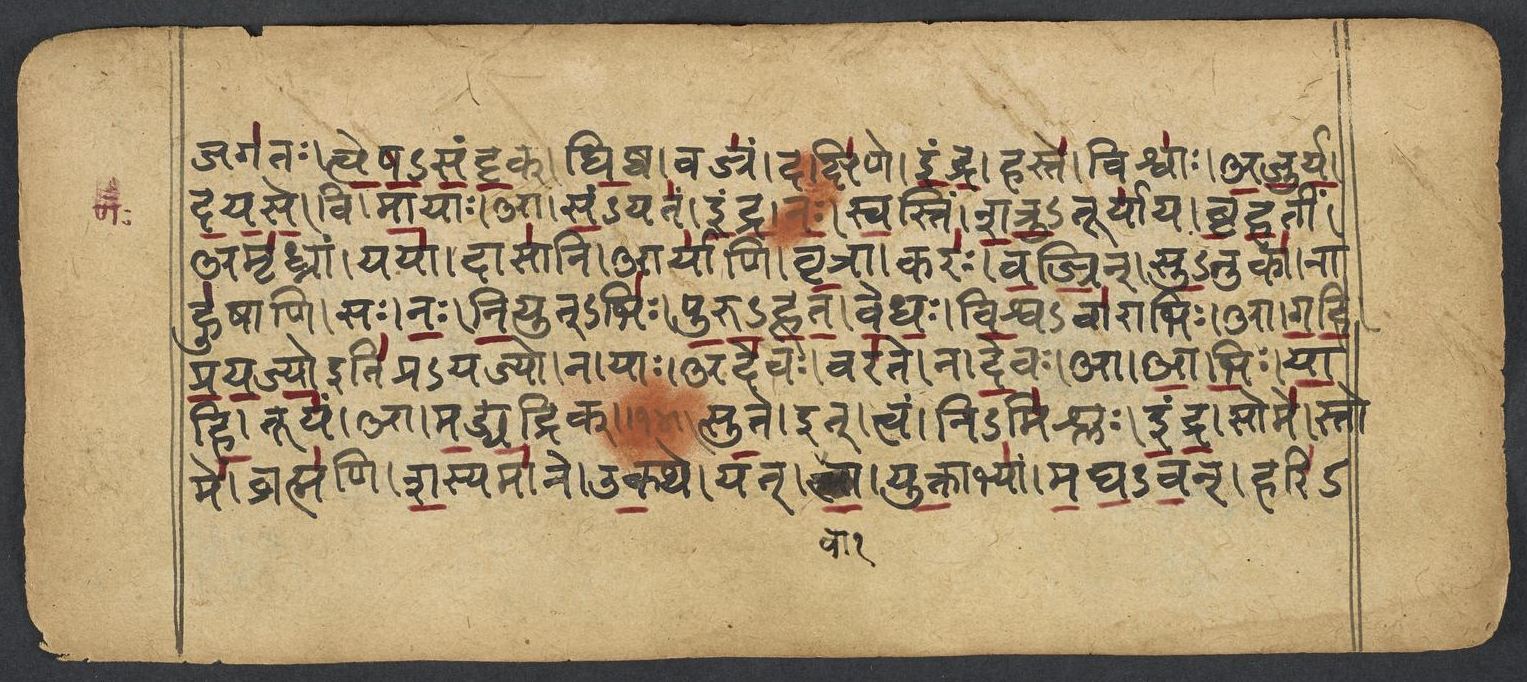
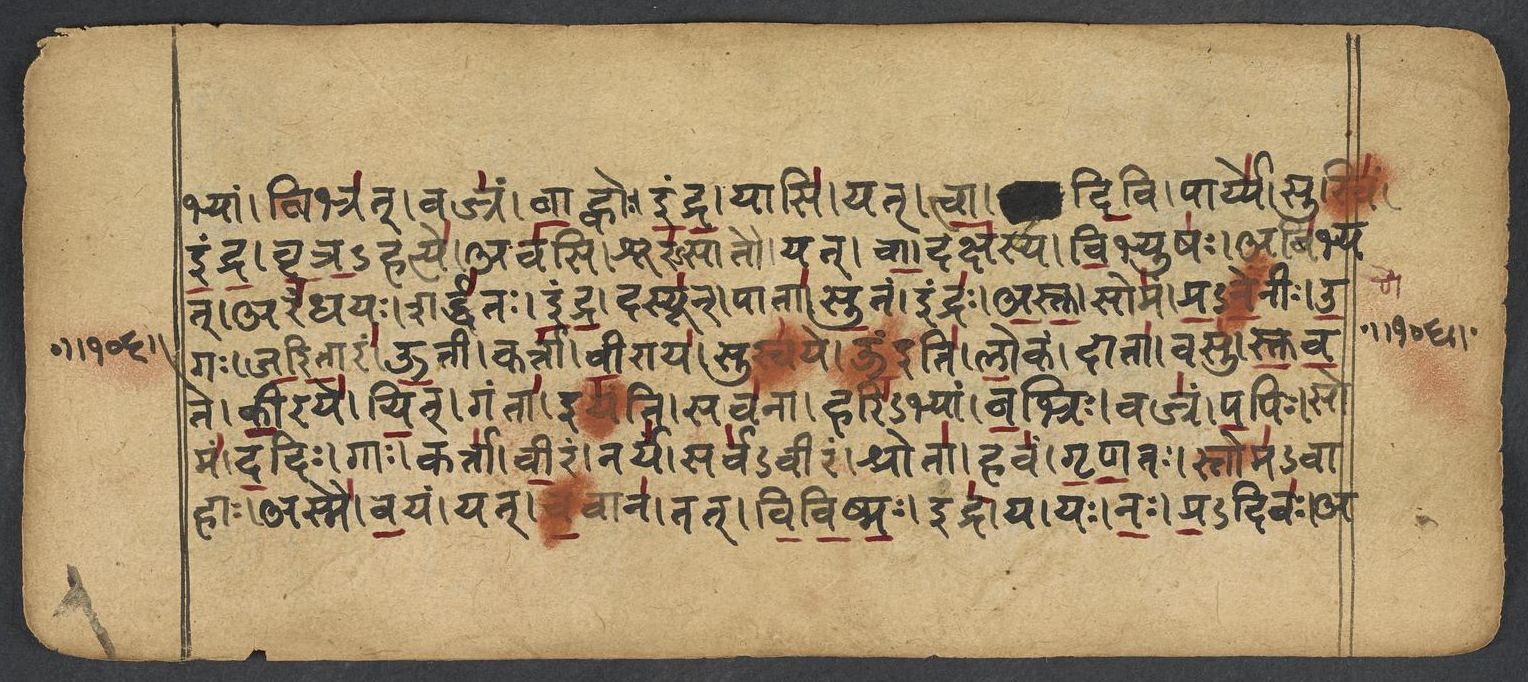
Where on the image
Penn Ms. Coll. 390 Item 41, fol. 433v (numbered 106v by the scribe) (OPenn image 434, upper leaf). Checked on the image: the Rigveda text on this page begins in RV 6.23.1 ‹-hari-bhyām bibhrat vajram bāhvoḥ›. The next page with Rigveda text, fol. 434r (numbered 107r by the scribe), begins in RV 6.23.5 ‹-apaḥ karitikaḥ sute some›. Verses 6.23.1-4 end on this page; 6.23.1 begins on fol. 433r (numbered 106r by the scribe).
1su̱ta it tvaṁ nimi̍śla indra̱ some̱ stome̱ brahma̍ṇi śa̱syamā̍na u̱kthe | yad vā̍ yu̱ktābhyā̍m maghava̱n hari̍bhyā̱m bibhra̱d vajra̍m bā̱hvor i̍ndra̱ yāsi̍ ||
2yad vā̍ di̱vi pārye̱ suṣvi̍m indra vṛtra̱hatye 'va̍si̱ śūra̍sātau | yad vā̱ dakṣa̍sya bi̱bhyuṣo̱ abi̍bhya̱d ara̍ndhaya̱ḥ śardha̍ta indra̱ dasyū̍n ||
3pātā̍ su̱tam indro̍ astu̱ soma̍m praṇe̱nīr u̱gro ja̍ri̱tāra̍m ū̱tī | kartā̍ vī̱rāya̱ suṣva̍ya u lo̱kaṁ dātā̱ vasu̍ stuva̱te kī̱raye̍ cit ||
4ganteyā̍nti̱ sava̍nā̱ hari̍bhyām ba̱bhrir vajra̍m pa̱piḥ soma̍ṁ da̱dir gāḥ | kartā̍ vī̱raṁ narya̱ṁ sarva̍vīra̱ṁ śrotā̱ hava̍ṁ gṛṇa̱taḥ stoma̍vāhāḥ ||
Compare: Padapāṭha (word-by-word text written in the manuscript; Sansknet e-text via GRETIL)
1sute | it | tvam | ni-miślaḥ | indra | some | stome | brahmaṇi | śasyamāne | ukthe | yat | vā | yuktābhyām | magha-van | hari-bhyām | bibhrat | vajram | bāhvoḥ | indra | yāsi
2yat | vā | divi | pārye | susvim | indra | vṛtra-hatye | vasi | śūra-sātau | yat | vā | dakṣasya | bibhyuṣaḥ | abibhyat | arandhayaḥ | śardhataḥ | indra | dasyūn
3pātā | sutam | indraḥ | astu | somam | pra-nenīḥ | ugraḥ | jaritāram | ūtī | kartā | vīrāya | susvaye | ūm ṃm iti[?] | lokam | dātā | vasu | stuvate | kīraye | cit
4gantā | iyanti | savanā | hari-bhyām | babhriḥ | vajram | papiḥ | somam | dadiḥ | gāḥ | kartā | vīram | naryam | sarva-vīram | śrotā | havam | gṛṇataḥ | stoma-vāhāḥ
1THOU art attached to pressed-out Soma, Indra, at laud, at prayer, and when the hymn is chanted; Or when with yoked Bays, Maghavan, thou comest, O Indra, bearing in thine arms the thunder.
2Or when on that decisive day thou holpest the presser of the juice at Vr̥itra's slaughter; Or when thou, while the strong one feared, undaunted, gavest to death, Indra, the daring Dasyus.
3Let Indra drink the pressed-out Soma, Helper and mighty Guide of him who sings his praises. He gives the hero room who pours oblations, and treasure even to the lowly singer.
4E'en humble rites with his Bay steeds he visits: he wields the bolt, drinks Soma, gives us cattle. He makes the valiant rich in store of heroes, accepts our praise and hears the singer's calling.
Where on the image
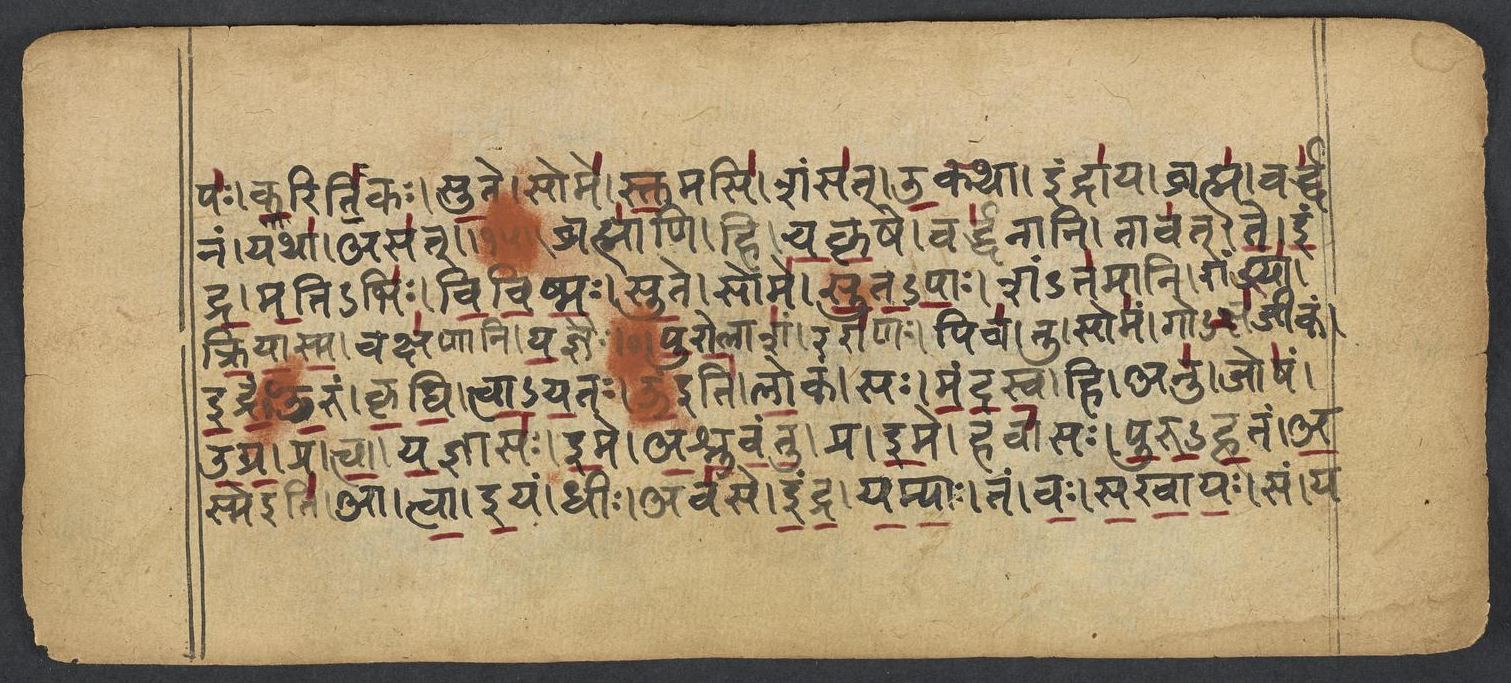
Penn Ms. Coll. 390 Item 41, fol. 434r (numbered 107r by the scribe) (OPenn image 434, lower leaf). Checked on the image: the Rigveda text on this page begins in RV 6.23.5 ‹-apaḥ karitikaḥ sute some›. The next page with Rigveda text, fol. 434v (numbered 107v by the scribe), begins in RV 6.23.9 ‹-bhojam indram kuvit tasmai›. Verses 6.23.5-8 end on this page; 6.23.5 begins on fol. 433v (numbered 106v by the scribe).
5asmai̍ va̱yaṁ yad vā̱vāna̱ tad vi̍viṣma̱ indrā̍ya̱ yo na̍ḥ pra̱divo̱ apa̱s kaḥ | su̱te some̍ stu̱masi̱ śaṁsa̍d u̱kthendrā̍ya̱ brahma̱ vardha̍na̱ṁ yathāsa̍t ||
6brahmā̍ṇi̱ hi ca̍kṛ̱ṣe vardha̍nāni̱ tāva̍t ta indra ma̱tibhi̍r viviṣmaḥ | su̱te some̍ sutapā̱ḥ śaṁta̍māni̱ rāṇḍyā̍ kriyāsma̱ vakṣa̍ṇāni ya̱jñaiḥ ||
7sa no̍ bodhi puro̱ḻāśa̱ṁ rarā̍ṇa̱ḥ pibā̱ tu soma̱ṁ goṛ̍jīkam indra | edam ba̱rhir yaja̍mānasya sīdo̱ruṁ kṛ̍dhi tvāya̱ta u̍ lo̱kam ||
8sa ma̍ndasvā̱ hy anu̱ joṣa̍m ugra̱ pra tvā̍ ya̱jñāsa̍ i̱me a̍śnuvantu | preme havā̍saḥ puruhū̱tam a̱sme ā tve̱yaṁ dhīr ava̍sa indra yamyāḥ ||
Compare: Padapāṭha (word-by-word text written in the manuscript; Sansknet e-text via GRETIL)
5asmai | vayam | yat | vavāna | tat | viviṣmaḥ | indrāya | yaḥ | naḥ | pra-divaḥ | apaḥ | karitikaḥ | sute | some | stumasi | śaṃsat | ukthā | indrāya | brahma | vardhanam | yathā | asat
6brahmāṇi | hi | cakṛṣe | vardhanāni | tāvat | te | indra | mati-bhiḥ | viviṣmaḥ | sute | some | suta-pāḥ | śam-tamāni | rāndryā | kriyāsma | vakṣaṇāni | yajñaiḥ
7saḥ | naḥ | bodhi | puroḷāśam | rarāṇaḥ | piba | tu | somam | go--ṛjīkam | indra | ā | idam | barhiḥ | yajamānasya | sīda | urum | kṛdhi | tvāyataḥ | oṃ iti | lokam
8saḥ | mandasva | hi | anu | joṣam | ugra | pra | tvā | yajñāsaḥ | ime | aśnuvantu | pra | ime | havāsaḥ | puru-hūtam | asme iti | ā | tvā | iyam | dhīḥ | avase | indra | yamyāḥ
5What he hath longed for we have brought to Indra, who from the days of old hath done us service. While Soma flows we will sing hymn, and laud him, so that our prayer may streng. then Indra's vigour.
6Thou hast made prayer the means of thine exalting, therefore we wait on thee with hymns, O Indra. May we, by the pressed Soma, Somadrinker! bring thee, with sacrifice, blissful sweet refreshment.
7Mark well our sacrificial cake, delighted Indra, drink Soma and the milk commingled. Here on the sacrificer's grass be seated: give ample room to thy devoted servant.
8O Mighty One, be joyful as thou willest. Let these our sacrifices reach and find thee; And may this hymn and these our invocations turn thee, whom many men invoke, to help us.
Where on the image
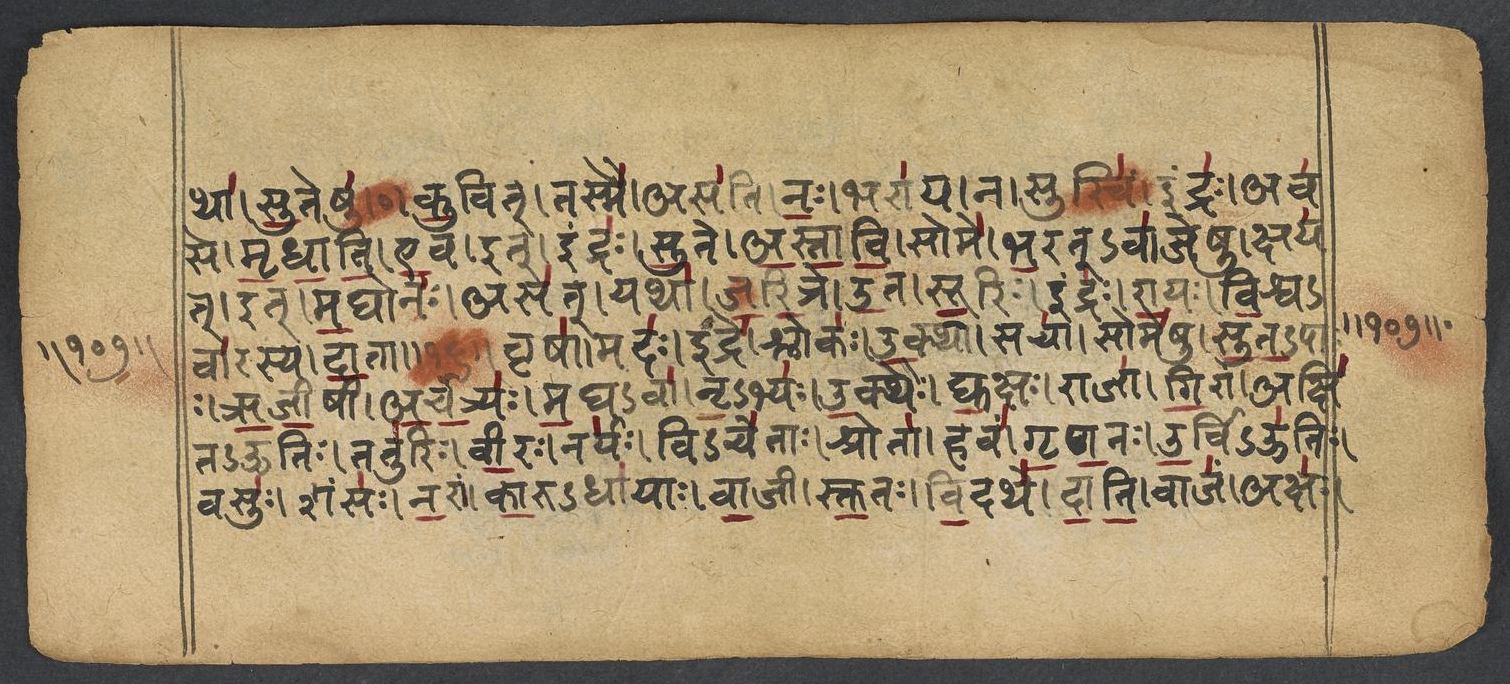
Penn Ms. Coll. 390 Item 41, fol. 434v (numbered 107v by the scribe) (OPenn image 435, upper leaf). Checked on the image: the Rigveda text on this page begins in RV 6.23.9 ‹-bhojam indram kuvit tasmai›. The next page with Rigveda text, fol. 435r (numbered 108r by the scribe), begins in RV 6.24.3 ‹na cakryoḥ śūra bṛhan›. Verses 6.23.9-10 end on this page; 6.23.9 begins on fol. 434r (numbered 107r by the scribe).
9taṁ va̍ḥ sakhāya̱ḥ saṁ yathā̍ su̱teṣu̱ some̍bhir īm pṛṇatā bho̱jam indra̍m | ku̱vit tasmā̱ asa̍ti no̱ bharā̍ya̱ na suṣvi̱m indro 'va̍se mṛdhāti ||
10e̱ved indra̍ḥ su̱te a̍stāvi̱ some̍ bha̱radvā̍jeṣu̱ kṣaya̱d in ma̱ghona̍ḥ | asa̱d yathā̍ jari̱tra u̱ta sū̱rir indro̍ rā̱yo vi̱śvavā̍rasya dā̱tā ||
Compare: Padapāṭha (word-by-word text written in the manuscript; Sansknet e-text via GRETIL)
9tam | vaḥ | sakhāyaḥ | sam | yathā | suteṣu | somebhiḥ | īm | pṛṇata | bhojam | indram | kuvit | tasmai | asati | naḥ | bharāya | na | susvim | indraḥ | avase | mṛdhāti
10eva | it | indraḥ | sute | astāvi | some | bharat-vājeṣu | kṣayat | it | maghonaḥ | asat | yathā | jaritre | uta | sūriḥ | indraḥ | rāyaḥ | viśva-vārasya | dātā
9Friends, when thejuices flow, replenish duly your own, your bounteous Indra with the Soma. Will it not aid him to support us? Indra. spares him who sheds the juice to win his favour.
10While Soma flowed, thus Indra hath been lauded, Ruler of nobles, mid the Bharadvâjas, That Indra may become the singer's patron and give him wealth in every kind of treasure.
Notes
- Sanskrit: Aufrecht's edition (1877) with the Vedic accents, as entered by van Nooten and Holland (GRETIL).
- English: Ralph T. H. Griffith, The Hymns of the Rigveda (1889-1892; 2nd ed. 1896-1897), from the VedaWeb digital text; OCR slips in that text were corrected against the printed 2nd edition (data/sources/rigveda/griffith_errata.json).
- Padapāṭha (edition text): Sansknet e-text via GRETIL (CC BY-NC-SA 4.0).
Cite
Sources
- Source: Penn Ms. Coll. 390 Item 41 (undated (catalogued with Penn's 18th-19th c. Vedic manuscripts)), OPenn, Public Domain Mark + Aufrecht's accented text (GRETIL) + Griffith's English (VedaWeb) (holding institution)
- Critical edition: Aufrecht (1877), accented e-text via GRETIL
← previous · → next · v cycle view · l back to library