Rigveda 6.24: To Indra
Introduction
Rigveda 6.24 is a hymn of 10 verses addressed to Indra. It stands in book (maṇḍala) 6, the family book of Bharadvāja. The Rigveda is the oldest collection of Sanskrit hymns, composed in the second half of the second millennium BCE and handed down orally for many centuries before it was written down.
The manuscript shown is Penn Ms. Coll. 390 Item 41 (University of Pennsylvania), an undated paper manuscript of the padapāṭha (the word-by-word recitation text, in which every word is written separately and compounds are split) of the whole Ṛgveda in Devanāgarī, 884 leaves in fascicles, 7-9 lines to the page, accents in red; this hymn stands on fol. 434v-436r. Each section below gives the verses that end on one page; the page boundaries were read on the images (the opening words of every page), not counted out. Where the manuscript is a padapāṭha (the word-by-word recitation text), the section shows Aufrecht's continuous (saṃhitā) text first and, as the edition text, the padapāṭha of the same verses, which is the form written on the page.
How was this verified? (Provenance)
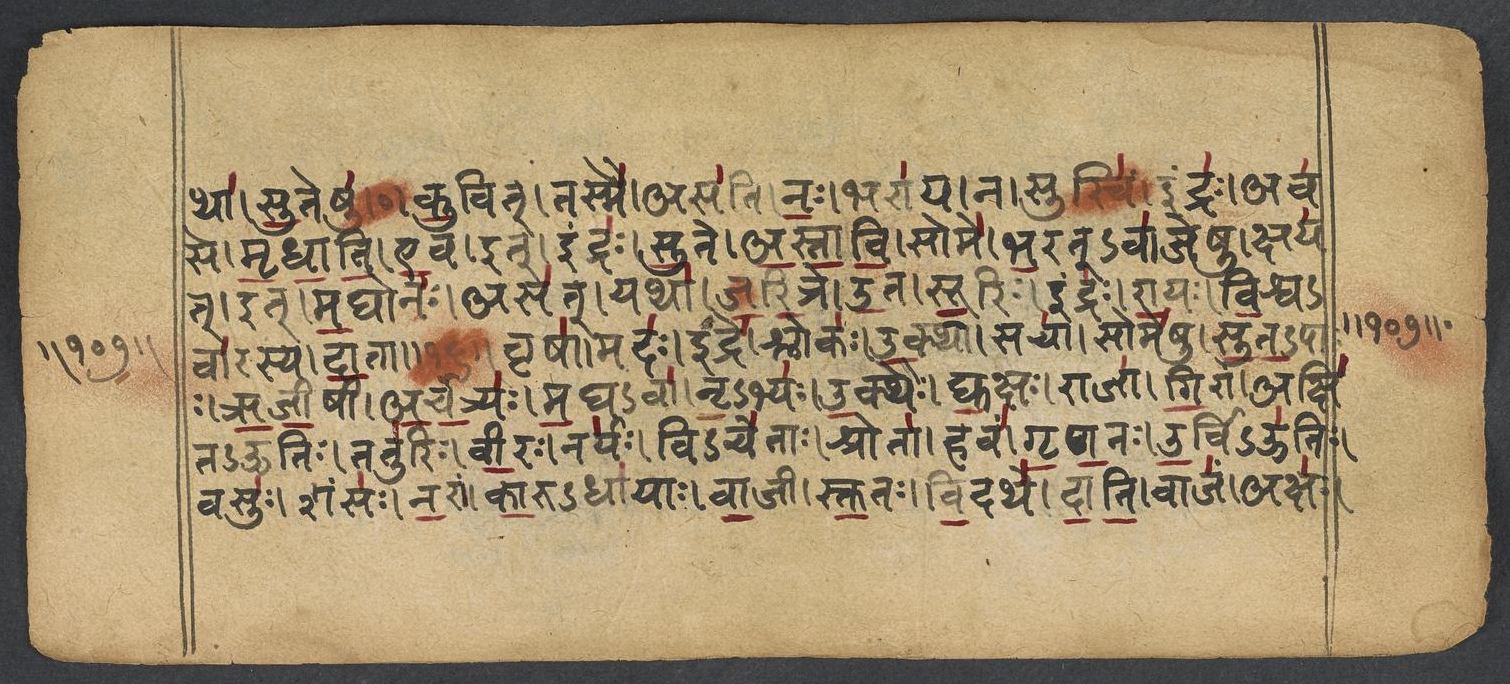
Where on the image
Penn Ms. Coll. 390 Item 41, fol. 434v (numbered 107v by the scribe) (OPenn image 435, upper leaf). Checked on the image: the Rigveda text on this page begins in RV 6.23.9 ‹-bhojam indram kuvit tasmai›. The next page with Rigveda text, fol. 435r (numbered 108r by the scribe), begins in RV 6.24.3 ‹na cakryoḥ śūra bṛhan›. Verses 6.24.1-2 end on this page.
1vṛṣā̱ mada̱ indre̱ śloka̍ u̱kthā sacā̱ some̍ṣu suta̱pā ṛ̍jī̱ṣī | a̱rca̱tryo̍ ma̱ghavā̱ nṛbhya̍ u̱kthair dyu̱kṣo rājā̍ gi̱rām akṣi̍totiḥ ||
2tatu̍rir vī̱ro naryo̱ vice̍tā̱ḥ śrotā̱ hava̍ṁ gṛṇa̱ta u̱rvyū̍tiḥ | vasu̱ḥ śaṁso̍ na̱rāṁ kā̱rudhā̍yā vā̱jī stu̱to vi̱dathe̍ dāti̱ vāja̍m ||
Compare: Padapāṭha (word-by-word text written in the manuscript; Sansknet e-text via GRETIL)
1vṛṣā | madaḥ | indre | ślokaḥ | ukthā | sacā | someṣu | suta-pāḥ | ṛjīṣī | arcatryaḥ | magha-vā | nṛ-bhyaḥ | ukthaiḥ | dyukṣaḥ | rājā | girām | akṣita-ūtiḥ
2taturiḥ | vīraḥ | naryaḥ | vi-cetāḥ | śrotā | havam | gṛṇataḥ | urvi-ūtiḥ | vasuḥ | śaṃsaḥ | narām | kāru-dhāyāḥ | vājī | stutaḥ | vidathe | dāti | vājam
1STRONG rapturous joy, praise, glory are with Indra: impetuous God, he quaffs the juice of Soma: That Maghavan whom men must laud with singing, Heaven-dweller, King of songs, whose help is lasting.
2He, Friend of man, most wise, victorious Hero, hears, with far-reaching aid, the singer call him. Excellent, Praise of Men, the bard's Supporter, Strong, he gives strength, extolled in holy synod.
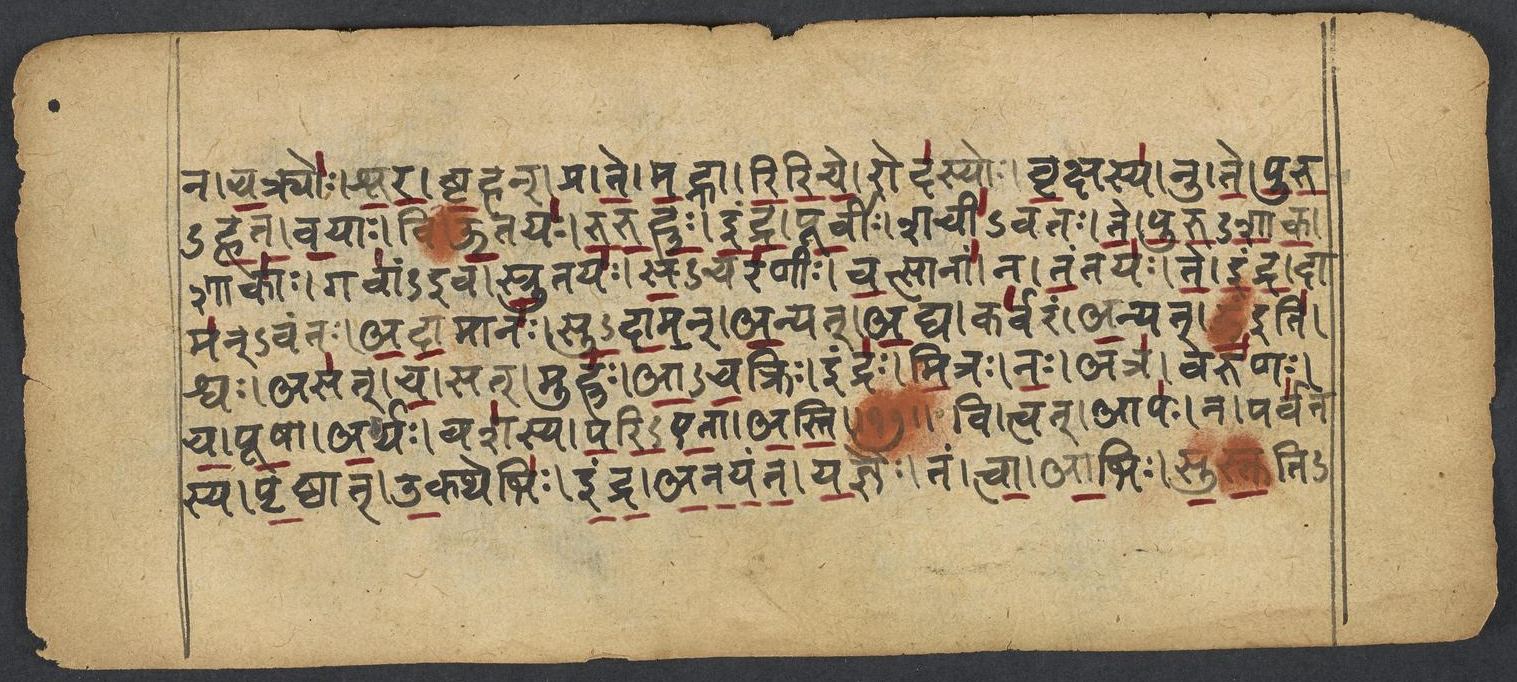
Where on the image
Penn Ms. Coll. 390 Item 41, fol. 435r (numbered 108r by the scribe) (OPenn image 435, lower leaf). Checked on the image: the Rigveda text on this page begins in RV 6.24.3 ‹na cakryoḥ śūra bṛhan›. The next page with Rigveda text, fol. 435v (numbered 108v by the scribe), begins in RV 6.24.6 ‹-sustuti-bhiḥ vājayantaḥ ājim na›. Verses 6.24.3-5 end on this page; 6.24.3 begins on fol. 434v (numbered 107v by the scribe).
3akṣo̱ na ca̱kryo̍ḥ śūra bṛ̱han pra te̍ ma̱hnā ri̍rice̱ roda̍syoḥ | vṛ̱kṣasya̱ nu te̍ puruhūta va̱yā vy ū̱3̱̍tayo̍ ruruhur indra pū̱rvīḥ ||
4śacī̍vatas te puruśāka̱ śākā̱ gavā̍m iva sru̱taya̍ḥ sa̱ṁcara̍ṇīḥ | va̱tsānā̱ṁ na ta̱ntaya̍s ta indra̱ dāma̍nvanto adā̱māna̍ḥ sudāman ||
5a̱nyad a̱dya karva̍ram a̱nyad u̱ śvo 'sa̍c ca̱ san muhu̍r āca̱krir indra̍ḥ | mi̱tro no̱ atra̱ varu̍ṇaś ca pū̱ṣāryo vaśa̍sya parye̱tāsti̍ ||
Compare: Padapāṭha (word-by-word text written in the manuscript; Sansknet e-text via GRETIL)
3akṣaḥ | na | cakryoḥ | śūra | bṛhan | pra | te | mahnā | ririce | rodasyoḥ | vṛkṣasya | nu | te | puru-hūta | vayāḥ | vi | ūtayaḥ | ruruhuḥ | indra pūrvīḥ
4śacī-vataḥ | te | puru-śāka | śākāḥ | gavām-iva | srutayaḥ | sam-caraṇīḥ | vatsānām | na | tantayaḥ | te | indra | dāman-vantaḥ | adāmānaḥ | su-dāman
5anyat | adya | karvaram | anyat | oṃ iti | śvaḥ | asat | ca | sat | muhuḥ | ā | cakriḥ | indraḥ | mitraḥ | naḥ | atra | varuṇaḥ | ca | pūṣā | aryaḥ | vaśasya | pari-etā | asti
3The lofty axle of thy wheels, O Hero, is not surpassed by heaven and earth in greatness. Like branches of a tree, Invoked of many manifold aids spring forth from thee, O Indra.
4Strong Lord, thine energies, endowed with vigour, are like the paths of kine converging homeward. Like bonds of cord, Indra, that bind the younglings, no bonds are they, O thou of boundless bounty.
5One act to-day, another act tomorrow oft Indra makes what is not yet existent. Here have we Mitra, Varuṇa, and Pûshan to overcome the foeman's domination.
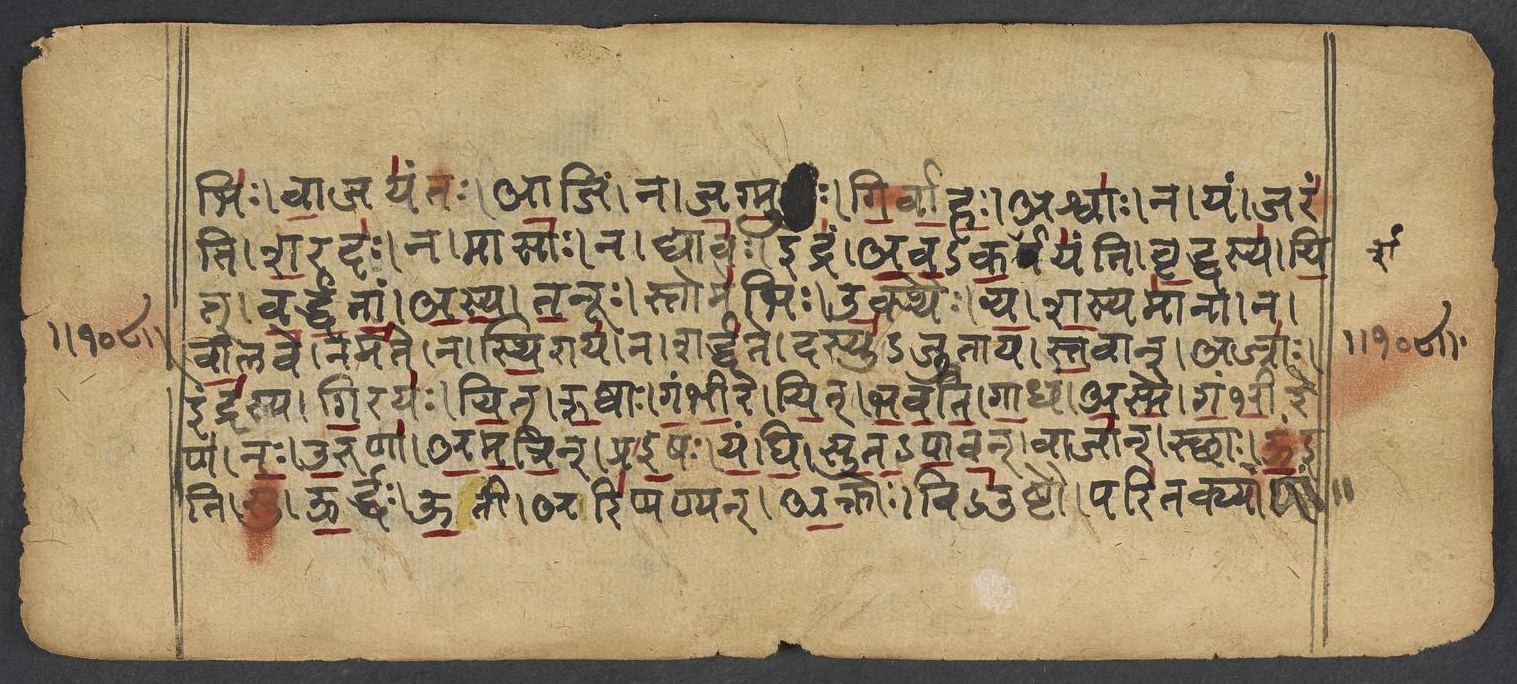
Where on the image
Penn Ms. Coll. 390 Item 41, fol. 435v (numbered 108v by the scribe) (OPenn image 436, upper leaf). Checked on the image: the Rigveda text on this page begins in RV 6.24.6 ‹-sustuti-bhiḥ vājayantaḥ ājim na›. The next page with Rigveda text, fol. 436r (numbered 109r by the scribe), begins in RV 6.24.10 ‹sacasva nāyam avase abhīke›. Verses 6.24.6-9 end on this page; 6.24.6 begins on fol. 435r (numbered 108r by the scribe).
6vi tvad āpo̱ na parva̍tasya pṛ̱ṣṭhād u̱kthebhi̍r indrānayanta ya̱jñaiḥ | taṁ tvā̱bhiḥ su̍ṣṭu̱tibhi̍r vā̱jaya̍nta ā̱jiṁ na ja̍gmur girvāho̱ aśvā̍ḥ ||
7na yaṁ jara̍nti śa̱rado̱ na māsā̱ na dyāva̱ indra̍m avaka̱rśaya̍nti | vṛ̱ddhasya̍ cid vardhatām asya ta̱nūḥ stome̍bhir u̱kthaiś ca̍ śa̱syamā̍nā ||
8na vī̱ḻave̱ nama̍te̱ na sthi̱rāya̱ na śardha̍te̱ dasyu̍jūtāya sta̱vān | ajrā̱ indra̍sya gi̱raya̍ś cid ṛ̱ṣvā ga̍mbhī̱re ci̍d bhavati gā̱dham a̍smai ||
9ga̱mbhī̱reṇa̍ na u̱ruṇā̍matri̱n preṣo ya̍ndhi sutapāva̱n vājā̍n | sthā ū̱ ṣu ū̱rdhva ū̱tī ari̍ṣaṇyann a̱ktor vyu̍ṣṭau̱ pari̍takmyāyām ||
Compare: Padapāṭha (word-by-word text written in the manuscript; Sansknet e-text via GRETIL)
6vi | tvat | āpaḥ | na | parvatasya | pṛṣṭhāt | ukthebhiḥ | indra | anayanta | yajñaiḥ | tam | tvā | ābhiḥ | sustuti-bhiḥ | vājayantaḥ | ājim | na | jagmuḥ | girvāhaḥ | aśvāḥ
7na | yam | jaranti | śaradaḥ | na | māsāḥ | na | dyāvaḥ | indram | ava-karśayanti | vṛddhasya | cit | vardhatām | asya | tanūḥ | stomebhiḥ | ukthaiḥ | ca | śasyamānā
8na | vīḷave | namate | na | sthirāya | na | śardhate | dasyu-jūtāya | stavān | ajrāḥ | indrasya | girayaḥ | cit | ṛṣvāḥ | gambhīre | cit | bhavati | gādham | asmai
9gambhīreṇa | naḥ | uruṇā | amatrin | pra | iṣaḥ | yandhi | suta-pāvan | vājān | sthāḥ | oṃ iti | su | ūrdhvaḥ | ūtī | ariṣaṇyan | aktoḥ | vi-uṣṭau | pari-takmyāyām
6By song and sacrifice men brought the waters from thee, as from a mountain's ridge, O Indra. Urging thy might, with these fair lauds they seek thee, O theme of song, as horses rush tobattle.
7That Indra whom nor months nor autumn seasons wither with age, nor fleeting days enfeeble,– Still may his body Wax, e'en now so mighty, glorified by the lauds and hymns that praise him.
8Extolled, he bends not to the strong, the steadfast, nor to the bold incited by the Dasyu. High mountains are as level plains to Indra: even in the deep he finds firm ground to rest on.
9Impetuous Speeder through all depth and distance, give strengthening food, thou drinker of the juices. Stand up erect to help us, unreluctant, what time the gloom of night brightens to morning.
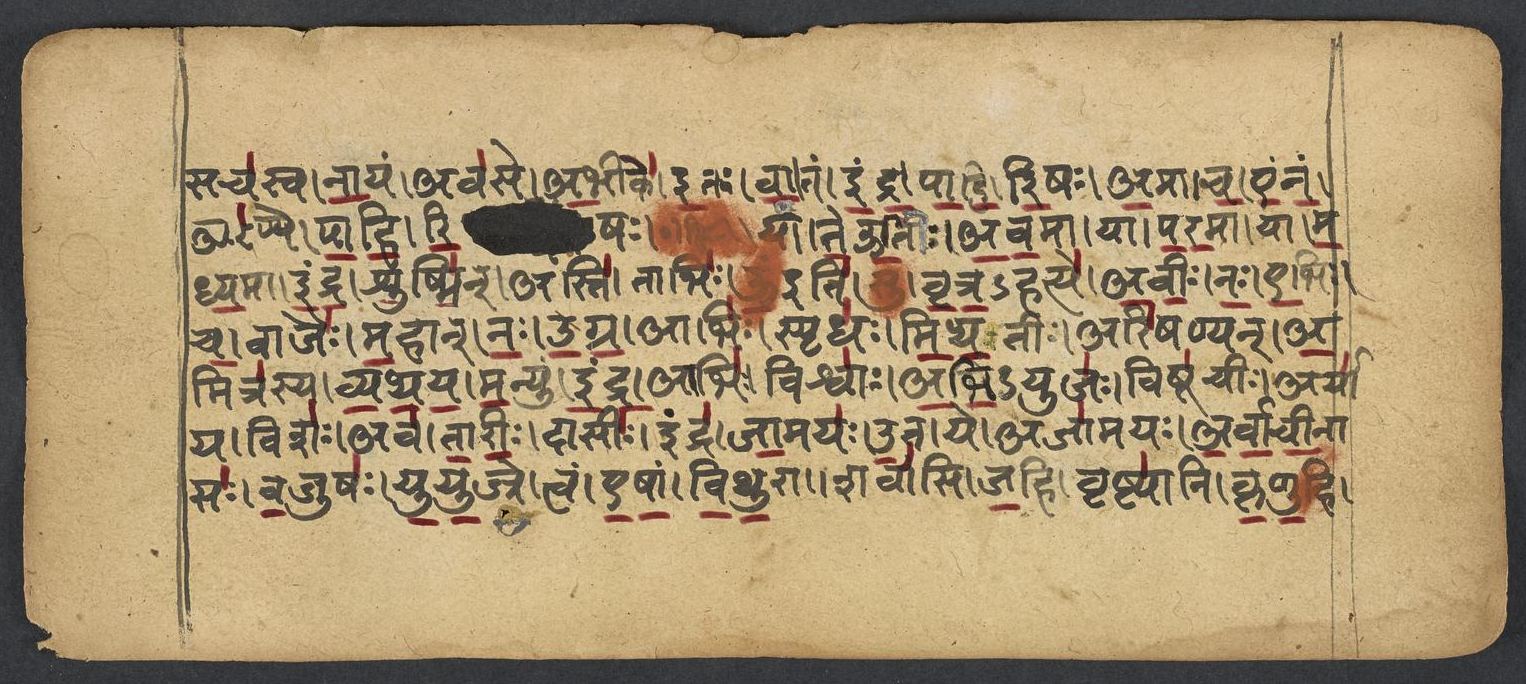
Where on the image
Penn Ms. Coll. 390 Item 41, fol. 436r (numbered 109r by the scribe) (OPenn image 436, lower leaf). Checked on the image: the Rigveda text on this page begins in RV 6.24.10 ‹sacasva nāyam avase abhīke›. The next page with Rigveda text, fol. 436v (numbered 109v by the scribe), begins in RV 6.25.3 ‹parācaḥ›. Verse 6.24.10 ends on this page.
10saca̍sva nā̱yam ava̍se a̱bhīka̍ i̱to vā̱ tam i̍ndra pāhi ri̱ṣaḥ | a̱mā cai̍na̱m ara̍ṇye pāhi ri̱ṣo made̍ma śa̱tahi̍māḥ su̱vīrā̍ḥ ||
Compare: Padapāṭha (word-by-word text written in the manuscript; Sansknet e-text via GRETIL)
10sacasva | nāyam | avase | abhīke | itaḥ | vā | tam | indra | pāhi | riṣaḥ | amā | ca | enam | araṇye | pāhi | riṣaḥ | madema | śata-himāḥ | su-vīrāḥ
10Hasting to help, come hither and protect him, keep him from harm when he is here, O Indra. At home, abroad, from injury preserve him. May brave sons gladden us through a hundred winters.
Notes
- Sanskrit: Aufrecht's edition (1877) with the Vedic accents, as entered by van Nooten and Holland (GRETIL).
- English: Ralph T. H. Griffith, The Hymns of the Rigveda (1889-1892; 2nd ed. 1896-1897), from the VedaWeb digital text; OCR slips in that text were corrected against the printed 2nd edition (data/sources/rigveda/griffith_errata.json).
- Padapāṭha (edition text): Sansknet e-text via GRETIL (CC BY-NC-SA 4.0).
Cite
Sources
- Source: Penn Ms. Coll. 390 Item 41 (undated (catalogued with Penn's 18th-19th c. Vedic manuscripts)), OPenn, Public Domain Mark + Aufrecht's accented text (GRETIL) + Griffith's English (VedaWeb) (holding institution)
- Critical edition: Aufrecht (1877), accented e-text via GRETIL
← previous · → next · v cycle view · l back to library