Rigveda 6.25: To Indra
Introduction
Rigveda 6.25 is a hymn of 9 verses addressed to Indra. It stands in book (maṇḍala) 6, the family book of Bharadvāja. The Rigveda is the oldest collection of Sanskrit hymns, composed in the second half of the second millennium BCE and handed down orally for many centuries before it was written down.
The manuscript shown is Penn Ms. Coll. 390 Item 41 (University of Pennsylvania), an undated paper manuscript of the padapāṭha (the word-by-word recitation text, in which every word is written separately and compounds are split) of the whole Ṛgveda in Devanāgarī, 884 leaves in fascicles, 7-9 lines to the page, accents in red; this hymn stands on fol. 436r-437r. Each section below gives the verses that end on one page; the page boundaries were read on the images (the opening words of every page), not counted out. Where the manuscript is a padapāṭha (the word-by-word recitation text), the section shows Aufrecht's continuous (saṃhitā) text first and, as the edition text, the padapāṭha of the same verses, which is the form written on the page.
How was this verified? (Provenance)
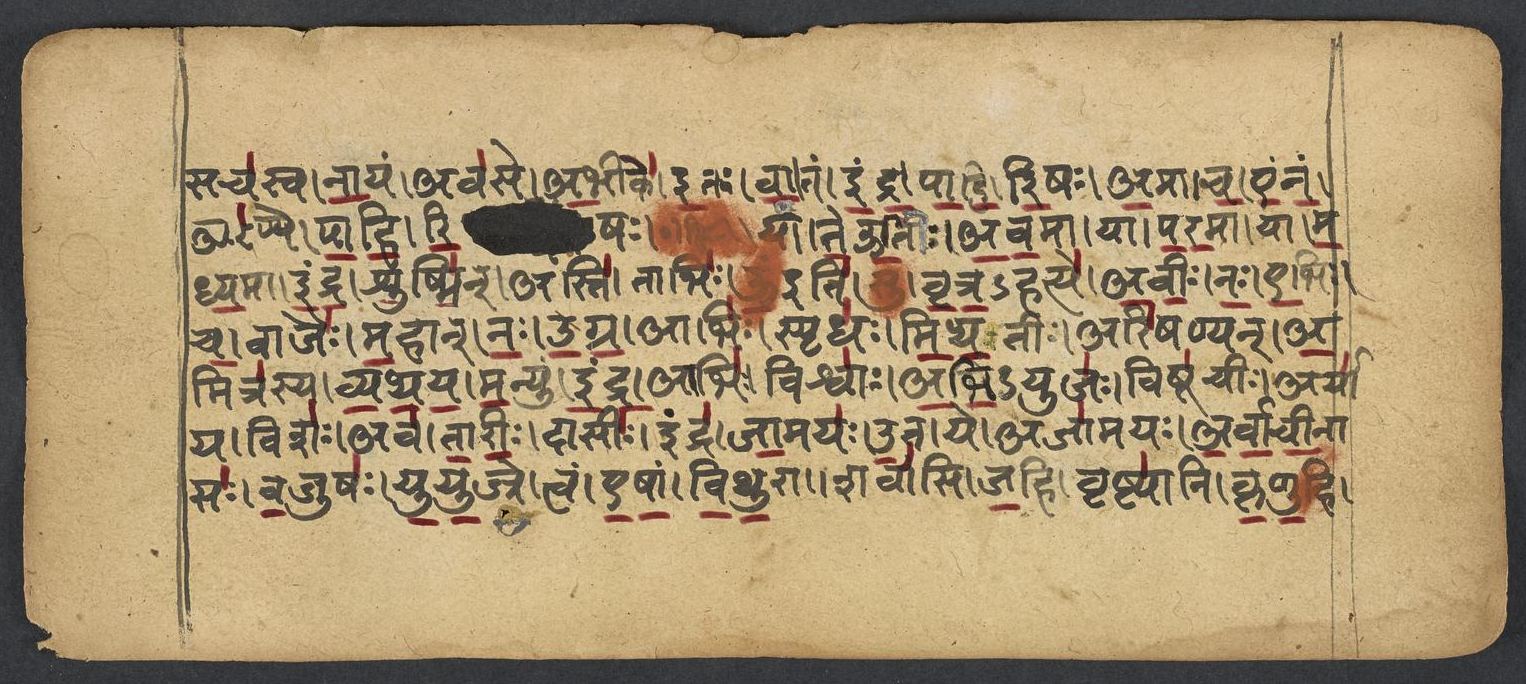
Where on the image
Penn Ms. Coll. 390 Item 41, fol. 436r (numbered 109r by the scribe) (OPenn image 436, lower leaf). Checked on the image: the Rigveda text on this page begins in RV 6.24.10 ‹sacasva nāyam avase abhīke›. The next page with Rigveda text, fol. 436v (numbered 109v by the scribe), begins in RV 6.25.3 ‹parācaḥ›. Verses 6.25.1-2 end on this page.
1yā ta̍ ū̱tir a̍va̱mā yā pa̍ra̱mā yā ma̍dhya̱mendra̍ śuṣmi̱nn asti̍ | tābhi̍r ū̱ ṣu vṛ̍tra̱hatye̍ 'vīr na e̱bhiś ca̱ vājai̍r ma̱hān na̍ ugra ||
2ābhi̱ḥ spṛdho̍ mitha̱tīr ari̍ṣaṇyann a̱mitra̍sya vyathayā ma̱nyum i̍ndra | ābhi̱r viśvā̍ abhi̱yujo̱ viṣū̍cī̱r āryā̍ya̱ viśo 'va̍ tārī̱r dāsī̍ḥ ||
Compare: Padapāṭha (word-by-word text written in the manuscript; Sansknet e-text via GRETIL)
1yā | te | ūtiḥ | avamā | yā | paramā | yā | madhyamā | indra | śuṣmin | asti | tābhiḥ | oṃ iti | su | vṛtra-hatye | avīḥ | naḥ | ebhiḥ | ca | vājaiḥ | mahān | naḥ | ugra
2ābhiḥ | spṛdhaḥ | mithatīḥ | ariṣaṇyan | amitrasya | vyathaya | manyum | indra | ābhiḥ | viśvāḥ | abhi-yujaḥ | viṣūcīḥ | āryāya | viśaḥ | ava | tārīḥ | dāsīḥ
1WITH thine assistance, O thou Mighty Indra, be it the least, the midmost, or the highest,– Great with those aids and by these powers support us, Strong God! in battle that subdues our foemen.
2With these discomfit hosts that fight against us, and check the opponent's wrath, thyself uninjured. With these chase all our foes to every quarter: subdue the tribes of Dâsas to the Ârya.
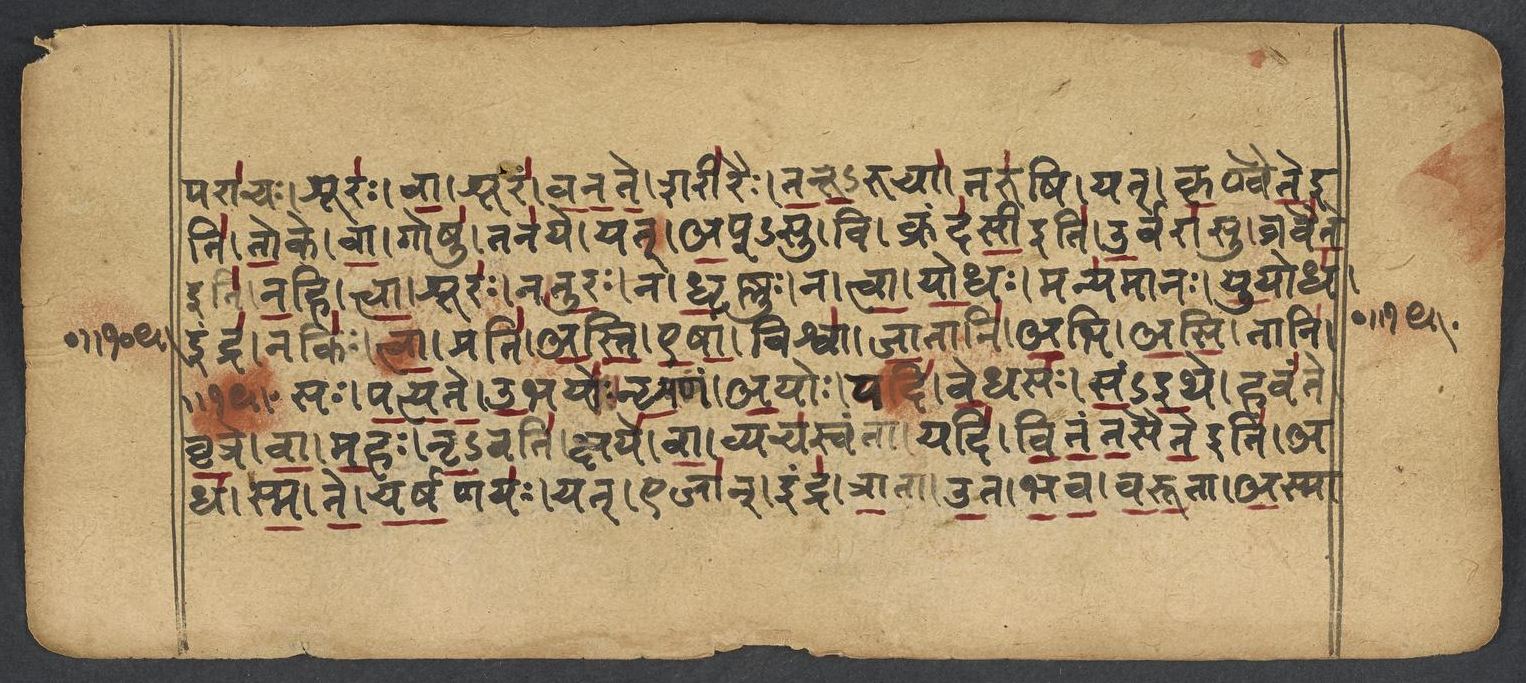
Where on the image
Penn Ms. Coll. 390 Item 41, fol. 436v (numbered 109v by the scribe) (OPenn image 437, upper leaf). Checked on the image: the Rigveda text on this page begins in RV 6.25.3 ‹parācaḥ›. The next page with Rigveda text, fol. 437r (numbered 110r by the scribe), begins in RV 6.25.7 ‹-asmākāsaḥ ye nṛ-tamāsaḥ aryaḥ›. Verses 6.25.3-6 end on this page; 6.25.3 begins on fol. 436r (numbered 109r by the scribe).
3indra̍ jā̱maya̍ u̱ta ye 'jā̍mayo 'rvācī̱nāso̍ va̱nuṣo̍ yuyu̱jre | tvam e̍ṣāṁ vithu̱rā śavā̍ṁsi ja̱hi vṛṣṇyā̍ni kṛṇu̱hī parā̍caḥ ||
4śūro̍ vā̱ śūra̍ṁ vanate̱ śarī̍rais tanū̱rucā̱ taru̍ṣi̱ yat kṛ̱ṇvaite̍ | to̱ke vā̱ goṣu̱ tana̍ye̱ yad a̱psu vi kranda̍sī u̱rvarā̍su̱ bravai̍te ||
5na̱hi tvā̱ śūro̱ na tu̱ro na dhṛ̱ṣṇur na tvā̍ yo̱dho manya̍māno yu̱yodha̍ | indra̱ naki̍ṣ ṭvā̱ praty a̍sty eṣā̱ṁ viśvā̍ jā̱tāny a̱bhy a̍si̱ tāni̍ ||
6sa pa̍tyata u̱bhayo̍r nṛ̱mṇam a̱yor yadī̍ ve̱dhasa̍ḥ sami̱the hava̍nte | vṛ̱tre vā̍ ma̱ho nṛ̱vati̱ kṣaye̍ vā̱ vyaca̍svantā̱ yadi̍ vitanta̱saite̍ ||
Compare: Padapāṭha (word-by-word text written in the manuscript; Sansknet e-text via GRETIL)
3indra | jāmayaḥ | uta | ye | ajāmayaḥ | arvācīnāsaḥ | vanuṣaḥ | yuyujre | tvam | eṣām | vithurā | śavāṃsi | jahi | vṛṣṇyāni | kṛṇuhi | parācaḥ
4śūraḥ | vā | śūram | vanate | śarīraiḥ | tanū-rucā | taruṣi | yat | kṛṇvaiteiti | toke | vā | goṣu | tanaye | yat | ap-su | vi | krandasī iti | urvarāsu | bravaiteiti
5nahi | tvā | śūraḥ | na | turaḥ | na | dhṛṣṇuḥ | na | tvā | yodhaḥ | manyamānaḥ | yuyodha | indra | nakiḥ | tvā | prati | asti | eṣām | viśvā | jātāni | abhi | asi | tāni
6saḥ | patyate | ubhayoḥ | nṛmṇam | ayoḥ | yadi | vedhasaḥ | sam-ithe | havante | vṛtre | vā | mahaḥ | nṛ-vati | kṣaye | vā | vyacasvantā | yadi | vitantasaiteiti
3Those who array themselves as foes to smite us, O Indra, be they kin or be they strangers,– Strike thou their manly strength that it be feeble, and drive in headlong flight our foemen backward.
4With strength of limb the hero slays the hero, when bright in arms they range them for the combat. When two opposing hosts contend in battle for seed and offspring, waters, kine, or corn-lands.
5Yet no strong man hath conquered thee, no hero, no brave, no warrior trusting in his valour. Not one of these is match for thee, O Indra. Thou far surpassest all these living creatures.
6He is the Lord of both these armies' valour when the commanders call them to the conflict: When with their ranks expanded they are fighting with a great foe or for a home with heroes.
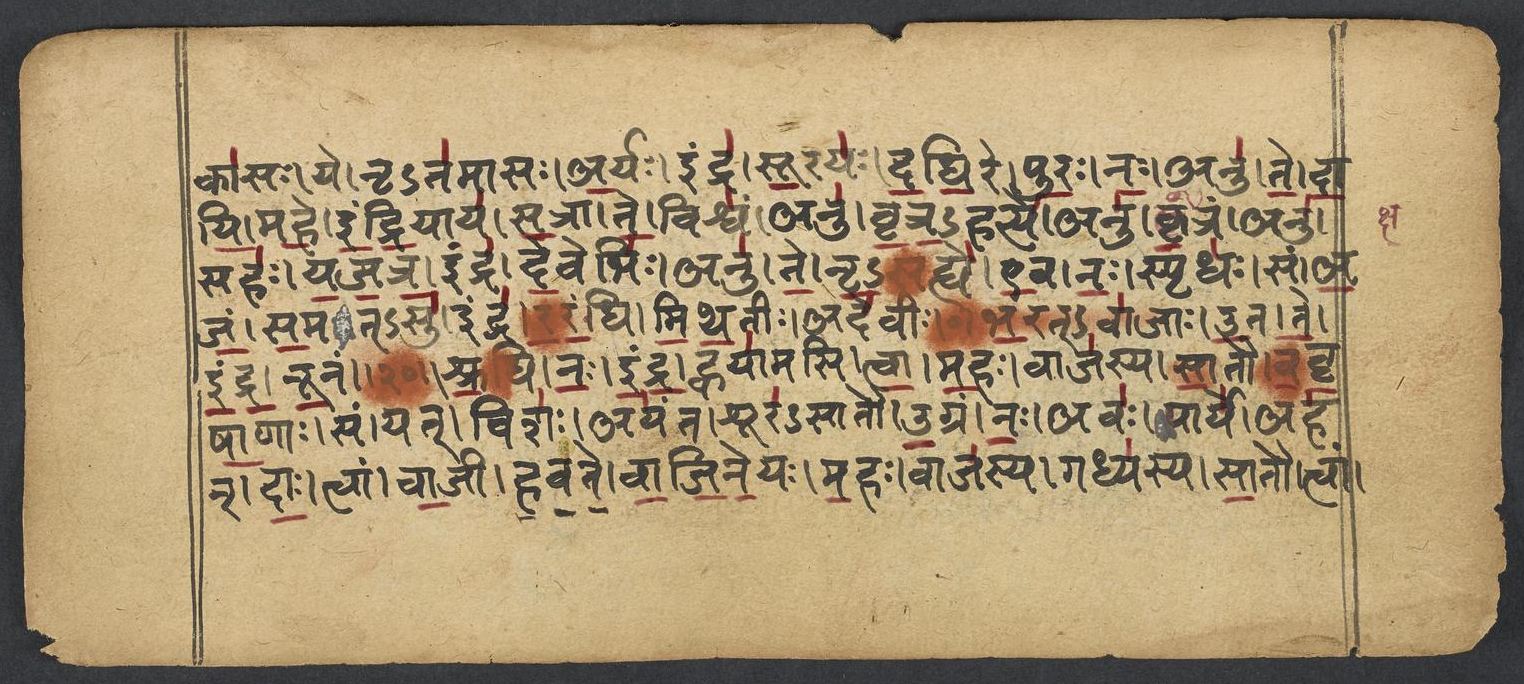
Where on the image
Penn Ms. Coll. 390 Item 41, fol. 437r (numbered 110r by the scribe) (OPenn image 437, lower leaf). Checked on the image: the Rigveda text on this page begins in RV 6.25.7 ‹-asmākāsaḥ ye nṛ-tamāsaḥ aryaḥ›. The next page with Rigveda text, fol. 437v (numbered 110v by the scribe), begins in RV 6.26.2 ‹vṛtreṣu indra sat-patim tarutram›. Verses 6.25.7-9 end on this page; 6.25.7 begins on fol. 436v (numbered 109v by the scribe).
7adha̍ smā te carṣa̱ṇayo̱ yad ejā̱n indra̍ trā̱tota bha̍vā varū̱tā | a̱smākā̍so̱ ye nṛta̍māso a̱rya indra̍ sū̱rayo̍ dadhi̱re pu̱ro na̍ḥ ||
8anu̍ te dāyi ma̱ha i̍ndri̱yāya̍ sa̱trā te̱ viśva̱m anu̍ vṛtra̱hatye̍ | anu̍ kṣa̱tram anu̱ saho̍ yaja̱trendra̍ de̱vebhi̱r anu̍ te nṛ̱ṣahye̍ ||
9e̱vā na̱ḥ spṛdha̱ḥ sam a̍jā sa̱matsv indra̍ rāra̱ndhi mi̍tha̱tīr ade̍vīḥ | vi̱dyāma̱ vasto̱r ava̍sā gṛ̱ṇanto̍ bha̱radvā̍jā u̱ta ta̍ indra nū̱nam ||
Compare: Padapāṭha (word-by-word text written in the manuscript; Sansknet e-text via GRETIL)
7adha | sma | te | carṣaṇayaḥ | yat | ejān | indra | trātā | uta | bhava | varūtā | asmākāsaḥ | ye | nṛ-tamāsaḥ | aryaḥ | indra | sūrayaḥ | dadhire | puraḥ | naḥ
8anu | te | dāyi | mahe | indriyāya | satrā | te | viśvam | anu | vṛtra-hatye | anu | kṣatram | anu | sahaḥ | yajatra | indra | devebhiḥ | anu | te | nṛ-sahye
9eva | naḥ | spṛdhaḥ | sam | aja | samat-su | indra | rarandhi | mithatīḥ | adevīḥ | vidyāma | vastoḥ | avasā | gṛṇantaḥ | bharat-vājāḥ | uta | te | indra | nūnam
7And when thy people stir themselves for battle, be thou their saviour, Indra, and protector, And theirs, the manliest of our friends, the pious, the chiefs who have installed us priests, O Indra.
8To thee for high dominion hath been for evermore, for slaughtering the Vr̥itras, All lordly power and might, O Holy Indra, given by Gods for victory in battle.
9So urge our hosts together in the combats: yield up the godless bands that fight against us. Singing, at morn may we find thee with favour, yea, Indra, and e'en now, we Bharadvâjas.
Notes
- Sanskrit: Aufrecht's edition (1877) with the Vedic accents, as entered by van Nooten and Holland (GRETIL).
- English: Ralph T. H. Griffith, The Hymns of the Rigveda (1889-1892; 2nd ed. 1896-1897), from the VedaWeb digital text; OCR slips in that text were corrected against the printed 2nd edition (data/sources/rigveda/griffith_errata.json).
- Padapāṭha (edition text): Sansknet e-text via GRETIL (CC BY-NC-SA 4.0).
Cite
Sources
- Source: Penn Ms. Coll. 390 Item 41 (undated (catalogued with Penn's 18th-19th c. Vedic manuscripts)), OPenn, Public Domain Mark + Aufrecht's accented text (GRETIL) + Griffith's English (VedaWeb) (holding institution)
- Critical edition: Aufrecht (1877), accented e-text via GRETIL
← previous · → next · v cycle view · l back to library