Rigveda 6.26: To Indra
Introduction
Rigveda 6.26 is a hymn of 8 verses addressed to Indra. It stands in book (maṇḍala) 6, the family book of Bharadvāja. The Rigveda is the oldest collection of Sanskrit hymns, composed in the second half of the second millennium BCE and handed down orally for many centuries before it was written down.
The manuscript shown is Penn Ms. Coll. 390 Item 41 (University of Pennsylvania), an undated paper manuscript of the padapāṭha (the word-by-word recitation text, in which every word is written separately and compounds are split) of the whole Ṛgveda in Devanāgarī, 884 leaves in fascicles, 7-9 lines to the page, accents in red; this hymn stands on fol. 437r-438r. Each section below gives the verses that end on one page; the page boundaries were read on the images (the opening words of every page), not counted out. Where the manuscript is a padapāṭha (the word-by-word recitation text), the section shows Aufrecht's continuous (saṃhitā) text first and, as the edition text, the padapāṭha of the same verses, which is the form written on the page.
How was this verified? (Provenance)
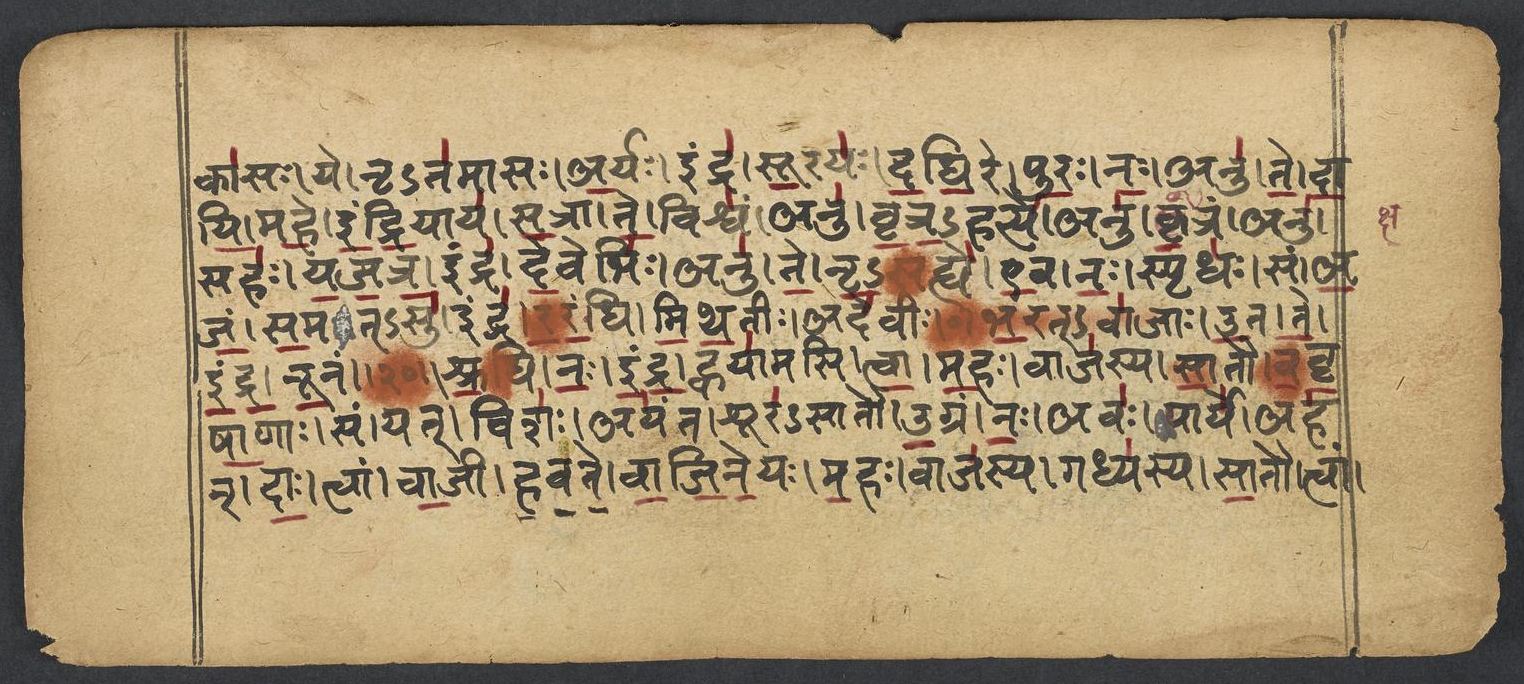
Where on the image
Penn Ms. Coll. 390 Item 41, fol. 437r (numbered 110r by the scribe) (OPenn image 437, lower leaf). Checked on the image: the Rigveda text on this page begins in RV 6.25.7 ‹-asmākāsaḥ ye nṛ-tamāsaḥ aryaḥ›. The next page with Rigveda text, fol. 437v (numbered 110v by the scribe), begins in RV 6.26.2 ‹vṛtreṣu indra sat-patim tarutram›. Verse 6.26.1 ends on this page.
1śru̱dhī na̍ indra̱ hvayā̍masi tvā ma̱ho vāja̍sya sā̱tau vā̍vṛṣā̱ṇāḥ | saṁ yad viśo 'ya̍nta̱ śūra̍sātā u̱graṁ no 'va̱ḥ pārye̱ aha̍n dāḥ ||
Compare: Padapāṭha (word-by-word text written in the manuscript; Sansknet e-text via GRETIL)
1śrudhi | naḥ | indra | hvayāmasi | tvā | mahaḥ | vājasya | sātau | vavṛṣāṇāḥ | sam | yat | viśaḥ | ayanta | śūra-sātau | ugram | naḥ | avaḥ | pārye | ahan | dāḥ
1O INDRA, hear us. Raining down the Soma, we call on thee to win us mighty valour. Give us strong succour on the day of trial, when the tribes gather on the field of battle.
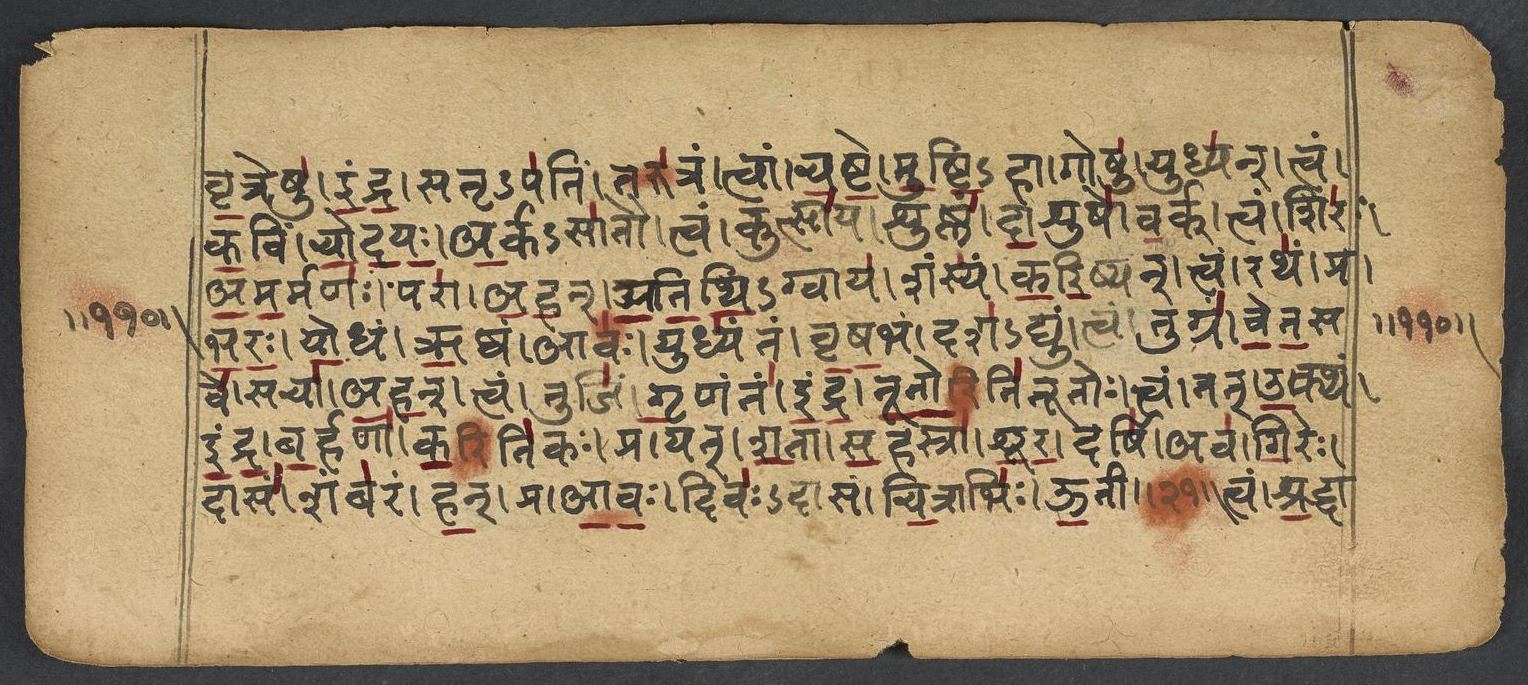
Where on the image
Penn Ms. Coll. 390 Item 41, fol. 437v (numbered 110v by the scribe) (OPenn image 438, upper leaf). Checked on the image: the Rigveda text on this page begins in RV 6.26.2 ‹vṛtreṣu indra sat-patim tarutram›. The next page with Rigveda text, fol. 438r (numbered 111r by the scribe), begins in RV 6.26.6 ‹-śraddhābhiḥ mandasānaḥ somaiḥ dabhītaye›. Verses 6.26.2-5 end on this page; 6.26.2 begins on fol. 437r (numbered 110r by the scribe).
2tvāṁ vā̱jī ha̍vate vājine̱yo ma̱ho vāja̍sya̱ gadhya̍sya sā̱tau | tvāṁ vṛ̱treṣv i̍ndra̱ satpa̍ti̱ṁ taru̍tra̱ṁ tvāṁ ca̍ṣṭe muṣṭi̱hā goṣu̱ yudhya̍n ||
3tvaṁ ka̱viṁ co̍dayo̱ 'rkasā̍tau̱ tvaṁ kutsā̍ya̱ śuṣṇa̍ṁ dā̱śuṣe̍ vark | tvaṁ śiro̍ ama̱rmaṇa̱ḥ parā̍hann atithi̱gvāya̱ śaṁsya̍ṁ kari̱ṣyan ||
4tvaṁ ratha̱m pra bha̍ro yo̱dham ṛ̱ṣvam āvo̱ yudhya̍ntaṁ vṛṣa̱bhaṁ daśa̍dyum | tvaṁ tugra̍ṁ veta̱save̱ sacā̍ha̱n tvaṁ tuji̍ṁ gṛ̱ṇanta̍m indra tūtoḥ ||
5tvaṁ tad u̱ktham i̍ndra ba̱rhaṇā̍ ka̱ḥ pra yac cha̱tā sa̱hasrā̍ śūra̱ darṣi̍ | ava̍ gi̱rer dāsa̱ṁ śamba̍raṁ ha̱n prāvo̱ divo̍dāsaṁ ci̱trābhi̍r ū̱tī ||
Compare: Padapāṭha (word-by-word text written in the manuscript; Sansknet e-text via GRETIL)
2tvām | vājī | havate | vājineyaḥ | mahaḥ | vājasya | gadhyasya | sātau | tvām | vṛtreṣu | indra | sat-patim | tarutram | tvām | caṣṭe | muṣṭi-hā | goṣu | yudhyan
3tvam | kavim | codayaḥ | arka-sātau | tvam | kutsāya | śuṣṇam | dāśuṣe | varka | tvam | śiraḥ | amarmaṇaḥ | parā | ahan | atithi-gvāya | śaṃsyam | kariṣyan
4tvam | ratham | pra | bharaḥ | yodham | ṛṣvam | āvaḥ | yudhyantam | vṛṣabham | daśa-dyum | tvam | tugram | vetasave | sacā | ahan | tvam | tujim | gṛṇantam | indra | tūtorititūtoḥ
5tvam | tat | uktham | indra | barhaṇā | karitikaḥ | pra | yat | śatā | sahasrā | śūra | darṣi | ava | gireḥ | dāsam | śambaram | han | pra | āvaḥ | divaḥ-dāsam | citrābhi ḥ | ūtī
2The warrior, son of warrior sire, invokes thee, to gain great strength that may be won as booty: To thee, the brave man's Lord, the fiends' subduer, he looks when fighting hand to hand for cattle.
3Thou didst impel the sage to win the daylight, didst ruin Ṣushṇa for the pious Kutsa. The invulnerable demon's head thou clavest when thou wouldst win the praise of Âtithigva.
4The lofty battle-car thou broughtest forward; thou holpest Daṣadyu the strong when fighting. Along with Vetasu thou slewest Tugra, and madest Tuji strong, who praised thee, Indra.
5Thou madest good the laud, what time thou rentest a hundred thousand fighting foes, O Hero, Slewest the Dâsa Ṣambara of the mountain, and with strange aids didst succour Divodâsa.
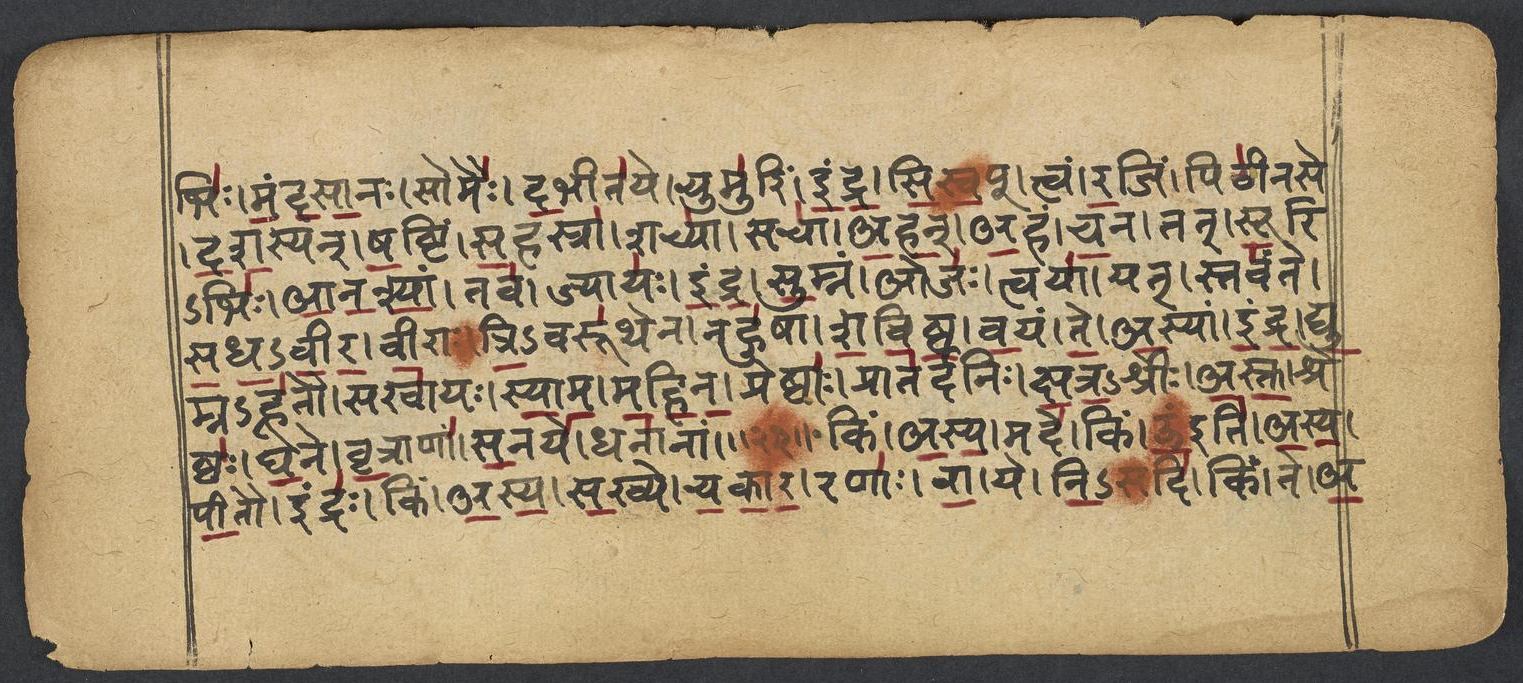
Where on the image
Penn Ms. Coll. 390 Item 41, fol. 438r (numbered 111r by the scribe) (OPenn image 438, lower leaf). Checked on the image: the Rigveda text on this page begins in RV 6.26.6 ‹-śraddhābhiḥ mandasānaḥ somaiḥ dabhītaye›. The next page with Rigveda text, fol. 438v (numbered 111v by the scribe), begins in RV 6.27.1 ‹-asya purā vividre kim›. Verses 6.26.6-8 end on this page; 6.26.6 begins on fol. 437v (numbered 110v by the scribe).
6tvaṁ śra̱ddhābhi̍r mandasā̱naḥ somai̍r da̱bhīta̍ye̱ cumu̍rim indra siṣvap | tvaṁ ra̱jim piṭhī̍nase daśa̱syan ṣa̱ṣṭiṁ sa̱hasrā̱ śacyā̱ sacā̍han ||
7a̱haṁ ca̱na tat sū̱ribhi̍r ānaśyā̱ṁ tava̱ jyāya̍ indra su̱mnam oja̍ḥ | tvayā̱ yat stava̍nte sadhavīra vī̱rās tri̱varū̍thena̱ nahu̍ṣā śaviṣṭha ||
8va̱yaṁ te̍ a̱syām i̍ndra dyu̱mnahū̍tau̱ sakhā̍yaḥ syāma mahina̱ preṣṭhā̍ḥ | prāta̍rdaniḥ kṣatra̱śrīr a̍stu̱ śreṣṭho̍ gha̱ne vṛ̱trāṇā̍ṁ sa̱naye̱ dhanā̍nām ||
Compare: Padapāṭha (word-by-word text written in the manuscript; Sansknet e-text via GRETIL)
6tvam | śraddhābhiḥ | mandasānaḥ | somaiḥ | dabhītaye | cumurim | indra | sisvap | tvam | rajim | pithīnase | daśasyan | ṣaṣṭim | sahasrā | śacyā | sacā | ahan
7aham | cana | tat | sūri-bhiḥ | ānaśyān | tava | jyāyaḥ | indra | sumnam | ojaḥ | tvayā | yat | stavante | sadha-vīra | vīrāḥ | tri-varūthena | nahuṣā | śaviṣṭha
8vayam | te | asyām | indra | dyumna-hūtau | sakhāyaḥ | syāma | mahina | preṣṭhāḥ | prātardaniḥ | kṣatra-śrīḥ | astu | śreṣṭhaḥ | ghane | vṛtrāṇām | sanaye | dhanānām
6Made glad with Soma-draughts and faith, thou sentest Chumuri to his sleep, to please Dabhîti. Thou, kindly giving Raji to Piṭhînas, slewest with might, at once, the sixty thousand.
7May I too, with the liberal chiefs, O Indra, acquire thy bliss supreme and domination, When, Mightiest! Hero-girt! Nahusha heroes boast them in thee, the triply-strong Defender.
8So may we he thy friends, thy best beloved, O Indra, at this holy invocation. Best be Pratardani, illustrious ruler, in slaying foemen and in gaining riches.
Notes
- Sanskrit: Aufrecht's edition (1877) with the Vedic accents, as entered by van Nooten and Holland (GRETIL).
- English: Ralph T. H. Griffith, The Hymns of the Rigveda (1889-1892; 2nd ed. 1896-1897), from the VedaWeb digital text; OCR slips in that text were corrected against the printed 2nd edition (data/sources/rigveda/griffith_errata.json).
- Padapāṭha (edition text): Sansknet e-text via GRETIL (CC BY-NC-SA 4.0).
Cite
Sources
- Source: Penn Ms. Coll. 390 Item 41 (undated (catalogued with Penn's 18th-19th c. Vedic manuscripts)), OPenn, Public Domain Mark + Aufrecht's accented text (GRETIL) + Griffith's English (VedaWeb) (holding institution)
- Critical edition: Aufrecht (1877), accented e-text via GRETIL
← previous · → next · v cycle view · l back to library