Rigveda 6.27: To Indra
Introduction
Rigveda 6.27 is a hymn of 8 verses addressed to Indra. It stands in book (maṇḍala) 6, the family book of Bharadvāja. The Rigveda is the oldest collection of Sanskrit hymns, composed in the second half of the second millennium BCE and handed down orally for many centuries before it was written down.
The manuscript shown is Penn Ms. Coll. 390 Item 41 (University of Pennsylvania), an undated paper manuscript of the padapāṭha (the word-by-word recitation text, in which every word is written separately and compounds are split) of the whole Ṛgveda in Devanāgarī, 884 leaves in fascicles, 7-9 lines to the page, accents in red; this hymn stands on fol. 438r-439r. Each section below gives the verses that end on one page; the page boundaries were read on the images (the opening words of every page), not counted out. Where the manuscript is a padapāṭha (the word-by-word recitation text), the section shows Aufrecht's continuous (saṃhitā) text first and, as the edition text, the padapāṭha of the same verses, which is the form written on the page.
How was this verified? (Provenance)
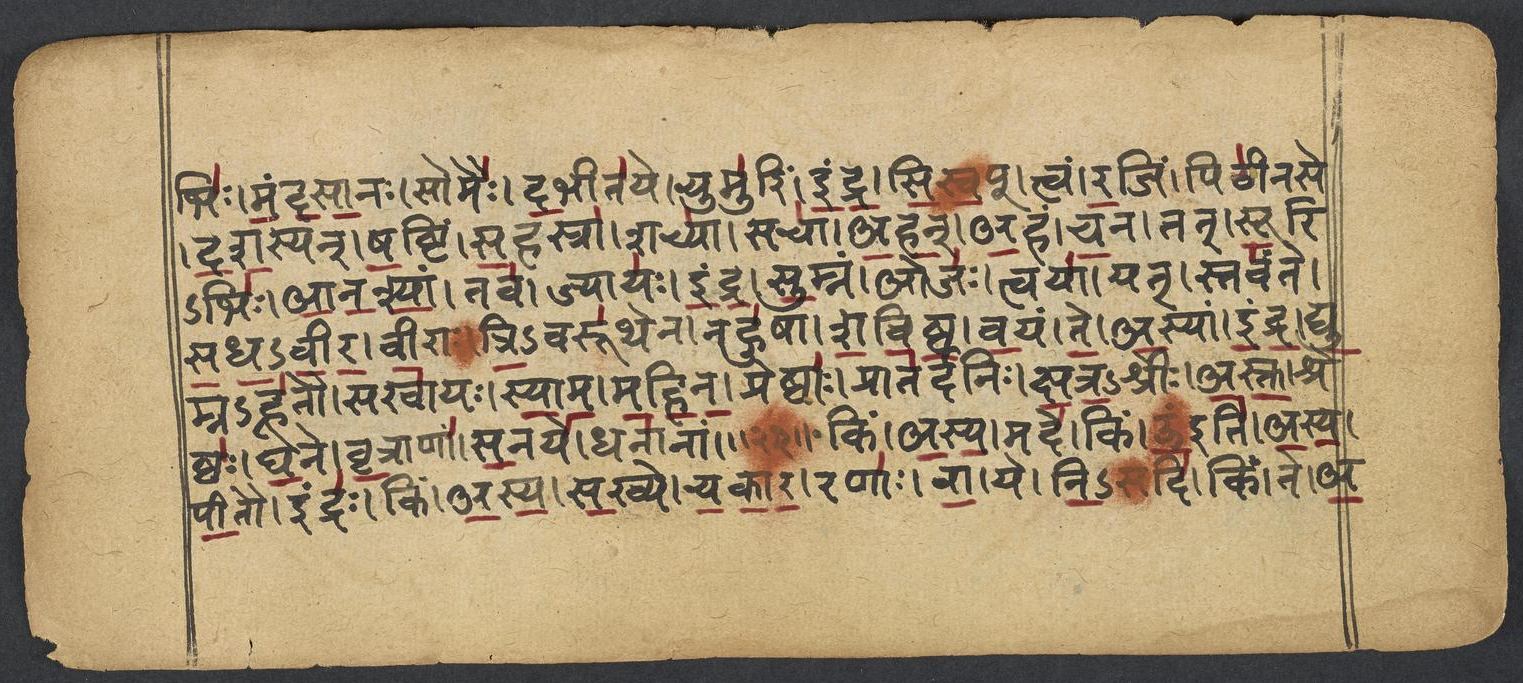
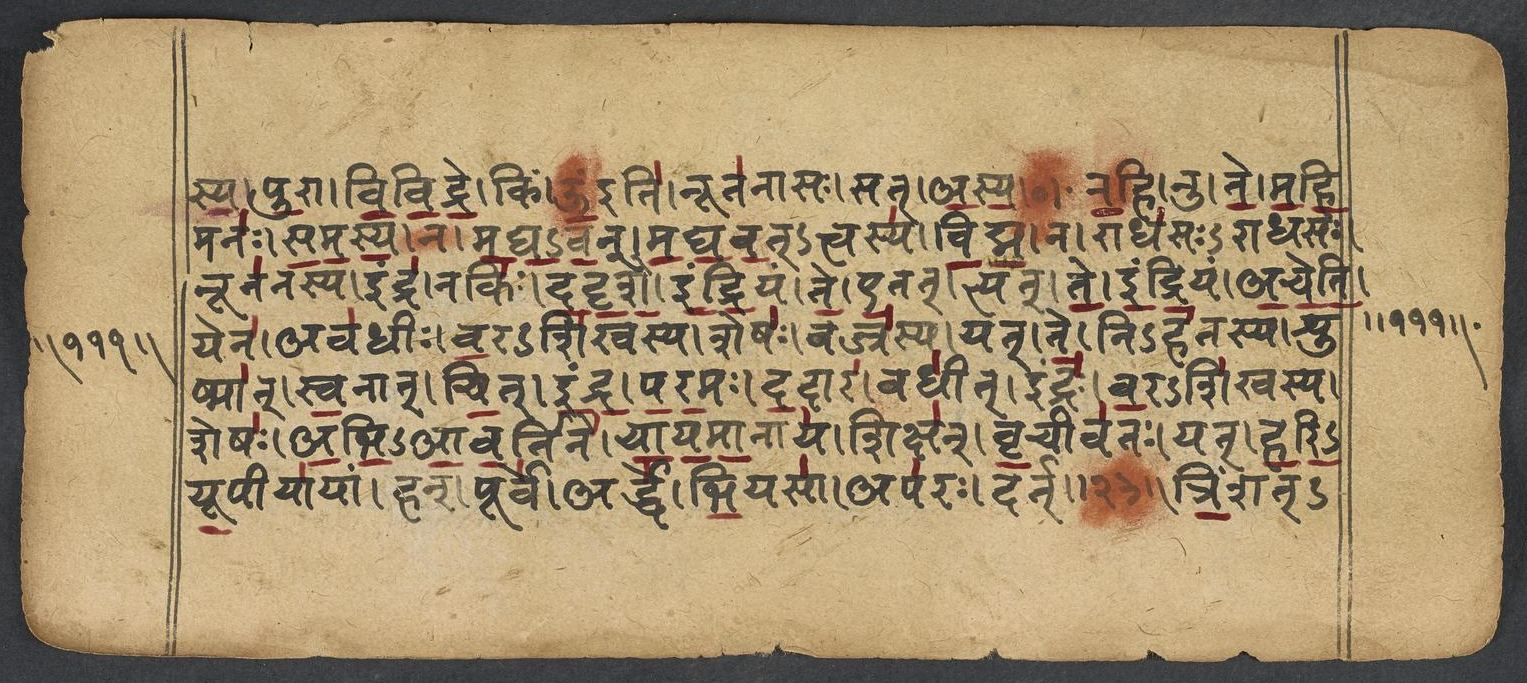
Where on the image
Penn Ms. Coll. 390 Item 41, fol. 438v (numbered 111v by the scribe) (OPenn image 439, upper leaf). Checked on the image: the Rigveda text on this page begins in RV 6.27.1 ‹-asya purā vividre kim›. The next page with Rigveda text, fol. 439r (numbered 112r by the scribe), begins in RV 6.27.6 ‹-triṃśat-śatam varmiṇaḥ indra sākam›. Verses 6.27.1-5 end on this page; 6.27.1 begins on fol. 438r (numbered 111r by the scribe).
1kim a̍sya̱ made̱ kim v a̍sya pī̱tāv indra̱ḥ kim a̍sya sa̱khye ca̍kāra | raṇā̍ vā̱ ye ni̱ṣadi̱ kiṁ te a̍sya pu̱rā vi̍vidre̱ kim u̱ nūta̍nāsaḥ ||
2sad a̍sya̱ made̱ sad v a̍sya pī̱tāv indra̱ḥ sad a̍sya sa̱khye ca̍kāra | raṇā̍ vā̱ ye ni̱ṣadi̱ sat te a̍sya pu̱rā vi̍vidre̱ sad u̱ nūta̍nāsaḥ ||
3na̱hi nu te̍ mahi̱mana̍ḥ samasya̱ na ma̍ghavan maghava̱ttvasya̍ vi̱dma | na rādha̍so-rādhaso̱ nūta̍na̱syendra̱ naki̍r dadṛśa indri̱yaṁ te̍ ||
4e̱tat tyat ta̍ indri̱yam a̍ceti̱ yenāva̍dhīr va̱raśi̍khasya̱ śeṣa̍ḥ | vajra̍sya̱ yat te̱ niha̍tasya̱ śuṣmā̍t sva̱nāc ci̍d indra para̱mo da̱dāra̍ ||
5vadhī̱d indro̍ va̱raśi̍khasya̱ śeṣo̍ 'bhyāva̱rtine̍ cāyamā̱nāya̱ śikṣa̍n | vṛ̱cīva̍to̱ yad dha̍riyū̱pīyā̍yā̱ṁ han pūrve̱ ardhe̍ bhi̱yasāpa̍ro̱ dart ||
Compare: Padapāṭha (word-by-word text written in the manuscript; Sansknet e-text via GRETIL)
1kim | asya | made | kim | oṃ iti | asya | pītau | indraḥ | kim | asya | sakhye | cakāra | raṇāḥ | vā | ye | ni-sadi | ki m | te | asya | purā | vividre | kim | oṃ iti | nūtanāsaḥ
2sat | asya | made | sat | oṃ iti | asya | pītau | indraḥ | sat | asya | sakhye | cakāra | raṇāḥ | vā | ye | ni-sadi | sat | te | asya | purā | vividre | sat | oṃ iti | nūtanāsaḥ
3nahi | nu | te | mahimanaḥ | samasya | na | magha-van | maghavat-tvasya | vi dma | na | rādhasaḥ-rādhasaḥ | nūtanasya | indra | nakiḥ | dadṛśe | indriyam | te
4etat | tyat | te | indriyam | aceti | yena | avadhīḥ | vara-śikhasya | śeṣaḥ | vajrasya | yat | te | ni-hatasya | śuṣmāt | svanāt | cit | indra | paramaḥ | dadāra
5vadhīt | indraḥ | vara-śikhasya | śeṣaḥ | abhi-āvartine | cāyamānāya | śikṣan | vṛcīvataḥ | yat | hariyūpīyāyām | han | pūrve | ardhe | bhiyasā | aparaḥ | darta
1WHAT deed hath Indra done in the wild transport, in quaffing or in friendship with, the Soma? What joys have men of ancient times or recent obtained within the chamber of libation?
2In its wild joy Indra hath proved him faithful, faithful in quaffing, faithful in its friendship. His truth is the delight that in this chamber the men of old and recent times have tasted.
3All thy vast power, O Maghavan, we know not, know not the riches of thy full abundance. No one hath seen that might of thine, productive of bounty every day renewed, O Indra.
4This one great power of thine our eyes have witnessed, wherewith thou slewest Varaṣikha's children, When by the force of thy descending thunder, at the mere sound, their boldest was demolished.
5In aid of Abhyâvartin Châyamâna, Indra destroyed the seed of Varaṣikha. At Hariyûpîyâ he smote the vanguard of the Vr̥ichîvans, and the rear fled frighted.
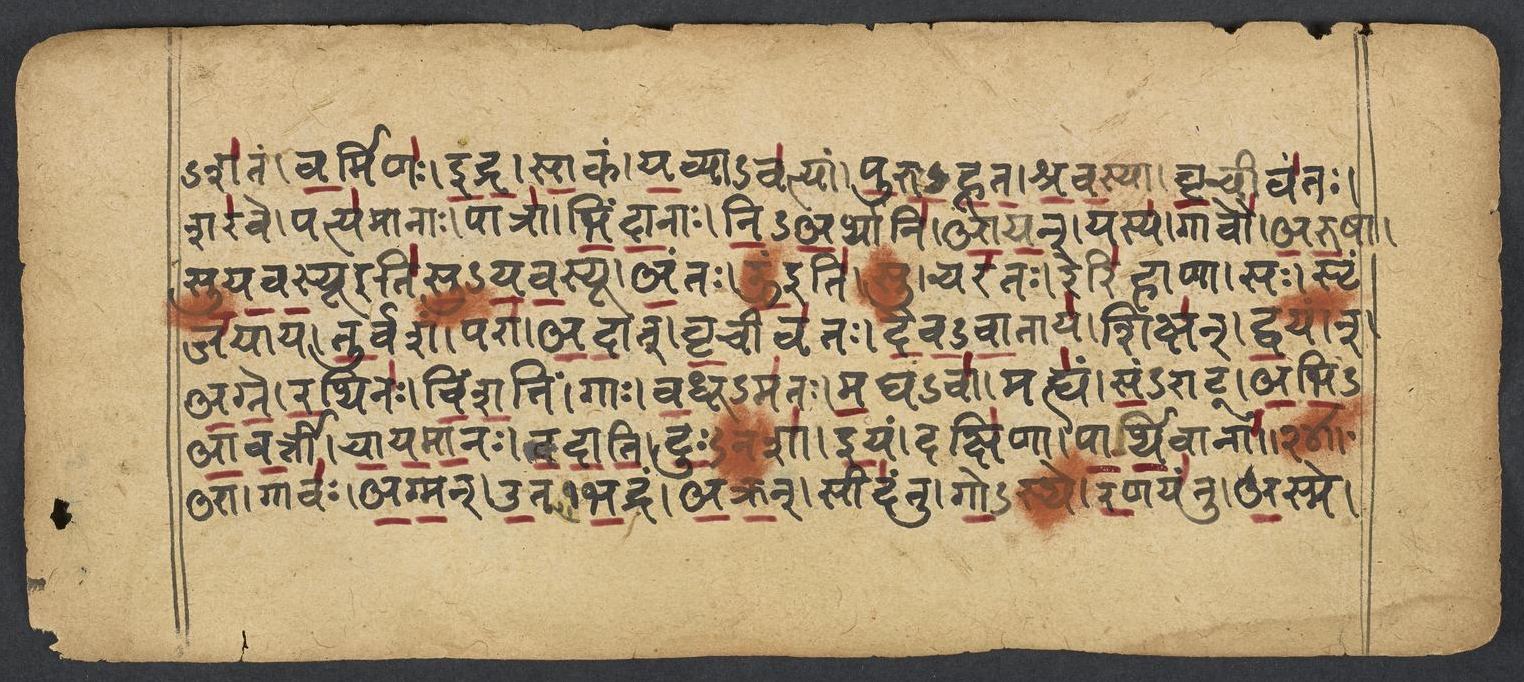
Where on the image
Penn Ms. Coll. 390 Item 41, fol. 439r (numbered 112r by the scribe) (OPenn image 439, lower leaf). Checked on the image: the Rigveda text on this page begins in RV 6.27.6 ‹-triṃśat-śatam varmiṇaḥ indra sākam›. The next page with Rigveda text, fol. 439v (numbered 112v by the scribe), begins in RV 6.28.1 ‹iti prajāvatīḥ puru-rūpāḥ iha›. Verses 6.27.6-8 end on this page; 6.27.6 begins on fol. 438v (numbered 111v by the scribe).
6tri̱ṁśaccha̍taṁ va̱rmiṇa̍ indra sā̱kaṁ ya̱vyāva̍tyām puruhūta śrava̱syā | vṛ̱cīva̍nta̱ḥ śara̍ve̱ patya̍mānā̱ḥ pātrā̍ bhindā̱nā nya̱rthāny ā̍yan ||
7yasya̱ gāvā̍v aru̱ṣā sū̍yava̱syū a̱ntar ū̱ ṣu cara̍to̱ reri̍hāṇā | sa sṛñja̍yāya tu̱rvaśa̱m parā̍dād vṛ̱cīva̍to daivavā̱tāya̱ śikṣa̍n ||
8dva̱yām̐ a̍gne ra̱thino̍ viṁśa̱tiṁ gā va̱dhūma̍to ma̱ghavā̱ mahya̍ṁ sa̱mrāṭ | a̱bhyā̱va̱rtī cā̍yamā̱no da̍dāti dū̱ṇāśe̱yaṁ dakṣi̍ṇā pārtha̱vānā̍m ||
Compare: Padapāṭha (word-by-word text written in the manuscript; Sansknet e-text via GRETIL)
6triṃśat-śatam | varmiṇaḥ | indra | sākam | yavyāvatyām | puru-hūta | śravasyā | vṛcīvantaḥ | śarave | patyamānāḥ | pātrā | bhindānāḥ | ni-arthāni | āyan
7yasya | gāvau | aruṣā | suyavasyū itisu-yavasyū | antaḥ | oṃ iti | su | carataḥ | rerihāṇā | saḥ | sṛñjayāya | turvaśam | parā | adāt | vṛcīvataḥ | daiva-vātāya | śikṣan
8dvayān | agne | rathinaḥ | viṃśatim | gāḥ | vadhū-mataḥ | magha-vā | mahyam | sam-rāṭ | abhi-āvartī | cāyamānaḥ | dadāti | duḥ-nāśā | iyam | dakṣiṇā | pārthavānām
6Three thousand, mailed, in quest of fame, together, on the Yavyâvatî, O much-sought Indra, Vr̥ichîvan's sons, falling before the arrow, like bursting vessels went to their destruction.
7He, whose two red Steers, seeking goodly pasture, plying their tongues move on 'twixt earth and heaven, Gave Turvaṣa to Sr̥injaya, and, to aid him, gave the Vr̥ichîvans up to Daivavata.
8Two wagon-teams, with damsels, twenty oxen, O Agni, Abhyâvartin Châyamâna, The liberal Sovran, giveth me. This guerdon of Pr̥ithu's seed is hard to win from others.
Notes
- Sanskrit: Aufrecht's edition (1877) with the Vedic accents, as entered by van Nooten and Holland (GRETIL).
- English: Ralph T. H. Griffith, The Hymns of the Rigveda (1889-1892; 2nd ed. 1896-1897), from the VedaWeb digital text; OCR slips in that text were corrected against the printed 2nd edition (data/sources/rigveda/griffith_errata.json).
- Padapāṭha (edition text): Sansknet e-text via GRETIL (CC BY-NC-SA 4.0).
Cite
Sources
- Source: Penn Ms. Coll. 390 Item 41 (undated (catalogued with Penn's 18th-19th c. Vedic manuscripts)), OPenn, Public Domain Mark + Aufrecht's accented text (GRETIL) + Griffith's English (VedaWeb) (holding institution)
- Critical edition: Aufrecht (1877), accented e-text via GRETIL
← previous · → next · v cycle view · l back to library