Rigveda 6.28: To the cows and Indra
Introduction
Rigveda 6.28 is a hymn of 8 verses addressed to the cows and Indra. It stands in book (maṇḍala) 6, the family book of Bharadvāja. The Rigveda is the oldest collection of Sanskrit hymns, composed in the second half of the second millennium BCE and handed down orally for many centuries before it was written down.
The manuscript shown is Penn Ms. Coll. 390 Item 41 (University of Pennsylvania), an undated paper manuscript of the padapāṭha (the word-by-word recitation text, in which every word is written separately and compounds are split) of the whole Ṛgveda in Devanāgarī, 884 leaves in fascicles, 7-9 lines to the page, accents in red; this hymn stands on fol. 439r-440r. Each section below gives the verses that end on one page; the page boundaries were read on the images (the opening words of every page), not counted out. Where the manuscript is a padapāṭha (the word-by-word recitation text), the section shows Aufrecht's continuous (saṃhitā) text first and, as the edition text, the padapāṭha of the same verses, which is the form written on the page.
How was this verified? (Provenance)
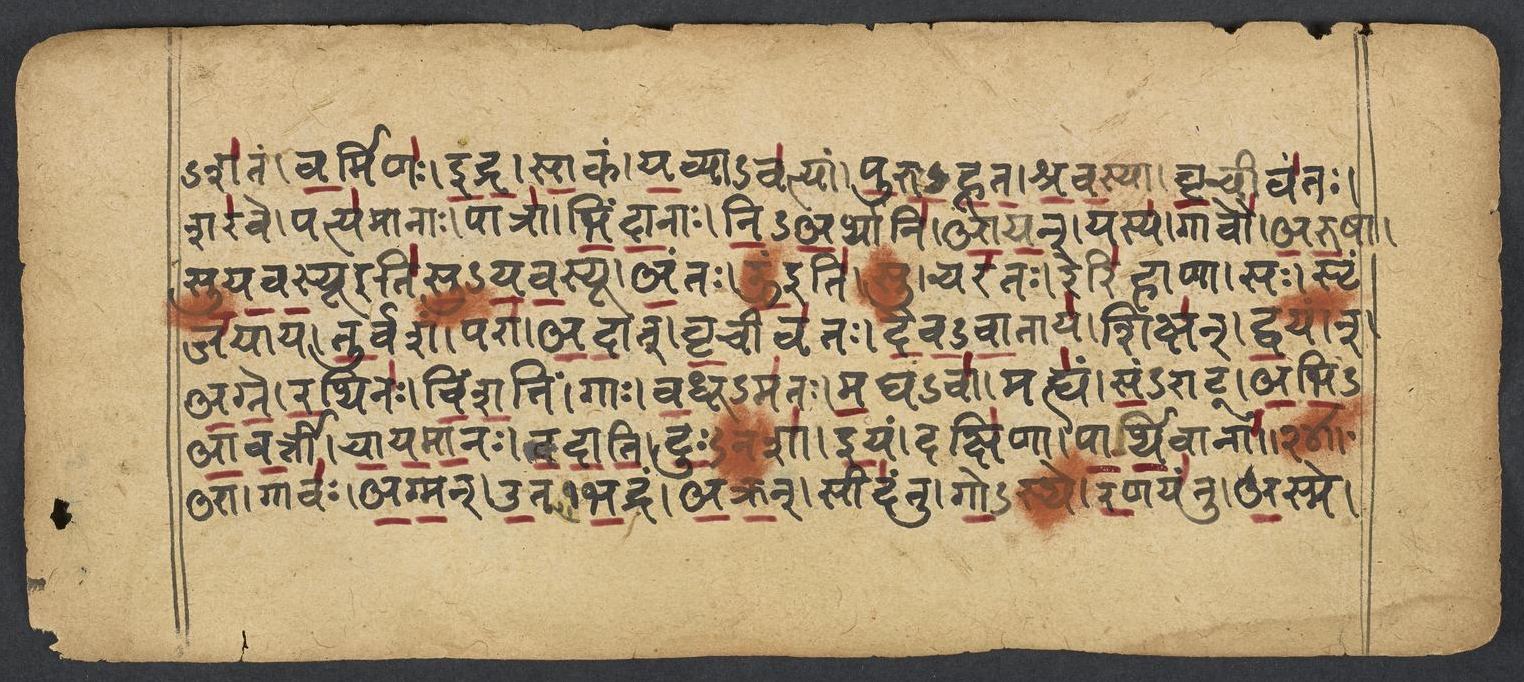
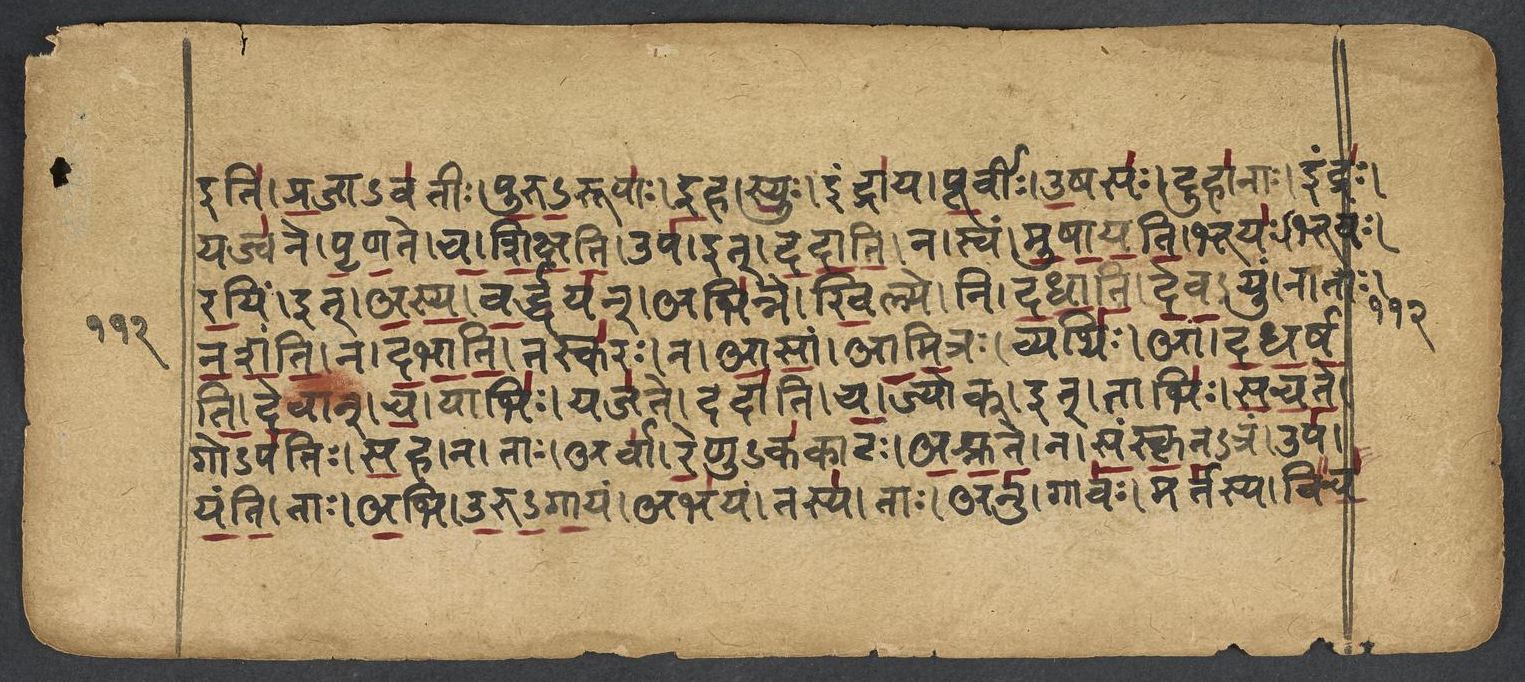
Where on the image
Penn Ms. Coll. 390 Item 41, fol. 439v (numbered 112v by the scribe) (OPenn image 440, upper leaf). Checked on the image: the Rigveda text on this page begins in RV 6.28.1 ‹iti prajāvatīḥ puru-rūpāḥ iha›. The next page with Rigveda text, fol. 440r (numbered 113r by the scribe), begins in RV 6.28.4 ‹-caranti yajvanaḥ›. Verses 6.28.1-3 end on this page; 6.28.1 begins on fol. 439r (numbered 112r by the scribe).
1ā gāvo̍ agmann u̱ta bha̱dram a̍kra̱n sīda̍ntu go̱ṣṭhe ra̱ṇaya̍ntv a̱sme | pra̱jāva̍tīḥ puru̱rūpā̍ i̱ha syu̱r indrā̍ya pū̱rvīr u̱ṣaso̱ duhā̍nāḥ ||
2indro̱ yajva̍ne pṛṇa̱te ca̍ śikṣa̱ty uped da̍dāti̱ na svam mu̍ṣāyati | bhūyo̍-bhūyo ra̱yim id a̍sya va̱rdhaya̱nn abhi̍nne khi̱lye ni da̍dhāti deva̱yum ||
3na tā na̍śanti̱ na da̍bhāti̱ taska̍ro̱ nāsā̍m āmi̱tro vyathi̱r ā da̍dharṣati | de̱vām̐ś ca̱ yābhi̱r yaja̍te̱ dadā̍ti ca̱ jyog it tābhi̍ḥ sacate̱ gopa̍tiḥ sa̱ha ||
Compare: Padapāṭha (word-by-word text written in the manuscript; Sansknet e-text via GRETIL)
1ā | gāvaḥ | agman | uta | bhadram | akran | sīdantu | go--sthe | raṇayantu | asme iti | prajāvatīḥ | puru-rūpāḥ | iha | syuḥ | indrāya | pūrvīḥ | uṣasaḥ | duhānāḥ
2indraḥ | yajvane | pṛṇate | ca | śikṣati | upa | it | dadāti | na | svam | muṣāyati | bhūyaḥ-bhūyaḥ | rayim | it | asya | vardhayan | abhinne | khilye | ni | dadhāti | deva-yum
3na | tāḥ | naśanti | na | dabhāti | taskaraḥ | na | āsām | āmitraḥ | vyathiḥ | ā | dadharṣati | devān | ca | yābhiḥ | yajate | dadāti | ca | jyok | it | tābhiḥ | sacate | go--patiḥ | saha
1THE Kine have come and brought good fortune: let them rest in the cow-pen and be happy near us. Here let them stay prolific, many-coloured, and yield through many morns their milk for Indra.
2Indra aids him who offers sacrifice and gifts: he takes not what is his, and gives him more thereto. Increasing ever more and ever more his wealth, he makes the pious dwell within unbroken bounds.
3These are ne'er lost, no robber ever injures them: no evil-minded foe attempts to harass them. The master of the Kine lives many a year with these, the Cows whereby he pours his gifts and serves the Gods.
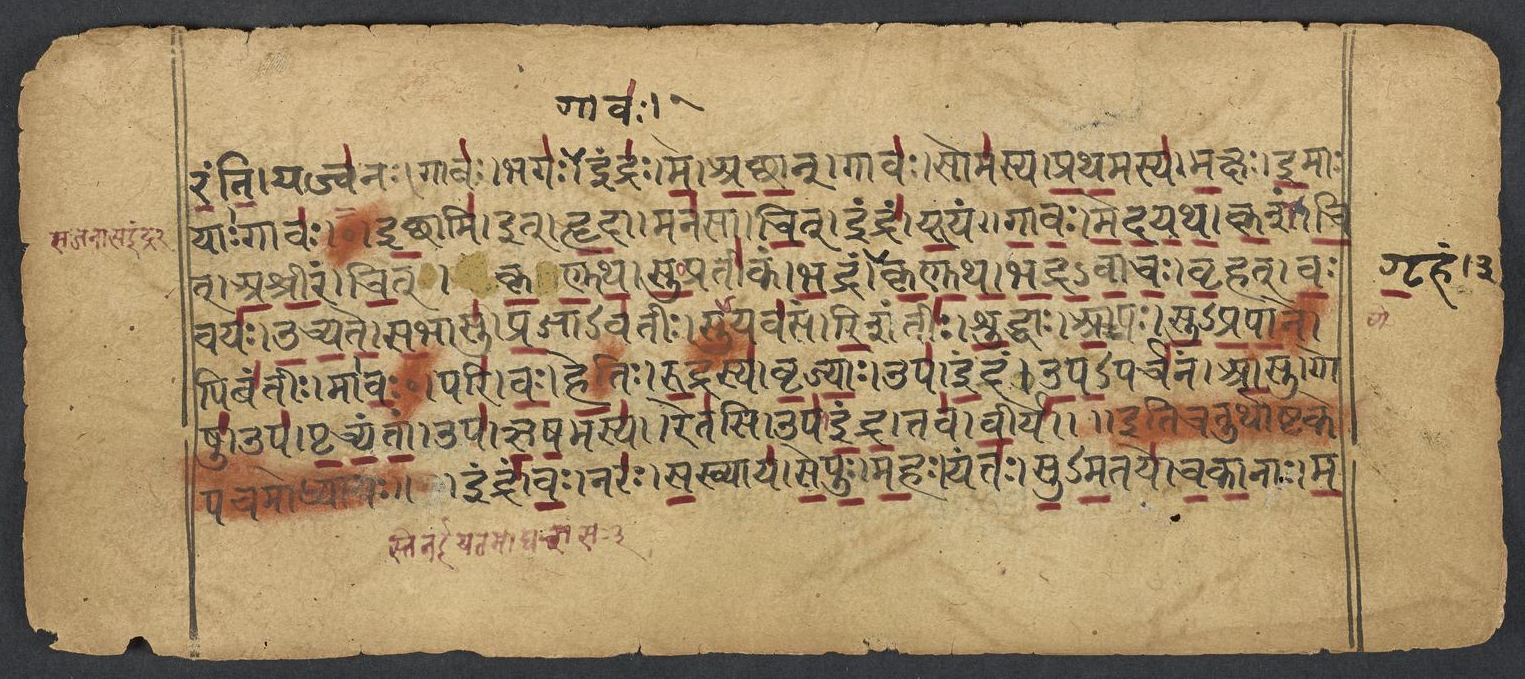
Where on the image
Penn Ms. Coll. 390 Item 41, fol. 440r (numbered 113r by the scribe) (OPenn image 440, lower leaf). Checked on the image: the Rigveda text on this page begins in RV 6.28.4 ‹-caranti yajvanaḥ›. The next page with Rigveda text, fol. 440v (numbered 113v by the scribe), begins in RV 6.29.1 ‹-mahaḥ hi dātā vajra-hastaḥ›. Verses 6.28.4-8 end on this page; 6.28.4 begins on fol. 439v (numbered 112v by the scribe).
4na tā arvā̍ re̱ṇuka̍kāṭo aśnute̱ na sa̍ṁskṛta̱tram upa̍ yanti̱ tā a̱bhi | u̱ru̱gā̱yam abha̍ya̱ṁ tasya̱ tā anu̱ gāvo̱ marta̍sya̱ vi ca̍ranti̱ yajva̍naḥ ||
5gāvo̱ bhago̱ gāva̱ indro̍ me acchā̱n gāva̱ḥ soma̍sya pratha̱masya̍ bha̱kṣaḥ | i̱mā yā gāva̱ḥ sa ja̍nāsa̱ indra̍ i̱cchāmīd dhṛ̱dā mana̍sā ci̱d indra̍m ||
6yū̱yaṁ gā̍vo medayathā kṛ̱śaṁ ci̍d aśrī̱raṁ ci̍t kṛṇuthā su̱pratī̍kam | bha̱draṁ gṛ̱haṁ kṛ̍ṇutha bhadravāco bṛ̱had vo̱ vaya̍ ucyate sa̱bhāsu̍ ||
7pra̱jāva̍tīḥ sū̱yava̍saṁ ri̱śantī̍ḥ śu̱ddhā a̱paḥ su̍prapā̱ṇe piba̍ntīḥ | mā va̍ḥ ste̱na ī̍śata̱ māghaśa̍ṁsa̱ḥ pari̍ vo he̱tī ru̱drasya̍ vṛjyāḥ ||
8upe̱dam u̍pa̱parca̍nam ā̱su goṣūpa̍ pṛcyatām | upa̍ ṛṣa̱bhasya̱ reta̱sy upe̍ndra̱ tava̍ vī̱rye̍ ||
Compare: Padapāṭha (word-by-word text written in the manuscript; Sansknet e-text via GRETIL)
4na | tāḥ | arvā | reṇu-kakāṭaḥ | aśnute | na | saṃskṛta-tram | upa | yanti | tāḥ | abhi | uru-gāyam | abhayam | tasya | tāḥ | anu | gāvaḥ | martasya | vi | caranti | yajvanaḥ
5gāvaḥ | bhagaḥ | gāvaḥ | indraḥ | me | acchān | gāvaḥ | somasya | prathamasya | bhakṣaḥ | imāḥ | yāḥ | gāvaḥ | saḥ | janāsaḥ | indraḥ | icchāmi | it | hṛdā | manasā | cit | indram
6yūyam | gāvaḥ | medayatha | kṛśam | cit | aśrīram | cit | kṛṇutha | su-pratīkam | bhadram | gṛham | kṛṇutha | bhadra-vācaḥ | bṛhat | vaḥ | vayaḥ | ucyate | sabhāsu
7prajāvatīḥ | su-yavasam | riśantīḥ | śuddhāḥ | apaḥ | su-prapāne | pibantīḥ | mā | vaḥ | stenaḥ | īśata | mā | agha-śaṃsaḥ | pari | vaḥ | hetiḥ | rudrasya | vṛjyāḥ
8upa | idam | upa-parcanam | āsu | goṣu | upa | pṛcyatām | upa | ṛṣabhasya | retasi | upa | indra | tava | vīrye
4The charger with his dusty brow o'ertakes them not, and never to the shambles do they take their way. These Cows, the cattle of the pious worshipper, roam over widespread pasture where no danger is.
5To me the Cows seem Bhaga, they seem Indra, they seem a portion of the first-poured Soma. These present Cows, they, O ye Indra. I long for Indra with my heart and spirit.
6O Cows, ye fatten e'en the worn and wasted, and make the unlovely beautiful tolook on. Prosper my house, ye with auspicious voices. Your power is glorified in our assemblies.
7Crop goodly pasturage and be prolific drink pure sweet water at good drinking places. Never be thief or sinful man your master, and may the dart of Rudra still avoid you.
8Now let this close admixture be close intermigled with these Cows, Mixt with the Steer's prolific flow, and, Indra, with thy hero might.
Notes
- Sanskrit: Aufrecht's edition (1877) with the Vedic accents, as entered by van Nooten and Holland (GRETIL).
- English: Ralph T. H. Griffith, The Hymns of the Rigveda (1889-1892; 2nd ed. 1896-1897), from the VedaWeb digital text; OCR slips in that text were corrected against the printed 2nd edition (data/sources/rigveda/griffith_errata.json).
- Padapāṭha (edition text): Sansknet e-text via GRETIL (CC BY-NC-SA 4.0).
Cite
Sources
- Source: Penn Ms. Coll. 390 Item 41 (undated (catalogued with Penn's 18th-19th c. Vedic manuscripts)), OPenn, Public Domain Mark + Aufrecht's accented text (GRETIL) + Griffith's English (VedaWeb) (holding institution)
- Critical edition: Aufrecht (1877), accented e-text via GRETIL
← previous · → next · v cycle view · l back to library