Rigveda 6.29: To Indra
Introduction
Rigveda 6.29 is a hymn of 6 verses addressed to Indra. It stands in book (maṇḍala) 6, the family book of Bharadvāja. The Rigveda is the oldest collection of Sanskrit hymns, composed in the second half of the second millennium BCE and handed down orally for many centuries before it was written down.
The manuscript shown is Penn Ms. Coll. 390 Item 41 (University of Pennsylvania), an undated paper manuscript of the padapāṭha (the word-by-word recitation text, in which every word is written separately and compounds are split) of the whole Ṛgveda in Devanāgarī, 884 leaves in fascicles, 7-9 lines to the page, accents in red; this hymn stands on fol. 440r-441r. Each section below gives the verses that end on one page; the page boundaries were read on the images (the opening words of every page), not counted out. Where the manuscript is a padapāṭha (the word-by-word recitation text), the section shows Aufrecht's continuous (saṃhitā) text first and, as the edition text, the padapāṭha of the same verses, which is the form written on the page.
How was this verified? (Provenance)
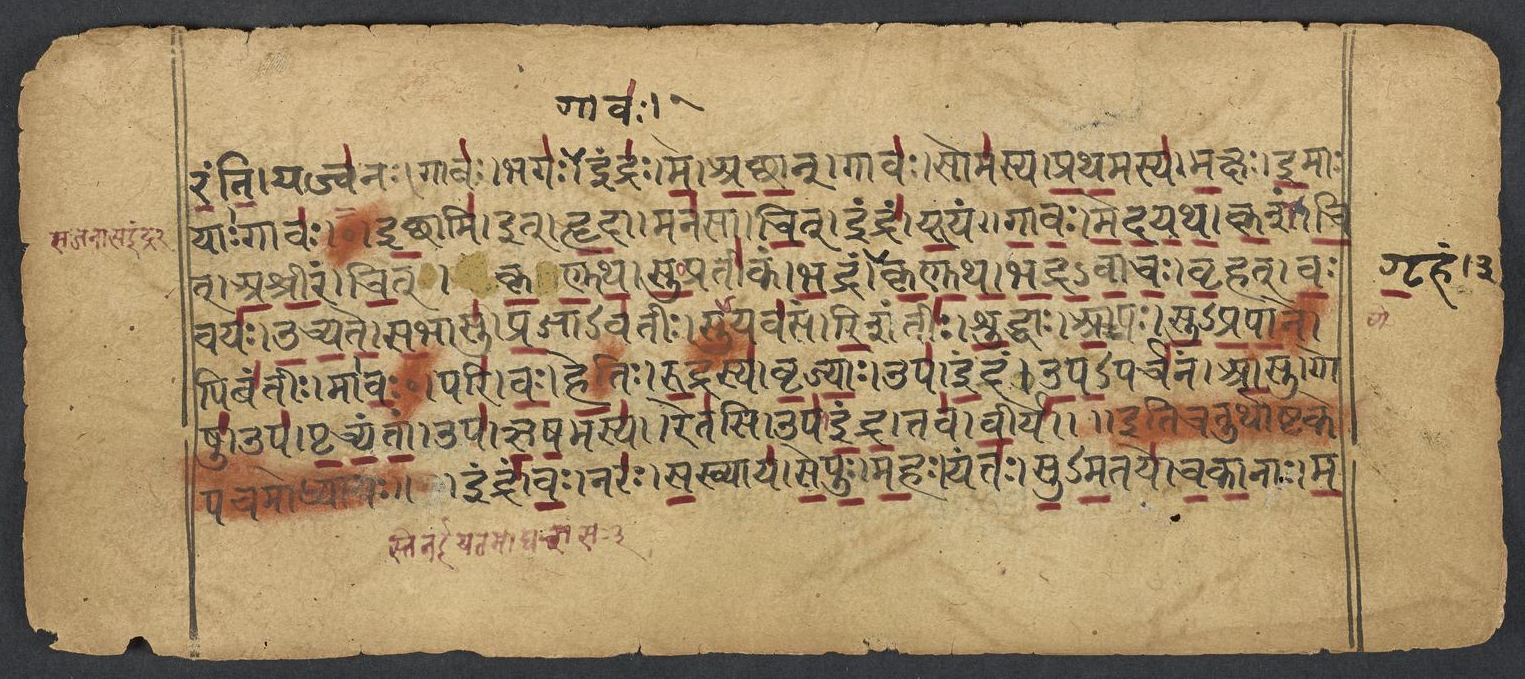
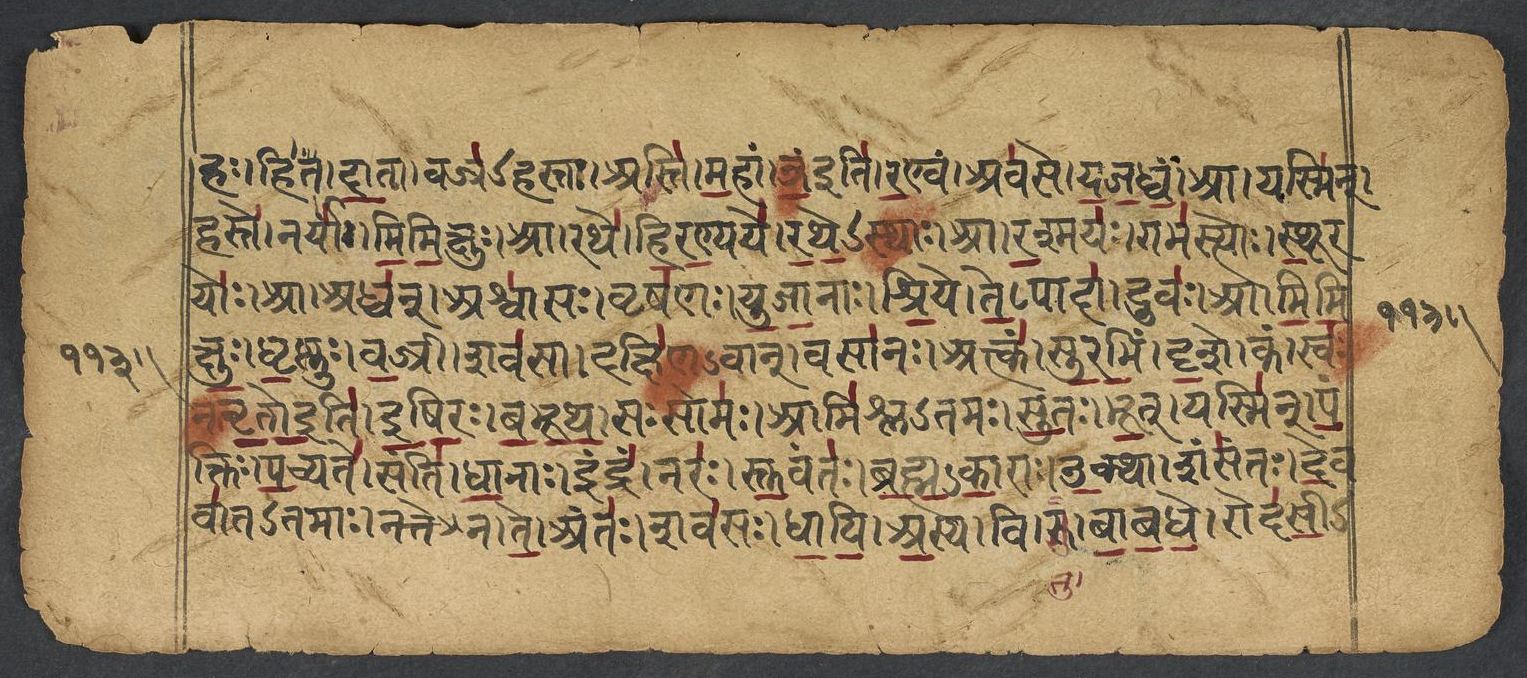
Where on the image
Penn Ms. Coll. 390 Item 41, fol. 440v (numbered 113v by the scribe) (OPenn image 441, upper leaf). Checked on the image: the Rigveda text on this page begins in RV 6.29.1 ‹-mahaḥ hi dātā vajra-hastaḥ›. The next page with Rigveda text, fol. 441r (numbered 114r by the scribe), begins in RV 6.29.5 ‹iti mahi-tvā ā tā›. Verses 6.29.1-4 end on this page; 6.29.1 begins on fol. 440r (numbered 113r by the scribe).
1indra̍ṁ vo̱ nara̍ḥ sa̱khyāya̍ sepur ma̱ho yanta̍ḥ suma̱taye̍ cakā̱nāḥ | ma̱ho hi dā̱tā vajra̍hasto̱ asti̍ ma̱hām u̍ ra̱ṇvam ava̍se yajadhvam ||
2ā yasmi̱n haste̱ naryā̍ mimi̱kṣur ā rathe̍ hira̱ṇyaye̍ rathe̱ṣṭhāḥ | ā ra̱śmayo̱ gabha̍styoḥ sthū̱rayo̱r ādhva̱nn aśvā̍so̱ vṛṣa̍ṇo yujā̱nāḥ ||
3śri̱ye te̱ pādā̱ duva̱ ā mi̍mikṣur dhṛ̱ṣṇur va̱jrī śava̍sā̱ dakṣi̍ṇāvān | vasā̍no̱ atka̍ṁ sura̱bhiṁ dṛ̱śe kaṁ sva1̱̍r ṇa nṛ̍tav iṣi̱ro ba̍bhūtha ||
4sa soma̱ āmi̍ślatamaḥ su̱to bhū̱d yasmi̍n pa̱ktiḥ pa̱cyate̱ santi̍ dhā̱nāḥ | indra̱ṁ nara̍ḥ stu̱vanto̍ brahmakā̱rā u̱kthā śaṁsa̍nto de̱vavā̍tatamāḥ ||
Compare: Padapāṭha (word-by-word text written in the manuscript; Sansknet e-text via GRETIL)
1indram | vaḥ | naraḥ | sakhyāya | sepuḥ | mahaḥ | yantaḥ | su-mataye | cakānāḥ | mahaḥ | hi | dātā | vajra-hastaḥ | asti | mahām | oṃ iti | raṇvam | avase | yajadhvam
2ā | yasmin | haste | naryāḥ | mimikṣuḥ | ā | rathe | hiraṇyaye | rathe--sthāḥ | ā | raśmayaḥ | gabhastyoḥ | sthūrayoḥ | ā | adhvan | aśvāsaḥ | vṛṣaṇaḥ | yujānāḥ
3śriye | te | pādā | duvaḥ | ā | mimikṣuḥ | dhṛṣṇuḥ | vajrī | śavasā | dakṣiṇa-vān | vasānaḥ | atkam | surabhim | dṛśe | kam | svaḥ | na | nṛto iti | iṣiraḥ | babhūtha
4saḥ | somaḥ | āmiśla-tamaḥ | sutaḥ | bhūt | yasmin | paktiḥ | pacyate | santi | dhānāḥ | indram | naraḥ | stuvantaḥ | brahma-kārāḥ | ukthā | śaṃsantaḥ | devavāta-tamāḥ
1YOUR men have followed Indra for his friendship, and for his loving-kindness glorified him. For he bestows great wealth, the Thunder-wielder: worship him, Great and Kind, to win his favour.
2Him to whose hand, men closely cling, and drivers stand on his golden chariot firmly stationed. With his firm arms he holds the reins; his Horses, the Stallions, are yoked ready for the journey.
3Thy devotees embrace thy feet for glory. Bold, thunder-armed, rich, through thy strength, in guerdon, Robed in a garment fair as heaven to look on, thou hast displayed thee like an active dancer.
4That Soma when effused hath best consistence, for which the food is dressed and grain is mingled; By which the men who pray, extolling Indra chief favourites of Gods, recite their praises.
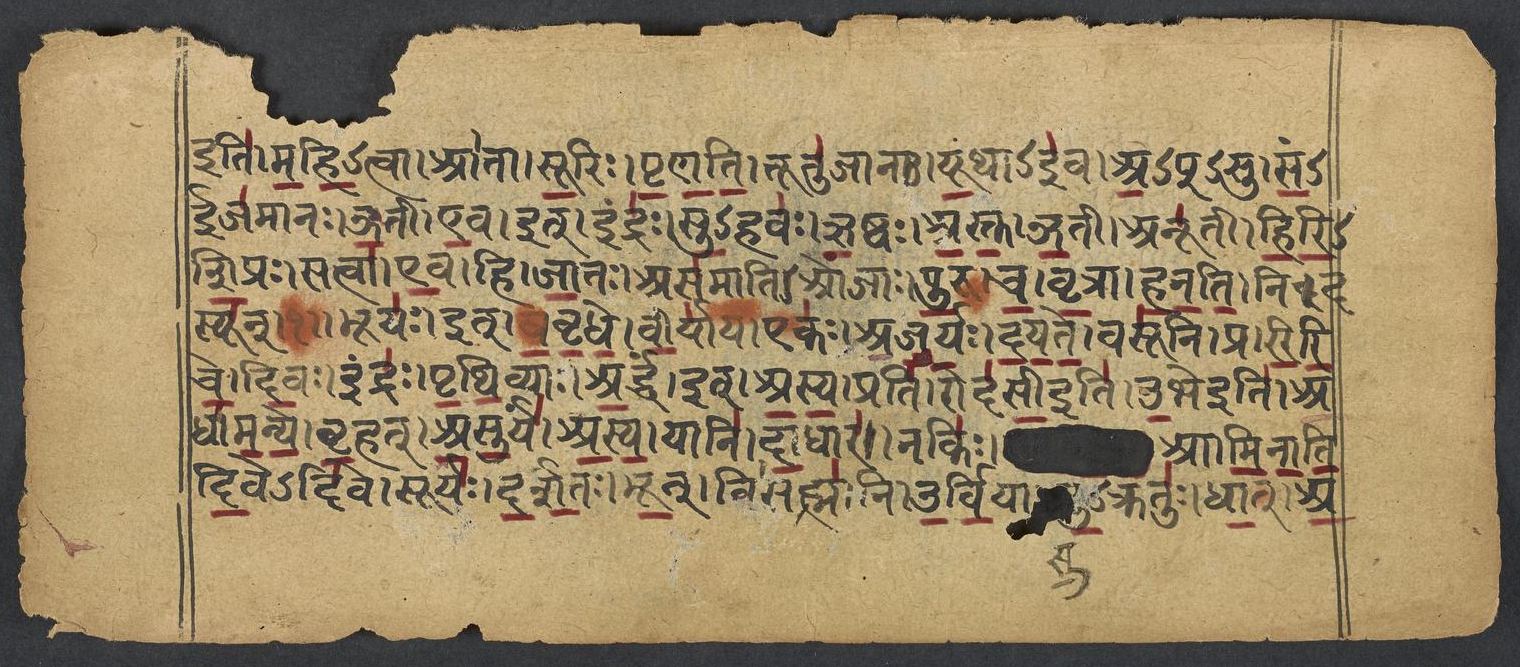
Where on the image
Penn Ms. Coll. 390 Item 41, fol. 441r (numbered 114r by the scribe) (OPenn image 441, lower leaf). Checked on the image: the Rigveda text on this page begins in RV 6.29.5 ‹iti mahi-tvā ā tā›. The next page with Rigveda text, fol. 441v (numbered 114v by the scribe), begins in RV 6.30.3 ‹ada cit nu cit›. Verses 6.29.5-6 end on this page; 6.29.5 begins on fol. 440v (numbered 113v by the scribe).
5na te̱ anta̱ḥ śava̍so dhāyy a̱sya vi tu bā̍badhe̱ roda̍sī mahi̱tvā | ā tā sū̱riḥ pṛ̍ṇati̱ tūtu̍jāno yū̱thevā̱psu sa̱mīja̍māna ū̱tī ||
6e̱ved indra̍ḥ su̱hava̍ ṛ̱ṣvo a̍stū̱tī anū̍tī hiriśi̱praḥ satvā̍ | e̱vā hi jā̱to asa̍mātyojāḥ pu̱rū ca̍ vṛ̱trā ha̍nati̱ ni dasyū̍n ||
Compare: Padapāṭha (word-by-word text written in the manuscript; Sansknet e-text via GRETIL)
5na | te | antaḥ | śavasaḥ | dhāyi | asya | vi | tu | bābadhe | rodasī iti | mahi-tvā | ā | tā | sūriḥ | pṛṇati | tūtujānaḥ | yūthāiva | ap-su | sam-ījamānaḥ | ūtī
6eva | it | indraḥ | su-havaḥ | ṛṣvaḥ | astu | ūtī | anūtī | hiri-śipraḥ | satvā | eva | hi | jātaḥ | asamāti-ojāḥ | puru | ca | vṛtrā | hanati | ni | dasyūn
5No limit of thy might hath been appointed, which by its greatness sundered earth and heaven. These the Prince filleth full with strong endeavour, driving, as 'twere, with help his flocks to waters.
6So be the lofty Indra prompt to listen, Helper unaided, golden-visored Hero. Yea, so may he, shown forth in might unequalled, smite down the many Vr̥itras and the Dasyus.
Notes
- Sanskrit: Aufrecht's edition (1877) with the Vedic accents, as entered by van Nooten and Holland (GRETIL).
- English: Ralph T. H. Griffith, The Hymns of the Rigveda (1889-1892; 2nd ed. 1896-1897), from the VedaWeb digital text; OCR slips in that text were corrected against the printed 2nd edition (data/sources/rigveda/griffith_errata.json).
- Padapāṭha (edition text): Sansknet e-text via GRETIL (CC BY-NC-SA 4.0).
Cite
Sources
- Source: Penn Ms. Coll. 390 Item 41 (undated (catalogued with Penn's 18th-19th c. Vedic manuscripts)), OPenn, Public Domain Mark + Aufrecht's accented text (GRETIL) + Griffith's English (VedaWeb) (holding institution)
- Critical edition: Aufrecht (1877), accented e-text via GRETIL
← previous · → next · v cycle view · l back to library