Rigveda 6.30: To Indra
Introduction
Rigveda 6.30 is a hymn of 5 verses addressed to Indra. It stands in book (maṇḍala) 6, the family book of Bharadvāja. The Rigveda is the oldest collection of Sanskrit hymns, composed in the second half of the second millennium BCE and handed down orally for many centuries before it was written down.
The manuscript shown is Penn Ms. Coll. 390 Item 41 (University of Pennsylvania), an undated paper manuscript of the padapāṭha (the word-by-word recitation text, in which every word is written separately and compounds are split) of the whole Ṛgveda in Devanāgarī, 884 leaves in fascicles, 7-9 lines to the page, accents in red; this hymn stands on fol. 441r-441v. Each section below gives the verses that end on one page; the page boundaries were read on the images (the opening words of every page), not counted out. Where the manuscript is a padapāṭha (the word-by-word recitation text), the section shows Aufrecht's continuous (saṃhitā) text first and, as the edition text, the padapāṭha of the same verses, which is the form written on the page.
How was this verified? (Provenance)
Where on the image
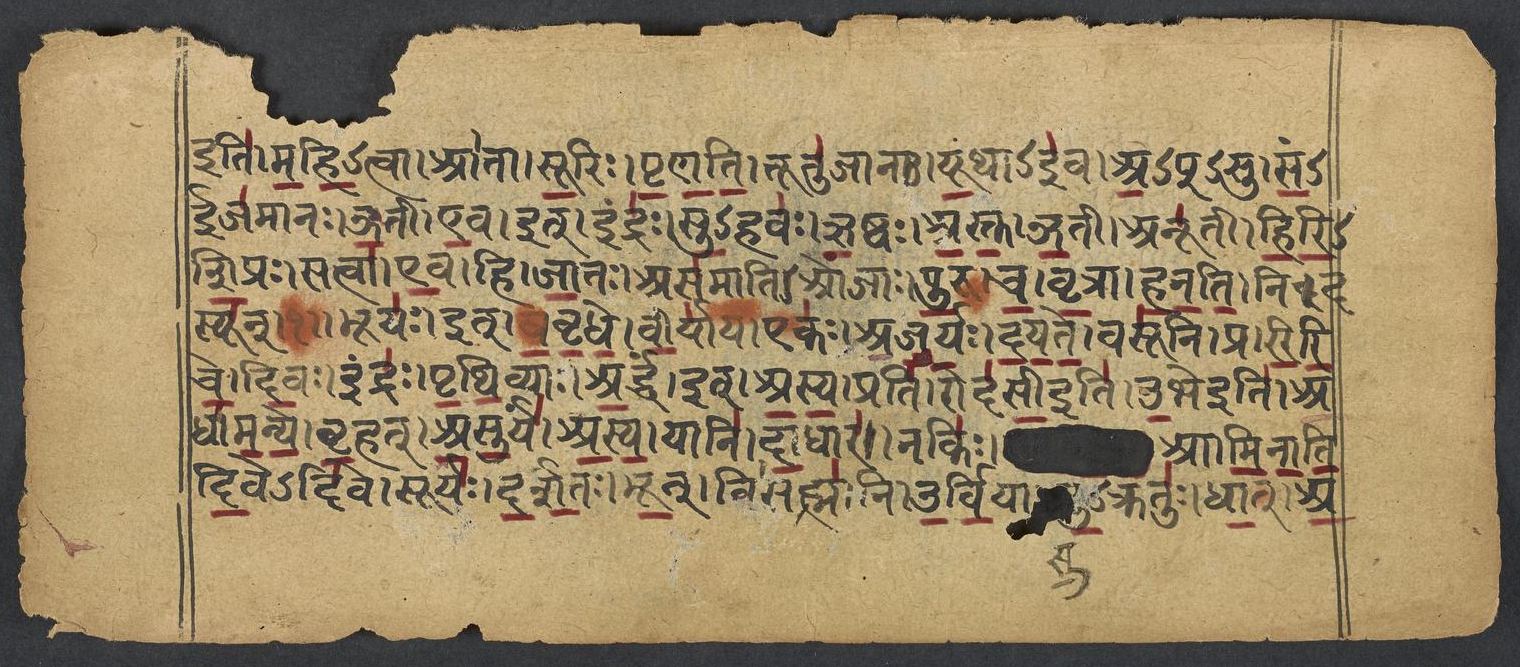
Penn Ms. Coll. 390 Item 41, fol. 441r (numbered 114r by the scribe) (OPenn image 441, lower leaf). Checked on the image: the Rigveda text on this page begins in RV 6.29.5 ‹iti mahi-tvā ā tā›. The next page with Rigveda text, fol. 441v (numbered 114v by the scribe), begins in RV 6.30.3 ‹ada cit nu cit›. Verses 6.30.1-2 end on this page.
1bhūya̱ id vā̍vṛdhe vī̱ryā̍ya̱m̐ eko̍ aju̱ryo da̍yate̱ vasū̍ni | pra ri̍rice di̱va indra̍ḥ pṛthi̱vyā a̱rdham id a̍sya̱ prati̱ roda̍sī u̱bhe ||
2adhā̍ manye bṛ̱had a̍su̱rya̍m asya̱ yāni̍ dā̱dhāra̱ naki̱r ā mi̍nāti | di̱ve-di̍ve̱ sūryo̍ darśa̱to bhū̱d vi sadmā̍ny urvi̱yā su̱kratu̍r dhāt ||
Compare: Padapāṭha (word-by-word text written in the manuscript; Sansknet e-text via GRETIL)
1bhūyaḥ | it | vavṛdhe | vīryāya | ekaḥ | ajuryaḥ | dayate | vasūni | pra | ririce | d ivaḥ | indraḥ | pṛthivyāḥ | ardham | it | asya | prati | rodasī iti | ubhe iti
2adha | manye | bṛhat | asuryam | asya | yāni | dādhāra | nakiḥ | ā | mināti | dive--dive | sūryaḥ | darśataḥ | bhūt | vi | sadmāni | urviyā | su-kratuḥ | dhāt
1INDRA hath waxed yet more for hero prowess, alone, Eternal, he bestoweth treasures. Indra transcendeth both the worlds in greatness: one half of him equalleth earth and heaven.
2Yea, mighty I esteem his Godlike nature: none hindereth what he hath once determined. Near and afar he spread and set the regions, and every day the Sun became apparent.
Where on the image
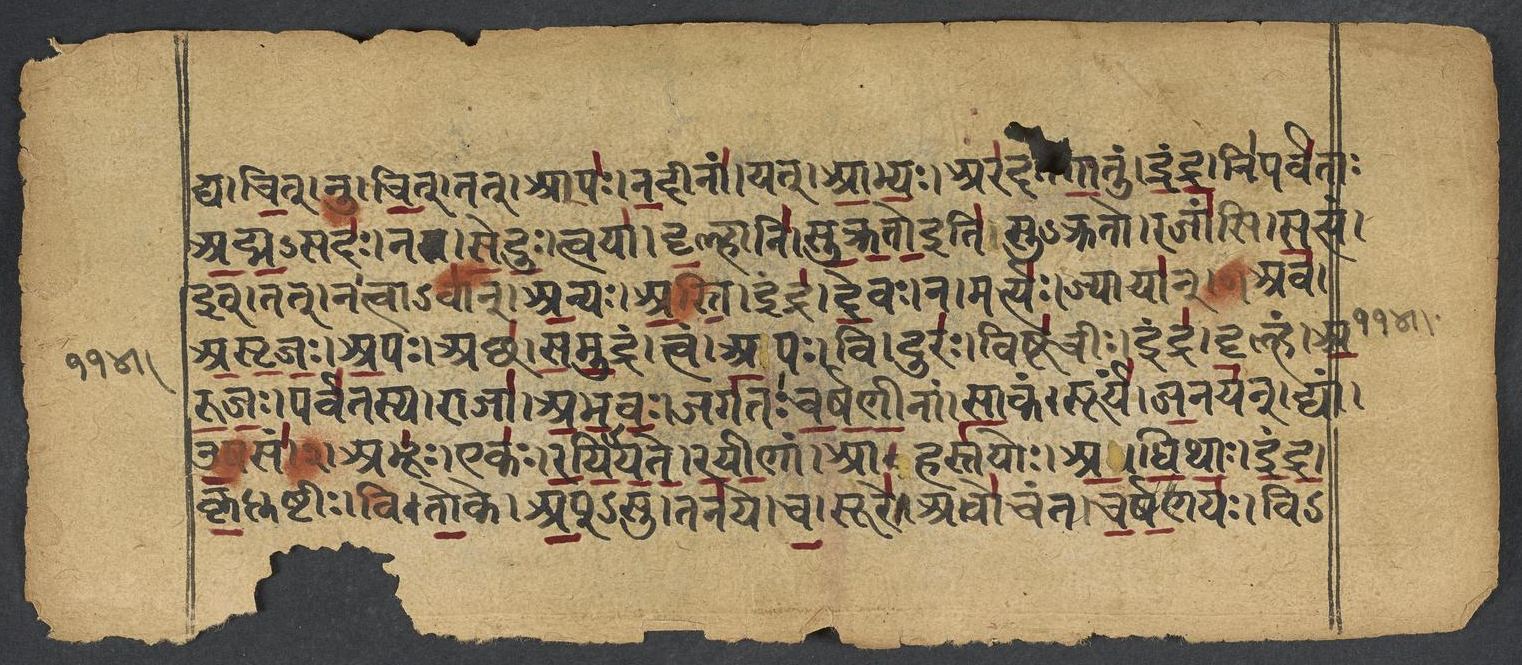
Penn Ms. Coll. 390 Item 41, fol. 441v (numbered 114v by the scribe) (OPenn image 442, upper leaf). Checked on the image: the Rigveda text on this page begins in RV 6.30.3 ‹ada cit nu cit›. The next page with Rigveda text, fol. 442r (numbered 115r by the scribe), begins in RV 6.31.1 ‹-vivācaḥ›. Verses 6.30.3-5 end on this page.
3a̱dyā ci̱n nū ci̱t tad apo̍ na̱dīnā̱ṁ yad ā̍bhyo̱ ara̍do gā̱tum i̍ndra | ni parva̍tā adma̱sado̱ na se̍du̱s tvayā̍ dṛ̱ḻhāni̍ sukrato̱ rajā̍ṁsi ||
4sa̱tyam it tan na tvāvā̍m̐ a̱nyo a̱stīndra̍ de̱vo na martyo̱ jyāyā̍n | aha̱nn ahi̍m pari̱śayā̍na̱m arṇo 'vā̍sṛjo a̱po acchā̍ samu̱dram ||
5tvam a̱po vi duro̱ viṣū̍cī̱r indra̍ dṛ̱ḻham a̍ruja̱ḥ parva̍tasya | rājā̍bhavo̱ jaga̍taś carṣaṇī̱nāṁ sā̱kaṁ sūrya̍ṁ ja̱naya̱n dyām u̱ṣāsa̍m ||
Compare: Padapāṭha (word-by-word text written in the manuscript; Sansknet e-text via GRETIL)
3ada | cit | nu | cit | tat | apaḥ | nadīnām | yat | ābhyaḥ | aradaḥ | gātum | indra | ni | parvatāḥ | adma-sadaḥ | na | seduḥ | tvayā | dṛḷhāni | sukrato itisu-krato | rajāṃsi
4satyam | it | tat | na | tvāvān | anyaḥ | asti | indra | devaḥ | na | martyaḥ | jyāyān | ahan | ahim | pari-śayānam | arṇaḥ | ava | asṛjaḥ | apaḥ | accha | samudram
5tvam | apaḥ | vi | duraḥ | viṣūcīḥ | indra | dṛḷham | arujaḥ | parvatasya | rājā | abhavaḥ | jagataḥ | carṣaṇīnām | sākam | sūryam | janayan | dyām | uṣasam
3E'en now endures thine exploit of the Rivers, when, Indra, for their floods thou clavest passage. Like men who sit at meat the mountains settled: by thee, Most Wise! the regions were made steadfast.
4This is the truth, none else is like thee, Indra, no God superior to thee, no mortal. Thou slewest Ahi who besieged the waters, and lettest loose the streams to hurry seaward.
5Indra, thou breakest up the floods and portals on all sides, and the firmness of the mountain. Thou art the King of men, of all that liveth, engendering at once Sun, Heaven, and Morning.
Notes
- Sanskrit: Aufrecht's edition (1877) with the Vedic accents, as entered by van Nooten and Holland (GRETIL).
- English: Ralph T. H. Griffith, The Hymns of the Rigveda (1889-1892; 2nd ed. 1896-1897), from the VedaWeb digital text; OCR slips in that text were corrected against the printed 2nd edition (data/sources/rigveda/griffith_errata.json).
- Padapāṭha (edition text): Sansknet e-text via GRETIL (CC BY-NC-SA 4.0).
Cite
Sources
- Source: Penn Ms. Coll. 390 Item 41 (undated (catalogued with Penn's 18th-19th c. Vedic manuscripts)), OPenn, Public Domain Mark + Aufrecht's accented text (GRETIL) + Griffith's English (VedaWeb) (holding institution)
- Critical edition: Aufrecht (1877), accented e-text via GRETIL
← previous · → next · v cycle view · l back to library