Rigveda 6.4: To Agni
Introduction
Rigveda 6.4 is a hymn of 8 verses addressed to Agni. It stands in book (maṇḍala) 6, the family book of Bharadvāja. The Rigveda is the oldest collection of Sanskrit hymns, composed in the second half of the second millennium BCE and handed down orally for many centuries before it was written down.
The manuscript shown is Penn Ms. Coll. 390 Item 41 (University of Pennsylvania), an undated paper manuscript of the padapāṭha (the word-by-word recitation text, in which every word is written separately and compounds are split) of the whole Ṛgveda in Devanāgarī, 884 leaves in fascicles, 7-9 lines to the page, accents in red; this hymn stands on fol. 405v-406v. Each section below gives the verses that end on one page; the page boundaries were read on the images (the opening words of every page), not counted out. Where the manuscript is a padapāṭha (the word-by-word recitation text), the section shows Aufrecht's continuous (saṃhitā) text first and, as the edition text, the padapāṭha of the same verses, which is the form written on the page.
How was this verified? (Provenance)
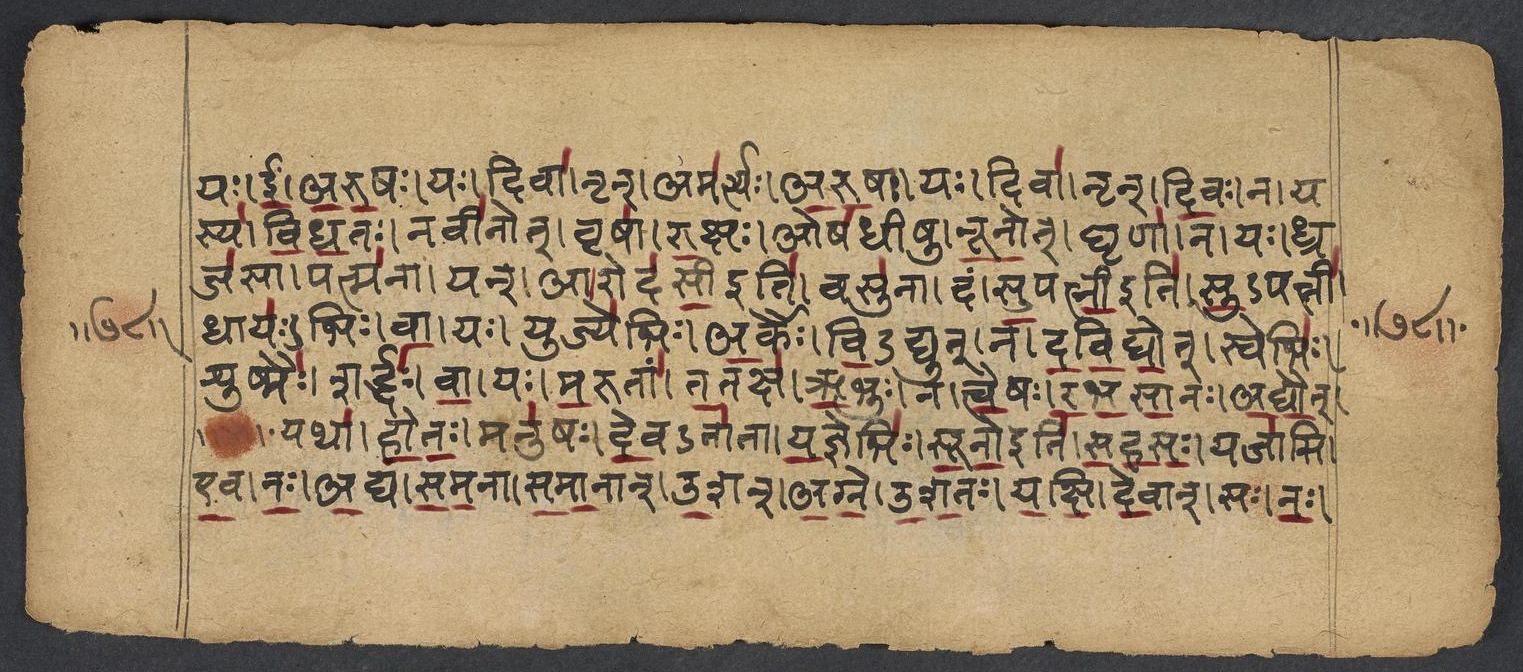
Where on the image
Penn Ms. Coll. 390 Item 41, fol. 405v (numbered 78v by the scribe) (OPenn image 406, upper leaf). Checked on the image: the Rigveda text on this page begins in RV 6.3.6 ‹yaḥ īm aruṣaḥ yaḥ›. The next page with Rigveda text, fol. 406r (numbered 79r by the scribe), begins in RV 6.4.2 ‹vibhāvā cakṣaṇiḥ na vastoḥ›. Verse 6.4.1 ends on this page.
1yathā̍ hota̱r manu̍ṣo de̱vatā̍tā ya̱jñebhi̍ḥ sūno sahaso̱ yajā̍si | e̱vā no̍ a̱dya sa̍ma̱nā sa̍mā̱nān u̱śann a̍gna uśa̱to ya̍kṣi de̱vān ||
Compare: Padapāṭha (word-by-word text written in the manuscript; Sansknet e-text via GRETIL)
1yathā | hotaḥ | manuṣaḥ | deva-tātā | yajñebhiḥ | sūno iti | sahasaḥ | yajāsi | eva | naḥ | adya | samanā | samānān | uśan | agne | uśasaḥ | yakṣi | devān
1As at man's service of the Gods, Invoker, thou, Son of Strength, dost sacrifice and worship, So bring for us to-day all Gods together, bring willingly the willing Gods, O Agni.
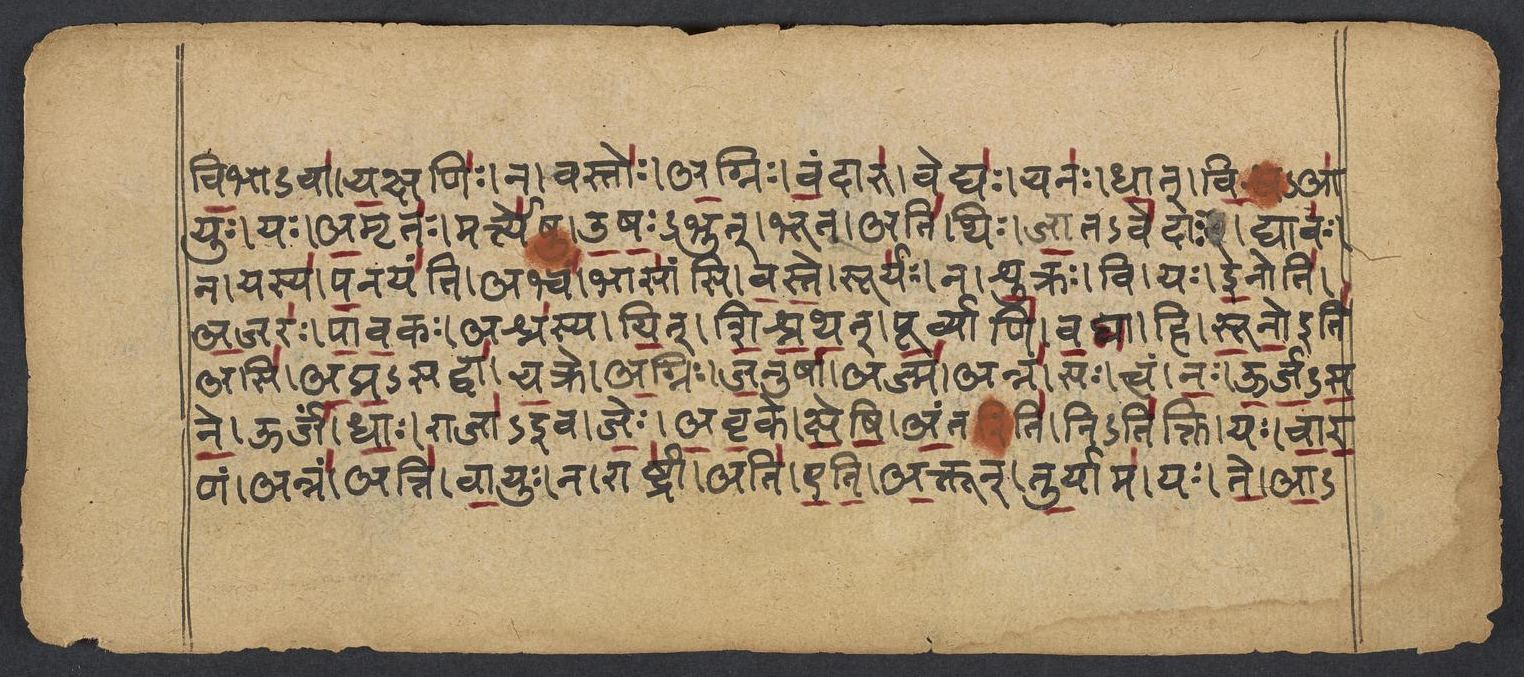
Where on the image
Penn Ms. Coll. 390 Item 41, fol. 406r (numbered 79r by the scribe) (OPenn image 406, lower leaf). Checked on the image: the Rigveda text on this page begins in RV 6.4.2 ‹vibhāvā cakṣaṇiḥ na vastoḥ›. The next page with Rigveda text, fol. 406v (numbered 79v by the scribe), begins in RV 6.4.5 ‹-ādiśām arātīḥ atyaḥ na›. Verses 6.4.2-4 end on this page; 6.4.2 begins on fol. 405v (numbered 78v by the scribe).
2sa no̍ vi̱bhāvā̍ ca̱kṣaṇi̱r na vasto̍r a̱gnir va̱ndāru̱ vedya̱ś cano̍ dhāt | vi̱śvāyu̱r yo a̱mṛto̱ martye̍ṣūṣa̱rbhud bhūd ati̍thir jā̱tave̍dāḥ ||
3dyāvo̱ na yasya̍ pa̱naya̱nty abhva̱m bhāsā̍ṁsi vaste̱ sūryo̱ na śu̱kraḥ | vi ya i̱noty a̱jara̍ḥ pāva̱ko 'śna̍sya cic chiśnathat pū̱rvyāṇi̍ ||
4va̱dmā hi sū̍no̱ asy a̍dma̱sadvā̍ ca̱kre a̱gnir ja̱nuṣājmānna̍m | sa tvaṁ na̍ ūrjasana̱ ūrja̍ṁ dhā̱ rāje̍va jer avṛ̱ke kṣe̍ṣy a̱ntaḥ ||
Compare: Padapāṭha (word-by-word text written in the manuscript; Sansknet e-text via GRETIL)
2saḥ | naḥ | vibhāvā | cakṣaṇiḥ | na | vastoḥ | agniḥ | vandāru | vedyaḥ | canaḥ | dhāt | viśva-āyuḥ | yaḥ | amṛtaḥ | martyeṣu | uṣaḥ-bhut | bhūt | atithiḥ | jāta-vedāḥ
3dyāvaḥ | na | yasya | panayanti | abhvam | bhāsāṃsi | vaste | sūryaḥ | na | śukraḥ | vi | yaḥ | inoti | ajaraḥ | pāvakaḥ | aśnasya | cit | śiśnathat | pūrvyāṇi
4vadmā | hi | sūno iti | asi | adma-sadvā | cakre | agniḥ | januṣā | ajmā | annam | saḥ | tvam | naḥ | ūrja-sane | ūrjam | dhāḥ | rājāiva | jeḥ | avṛke | kṣeṣi | antariti
2May Agni, radiant Herald of the morning, meet to be known, accept our praise with favour. Dear to all life, mid mortal men Immortal, our guest, awake at dawn, is Jâtavedas.
3Whose might the very heavens regard with wonder: bright as the Sun he clothes himself with lustre. He who sends forth, Eternal Purifier, hath shattered e'en the ancient works of Aṣna.
4Thou art a Singer, Son! our feast-companion: Agni at birth prepared his food and pathway. Therefore vouchsafe us strength, O Strength-bestower. Win like a King: foes trouble not thy dwelling.
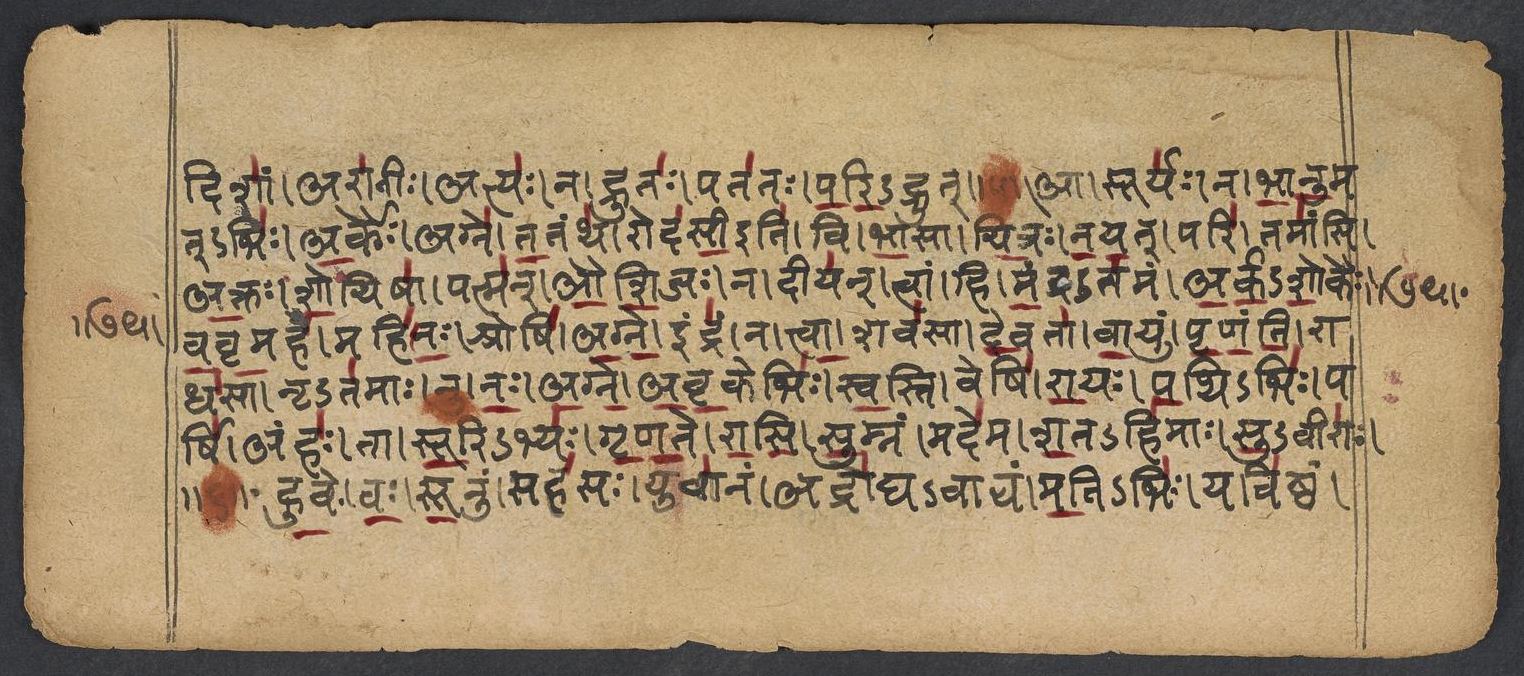
Where on the image
Penn Ms. Coll. 390 Item 41, fol. 406v (numbered 79v by the scribe) (OPenn image 407, upper leaf). Checked on the image: the Rigveda text on this page begins in RV 6.4.5 ‹-ādiśām arātīḥ atyaḥ na›. The next page with Rigveda text, fol. 407r (numbered 80r by the scribe), begins in RV 6.5.1 ‹yaḥ invati draviṇāni pra-cetāḥ›. Verses 6.4.5-8 end on this page; 6.4.5 begins on fol. 406r (numbered 79r by the scribe).
5niti̍kti̱ yo vā̍ra̱ṇam anna̱m atti̍ vā̱yur na rāṣṭry aty e̍ty a̱ktūn | tu̱ryāma̱ yas ta̍ ā̱diśā̱m arā̍tī̱r atyo̱ na hruta̱ḥ pata̍taḥ pari̱hrut ||
6ā sūryo̱ na bhā̍nu̱madbhi̍r a̱rkair agne̍ ta̱tantha̱ roda̍sī̱ vi bhā̱sā | ci̱tro na̍ya̱t pari̱ tamā̍ṁsy a̱ktaḥ śo̱ciṣā̱ patma̍nn auśi̱jo na dīya̍n ||
7tvāṁ hi ma̱ndrata̍mam arkaśo̱kair va̍vṛ̱mahe̱ mahi̍ na̱ḥ śroṣy a̍gne | indra̱ṁ na tvā̱ śava̍sā de̱vatā̍ vā̱yum pṛ̍ṇanti̱ rādha̍sā̱ nṛta̍māḥ ||
8nū no̍ agne 'vṛ̱kebhi̍ḥ sva̱sti veṣi̍ rā̱yaḥ pa̱thibhi̱ḥ parṣy aṁha̍ḥ | tā sū̱ribhyo̍ gṛṇa̱te rā̍si su̱mnam made̍ma śa̱tahi̍māḥ su̱vīrā̍ḥ ||
Compare: Padapāṭha (word-by-word text written in the manuscript; Sansknet e-text via GRETIL)
5ni-tikti | yaḥ | vāranam | annam | atti | vāyuḥ | na | rāṣṭrī | ati | eti | aktūn | tuyārmaḥ | yaḥ | te | ādiśām | arātīḥ | atyaḥ | na | hrutaḥ | patataḥ | pari-hrut
6ā | sūryaḥ | na | bhānumat-bhiḥ | arkaiḥ | agne | tatantha | rodasī iti | vi | bhāsā | citraḥ | nayat | pari | tamāṃsi | aktaḥ | śociṣā | patman | auśijaḥ | na | dīyan
7tvām | hi | mandra-tamam | arka-śokaiḥ | vavṛmahe | mahi | naḥ | śroṣi | agne | indram | na | tvā | śavasā | devatā | vāyum | pṛṇanti | rādhasā | nṛ-tamāḥ
8nu | naḥ | agne | avṛkebhiḥ | svasti | veṣi | rāyaḥ | pathi-bhiḥ | parṣi | aṃhaḥ | tā | sūri-bhyaḥ | gṛṇate | rāsi | sumnam | madema | śata-himāḥ | su-vīrāḥ
5Even he who eats his firm hard food with swiftness,and overtakes the nights as Vâyu kingdoms. May we o'ercome those who resist thine orders, like a steed casting down the flying foemen.
6Like Sûrya with his fulgent rays, O Agni, thou overspreadest both the worlds with splendour. Decked with bright colour he dispels the darkness, like Auṣija, with clear flame swiftly flying.
7We have elected thee as most delightful for thy beams' glow: hear our great laud, O Agni. The best men praise thee as the peer of Indra in strength, mid Gods, like Vâyu in thy bounty.
8Now, Agni, on the tranquil paths of riches come to us for our weal: save us from sorrow. Grant chiefs and bard this boon. May we live happy, with hero children, through a hundred winters.
Notes
- Sanskrit: Aufrecht's edition (1877) with the Vedic accents, as entered by van Nooten and Holland (GRETIL).
- English: Ralph T. H. Griffith, The Hymns of the Rigveda (1889-1892; 2nd ed. 1896-1897), from the VedaWeb digital text; OCR slips in that text were corrected against the printed 2nd edition (data/sources/rigveda/griffith_errata.json).
- Padapāṭha (edition text): Sansknet e-text via GRETIL (CC BY-NC-SA 4.0).
Cite
Sources
- Source: Penn Ms. Coll. 390 Item 41 (undated (catalogued with Penn's 18th-19th c. Vedic manuscripts)), OPenn, Public Domain Mark + Aufrecht's accented text (GRETIL) + Griffith's English (VedaWeb) (holding institution)
- Critical edition: Aufrecht (1877), accented e-text via GRETIL
← previous · → next · v cycle view · l back to library