Rigveda 6.31: To Indra
Introduction
Rigveda 6.31 is a hymn of 5 verses addressed to Indra. It stands in book (maṇḍala) 6, the family book of Bharadvāja. The Rigveda is the oldest collection of Sanskrit hymns, composed in the second half of the second millennium BCE and handed down orally for many centuries before it was written down.
The manuscript shown is Penn Ms. Coll. 390 Item 41 (University of Pennsylvania), an undated paper manuscript of the padapāṭha (the word-by-word recitation text, in which every word is written separately and compounds are split) of the whole Ṛgveda in Devanāgarī, 884 leaves in fascicles, 7-9 lines to the page, accents in red; this hymn stands on fol. 441v-442v. Each section below gives the verses that end on one page; the page boundaries were read on the images (the opening words of every page), not counted out. Where the manuscript is a padapāṭha (the word-by-word recitation text), the section shows Aufrecht's continuous (saṃhitā) text first and, as the edition text, the padapāṭha of the same verses, which is the form written on the page.
How was this verified? (Provenance)
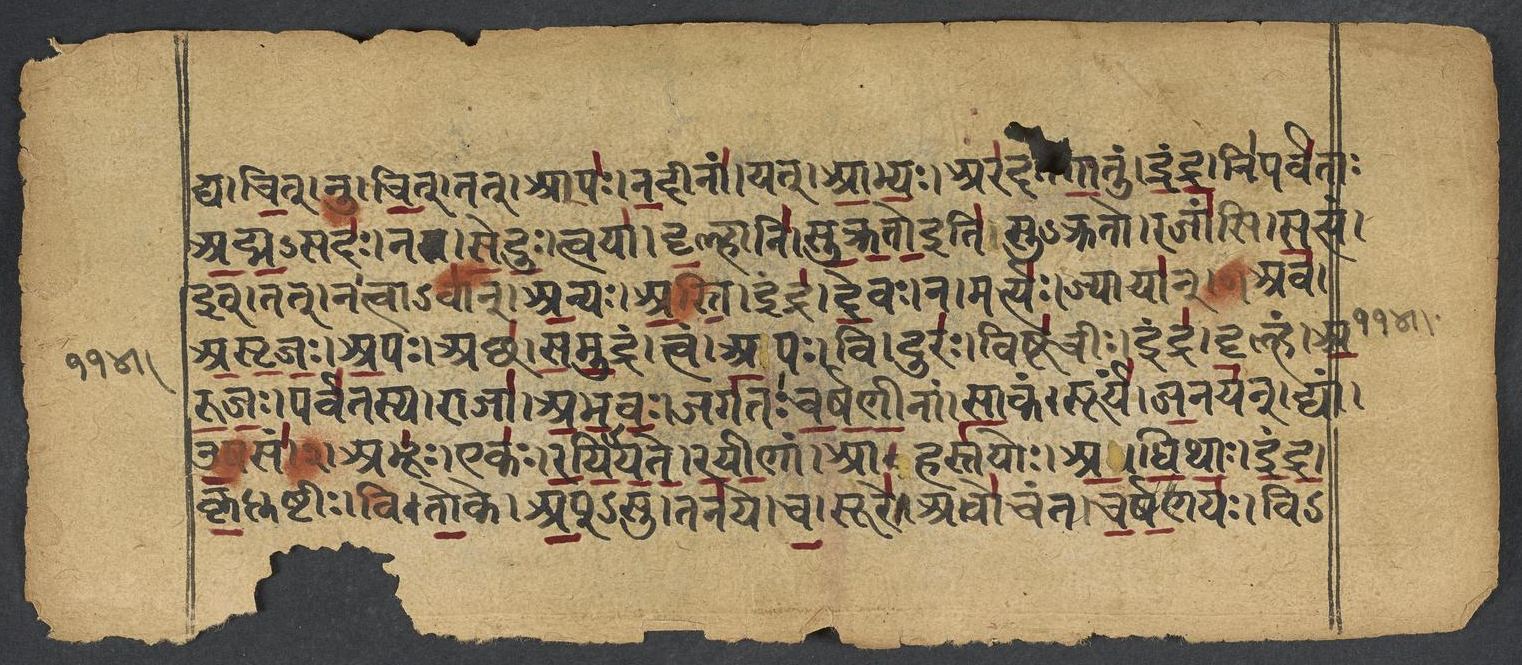
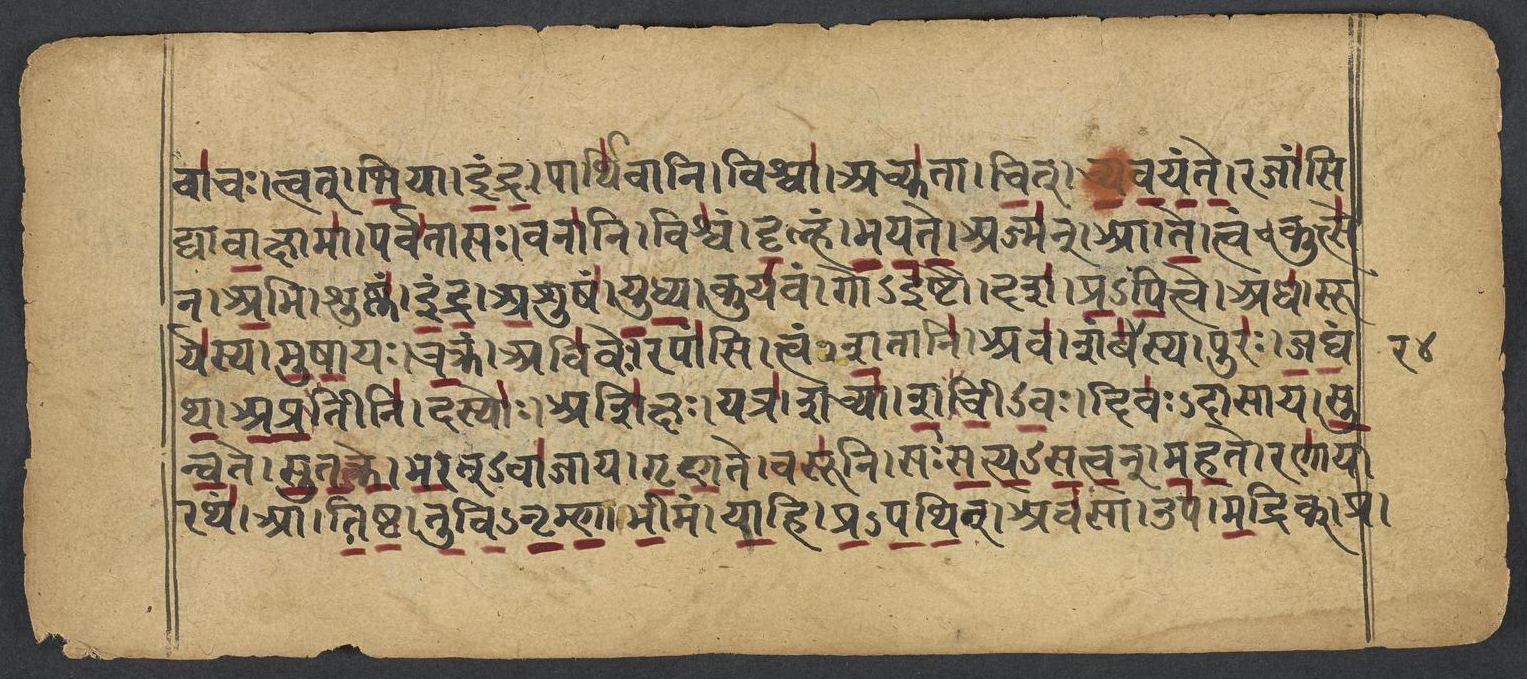
Where on the image
Penn Ms. Coll. 390 Item 41, fol. 442r (numbered 115r by the scribe) (OPenn image 442, lower leaf). Checked on the image: the Rigveda text on this page begins in RV 6.31.1 ‹-vivācaḥ›. The next page with Rigveda text, fol. 442v (numbered 115v by the scribe), begins in RV 6.31.5 ‹ca śruta śravaya carṣaṇi-bhyaḥ›. Verses 6.31.1-4 end on this page; 6.31.1 begins on fol. 441v (numbered 114v by the scribe).
1abhū̱r eko̍ rayipate rayī̱ṇām ā hasta̍yor adhithā indra kṛ̱ṣṭīḥ | vi to̱ke a̱psu tana̍ye ca̱ sūre 'vo̍canta carṣa̱ṇayo̱ vivā̍caḥ ||
2tvad bhi̱yendra̱ pārthi̍vāni̱ viśvācyu̍tā cic cyāvayante̱ rajā̍ṁsi | dyāvā̱kṣāmā̱ parva̍tāso̱ vanā̍ni̱ viśva̍ṁ dṛ̱ḻham bha̍yate̱ ajma̱nn ā te̍ ||
3tvaṁ kutse̍nā̱bhi śuṣṇa̍m indrā̱śuṣa̍ṁ yudhya̱ kuya̍va̱ṁ gavi̍ṣṭau | daśa̍ prapi̱tve adha̱ sūrya̍sya muṣā̱yaś ca̱kram avi̍ve̱ rapā̍ṁsi ||
4tvaṁ śa̱tāny ava̱ śamba̍rasya̱ puro̍ jaghanthāpra̱tīni̱ dasyo̍ḥ | aśi̍kṣo̱ yatra̱ śacyā̍ śacīvo̱ divo̍dāsāya sunva̱te su̍takre bha̱radvā̍jāya gṛṇa̱te vasū̍ni ||
Compare: Padapāṭha (word-by-word text written in the manuscript; Sansknet e-text via GRETIL)
1abhūḥ | ekaḥ | rayi-pate | rayīṇām | ā | hastayoḥ | adhithāḥ | indra | kṛṣṭīḥ | vi | toke | ap-su | tanaye | ca | sūre | avocanta | carṣaṇayaḥ | vivācaḥ
2tvat | bhiyā | indra | pārthivāni | viśvā | acyutā | cit | cyavayante | rajāṃsi | dyāvākṣāmā | parvatāsaḥ | vanāni | viśvam | dṛḷham | bhayate | ajman | ā | te
3tvam | kutsena | abhi | śuṣṇam | indra | aśuṣam | yudhya | kuyavam | gaviṣṭau | daśa | pra-pitve | adha | sūryasya | muṣāyaḥ | cakram | aviveḥ | rapāṃsi
4tvam | śatāni | ava | śambarasya | puraḥ | jaghantha | apratīni | dasyoḥ | aśikṣaḥ | yatra | śacyā | śacī-vaḥ | divaḥ-dāsāya | sunvate | suta-kre | bharat-vājāya | gṛṇate | vasūni
1SOLE Lord of wealth art thou, O Lord of riches: thou in thine hands hast held the people, Indra! Men have invoked thee with contending voices for seed and waters, progeny and sunlight.
2Through fear of thee, O Indra, all the regions of earth, though naught may move them, shake and tremble. All that is firm is frightened at thy coming, -the earth, the heaven, the mountain, and the forest.
3With Kutsa, Indra! thou didst conquer Ṣushṇa, voracious, bane of crops, in fight for cattle. In the close fray thou rentest him: thou stolest the Sun's wheel and didst drive away misfortunes.
4Thou smotest to the ground the hundred castles, impregnable, of Ṣambara the Dasyu, When, Strong, with might thou holpest Divodâsa who poured libations out, O Soma-buyer, and madest Bharadvâja rich who praised thee.
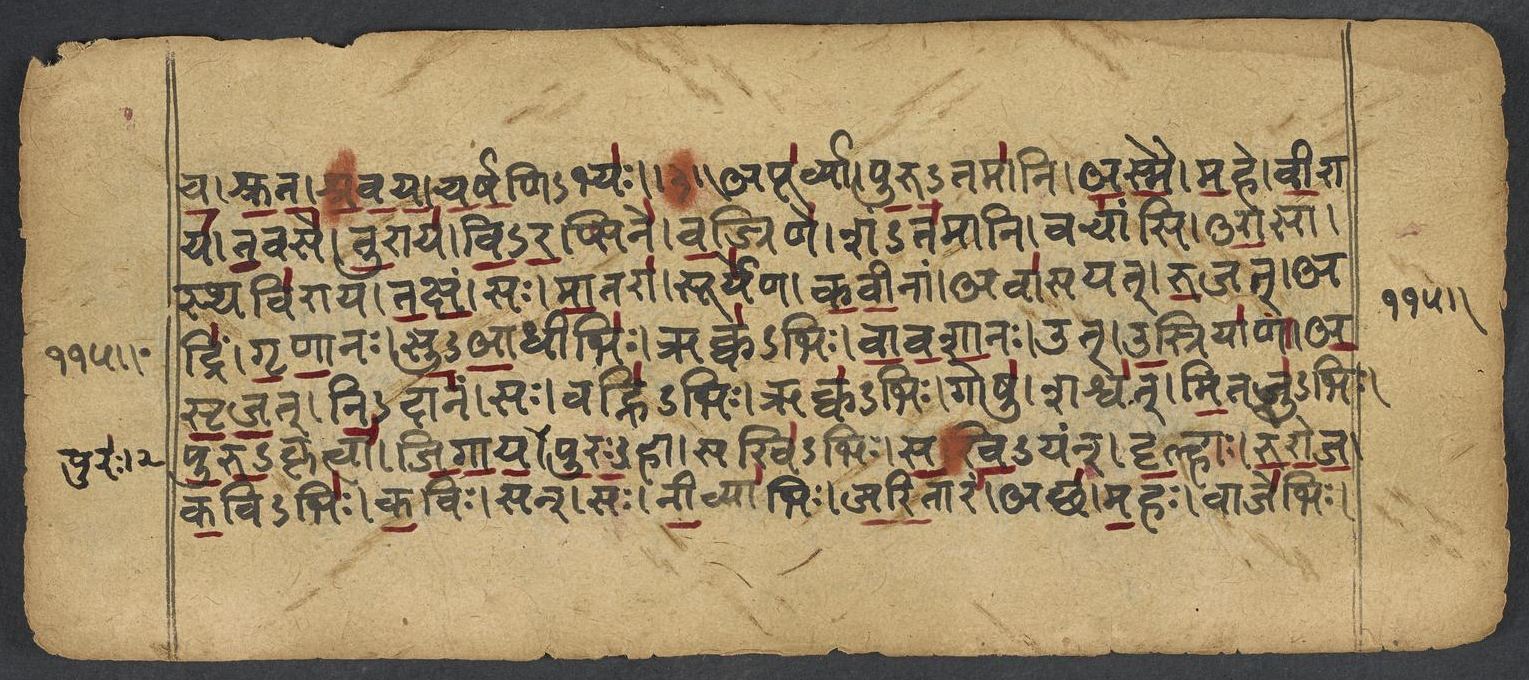
Where on the image
Penn Ms. Coll. 390 Item 41, fol. 442v (numbered 115v by the scribe) (OPenn image 443, upper leaf). Checked on the image: the Rigveda text on this page begins in RV 6.31.5 ‹ca śruta śravaya carṣaṇi-bhyaḥ›. The next page with Rigveda text, fol. 443r (numbered 116r by the scribe), begins in RV 6.32.4 ‹mahat-bhiḥ ca śuṣmaiḥ puru-vīrābhiḥ›. Verse 6.31.5 ends on this page; 6.31.5 begins on fol. 442r (numbered 115r by the scribe).
5sa sa̍tyasatvan maha̱te raṇā̍ya̱ ratha̱m ā ti̍ṣṭha tuvinṛmṇa bhī̱mam | yā̱hi pra̍pathi̱nn ava̱sopa̍ ma̱drik pra ca̍ śruta śrāvaya carṣa̱ṇibhya̍ḥ ||
Compare: Padapāṭha (word-by-word text written in the manuscript; Sansknet e-text via GRETIL)
5saḥ | satya-satvan | mahate | raṇāya | ratham | ā | tiṣṭha | tuvi-nṛmṇa | bhīmam | yāhi | pra-pathin | avasā | upa | madrik | pra | ca | śruta | śravaya | carṣaṇi-bhyaḥ
5As such, true Hero, for great joy of battle mount thy terrific car, O Brave and Manly. Come with thine help to me, thou distant Roamer, and, glorious God, spread among men my glory.
Notes
- Sanskrit: Aufrecht's edition (1877) with the Vedic accents, as entered by van Nooten and Holland (GRETIL).
- English: Ralph T. H. Griffith, The Hymns of the Rigveda (1889-1892; 2nd ed. 1896-1897), from the VedaWeb digital text; OCR slips in that text were corrected against the printed 2nd edition (data/sources/rigveda/griffith_errata.json).
- Padapāṭha (edition text): Sansknet e-text via GRETIL (CC BY-NC-SA 4.0).
Cite
Sources
- Source: Penn Ms. Coll. 390 Item 41 (undated (catalogued with Penn's 18th-19th c. Vedic manuscripts)), OPenn, Public Domain Mark + Aufrecht's accented text (GRETIL) + Griffith's English (VedaWeb) (holding institution)
- Critical edition: Aufrecht (1877), accented e-text via GRETIL
← previous · → next · v cycle view · l back to library