Rigveda 6.32: To Indra
Introduction
Rigveda 6.32 is a hymn of 5 verses addressed to Indra. It stands in book (maṇḍala) 6, the family book of Bharadvāja. The Rigveda is the oldest collection of Sanskrit hymns, composed in the second half of the second millennium BCE and handed down orally for many centuries before it was written down.
The manuscript shown is Penn Ms. Coll. 390 Item 41 (University of Pennsylvania), an undated paper manuscript of the padapāṭha (the word-by-word recitation text, in which every word is written separately and compounds are split) of the whole Ṛgveda in Devanāgarī, 884 leaves in fascicles, 7-9 lines to the page, accents in red; this hymn stands on fol. 442v-443r. Each section below gives the verses that end on one page; the page boundaries were read on the images (the opening words of every page), not counted out. Where the manuscript is a padapāṭha (the word-by-word recitation text), the section shows Aufrecht's continuous (saṃhitā) text first and, as the edition text, the padapāṭha of the same verses, which is the form written on the page.
How was this verified? (Provenance)
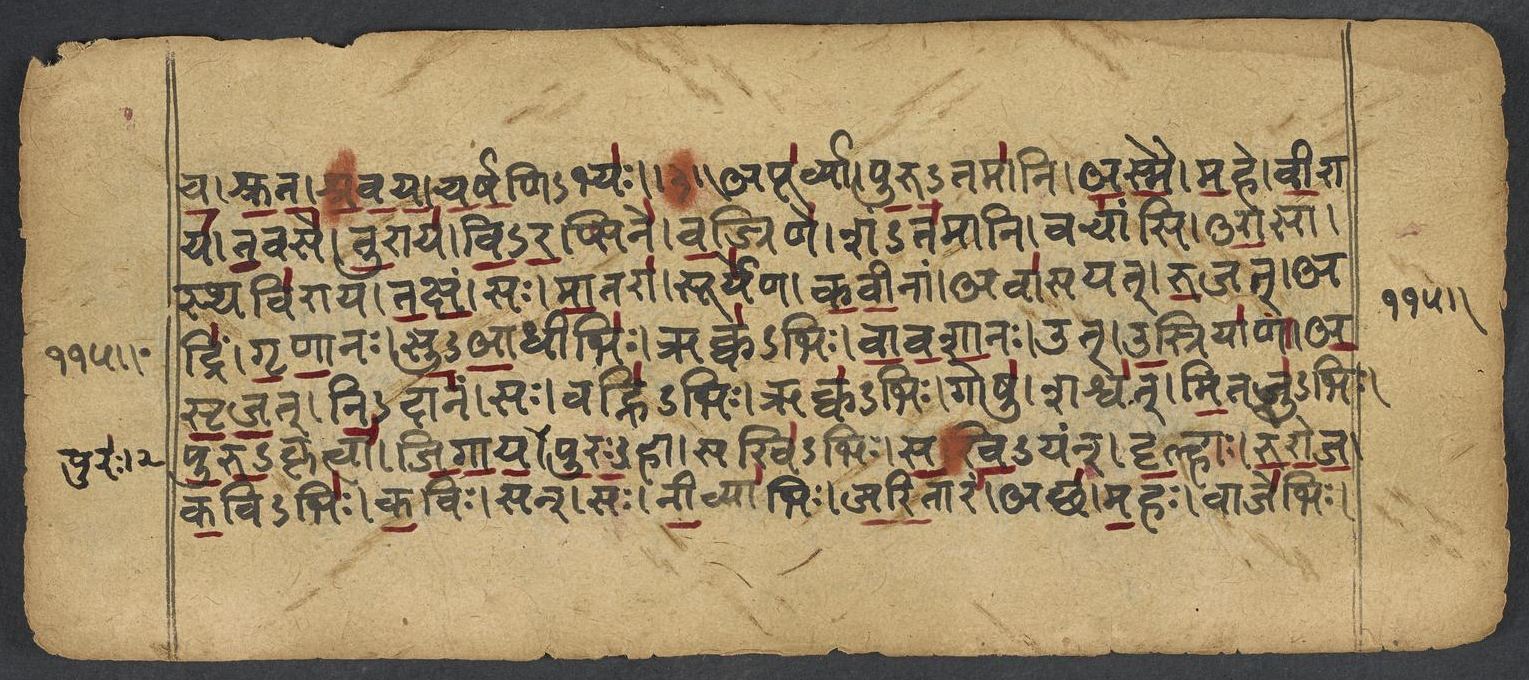
Where on the image
Penn Ms. Coll. 390 Item 41, fol. 442v (numbered 115v by the scribe) (OPenn image 443, upper leaf). Checked on the image: the Rigveda text on this page begins in RV 6.31.5 ‹ca śruta śravaya carṣaṇi-bhyaḥ›. The next page with Rigveda text, fol. 443r (numbered 116r by the scribe), begins in RV 6.32.4 ‹mahat-bhiḥ ca śuṣmaiḥ puru-vīrābhiḥ›. Verses 6.32.1-3 end on this page.
1apū̍rvyā puru̱tamā̍ny asmai ma̱he vī̱rāya̍ ta̱vase̍ tu̱rāya̍ | vi̱ra̱pśine̍ va̱jriṇe̱ śaṁta̍māni̱ vacā̍ṁsy ā̱sā sthavi̍rāya takṣam ||
2sa mā̱tarā̱ sūrye̍ṇā kavī̱nām avā̍sayad ru̱jad adri̍ṁ gṛṇā̱naḥ | svā̱dhībhi̱r ṛkva̍bhir vāvaśā̱na ud u̱sriyā̍ṇām asṛjan ni̱dāna̍m ||
3sa vahni̍bhi̱r ṛkva̍bhi̱r goṣu̱ śaśva̍n mi̱tajñu̍bhiḥ puru̱kṛtvā̍ jigāya | pura̍ḥ puro̱hā sakhi̍bhiḥ sakhī̱yan dṛ̱ḻhā ru̍roja ka̱vibhi̍ḥ ka̱viḥ san ||
Compare: Padapāṭha (word-by-word text written in the manuscript; Sansknet e-text via GRETIL)
1apūrvyā | puru-tamāni | asmai | mahe | vīrāya | tavase | turāya | virapśine | vajriṇe | śam-tamāni | vacāṃsi | āsā | sthavirāya | takṣam
2saḥ | mātarā | sūryeṇa | kavīnām | avāsayat | rujat | adrim | gṛṇānaḥ | su-ādhībhiḥ | ṛkva-bhiḥ | vāvaśānaḥ | ut | usriyāṇām | asṛjat | ni-dānam
3saḥ | vahni-bhiḥ | ṛkva-bhiḥ | goṣu | śaśvat | mitajñu-bhiḥ | puru-kṛtvā | jigāya | puraḥ | puraḥ-hā | sakhi-bhiḥ | sakhi-yan | dṛḷhā | ruroja | kavi-bhiḥ | kaviḥ | san
1I WITH my lips have fashioned for this Hero words never matched, most plentiful and auspicious, For him the Ancient, Great, Strong, Energetic, the very mighty Wielder of the Thunder.
2Amid the sages, with the Sun he brightened the Parents: glorified, he burst the mountain; And, roaring with the holy-thoughted singers, he loosed the bond that held the beams of Morning.
3Famed for great deeds, with priests who kneel and laud him, he still hath conquered in the frays for cattle, And broken down the forts, the Fort-destroyer, a Friend with friends, a Sage among the sages.
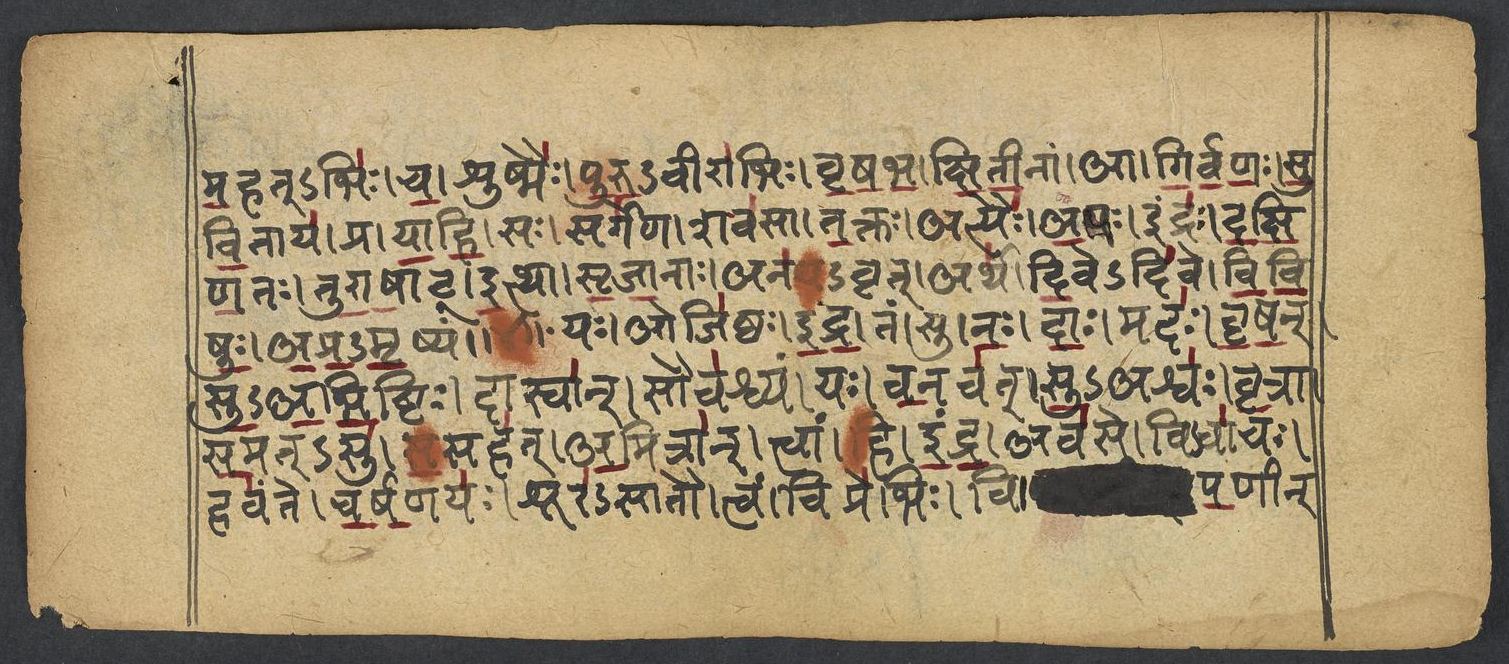
Where on the image
Penn Ms. Coll. 390 Item 41, fol. 443r (numbered 116r by the scribe) (OPenn image 443, lower leaf). Checked on the image: the Rigveda text on this page begins in RV 6.32.4 ‹mahat-bhiḥ ca śuṣmaiḥ puru-vīrābhiḥ›. The next page with Rigveda text, fol. 443v (numbered 116v by the scribe), begins in RV 6.33.2 ‹aśāyaḥ tvāūtaḥ it sanitā›. Verses 6.32.4-5 end on this page; 6.32.4 begins on fol. 442v (numbered 115v by the scribe).
4sa nī̱vyā̍bhir jari̱tāra̱m acchā̍ ma̱ho vāje̍bhir ma̱hadbhi̍ś ca̱ śuṣmai̍ḥ | pu̱ru̱vīrā̍bhir vṛṣabha kṣitī̱nām ā gi̍rvaṇaḥ suvi̱tāya̱ pra yā̍hi ||
5sa sarge̍ṇa̱ śava̍sā ta̱kto atyai̍r a̱pa indro̍ dakṣiṇa̱tas tu̍rā̱ṣāṭ | i̱tthā sṛ̍jā̱nā ana̍pāvṛ̱d artha̍ṁ di̱ve-di̍ve viviṣur apramṛ̱ṣyam ||
Compare: Padapāṭha (word-by-word text written in the manuscript; Sansknet e-text via GRETIL)
4saḥ | nīvyābhiḥ | jaritāram | accha | mahaḥ | vājebhiḥ | mahat-bhiḥ | ca | śuṣmaiḥ | puru-vīrābhiḥ | vṛṣabha | kṣitīnām | ā | girvaṇaḥ | suvitāya | pra | yāhi
5saḥ | sargeṇa | śavasā | taktaḥ | atyaiḥ | apaḥ | indraḥ | dakṣiṇataḥ | turāṣāṭ | itthā | sṛjānāḥ | anapa-vṛt | artham | dive--dive | viviṣuḥ | apra-mṛṣyam
4Come with thy girthed mares, with abundant vigour and plenteous strength to him who sings thy praises. Come hither, borne by mares with many heroes, Lover of song! Steer! for the people's welfare.
5Indra with rush and might, sped by his Coursers, hath swiftly won the waters from the southward. Thus set at liberty the rivers daily flow to their goal, incessant and exhaustless.
Notes
- Sanskrit: Aufrecht's edition (1877) with the Vedic accents, as entered by van Nooten and Holland (GRETIL).
- English: Ralph T. H. Griffith, The Hymns of the Rigveda (1889-1892; 2nd ed. 1896-1897), from the VedaWeb digital text; OCR slips in that text were corrected against the printed 2nd edition (data/sources/rigveda/griffith_errata.json).
- Padapāṭha (edition text): Sansknet e-text via GRETIL (CC BY-NC-SA 4.0).
Cite
Sources
- Source: Penn Ms. Coll. 390 Item 41 (undated (catalogued with Penn's 18th-19th c. Vedic manuscripts)), OPenn, Public Domain Mark + Aufrecht's accented text (GRETIL) + Griffith's English (VedaWeb) (holding institution)
- Critical edition: Aufrecht (1877), accented e-text via GRETIL
← previous · → next · v cycle view · l back to library