Rigveda 6.33: To Indra
Introduction
Rigveda 6.33 is a hymn of 5 verses addressed to Indra. It stands in book (maṇḍala) 6, the family book of Bharadvāja. The Rigveda is the oldest collection of Sanskrit hymns, composed in the second half of the second millennium BCE and handed down orally for many centuries before it was written down.
The manuscript shown is Penn Ms. Coll. 390 Item 41 (University of Pennsylvania), an undated paper manuscript of the padapāṭha (the word-by-word recitation text, in which every word is written separately and compounds are split) of the whole Ṛgveda in Devanāgarī, 884 leaves in fascicles, 7-9 lines to the page, accents in red; this hymn stands on fol. 443r-443v. Each section below gives the verses that end on one page; the page boundaries were read on the images (the opening words of every page), not counted out. Where the manuscript is a padapāṭha (the word-by-word recitation text), the section shows Aufrecht's continuous (saṃhitā) text first and, as the edition text, the padapāṭha of the same verses, which is the form written on the page.
How was this verified? (Provenance)
Where on the image
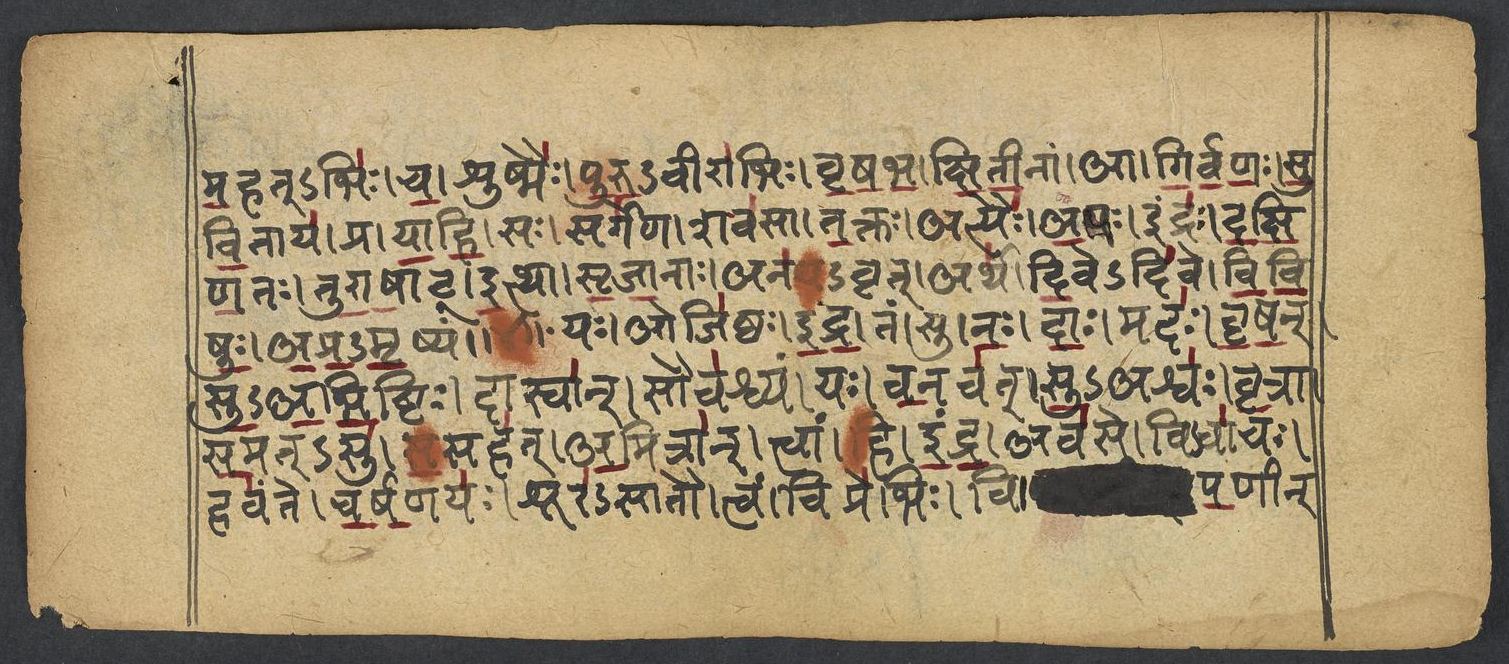
Penn Ms. Coll. 390 Item 41, fol. 443r (numbered 116r by the scribe) (OPenn image 443, lower leaf). Checked on the image: the Rigveda text on this page begins in RV 6.32.4 ‹mahat-bhiḥ ca śuṣmaiḥ puru-vīrābhiḥ›. The next page with Rigveda text, fol. 443v (numbered 116v by the scribe), begins in RV 6.33.2 ‹aśāyaḥ tvāūtaḥ it sanitā›. Verse 6.33.1 ends on this page.
1ya oji̍ṣṭha indra̱ taṁ su no̍ dā̱ mado̍ vṛṣan svabhi̱ṣṭir dāsvā̍n | sauva̍śvya̱ṁ yo va̱nava̱t svaśvo̍ vṛ̱trā sa̱matsu̍ sā̱saha̍d a̱mitrā̍n ||
Compare: Padapāṭha (word-by-word text written in the manuscript; Sansknet e-text via GRETIL)
1yaḥ | ojiṣṭhaḥ | indra | tam | su | naḥ | dāḥ | madaḥ | vṛṣan | su-abhiṣṭiḥ | dāsvān | sauvaśvyam | yaḥ | vana-vat | su-aśvaḥ | vṛtrā | samat-su | sasahat | amitrān
1GIVE us the rapture that is mightiest, Indra, prompt to bestow and swift to aid, O Hero, That wins with brave steeds where brave steeds encounter, and quells the Vr̥itras and the foes in battle.
Where on the image
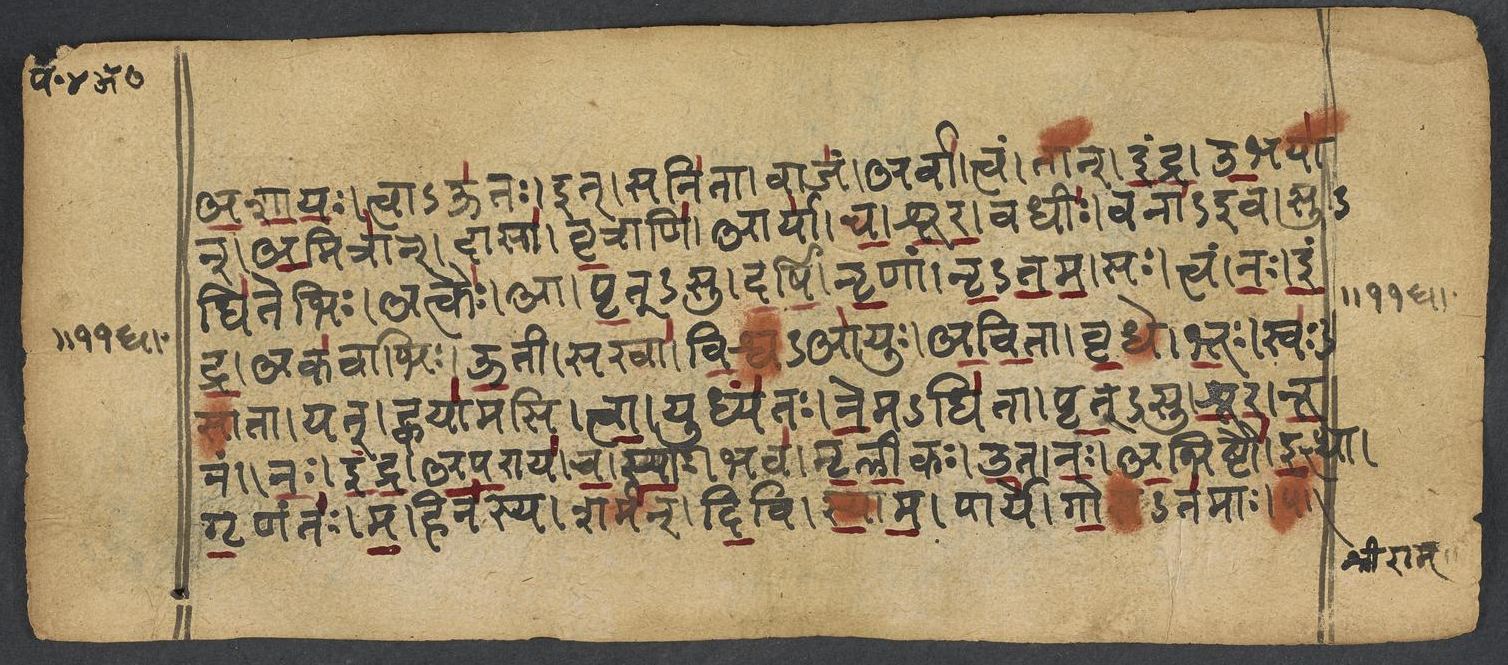
Penn Ms. Coll. 390 Item 41, fol. 443v (numbered 116v by the scribe) (OPenn image 444, upper leaf). Checked on the image: the Rigveda text on this page begins in RV 6.33.2 ‹aśāyaḥ tvāūtaḥ it sanitā›. The next page with Rigveda text, fol. 444r (numbered 117r by the scribe), begins in RV 6.34.1 ‹sam ca tve iti›. Verses 6.33.2-5 end on this page; 6.33.2 begins on fol. 443r (numbered 116r by the scribe).
2tvāṁ hī̱3̱̍ndrāva̍se̱ vivā̍co̱ hava̍nte carṣa̱ṇaya̱ḥ śūra̍sātau | tvaṁ vipre̍bhi̱r vi pa̱ṇīm̐r a̍śāya̱s tvota̱ it sani̍tā̱ vāja̱m arvā̍ ||
3tvaṁ tām̐ i̍ndro̱bhayā̍m̐ a̱mitrā̱n dāsā̍ vṛ̱trāṇy āryā̍ ca śūra | vadhī̱r vane̍va̱ sudhi̍tebhi̱r atkai̱r ā pṛ̱tsu da̍rṣi nṛ̱ṇāṁ nṛ̍tama ||
4sa tvaṁ na̍ i̱ndrāka̍vābhir ū̱tī sakhā̍ vi̱śvāyu̍r avi̱tā vṛ̱dhe bhū̍ḥ | sva̍rṣātā̱ yad dhvayā̍masi tvā̱ yudhya̍nto ne̱madhi̍tā pṛ̱tsu śū̍ra ||
5nū̱naṁ na̍ indrāpa̱rāya̍ ca syā̱ bhavā̍ mṛḻī̱ka u̱ta no̍ a̱bhiṣṭau̍ | i̱tthā gṛ̱ṇanto̍ ma̱hina̍sya̱ śarma̍n di̱vi ṣyā̍ma̱ pārye̍ go̱ṣata̍māḥ ||
Compare: Padapāṭha (word-by-word text written in the manuscript; Sansknet e-text via GRETIL)
2tvām | hi | indra | avase | vivācaḥ | havante | carṣaṇayaḥ | śūra-sātau | tvam | viprebhiḥ | vi | paṇīn | aśāyaḥ | tvāūtaḥ | it | sanitā | vājam | arvā
3tvam | tān | indra | ubhayān | amitrān | dāsā | vṛtrāṇi | āryā | ca | śūra | vadhīḥ | vanāiva | su-dhitebhiḥ | atkaiḥ | ā | pṛt-su | darṣi | nṛṇām | nṛ-tama
4saḥ | tvam | naḥ | indra | akavābhiḥ | ūtī | sakhā | viśva-āyuḥ | avitā | vṛdhe | bhūḥ | svaḥ-sātā | yat | hvayāmasi | tvā | yudhyantaḥ | nema-dhitā | pṛt-su | śūra
5nūnam | naḥ | indra | aparāya | ca | syāḥ | bhava | mṛḷīkaḥ | uta | naḥ | abhiṣṭau | itthā | gṛṇantaḥ | mahinasya | śarman | divi | syāma | pārye | gosa-tamāḥ
2For with loud voice the tribes invoke thee, Indra, to aid them in the battlefield of heroes. Thou, with the singers, hast pierced through the Paṇis: the charger whom thou aidest wins the booty.
3Both races, Indra, of opposing foemen, O Hero, both the Ârya and the Dâsa, Hast thou struck down like woods with well-shot lightnings: thou rentest them in fight, most manly Chieftain!
4Indra, befriend us with no scanty succour, prosper and aid us, Loved of all that liveth, When, fighting for the sunlight, we invoke thee, O Hero, in the fray, in war's division.
5Be ours, O Indra, now and for the future, be graciously inclined and near to help us. Thus may we, singing, sheltered by the Mighty, win many cattle on the day of trial.
Notes
- Sanskrit: Aufrecht's edition (1877) with the Vedic accents, as entered by van Nooten and Holland (GRETIL).
- English: Ralph T. H. Griffith, The Hymns of the Rigveda (1889-1892; 2nd ed. 1896-1897), from the VedaWeb digital text; OCR slips in that text were corrected against the printed 2nd edition (data/sources/rigveda/griffith_errata.json).
- Padapāṭha (edition text): Sansknet e-text via GRETIL (CC BY-NC-SA 4.0).
Cite
Sources
- Source: Penn Ms. Coll. 390 Item 41 (undated (catalogued with Penn's 18th-19th c. Vedic manuscripts)), OPenn, Public Domain Mark + Aufrecht's accented text (GRETIL) + Griffith's English (VedaWeb) (holding institution)
- Critical edition: Aufrecht (1877), accented e-text via GRETIL
← previous · → next · v cycle view · l back to library