Rigveda 6.36: To Indra
Introduction
Rigveda 6.36 is a hymn of 5 verses addressed to Indra. It stands in book (maṇḍala) 6, the family book of Bharadvāja. The Rigveda is the oldest collection of Sanskrit hymns, composed in the second half of the second millennium BCE and handed down orally for many centuries before it was written down.
The manuscript shown is Penn Ms. Coll. 390 Item 41 (University of Pennsylvania), an undated paper manuscript of the padapāṭha (the word-by-word recitation text, in which every word is written separately and compounds are split) of the whole Ṛgveda in Devanāgarī, 884 leaves in fascicles, 7-9 lines to the page, accents in red; this hymn stands on fol. 445r-445v. Each section below gives the verses that end on one page; the page boundaries were read on the images (the opening words of every page), not counted out. Where the manuscript is a padapāṭha (the word-by-word recitation text), the section shows Aufrecht's continuous (saṃhitā) text first and, as the edition text, the padapāṭha of the same verses, which is the form written on the page.
How was this verified? (Provenance)
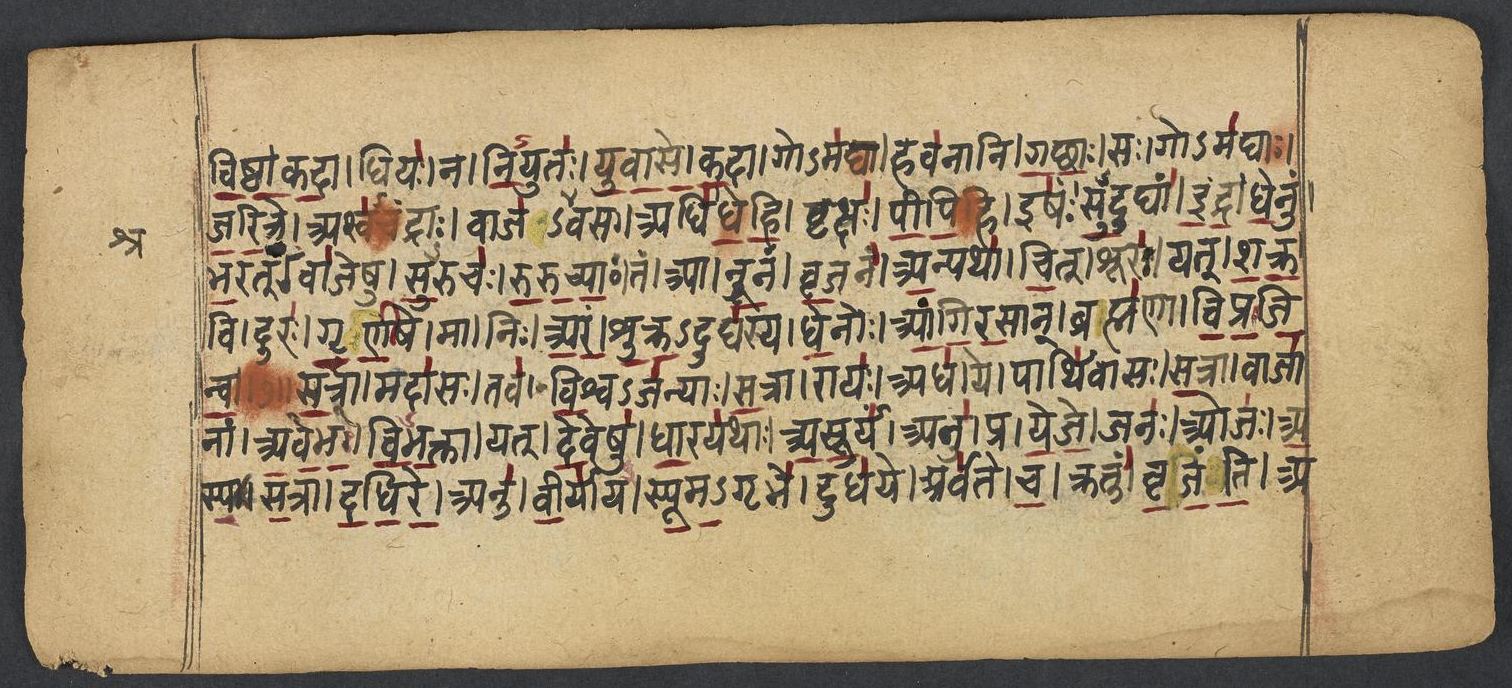
Where on the image
Penn Ms. Coll. 390 Item 41, fol. 445r (numbered 118r by the scribe) (OPenn image 445, lower leaf). Checked on the image: the Rigveda text on this page begins in RV 6.35.3 ‹-śaviṣṭha kadā dhiyaḥ na›. The next page with Rigveda text, fol. 445v (numbered 118v by the scribe), begins in RV 6.36.2 ‹-api vṛtra-hatye›. Verse 6.36.1 ends on this page.
1sa̱trā madā̍sa̱s tava̍ vi̱śvaja̍nyāḥ sa̱trā rāyo 'dha̱ ye pārthi̍vāsaḥ | sa̱trā vājā̍nām abhavo vibha̱ktā yad de̱veṣu̍ dhā̱raya̍thā asu̱rya̍m ||
Compare: Padapāṭha (word-by-word text written in the manuscript; Sansknet e-text via GRETIL)
1satrā | madāsaḥ | tava | viśva-janyāḥ | satrā | rāyaḥ | adha | ye | pārthivāsaḥ | satrā | vājānām | abhavaḥ | vi-bhaktā | yat | deveṣu | dhārayathāḥ | asuryam
1THY raptures ever were for all men's profit: so evermore have been thine earthly riches. Thou still hast been the dealer-forth of vigour, since among Gods thou hast had power and Godhead.
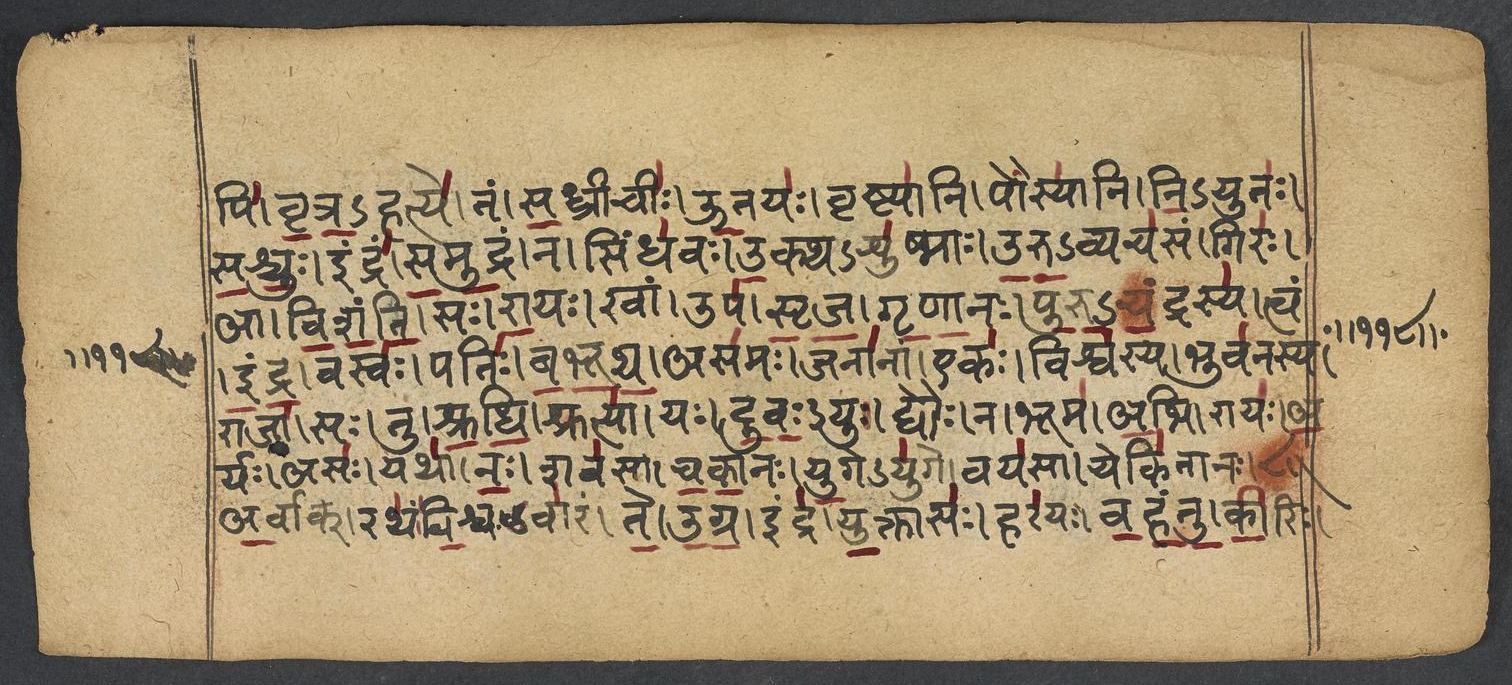
Where on the image
Penn Ms. Coll. 390 Item 41, fol. 445v (numbered 118v by the scribe) (OPenn image 446, upper leaf). Checked on the image: the Rigveda text on this page begins in RV 6.36.2 ‹-api vṛtra-hatye›. The next page with Rigveda text, fol. 446r (numbered 119r by the scribe), begins in RV 6.37.1 ‹cit hi tvā havate›. Verses 6.36.2-5 end on this page; 6.36.2 begins on fol. 445r (numbered 118r by the scribe).
2anu̱ pra ye̍je̱ jana̱ ojo̍ asya sa̱trā da̍dhire̱ anu̍ vī̱ryā̍ya | syū̱ma̱gṛbhe̱ dudha̱ye 'rva̍te ca̱ kratu̍ṁ vṛñja̱nty api̍ vṛtra̱hatye̍ ||
3taṁ sa̱dhrīcī̍r ū̱tayo̱ vṛṣṇyā̍ni̱ pauṁsyā̍ni ni̱yuta̍ḥ saścu̱r indra̍m | sa̱mu̱draṁ na sindha̍va u̱kthaśu̍ṣmā uru̱vyaca̍sa̱ṁ gira̱ ā vi̍śanti ||
4sa rā̱yas khām upa̍ sṛjā gṛṇā̱naḥ pu̍ruśca̱ndrasya̱ tvam i̍ndra̱ vasva̍ḥ | pati̍r babhū̱thāsa̍mo̱ janā̍nā̱m eko̱ viśva̍sya̱ bhuva̍nasya̱ rājā̍ ||
5sa tu śru̍dhi̱ śrutyā̱ yo du̍vo̱yur dyaur na bhūmā̱bhi rāyo̍ a̱ryaḥ | aso̱ yathā̍ na̱ḥ śava̍sā cakā̱no yu̱ge-yu̍ge̱ vaya̍sā̱ ceki̍tānaḥ ||
Compare: Padapāṭha (word-by-word text written in the manuscript; Sansknet e-text via GRETIL)
2anu | pra | yeje | janaḥ | ojaḥ | asya | satrā | dadhire | anu | vīryāya | syūma-gṛbhe | dudhaye | arvate | ca | kratum | vṛñjanti | api | vṛtra-hatye
3tam | sadhrīcīḥ | ūtayaḥ | vṛṣṇyāni | paiṃsyāni | ni-yutaḥ | saścuḥ | indram | samudram | na | sindhavaḥ | uktha-śuṣmāḥ | uru-vyacasam | giraḥ | ā | viśanti
4saḥ | rāyaḥ | khām | upa | sṛja | gṛṇānaḥ | puru-candrasya | tvam | indra | vasvaḥ | patiḥ | babhūtha | asamaḥ | janānām | ekaḥ | viśvasya | bhuvanasya | rājā
5saḥ | tu | śrudhi | śrutyā | yaḥ | duvaḥ-yuḥ | dyauḥ | na | bhūma | abhi | rāyaḥ | aryaḥ | asaḥ | yathā | naḥ | śavasā | cakānaḥ | yuge--yuge | vayasā | cekitānaḥ
2Men have obtained his strength by sacrificing, and ever urged him, on to hero valour. For the rein-seizing, the impetuous Charger they furnished power even for Vr̥itra's slaughter.
3Associate with him, as teams of horses, help, manly might, and vigour follow Indra. As rivers reach the sea, so, strong with praises, our holy songs reach him the Comprehensive.
4Lauded by us, let flow the spring, O Indra, of excellent and brightly-shining riches. For thou art Lord of men, without an equal: of all the world thou art the only Sovran.
5Hear what thou mayst hear, thou who, fain for worship, as heaven girds earth, guardest thy servant's treasure; Tlat thou mayst be our own, joying in power, famed through thy might in every generation.
Notes
- Sanskrit: Aufrecht's edition (1877) with the Vedic accents, as entered by van Nooten and Holland (GRETIL).
- English: Ralph T. H. Griffith, The Hymns of the Rigveda (1889-1892; 2nd ed. 1896-1897), from the VedaWeb digital text; OCR slips in that text were corrected against the printed 2nd edition (data/sources/rigveda/griffith_errata.json).
- Padapāṭha (edition text): Sansknet e-text via GRETIL (CC BY-NC-SA 4.0).
Cite
Sources
- Source: Penn Ms. Coll. 390 Item 41 (undated (catalogued with Penn's 18th-19th c. Vedic manuscripts)), OPenn, Public Domain Mark + Aufrecht's accented text (GRETIL) + Griffith's English (VedaWeb) (holding institution)
- Critical edition: Aufrecht (1877), accented e-text via GRETIL
← previous · → next · v cycle view · l back to library