Rigveda 6.37: To Indra
Introduction
Rigveda 6.37 is a hymn of 5 verses addressed to Indra. It stands in book (maṇḍala) 6, the family book of Bharadvāja. The Rigveda is the oldest collection of Sanskrit hymns, composed in the second half of the second millennium BCE and handed down orally for many centuries before it was written down.
The manuscript shown is Penn Ms. Coll. 390 Item 41 (University of Pennsylvania), an undated paper manuscript of the padapāṭha (the word-by-word recitation text, in which every word is written separately and compounds are split) of the whole Ṛgveda in Devanāgarī, 884 leaves in fascicles, 7-9 lines to the page, accents in red; this hymn stands on fol. 445v-446v. Each section below gives the verses that end on one page; the page boundaries were read on the images (the opening words of every page), not counted out. Where the manuscript is a padapāṭha (the word-by-word recitation text), the section shows Aufrecht's continuous (saṃhitā) text first and, as the edition text, the padapāṭha of the same verses, which is the form written on the page.
How was this verified? (Provenance)
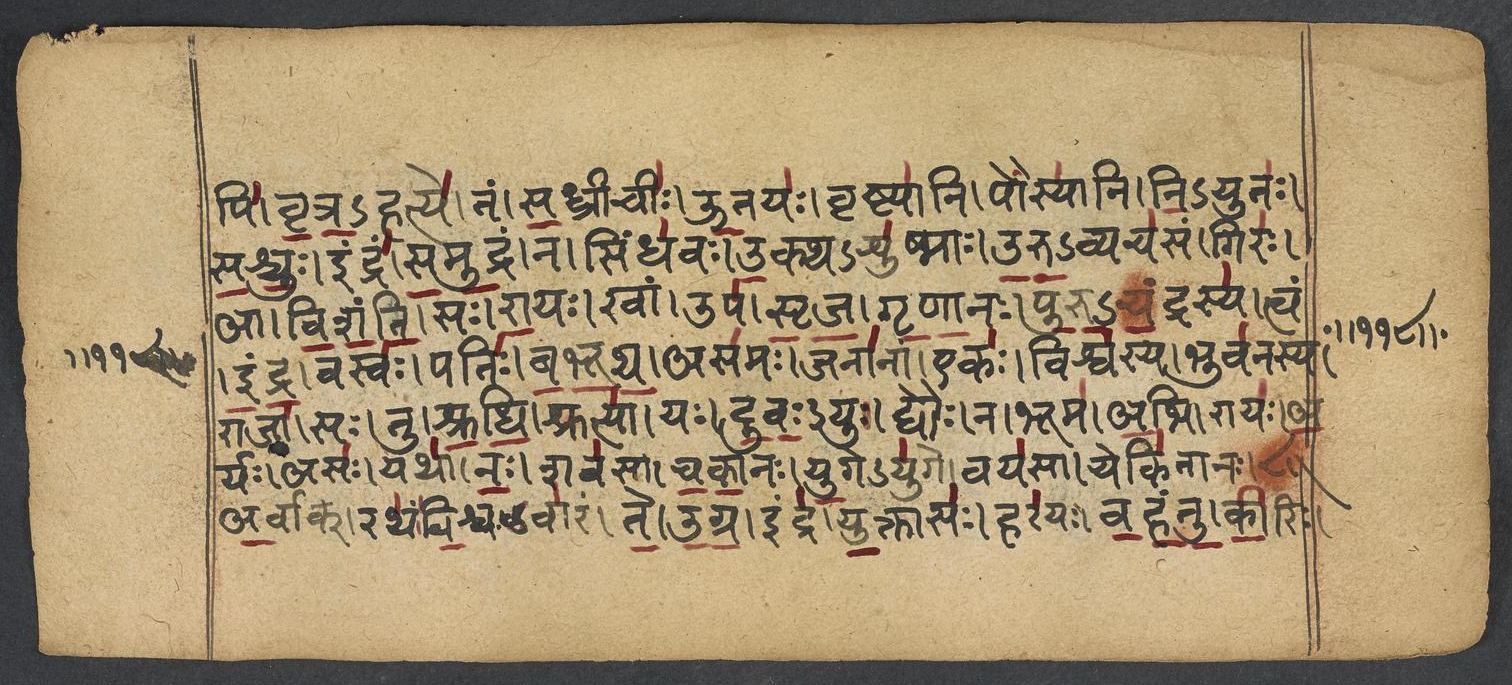
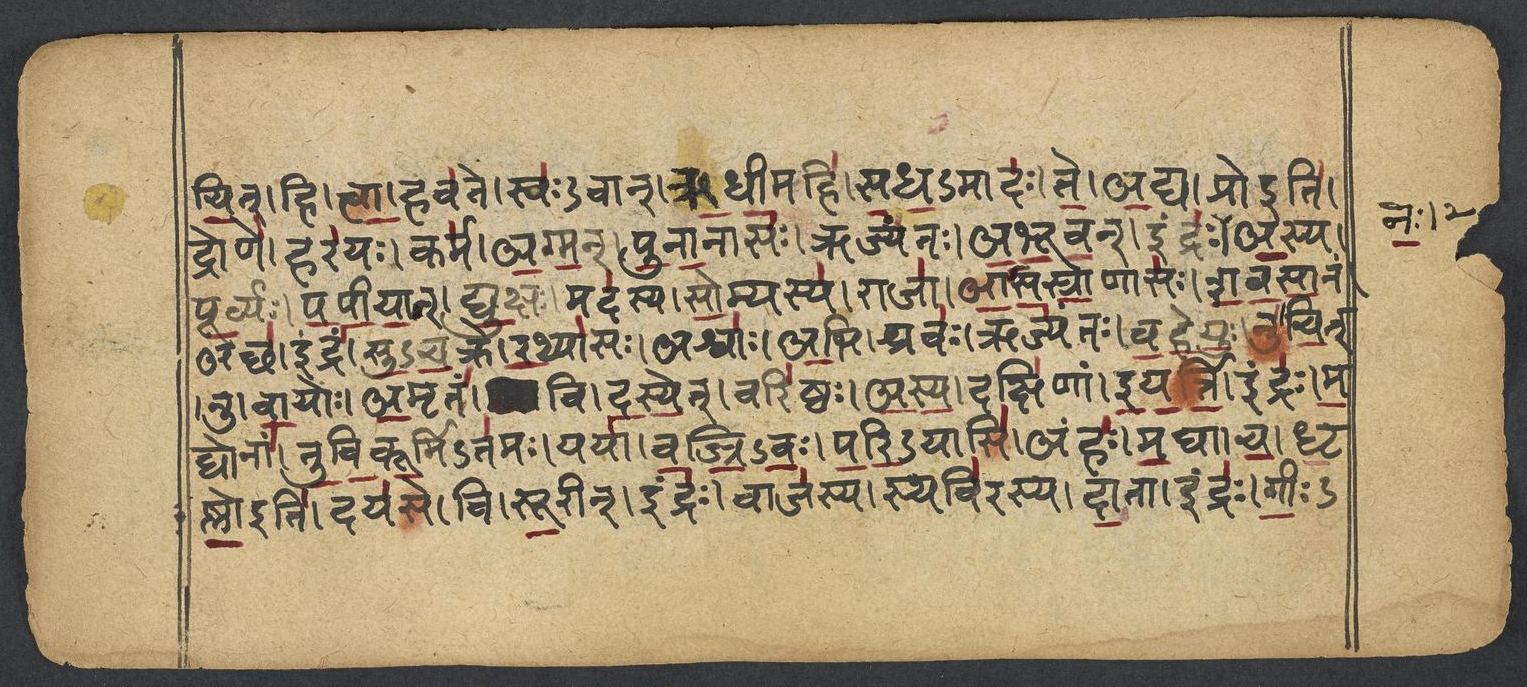
Where on the image
Penn Ms. Coll. 390 Item 41, fol. 446r (numbered 119r by the scribe) (OPenn image 446, lower leaf). Checked on the image: the Rigveda text on this page begins in RV 6.37.1 ‹cit hi tvā havate›. The next page with Rigveda text, fol. 446v (numbered 119v by the scribe), begins in RV 6.37.5 ‹-gīḥ-bhiḥ vardhatām vṛddha-mahāḥ indraḥ›. Verses 6.37.1-4 end on this page; 6.37.1 begins on fol. 445v (numbered 118v by the scribe).
1a̱rvāg ratha̍ṁ vi̱śvavā̍raṁ ta u̱grendra̍ yu̱ktāso̱ hara̍yo vahantu | kī̱riś ci̱d dhi tvā̱ hava̍te̱ sva̍rvān ṛdhī̱mahi̍ sadha̱māda̍s te a̱dya ||
2pro droṇe̱ hara̍ya̱ḥ karmā̍gman punā̱nāsa̱ ṛjya̍nto abhūvan | indro̍ no a̱sya pū̱rvyaḥ pa̍pīyād dyu̱kṣo mada̍sya so̱myasya̱ rājā̍ ||
3ā̱sa̱srā̱ṇāsa̍ḥ śavasā̱nam acchendra̍ṁ suca̱kre ra̱thyā̍so̱ aśvā̍ḥ | a̱bhi śrava̱ ṛjya̍nto vaheyu̱r nū ci̱n nu vā̱yor a̱mṛta̱ṁ vi da̍syet ||
4vari̍ṣṭho asya̱ dakṣi̍ṇām iya̱rtīndro̍ ma̱ghonā̍ṁ tuvikū̱rmita̍maḥ | yayā̍ vajrivaḥ pari̱yāsy aṁho̍ ma̱ghā ca̍ dhṛṣṇo̱ daya̍se̱ vi sū̱rīn ||
Compare: Padapāṭha (word-by-word text written in the manuscript; Sansknet e-text via GRETIL)
1arvāk | ratham | viśva-vāram | te | ugra | indra | yuktāsaḥ | harayaḥ | vahantu | kīriḥ | cit | hi | tvā | havate | svaḥ-vān | ṛdhīmahi | sadha-mādaḥ | te | adya
2pro iti | droṇe | harayaḥ | karma | agman | punānāsaḥ | ṛjyantaḥ | abhūvan | indraḥ | naḥ | asya | pūrvyaḥ | pāpīyāt | dyukṣaḥ | madasya | somyasya | rājā
3āsasrāṇāsaḥ | śavasānam | accha | indram | su-cakre | rathyāsaḥ | aśvāḥ | abhi | śravaḥ | ṛjyantaḥ | vaheyuḥ | nu | cit | nu | vāyoḥ | amṛtam | vi | dasyet
4variṣṭhaḥ | asya | dakṣiṇām | iyarti | indraḥ | maghonām | tuvikūrmi-tamaḥ | yayā | vajri-vaḥ | pari-yāsi | aṃhaḥ | maghā | ca | dhṛṣṇo iti | dayase | vi | sūrīn
1LET thy Bay Horses, yoked, O mighty Indra, bring thy car hither fraught with every blessing. For thee, the Heavenly, e'en the poor invoketh: may we this day, thy feast-companions, prosper.
2Forth to the vat the brown drops flow for service, and purified proceed directly forward. May Indra drink of this, our guest aforetime, Celestial King of the strong draught of Soma.
3Bringing us hitherward all-potent Indra on well-wheeled chariot, may the Steeds who bear him Convey him on the road direct to glory, and ne'er may Vâyu's Amrit cease and fail him.
4Supreme, he stirs this man to give the guerdon,– Indra, most efficacious of the princes,– Wherewith, O Thunderer, thou removest sorrow, and, Bold One! partest wealth among the nobles.
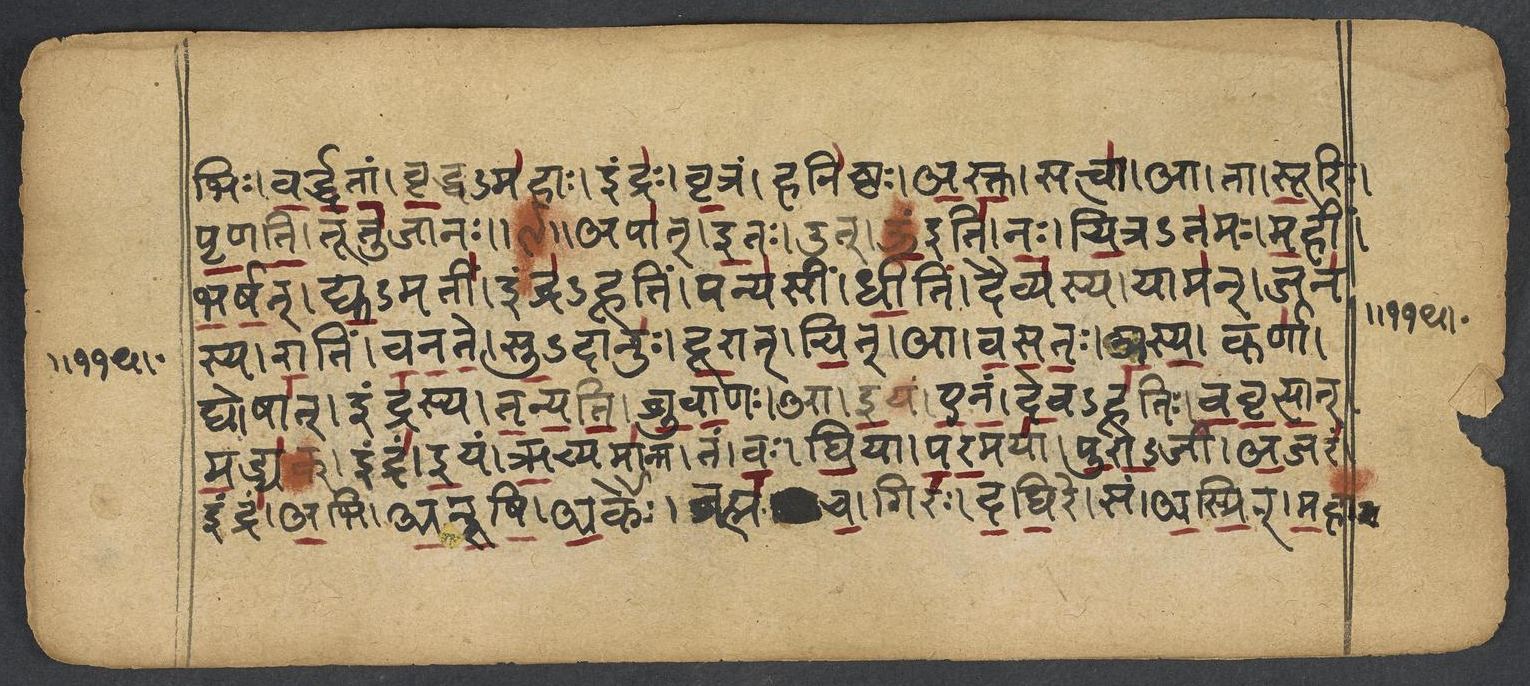
Where on the image
Penn Ms. Coll. 390 Item 41, fol. 446v (numbered 119v by the scribe) (OPenn image 447, upper leaf). Checked on the image: the Rigveda text on this page begins in RV 6.37.5 ‹-gīḥ-bhiḥ vardhatām vṛddha-mahāḥ indraḥ›. The next page with Rigveda text, fol. 447r (numbered 120r by the scribe), begins in RV 6.38.3 ‹-mahān ca stomaḥ adhi›. Verse 6.37.5 ends on this page; 6.37.5 begins on fol. 446r (numbered 119r by the scribe).
5indro̱ vāja̍sya̱ sthavi̍rasya dā̱tendro̍ gī̱rbhir va̍rdhatāṁ vṛ̱ddhama̍hāḥ | indro̍ vṛ̱traṁ hani̍ṣṭho astu̱ satvā tā sū̱riḥ pṛ̍ṇati̱ tūtu̍jānaḥ ||
Compare: Padapāṭha (word-by-word text written in the manuscript; Sansknet e-text via GRETIL)
5indraḥ | vājasya | sthavirasya | dātā | indraḥ | gīḥ-bhiḥ | vardhatām | vṛddha-mahāḥ | indraḥ | vṛtram | haniṣṭhaḥ | astu | satvā | ā | tā | sūriḥ | pṛṇati | tūtujānaḥ
5Indra is hewho gives enduring vigour: may our songs magnify the God Most Mighty. Best Vr̥itra-slayer be the Hero Indra these things he gives as Prince, with strong endeavour.
Notes
- Sanskrit: Aufrecht's edition (1877) with the Vedic accents, as entered by van Nooten and Holland (GRETIL).
- English: Ralph T. H. Griffith, The Hymns of the Rigveda (1889-1892; 2nd ed. 1896-1897), from the VedaWeb digital text; OCR slips in that text were corrected against the printed 2nd edition (data/sources/rigveda/griffith_errata.json).
- Padapāṭha (edition text): Sansknet e-text via GRETIL (CC BY-NC-SA 4.0).
Cite
Sources
- Source: Penn Ms. Coll. 390 Item 41 (undated (catalogued with Penn's 18th-19th c. Vedic manuscripts)), OPenn, Public Domain Mark + Aufrecht's accented text (GRETIL) + Griffith's English (VedaWeb) (holding institution)
- Critical edition: Aufrecht (1877), accented e-text via GRETIL
← previous · → next · v cycle view · l back to library