Rigveda 6.38: To Indra
Introduction
Rigveda 6.38 is a hymn of 5 verses addressed to Indra. It stands in book (maṇḍala) 6, the family book of Bharadvāja. The Rigveda is the oldest collection of Sanskrit hymns, composed in the second half of the second millennium BCE and handed down orally for many centuries before it was written down.
The manuscript shown is Penn Ms. Coll. 390 Item 41 (University of Pennsylvania), an undated paper manuscript of the padapāṭha (the word-by-word recitation text, in which every word is written separately and compounds are split) of the whole Ṛgveda in Devanāgarī, 884 leaves in fascicles, 7-9 lines to the page, accents in red; this hymn stands on fol. 446v-447r. Each section below gives the verses that end on one page; the page boundaries were read on the images (the opening words of every page), not counted out. Where the manuscript is a padapāṭha (the word-by-word recitation text), the section shows Aufrecht's continuous (saṃhitā) text first and, as the edition text, the padapāṭha of the same verses, which is the form written on the page.
How was this verified? (Provenance)
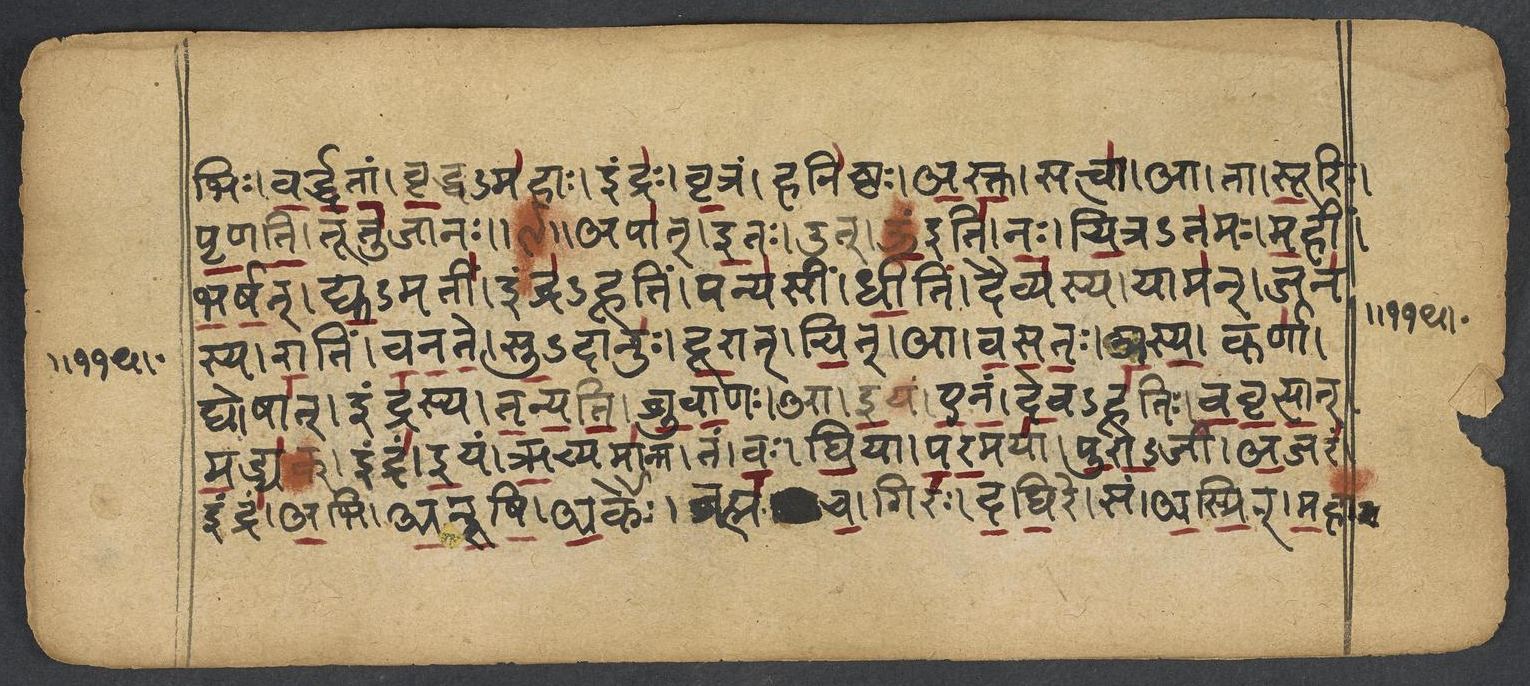
Where on the image
Penn Ms. Coll. 390 Item 41, fol. 446v (numbered 119v by the scribe) (OPenn image 447, upper leaf). Checked on the image: the Rigveda text on this page begins in RV 6.37.5 ‹-gīḥ-bhiḥ vardhatām vṛddha-mahāḥ indraḥ›. The next page with Rigveda text, fol. 447r (numbered 120r by the scribe), begins in RV 6.38.3 ‹-mahān ca stomaḥ adhi›. Verses 6.38.1-2 end on this page.
1apā̍d i̱ta ud u̍ naś ci̱trata̍mo ma̱hīm bha̍rṣad dyu̱matī̱m indra̍hūtim | panya̍sīṁ dhī̱tiṁ daivya̍sya̱ yāma̱ñ jana̍sya rā̱tiṁ va̍nate su̱dānu̍ḥ ||
2dū̱rāc ci̱d ā va̍sato asya̱ karṇā̱ ghoṣā̱d indra̍sya tanyati bruvā̱ṇaḥ | eyam e̍naṁ de̱vahū̍tir vavṛtyān ma̱drya1̱̍g indra̍m i̱yam ṛ̱cyamā̍nā ||
Compare: Padapāṭha (word-by-word text written in the manuscript; Sansknet e-text via GRETIL)
1apāt | itaḥ | ut | oṃ iti | naḥ | citra-tamaḥ | mahīm | bharṣat | dyu-matīm | indra-hūtim | panyasīm | dhītim | daivyasya | yāman | janasya | rātim | vanate | su-dānuḥ
2dūrāt | cit | ā | vasataḥ | asya | karṇā | ghoṣāt | indrasya | tanyati | bruvāṇaḥ | ā | iyam | enam | deva-hūtiḥ | vavṛtyāt | madryak | indram | iyam | ṛcyamānā
1HE hath drunk hence, Most Marvellous, and carried away our great and splendid call on Indra. The Bounteous, when we serve the Gods, accepteth song yet more famous and the gifts we bring him.
2The speaker filleth with a cry to Indra his ears who cometh nigh e'en from a distance. May this my call bring Indra to my presence, this call to Gods composed in sacred verses.
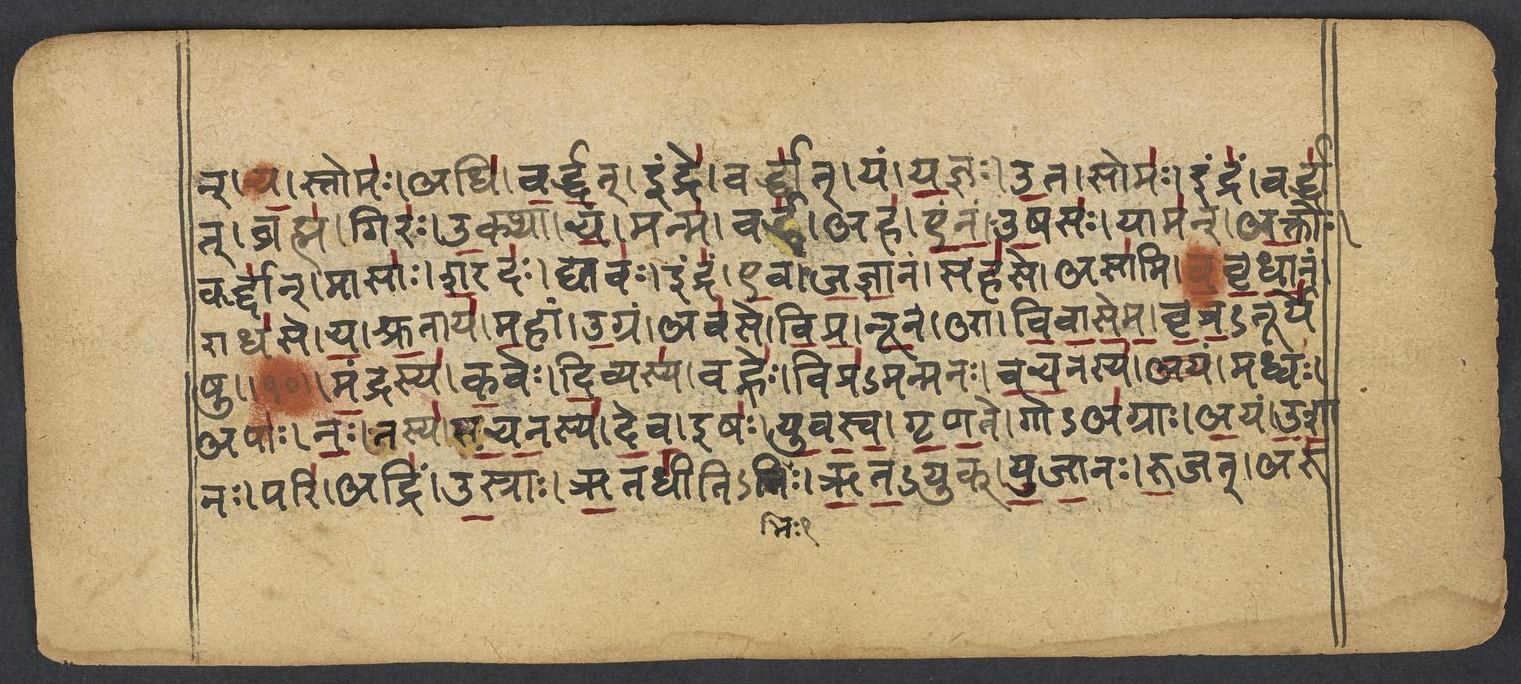
Where on the image
Penn Ms. Coll. 390 Item 41, fol. 447r (numbered 120r by the scribe) (OPenn image 447, lower leaf). Checked on the image: the Rigveda text on this page begins in RV 6.38.3 ‹-mahān ca stomaḥ adhi›. The next page with Rigveda text, fol. 447v (numbered 120v by the scribe), begins in RV 6.39.2 ‹-arugṇam vi valasya sānum›. Verses 6.38.3-5 end on this page; 6.38.3 begins on fol. 446v (numbered 119v by the scribe).
3taṁ vo̍ dhi̱yā pa̍ra̱mayā̍ purā̱jām a̱jara̱m indra̍m a̱bhy a̍nūṣy a̱rkaiḥ | brahmā̍ ca̱ giro̍ dadhi̱re sam a̍smin ma̱hām̐ś ca̱ stomo̱ adhi̍ vardha̱d indre̍ ||
4vardhā̱d yaṁ ya̱jña u̱ta soma̱ indra̱ṁ vardhā̱d brahma̱ gira̍ u̱kthā ca̱ manma̍ | vardhāhai̍nam u̱ṣaso̱ yāma̍nn a̱ktor vardhā̱n māsā̍ḥ śa̱rado̱ dyāva̱ indra̍m ||
5e̱vā ja̍jñā̱naṁ saha̍se̱ asā̍mi vāvṛdhā̱naṁ rādha̍se ca śru̱tāya̍ | ma̱hām u̱gram ava̍se vipra nū̱nam ā vi̍vāsema vṛtra̱tūrye̍ṣu ||
Compare: Padapāṭha (word-by-word text written in the manuscript; Sansknet e-text via GRETIL)
3tam | vaḥ | dhiyā | paramayā | purājām | ajaram | indram | abhi | anūṣi | arkaiḥ | brahma | ca | giraḥ | dadhire | sam | asmin | mahān | ca | stomaḥ | adhi | vardhat | indre
4vardhāt | yam | yajñaḥ | uta | somaḥ | indram | vardhāt | brahma | giraḥ | ukthā | ca | manma | vardha | aha | enam | uṣasaḥ | yāman | aktoḥ | vardhān | māsāḥ | śaradaḥ | dyāvaḥ | indram
5eva | jajñānam | sahase | asāmi | vavṛdhānam | rādhase | ca | śrutāya | mahām | ugram | avase | vipra | nūnam | ā | vivāsema | vṛtra-tūryeṣu
3Him have I sung with my best song and praises, Indra of ancient birth and Everlasting. For prayer and songs in him are concentrated: let laud wax mighty when addressed to Indra:
4Indra, whom sacrifice shall strengthen, Soma, and song and hymn, and praises and devotion, Whom Dawns shall strengthen when the night departeth, Indra whom days shall strengthen, months, and autumns.
5Him, born for conquering might in full perfection, and waxen strongfor bounty and for glory, Great, Powerful, will we to-day, O singer, invite to aid. us and to quell our foemen.
Notes
- Sanskrit: Aufrecht's edition (1877) with the Vedic accents, as entered by van Nooten and Holland (GRETIL).
- English: Ralph T. H. Griffith, The Hymns of the Rigveda (1889-1892; 2nd ed. 1896-1897), from the VedaWeb digital text; OCR slips in that text were corrected against the printed 2nd edition (data/sources/rigveda/griffith_errata.json).
- Padapāṭha (edition text): Sansknet e-text via GRETIL (CC BY-NC-SA 4.0).
Cite
Sources
- Source: Penn Ms. Coll. 390 Item 41 (undated (catalogued with Penn's 18th-19th c. Vedic manuscripts)), OPenn, Public Domain Mark + Aufrecht's accented text (GRETIL) + Griffith's English (VedaWeb) (holding institution)
- Critical edition: Aufrecht (1877), accented e-text via GRETIL
← previous · → next · v cycle view · l back to library