Rigveda 6.5: To Agni
Introduction
Rigveda 6.5 is a hymn of 7 verses addressed to Agni. It stands in book (maṇḍala) 6, the family book of Bharadvāja. The Rigveda is the oldest collection of Sanskrit hymns, composed in the second half of the second millennium BCE and handed down orally for many centuries before it was written down.
The manuscript shown is Penn Ms. Coll. 390 Item 41 (University of Pennsylvania), an undated paper manuscript of the padapāṭha (the word-by-word recitation text, in which every word is written separately and compounds are split) of the whole Ṛgveda in Devanāgarī, 884 leaves in fascicles, 7-9 lines to the page, accents in red; this hymn stands on fol. 406v-408r. Each section below gives the verses that end on one page; the page boundaries were read on the images (the opening words of every page), not counted out. Where the manuscript is a padapāṭha (the word-by-word recitation text), the section shows Aufrecht's continuous (saṃhitā) text first and, as the edition text, the padapāṭha of the same verses, which is the form written on the page.
How was this verified? (Provenance)
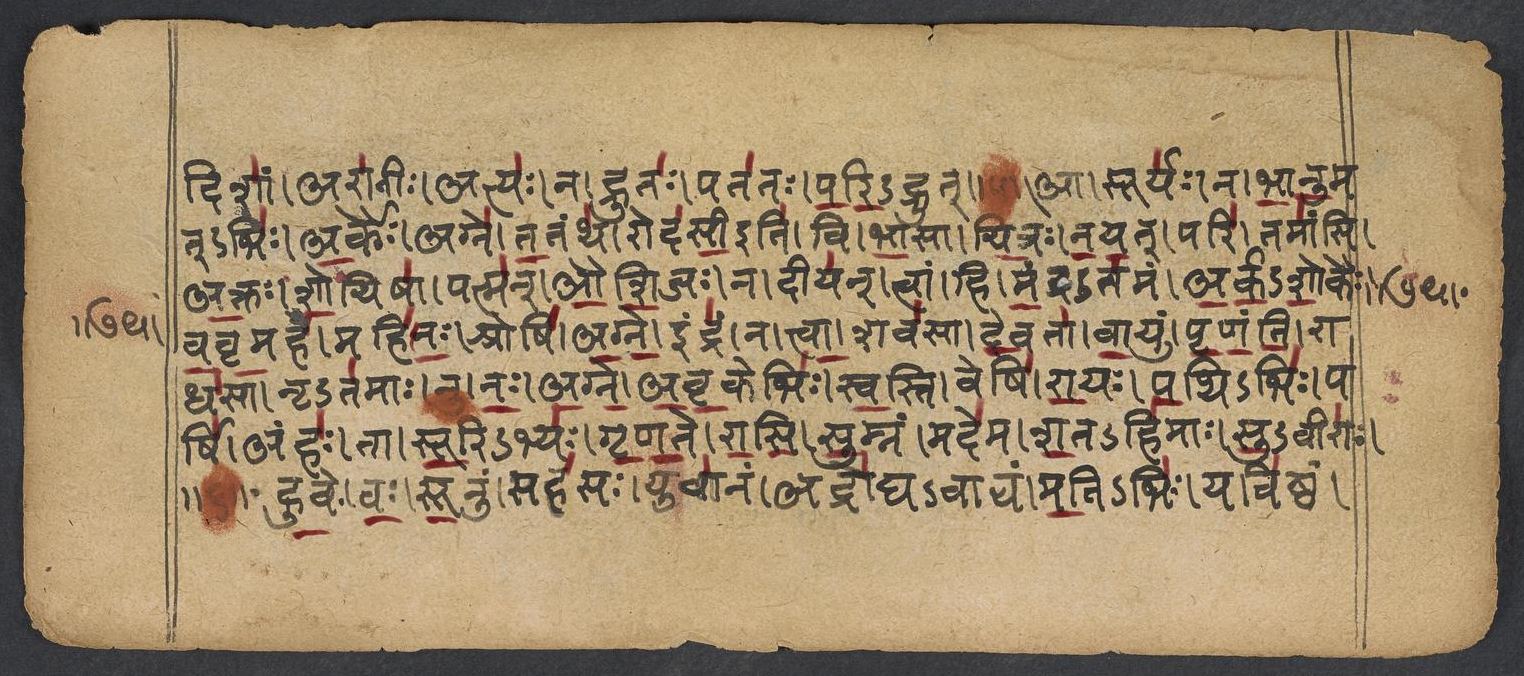
Where on the image
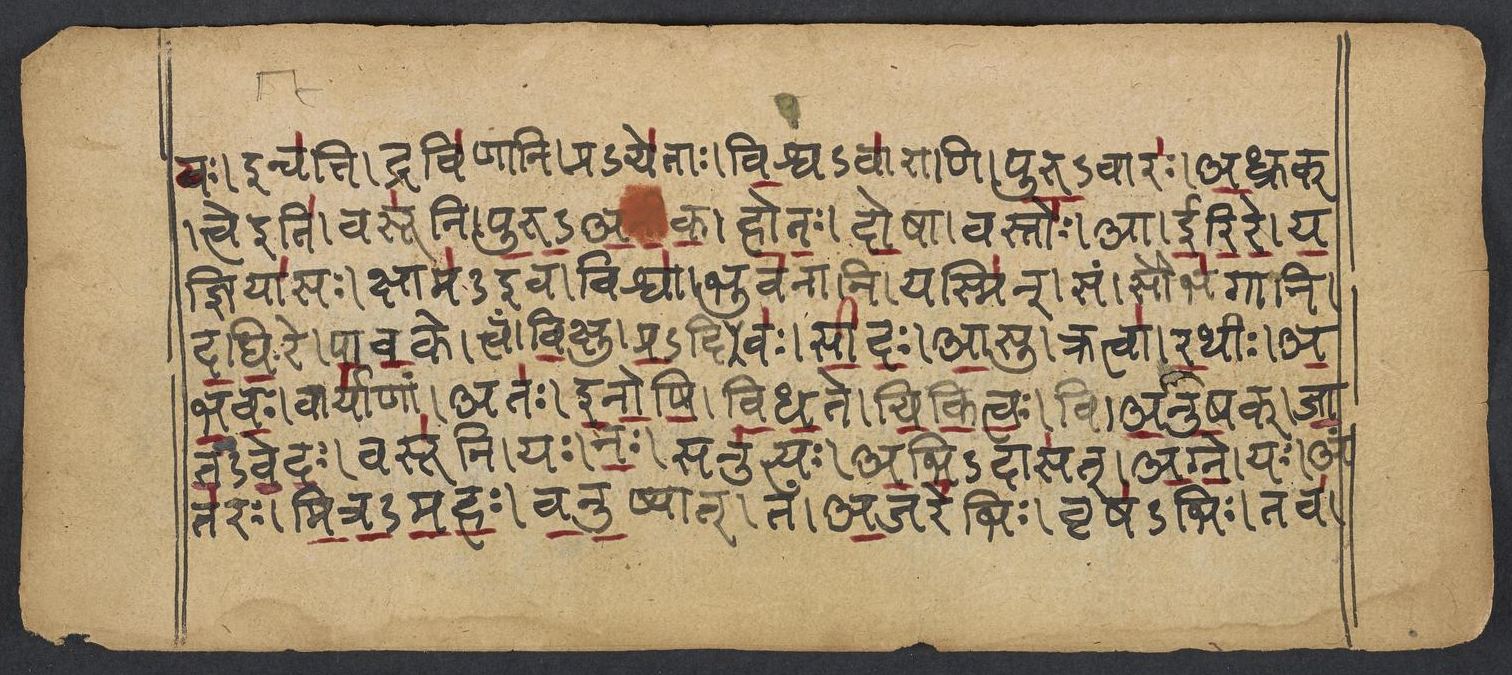
Penn Ms. Coll. 390 Item 41, fol. 407r (numbered 80r by the scribe) (OPenn image 407, lower leaf). Checked on the image: the Rigveda text on this page begins in RV 6.5.1 ‹yaḥ invati draviṇāni pra-cetāḥ›. The next page with Rigveda text, fol. 407v (numbered 80v by the scribe), begins in RV 6.5.4 ‹-tava svaiḥ tapa tapiṣṭha›. Verses 6.5.1-3 end on this page; 6.5.1 begins on fol. 406v (numbered 79v by the scribe).
1hu̱ve va̍ḥ sū̱nuṁ saha̍so̱ yuvā̍na̱m adro̍ghavācam ma̱tibhi̱r yavi̍ṣṭham | ya inva̍ti̱ dravi̍ṇāni̱ prace̍tā vi̱śvavā̍rāṇi puru̱vāro̍ a̱dhruk ||
2tve vasū̍ni purvaṇīka hotar do̱ṣā vasto̱r eri̍re ya̱jñiyā̍saḥ | kṣāme̍va̱ viśvā̱ bhuva̍nāni̱ yasmi̱n saṁ saubha̍gāni dadhi̱re pā̍va̱ke ||
3tvaṁ vi̱kṣu pra̱diva̍ḥ sīda ā̱su kratvā̍ ra̱thīr a̍bhavo̱ vāryā̍ṇām | ata̍ inoṣi vidha̱te ci̍kitvo̱ vy ā̍nu̱ṣag jā̍tavedo̱ vasū̍ni ||
Compare: Padapāṭha (word-by-word text written in the manuscript; Sansknet e-text via GRETIL)
1huve | vaḥ | sūnum | sahasaḥ | yuvānam | adrogha-vācam | mati-bhiḥ | yaviṣṭham | yaḥ | invati | draviṇāni | pra-cetāḥ | viśva-vārāṇi | puru-vāraḥ | adhruk
2tve iti | vasūni | puru-aṇīka | hotaḥ | doṣā | vastoḥ | ā | īrire | yajñiyāsaḥ | kṣāma-iva | viśvā | bhuvanāni | yasmin | sam | saubhagāni | dadhire | pāvake
3tvam | vikṣu | pra-divaḥ | sīda | āsu | kratvā | rathīḥ | abhavaḥ | vāryāṇām | ataḥ | inoṣi | vidhate | cikitvaḥ | vi | ānuṣak | jāta-vedaḥ | vasūni
1I INVOCATE your Son of Strength, the Youthful, with hymns, the Youngest God, whose speech is guileless; Sage who sends wealth comprising every treasure, bringer of many boons, devoid of malice.
2At eve and morn thy pious servants bring thee their precious gifts, O Priest of many aspects, On whom, the Purifier, all things living as on firm. ground their happiness have stablished.
3Thou from of old hast dwelt among these people, by mental power the charioteer of blessings. Hence sendest thou, O sapient Jâtavedas, to him who serves thee treasures in succession.
Where on the image
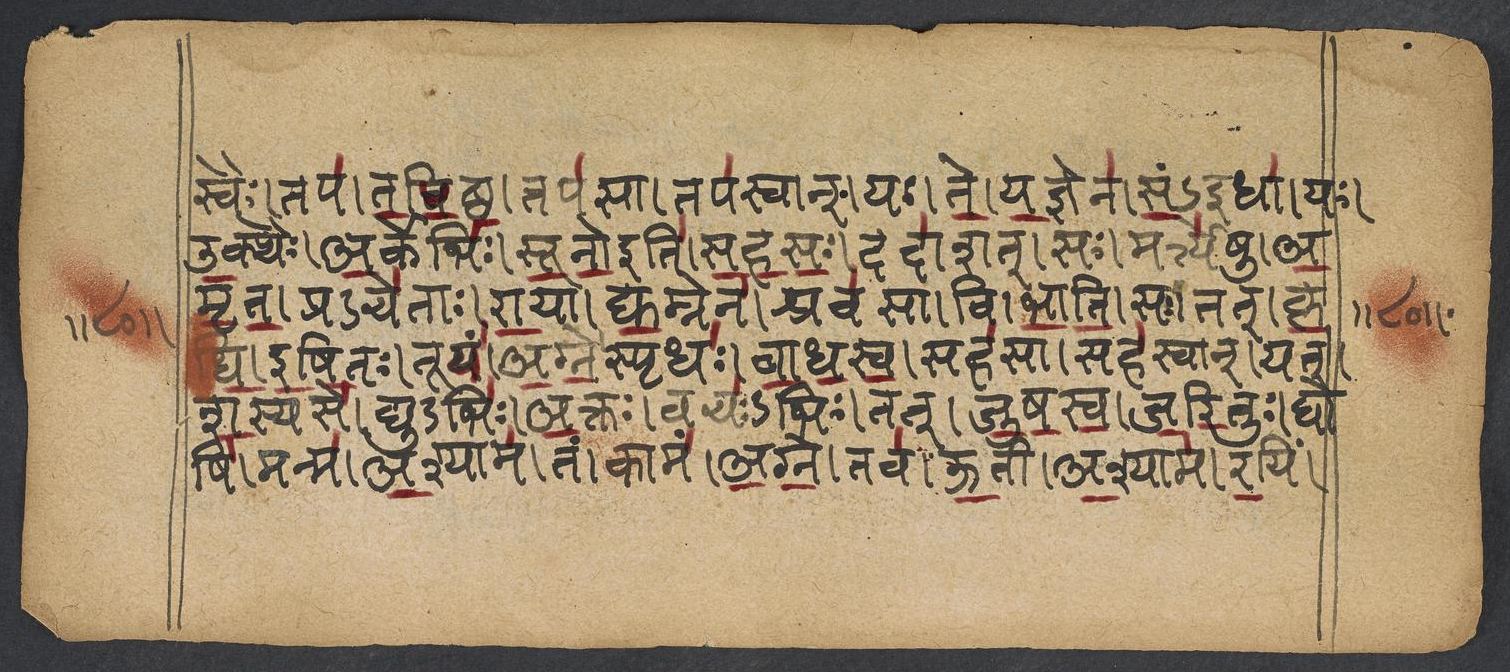
Penn Ms. Coll. 390 Item 41, fol. 407v (numbered 80v by the scribe) (OPenn image 408, upper leaf). Checked on the image: the Rigveda text on this page begins in RV 6.5.4 ‹-tava svaiḥ tapa tapiṣṭha›. The next page with Rigveda text, fol. 408r (numbered 81r by the scribe), begins in RV 6.5.7 ‹rayi-vaḥ su-vīram aśyāma vājam›. Verses 6.5.4-6 end on this page; 6.5.4 begins on fol. 407r (numbered 80r by the scribe).
4yo na̱ḥ sanu̍tyo abhi̱dāsa̍d agne̱ yo anta̍ro mitramaho vanu̱ṣyāt | tam a̱jare̍bhi̱r vṛṣa̍bhi̱s tava̱ svais tapā̍ tapiṣṭha̱ tapa̍sā̱ tapa̍svān ||
5yas te̍ ya̱jñena̍ sa̱midhā̱ ya u̱kthair a̱rkebhi̍ḥ sūno sahaso̱ dadā̍śat | sa martye̍ṣv amṛta̱ prace̍tā rā̱yā dyu̱mnena̱ śrava̍sā̱ vi bhā̍ti ||
6sa tat kṛ̍dhīṣi̱tas tūya̍m agne̱ spṛdho̍ bādhasva̱ saha̍sā̱ saha̍svān | yac cha̱syase̱ dyubhi̍r a̱kto vaco̍bhi̱s taj ju̍ṣasva jari̱tur ghoṣi̱ manma̍ ||
Compare: Padapāṭha (word-by-word text written in the manuscript; Sansknet e-text via GRETIL)
4yaḥ | naḥ | sanutyaḥ | abhi-dāsat | agne | yaḥ | antaraḥ | mitra-mahaḥ | vanuṣyāt | tam | ajarebhiḥ | vṛṣa-bhiḥ | tava | svaiḥ | tapa | tapiṣṭha | tapasā | tapasvān
5yaḥ | te | yajñena | sam-idhā | yaḥ | ukthaiḥ | arkebhiḥ | sūno iti | sahasaḥ | dadāśat | saḥ | martyeṣu | amṛta | pra-cetā | rāyā | dyumnena | śravasā | vi | bhāti
6saḥ | tat | kṛdhi | iṣitaḥ | tūyam | agne | spṛdhaḥ | bādhasva | sahasā | sahasvān | yat | śasyase | dyu-bhiḥ | aktaḥ | vacaḥ-bhiḥ | tat | juṣasva | jarituḥ | ghoṣi | manma
4Agni, whoever secretly attacks us, the neighbour, thou with Mitra's might! who harms us, Burn him with thine own Steers for ever youthful, burning with burning heat, thou fiercest burner.
5He who serves thee with sacrifice and fuel, with hymn, O Son of Strength, and chanted praises, Shines out, Immortal! in the midst of mortals, a sage, with wealth, with splendour and with glory.
6Do this, O Agni, when we urge thee, quickly, triumphant in thy might subdue our foemen. When thou art praised with words and decked with brightness, accept this chanted hymn, the singer's worship.
Where on the image
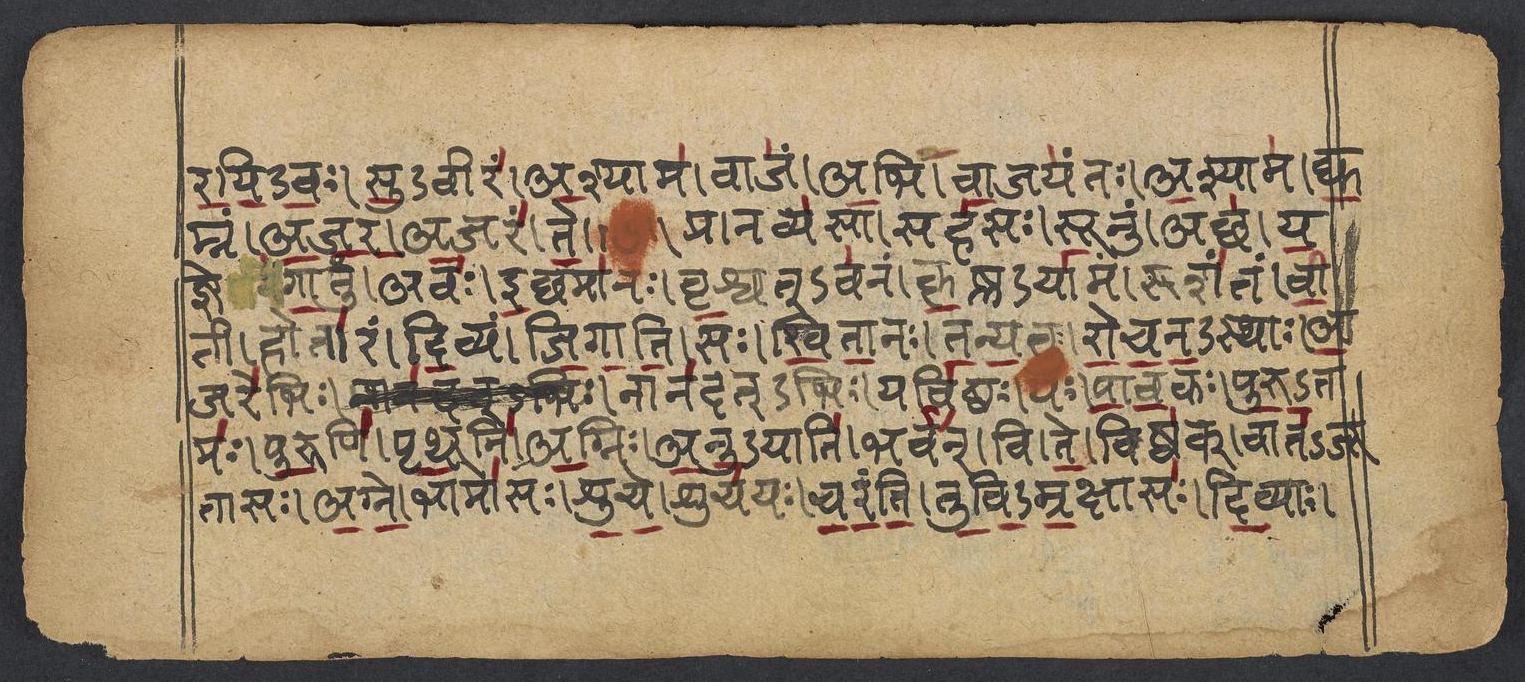
Penn Ms. Coll. 390 Item 41, fol. 408r (numbered 81r by the scribe) (OPenn image 408, lower leaf). Checked on the image: the Rigveda text on this page begins in RV 6.5.7 ‹rayi-vaḥ su-vīram aśyāma vājam›. The next page with Rigveda text, fol. 408v (numbered 81v by the scribe), begins in RV 6.6.3 ‹nava-gvāḥ vanā vananti dhṛṣatā›. Verse 6.5.7 ends on this page; 6.5.7 begins on fol. 407v (numbered 80v by the scribe).
7a̱śyāma̱ taṁ kāma̍m agne̱ tavo̱tī a̱śyāma̍ ra̱yiṁ ra̍yivaḥ su̱vīra̍m | a̱śyāma̱ vāja̍m a̱bhi vā̱jaya̍nto̱ 'śyāma̍ dyu̱mnam a̍jarā̱jara̍ṁ te ||
Compare: Padapāṭha (word-by-word text written in the manuscript; Sansknet e-text via GRETIL)
7aśyāma | tam | kāmam | agne | tava | ūtī | aśyāma | rayim | rayi-vaḥ | su-vīram | aśyāma | vājam | abhi | vājayants | aśyāma | dyumnam | ajara | ajaram | te
7Help us, that we may gain this wish, O Agni, gain riches, Wealthy One! with store of heroes. Desiring strength from thee may we be strengthened, and win, Eternal! thine eternal glory.
Notes
- Sanskrit: Aufrecht's edition (1877) with the Vedic accents, as entered by van Nooten and Holland (GRETIL).
- English: Ralph T. H. Griffith, The Hymns of the Rigveda (1889-1892; 2nd ed. 1896-1897), from the VedaWeb digital text; OCR slips in that text were corrected against the printed 2nd edition (data/sources/rigveda/griffith_errata.json).
- Padapāṭha (edition text): Sansknet e-text via GRETIL (CC BY-NC-SA 4.0).
Cite
Sources
- Source: Penn Ms. Coll. 390 Item 41 (undated (catalogued with Penn's 18th-19th c. Vedic manuscripts)), OPenn, Public Domain Mark + Aufrecht's accented text (GRETIL) + Griffith's English (VedaWeb) (holding institution)
- Critical edition: Aufrecht (1877), accented e-text via GRETIL
← previous · → next · v cycle view · l back to library