Rigveda 6.40: To Indra
Introduction
Rigveda 6.40 is a hymn of 5 verses addressed to Indra. It stands in book (maṇḍala) 6, the family book of Bharadvāja. The Rigveda is the oldest collection of Sanskrit hymns, composed in the second half of the second millennium BCE and handed down orally for many centuries before it was written down.
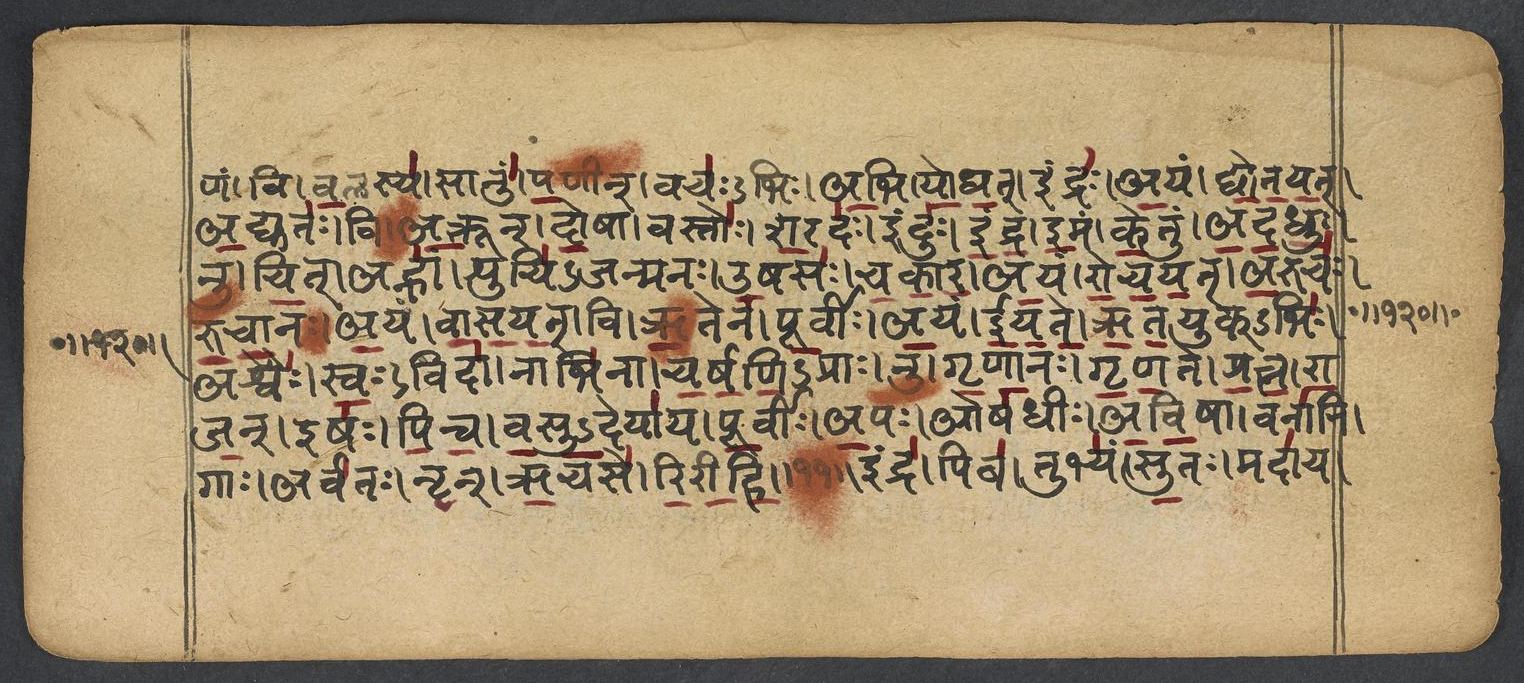
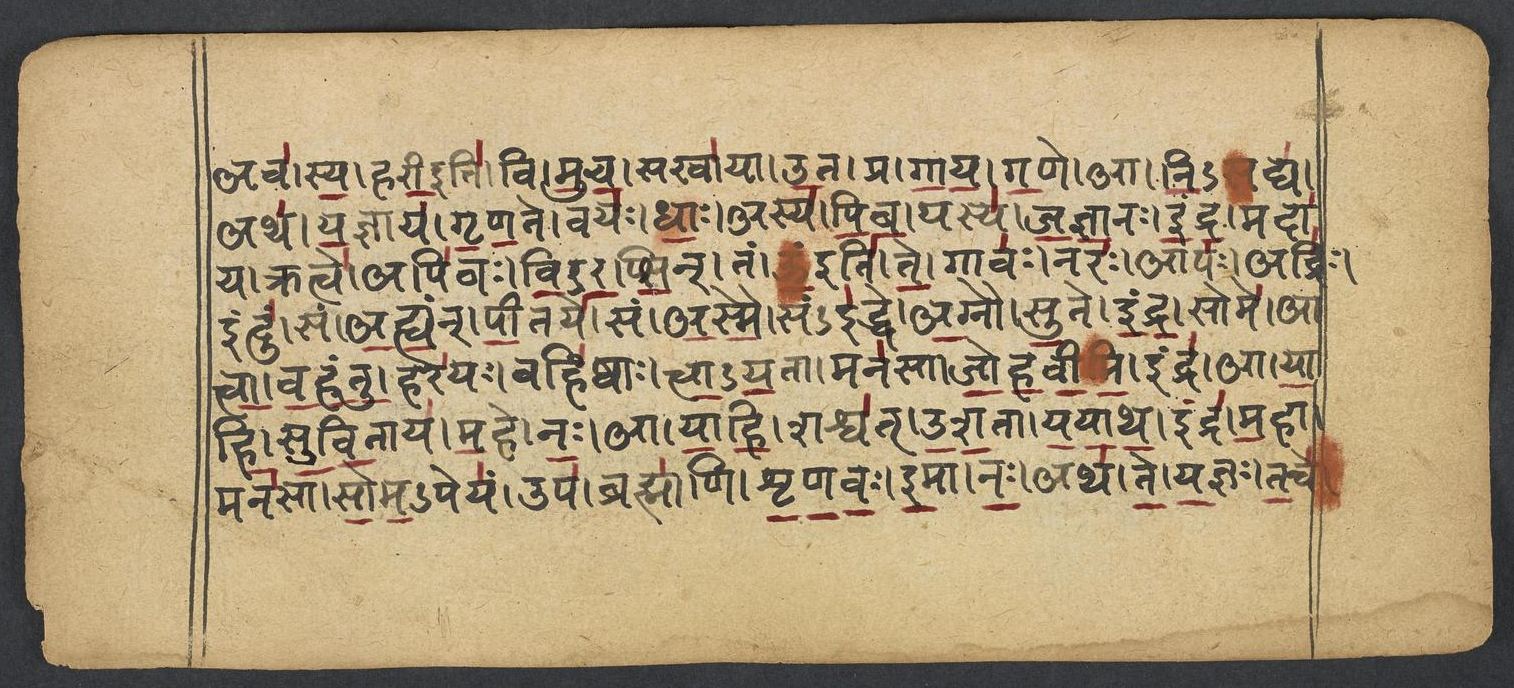
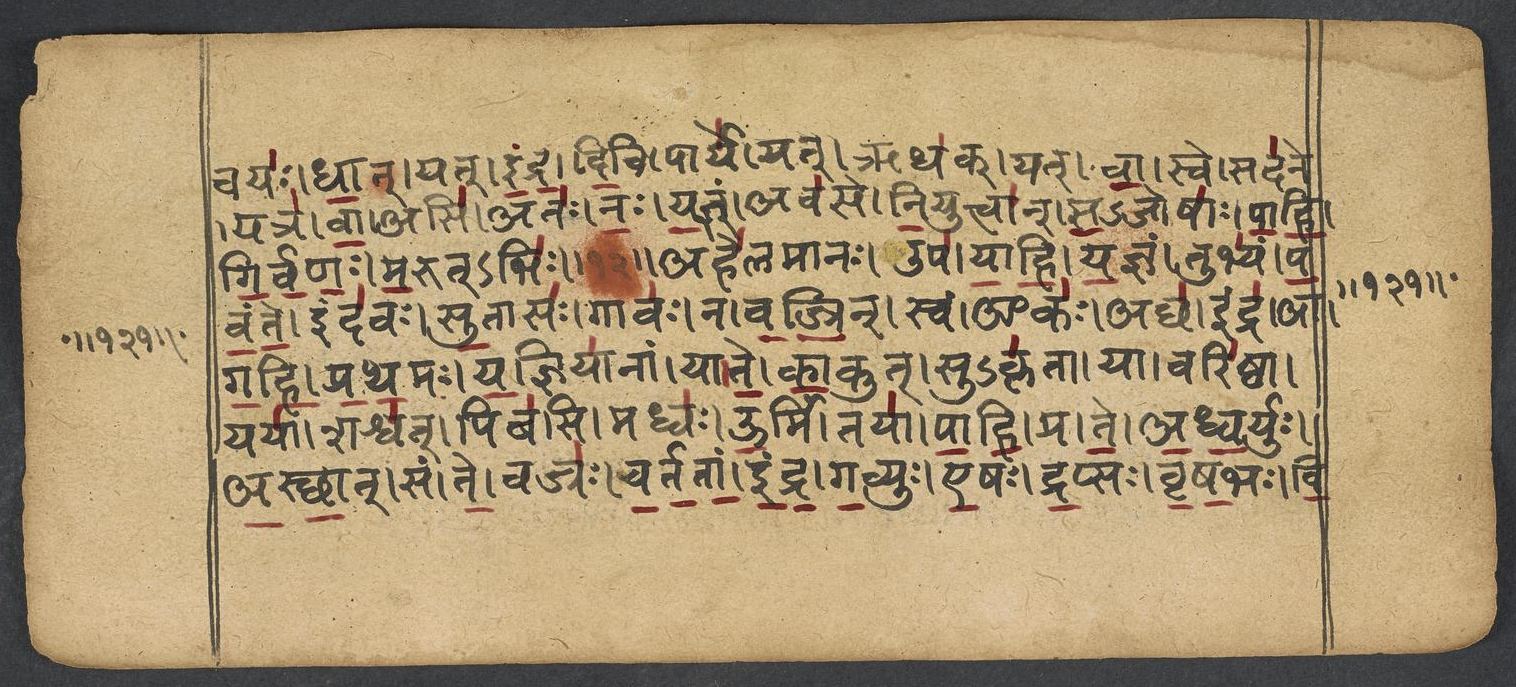
The manuscript shown is Penn Ms. Coll. 390 Item 41 (University of Pennsylvania), an undated paper manuscript of the padapāṭha (the word-by-word recitation text, in which every word is written separately and compounds are split) of the whole Ṛgveda in Devanāgarī, 884 leaves in fascicles, 7-9 lines to the page, accents in red; this hymn stands on fol. 447v-448v. Each section below gives the verses that end on one page; the page boundaries were read on the images (the opening words of every page), not counted out. Where the manuscript is a padapāṭha (the word-by-word recitation text), the section shows Aufrecht's continuous (saṃhitā) text first and, as the edition text, the padapāṭha of the same verses, which is the form written on the page.
How was this verified? (Provenance)
Where on the image
Penn Ms. Coll. 390 Item 41, fol. 448r (numbered 121r by the scribe) (OPenn image 448, lower leaf). Checked on the image: the Rigveda text on this page begins in RV 6.40.1 ‹ava sya harī iti›. The next page with Rigveda text, fol. 448v (numbered 121v by the scribe), begins in RV 6.40.4 ‹vayaḥ dhāt›. Verses 6.40.1-3 end on this page; 6.40.1 begins on fol. 447v (numbered 120v by the scribe).
1indra̱ piba̱ tubhya̍ṁ su̱to madā̱yāva̍ sya̱ harī̱ vi mu̍cā̱ sakhā̍yā | u̱ta pra gā̍ya ga̱ṇa ā ni̱ṣadyāthā̍ ya̱jñāya̍ gṛṇa̱te vayo̍ dhāḥ ||
2asya̍ piba̱ yasya̍ jajñā̱na i̍ndra̱ madā̍ya̱ kratve̱ api̍bo virapśin | tam u̍ te̱ gāvo̱ nara̱ āpo̱ adri̱r indu̱ṁ sam a̍hyan pī̱taye̱ sam a̍smai ||
3sami̍ddhe a̱gnau su̱ta i̍ndra̱ soma̱ ā tvā̍ vahantu̱ hara̍yo̱ vahi̍ṣṭhāḥ | tvā̱ya̱tā mana̍sā johavī̱mīndrā yā̍hi suvi̱tāya̍ ma̱he na̍ḥ ||
Compare: Padapāṭha (word-by-word text written in the manuscript; Sansknet e-text via GRETIL)
1indra | piba | tubhyam | sutaḥ | madāya | ava | sya | harī iti | vi | muca | sakhāyā | uta | pra | gāya | gaṇe | ā | ni-sadya | atha | yajñāya | gṛṇate | vayaḥ | dhāḥ
2asya | piba | yasya | jajñanaḥ | ndra | madāya | kratve | apibaḥ | vi-rapśin | tam | oṃ iti | te | gāvaḥ | naraḥ | āpaḥ | adriḥ | indum | sam | ahyan | pītaye | sam | asmai
3sam-iddhe | agnau | sute | indra | some | ā | tvā | vahantu | harayaḥ | vahiṣṭhāḥ | tvāyatā | manasā | johavīmi | indra | ā | yāhi | suvitāya | mahe | naḥ
1DRINK, Indra; juice is shed to make thee joyful: loose thy Bay Steeds and give thy friends their freedom. Begin the song, seated in our assembly. Give strength for sacrifice to him who singeth.
2Drink thou of this whereof at birth, O Indra, thou drankest, Mighty One for power and rapture. The men, the pressing-stones, the cows, the waters have made this Soma ready for thy drinking.
3The fire is kindled, Soma pressed, O Indra: let thy Bays, best to draw, convey thee hither. With mind devoted, Indra, I invoke thee. Come, for our great prosperity approach us.
Where on the image
Penn Ms. Coll. 390 Item 41, fol. 448v (numbered 121v by the scribe) (OPenn image 449, upper leaf). Checked on the image: the Rigveda text on this page begins in RV 6.40.4 ‹vayaḥ dhāt›. The next page with Rigveda text, fol. 449r (numbered 122r by the scribe), begins in RV 6.41.3 ‹-viśva-rūpaḥ indrāya vṛṣṇe sam›. Verses 6.40.4-5 end on this page; 6.40.4 begins on fol. 448r (numbered 121r by the scribe).
4ā yā̍hi̱ śaśva̍d uśa̱tā ya̍yā̱thendra̍ ma̱hā mana̍sā soma̱peya̍m | upa̱ brahmā̍ṇi śṛṇava i̱mā no 'thā̍ te ya̱jñas ta̱nve̱3̱̍ vayo̍ dhāt ||
5yad i̍ndra di̱vi pārye̱ yad ṛdha̱g yad vā̱ sve sada̍ne̱ yatra̱ vāsi̍ | ato̍ no ya̱jñam ava̍se ni̱yutvā̍n sa̱joṣā̍ḥ pāhi girvaṇo ma̱rudbhi̍ḥ ||
Compare: Padapāṭha (word-by-word text written in the manuscript; Sansknet e-text via GRETIL)
4ā | yāhi | śaśvat | uśatā | yayātha | indra | mahā | manasā | soma-peyam | upa | brahmāṇi | śṛṇavaḥ | imā | naḥ | atha | te | yajñaḥ | tanve | vayaḥ | dhāt
5yat | indra | divi | pārye | yat | ṛdhak | yat | vā | sve | sadane | yatra | vā | asi | ataḥ | naḥ | yajñam | avase | niyutvān | sa-joṣāḥ | pāhi | girvaṇaḥ | marut-bhiḥ
4Indra, come hither: evermore thou camest through our great strong desire to drink the Soma. Listen and hear the prayers which now we offer, and let this sacrifice increase thy vigour.
5Mayst thou, O Indra, on the day of trial, present or absent, wheresoe'er thou dwellest, Thence, with thy team, accordant with the Maruts, Song-lover! guard our sacrifice, to help us.
Notes
- Sanskrit: Aufrecht's edition (1877) with the Vedic accents, as entered by van Nooten and Holland (GRETIL).
- English: Ralph T. H. Griffith, The Hymns of the Rigveda (1889-1892; 2nd ed. 1896-1897), from the VedaWeb digital text; OCR slips in that text were corrected against the printed 2nd edition (data/sources/rigveda/griffith_errata.json).
- Padapāṭha (edition text): Sansknet e-text via GRETIL (CC BY-NC-SA 4.0).
Cite
Sources
- Source: Penn Ms. Coll. 390 Item 41 (undated (catalogued with Penn's 18th-19th c. Vedic manuscripts)), OPenn, Public Domain Mark + Aufrecht's accented text (GRETIL) + Griffith's English (VedaWeb) (holding institution)
- Critical edition: Aufrecht (1877), accented e-text via GRETIL
← previous · → next · v cycle view · l back to library