Rigveda 6.47: To Soma, Indra and others
Introduction
Rigveda 6.47 is a hymn of 31 verses addressed to Soma, Indra and others. It stands in book (maṇḍala) 6, the family book of Bharadvāja. The Rigveda is the oldest collection of Sanskrit hymns, composed in the second half of the second millennium BCE and handed down orally for many centuries before it was written down.
The manuscript shown is Penn Ms. Coll. 390 Item 41 (University of Pennsylvania), an undated paper manuscript of the padapāṭha (the word-by-word recitation text, in which every word is written separately and compounds are split) of the whole Ṛgveda in Devanāgarī, 884 leaves in fascicles, 7-9 lines to the page, accents in red; this hymn stands on fol. 457v-461v. Each section below gives the verses that end on one page; the page boundaries were read on the images (the opening words of every page), not counted out. Where the manuscript is a padapāṭha (the word-by-word recitation text), the section shows Aufrecht's continuous (saṃhitā) text first and, as the edition text, the padapāṭha of the same verses, which is the form written on the page.
How was this verified? (Provenance)
Where on the image
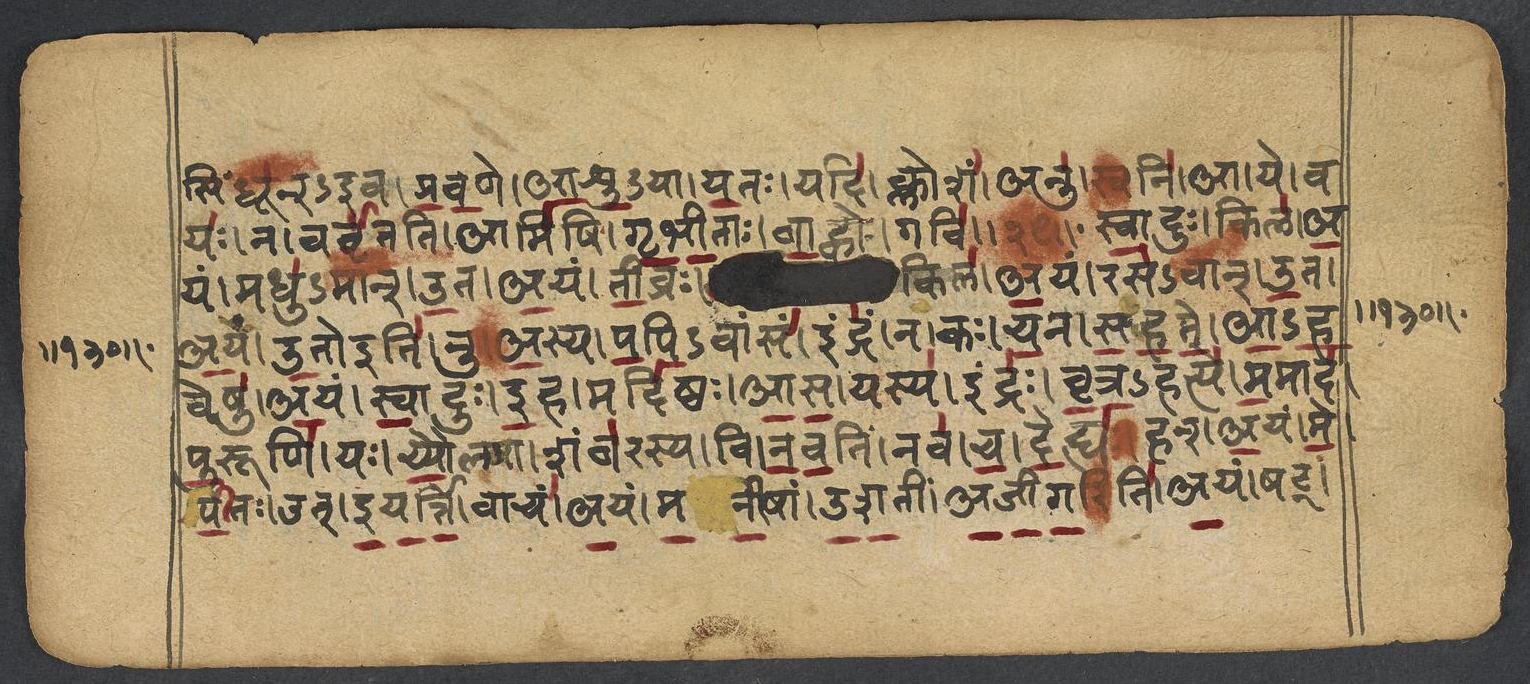
Penn Ms. Coll. 390 Item 41, fol. 457v (numbered 130v by the scribe) (OPenn image 458, upper leaf). Checked on the image: the Rigveda text on this page begins in RV 6.46.14 ‹sindhūn-iva pravaṇe āśu-yā yataḥ›. The next page with Rigveda text, fol. 458r (numbered 131r by the scribe), begins in RV 6.47.3 ‹urvīḥ amimīta dhīraḥ na›. Verses 6.47.1-2 end on this page.
1svā̱duṣ kilā̱yam madhu̍mām̐ u̱tāyaṁ tī̱vraḥ kilā̱yaṁ rasa̍vām̐ u̱tāyam | u̱to nv a1̱̍sya pa̍pi̱vāṁsa̱m indra̱ṁ na kaś ca̱na sa̍hata āha̱veṣu̍ ||
2a̱yaṁ svā̱dur i̱ha madi̍ṣṭha āsa̱ yasyendro̍ vṛtra̱hatye̍ ma̱māda̍ | pu̱rūṇi̱ yaś cyau̱tnā śamba̍rasya̱ vi na̍va̱tiṁ nava̍ ca de̱hyo̱3̱̍ han ||
Compare: Padapāṭha (word-by-word text written in the manuscript; Sansknet e-text via GRETIL)
1svāduḥ | kila | ayam | madhu-mān | uta | ayam | tīvraḥ | kila | ayam | rasa-vān | uta | ayam | uto iti | nu | asya | papi-vāṃsam | indram | na | kaḥ | cana | sahate | āhaveṣu
2ayam | svāduḥ | iha | madiṣṭhaḥ | āsa | yasya | indraḥ | vṛtra-hatye | mamāda | purūṇi | yaḥ | cyautnā | śambarasya | vi | navatim | nava | ca | dehyaḥ | han
1YEA, this is good to taste and full of. sweetness, verily it is strong and rich in flavour. No one may conquer Indra in the battle when he hath drunken of the draught we offer.
2This sweet juice here had mightiest power to gladden: it boldened Indra when he slaughtered Vr̥itra, When he defeated Ṣambara's many onslaughts, and battered down his nineand ninety ramparts.
Where on the image
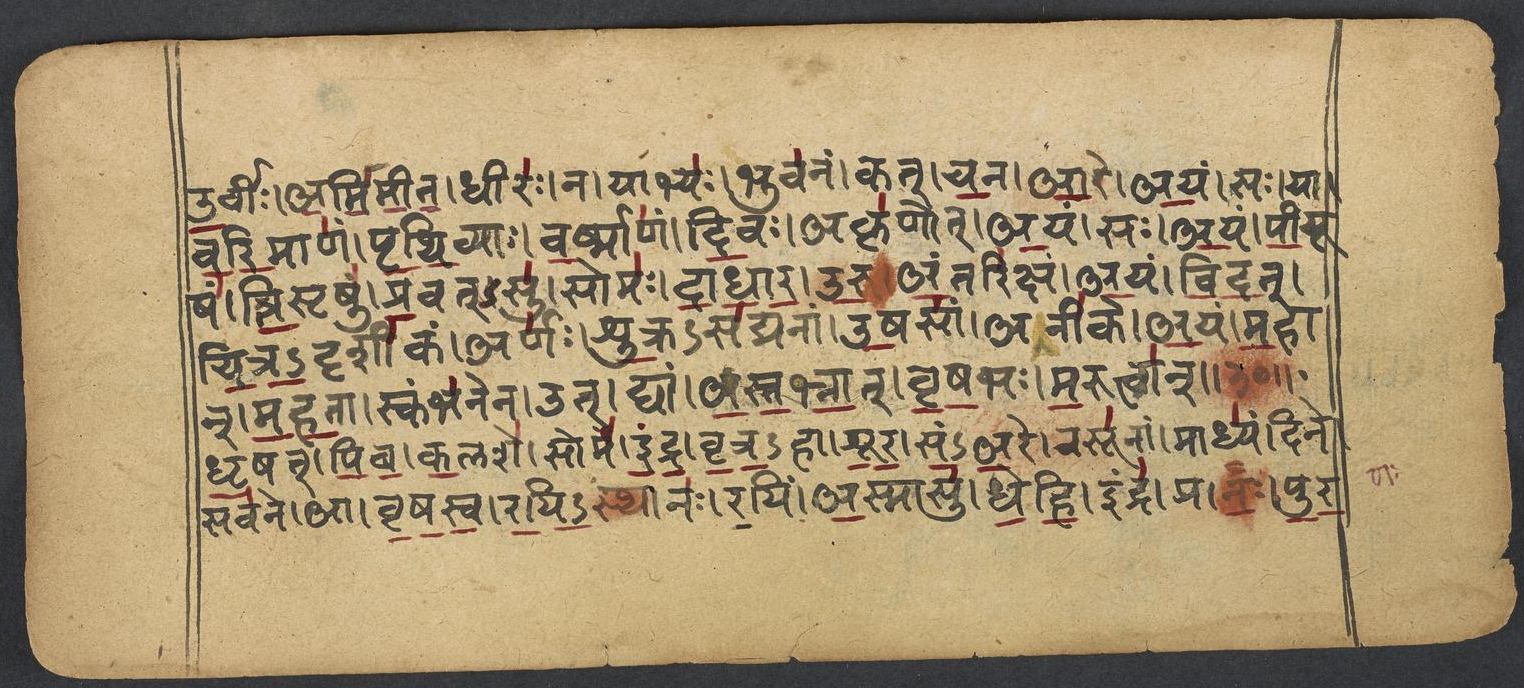
Penn Ms. Coll. 390 Item 41, fol. 458r (numbered 131r by the scribe) (OPenn image 458, lower leaf). Checked on the image: the Rigveda text on this page begins in RV 6.47.3 ‹urvīḥ amimīta dhīraḥ na›. The next page with Rigveda text, fol. 458v (numbered 131v by the scribe), begins in RV 6.47.7 ‹-puraetāiva paśya pra naḥ›. Verses 6.47.3-6 end on this page; 6.47.3 begins on fol. 457v (numbered 130v by the scribe).
3a̱yam me̍ pī̱ta ud i̍yarti̱ vāca̍m a̱yam ma̍nī̱ṣām u̍śa̱tīm a̍jīgaḥ | a̱yaṁ ṣaḻ u̱rvīr a̍mimīta̱ dhīro̱ na yābhyo̱ bhuva̍na̱ṁ kac ca̱nāre ||
4a̱yaṁ sa yo va̍ri̱māṇa̍m pṛthi̱vyā va̱rṣmāṇa̍ṁ di̱vo akṛ̍ṇod a̱yaṁ saḥ | a̱yam pī̱yūṣa̍ṁ ti̱sṛṣu̍ pra̱vatsu̱ somo̍ dādhāro̱rv a1̱̍ntari̍kṣam ||
5a̱yaṁ vi̍dac citra̱dṛśī̍ka̱m arṇa̍ḥ śu̱krasa̍dmanām u̱ṣasā̱m anī̍ke | a̱yam ma̱hān ma̍ha̱tā skambha̍ne̱nod dyām a̍stabhnād vṛṣa̱bho ma̱rutvā̍n ||
6dhṛ̱ṣat pi̍ba ka̱laśe̱ soma̍m indra vṛtra̱hā śū̍ra sama̱re vasū̍nām | mādhya̍ṁdine̱ sava̍na̱ ā vṛ̍ṣasva rayi̱sthāno̍ ra̱yim a̱smāsu̍ dhehi ||
Compare: Padapāṭha (word-by-word text written in the manuscript; Sansknet e-text via GRETIL)
3ayam | me | pītaḥ | ut | iyarti | vācam | ayam | manīṣām | uśatīm | ajīgaḥ | ayam | ṣaṭ | urvīḥ | amimīta | dhīraḥ | na | yābhyaḥ | bhuvanam | kat | cana | āre
4ayam | saḥ | yaḥ | varimāṇam | pṛthivyāḥ | varṣmāṇam | divaḥ | akṛṇot | ayam | saḥ | ayam | pīyūṣam | tisṛṣu | pravat-su | somaḥ | dādhāra | uru | antarikṣam
5ayam | vidat | citra-dṛśīkam | arṇaḥ | śukra-sadmanām | uṣasām | anīke | ayam | mahān | mahatā | skambhanena | ut | dyām | astabhnāt | vṛṣabhaḥ | marutvān
6dhṛṣat | piba | kalaśe | somam | indra | vṛtra-hā | śūra | sam-are | vasūnām | mādhyandine | savane | ā | vṛṣasva | rayi-sthānaḥ | rayim | asmāsu | dhehi
3This stirreth up my voice when I have drunk it: this hath aroused from sleep my yearning spirit. This Sage hath measured out the six expanses from which no single creature is excluded.
4This, even this, is he who hath created the breadth of earth, the lofty height of heaven. He formed the nectar in three headlong rivers. Soma supports the wide mid-air above us.
5He found the wavy sea of brilliant colours in forefront of the Dawns who dwell in brightness. This Mighty One, the Steer begirt by Maruts, hath propped the heavens up with a mighty pillar.
6Drink Soma boldly from the beaker, Indra, in war for treasures, Hero, Vr̥itra-slayer! Fill thyself full at the mid-day libation, and give us wealth, thou Treasury of riches.
Where on the image
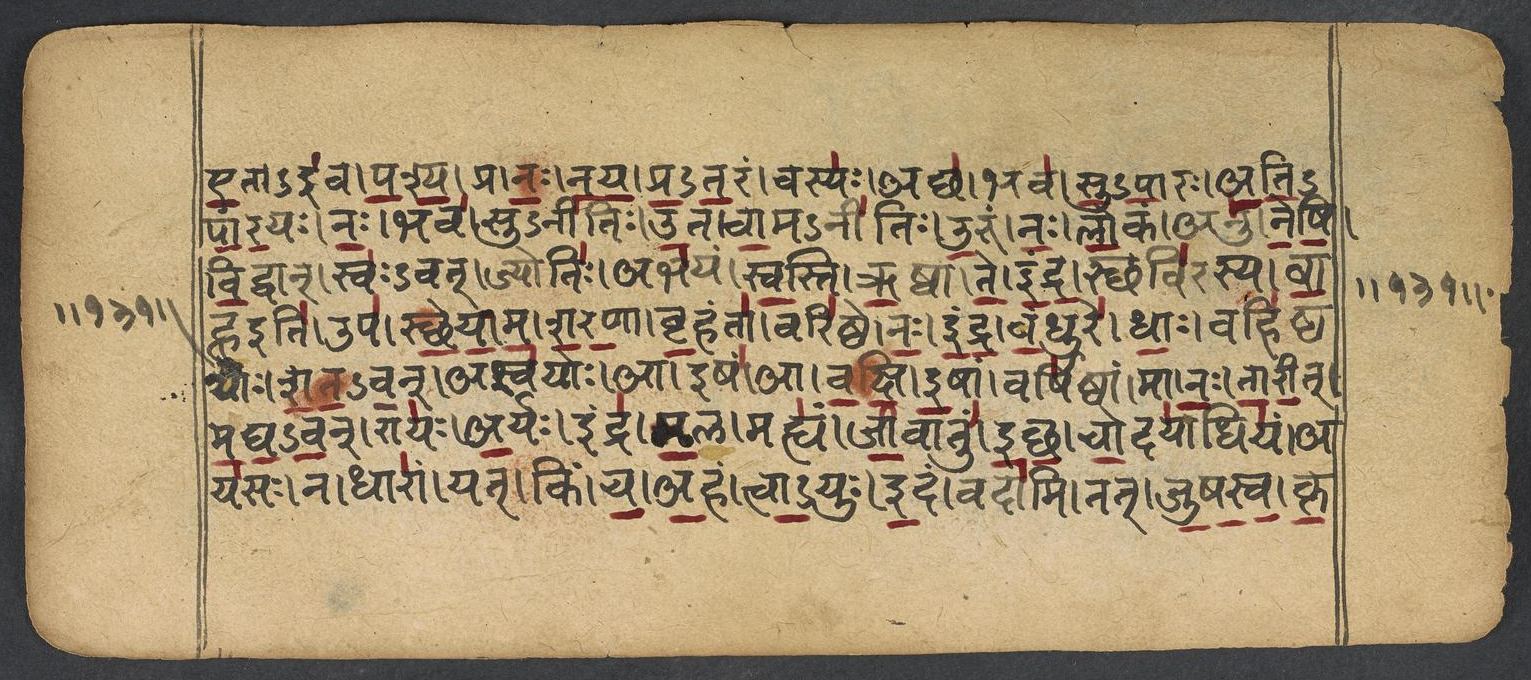
Penn Ms. Coll. 390 Item 41, fol. 458v (numbered 131v by the scribe) (OPenn image 459, upper leaf). Checked on the image: the Rigveda text on this page begins in RV 6.47.7 ‹-puraetāiva paśya pra naḥ›. The next page with Rigveda text, fol. 459r (numbered 132r by the scribe), begins in RV 6.47.10 ‹-kṛdhi mā deva-vantam›. Verses 6.47.7-9 end on this page; 6.47.7 begins on fol. 458r (numbered 131r by the scribe).
7indra̱ pra ṇa̍ḥ purae̱teva̍ paśya̱ pra no̍ naya prata̱raṁ vasyo̱ accha̍ | bhavā̍ supā̱ro a̍tipāra̱yo no̱ bhavā̱ sunī̍tir u̱ta vā̱manī̍tiḥ ||
8u̱ruṁ no̍ lo̱kam anu̍ neṣi vi̱dvān sva̍rva̱j jyoti̱r abha̍yaṁ sva̱sti | ṛ̱ṣvā ta̍ indra̱ sthavi̍rasya bā̱hū upa̍ stheyāma śara̱ṇā bṛ̱hantā̍ ||
9vari̍ṣṭhe na indra va̱ndhure̍ dhā̱ vahi̍ṣṭhayoḥ śatāva̱nn aśva̍yo̱r ā | iṣa̱m ā va̍kṣī̱ṣāṁ varṣi̍ṣṭhā̱m mā na̍s tārīn maghava̱n rāyo̍ a̱ryaḥ ||
Compare: Padapāṭha (word-by-word text written in the manuscript; Sansknet e-text via GRETIL)
7indra | pra | naḥ | puraetāiva | paśya | pra | naḥ | naya | pra-taram | vasyaḥ | accha | bhava | su-pāraḥ | ati-pārayaḥ | naḥ | bhava | su-nītiḥ | uta | vāma-nītiḥ
8urum | naḥ | lokam | anu | neṣi | vidvān | svar-vat | jyotiḥ | abhayam | svasti | ṛṣvā | te | indra | sthavirasya | bāhū iti | upa | stheyāma | śaraṇā | bṛhantā
9variṣṭhe | naḥ | indra | vandhure | dhāḥ | vahiṣṭhayoḥ | śata-van | aśvayoḥ | ā | iṣam | ā | vakṣi | iṣām | varṣiṣṭhām | mā | naḥ | tārīt | magha-van | rāyaḥ | aryaḥ
7Look out for us, O Indra, as our Leader, and guide us on to gain yet goodlier treasure. Excellent Guardian, bear us well through peril, and lead us on to wealth with careful guidance.
8Lead us to ample room, O thou who knowest, to happiness, security, and sunlight. High, Indra, are the arms of thee the Mighty: may we betake. us to their lofty shelter.
9Set us on widest chariot-seat, O Indra, with two steeds best to draw, O Lord of Hundreds! Bring us the best among all sorts of viands: let not the foe's wealth, Maghavan, subdue us.
Where on the image
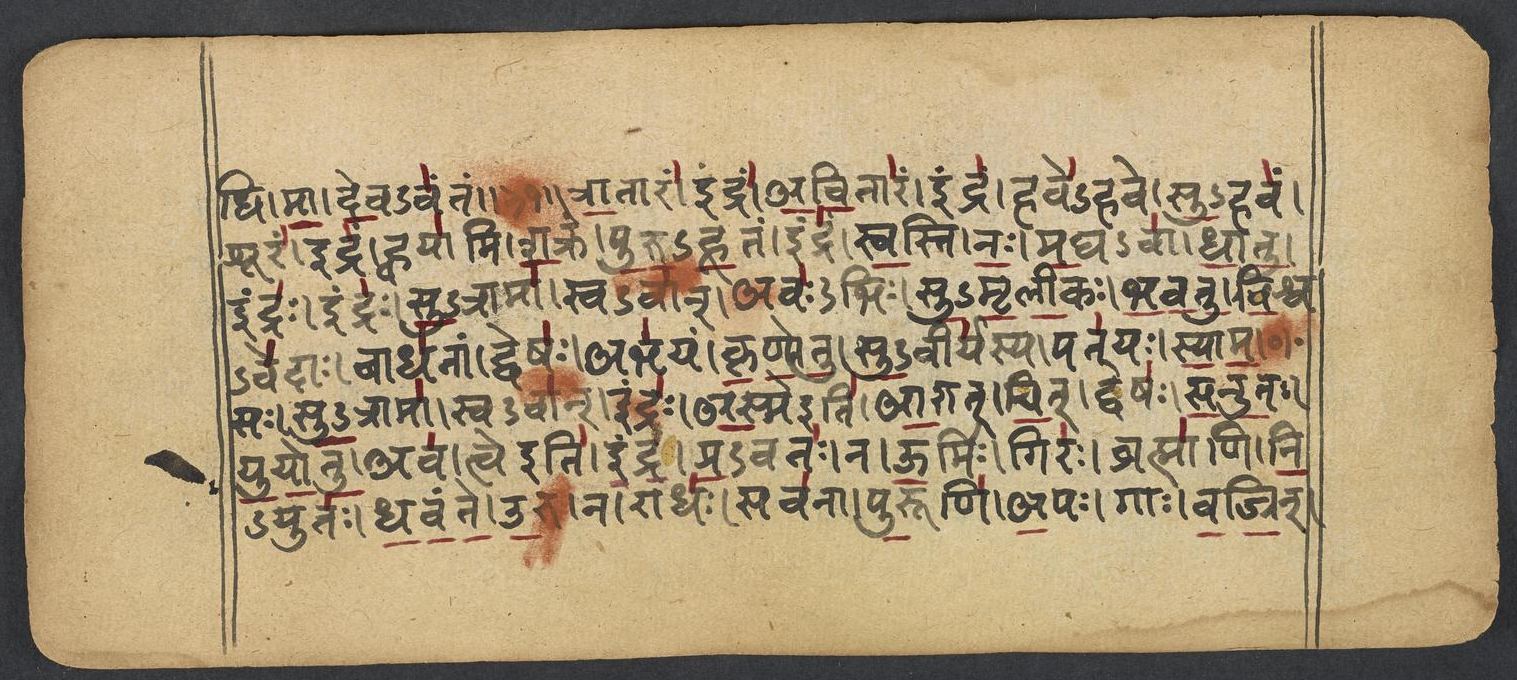
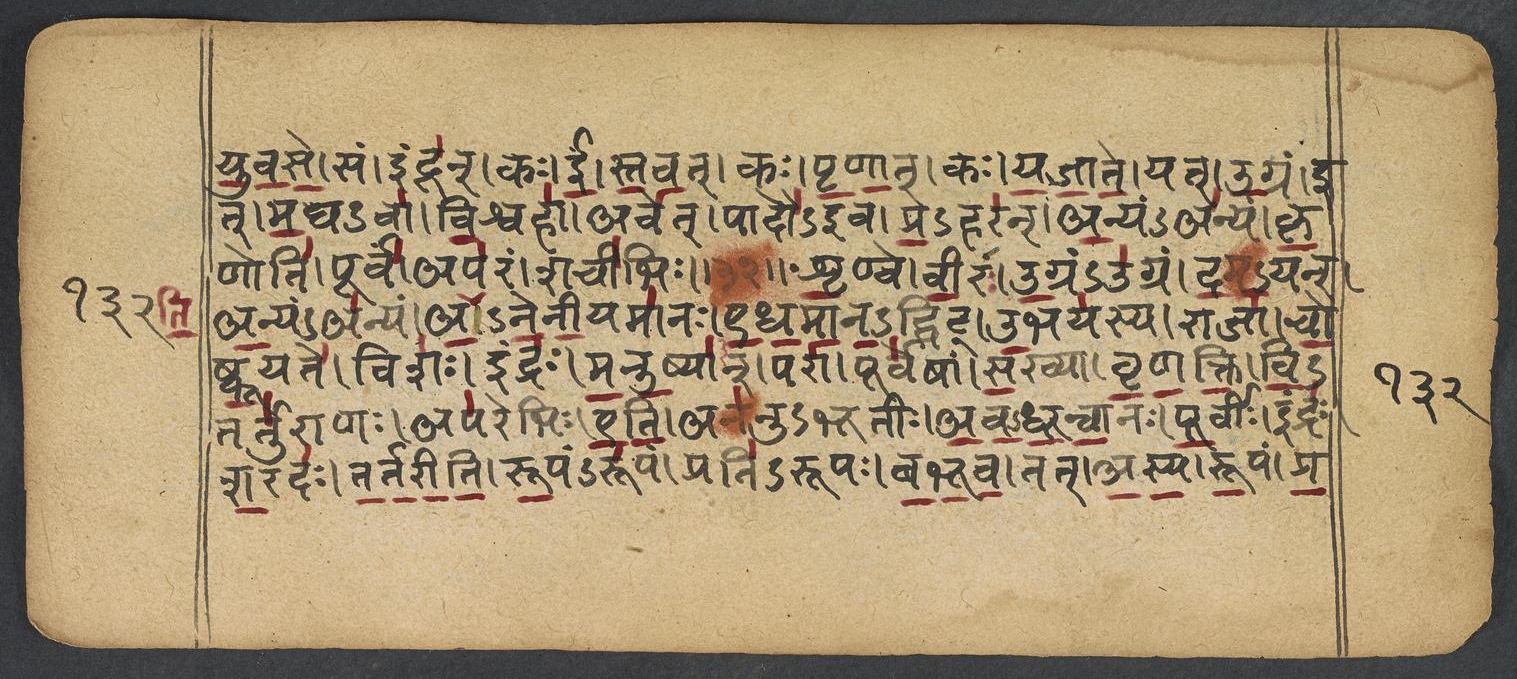
Penn Ms. Coll. 390 Item 41, fol. 459r (numbered 132r by the scribe) (OPenn image 459, lower leaf). Checked on the image: the Rigveda text on this page begins in RV 6.47.10 ‹-kṛdhi mā deva-vantam›. The next page with Rigveda text, fol. 459v (numbered 132v by the scribe), begins in RV 6.47.14 ‹-vajrin yuvase sam indūn›. Verses 6.47.10-13 end on this page; 6.47.10 begins on fol. 458v (numbered 131v by the scribe).
10indra̍ mṛ̱ḻa mahya̍ṁ jī̱vātu̍m iccha co̱daya̱ dhiya̱m aya̍so̱ na dhārā̍m | yat kiṁ cā̱haṁ tvā̱yur i̱daṁ vadā̍mi̱ taj ju̍ṣasva kṛ̱dhi mā̍ de̱vava̍ntam ||
11trā̱tāra̱m indra̍m avi̱tāra̱m indra̱ṁ have̍-have su̱hava̱ṁ śūra̱m indra̍m | hvayā̍mi śa̱kram pu̍ruhū̱tam indra̍ṁ sva̱sti no̍ ma̱ghavā̍ dhā̱tv indra̍ḥ ||
12indra̍ḥ su̱trāmā̱ svavā̱m̐ avo̍bhiḥ sumṛḻī̱ko bha̍vatu vi̱śvave̍dāḥ | bādha̍tā̱ṁ dveṣo̱ abha̍yaṁ kṛṇotu su̱vīrya̍sya̱ pata̍yaḥ syāma ||
13tasya̍ va̱yaṁ su̍ma̱tau ya̱jñiya̱syāpi̍ bha̱dre sau̍mana̱se syā̍ma | sa su̱trāmā̱ svavā̱m̐ indro̍ a̱sme ā̱rāc ci̱d dveṣa̍ḥ sanu̱tar yu̍yotu ||
Compare: Padapāṭha (word-by-word text written in the manuscript; Sansknet e-text via GRETIL)
10indra | mṛḷa | mahyam | jīvātum | iccha | codaya | dhiyam | ayasaḥ | na | dhārām | yat | kim | ca | aham | tvāyuḥ | idam | vadāmi | tat | juṣasva | kṛdhi | mā | deva-vantam
11trātāram | indram | avitāram | indram | have--have | su-havam | śūram | indram | hvayāmi | śakram | puru-hūtam | indram | svasti | naḥ | magha-vā | dhātu | indraḥ
12indraḥ | su-trāmā | sva-vān | avaḥ-bhiḥ | su-mṛḷīkaḥ | bhavatu | viśva-vedāḥ | bādhatām | dveṣaḥ | abhayam | kṛṇotu | su-vīryasya | patayaḥ | syāma
13tasya | vayam | su-matau | yajñiyasya | api | bhadre | saumanase | syāma | saḥ | su-trāmā | sva-vān | indraḥ | asme iti | ārāt | cit | dveṣaḥ | sanutaḥ | yuyotu
10Be gracious, Indra, let my days be lengthened: sharpen my thought as 'twere a blade of iron Approve whatever words I speak, dependent on thee, and grant me thy divine protection.
11Indra the Rescuer, Indra the Helper, Hero who listens at each invocation, Ṣakra I call, Indra invoked of many. May Indra Maghavan prosper and bless us.
12May helpful Indra as our good Protector, Lord of all treasures, favour us with succour, Baffle our foes, and give us rest and safety, and may we be the lords of hero vigour.
13May we enjoy the grace of him the Holy, yea, may we dwell in his auspicious favour. May helpful Indra as our good Preserver drive from us, even from afar, our foemen.
Where on the image
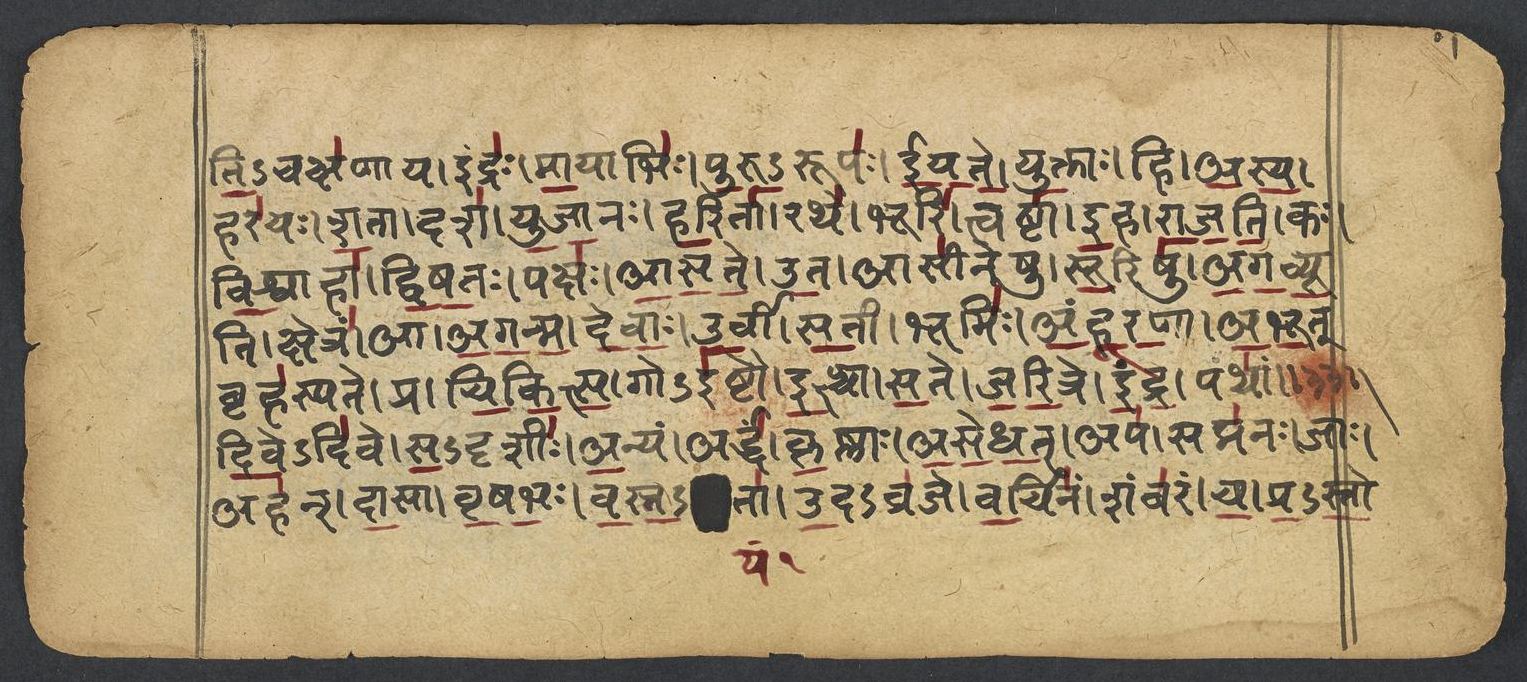
Penn Ms. Coll. 390 Item 41, fol. 459v (numbered 132v by the scribe) (OPenn image 460, upper leaf). Checked on the image: the Rigveda text on this page begins in RV 6.47.14 ‹-vajrin yuvase sam indūn›. The next page with Rigveda text, fol. 460r (numbered 133r by the scribe), begins in RV 6.47.18 ‹-prati-cakṣaṇāya indraḥ māyābhiḥ puru-rūpaḥ›. Verses 6.47.14-17 end on this page; 6.47.14 begins on fol. 459r (numbered 132r by the scribe).
14ava̱ tve i̍ndra pra̱vato̱ normir giro̱ brahmā̍ṇi ni̱yuto̍ dhavante | u̱rū na rādha̱ḥ sava̍nā pu̱rūṇy a̱po gā va̍jrin yuvase̱ sam indū̍n ||
15ka ī̍ṁ stava̱t kaḥ pṛ̍ṇā̱t ko ya̍jāte̱ yad u̱gram in ma̱ghavā̍ vi̱śvahāve̍t | pādā̍v iva pra̱hara̍nn a̱nyam-a̍nyaṁ kṛ̱ṇoti̱ pūrva̱m apa̍ra̱ṁ śacī̍bhiḥ ||
16śṛ̱ṇve vī̱ra u̱gram-u̍graṁ damā̱yann a̱nyam-a̍nyam atinenī̱yamā̍naḥ | e̱dha̱mā̱na̱dviḻ u̱bhaya̍sya̱ rājā̍ coṣkū̱yate̱ viśa̱ indro̍ manu̱ṣyā̍n ||
17parā̱ pūrve̍ṣāṁ sa̱khyā vṛ̍ṇakti vi̱tartu̍rāṇo̱ apa̍rebhir eti | anā̍nubhūtīr avadhūnvā̱naḥ pū̱rvīr indra̍ḥ śa̱rada̍s tartarīti ||
Compare: Padapāṭha (word-by-word text written in the manuscript; Sansknet e-text via GRETIL)
14ava | tve iti | indra | pra-vataḥ | na | ūrmiḥ | giraḥ | brahmāṇi | ni-yutaḥ | dhavante | uru | na | rādhaḥ | savanā | purūṇi | apaḥ | gāḥ | vajrin | yuvase | sam | indūn
15kaḥ | īm | stavat | kaḥ | pṛṇāt | kaḥ | yajāte | yat | ugram | it | magha-vā | viśvahā | avet | pādau-iva | pra-haran | anyam-anyam | kṛṇoti | pūrvam | aparam | śacībhiḥ
16śṛṇve | vīraḥ | ugram-ugram | dama-yan | anyam-anyam | ati-nenīyamānaḥ | edhamāna-dviṭ | ubhayasya | rājā | coṣkūyate | viśaḥ | indraḥ | manuṣayān
17parā | pūrveṣām | sakhyā | vṛṇakti | vi-tarturāṇaḥ | aparebhiḥ | eti | ananu-bhūtīḥ | ava-dhūnvānaḥ | pūrvīḥ | indraḥ | śaradaḥ | tartarīti
14Like rivers rushing down a slope, O Indra, to thee haste songs and prayers and linked verses. Thou gatherest, Thunderer! like widespread bounty, kine, water, drops, and manifold libations.
15Who lauds him, satisfies him, pays him worship? E'en the rich noble still hath found him mighty. With power, as when one moves his feet alternate, he makes the last precede, the foremost follow.
16Famed is the Hero as each strong man's tamer, ever advancing one and then another. King of both worlds, hating the high and haughty, Indra protects the men who are his people.
17He loves no more the men he loved aforetime: he turns and moves away allied with others. Rejecting those who disregard his worship, Indra victorious lives through many autumns.
Where on the image
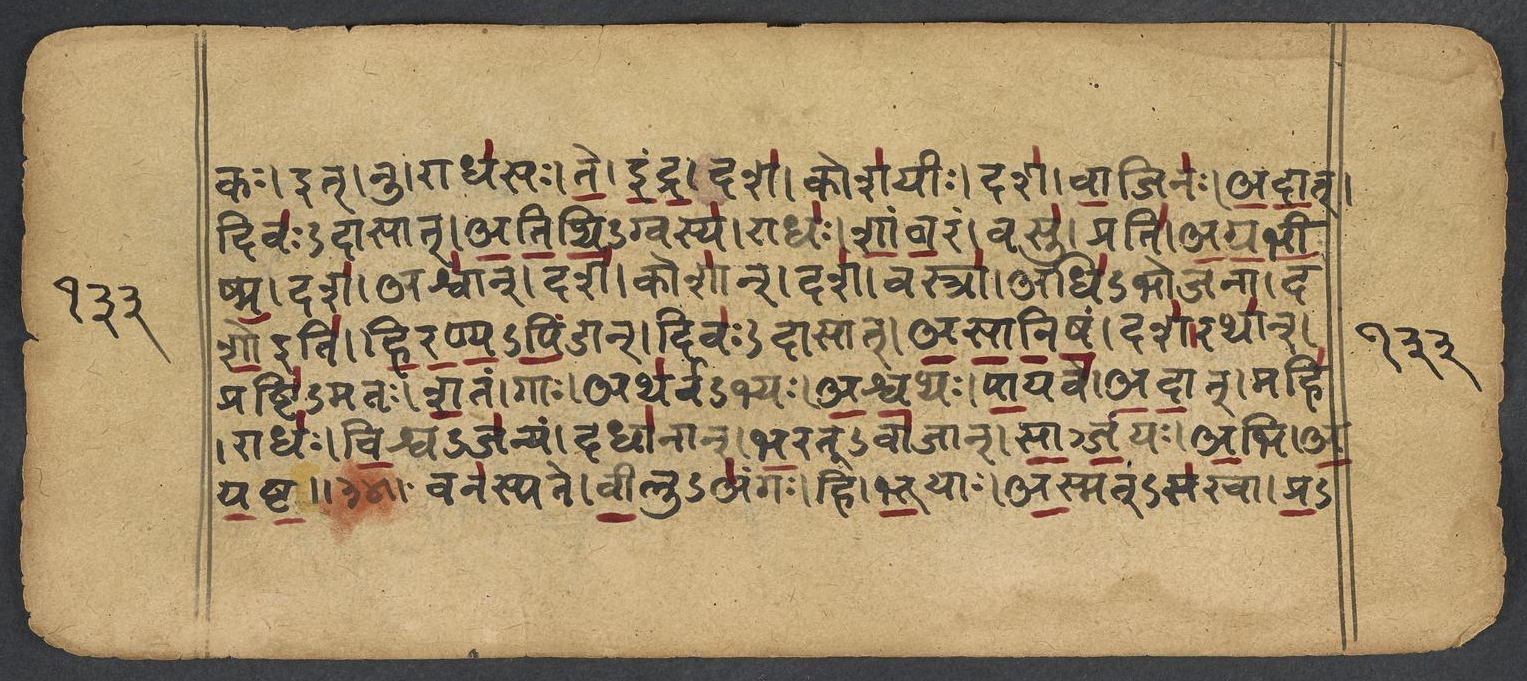
Penn Ms. Coll. 390 Item 41, fol. 460r (numbered 133r by the scribe) (OPenn image 460, lower leaf). Checked on the image: the Rigveda text on this page begins in RV 6.47.18 ‹-prati-cakṣaṇāya indraḥ māyābhiḥ puru-rūpaḥ›. The next page with Rigveda text, fol. 460v (numbered 133v by the scribe), begins in RV 6.47.22 ‹-prastokaḥ it nu rādhasaḥ›. Verses 6.47.18-21 end on this page; 6.47.18 begins on fol. 459v (numbered 132v by the scribe).
18rū̱paṁ-rū̍pa̱m prati̍rūpo babhūva̱ tad a̍sya rū̱pam pra̍ti̱cakṣa̍ṇāya | indro̍ mā̱yābhi̍ḥ puru̱rūpa̍ īyate yu̱ktā hy a̍sya̱ hara̍yaḥ śa̱tā daśa̍ ||
19yu̱jā̱no ha̱ritā̱ rathe̱ bhūri̱ tvaṣṭe̱ha rā̍jati | ko vi̱śvāhā̍ dviṣa̱taḥ pakṣa̍ āsata u̱tāsī̍neṣu sū̱riṣu̍ ||
20a̱ga̱vyū̱ti kṣetra̱m āga̍nma devā u̱rvī sa̱tī bhūmi̍r aṁhūra̱ṇābhū̍t | bṛha̍spate̱ pra ci̍kitsā̱ gavi̍ṣṭāv i̱tthā sa̱te ja̍ri̱tra i̍ndra̱ panthā̍m ||
21di̱ve-di̍ve sa̱dṛśī̍r a̱nyam ardha̍ṁ kṛ̱ṣṇā a̍sedha̱d apa̱ sadma̍no̱ jāḥ | aha̍n dā̱sā vṛ̍ṣa̱bho va̍sna̱yanto̱davra̍je va̱rcina̱ṁ śamba̍raṁ ca ||
Compare: Padapāṭha (word-by-word text written in the manuscript; Sansknet e-text via GRETIL)
18rūpam-rūpam | prati-rūpaḥ | babhūva | tat | asya | rūpam | prati-cakṣaṇāya | indraḥ | māyābhiḥ | puru-rūpaḥ | īyate | yuktāḥ | hi | asya | harayaḥ | śatā | daśa
19yujānaḥ | haritā | rathe | bhūri | tvaṣṭā | iha | rājati | kaḥ | viśvāhā | dviṣataḥ | pakṣaḥ | āsate | uta | āsīneṣu | sūriṣu
20agavyūti | kṣetram | ā | aganma | devāḥ | urvī | satī | bhūmiḥ | aṃhūraṇā | abhūt | bṛhaspate | pra | cikitsa | go--iṣṭau | itthā | sate | jaritre | indra | panthām
21dive--dive | sa-dṛśīḥ | anyam | ardham | kṛṣṇāḥ | asedhat | apa | sadmanaḥ | jāḥ | ahan | dāsā | vṛṣabhaḥ | vasnayantā | uda-vraje | varcinam | śambaram | ca
18In every figure he hath been the mode: this is his only form for us to look on. Indra moves multiform by his illusions; for his Bay Steeds are yoked, ten times a hundred.
19Here Tvashṭar, yoking to the car the Bay Steeds, hath extended sway. Who will for ever stand upon the foeman's side, even when our princes sit at ease?
20Gods, we have reached a country void of pasture the land, though spacious, was too small to hold us. Br̥ihaspati, provide in war for cattle; find a path, Indra, for this faithful singer.
21Day after day far from their seat he drove them, alike, from place to place, those darksome creatures. The Hero slew the meanly-huckstering Dâsas, Varcin and Ṣambara, where the waters gather.
Where on the image
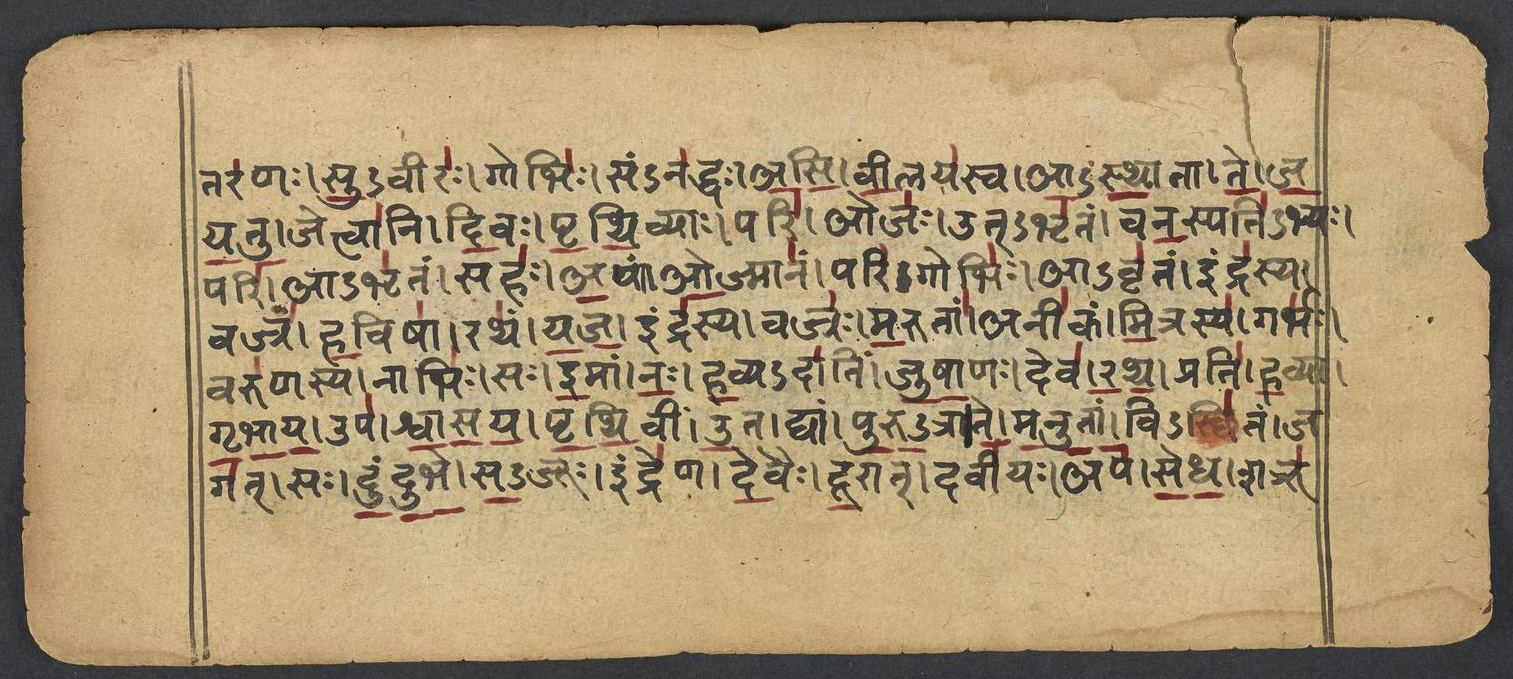
Penn Ms. Coll. 390 Item 41, fol. 460v (numbered 133v by the scribe) (OPenn image 461, upper leaf). Checked on the image: the Rigveda text on this page begins in RV 6.47.22 ‹-prastokaḥ it nu rādhasaḥ›. The next page with Rigveda text, fol. 461r (numbered 134r by the scribe), begins in RV 6.47.26 ‹-pra-taraṇaḥ su-vīraḥ gobhiḥ sam-naddhaḥ›. Verses 6.47.22-25 end on this page; 6.47.22 begins on fol. 460r (numbered 133r by the scribe).
22pra̱sto̱ka in nu rādha̍sas ta indra̱ daśa̱ kośa̍yī̱r daśa̍ vā̱jino̍ 'dāt | divo̍dāsād atithi̱gvasya̱ rādha̍ḥ śāmba̱raṁ vasu̱ praty a̍grabhīṣma ||
23daśāśvā̱n daśa̱ kośā̱n daśa̱ vastrādhi̍bhojanā | daśo̍ hiraṇyapi̱ṇḍān divo̍dāsād asāniṣam ||
24daśa̱ rathā̱n praṣṭi̍mataḥ śa̱taṁ gā atha̍rvabhyaḥ | a̱śva̱thaḥ pā̱yave̍ 'dāt ||
25mahi̱ rādho̍ vi̱śvaja̍nya̱ṁ dadhā̍nān bha̱radvā̍jān sārñja̱yo a̱bhy a̍yaṣṭa ||
Compare: Padapāṭha (word-by-word text written in the manuscript; Sansknet e-text via GRETIL)
22prastokaḥ | it | nu | rādhasaḥ | te | indra | daśa | kośayīḥ | daśa | vājinaḥ | adāt | divaḥ-dāsāt | atithi-gvasya | rādhaḥ | śāmbaram | vasu | prati | agrabhīṣma
23daśa | aśvān | daśa | kośān | daśa | vastrā | adhi-bhojanā | daso iti | hiraṇya-piṇḍān | divaḥ-dāsāt | asāniṣam
24daśa | rathān | praṣṭi-mataḥ | śatam | gāḥ | atharva-bhyaḥ | aśvathaḥ | pāyave | adāt
25mahi | rādhaḥ | viśva-janyam | dadhānān | bharat-vājān | sañjaryaḥ | abhi | ayaṣṭa
22Out of thy bounty, Indra, hath Prastoka bestowed ten coffers and ten mettled horses. We have received in turn from Divodâsa Ṣambara's wealth, the gift of Âtithigva.
23Ten horses and ten treasure-chests, ten garments as an added gift, These and ten lumps of gold have I received from Divodâsa's hand.
24Ten cars with extra steed to each, for the Atharvans hundred cows, Hath Aṣvatha to Pâyu given.
25Thus Sr̥injaya's son honoured the Bharadvâjas, recipients of all noble gifts and bounty.
Where on the image
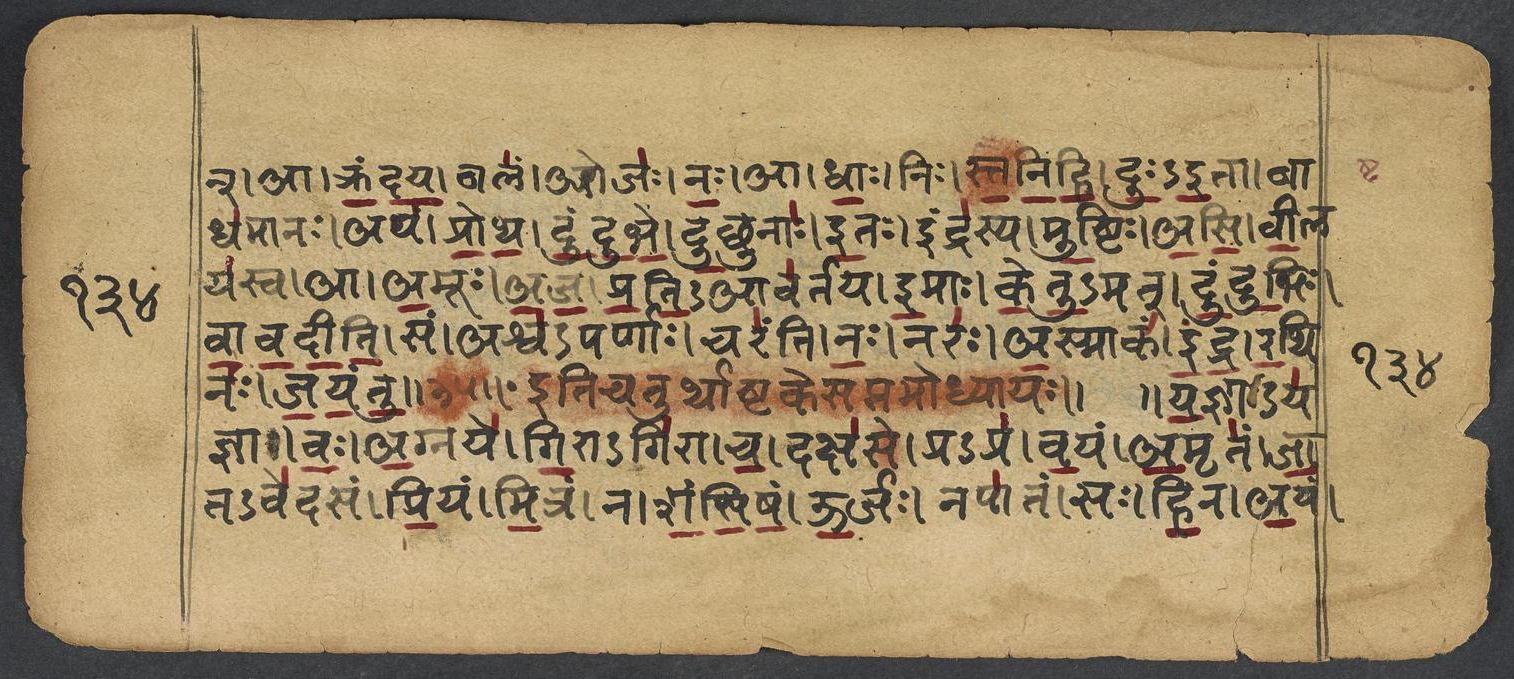
Penn Ms. Coll. 390 Item 41, fol. 461r (numbered 134r by the scribe) (OPenn image 461, lower leaf). Checked on the image: the Rigveda text on this page begins in RV 6.47.26 ‹-pra-taraṇaḥ su-vīraḥ gobhiḥ sam-naddhaḥ›. The next page with Rigveda text, fol. 461v (numbered 134v by the scribe), begins in RV 6.47.29 ‹-śatrūn›. Verses 6.47.26-28 end on this page; 6.47.26 begins on fol. 460v (numbered 133v by the scribe).
26vana̍spate vī̱ḍva̍ṅgo̱ hi bhū̱yā a̱smatsa̍khā pra̱tara̍ṇaḥ su̱vīra̍ḥ | gobhi̱ḥ saṁna̍ddho asi vī̱ḻaya̍svāsthā̱tā te̍ jayatu̱ jetvā̍ni ||
27di̱vas pṛ̍thi̱vyāḥ pary oja̱ udbhṛ̍ta̱ṁ vana̱spati̍bhya̱ḥ pary ābhṛ̍ta̱ṁ saha̍ḥ | a̱pām o̱jmāna̱m pari̱ gobhi̱r āvṛ̍ta̱m indra̍sya̱ vajra̍ṁ ha̱viṣā̱ ratha̍ṁ yaja ||
28indra̍sya̱ vajro̍ ma̱rutā̱m anī̍kam mi̱trasya̱ garbho̱ varu̍ṇasya̱ nābhi̍ḥ | semāṁ no̍ ha̱vyadā̍tiṁ juṣā̱ṇo deva̍ ratha̱ prati̍ ha̱vyā gṛ̍bhāya ||
Compare: Padapāṭha (word-by-word text written in the manuscript; Sansknet e-text via GRETIL)
26vanaspate | vīḷu-aṅgaḥ | hi | bhūyāḥ | asmat-sakhā | pra-taraṇaḥ | su-vīraḥ | gobhiḥ | sam-naddhaḥ | asi | vīḷayasva | āsthātā | te | jayatu | jetvāni
27divaḥ | pṛthivyāḥ | pari | ojaḥ | ut-bhṛtam | vanaspati-bhyaḥ | pari | ābhṛtam | sahaḥ | apām | ojmānam | pari | gobhiḥ | āvṛtam | indrasya | vajram | haviṣā | ratham | yaja
28indrasya | vajraḥ | marutām | anīkam | mitrasya | garbhaḥ | varuṇasya | nābhiḥ | saḥ | imām | naḥ | havyad-ātim | juṣāṇaḥ | deva | ratha | prati | havyā | gṛbhāya
26Lord of the wood, be firm and strong in body: be, bearing us, a brave victorious hero Show forth thy strength, compact with straps of leather, and let thy rider win all spoils of battle.
27Its mighty strength was borrowed from the heaven and earth: its conquering force was brought from sovrans of the wood. Honour with holy gifts the Car like Indra's bolt, the Car bound round with straps, the vigour of the floods.
28Thou Bolt of Indra, Vanguard of the Maruts, close knit to Varuṇa and Child of Mitra,– As such, accepting gifts which here we offer, receive, O Godlike Chariot, these oblations.
Where on the image
Penn Ms. Coll. 390 Item 41, fol. 461v (numbered 134v by the scribe) (OPenn image 462, upper leaf). Checked on the image: the Rigveda text on this page begins in RV 6.47.29 ‹-śatrūn›. The next page with Rigveda text, fol. 462r (numbered 135r by the scribe), begins in RV 6.48.2 ‹asma-yuḥ dāśema havya-dātaye bhuvat›. Verses 6.47.29-31 end on this page; 6.47.29 begins on fol. 461r (numbered 134r by the scribe).
29upa̍ śvāsaya pṛthi̱vīm u̱ta dyām pu̍ru̱trā te̍ manutā̱ṁ viṣṭhi̍ta̱ṁ jaga̍t | sa du̍ndubhe sa̱jūr indre̍ṇa de̱vair dū̱rād davī̍yo̱ apa̍ sedha̱ śatrū̍n ||
30ā kra̍ndaya̱ bala̱m ojo̍ na̱ ā dhā̱ niḥ ṣṭa̍nihi duri̱tā bādha̍mānaḥ | apa̍ protha dundubhe du̱cchunā̍ i̱ta indra̍sya mu̱ṣṭir a̍si vī̱ḻaya̍sva ||
31āmūr a̍ja pra̱tyāva̍rtaye̱māḥ ke̍tu̱mad du̍ndu̱bhir vā̍vadīti | sam aśva̍parṇā̱ś cara̍nti no̱ naro̱ 'smāka̍m indra ra̱thino̍ jayantu ||
Compare: Padapāṭha (word-by-word text written in the manuscript; Sansknet e-text via GRETIL)
29upa | śvāsaya | pṛthivīm | uta | dyām | puru-trā | te | manutām | vi-sthitam | jagat | saḥ | dundubhe | sa-jūḥ | indreṇa | devaiḥ | dūrāt | davīyaḥ | apa | sedha | śatrūn
30ā | krandaya | balam | ojaḥ | naḥ | ā | dhāḥ | niḥ | stanihi | duḥ-itā | bādhamānaḥ | apa | protha | dundubhe | ducchunāḥ | itaḥ | indrasya | muṣṭiḥ | asi | vīḷayasva
31ā | amūḥ | aja | prati-āvartaya | imāḥ | ketu-mat | dundubhiḥ | vāvadīti | sam | aśva-parṇāḥ | caranti | naḥ | naraḥ | asmākam | indra | rathinaḥ | jayantu
29Send forth thy voice aloud through earth and heaven, and let the world in all its breadth regard thee; O Drum, accordant with the Gods and Indra, drive thou afar, yea, very far, our foemen.
30Thunder out strength and fill us full of vigour: yea, thunder forth and drive away all dangers. Drive hence, O War-drum, drive away misfortune: thou art the Fist of Indra: show thy firmness.
31Drive hither those, and these again bring hither: the War-drum speaks aloud as battle's signal. Our heroes, winged with horses, come together. Let our car-warriors, Indra, be triumphant.
Notes
- Sanskrit: Aufrecht's edition (1877) with the Vedic accents, as entered by van Nooten and Holland (GRETIL).
- English: Ralph T. H. Griffith, The Hymns of the Rigveda (1889-1892; 2nd ed. 1896-1897), from the VedaWeb digital text; OCR slips in that text were corrected against the printed 2nd edition (data/sources/rigveda/griffith_errata.json).
- Padapāṭha (edition text): Sansknet e-text via GRETIL (CC BY-NC-SA 4.0).
Cite
Sources
- Source: Penn Ms. Coll. 390 Item 41 (undated (catalogued with Penn's 18th-19th c. Vedic manuscripts)), OPenn, Public Domain Mark + Aufrecht's accented text (GRETIL) + Griffith's English (VedaWeb) (holding institution)
- Critical edition: Aufrecht (1877), accented e-text via GRETIL
← previous · → next · v cycle view · l back to library