Rigveda 6.48: To Agni, the Maruts and Pusan
Introduction
Rigveda 6.48 is a hymn of 22 verses addressed to Agni, the Maruts and Pusan. It stands in book (maṇḍala) 6, the family book of Bharadvāja. The Rigveda is the oldest collection of Sanskrit hymns, composed in the second half of the second millennium BCE and handed down orally for many centuries before it was written down.
The manuscript shown is Penn Ms. Coll. 390 Item 41 (University of Pennsylvania), an undated paper manuscript of the padapāṭha (the word-by-word recitation text, in which every word is written separately and compounds are split) of the whole Ṛgveda in Devanāgarī, 884 leaves in fascicles, 7-9 lines to the page, accents in red; this hymn stands on fol. 461v-464v. Each section below gives the verses that end on one page; the page boundaries were read on the images (the opening words of every page), not counted out. Where the manuscript is a padapāṭha (the word-by-word recitation text), the section shows Aufrecht's continuous (saṃhitā) text first and, as the edition text, the padapāṭha of the same verses, which is the form written on the page.
How was this verified? (Provenance)
Where on the image
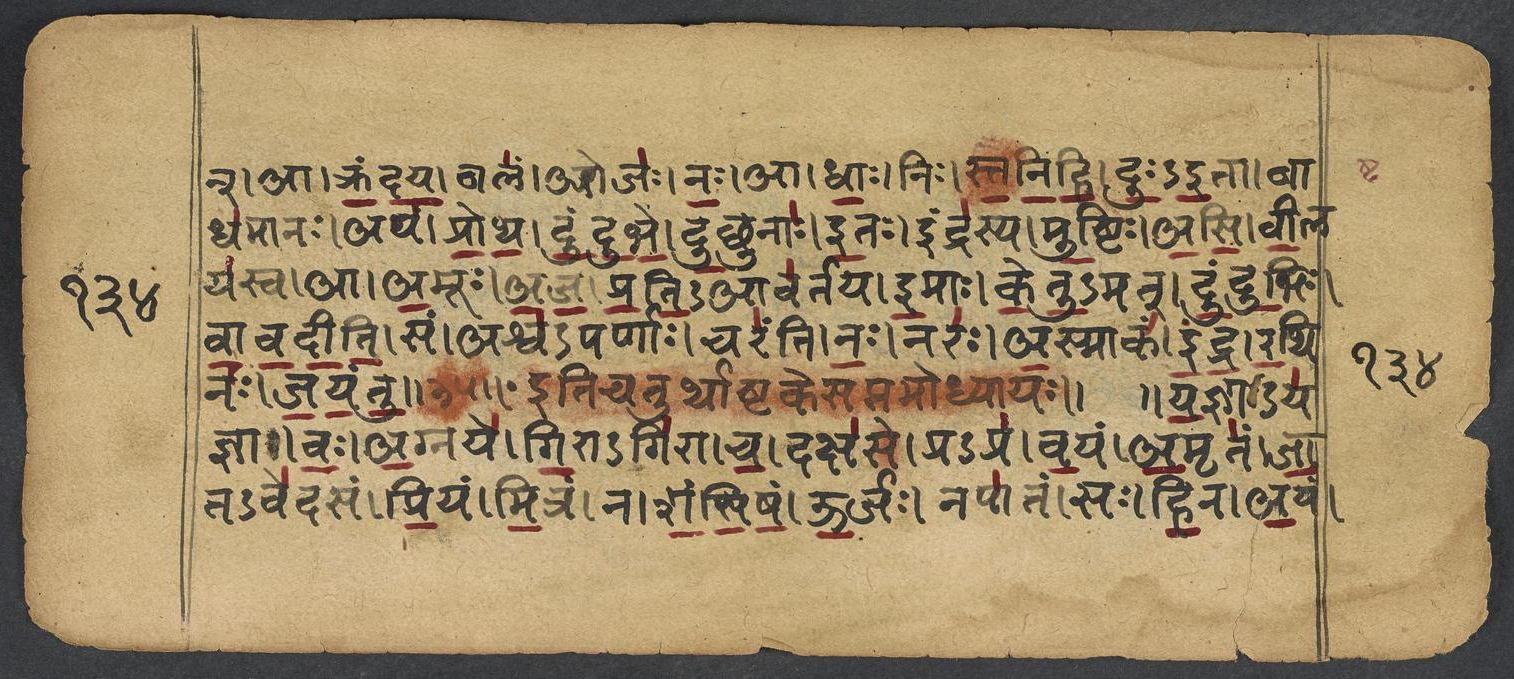
Penn Ms. Coll. 390 Item 41, fol. 461v (numbered 134v by the scribe) (OPenn image 462, upper leaf). Checked on the image: the Rigveda text on this page begins in RV 6.47.29 ‹-śatrūn›. The next page with Rigveda text, fol. 462r (numbered 135r by the scribe), begins in RV 6.48.2 ‹asma-yuḥ dāśema havya-dātaye bhuvat›. Verse 6.48.1 ends on this page.
1ya̱jñā-ya̍jñā vo a̱gnaye̍ gi̱rā-gi̍rā ca̱ dakṣa̍se | pra-pra̍ va̱yam a̱mṛta̍ṁ jā̱tave̍dasam pri̱yam mi̱traṁ na śa̍ṁsiṣam ||
Compare: Padapāṭha (word-by-word text written in the manuscript; Sansknet e-text via GRETIL)
1yajñāyajñā | vaḥ | agnaye | girāgirā | ca | dakṣase | pra-pra | vayam | amṛtam | jāta-vedasam | priyam | mitram | na | śaṃsiṣam
1SING to your Agni with each song, at every sacrifice, for strength. Come, let us praise the Wise and Everlasting God, even as a well-beloved Friend,
Where on the image
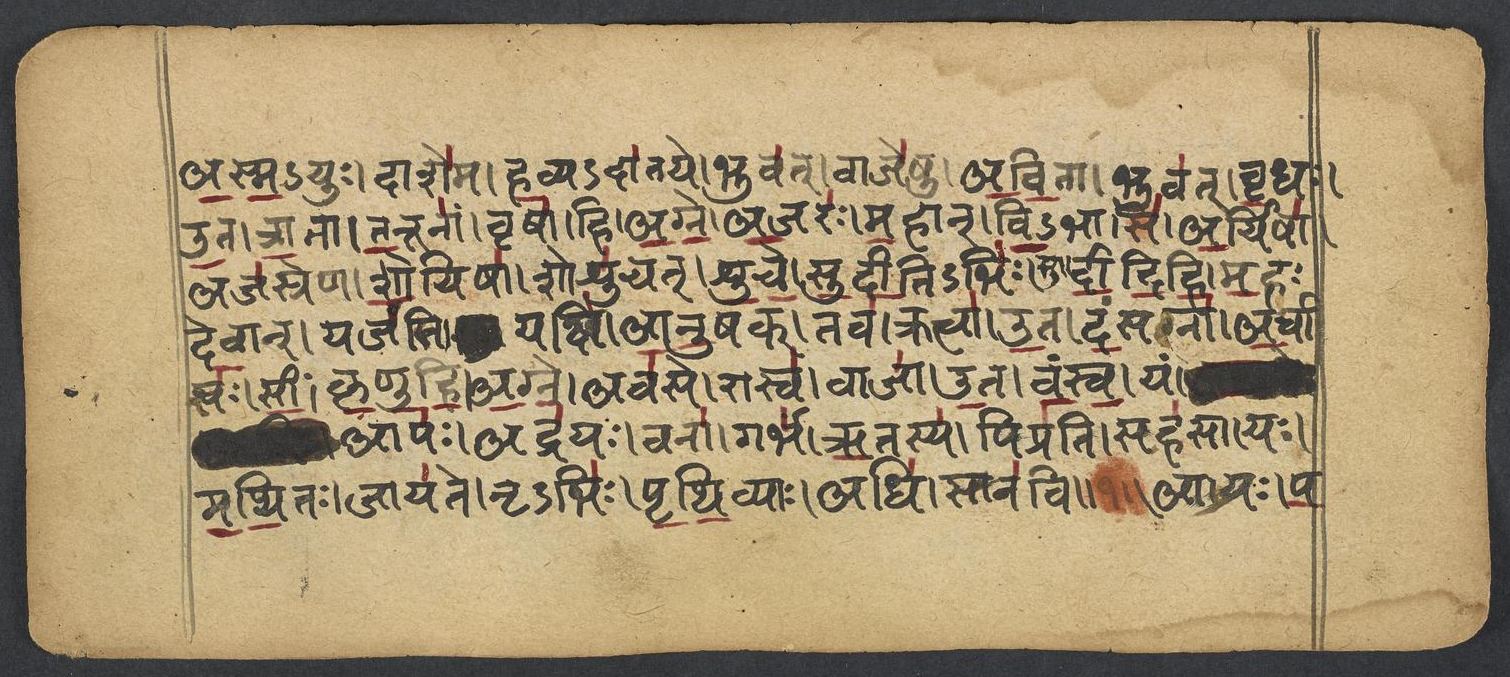
Penn Ms. Coll. 390 Item 41, fol. 462r (numbered 135r by the scribe) (OPenn image 462, lower leaf). Checked on the image: the Rigveda text on this page begins in RV 6.48.2 ‹asma-yuḥ dāśema havya-dātaye bhuvat›. The next page with Rigveda text, fol. 462v (numbered 135v by the scribe), begins in RV 6.48.6 ‹-paprau bhānunā rodasī iti›. Verses 6.48.2-5 end on this page; 6.48.2 begins on fol. 461v (numbered 134v by the scribe).
2ū̱rjo napā̍ta̱ṁ sa hi̱nāyam a̍sma̱yur dāśe̍ma ha̱vyadā̍taye | bhuva̱d vāje̍ṣv avi̱tā bhuva̍d vṛ̱dha u̱ta trā̱tā ta̱nūnā̍m ||
3vṛṣā̱ hy a̍gne a̱jaro̍ ma̱hān vi̱bhāsy a̱rciṣā̍ | aja̍sreṇa śo̱ciṣā̱ śośu̍cac chuce sudī̱tibhi̱ḥ su dī̍dihi ||
4ma̱ho de̱vān yaja̍si̱ yakṣy ā̍nu̱ṣak tava̱ kratvo̱ta da̱ṁsanā̍ | a̱rvāca̍ḥ sīṁ kṛṇuhy a̱gne 'va̍se̱ rāsva̱ vājo̱ta va̍ṁsva ||
5yam āpo̱ adra̍yo̱ vanā̱ garbha̍m ṛ̱tasya̱ pipra̍ti | saha̍sā̱ yo ma̍thi̱to jāya̍te̱ nṛbhi̍ḥ pṛthi̱vyā adhi̱ sāna̍vi ||
Compare: Padapāṭha (word-by-word text written in the manuscript; Sansknet e-text via GRETIL)
2ūrjaḥ | napātam | saḥ | hina | ayam | asma-yuḥ | dāśema | havya-dātaye | bhuvat | vājeṣu | avitā | bhuvat | vṛdhaḥ | uta | trātā | tanūnām
3vṛṣā | hi | agne | ajaraḥ | mahān | vi-bhāsi | arciṣā | ajasreṇa | śociṣā | śośucat | śuce | sudīti-bhiḥ | su | dīdihi
4mahaḥ | devān | yajasi | yakṣi | ānuṣak | tava | kratvā | uta | daṃsanā | arvācaḥ | sīm | kṛṇuhi | agne | avase | rāsva | vājā | uta | vaṃsva
5yam | āpaḥ | adrayaḥ | vanā | garbham | ṛtasya | piprati | sahasā | yaḥ | math itaḥ | jāyate | nṛ-bhiḥ | pṛthivyāḥ | adhi | sānavi
2The Son of Strength; for is he not our gracious Lord? Let us serve him who bears our gifts. In battle may he be our help and strengthener, yea, be the saviour of our lives.
3Agni, thou beamest forth with light, great Hero, never changed by time. Shining, pure Agni! with a light that never fades, beam with thy fair beams brilliantly.
4Thou worshippest great Gods: bring them without delay by wisdom and thy wondrous power. O Agni, make them turn hither to succour us. Give strength, and win it for thyself.
5He whom floods, stones, and trees support, the offspring of eternal Law; He who when rubbed with force is brought to life by men upon the lofty height of earth;
Where on the image
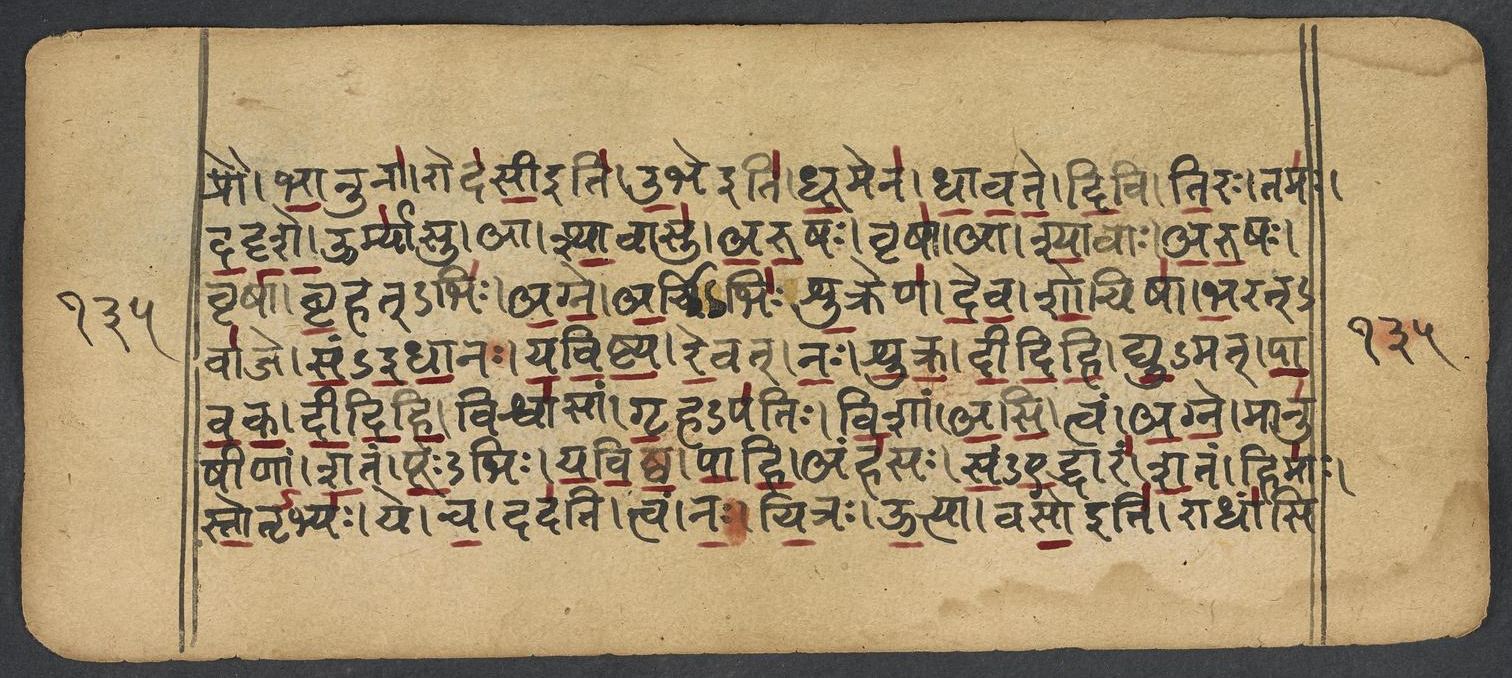
Penn Ms. Coll. 390 Item 41, fol. 462v (numbered 135v by the scribe) (OPenn image 463, upper leaf). Checked on the image: the Rigveda text on this page begins in RV 6.48.6 ‹-paprau bhānunā rodasī iti›. The next page with Rigveda text, fol. 463r (numbered 136r by the scribe), begins in RV 6.48.9 ‹codaya asya rāyaḥ tvam›. Verses 6.48.6-8 end on this page; 6.48.6 begins on fol. 462r (numbered 135r by the scribe).
6ā yaḥ pa̱prau bhā̱nunā̱ roda̍sī u̱bhe dhū̱mena̍ dhāvate di̱vi | ti̱ras tamo̍ dadṛśa̱ ūrmyā̱sv ā śyā̱vāsv a̍ru̱ṣo vṛṣā śyā̱vā a̍ru̱ṣo vṛṣā̍ ||
7bṛ̱hadbhi̍r agne a̱rcibhi̍ḥ śu̱kreṇa̍ deva śo̱ciṣā̍ | bha̱radvā̍je samidhā̱no ya̍viṣṭhya re̱van na̍ḥ śukra dīdihi dyu̱mat pā̍vaka dīdihi ||
8viśvā̍sāṁ gṛ̱hapa̍tir vi̱śām a̍si̱ tvam a̍gne̱ mānu̍ṣīṇām | śa̱tam pū̱rbhir ya̍viṣṭha pā̱hy aṁha̍saḥ same̱ddhāra̍ṁ śa̱taṁ himā̍ḥ sto̱tṛbhyo̱ ye ca̱ dada̍ti ||
Compare: Padapāṭha (word-by-word text written in the manuscript; Sansknet e-text via GRETIL)
6ā | yaḥ | paprau | bhānunā | rodasī iti | ubhe iti | dhūmena | dhāvate | divi | tiraḥ | tamaḥ | dadṛśe | ūrmyāsu | ā | śyāvāsu | aruṣaḥ | vṛṣā | ā | śyāvāḥ | aruṣaḥ | vṛṣā
7bṛhat-bhiḥ | agne | arci-bhiḥ | śukreṇa | deva | śociṣā | bharat-vāje | sam-idhānaḥ | yaviṣṭhya | revat | naḥ | śukra | dīdihi | dyu-mat | pāvaka | dīdihi
8viśvāsām | gṛha-patiḥ | viśām | asi | tvam | agne | mānuṣīṇām | śatam | pūḥ-bhiḥ | yaviṣṭha | pāhi | aṃhasaḥ | sam-eddhāram | śatam | himāḥ | stotṛ-bhyaḥ | ye | ca | dadati
6He who hath filled both worlds full with his brilliant shine, who hastens with his smoke to heaven; He made himself apparent through the gloom by night, the Red Bull in the darksome nights, the Red Bull in the darksome nights.
7O Agni, with thy lofty beams, with thy pure brilliancy, O God, Kindled, Most Youthful One! by Bharadvâja's hand, shine on us, O pure God, with wealth, shine, Purifier! splendidly.
8Thou art the Lord of house and home of all the tribes, O Agni, of all tribes of men. Guard with a hundred forts thy kindler from distress, through hundred winters, Youngest God! and those who make thy singers rich.
Where on the image
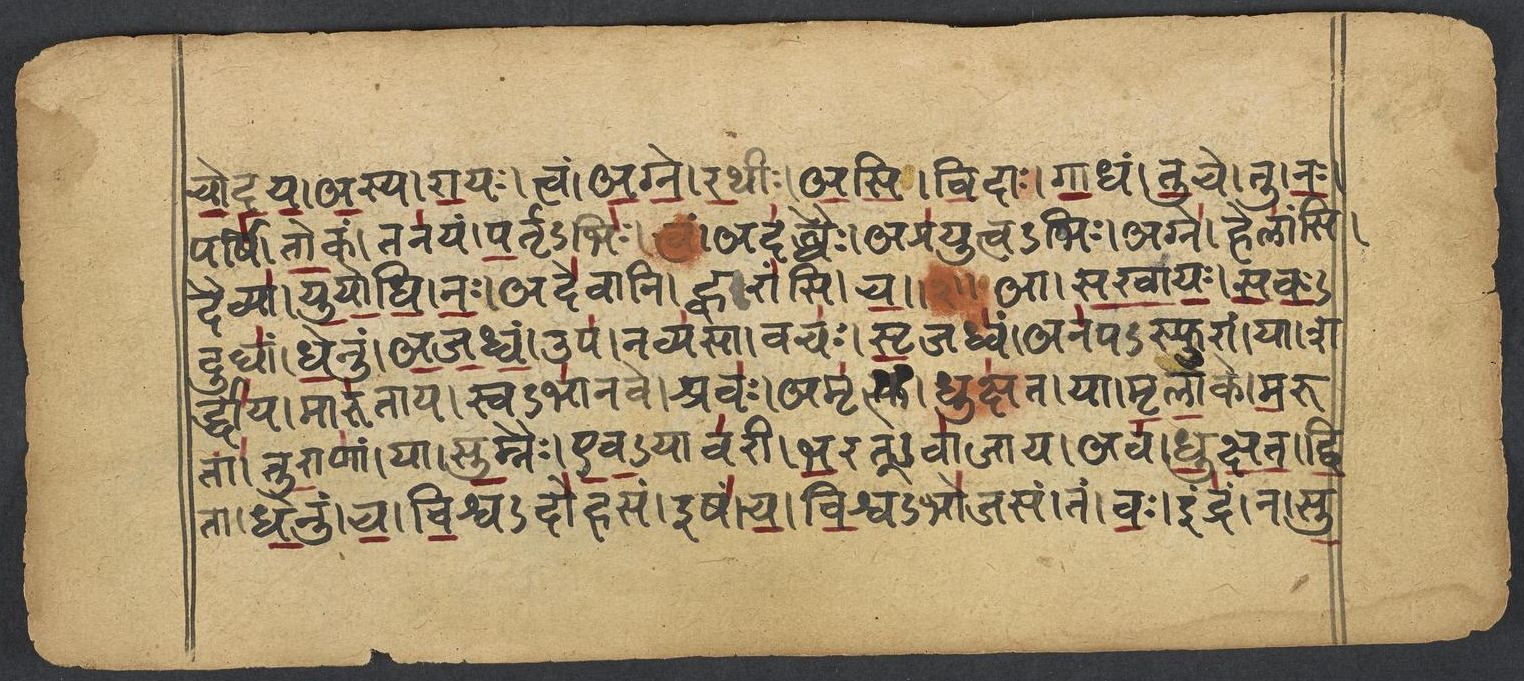
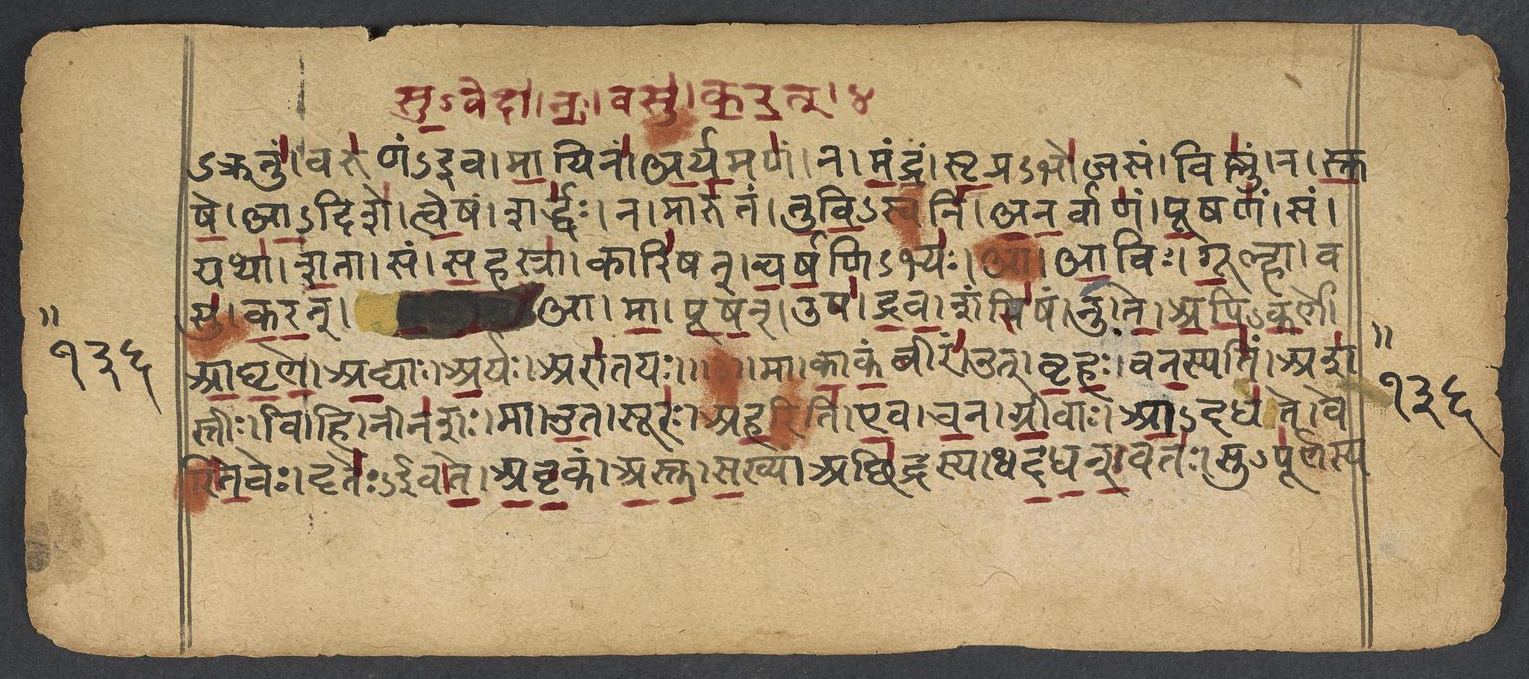
Penn Ms. Coll. 390 Item 41, fol. 463r (numbered 136r by the scribe) (OPenn image 463, lower leaf). Checked on the image: the Rigveda text on this page begins in RV 6.48.9 ‹codaya asya rāyaḥ tvam›. The next page with Rigveda text, fol. 463v (numbered 136v by the scribe), begins in RV 6.48.14 ‹-su-kratum varuṇam-iva māyinam aryamaṇam›. Verses 6.48.9-13 end on this page; 6.48.9 begins on fol. 462v (numbered 135v by the scribe).
9tvaṁ na̍ś ci̱tra ū̱tyā vaso̱ rādhā̍ṁsi codaya | a̱sya rā̱yas tvam a̍gne ra̱thīr a̍si vi̱dā gā̱dhaṁ tu̱ce tu na̍ḥ ||
10parṣi̍ to̱kaṁ tana̍yam pa̱rtṛbhi̱ṣ ṭvam ada̍bdhai̱r apra̍yutvabhiḥ | agne̱ heḻā̍ṁsi̱ daivyā̍ yuyodhi̱ no 'de̍vāni̱ hvarā̍ṁsi ca ||
11ā sa̍khāyaḥ saba̱rdughā̍ṁ dhe̱num a̍jadhva̱m upa̱ navya̍sā̱ vaca̍ḥ | sṛ̱jadhva̱m ana̍pasphurām ||
12yā śardhā̍ya̱ māru̍tāya̱ svabhā̍nave̱ śravo 'mṛ̍tyu̱ dhukṣa̍ta | yā mṛ̍ḻī̱ke ma̱rutā̍ṁ tu̱rāṇā̱ṁ yā su̱mnair e̍va̱yāva̍rī ||
13bha̱radvā̍jā̱yāva̍ dhukṣata dvi̱tā | dhe̱nuṁ ca̍ vi̱śvado̍hasa̱m iṣa̍ṁ ca vi̱śvabho̍jasam ||
Compare: Padapāṭha (word-by-word text written in the manuscript; Sansknet e-text via GRETIL)
9tvam | naḥ | citraḥ | ūtyā | vaso iti | rādhāṃsi | codaya | asya | rāyaḥ | tvam | agne | rathīḥ | asi | vidāḥ | gādham | tuce | tu | naḥ
10parṣi | tokam | tanayam | partṛ-bhiḥ | tvam | adabdhaiḥ | aprayutva-bhiḥ | agne | helāṃsi | daivyā | yuyodhi | naḥ | adevāni | hvarāṃsi | ca
11ā | sakhāyaḥ | sabaḥ-dughām | dhenum | ajadhvam | upa | navyasā | vacaḥ | sṛjadhvam | anapa-sphurām
12yā | śardhāya | mārutāya | sva-bhānave | śravaḥ | amṛtyu | dhukṣata | yā | mṛḷīke | marutām | turāṇām | yā | sumnaiḥ | eva-yāvarī
13bharat-vājāya | ava | dhukṣata | dvitā | dhenum | ca | viśva-dohasam | iṣam | ca | v iśva-bhojasam
9Wonderful, with thy favouring help, send us thy bounties, gracious Lord. Thou art the Charioteer, Agni, of earthly wealth: find rest and safety for our seed.
10With guards unfailing never negligent speed thou our children and our progeny. Keep far from us, O Agni, all celestial wrath and wickedness of godless men.
11Hither, O friends, with newest song drive her who freely pours her milk; Loose her who never turns away;
12Who, for the host of Maruts bright with native sheen, hath shed immortal fame like milk; Whom the impetuous Maruts look upon with love, who moves in splendour on their ways.
13For Bharadvâja she poured down in days of old The milch-cow yielding milk for all, and food that gives all nourishment.
Where on the image
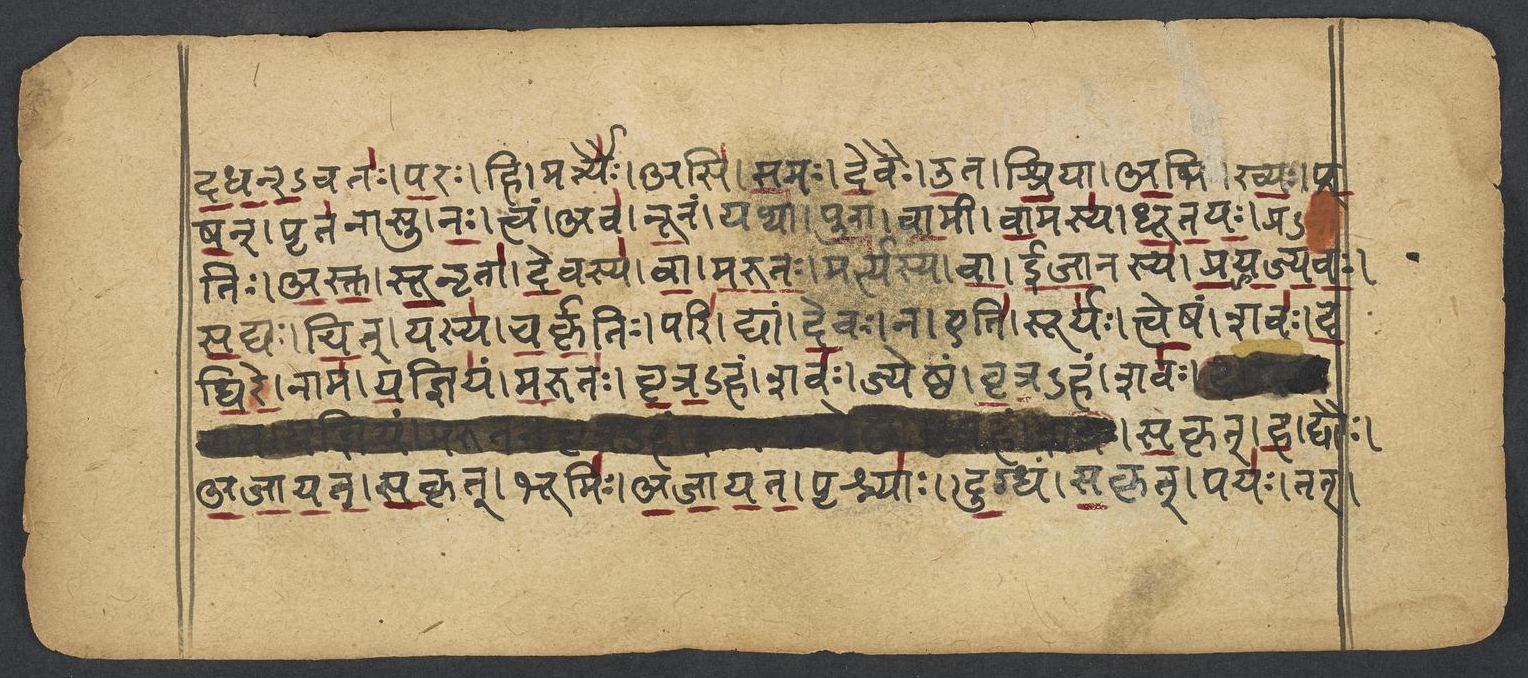
Penn Ms. Coll. 390 Item 41, fol. 463v (numbered 136v by the scribe) (OPenn image 464, upper leaf). Checked on the image: the Rigveda text on this page begins in RV 6.48.14 ‹-su-kratum varuṇam-iva māyinam aryamaṇam›. The next page with Rigveda text, fol. 464r (numbered 137r by the scribe), begins in RV 6.48.18 ‹dadhan-vataḥ›. Verses 6.48.14-17 end on this page; 6.48.14 begins on fol. 463r (numbered 136r by the scribe).
14taṁ va̱ indra̱ṁ na su̱kratu̱ṁ varu̍ṇam iva mā̱yina̍m | a̱rya̱maṇa̱ṁ na ma̱ndraṁ sṛ̱prabho̍jasa̱ṁ viṣṇu̱ṁ na stu̍ṣa ā̱diśe̍ ||
15tve̱ṣaṁ śardho̱ na māru̍taṁ tuvi̱ṣvaṇy a̍na̱rvāṇa̍m pū̱ṣaṇa̱ṁ saṁ yathā̍ śa̱tā | saṁ sa̱hasrā̱ kāri̍ṣac carṣa̱ṇibhya̱ ām̐ ā̱vir gū̱ḻhā vasū̍ karat su̱vedā̍ no̱ vasū̍ karat ||
16ā mā̍ pūṣa̱nn upa̍ drava̱ śaṁsi̍ṣa̱ṁ nu te̍ apika̱rṇa ā̍ghṛṇe | a̱ghā a̱ryo arā̍tayaḥ ||
17mā kā̍ka̱mbīra̱m ud vṛ̍ho̱ vana̱spati̱m aśa̍stī̱r vi hi nīna̍śaḥ | mota sūro̱ aha̍ e̱vā ca̱na grī̱vā ā̱dadha̍te̱ veḥ ||
Compare: Padapāṭha (word-by-word text written in the manuscript; Sansknet e-text via GRETIL)
14tam | vaḥ | indram | na | su-kratum | varuṇam-iva | māyinam | aryamaṇam | na | mandram | sṛpra-bhojasam | viṣṇum | na | stuṣe | ādiśe
15tveṣam | śardhaḥ | na | mārutam | tuvi-svaṇi | anarvāṇam | pūṣaṇam | sam | yathā | śatā | sam | sahasrā | kāriṣat | carṣaṇi-bhyaḥ | ā | āviḥ | gūḷhā | vasu | karat | su-vedā | naḥ | vasu | karat
16ā | mā | pūṣan | upa | drava | śaṃsiṣam | nu | te | api-karṇe | āghṛṇe | aghāḥ | aryaḥ | arātayaḥ
17mā | kākambīram | ut | vṛhaḥ | vanaspatim | aśastīḥ | vi | hi | nīnaśaḥ | mā | uta | sūraḥ | ahariti | eva | cana | grīvā | ādadhate | veḥ
14Your friend like Indra passing wise, with magic power like Varuṇa. Like Aryaman joy-giving, bringing plenteous food like Vishṇu, for my wish, I praise,
15Bright as the host of Maruts mighty in their roar. May they bring Pûshan free from foes; May they bring hither hundreds, thousands for our men: may they bring hidden stores to light, and make wealth easy to be found.
16Haste to me, Pûshan, in thine ear, bright Deity: I fain would speak: Most sinful is our foeman's hate.
17Tear not up by the roots the Kâkambîra tree: destroy thou all malignity. Let them not snare by day the neck of that Celestial Bird the Sun.
Where on the image
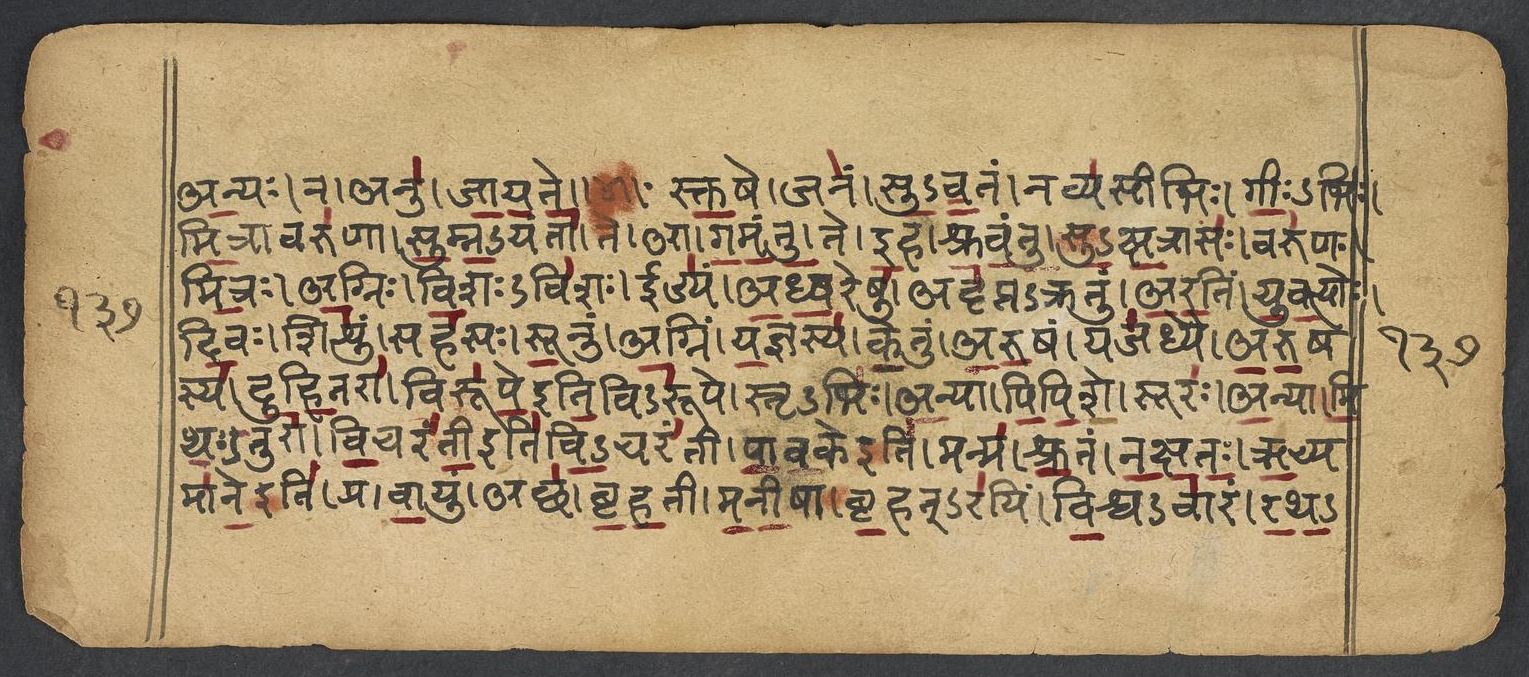
Penn Ms. Coll. 390 Item 41, fol. 464r (numbered 137r by the scribe) (OPenn image 464, lower leaf). Checked on the image: the Rigveda text on this page begins in RV 6.48.18 ‹dadhan-vataḥ›. The next page with Rigveda text, fol. 464v (numbered 137v by the scribe), begins in RV 6.48.22 ‹anyaḥ na anu jāyate›. Verses 6.48.18-21 end on this page; 6.48.18 begins on fol. 463v (numbered 136v by the scribe).
18dṛte̍r iva te 'vṛ̱kam a̍stu sa̱khyam | acchi̍drasya dadha̱nvata̱ḥ supū̍rṇasya dadha̱nvata̍ḥ ||
19pa̱ro hi martyai̱r asi̍ sa̱mo de̱vair u̱ta śri̱yā | a̱bhi khya̍ḥ pūṣa̱n pṛta̍nāsu na̱s tvam avā̍ nū̱naṁ yathā̍ pu̱rā ||
20vā̱mī vā̱masya̍ dhūtaya̱ḥ praṇī̍tir astu sū̱nṛtā̍ | de̱vasya̍ vā maruto̱ martya̍sya vejā̱nasya̍ prayajyavaḥ ||
21sa̱dyaś ci̱d yasya̍ carkṛ̱tiḥ pari̱ dyāṁ de̱vo naiti̱ sūrya̍ḥ | tve̱ṣaṁ śavo̍ dadhire̱ nāma̍ ya̱jñiya̍m ma̱ruto̍ vṛtra̱haṁ śavo̱ jyeṣṭha̍ṁ vṛtra̱haṁ śava̍ḥ ||
Compare: Padapāṭha (word-by-word text written in the manuscript; Sansknet e-text via GRETIL)
18dṛteḥ-iva | te | avṛkam | astu | sakhyam | acchidrasya | dadhan-vataḥ | su-pūrṇasya | dadhan-vataḥ
19paraḥ | hi | martyaiḥ | asi | samaḥ | devaiḥ | uta | śriyā | abhi | khyaḥ | pūṣan | pṛtanāsu | naḥ | tvam | ava | nūnam | yathā | purā
20vāmī | vāmasya | dhūtayaḥ | pra-nītiḥ | astu | sūnṛtā | devasya | vā | marutaḥ | martyasya | vejānasya | pra-yajyavaḥ
21sadyaḥ | cit | yasya | carkṛtiḥ | pari | dyām | devaḥ | na | eti | sūryaḥ | tveṣam | śavaḥ | dadhire | nāma | yajñiyam | marutaḥ | vṛtra-ham | śavaḥ | jyeṣṭham | vṛtra-ham | śavaḥ
18Uninjured let thy friendship be, like the smooth surface of a skin, A flawless skin, containing curds, full to the mouth, containing curds.
19For thou art high above mankind, in glory equal to the Gods. Therefore, O Pûshan, look upon us in the fight: now help us as in days of old.
20May the kind excellence of him the Kind, loud Roarers! be our guide, Be it the God's, O Maruts, or a mortal man's who worships, ye impetuous Ones!
21They whose high glory in a moment like the God, the Sun, goes round the space of heaven, The Maruts have obtained bright strength, a sacred name, strength that destroys the Vr̥itras, strength Vr̥itra-destroying excellent.
Where on the image
Penn Ms. Coll. 390 Item 41, fol. 464v (numbered 137v by the scribe) (OPenn image 465, upper leaf). Checked on the image: the Rigveda text on this page begins in RV 6.48.22 ‹anyaḥ na anu jāyate›. The next page with Rigveda text, fol. 465r (numbered 138r by the scribe), begins in RV 6.49.4 ‹-ratha-prām dyutad-yāmā ni-yutaḥ patyamānaḥ›. Verse 6.48.22 ends on this page; 6.48.22 begins on fol. 464r (numbered 137r by the scribe).
22sa̱kṛd dha̱ dyaur a̍jāyata sa̱kṛd bhūmi̍r ajāyata | pṛśnyā̍ du̱gdhaṁ sa̱kṛt paya̱s tad a̱nyo nānu̍ jāyate ||
Compare: Padapāṭha (word-by-word text written in the manuscript; Sansknet e-text via GRETIL)
22sakṛt | ha | dyauḥ | ajāyata | sakṛt | bhūmiḥ | ajāyata | pṛśnyāḥ | dugdham | sakṛt | payaḥ | tat | anyaḥ | na | anu | jāyate
22Once, only once, the heaven was made, once only once, the earth was formed- Once, only Pr̥iṣni's milk was shed: no second, after this, is born.
Notes
- Sanskrit: Aufrecht's edition (1877) with the Vedic accents, as entered by van Nooten and Holland (GRETIL).
- English: Ralph T. H. Griffith, The Hymns of the Rigveda (1889-1892; 2nd ed. 1896-1897), from the VedaWeb digital text; OCR slips in that text were corrected against the printed 2nd edition (data/sources/rigveda/griffith_errata.json).
- Padapāṭha (edition text): Sansknet e-text via GRETIL (CC BY-NC-SA 4.0).
Cite
Sources
- Source: Penn Ms. Coll. 390 Item 41 (undated (catalogued with Penn's 18th-19th c. Vedic manuscripts)), OPenn, Public Domain Mark + Aufrecht's accented text (GRETIL) + Griffith's English (VedaWeb) (holding institution)
- Critical edition: Aufrecht (1877), accented e-text via GRETIL
← previous · → next · v cycle view · l back to library