Rigveda 6.6: To Agni
Introduction
Rigveda 6.6 is a hymn of 7 verses addressed to Agni. It stands in book (maṇḍala) 6, the family book of Bharadvāja. The Rigveda is the oldest collection of Sanskrit hymns, composed in the second half of the second millennium BCE and handed down orally for many centuries before it was written down.
The manuscript shown is Penn Ms. Coll. 390 Item 41 (University of Pennsylvania), an undated paper manuscript of the padapāṭha (the word-by-word recitation text, in which every word is written separately and compounds are split) of the whole Ṛgveda in Devanāgarī, 884 leaves in fascicles, 7-9 lines to the page, accents in red; this hymn stands on fol. 408r-409r. Each section below gives the verses that end on one page; the page boundaries were read on the images (the opening words of every page), not counted out. Where the manuscript is a padapāṭha (the word-by-word recitation text), the section shows Aufrecht's continuous (saṃhitā) text first and, as the edition text, the padapāṭha of the same verses, which is the form written on the page.
How was this verified? (Provenance)
Where on the image
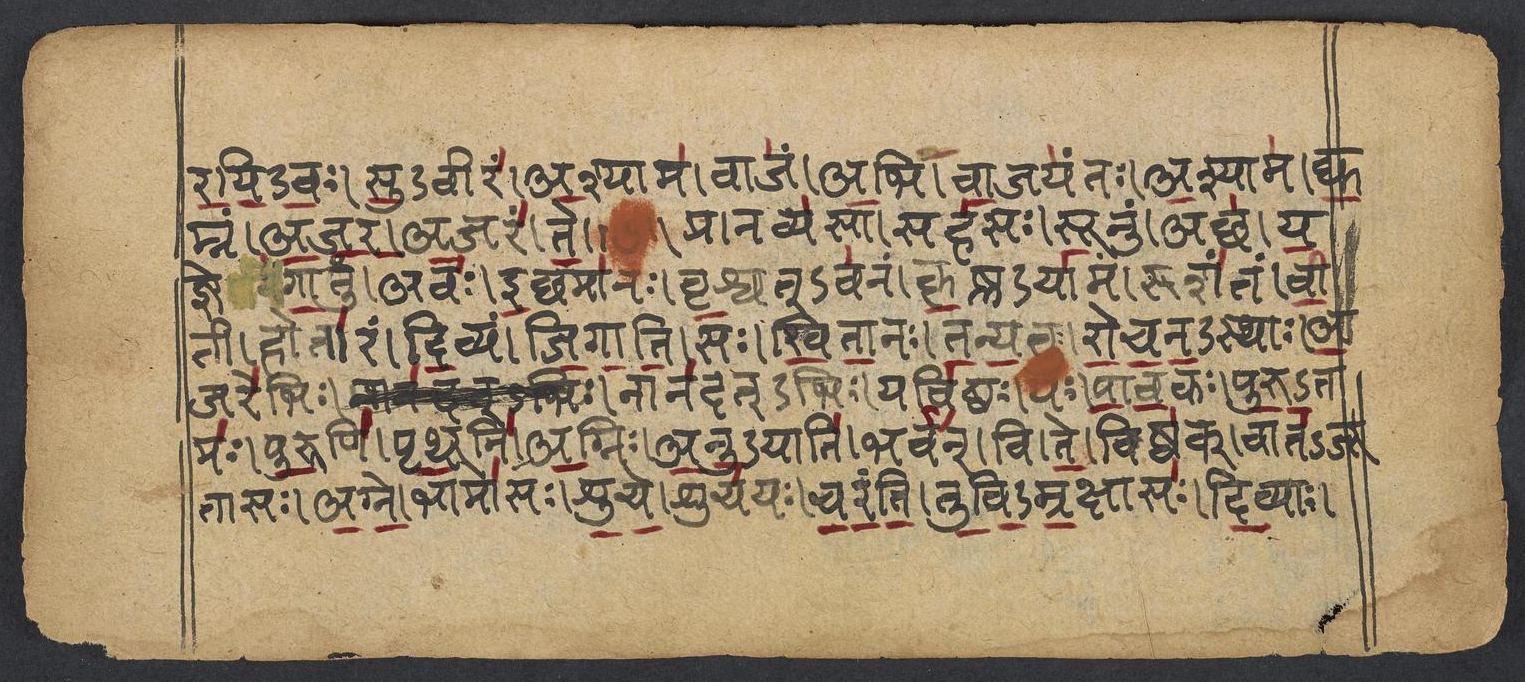
Penn Ms. Coll. 390 Item 41, fol. 408r (numbered 81r by the scribe) (OPenn image 408, lower leaf). Checked on the image: the Rigveda text on this page begins in RV 6.5.7 ‹rayi-vaḥ su-vīram aśyāma vājam›. The next page with Rigveda text, fol. 408v (numbered 81v by the scribe), begins in RV 6.6.3 ‹nava-gvāḥ vanā vananti dhṛṣatā›. Verses 6.6.1-2 end on this page.
1pra navya̍sā̱ saha̍saḥ sū̱num acchā̍ ya̱jñena̍ gā̱tum ava̍ i̱cchamā̍naḥ | vṛ̱ścadva̍naṁ kṛ̱ṣṇayā̍ma̱ṁ ruśa̍ntaṁ vī̱tī hotā̍raṁ di̱vyaṁ ji̍gāti ||
2sa śvi̍tā̱nas ta̍nya̱tū ro̍cana̱sthā a̱jare̍bhi̱r nāna̍dadbhi̱r yavi̍ṣṭhaḥ | yaḥ pā̍va̱kaḥ pu̍ru̱tama̍ḥ pu̱rūṇi̍ pṛ̱thūny a̱gnir a̍nu̱yāti̱ bharva̍n ||
Compare: Padapāṭha (word-by-word text written in the manuscript; Sansknet e-text via GRETIL)
1pra | navyasā | sahasaḥ | sūnum | accha | yajñena | gātum | avaḥ | icchamānaḥ | vṛścat-vanam | kṛṣṇayāmam | ruśantam | vītī | hotāram | divyam | jigāti
2saḥ | śvitānaḥ | tānyatuḥ | rocana-sthāḥ | ajarebhiḥ | nānadat-bhiḥ | yaviṣṭhaḥ | yaḥ | pāvakaḥ | puru-tamaḥ | purūṇi | pṛthūni | agniḥ | anu-yāti | bharvan
1HE who seeks furtherance and grace to help him goes to the Son of Strength with newest worship, Calling the heavenly Priest to share the banquet, who rends the wood, bright, with his blackened pathway.
2White-hued and thundering he dwells in splendour, Most Youthful, with the loudvoiced and eternal- Agni, most variform, the Purifier, who follows crunching many ample forests.
Where on the image
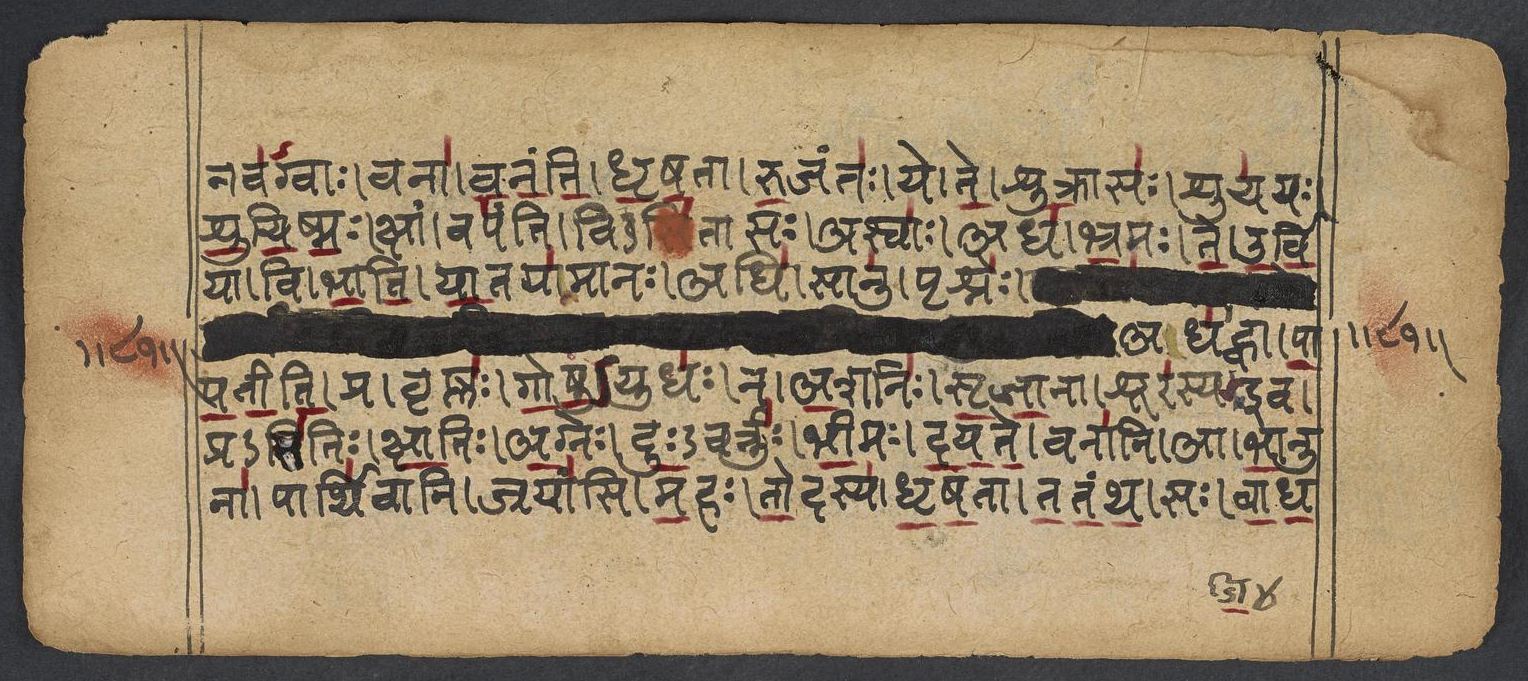
Penn Ms. Coll. 390 Item 41, fol. 408v (numbered 81v by the scribe) (OPenn image 409, upper leaf). Checked on the image: the Rigveda text on this page begins in RV 6.6.3 ‹nava-gvāḥ vanā vananti dhṛṣatā›. The next page with Rigveda text, fol. 409r (numbered 82r by the scribe), begins in RV 6.6.6 ‹-bādhasva apa bhayā sahaḥ-bhiḥ›. Verses 6.6.3-5 end on this page; 6.6.3 begins on fol. 408r (numbered 81r by the scribe).
3vi te̱ viṣva̱g vāta̍jūtāso agne̱ bhāmā̍saḥ śuce̱ śuca̍yaś caranti | tu̱vi̱mra̱kṣāso̍ di̱vyā nava̍gvā̱ vanā̍ vananti dhṛṣa̱tā ru̱janta̍ḥ ||
4ye te̍ śu̱krāsa̱ḥ śuca̍yaḥ śuciṣma̱ḥ kṣāṁ vapa̍nti̱ viṣi̍tāso̱ aśvā̍ḥ | adha̍ bhra̱mas ta̍ urvi̱yā vi bhā̍ti yā̱taya̍māno̱ adhi̱ sānu̱ pṛśne̍ḥ ||
5adha̍ ji̱hvā pā̍patīti̱ pra vṛṣṇo̍ goṣu̱yudho̱ nāśani̍ḥ sṛjā̱nā | śūra̍syeva̱ prasi̍tiḥ kṣā̱tir a̱gner du̱rvartu̍r bhī̱mo da̍yate̱ vanā̍ni ||
Compare: Padapāṭha (word-by-word text written in the manuscript; Sansknet e-text via GRETIL)
3vi | te | viṣvak | vāta-jūtāsaḥ | agne | bhāmāsaḥ | śuce | śucayaḥ | caranti | tuvi-mrakṣāsaḥ | divyāḥ | nava-gvāḥ | vanā | vananti | dhṛṣatā | rujantaḥ
4ye | te | śukrāsaḥ | śucayaḥ | śuciṣmaḥ | kṣām | vapanti | vi-sitāsaḥ | aśvāḥ | adha | bhramaḥ | te | urviyā | vi | bhāti | yātayamānaḥ | adhi | sānu | pṛśneḥ
5adha | jihvā | pāpatīti | pra | vṛṣṇaḥ | goṣu-yudhaḥ | na | aśaniḥ | sṛjānā | śūrasya-iva | pra-sitiḥ | kṣātiḥ | agneḥ | duḥ-vartuḥ | bhīmaḥ | dayate | vanāni
3Incited by the wind thy flames, O Agni, move onward, Pure One! pure, in all directions. Thy most destructive heavenly Navagvas break the woods down and devastate them boldly.
4Thy pure white horses from their bonds are loosened: O Radiant One, they shear the ground beneath them, And far and wide shines out thy flame, and flickers rapidly moving over earth's high ridges.
5Forth darts the Bull's tongue like the sharp stone weapon discharged by him who fights to win the cattle. Agni's fierce flame is like a hero's onset: dread and resistless he destroys the forests.
Where on the image
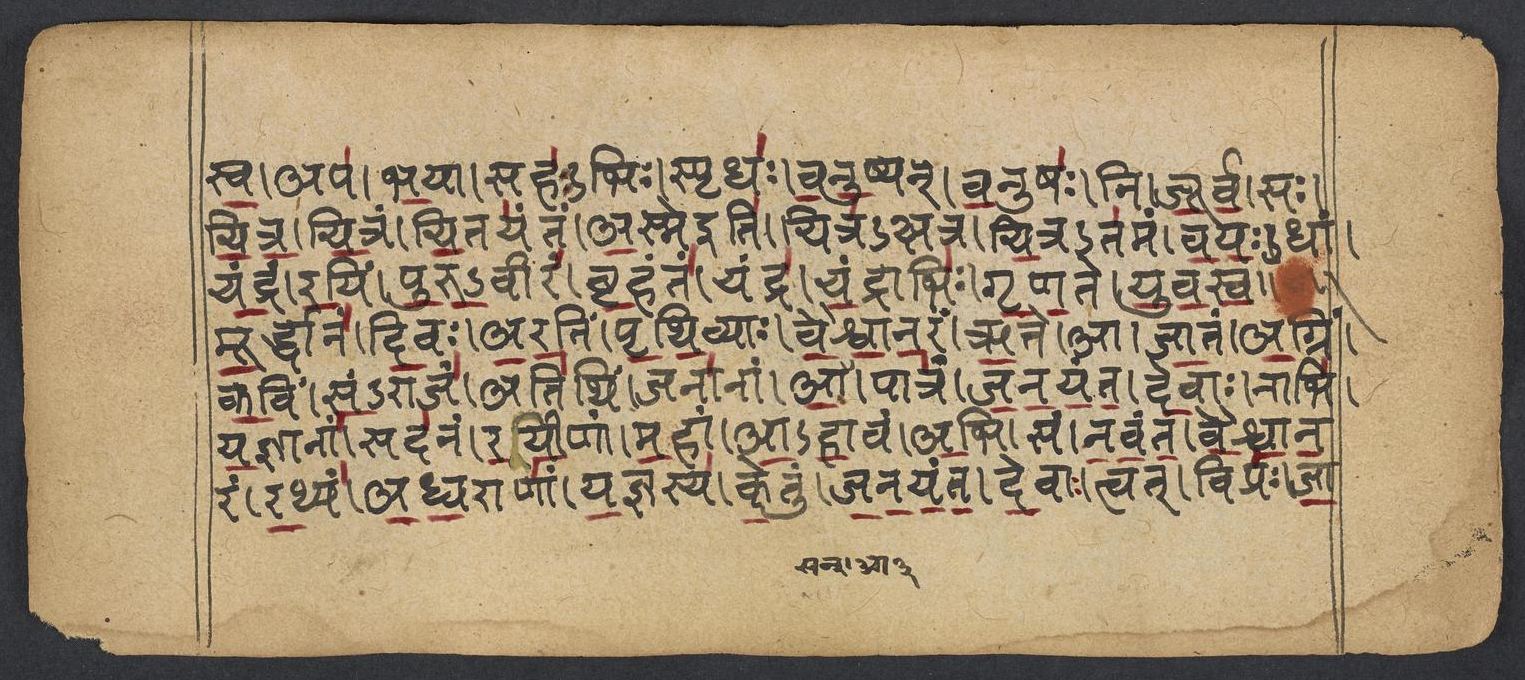
Penn Ms. Coll. 390 Item 41, fol. 409r (numbered 82r by the scribe) (OPenn image 409, lower leaf). Checked on the image: the Rigveda text on this page begins in RV 6.6.6 ‹-bādhasva apa bhayā sahaḥ-bhiḥ›. The next page with Rigveda text, fol. 409v (numbered 82v by the scribe), begins in RV 6.7.3 ‹jāyate vājī agne tvat›. Verses 6.6.6-7 end on this page; 6.6.6 begins on fol. 408v (numbered 81v by the scribe).
6ā bhā̱nunā̱ pārthi̍vāni̱ jrayā̍ṁsi ma̱has to̱dasya̍ dhṛṣa̱tā ta̍tantha | sa bā̍dha̱svāpa̍ bha̱yā saho̍bhi̱ḥ spṛdho̍ vanu̱ṣyan va̱nuṣo̱ ni jū̍rva ||
7sa ci̍tra ci̱traṁ ci̱taya̍ntam a̱sme citra̍kṣatra ci̱trata̍maṁ vayo̱dhām | ca̱ndraṁ ra̱yim pu̍ru̱vīra̍m bṛ̱hanta̱ṁ candra̍ ca̱ndrābhi̍r gṛṇa̱te yu̍vasva ||
Compare: Padapāṭha (word-by-word text written in the manuscript; Sansknet e-text via GRETIL)
6ā | bhānunā | pārthivāni | jrayāṃsi | mahaḥ | todasya | dhṛṣatā | tatantha | saḥ | bādhasva | apa | bhayā | sahaḥ-bhiḥ | spṛdhaḥ | vanuṣyan | vanuṣaḥ | ni | jūvar
7saḥ | citra | citram | citayantam | asme iti | citra-kṣatra | citra-tamam | vayaḥ-dhām | candram | rayim | puru-vīram | bṛhantam | candra | candrābhiḥ | gṛṇate | yuvasva
6Thou with the sunlight of the great Impeller hast boldly over-spread the earth's expanses. So drive away with conquering might all perils. fighting our foemen burn up those who harm us.
7Wondrous! of wondrous power! give to the singer wealth wondrous, marked, most wonderful, lifegiving. Wealth bright, O Bright One, vast, with many heroes, give with thy bright flames to the man who lauds thee.
Notes
- Sanskrit: Aufrecht's edition (1877) with the Vedic accents, as entered by van Nooten and Holland (GRETIL).
- English: Ralph T. H. Griffith, The Hymns of the Rigveda (1889-1892; 2nd ed. 1896-1897), from the VedaWeb digital text; OCR slips in that text were corrected against the printed 2nd edition (data/sources/rigveda/griffith_errata.json).
- Padapāṭha (edition text): Sansknet e-text via GRETIL (CC BY-NC-SA 4.0).
Cite
Sources
- Source: Penn Ms. Coll. 390 Item 41 (undated (catalogued with Penn's 18th-19th c. Vedic manuscripts)), OPenn, Public Domain Mark + Aufrecht's accented text (GRETIL) + Griffith's English (VedaWeb) (holding institution)
- Critical edition: Aufrecht (1877), accented e-text via GRETIL
← previous · → next · v cycle view · l back to library