Rigveda 6.55: To Pusan
Introduction
Rigveda 6.55 is a hymn of 6 verses addressed to Pusan. It stands in book (maṇḍala) 6, the family book of Bharadvāja. The Rigveda is the oldest collection of Sanskrit hymns, composed in the second half of the second millennium BCE and handed down orally for many centuries before it was written down.
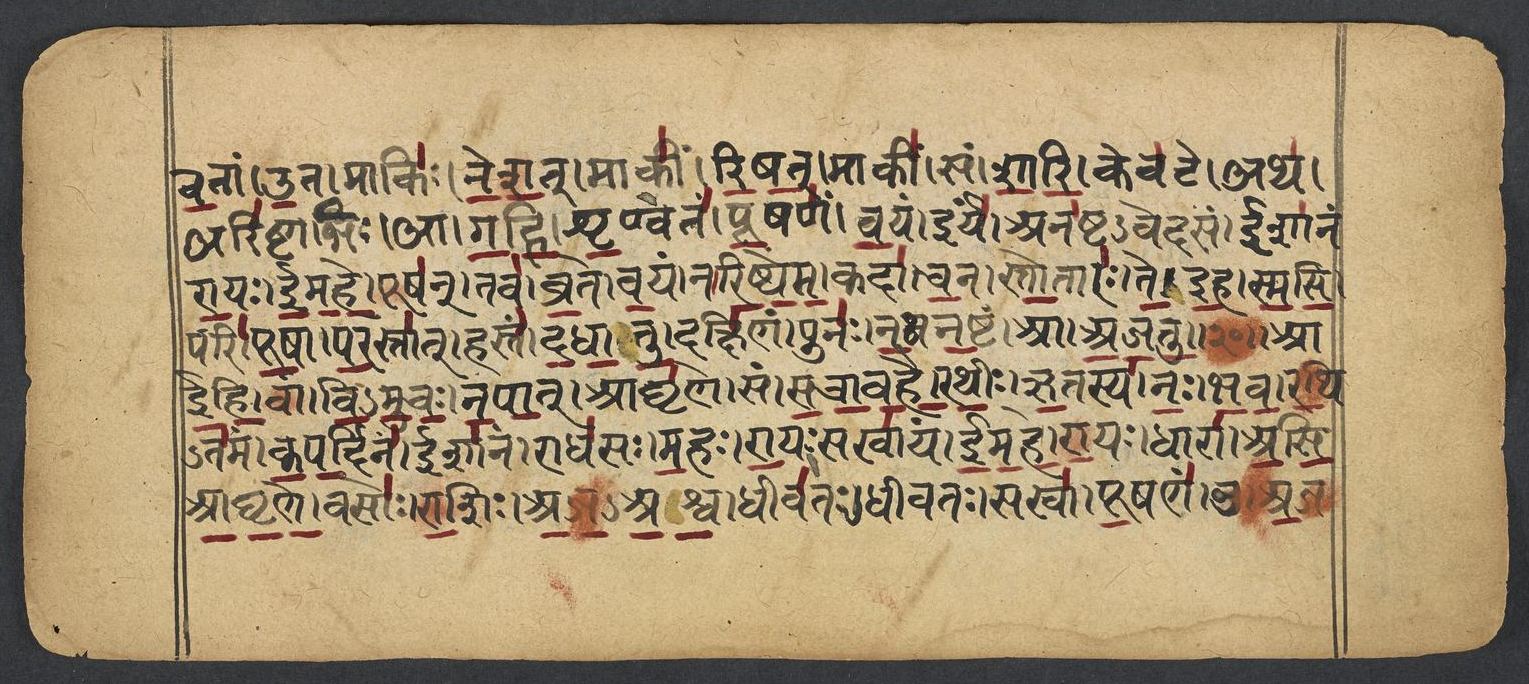
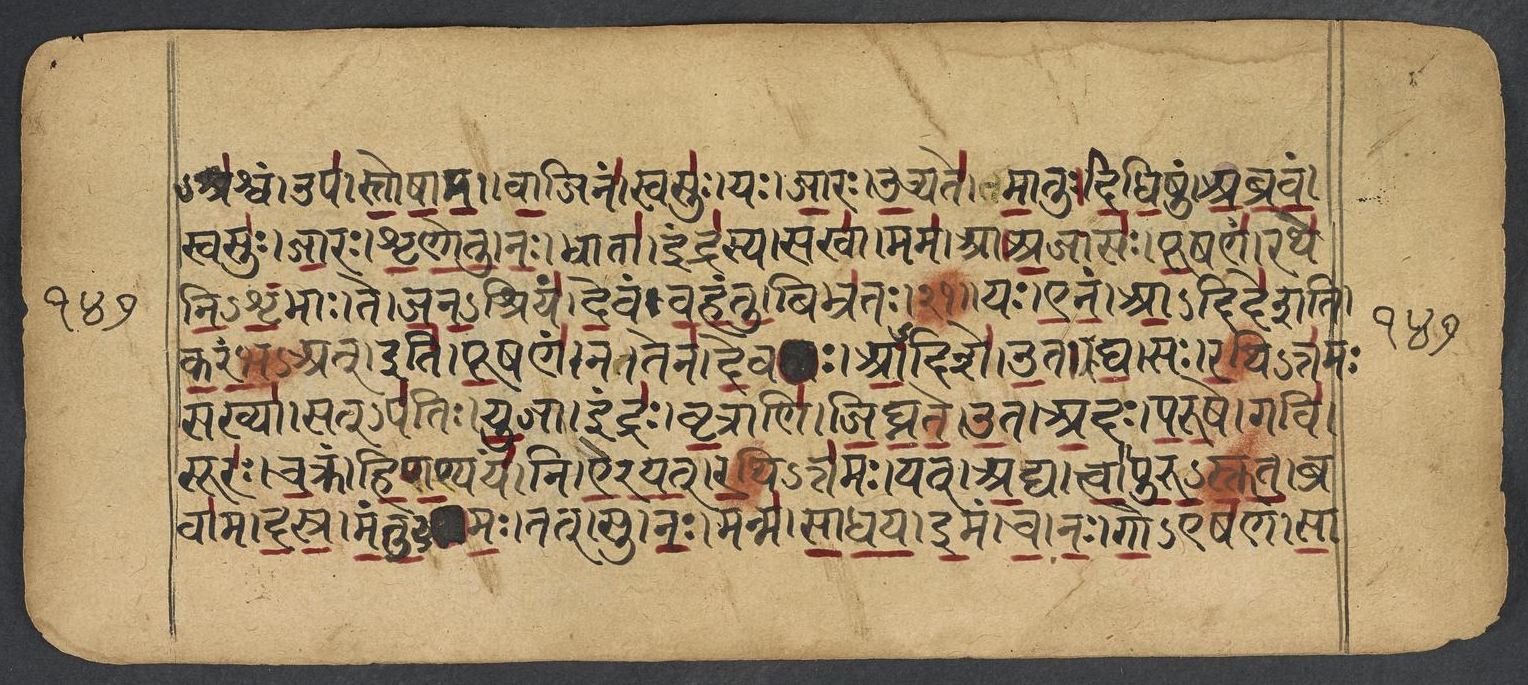
The manuscript shown is Penn Ms. Coll. 390 Item 41 (University of Pennsylvania), an undated paper manuscript of the padapāṭha (the word-by-word recitation text, in which every word is written separately and compounds are split) of the whole Ṛgveda in Devanāgarī, 884 leaves in fascicles, 7-9 lines to the page, accents in red; this hymn stands on fol. 474r-474v. Each section below gives the verses that end on one page; the page boundaries were read on the images (the opening words of every page), not counted out. Where the manuscript is a padapāṭha (the word-by-word recitation text), the section shows Aufrecht's continuous (saṃhitā) text first and, as the edition text, the padapāṭha of the same verses, which is the form written on the page.
How was this verified? (Provenance)
Where on the image
Penn Ms. Coll. 390 Item 41, fol. 474r (numbered 147r by the scribe) (OPenn image 474, lower leaf). Checked on the image: the Rigveda text on this page begins in RV 6.54.6 ‹-stuvatām uta›. The next page with Rigveda text, fol. 474v (numbered 147v by the scribe), begins in RV 6.55.4 ‹-aja-aśvam upa stoṣāma vājinam›. Verses 6.55.1-3 end on this page.
1ehi̱ vāṁ vi̍muco napā̱d āghṛ̍ṇe̱ saṁ sa̍cāvahai | ra̱thīr ṛ̱tasya̍ no bhava ||
2ra̱thīta̍maṁ kapa̱rdina̱m īśā̍na̱ṁ rādha̍so ma̱haḥ | rā̱yaḥ sakhā̍yam īmahe ||
3rā̱yo dhārā̍sy āghṛṇe̱ vaso̍ rā̱śir a̍jāśva | dhīva̍to-dhīvata̱ḥ sakhā̍ ||
Compare: Padapāṭha (word-by-word text written in the manuscript; Sansknet e-text via GRETIL)
1ā | ihi | vām | vi-mucaḥ | napāt | āghṛṇe | sam | sacāvahai | rathīḥ | ṛtasya | naḥ | bhava
2rathi-tamam | kapardinam | īśānam | rādhasaḥ | mahaḥ | rāyaḥ | sakhāyam | īmahe
3rāyaḥ | dhārā | asi | āghṛṇe | vasoḥ | rāśiḥ | aja-aśva | dhīvataḥ-dhīvataḥ | sakhā
1SON of Deliverance, come, bright God! Let us twain go together: be our charioteer of sacrifice.
2We pray for wealth to thee most skilled of charioteers, with braided hair, Lord of great riches, and our Friend.
3Bright God whose steeds are goats, thou art a stream of wealth, a treasure-heap, The Friend of every pious man.
Where on the image
Penn Ms. Coll. 390 Item 41, fol. 474v (numbered 147v by the scribe) (OPenn image 475, upper leaf). Checked on the image: the Rigveda text on this page begins in RV 6.55.4 ‹-aja-aśvam upa stoṣāma vājinam›. The next page with Rigveda text, fol. 475r (numbered 148r by the scribe), begins in RV 6.56.5 ‹-sātaye sīsadhaḥ gaṇam ārāt›. Verses 6.55.4-6 end on this page; 6.55.4 begins on fol. 474r (numbered 147r by the scribe).
4pū̱ṣaṇa̱ṁ nv a1̱̍jāśva̱m upa̍ stoṣāma vā̱jina̍m | svasu̱r yo jā̱ra u̱cyate̍ ||
5mā̱tur di̍dhi̱ṣum a̍brava̱ṁ svasu̍r jā̱raḥ śṛ̍ṇotu naḥ | bhrātendra̍sya̱ sakhā̱ mama̍ ||
6ājāsa̍ḥ pū̱ṣaṇa̱ṁ rathe̍ niśṛ̱mbhās te ja̍na̱śriya̍m | de̱vaṁ va̍hantu̱ bibhra̍taḥ ||
Compare: Padapāṭha (word-by-word text written in the manuscript; Sansknet e-text via GRETIL)
4pūṣaṇam | nu | aja-aśvam | upa | stoṣāma | vājinam | svasuḥ | yaḥ | jāraḥ | ucyate
5mātuḥ | didhiṣum | abravam | svasuḥ | jāraḥ | śṛṇotu | naḥ | bhrātā | indrasya | sakhā | mama
6ājāsaḥ | pūṣaṇam | rathe | ni-śṛmbhāḥ | te | jana-śriyam | devam | vahantu | bibhrataḥ
4Pûshan, who driveth goats for steeds, the strong and Mighty, who is called His Sister's lover, will we laud.
5His Mother's suitor I address. May he who loves his Sister hear, Brother of Indra, and my Friend.
6May the sure-footed goats come nigh, conveying Pûshan on his car, The God who visiteth mankind.
Notes
- Sanskrit: Aufrecht's edition (1877) with the Vedic accents, as entered by van Nooten and Holland (GRETIL).
- English: Ralph T. H. Griffith, The Hymns of the Rigveda (1889-1892; 2nd ed. 1896-1897), from the VedaWeb digital text; OCR slips in that text were corrected against the printed 2nd edition (data/sources/rigveda/griffith_errata.json).
- Padapāṭha (edition text): Sansknet e-text via GRETIL (CC BY-NC-SA 4.0).
Cite
Sources
- Source: Penn Ms. Coll. 390 Item 41 (undated (catalogued with Penn's 18th-19th c. Vedic manuscripts)), OPenn, Public Domain Mark + Aufrecht's accented text (GRETIL) + Griffith's English (VedaWeb) (holding institution)
- Critical edition: Aufrecht (1877), accented e-text via GRETIL
← previous · → next · v cycle view · l back to library