Rigveda 6.59: To Indra and Agni
Introduction
Rigveda 6.59 is a hymn of 10 verses addressed to Indra and Agni. It stands in book (maṇḍala) 6, the family book of Bharadvāja. The Rigveda is the oldest collection of Sanskrit hymns, composed in the second half of the second millennium BCE and handed down orally for many centuries before it was written down.
The manuscript shown is Penn Ms. Coll. 390 Item 41 (University of Pennsylvania), an undated paper manuscript of the padapāṭha (the word-by-word recitation text, in which every word is written separately and compounds are split) of the whole Ṛgveda in Devanāgarī, 884 leaves in fascicles, 7-9 lines to the page, accents in red; this hymn stands on fol. 476r-477r. Each section below gives the verses that end on one page; the page boundaries were read on the images (the opening words of every page), not counted out. Where the manuscript is a padapāṭha (the word-by-word recitation text), the section shows Aufrecht's continuous (saṃhitā) text first and, as the edition text, the padapāṭha of the same verses, which is the form written on the page.
How was this verified? (Provenance)
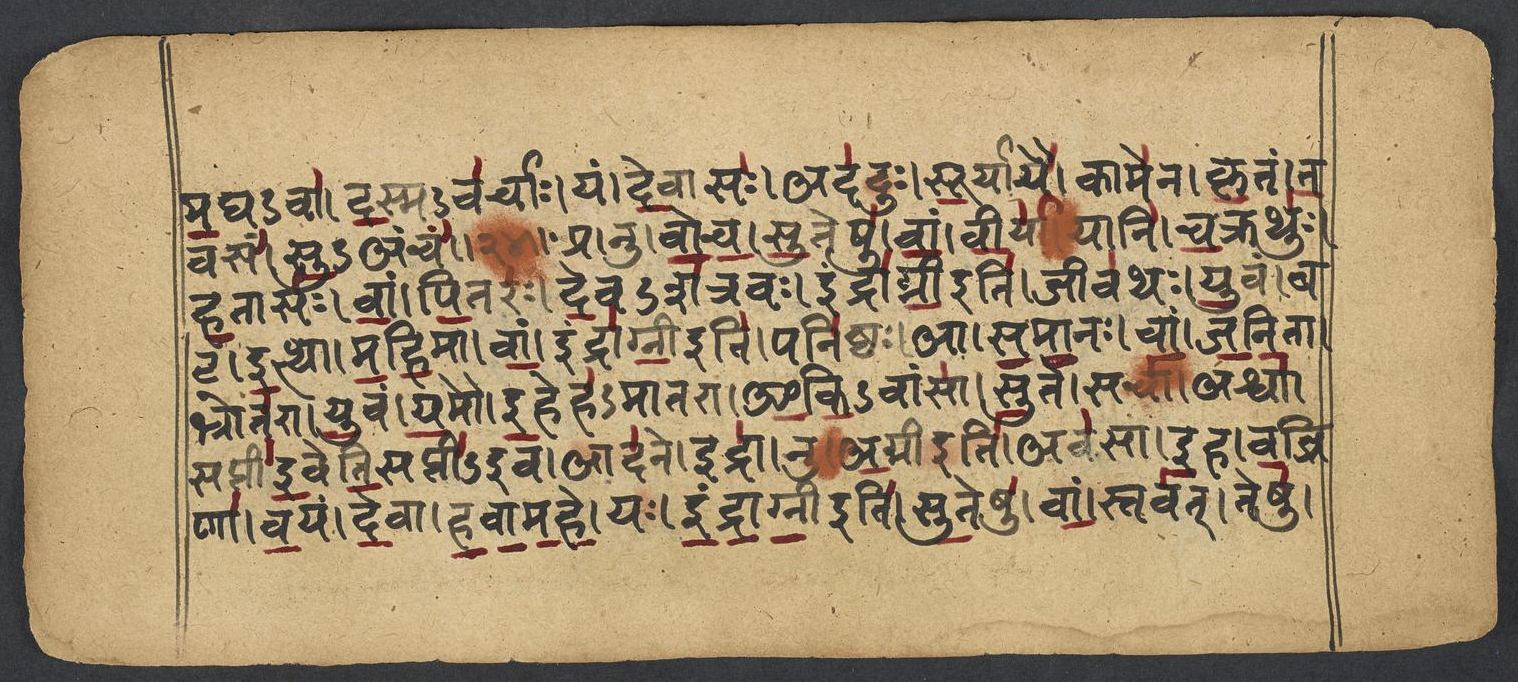
Where on the image
Penn Ms. Coll. 390 Item 41, fol. 476r (numbered 149r by the scribe) (OPenn image 476, lower leaf). Checked on the image: the Rigveda text on this page begins in RV 6.58.4 ‹magha-vā dasma-vacārḥ yam devāsaḥ›. The next page with Rigveda text, fol. 476v (numbered 149v by the scribe), begins in RV 6.59.4 ‹-teṣu ṛta-vṛdhā joṣa-vākam vadataḥ›. Verses 6.59.1-3 end on this page.
1pra nu vo̍cā su̱teṣu̍ vāṁ vī̱ryā̱3̱̍ yāni̍ ca̱krathu̍ḥ | ha̱tāso̍ vām pi̱taro̍ de̱vaśa̍trava̱ indrā̍gnī̱ jīva̍tho yu̱vam ||
2baḻ i̱tthā ma̍hi̱mā vā̱m indrā̍gnī̱ pani̍ṣṭha̱ ā | sa̱mā̱no vā̍ṁ jani̱tā bhrāta̍rā yu̱vaṁ ya̱māv i̱heha̍mātarā ||
3o̱ki̱vāṁsā̍ su̱te sacā̱m̐ aśvā̱ saptī̍ i̱vāda̍ne | indrā̱ nv a1̱̍gnī ava̍se̱ha va̱jriṇā̍ va̱yaṁ de̱vā ha̍vāmahe ||
Compare: Padapāṭha (word-by-word text written in the manuscript; Sansknet e-text via GRETIL)
1pra | nu | voca | suteṣu | vām | vīryā | yāni | cakrathuḥ | hatāsaḥ | vām | pitaraḥ | deva-śatravaḥ | indrāgnī iti | jīvathaḥ | yuvam
2baṭ | itthā | mahimā | vām | indrāgnī iti | paniṣṭhaḥ | ā | samānaḥ | vām | janitā | bhrātarā | yuvam | yamau | iheha-mātarā
3oki-vāṃsā | sute | sacā | aśvā | saptīivetisaptī-iva | ādane | indrā | nu | agnī iti | avasā | iha | vajriṇā | vayam | devā | havāmahe
1I WILL declare, while juices flow, the manly deeds that ye have done: Your Fathers, enemies of Gods, were smitten down, and, Indra-Agni, ye survive.
2Thus, Indra-Agnip verily your greatness merits loftiest praise, Sprung from one common Father, brothers, twins are ye; your Mother is in every place.
3These who delight in flowing juice, like fellow horses at their food, Indra and Agni, Gods armed with the thunderbolt, we call this day to come with help.
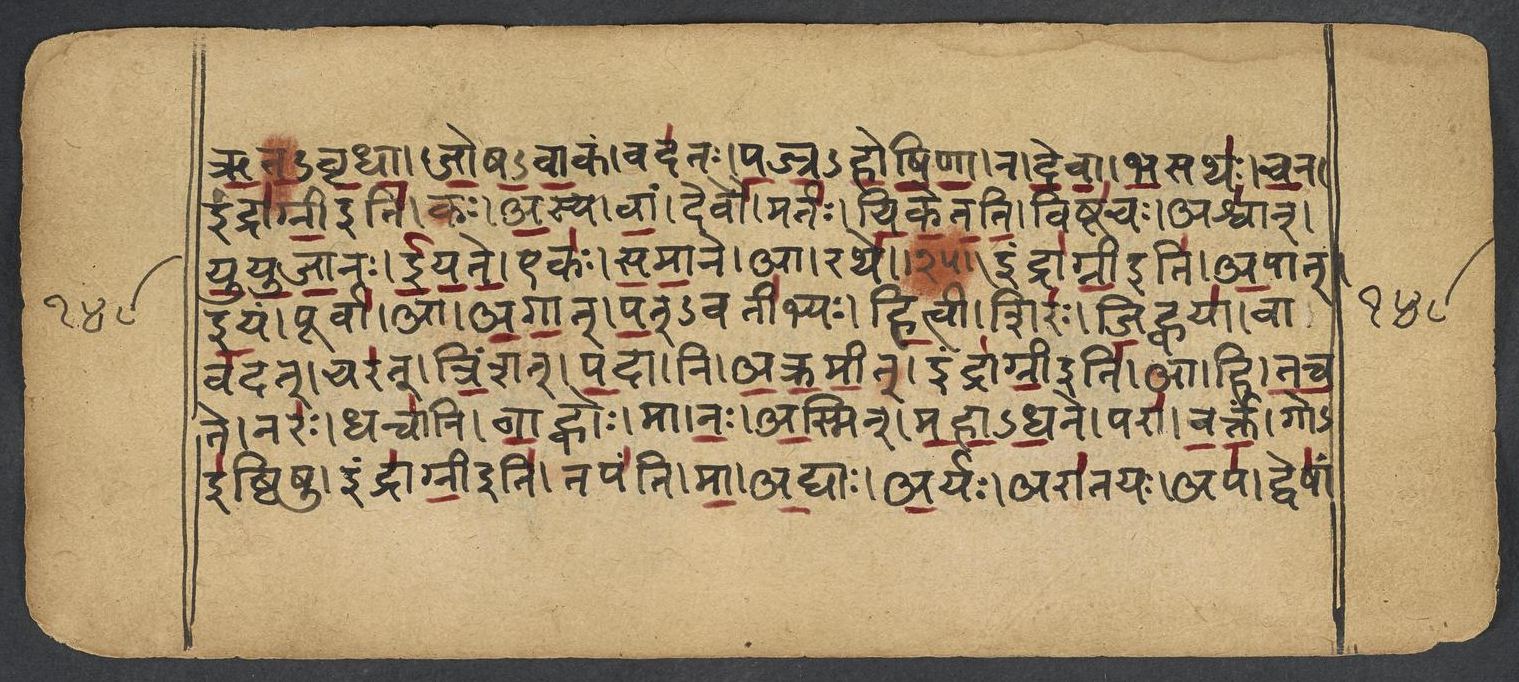
Where on the image
Penn Ms. Coll. 390 Item 41, fol. 476v (numbered 149v by the scribe) (OPenn image 477, upper leaf). Checked on the image: the Rigveda text on this page begins in RV 6.59.4 ‹-teṣu ṛta-vṛdhā joṣa-vākam vadataḥ›. The next page with Rigveda text, fol. 477r (numbered 150r by the scribe), begins in RV 6.59.8 ‹-dveṣāṃsi ā kṛtam yuyutam›. Verses 6.59.4-7 end on this page; 6.59.4 begins on fol. 476r (numbered 149r by the scribe).
4ya i̍ndrāgnī su̱teṣu̍ vā̱ṁ stava̱t teṣv ṛ̍tāvṛdhā | jo̱ṣa̱vā̱kaṁ vada̍taḥ pajrahoṣiṇā̱ na de̍vā bha̱satha̍ś ca̱na ||
5indrā̍gnī̱ ko a̱sya vā̱ṁ devau̱ marta̍ś ciketati | viṣū̍co̱ aśvā̍n yuyujā̱na ī̍yata̱ eka̍ḥ samā̱na ā rathe̍ ||
6indrā̍gnī a̱pād i̱yam pūrvāgā̍t pa̱dvatī̍bhyaḥ | hi̱tvī śiro̍ ji̱hvayā̱ vāva̍da̱c cara̍t tri̱ṁśat pa̱dā ny a̍kramīt ||
7indrā̍gnī̱ ā hi ta̍nva̱te naro̱ dhanvā̍ni bā̱hvoḥ | mā no̍ a̱smin ma̍hādha̱ne parā̍ varkta̱ṁ gavi̍ṣṭiṣu ||
Compare: Padapāṭha (word-by-word text written in the manuscript; Sansknet e-text via GRETIL)
4yaḥ | indrāgnī iti | suteṣu | vām | stavat | teṣu | ṛta-vṛdhā | joṣa-vākam | vadataḥ | pajra-hoṣi ṇā | na | devā | bhasathaḥ | cana
5indrāgnī iti | kaḥ | asya | vām | devau | martaḥ | ciketati | viṣūcaḥ | aśvān | yuyujānaḥ | īyate | ekaḥ | samāne | ā | rathe
6indrāgnī iti | apāt | iyam | pūrvā | ā | agāt | pat-vatībhyaḥ | hitvī | śiraḥ | jihvayā | vāvadat | carat | triṃśat | padā | ni | akramīt
7indrāgnī iti | ā | hi | tanvate | naraḥ | dhanvāni | bāhvoḥ | mā | naḥ | asmin | mahādhane | parā | varktam | go--iṣṭiṣu
4Indra and Agni, Friends of Law, served with rich gifts, your speech is kind To him who praises you while these libations flow: that man, O Gods, ye ne'er consume.
5What mortal understands, O Gods, Indra and Agni, this your way? One of you, yoking Steeds that move to every side, advances in your common car.
6First, Indra-Agni, hath this Maid come footless unto those with feet. Stretching her head and speaking loudly with her tongue, she hath gone downward thirty steps.
7E'en now, O Indra-Agni, men hold in their arms and stretch their bows. Desert us not in this great fray, in battles for the sake of kine.
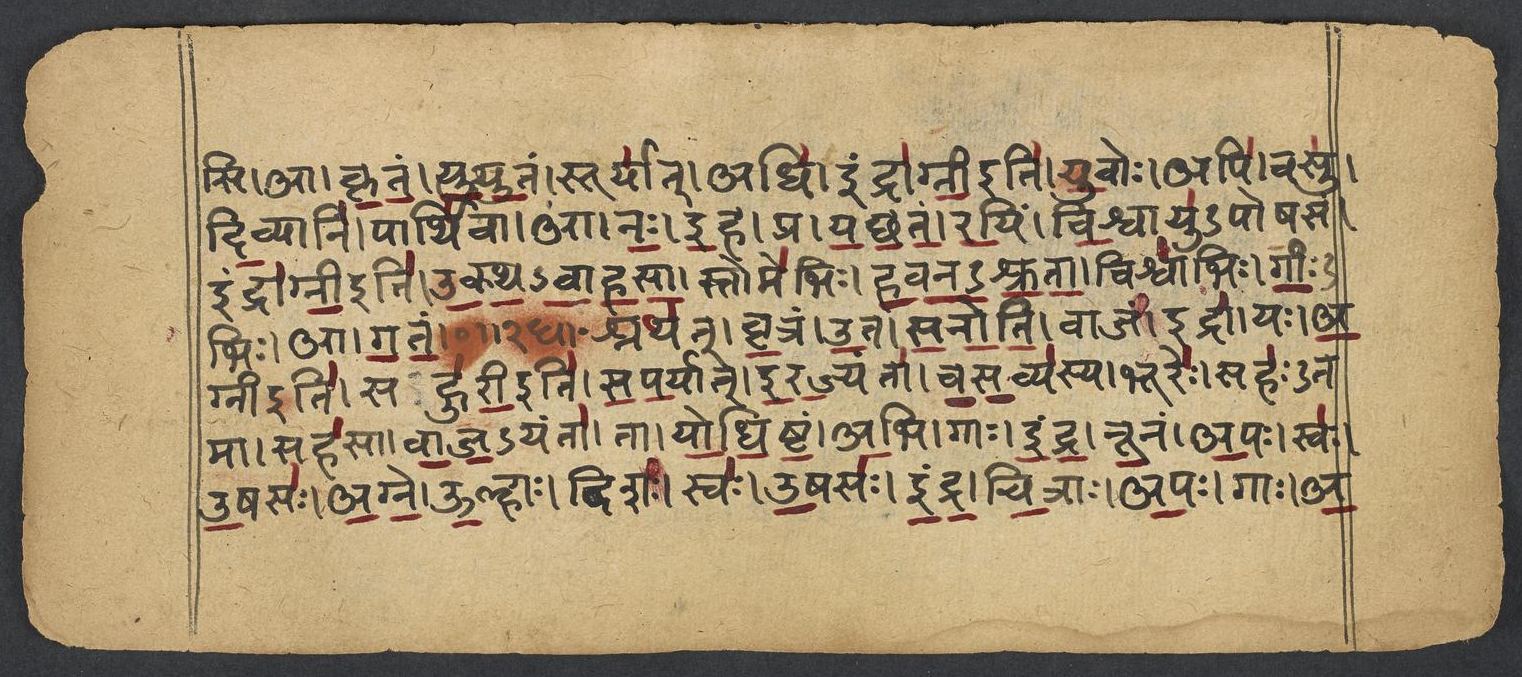
Where on the image
Penn Ms. Coll. 390 Item 41, fol. 477r (numbered 150r by the scribe) (OPenn image 477, lower leaf). Checked on the image: the Rigveda text on this page begins in RV 6.59.8 ‹-dveṣāṃsi ā kṛtam yuyutam›. The next page with Rigveda text, fol. 477v (numbered 150v by the scribe), begins in RV 6.60.2 ‹-agne yuvase niyutvān›. Verses 6.59.8-10 end on this page; 6.59.8 begins on fol. 476v (numbered 149v by the scribe).
8indrā̍gnī̱ tapa̍nti mā̱ghā a̱ryo arā̍tayaḥ | apa̱ dveṣā̱ṁsy ā kṛ̍taṁ yuyu̱taṁ sūryā̱d adhi̍ ||
9indrā̍gnī yu̱vor api̱ vasu̍ di̱vyāni̱ pārthi̍vā | ā na̍ i̱ha pra ya̍cchataṁ ra̱yiṁ vi̱śvāyu̍poṣasam ||
10indrā̍gnī ukthavāhasā̱ stome̍bhir havanaśrutā | viśvā̍bhir gī̱rbhir ā ga̍tam a̱sya soma̍sya pī̱taye̍ ||
Compare: Padapāṭha (word-by-word text written in the manuscript; Sansknet e-text via GRETIL)
8indrāgnī iti | tapanti | mā | aghāḥ | aryaḥ | arātayaḥ | apa | dveṣāṃsi | ā | kṛtam | yuyutam | sūryāt | adhi
9indrāgnī iti | yuvoḥ | api | vasu | divyāni | pārthivā | ā | naḥ | iha | pra | yacchatam | rayim | viśvāyu-poṣasam
10indrāgnī iti | uktha-vāhasā | stomebhiḥ | havana-śrutā | viśvābhiḥ | gīḥ-bhiḥ | ā | gatam | asya | somasya | pītaye
8The foeman's sinful enmities, Indra and Agni, vex me sore. Drive those who hate me far away, and keep them distant from the Sun.
9Indra and Agni, yours are all the treasures of the heavens and earth. Here give ye us the opulence that prospers every living man.
10O Indra-Agni, who accept the laud, and hear us for our praise, Come near us, drawn by all our songs, to drink of this our Soma juice.
Notes
- Sanskrit: Aufrecht's edition (1877) with the Vedic accents, as entered by van Nooten and Holland (GRETIL).
- English: Ralph T. H. Griffith, The Hymns of the Rigveda (1889-1892; 2nd ed. 1896-1897), from the VedaWeb digital text; OCR slips in that text were corrected against the printed 2nd edition (data/sources/rigveda/griffith_errata.json).
- Padapāṭha (edition text): Sansknet e-text via GRETIL (CC BY-NC-SA 4.0).
Cite
Sources
- Source: Penn Ms. Coll. 390 Item 41 (undated (catalogued with Penn's 18th-19th c. Vedic manuscripts)), OPenn, Public Domain Mark + Aufrecht's accented text (GRETIL) + Griffith's English (VedaWeb) (holding institution)
- Critical edition: Aufrecht (1877), accented e-text via GRETIL
← previous · → next · v cycle view · l back to library