Rigveda 6.60: To Indra and Agni
Introduction
Rigveda 6.60 is a hymn of 15 verses addressed to Indra and Agni. It stands in book (maṇḍala) 6, the family book of Bharadvāja. The Rigveda is the oldest collection of Sanskrit hymns, composed in the second half of the second millennium BCE and handed down orally for many centuries before it was written down.
The manuscript shown is Penn Ms. Coll. 390 Item 41 (University of Pennsylvania), an undated paper manuscript of the padapāṭha (the word-by-word recitation text, in which every word is written separately and compounds are split) of the whole Ṛgveda in Devanāgarī, 884 leaves in fascicles, 7-9 lines to the page, accents in red; this hymn stands on fol. 477r-478v. Each section below gives the verses that end on one page; the page boundaries were read on the images (the opening words of every page), not counted out. Where the manuscript is a padapāṭha (the word-by-word recitation text), the section shows Aufrecht's continuous (saṃhitā) text first and, as the edition text, the padapāṭha of the same verses, which is the form written on the page.
How was this verified? (Provenance)
Where on the image
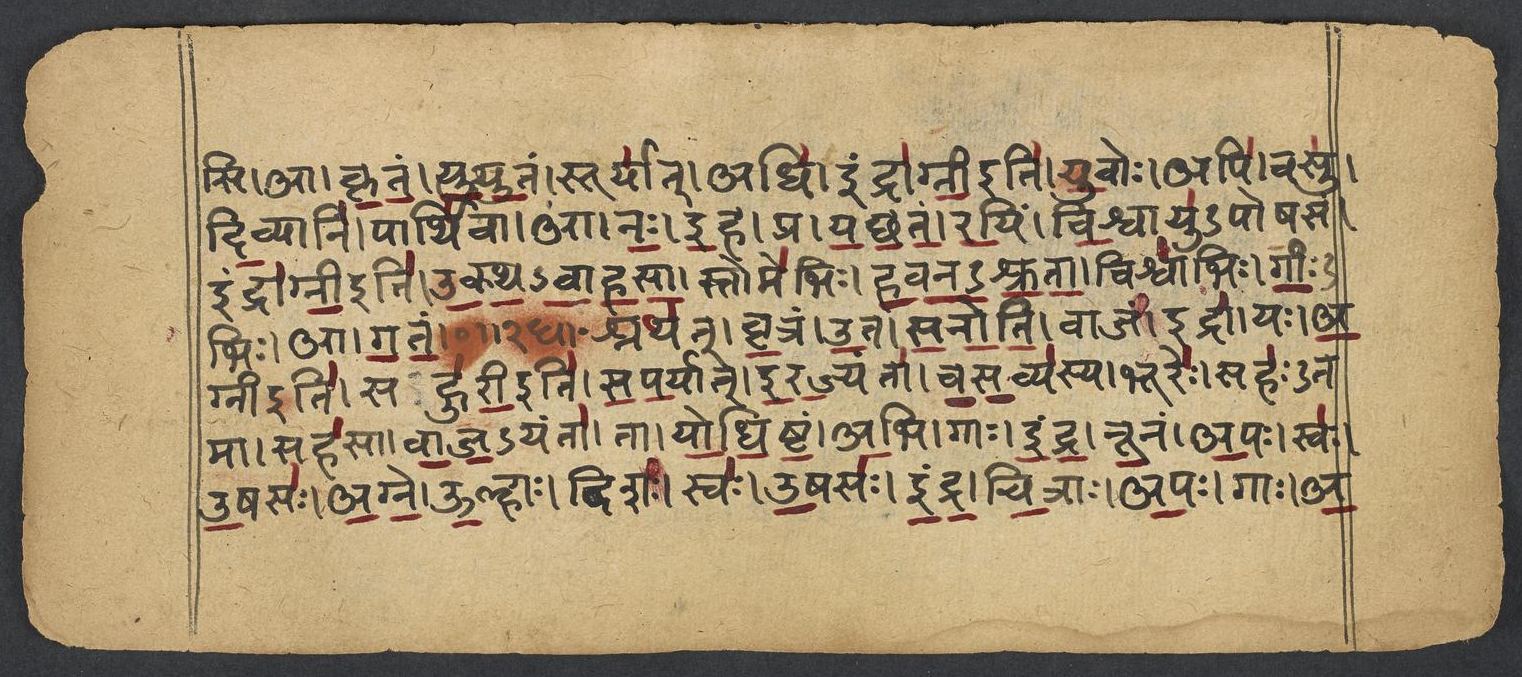
Penn Ms. Coll. 390 Item 41, fol. 477r (numbered 150r by the scribe) (OPenn image 477, lower leaf). Checked on the image: the Rigveda text on this page begins in RV 6.59.8 ‹-dveṣāṃsi ā kṛtam yuyutam›. The next page with Rigveda text, fol. 477v (numbered 150v by the scribe), begins in RV 6.60.2 ‹-agne yuvase niyutvān›. Verse 6.60.1 ends on this page.
1śnatha̍d vṛ̱tram u̱ta sa̍noti̱ vāja̱m indrā̱ yo a̱gnī sahu̍rī sapa̱ryāt | i̱ra̱jyantā̍ vasa̱vya̍sya̱ bhūre̱ḥ saha̍stamā̱ saha̍sā vāja̱yantā̍ ||
Compare: Padapāṭha (word-by-word text written in the manuscript; Sansknet e-text via GRETIL)
1śnathat | vṛtram | uta | sanoti | vājam | indrā | yaḥ | agnī iti | sahurī iti | saparyāt | irajyantā | vasavyasya | bhūreḥ | sahaḥ-tamā | sahasā | vāja-yantā
1HE slays the foe and wins the spoil who worships Indra and Agni, strong and mighty Heroes, Who rule as Sovrans over ample riches, victorious, showing forth their power in conquest.
Where on the image
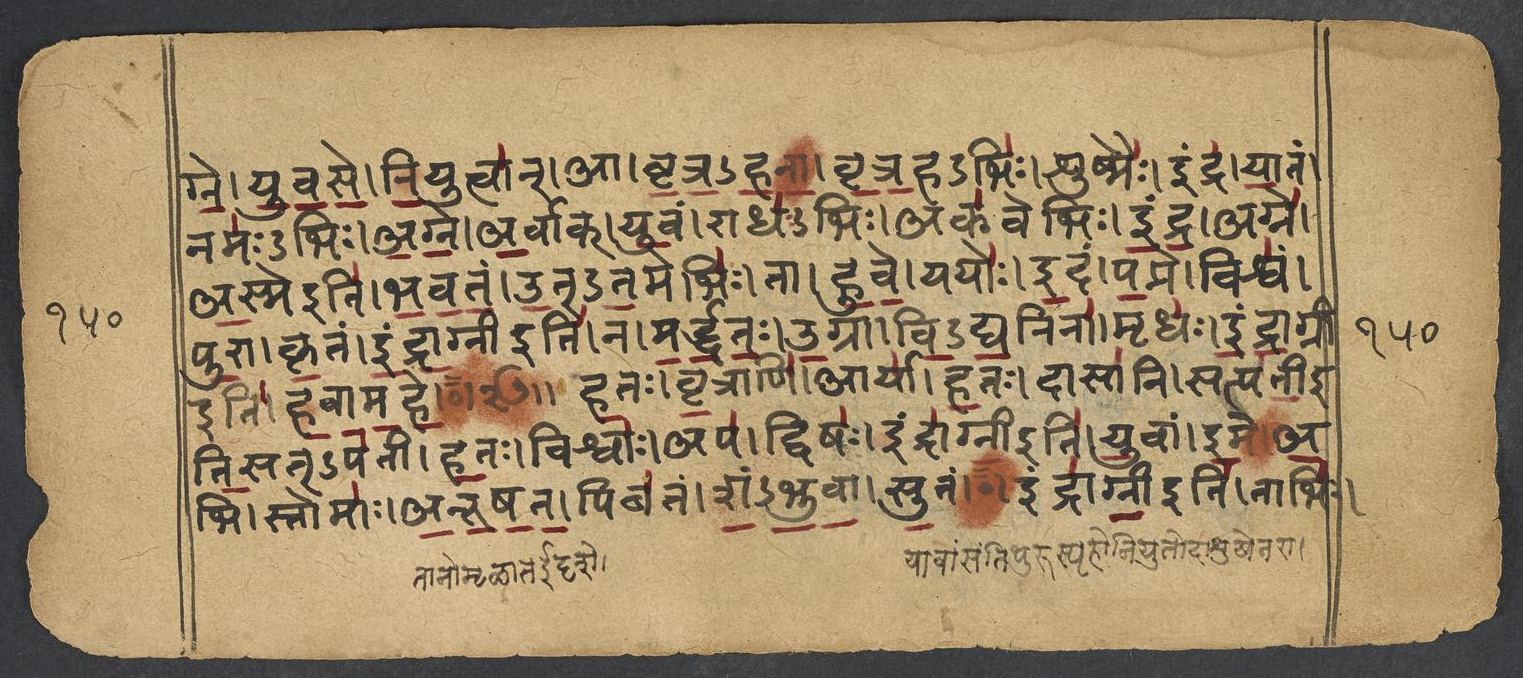
Penn Ms. Coll. 390 Item 41, fol. 477v (numbered 150v by the scribe) (OPenn image 478, upper leaf). Checked on the image: the Rigveda text on this page begins in RV 6.60.2 ‹-agne yuvase niyutvān›. The next page with Rigveda text, fol. 478r (numbered 151r by the scribe), begins in RV 6.60.8 ‹ā gatam›. Verses 6.60.2-7 end on this page; 6.60.2 begins on fol. 477r (numbered 150r by the scribe).
2tā yo̍dhiṣṭam a̱bhi gā i̍ndra nū̱nam a̱paḥ sva̍r u̱ṣaso̍ agna ū̱ḻhāḥ | diśa̱ḥ sva̍r u̱ṣasa̍ indra ci̱trā a̱po gā a̍gne yuvase ni̱yutvā̍n ||
3ā vṛ̍trahaṇā vṛtra̱habhi̱ḥ śuṣmai̱r indra̍ yā̱taṁ namo̍bhir agne a̱rvāk | yu̱vaṁ rādho̍bhi̱r aka̍vebhir i̱ndrāgne̍ a̱sme bha̍vatam utta̱mebhi̍ḥ ||
4tā hu̍ve̱ yayo̍r i̱dam pa̱pne viśva̍m pu̱rā kṛ̱tam | i̱ndrā̱gnī na ma̍rdhataḥ ||
5u̱grā vi̍gha̱ninā̱ mṛdha̍ indrā̱gnī ha̍vāmahe | tā no̍ mṛḻāta ī̱dṛśe̍ ||
6ha̱to vṛ̱trāṇy āryā̍ ha̱to dāsā̍ni̱ satpa̍tī | ha̱to viśvā̱ apa̱ dviṣa̍ḥ ||
7indrā̍gnī yu̱vām i̱me̱3̱̍ 'bhi stomā̍ anūṣata | piba̍taṁ śambhuvā su̱tam ||
Compare: Padapāṭha (word-by-word text written in the manuscript; Sansknet e-text via GRETIL)
2tā | yodhiṣṭam | abhi | gāḥ | indra | nūnam | apaḥ | svaḥ | uṣasaḥ | agne | ūḷhāḥ | diśaḥ | svaḥ | uṣasaḥ | indra | citrāḥ | apaḥ | gāḥ | agne | yuvase | niyutvān
3ā | vṛtra-hanā | vṛtraha-bhiḥ | śuṣmaiḥ | indra | yātam | namaḥ-bhiḥ | agne | arvāk | yuvam | rādhaḥ-bhiḥ | akavebhiḥ | indra | agne | asme iti | bhavatam | ut-tamebhiḥ
4tā | huve | yayoḥ | idam | papne | viśvam | purā | kṛtam | indrāgnī iti | na | mardhataḥ
5ugrā | vi-ghaninā | mṛdhaḥ | indrāgnī iti | havāmahe | tā | naḥ | mṛḷātaḥ | īdṛśe
6hataḥ | vṛtrāṇi | āryā | hataḥ | dāsāni | satpatī itisat-patī | hataḥ | viśvāḥ | apa | dviṣaḥ
7indrāgnī iti | yuvām | ime | abhi | stomāḥ | anūṣata | pibatam | śam-bhuvā | sutam
2So battle now, O Indra and thou, Agni, for cows and waters, sunlight, stolen Mornings. Team-borne, thou makest kine thine own, O Agni: thou, Indra, light, Dawns, regions, wondrous waters.
3With Vr̥itra-slaying might, Indra and Agni, come, drawn by homage, O ye Vr̥itra-slayers. Indra and Agni, show yourselves among us with your supreme and unrestricted bounties.
4I call the Twain whose deeds of old have all been famed in ancient days O Indra-Agni, harm us not.
5The Strong, the scatterers of the foe, Indra and Agni, we invoke; May they be kind to one like me.
6They slay our Ârya foes, these Lords of heroes, slay our Dasyu foes And drive our enemies away.
7Indra and Agni, these our songs of praise have sounded forth to you: Ye who bring blessings! drink the juice.
Where on the image
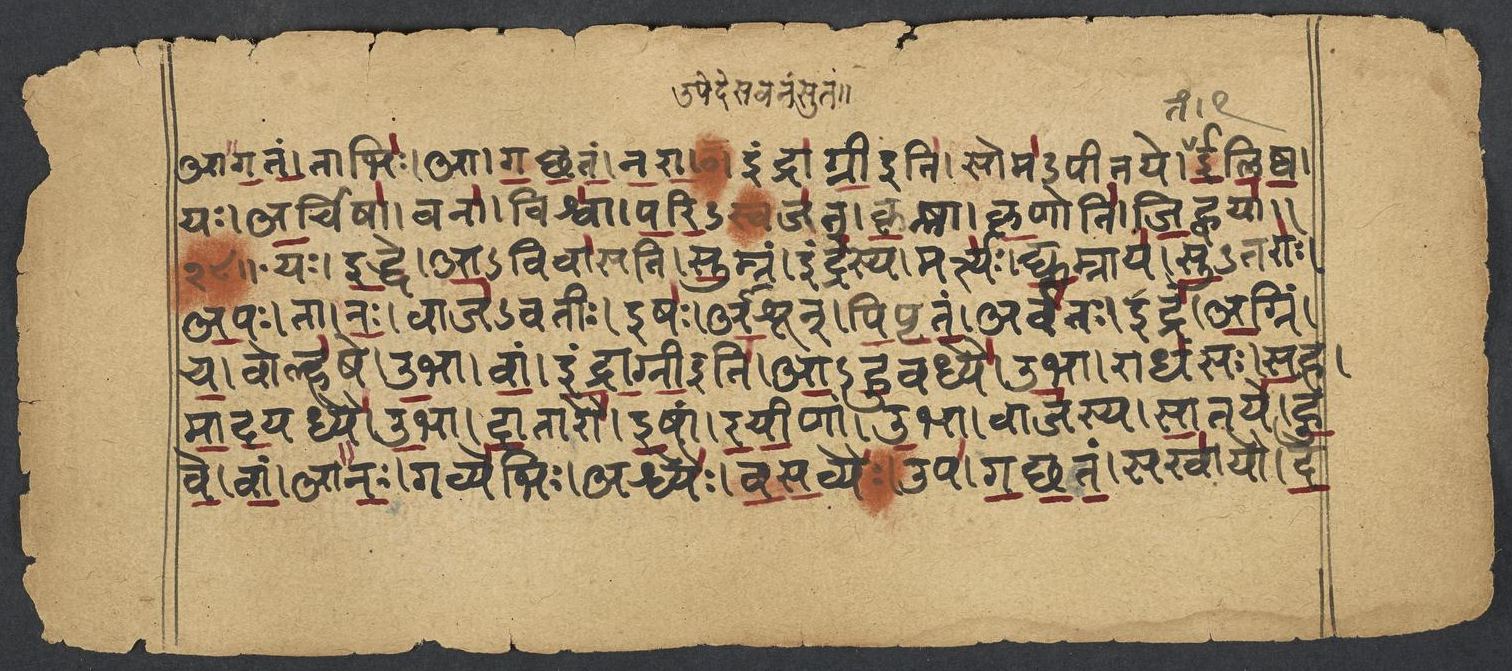
Penn Ms. Coll. 390 Item 41, fol. 478r (numbered 151r by the scribe) (OPenn image 478, lower leaf). Checked on the image: the Rigveda text on this page begins in RV 6.60.8 ‹ā gatam›. The next page with Rigveda text, fol. 478v (numbered 151v by the scribe), begins in RV 6.60.14 ‹-devau sakhyāya śam-bhuvā indrāgnī›. Verses 6.60.8-13 end on this page; 6.60.8 begins on fol. 477v (numbered 150v by the scribe).
8yā vā̱ṁ santi̍ puru̱spṛho̍ ni̱yuto̍ dā̱śuṣe̍ narā | indrā̍gnī̱ tābhi̱r ā ga̍tam ||
9tābhi̱r ā ga̍cchataṁ na̱rope̱daṁ sava̍naṁ su̱tam | indrā̍gnī̱ soma̍pītaye ||
10tam ī̍ḻiṣva̱ yo a̱rciṣā̱ vanā̱ viśvā̍ pari̱ṣvaja̍t | kṛ̱ṣṇā kṛ̱ṇoti̍ ji̱hvayā̍ ||
11ya i̱ddha ā̱vivā̍sati su̱mnam indra̍sya̱ martya̍ḥ | dyu̱mnāya̍ su̱tarā̍ a̱paḥ ||
12tā no̱ vāja̍vatī̱r iṣa̍ ā̱śūn pi̍pṛta̱m arva̍taḥ | indra̍m a̱gniṁ ca̱ voḻha̍ve ||
13u̱bhā vā̍m indrāgnī āhu̱vadhyā̍ u̱bhā rādha̍saḥ sa̱ha mā̍da̱yadhyai̍ | u̱bhā dā̱tārā̍v i̱ṣāṁ ra̍yī̱ṇām u̱bhā vāja̍sya sā̱taye̍ huve vām ||
Compare: Padapāṭha (word-by-word text written in the manuscript; Sansknet e-text via GRETIL)
8yāḥ | vām | santi | puru-spṛhaḥ | ni-yutaḥ | dāśuṣe | narā | indrāgnī iti | tābhiḥ | ā | gatam
9tābhiḥ | ā | gacchatam | narā | upa | idam | savanam | sutam | indrāgnī iti | soma-pītaye
10tam | īḷiṣva | yaḥ | arciṣā | vanā | viśvā | pari-svajat | kṛṣṇā | kṛṇoti | jihvayā
11yaḥ | iddhe | āvivāsati | sumnam | indrasya | martyaḥ | dyumnāya | su-tarāḥ | apaḥ
12tā | naḥ | vāja-vatīḥ | iṣaḥ | āśūn | pipṛtam | arvataḥ | indram | agnim | ca | voḷhave
13ubhā | vām | indrāgnī iti | āhuvadhyai | ubhā | rādhasaḥ | saha | mādayadhyai | ubhā | dātārau | iṣām | rayīṇām | ubhā | vājasya | sātaye | huve | vām
8Come, Indra-Agni, with those teams, desired of many, which ye have, O Heroes, for the worshipper.
9With those to this libation poured, ye Heroes, Indra-Agni, come: Come ye to drink the Soma juice.
10Glorify him who compasses all forests with his glowing flame, And leaves them blackened with his tongue.
11He who gains Indra's bliss with fire enkindled finds an easy way Over the floods to happiness.
12Give us fleet coursers to convey Indra and Agni, and bestow Abundant strengthening food on us.
13Indra and Agni, I will call you hither and make you joyful with the gifts I offer. Ye Twain are givers both of food and riches: to win me strength and vigour I invoke you.
Where on the image
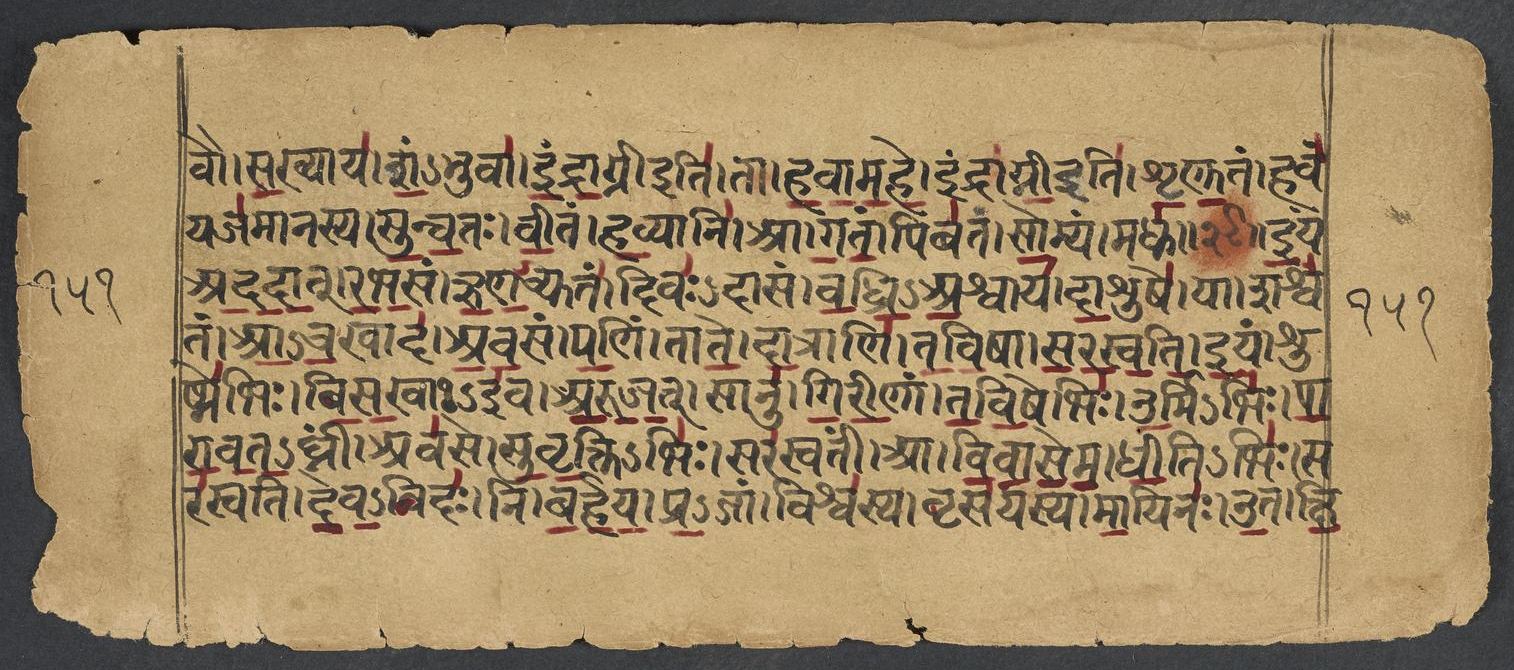
Penn Ms. Coll. 390 Item 41, fol. 478v (numbered 151v by the scribe) (OPenn image 479, upper leaf). Checked on the image: the Rigveda text on this page begins in RV 6.60.14 ‹-devau sakhyāya śam-bhuvā indrāgnī›. The next page with Rigveda text, fol. 479r (numbered 152r by the scribe), begins in RV 6.61.3 ‹-kṣiti-bhyaḥ avanīḥ avindaḥ viṣam›. Verses 6.60.14-15 end on this page; 6.60.14 begins on fol. 478r (numbered 151r by the scribe).
14ā no̱ gavye̍bhi̱r aśvyai̍r vasa̱vyai̱3̱̍r upa̍ gacchatam | sakhā̍yau de̱vau sa̱khyāya̍ śa̱mbhuve̍ndrā̱gnī tā ha̍vāmahe ||
15indrā̍gnī śṛṇu̱taṁ hava̱ṁ yaja̍mānasya sunva̱taḥ | vī̱taṁ ha̱vyāny ā ga̍ta̱m piba̍taṁ so̱myam madhu̍ ||
Compare: Padapāṭha (word-by-word text written in the manuscript; Sansknet e-text via GRETIL)
14ā | naḥ | gavyebhiḥ | aśvyaiḥ | vasavyaiḥ | upa | gacchatam | sakhāyau | devau | sakhyāya | śam-bhuvā | indrāgnī iti | tā | havāmahe
15indrāgnī iti | śṛṇutam | havam | yajamānasya | sunvataḥ | vītam | havyāni | ā | gatam | p ibatam | somyam | madhu
14Come unto us with riches, come with wealth in horses and in kine. Indra and Agni, we invoke you both, the Gods, as Friends for friendship, bringing bliss.
15Indra and Agni, hear his call who worships. with libations poured. Come and enjoy the offerings, drink the sweetly-flavoured Soma juice.
Notes
- Sanskrit: Aufrecht's edition (1877) with the Vedic accents, as entered by van Nooten and Holland (GRETIL).
- English: Ralph T. H. Griffith, The Hymns of the Rigveda (1889-1892; 2nd ed. 1896-1897), from the VedaWeb digital text; OCR slips in that text were corrected against the printed 2nd edition (data/sources/rigveda/griffith_errata.json).
- Padapāṭha (edition text): Sansknet e-text via GRETIL (CC BY-NC-SA 4.0).
Cite
Sources
- Source: Penn Ms. Coll. 390 Item 41 (undated (catalogued with Penn's 18th-19th c. Vedic manuscripts)), OPenn, Public Domain Mark + Aufrecht's accented text (GRETIL) + Griffith's English (VedaWeb) (holding institution)
- Critical edition: Aufrecht (1877), accented e-text via GRETIL
← previous · → next · v cycle view · l back to library