Rigveda 6.7: To Agni Vaisvanara
Introduction
Rigveda 6.7 is a hymn of 7 verses addressed to Agni Vaisvanara. It stands in book (maṇḍala) 6, the family book of Bharadvāja. The Rigveda is the oldest collection of Sanskrit hymns, composed in the second half of the second millennium BCE and handed down orally for many centuries before it was written down.
The manuscript shown is Penn Ms. Coll. 390 Item 41 (University of Pennsylvania), an undated paper manuscript of the padapāṭha (the word-by-word recitation text, in which every word is written separately and compounds are split) of the whole Ṛgveda in Devanāgarī, 884 leaves in fascicles, 7-9 lines to the page, accents in red; this hymn stands on fol. 409r-410r. Each section below gives the verses that end on one page; the page boundaries were read on the images (the opening words of every page), not counted out. Where the manuscript is a padapāṭha (the word-by-word recitation text), the section shows Aufrecht's continuous (saṃhitā) text first and, as the edition text, the padapāṭha of the same verses, which is the form written on the page.
How was this verified? (Provenance)
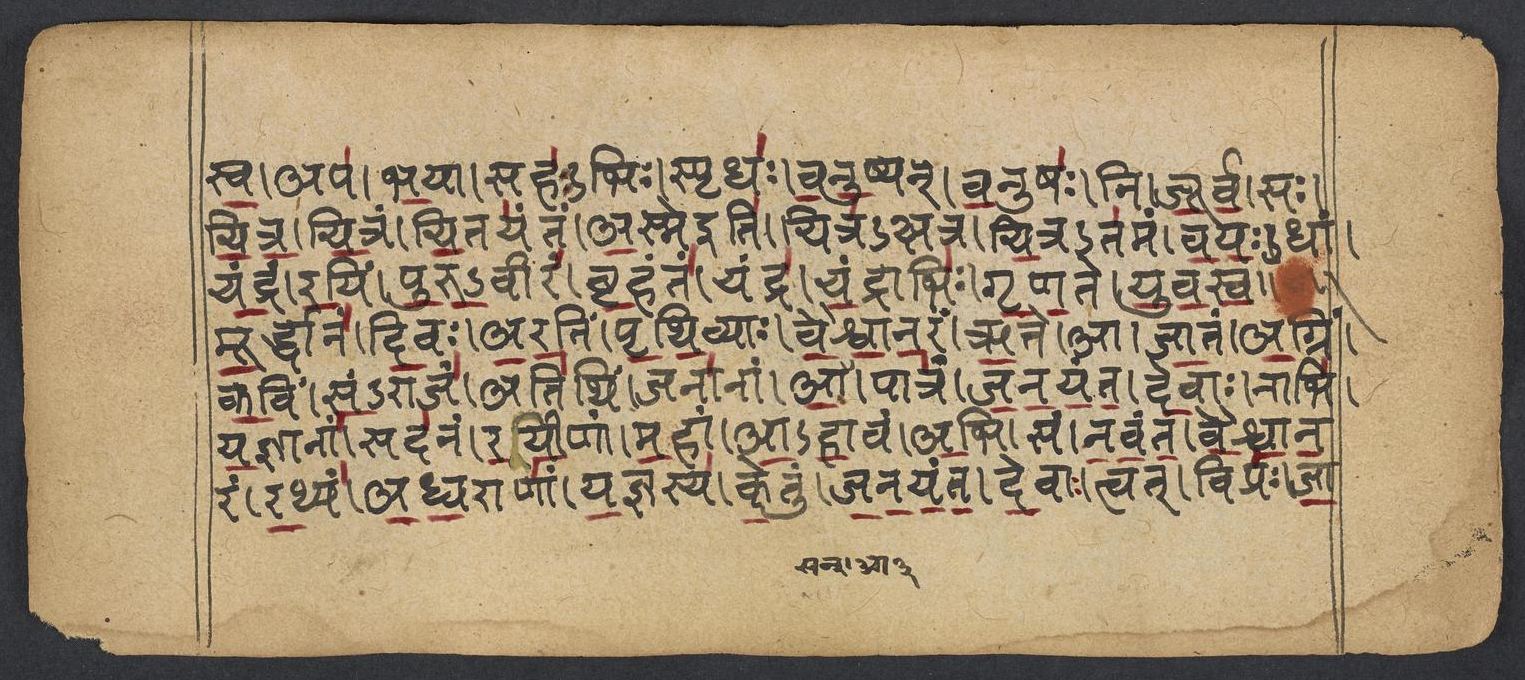
Where on the image
Penn Ms. Coll. 390 Item 41, fol. 409r (numbered 82r by the scribe) (OPenn image 409, lower leaf). Checked on the image: the Rigveda text on this page begins in RV 6.6.6 ‹-bādhasva apa bhayā sahaḥ-bhiḥ›. The next page with Rigveda text, fol. 409v (numbered 82v by the scribe), begins in RV 6.7.3 ‹jāyate vājī agne tvat›. Verses 6.7.1-2 end on this page.
1mū̱rdhāna̍ṁ di̱vo a̍ra̱tim pṛ̍thi̱vyā vai̍śvāna̱ram ṛ̱ta ā jā̱tam a̱gnim | ka̱viṁ sa̱mrāja̱m ati̍thi̱ṁ janā̍nām ā̱sann ā pātra̍ṁ janayanta de̱vāḥ ||
2nābhi̍ṁ ya̱jñānā̱ṁ sada̍naṁ rayī̱ṇām ma̱hām ā̍hā̱vam a̱bhi saṁ na̍vanta | vai̱śvā̱na̱raṁ ra̱thya̍m adhva̱rāṇā̍ṁ ya̱jñasya̍ ke̱tuṁ ja̍nayanta de̱vāḥ ||
Compare: Padapāṭha (word-by-word text written in the manuscript; Sansknet e-text via GRETIL)
1mūrdhānam | divaḥ | aratim | pṛthivyāḥ | vaiśvānaram | ṛte | ā | jātam | agnim | kavim | sam-rājam | atithim | janānām | āsan | ā | pātram | janayanta | devāḥ
2nābhim | yajñānām | sadanam | rayīṇām | mahām | āhāvam | abhi | sam | navanta | vaiśvānaram | rathyam | adhvarāṇām | yajñasya | ketum | janayanta | devāḥ
1Him, messenger of earth and head of heaven, Agni Vaiṣvânara, born in holy Order, The Sage, the King, the guest of men, a vessel fit for their mouths, the Gods have generated.
2Him have they praised, mid-point of sacrifices, great cistern of libations, seat of riches. Vaiṣvânara, conveyer of oblations, ensign of worship, have the Gods engendered.
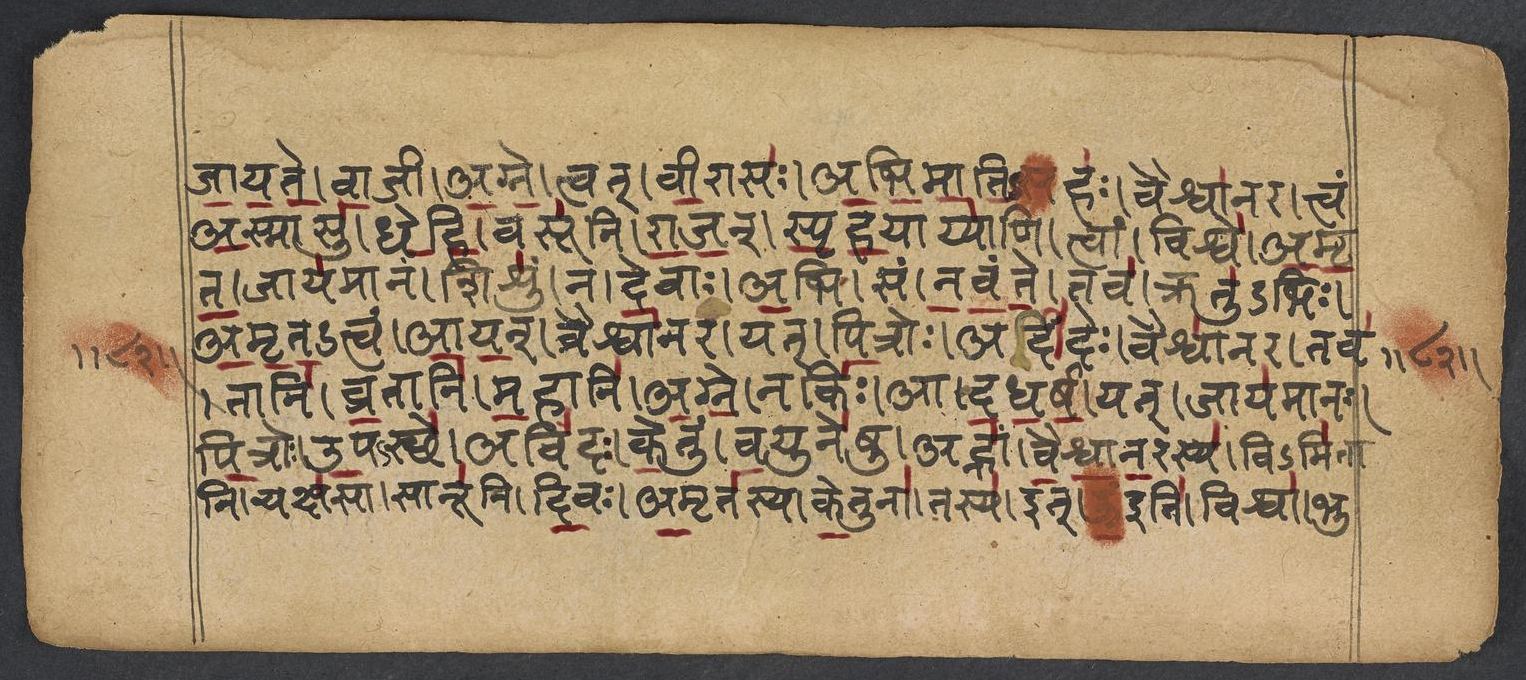
Where on the image
Penn Ms. Coll. 390 Item 41, fol. 409v (numbered 82v by the scribe) (OPenn image 410, upper leaf). Checked on the image: the Rigveda text on this page begins in RV 6.7.3 ‹jāyate vājī agne tvat›. The next page with Rigveda text, fol. 410r (numbered 83r by the scribe), begins in RV 6.7.6 ‹-bhuvanā adhi mūrdhani vayāḥ-iva›. Verses 6.7.3-5 end on this page; 6.7.3 begins on fol. 409r (numbered 82r by the scribe).
3tvad vipro̍ jāyate vā̱jy a̍gne̱ tvad vī̱rāso̍ abhimāti̱ṣāha̍ḥ | vaiśvā̍nara̱ tvam a̱smāsu̍ dhehi̱ vasū̍ni rājan spṛha̱yāyyā̍ṇi ||
4tvāṁ viśve̍ amṛta̱ jāya̍māna̱ṁ śiśu̱ṁ na de̱vā a̱bhi saṁ na̍vante | tava̱ kratu̍bhir amṛta̱tvam ā̍ya̱n vaiśvā̍nara̱ yat pi̱tror adī̍deḥ ||
5vaiśvā̍nara̱ tava̱ tāni̍ vra̱tāni̍ ma̱hāny a̍gne̱ naki̱r ā da̍dharṣa | yaj jāya̍mānaḥ pi̱tror u̱pasthe 'vi̍ndaḥ ke̱tuṁ va̱yune̱ṣv ahnā̍m ||
Compare: Padapāṭha (word-by-word text written in the manuscript; Sansknet e-text via GRETIL)
3tvat | vipraḥ | jāyate | vājī | agne | tvat | vīrāsaḥ | abhimāti-sāhaḥ | vaiśvānara | tvam | asmāsu | dhehi | vasūni | rājan | spṛhayāyyāṇi
4tvām | viśve | amṛta | jāyamānam | śiśum | na | devāḥ | abhi | sam | navante | tava | kratu-bhiḥ | amṛta-tvam | āyan | vaiśvānara | yat | pitroḥ | adīdeḥ
5vaiśvānara | tava | tāni | vratāni | mahāni | agne | nakiḥ | ā | dadharṣa | yat | jāyamānaḥ | pitroḥ | upa-sthe | avindaḥ | ketum | vayuneṣu | ahnām
3From thee, O Agni, springs the mighty singer, from thee come heroes who subdue the foeman. O King, Vaiṣvânara, bestow thou on us excellent treasures worthy to belonged fo r.
4To thee, Immortal! when to life thou springest, all the Gods sing for joy as to their infant. They by thy mental powers were made immortal, Vaiṣvânara, when thou shonest from thy Parents.
5Agni Vaiṣvânara, no one hath ever resisted these thy mighty ordinances, When thou, arising from thy Parents' bosom, foundest the light for days' appointed courses.
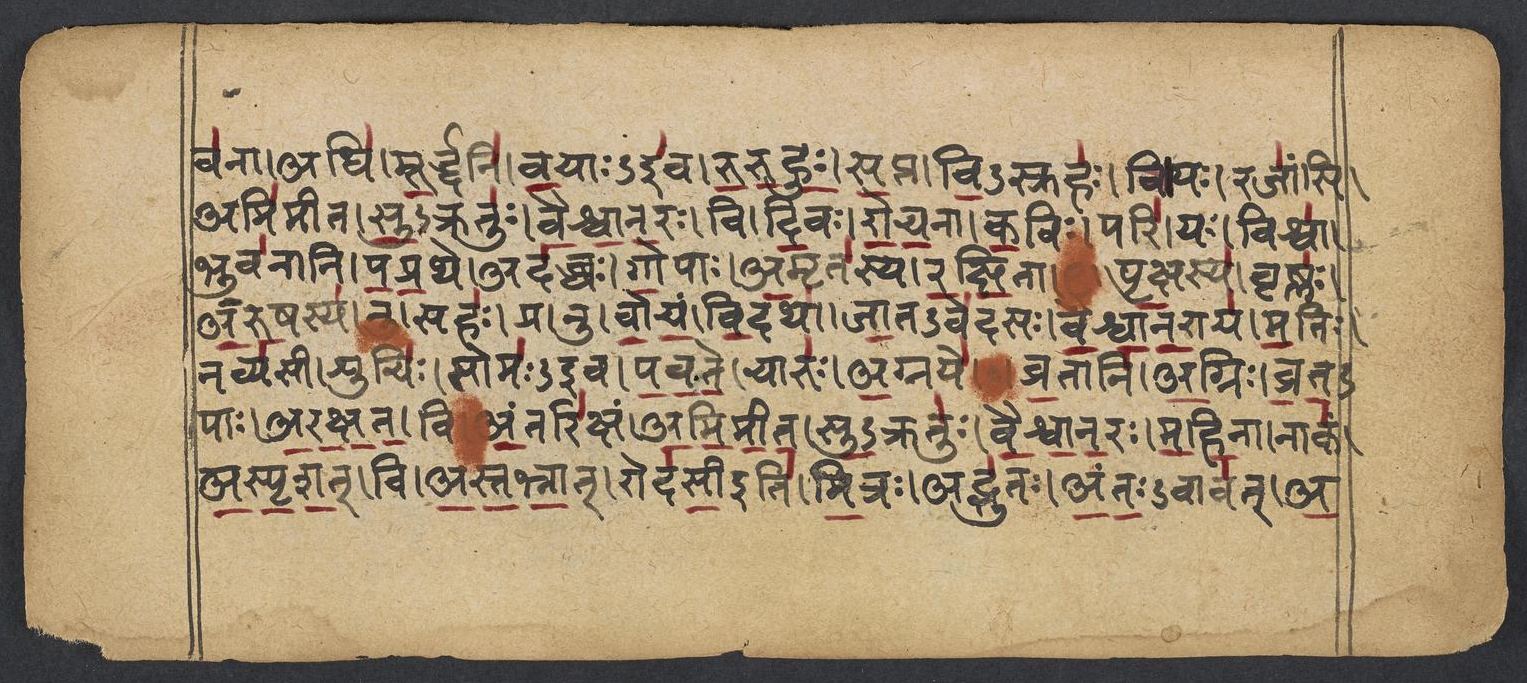
Where on the image
Penn Ms. Coll. 390 Item 41, fol. 410r (numbered 83r by the scribe) (OPenn image 410, lower leaf). Checked on the image: the Rigveda text on this page begins in RV 6.7.6 ‹-bhuvanā adhi mūrdhani vayāḥ-iva›. The next page with Rigveda text, fol. 410v (numbered 83v by the scribe), begins in RV 6.8.3 ‹-akṛṇot jyotiṣā tamaḥ vi›. Verses 6.7.6-7 end on this page; 6.7.6 begins on fol. 409v (numbered 82v by the scribe).
6vai̱śvā̱na̱rasya̱ vimi̍tāni̱ cakṣa̍sā̱ sānū̍ni di̱vo a̱mṛta̍sya ke̱tunā̍ | tasyed u̱ viśvā̱ bhuva̱nādhi̍ mū̱rdhani̍ va̱yā i̍va ruruhuḥ sa̱pta vi̱sruha̍ḥ ||
7vi yo rajā̱ṁsy ami̍mīta su̱kratu̍r vaiśvāna̱ro vi di̱vo ro̍ca̱nā ka̱viḥ | pari̱ yo viśvā̱ bhuva̍nāni papra̱the 'da̍bdho go̱pā a̱mṛta̍sya rakṣi̱tā ||
Compare: Padapāṭha (word-by-word text written in the manuscript; Sansknet e-text via GRETIL)
6vaiśvānarasya | vi-mitāni | cakṣasā | sānūni | divaḥ | amṛtasya | ketunā | tasya | it | oṃ iti | viśvā | bhuvanā | adhi | mūrdhani | vayāḥ-iva | ruruhuḥ | sapta | vi-sruhaḥ
7vi | yaḥ | rajāṃsi | amimīta | su-kratuḥ | vaiśvānaraḥ | vi | divaḥ | rocanā | kavi ḥ | pari | yaḥ | viśvā | bhuvanāni | paprathe | adabdhaḥ | gopāḥ | amṛtasya | rakṣi tā
6The summits of the heaven are traversed through and through by the Immortal's light, Vaiṣvânara's brilliancy. All creatures in existence rest upon his head. The Seven swift-flowing Streams have grown like branches forth,
7Vaiṣvânara, who measured out the realms of air, Sage very wise who made the lucid spheres of heaven, The Undeceivable who spread out all the worlds, keeper is he and guard of immortality.
Notes
- Sanskrit: Aufrecht's edition (1877) with the Vedic accents, as entered by van Nooten and Holland (GRETIL).
- English: Ralph T. H. Griffith, The Hymns of the Rigveda (1889-1892; 2nd ed. 1896-1897), from the VedaWeb digital text; OCR slips in that text were corrected against the printed 2nd edition (data/sources/rigveda/griffith_errata.json).
- Padapāṭha (edition text): Sansknet e-text via GRETIL (CC BY-NC-SA 4.0).
Cite
Sources
- Source: Penn Ms. Coll. 390 Item 41 (undated (catalogued with Penn's 18th-19th c. Vedic manuscripts)), OPenn, Public Domain Mark + Aufrecht's accented text (GRETIL) + Griffith's English (VedaWeb) (holding institution)
- Critical edition: Aufrecht (1877), accented e-text via GRETIL
← previous · → next · v cycle view · l back to library