Rigveda 6.61: To Sarasvati
Introduction
Rigveda 6.61 is a hymn of 14 verses addressed to Sarasvati. It stands in book (maṇḍala) 6, the family book of Bharadvāja. The Rigveda is the oldest collection of Sanskrit hymns, composed in the second half of the second millennium BCE and handed down orally for many centuries before it was written down.
The manuscript shown is Penn Ms. Coll. 390 Item 41 (University of Pennsylvania), an undated paper manuscript of the padapāṭha (the word-by-word recitation text, in which every word is written separately and compounds are split) of the whole Ṛgveda in Devanāgarī, 884 leaves in fascicles, 7-9 lines to the page, accents in red; this hymn stands on fol. 478v-479v. Each section below gives the verses that end on one page; the page boundaries were read on the images (the opening words of every page), not counted out. Where the manuscript is a padapāṭha (the word-by-word recitation text), the section shows Aufrecht's continuous (saṃhitā) text first and, as the edition text, the padapāṭha of the same verses, which is the form written on the page.
How was this verified? (Provenance)
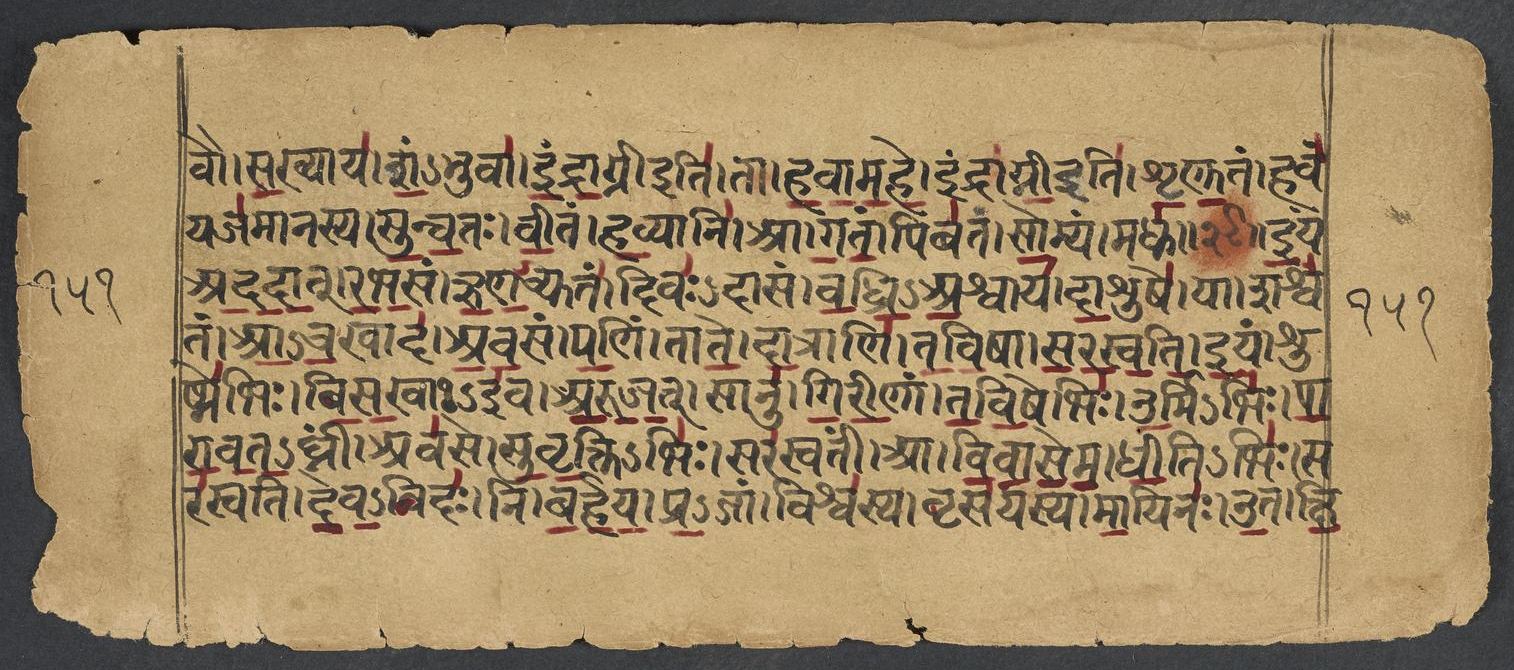
Where on the image
Penn Ms. Coll. 390 Item 41, fol. 478v (numbered 151v by the scribe) (OPenn image 479, upper leaf). Checked on the image: the Rigveda text on this page begins in RV 6.60.14 ‹-devau sakhyāya śam-bhuvā indrāgnī›. The next page with Rigveda text, fol. 479r (numbered 152r by the scribe), begins in RV 6.61.3 ‹-kṣiti-bhyaḥ avanīḥ avindaḥ viṣam›. Verses 6.61.1-2 end on this page.
1i̱yam a̍dadād rabha̱sam ṛ̍ṇa̱cyuta̱ṁ divo̍dāsaṁ vadhrya̱śvāya̍ dā̱śuṣe̍ | yā śaśva̍ntam āca̱khādā̍va̱sam pa̱ṇiṁ tā te̍ dā̱trāṇi̍ tavi̱ṣā sa̍rasvati ||
2i̱yaṁ śuṣme̍bhir bisa̱khā i̍vāruja̱t sānu̍ girī̱ṇāṁ ta̍vi̱ṣebhi̍r ū̱rmibhi̍ḥ | pā̱rā̱va̱ta̱ghnīm ava̍se suvṛ̱ktibhi̱ḥ sara̍svatī̱m ā vi̍vāsema dhī̱tibhi̍ḥ ||
Compare: Padapāṭha (word-by-word text written in the manuscript; Sansknet e-text via GRETIL)
1iyam | adadāt | rabhasam | ṛṇa-cyutam | divaḥ-dāsam | vadhri-aśvāya | dāśuṣe | yā | śaśvantam | ācakhāda | avasam | paṇim | tā | te | dātrāṇi | taviṣā | sarasvati
2iyam | śuṣmebhiḥ | bisakhāḥ-iva | arujat | sānu | girīṇām | taviṣebhiḥ | ūrmi-bhiḥ | pārāvata-ghnīm | avase | suvṛkti-bhiḥ | sarasvatīm | ā | vivāsema | dhīti-bhiḥ
1To Vadhryaṣva when. be worshipped her with gifts she gave fierce Divodâsa, canceller of debts. Consumer of the churlish niggard, one and all, thine, O Sarasvatî, are these effectual boons.
2She with her might, like one who digs for lotus-stems, hath burst with her strong waves the ridges of the hills. Let us invite with songs and holy hymns for help Sarasvatî who slayeth the Pârâvatas.
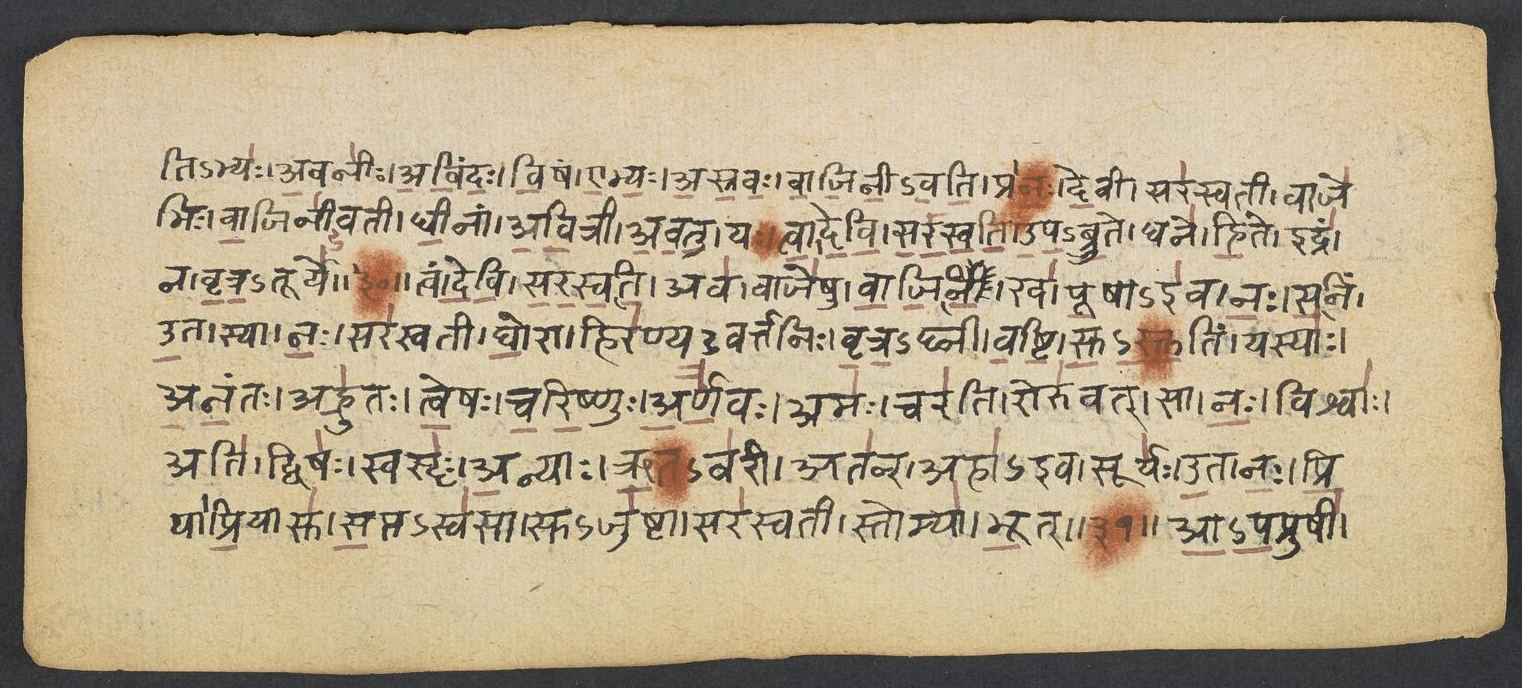
Where on the image
Penn Ms. Coll. 390 Item 41, fol. 479r (numbered 152r by the scribe) (OPenn image 479, lower leaf). Checked on the image: the Rigveda text on this page begins in RV 6.61.3 ‹-kṣiti-bhyaḥ avanīḥ avindaḥ viṣam›. The next page with Rigveda text, fol. 479v (numbered 152v by the scribe), begins in RV 6.61.11 ‹pārthivāni uru rajaḥ antarikṣam›. Verses 6.61.3-10 end on this page; 6.61.3 begins on fol. 478v (numbered 151v by the scribe).
3sara̍svati deva̱nido̱ ni ba̍rhaya pra̱jāṁ viśva̍sya̱ bṛsa̍yasya mā̱yina̍ḥ | u̱ta kṣi̱tibhyo̱ 'vanī̍r avindo vi̱ṣam e̍bhyo asravo vājinīvati ||
4pra ṇo̍ de̱vī sara̍svatī̱ vāje̍bhir vā̱jinī̍vatī | dhī̱nām a̍vi̱try a̍vatu ||
5yas tvā̍ devi sarasvaty upabrū̱te dhane̍ hi̱te | indra̱ṁ na vṛ̍tra̱tūrye̍ ||
6tvaṁ de̍vi sarasva̱ty avā̱ vāje̍ṣu vājini | radā̍ pū̱ṣeva̍ naḥ sa̱nim ||
7u̱ta syā na̱ḥ sara̍svatī gho̱rā hira̍ṇyavartaniḥ | vṛ̱tra̱ghnī va̍ṣṭi suṣṭu̱tim ||
8yasyā̍ ana̱nto ahru̍tas tve̱ṣaś ca̍ri̱ṣṇur a̍rṇa̱vaḥ | ama̱ś cara̍ti̱ roru̍vat ||
9sā no̱ viśvā̱ ati̱ dviṣa̱ḥ svasṝ̍r a̱nyā ṛ̱tāva̍rī | ata̱nn ahe̍va̱ sūrya̍ḥ ||
10u̱ta na̍ḥ pri̱yā pri̱yāsu̍ sa̱ptasva̍sā̱ suju̍ṣṭā | sara̍svatī̱ stomyā̍ bhūt ||
Compare: Padapāṭha (word-by-word text written in the manuscript; Sansknet e-text via GRETIL)
3sarasvati | deva-nidaḥ | ni | barhaya | pra-jām | viśvasya | bṛsayasya | māyinaḥ | uta | kṣiti-bhyaḥ | avanīḥ | avindaḥ | viṣam | ebhyaḥ | asravaḥ | vājinī-vati
4pra | naḥ | devī | sarasvatī | vājebhiḥ | vājinī-vatī | dhīnām | avitrī | avatu
5yaḥ | tvā | devi | sarasvati | upa-brūte | dhane | hite | indram | na | vṛtra-tūyer
6tvam | devi | sarasvati | ava | vājeṣu | vājini | rada | pūṣāiva | naḥ | sanim
7uta | syā | naḥ | sarasvatī | ghorā | hiraṇya-vartaniḥ | vṛtra-ghnī | vaṣṭi | su-stutim
8yasyāḥ | anantaḥ | ahutaḥ | tveṣaḥ | cariṣṇuḥ | arṇavaḥ | amaḥ | carati | roruvat
9sā | naḥ | viśvā | ati | dviṣaḥ | savsṛṝḥ | anyā | ṛta-varī | atan | ahāiva | sūryaḥ
10uta | naḥ | priyā | priyāsu | sapta-svasā | su-juṣṭā | sarasvatī | stomyā | bhūt
3Thou castest down, Sarasvatî, those who scorned the Gods, the brood of every Br̥isaya skilled in magic arts. Thou hast discovered rivers for the tribes of men, and, rich in wealth! made poison flow away from them.
4May the divine Sarasvatî, rich in her wealth, protect us well, Furthering all our thoughts with might
5Whoso, divine Sarasvatî, invokes thee where the prize is set, Like Indra when he smites the foe.
6Aid us, divine Sarasvatî, thou who art strong in wealth and power Like Pûshan, give us opulence.
7Yea, this divine Sarasvatî, terrible with her golden path, Foe-slayer, claims our eulogy.
8Whose limitless unbroken flood, swift-moving with a rapid rush, Comes onward with tempestuous roar.
9She hath spread us beyond all foes, beyond her Sisters, Holy One, As Sûrya spreadeth out the days.
10Yea, she most dear amid dear stream, Seven-sistered, graciously inclined, Sarasvatî hath earned our praise.
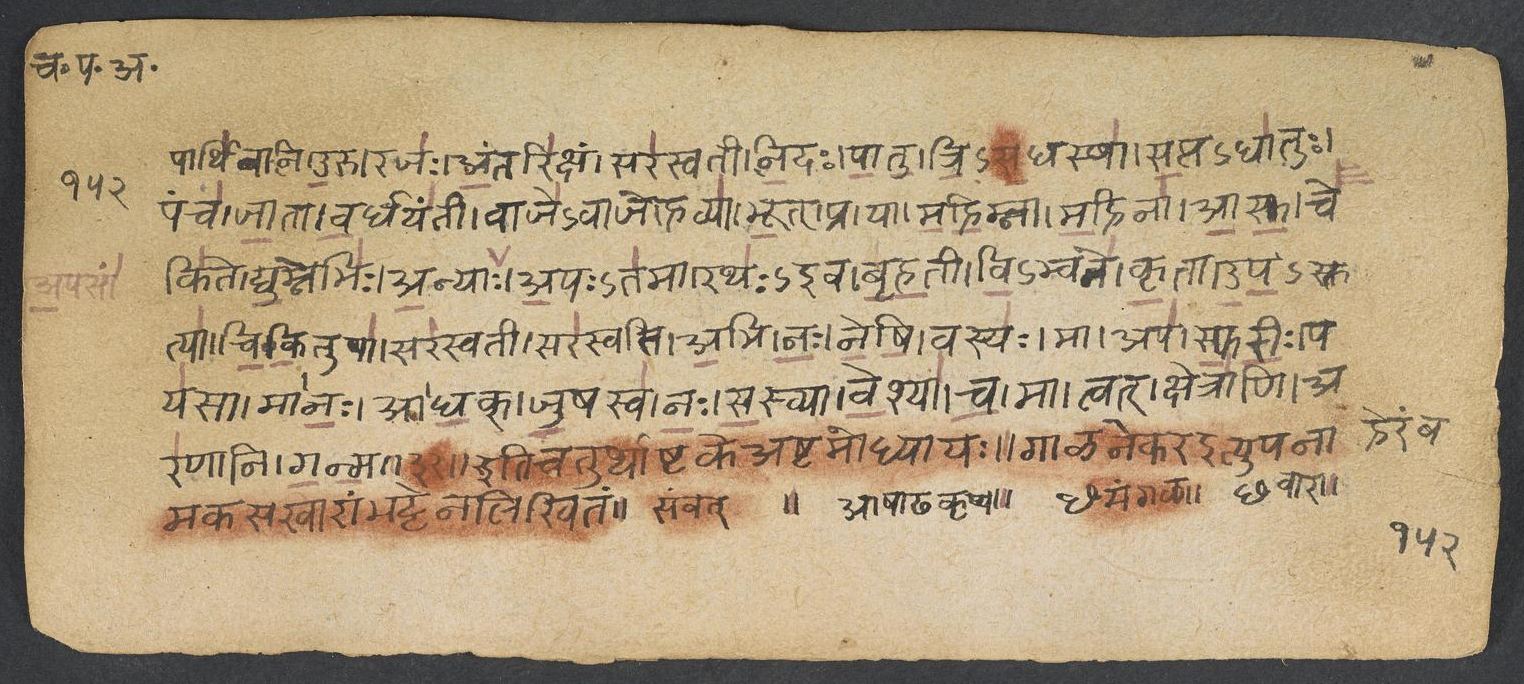
Where on the image
Penn Ms. Coll. 390 Item 41, fol. 479v (numbered 152v by the scribe) (OPenn image 480, upper leaf). Checked on the image: the Rigveda text on this page begins in RV 6.61.11 ‹pārthivāni uru rajaḥ antarikṣam›. The next page with Rigveda text, fol. 481r (numbered 2r by the scribe), begins in RV 6.62.1 ‹stuṣe narā divaḥ asya›. Verses 6.61.11-14 end on this page; 6.61.11 begins on fol. 479r (numbered 152r by the scribe).
11ā̱pa̱pruṣī̱ pārthi̍vāny u̱ru rajo̍ a̱ntari̍kṣam | sara̍svatī ni̱das pā̍tu ||
12tri̱ṣa̱dhasthā̍ sa̱ptadhā̍tu̱ḥ pañca̍ jā̱tā va̱rdhaya̍ntī | vāje̍-vāje̱ havyā̍ bhūt ||
13pra yā ma̍hi̱mnā ma̱hinā̍su̱ ceki̍te dyu̱mnebhi̍r a̱nyā a̱pasā̍m a̱pasta̍mā | ratha̍ iva bṛha̱tī vi̱bhvane̍ kṛ̱topa̱stutyā̍ ciki̱tuṣā̱ sara̍svatī ||
14sara̍svaty a̱bhi no̍ neṣi̱ vasyo̱ māpa̍ spharī̱ḥ paya̍sā̱ mā na̱ ā dha̍k | ju̱ṣasva̍ naḥ sa̱khyā ve̱śyā̍ ca̱ mā tvat kṣetrā̱ṇy ara̍ṇāni ganma ||
Compare: Padapāṭha (word-by-word text written in the manuscript; Sansknet e-text via GRETIL)
11āpapruṣī | pārthivāni | uru | rajaḥ | antarikṣam | sarasvatī | nidaḥ | pātu
12tri-sadhasthā | sapta-dhātuḥ | pañca | jātā | vardhayantī | vāje--vāje | havyā | bhūt
13pra | yā | mahimnā | mahināsu | cekite | dyumnebhiḥ | anyā | apasām | apaḥ-tamā | rathaḥ-iva | bṛhatī | vi-bhvane | kṛtā | upa-stutyā | cikituṣā | sarasvatī
14sarasvati | abhi | naḥ | neṣi | vasyaḥ | mā | apa | spharīḥ | payasā | mā | naḥ | ā | dhak | juṣasva | naḥ | sakhyā | veśyā | ca | mā | tvat | kṣetrāṇi | araṇāni | ganma
11Guard us from hate Sarasvatî, she who hath filled the realms of earth, And that wide tract, the firmament!
12Seven-sistered, sprung from threefold source, the Five Tribes' prosperer, she must be Invoked in every deed of might.
13Marked out by majesty among the Mighty Ones, in glory swifter than the other rapid Streams, Created vast for victory like a chariot, Sarasvatî must be extolled by every sage.
14Guide us, Sarasvatî, to glorious treasure: refuse us not thy milk, nor spurn us from thee. Gladly accept our friendship and obedience: let us not go from thee to distant countries.
Notes
- Sanskrit: Aufrecht's edition (1877) with the Vedic accents, as entered by van Nooten and Holland (GRETIL).
- English: Ralph T. H. Griffith, The Hymns of the Rigveda (1889-1892; 2nd ed. 1896-1897), from the VedaWeb digital text; OCR slips in that text were corrected against the printed 2nd edition (data/sources/rigveda/griffith_errata.json).
- Padapāṭha (edition text): Sansknet e-text via GRETIL (CC BY-NC-SA 4.0).
Cite
Sources
- Source: Penn Ms. Coll. 390 Item 41 (undated (catalogued with Penn's 18th-19th c. Vedic manuscripts)), OPenn, Public Domain Mark + Aufrecht's accented text (GRETIL) + Griffith's English (VedaWeb) (holding institution)
- Critical edition: Aufrecht (1877), accented e-text via GRETIL
← previous · → next · v cycle view · l back to library