Rigveda 6.62: To Asvins
Introduction
Rigveda 6.62 is a hymn of 11 verses addressed to Asvins. It stands in book (maṇḍala) 6, the family book of Bharadvāja. The Rigveda is the oldest collection of Sanskrit hymns, composed in the second half of the second millennium BCE and handed down orally for many centuries before it was written down.
The manuscript shown is Penn Ms. Coll. 390 Item 41 (University of Pennsylvania), an undated paper manuscript of the padapāṭha (the word-by-word recitation text, in which every word is written separately and compounds are split) of the whole Ṛgveda in Devanāgarī, 884 leaves in fascicles, 7-9 lines to the page, accents in red; this hymn stands on fol. 481r-482r. Each section below gives the verses that end on one page; the page boundaries were read on the images (the opening words of every page), not counted out. Where the manuscript is a padapāṭha (the word-by-word recitation text), the section shows Aufrecht's continuous (saṃhitā) text first and, as the edition text, the padapāṭha of the same verses, which is the form written on the page.
How was this verified? (Provenance)
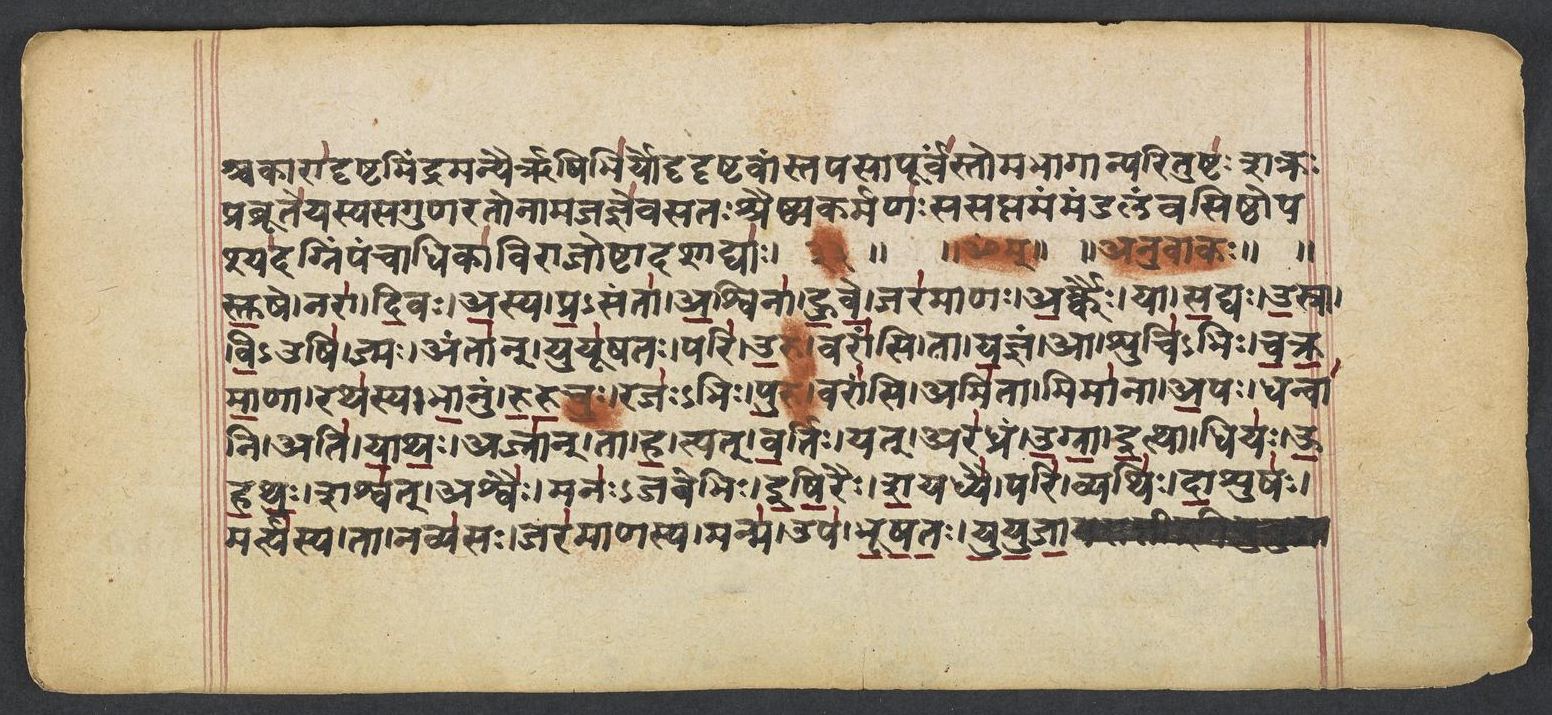
Where on the image
Penn Ms. Coll. 390 Item 41, fol. 481r (numbered 2r by the scribe) (OPenn image 481, lower leaf). Checked on the image: the Rigveda text on this page begins in RV 6.62.1 ‹stuṣe narā divaḥ asya›. Lines 1-3 end the anukramaṇī; 6.62.1 (stuṣe narā divaḥ asya prasantā) begins in line 4. The next page with Rigveda text, fol. 481v (numbered 2v by the scribe), begins in RV 6.62.4 ‹-yuyujānasaptī itiyuyujāna-saptī śubham pṛkṣam›. Verses 6.62.1-3 end on this page.
1stu̱ṣe narā̍ di̱vo a̱sya pra̱santā̱śvinā̍ huve̱ jara̍māṇo a̱rkaiḥ | yā sa̱dya u̱srā vyuṣi̱ jmo antā̱n yuyū̍ṣata̱ḥ pary u̱rū varā̍ṁsi ||
2tā ya̱jñam ā śuci̍bhiś cakramā̱ṇā ratha̍sya bhā̱nuṁ ru̍rucū̱ rajo̍bhiḥ | pu̱rū varā̱ṁsy ami̍tā̱ mimā̍nā̱po dhanvā̱ny ati̍ yātho̱ ajrā̍n ||
3tā ha̱ tyad va̱rtir yad ara̍dhram ugre̱tthā dhiya̍ ūhathu̱ḥ śaśva̱d aśvai̍ḥ | mano̍javebhir iṣi̱raiḥ śa̱yadhyai̱ pari̱ vyathi̍r dā̱śuṣo̱ martya̍sya ||
Compare: Padapāṭha (word-by-word text written in the manuscript; Sansknet e-text via GRETIL)
1stuṣe | narā | divaḥ | asya | pra-santā | aśvinā | huve | jaramāṇaḥ | arkaiḥ | yā | sadyaḥ | usrā | vi-uṣi | jmaḥ | antān | yuyāūṣataḥ | pari | uru | varāṃsi
2tā | yajñam | ā | śuci-bhiḥ | cakramāṇā | rathasya | bhānum | rurucuḥ | rajaḥ-bhiḥ | puru | varāṃsi | amitā | mimānā | apaḥ | dhanvāni | ati | yāthaḥ | ajrān
3tā | ha | tyat | vartiḥ | yat | aradhram | ugrā | itthā | dhiyaḥ | ūhathuḥ | śaśvat | aśvaiḥ | manaḥ-javebhiḥ | iṣiraiḥ | śayadhyai | pari | vyarthiḥ | dāśuṣaḥ | martyasya
1I LAUD the Heroes Twain, this heaven's Controllers: singing with songs of praise I call the Aṣvins, Fain in a moment, when the morns are breaking, to part the earth's ends and the spacious regions.
2Moving to sacrifice through realms of lustre they light the radiance of the car that bears them. traversing many wide unmeasured spaces, over the wastes ye pass, and fields, and waters.
3Ye to that bounteous path of yours, ye mighty, have ever borne away our thoughts with horses, Mind-swift and full of vigour, that the trouble of man who offers gifts might cease and slumber.
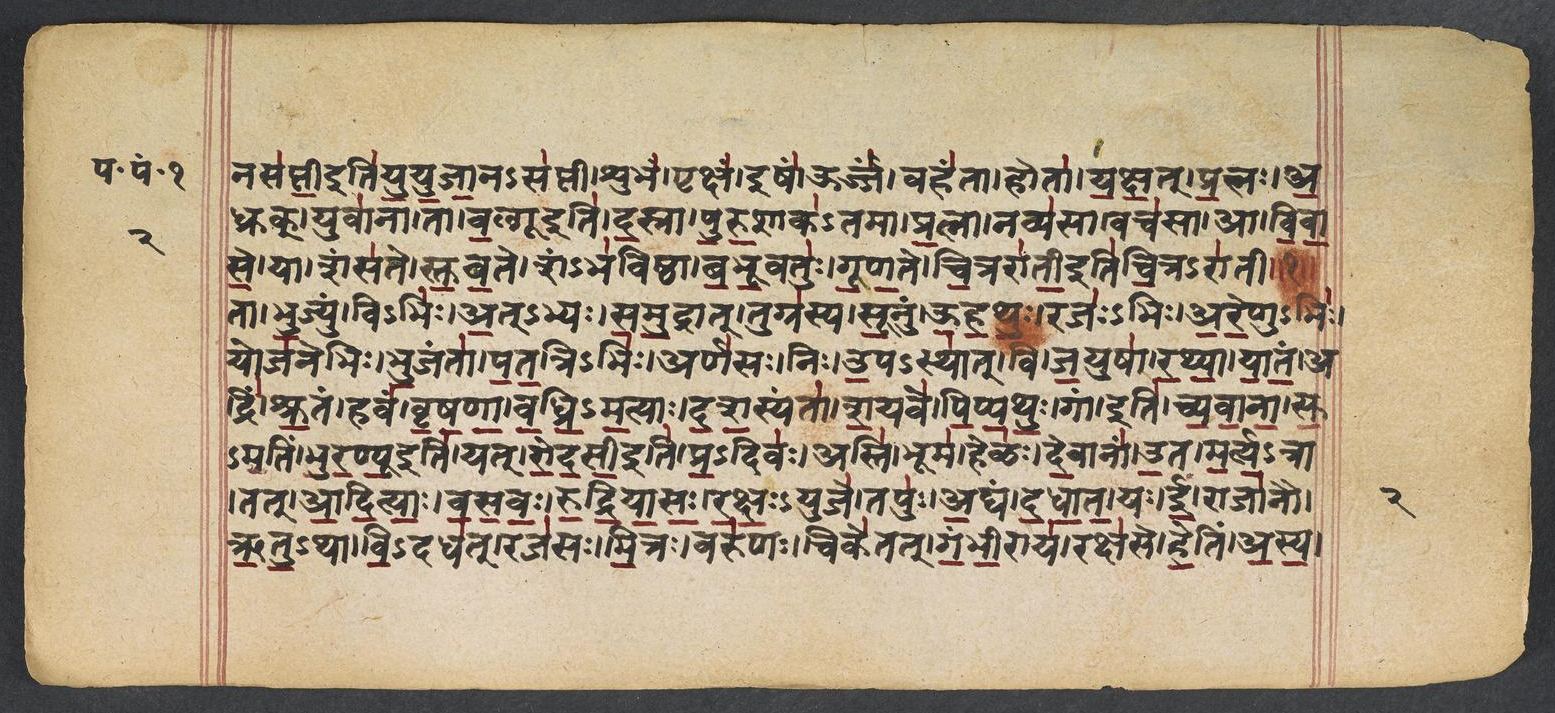
Where on the image
Penn Ms. Coll. 390 Item 41, fol. 481v (numbered 2v by the scribe) (OPenn image 482, upper leaf). Checked on the image: the Rigveda text on this page begins in RV 6.62.4 ‹-yuyujānasaptī itiyuyujāna-saptī śubham pṛkṣam›. The next page with Rigveda text, fol. 482r (numbered 3r by the scribe), begins in RV 6.62.9 ‹droghāya cit vacase ānavāya›. Verses 6.62.4-8 end on this page; 6.62.4 begins on fol. 481r (numbered 2r by the scribe).
4tā navya̍so̱ jara̍māṇasya̱ manmopa̍ bhūṣato yuyujā̱nasa̍ptī | śubha̱m pṛkṣa̱m iṣa̱m ūrja̱ṁ vaha̍ntā̱ hotā̍ yakṣat pra̱tno a̱dhrug yuvā̍nā ||
5tā va̱lgū da̱srā pu̍ru̱śāka̍tamā pra̱tnā navya̍sā̱ vaca̱sā vi̍vāse | yā śaṁsa̍te stuva̱te śambha̍viṣṭhā babhū̱vatu̍r gṛṇa̱te ci̱trarā̍tī ||
6tā bhu̱jyuṁ vibhi̍r a̱dbhyaḥ sa̍mu̱drāt tugra̍sya sū̱num ū̍hathū̱ rajo̍bhiḥ | a̱re̱ṇubhi̱r yoja̍nebhir bhu̱jantā̍ pata̱tribhi̱r arṇa̍so̱ nir u̱pasthā̍t ||
7vi ja̱yuṣā̍ rathyā yāta̱m adri̍ṁ śru̱taṁ hava̍ṁ vṛṣaṇā vadhrima̱tyāḥ | da̱śa̱syantā̍ śa̱yave̍ pipyathu̱r gām iti̍ cyavānā suma̱tim bhu̍raṇyū ||
8yad ro̍dasī pra̱divo̱ asti̱ bhūmā̱ heḻo̍ de̱vānā̍m u̱ta ma̍rtya̱trā | tad ā̍dityā vasavo rudriyāso rakṣo̱yuje̱ tapu̍r a̱ghaṁ da̍dhāta ||
Compare: Padapāṭha (word-by-word text written in the manuscript; Sansknet e-text via GRETIL)
4tā | navyasaḥ | jaramāṇasya | manma | upa | bhūṣataḥ | yuyujānasaptī itiyuyujāna-saptī | śubham | pṛkṣam | iṣam | ūrjam | vahantā | hotā | yakṣat | pratnaḥ | adhruk | yuvānā
5tā | valgū | dasrā | puruśāka-tamā | pratnā | navyasā | vacasā | ā | vivāse | yā | śaṃsate | stuvate | śam-bhaviṣṭhā | babhūvatuḥ | gṛṇate | citrarātī iticitra-rātī
6tā | bhujyum | vi-bhiḥ | at-bhyaḥ | samudrāt | tugrasya | sūnum | ūhathuḥ | rajaḥ-bhiḥ | areṇu-bhiḥ | yojanebhiḥ | bhujantā | patatri-bhiḥ | arṇasaḥ | niḥ | upa-sthāt
7vi | jayuṣā | rathyā | yātam | adrim | śrutam | havam | vṛṣaṇā | vadhri-matyāḥ | daśasyantā | śayave | pipyathuḥ | gām | iti | cyavānā | su-matim | bhuraṇyūiti
8yat | rodasī iti | pra-divaḥ | asti | bhūmā | heḷaḥ | devānām | uta | martya-trā | tat | ādityāḥ | vasavaḥ | rudriyāsaḥ | rakṣaḥ-yuje | tapuḥ | agham | dadhāta
4So ye, when ye have yoked your chariothorses, come to the hymn of the most recent singer. Our true and ancient Herald Priest shall bring you, the Youthful, bearing splendour, food, and vigour.
5With newest hymn I call those Wonder-Workers, ancient and brilliant, and exceeding mighty, Bringers of bliss to him who lauds and praises, bestowing varied bounties on the singer.
6So ye, with birds, out of the sea and waters bore Bhujyu, son of Tugra, through the regions. Speeding with winged steeds through dustless spaces, out of the bosom of the flood they bore him.
7Victors, car-borne, ye rent the rock asunder: Bulls, heard the calling of the eunuch's consort. Bounteous, ye filled the cow with milk for Ṣayu: thus, swift and zealous Ones, ye showed your favour.
8Whate'er from olden time, Heaven, Earth! existeth great object of the wrath of Gods and mortals, Make that, Âdityas, Vasus, sons of Rudra, an evil brand to one allied with demons.
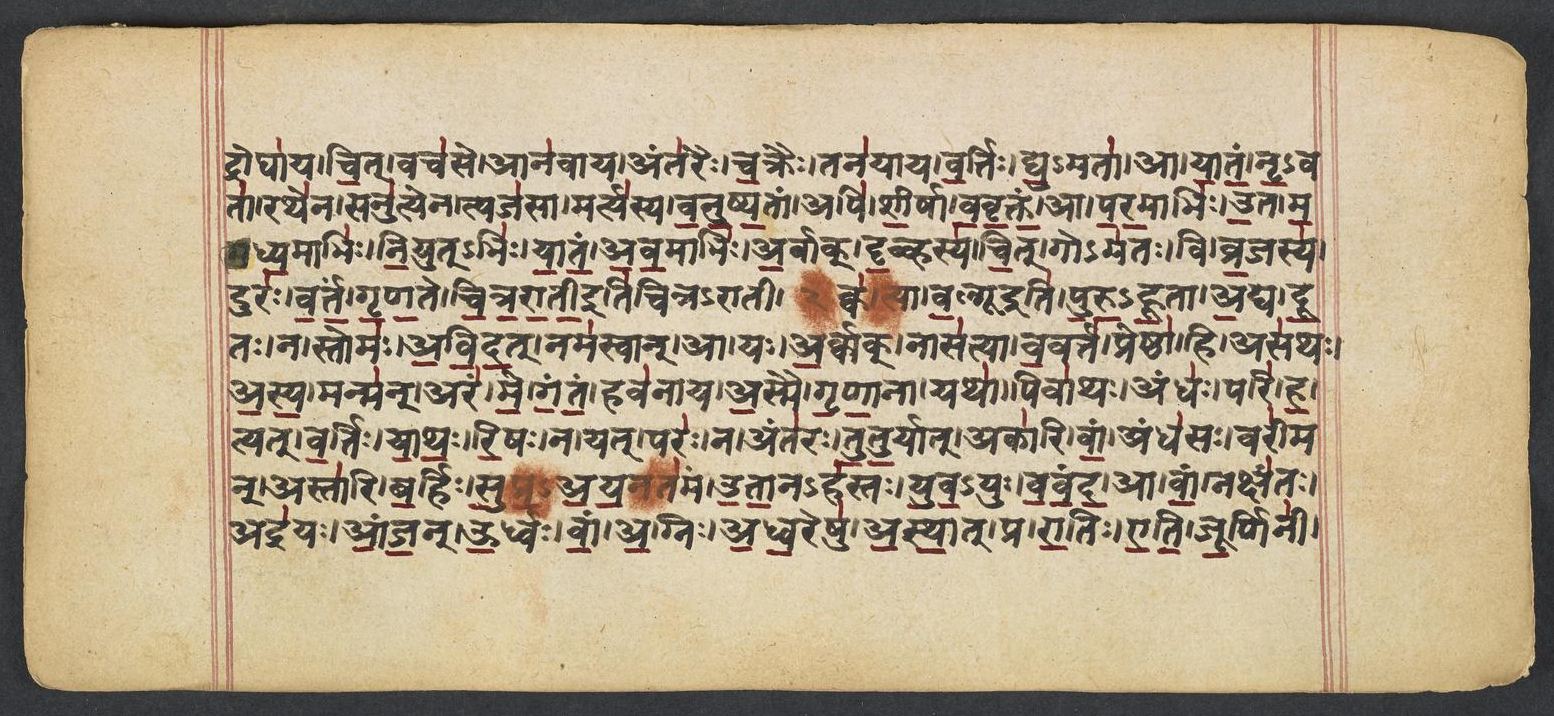
Where on the image
Penn Ms. Coll. 390 Item 41, fol. 482r (numbered 3r by the scribe) (OPenn image 482, lower leaf). Checked on the image: the Rigveda text on this page begins in RV 6.62.9 ‹droghāya cit vacase ānavāya›. The next page with Rigveda text, fol. 482v (numbered 3v by the scribe), begins in RV 6.63.4 ‹ghṛtācī pra hotā gūrta-manāḥ›. Verses 6.62.9-11 end on this page; 6.62.9 begins on fol. 481v (numbered 2v by the scribe).
9ya ī̱ṁ rājā̍nāv ṛtu̱thā vi̱dadha̱d raja̍so mi̱tro varu̍ṇa̱ś cike̍tat | ga̱mbhī̱rāya̱ rakṣa̍se he̱tim a̍sya̱ droghā̍ya ci̱d vaca̍sa̱ āna̍vāya ||
10anta̍raiś ca̱krais tana̍yāya va̱rtir dyu̱matā yā̍taṁ nṛ̱vatā̱ rathe̍na | sanu̍tyena̱ tyaja̍sā̱ martya̍sya vanuṣya̱tām api̍ śī̱rṣā va̍vṛktam ||
11ā pa̍ra̱mābhi̍r u̱ta ma̍dhya̱mābhi̍r ni̱yudbhi̍r yātam ava̱mābhi̍r a̱rvāk | dṛ̱ḻhasya̍ ci̱d goma̍to̱ vi vra̱jasya̱ duro̍ vartaṁ gṛṇa̱te ci̍trarātī ||
Compare: Padapāṭha (word-by-word text written in the manuscript; Sansknet e-text via GRETIL)
9yaḥ | īm | rājānau | ṛtu-thā | vi-dadhat | rajasaḥ | mitraḥ | varuṇaḥ | ciketat | gambhīrāya | rakṣase | hetim | asya | droghāya | cit | vacase | ānavāya
10antaraiḥ | cakraiḥ | tanayāya | vartiḥ | dyu-matā | ā | yātam | nṛ-vatā | rathena | sanutyena | tyajasā | martyasya | vanuṣyatām | api | śīrṣā | vavṛktam
11ā | paramābhiḥ | uta | madhyamābhiḥ | niyut-bhiḥ | yātam | avamābhiḥ | arvāk | dṛḷhasya | cit | go--mataḥ | vi | vrajasya | duraḥ | vartam | gṛṇate | citrarātī iticitra-rātī
9May he who knows, as Varuṇa and Mitra, air's realm, appointing both the Kings in season, Against the secret fiend cast forth his weapon, against the lying words that strangers utter.
10Come to our home with friendly wheels, for offspring; come on your radiant chariot rich in heroes. Strike off, ye Twain, the heads of our assailants who with man's treacherous attack approach us.
11Come hitherward to us with teams of horses, the highest and the midmost and the lowest. Bountiful Lords, throw open to the singer doors e'en of the firm-closed stall of cattle.
Notes
- Sanskrit: Aufrecht's edition (1877) with the Vedic accents, as entered by van Nooten and Holland (GRETIL).
- English: Ralph T. H. Griffith, The Hymns of the Rigveda (1889-1892; 2nd ed. 1896-1897), from the VedaWeb digital text; OCR slips in that text were corrected against the printed 2nd edition (data/sources/rigveda/griffith_errata.json).
- Padapāṭha (edition text): Sansknet e-text via GRETIL (CC BY-NC-SA 4.0).
Cite
Sources
- Source: Penn Ms. Coll. 390 Item 41 (undated (catalogued with Penn's 18th-19th c. Vedic manuscripts)), OPenn, Public Domain Mark + Aufrecht's accented text (GRETIL) + Griffith's English (VedaWeb) (holding institution)
- Critical edition: Aufrecht (1877), accented e-text via GRETIL
← previous · → next · v cycle view · l back to library