Rigveda 6.63: To Asvins
Introduction
Rigveda 6.63 is a hymn of 11 verses addressed to Asvins. It stands in book (maṇḍala) 6, the family book of Bharadvāja. The Rigveda is the oldest collection of Sanskrit hymns, composed in the second half of the second millennium BCE and handed down orally for many centuries before it was written down.
The manuscript shown is Penn Ms. Coll. 390 Item 41 (University of Pennsylvania), an undated paper manuscript of the padapāṭha (the word-by-word recitation text, in which every word is written separately and compounds are split) of the whole Ṛgveda in Devanāgarī, 884 leaves in fascicles, 7-9 lines to the page, accents in red; this hymn stands on fol. 482r-483r. Each section below gives the verses that end on one page; the page boundaries were read on the images (the opening words of every page), not counted out. Where the manuscript is a padapāṭha (the word-by-word recitation text), the section shows Aufrecht's continuous (saṃhitā) text first and, as the edition text, the padapāṭha of the same verses, which is the form written on the page.
How was this verified? (Provenance)
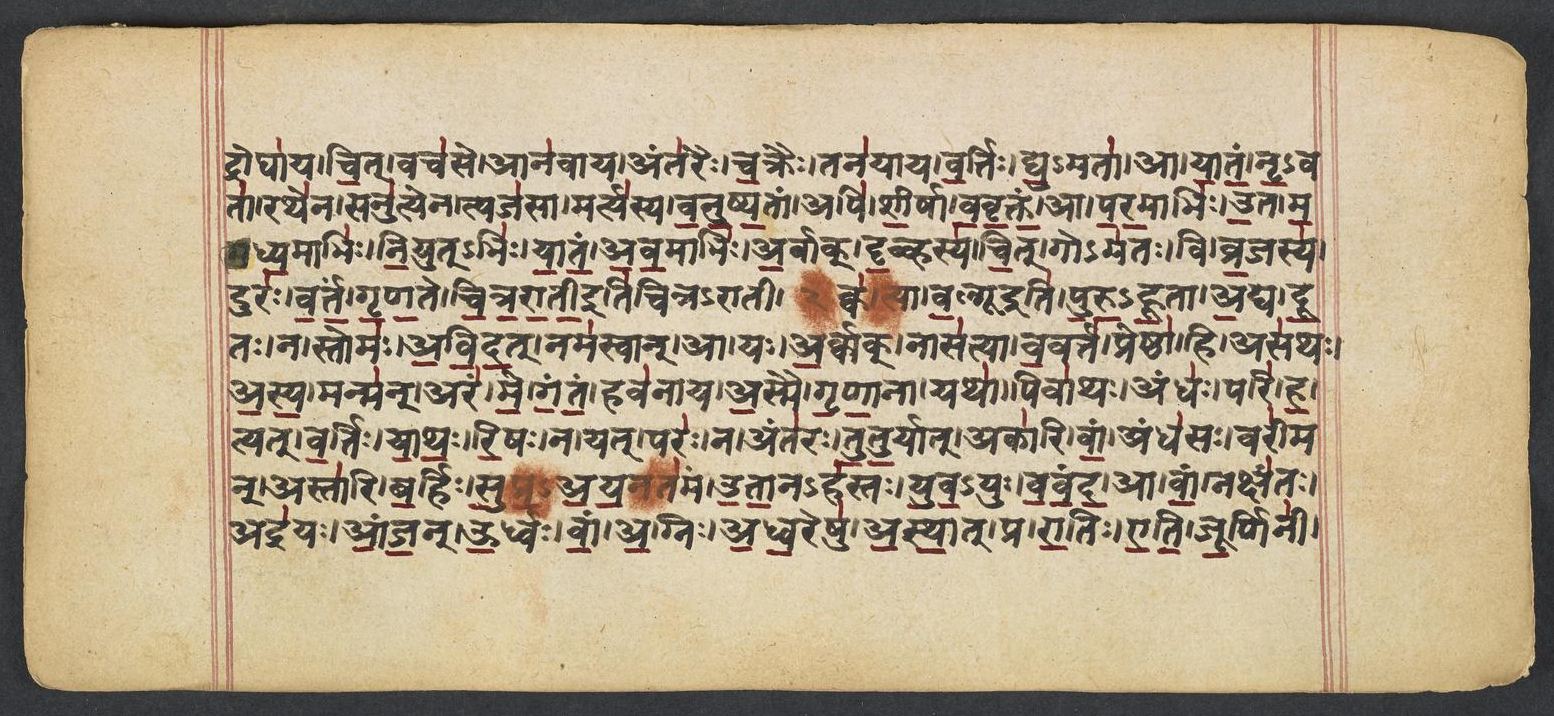
Where on the image
Penn Ms. Coll. 390 Item 41, fol. 482r (numbered 3r by the scribe) (OPenn image 482, lower leaf). Checked on the image: the Rigveda text on this page begins in RV 6.62.9 ‹droghāya cit vacase ānavāya›. The next page with Rigveda text, fol. 482v (numbered 3v by the scribe), begins in RV 6.63.4 ‹ghṛtācī pra hotā gūrta-manāḥ›. Verses 6.63.1-3 end on this page.
1kva1̱̍ tyā va̱lgū pu̍ruhū̱tādya dū̱to na stomo̍ 'vida̱n nama̍svān | ā yo a̱rvāṅ nāsa̍tyā va̱varta̱ preṣṭhā̱ hy asa̍tho asya̱ manma̍n ||
2ara̍m me ganta̱ṁ hava̍nāyā̱smai gṛ̍ṇā̱nā yathā̱ pibā̍tho̱ andha̍ḥ | pari̍ ha̱ tyad va̱rtir yā̍tho ri̱ṣo na yat paro̱ nānta̍ras tutu̱ryāt ||
3akā̍ri vā̱m andha̍so̱ varī̍ma̱nn astā̍ri ba̱rhiḥ su̍prāya̱ṇata̍mam | u̱ttā̱naha̍sto yuva̱yur va̍va̱ndā vā̱ṁ nakṣa̍nto̱ adra̍ya āñjan ||
Compare: Padapāṭha (word-by-word text written in the manuscript; Sansknet e-text via GRETIL)
1kva | tyā | valgū iti | puru-hūtā | adya | dūtaḥ | na | stomaḥ | avidat | namasvān | ā | yaḥ | arvāk | nāsatyā | vavarta | preṣṭhā | hi | asathaḥ | asya | manman
2aram | me | gantam | havanāya | asmai | gṛṇānā | yathā | pibāthaḥ | andhaḥ | pari | ha | tyat | vartiḥ | yāthaḥ | riṣaḥ | na | yat | paraḥ | na | antaraḥ | tuturyāt
3akāri | vām | andhasaḥ | varīman | astāri | barhiḥ | supra-ayanatamam | uttāna-hastaḥ | yuvayuḥ | vavanda | ā | vām | nakṣantaḥ | adrayaḥ | āñjan
1WHERE hath the hymn with reverence, like an envoy, found both fair Gods to-day, invoked of many- Hymn that hath brought the two Nâsatyas hither? To this man's thought be ye, both Gods, most friendly.
2Come readily to this mine invocation, lauded with songs, that ye may drink the juices. Compass this house to keep it from the foeman, that none may force it, either near or distant.
3Juice in wide room hath been prepared to feast you: for you the grass is strewn, most soft to tread on. With lifted hands your servant hath adored you. Yearningfor you the press-stones shed the liquid.
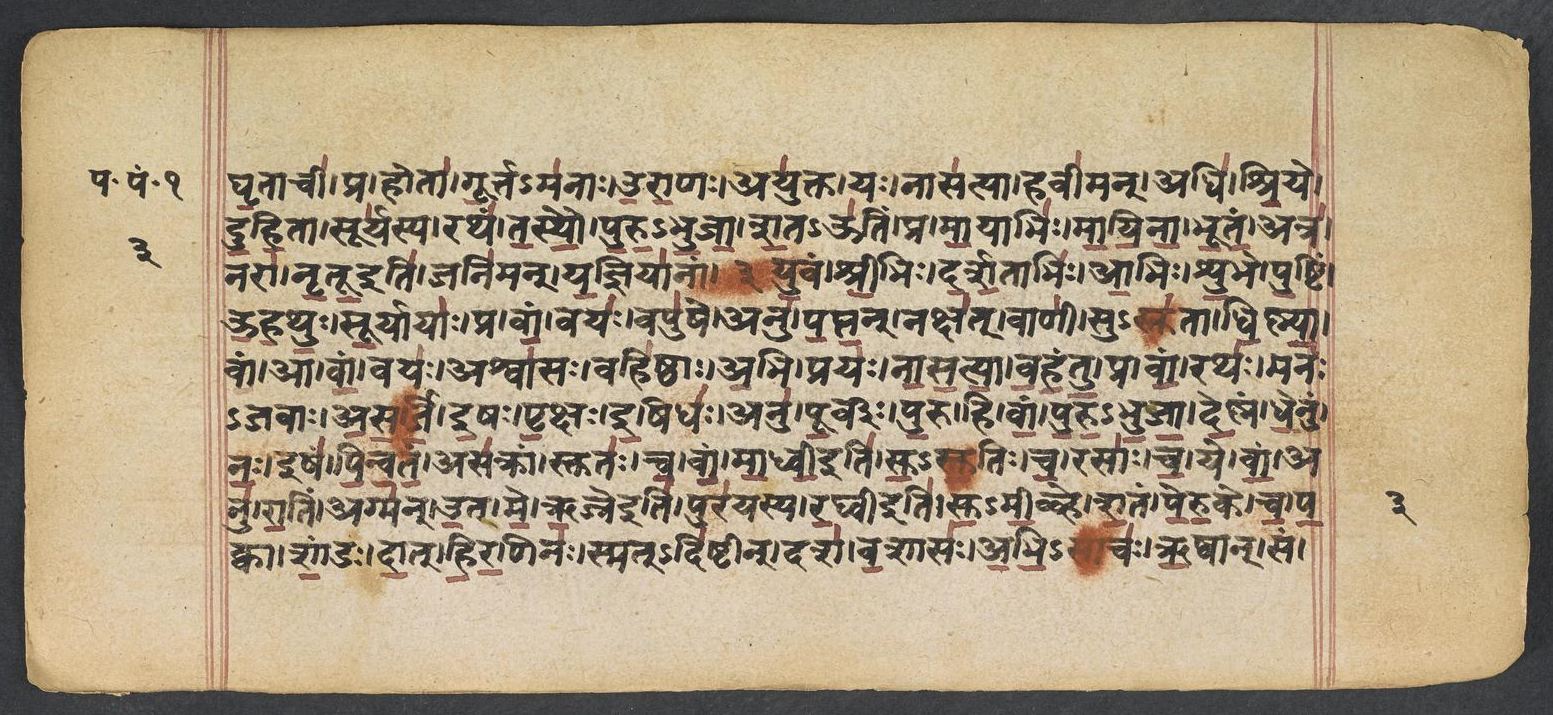
Where on the image
Penn Ms. Coll. 390 Item 41, fol. 482v (numbered 3v by the scribe) (OPenn image 483, upper leaf). Checked on the image: the Rigveda text on this page begins in RV 6.63.4 ‹ghṛtācī pra hotā gūrta-manāḥ›. The next page with Rigveda text, fol. 483r (numbered 4r by the scribe), begins in RV 6.63.10 ‹vām śatā nāsatyā sahasrā›. Verses 6.63.4-9 end on this page; 6.63.4 begins on fol. 482r (numbered 3r by the scribe).
4ū̱rdhvo vā̍m a̱gnir a̍dhva̱reṣv a̍sthā̱t pra rā̱tir e̍ti jū̱rṇinī̍ ghṛ̱tācī̍ | pra hotā̍ gū̱rtama̍nā urā̱ṇo 'yu̍kta̱ yo nāsa̍tyā̱ havī̍man ||
5adhi̍ śri̱ye du̍hi̱tā sūrya̍sya̱ ratha̍ṁ tasthau purubhujā śa̱toti̍m | pra mā̱yābhi̍r māyinā bhūta̱m atra̱ narā̍ nṛtū̱ jani̍man ya̱jñiyā̍nām ||
6yu̱vaṁ śrī̱bhir da̍rśa̱tābhi̍r ā̱bhiḥ śu̱bhe pu̱ṣṭim ū̍hathuḥ sū̱ryāyā̍ḥ | pra vā̱ṁ vayo̱ vapu̱ṣe 'nu̍ papta̱n nakṣa̱d vāṇī̱ suṣṭu̍tā dhiṣṇyā vām ||
7ā vā̱ṁ vayo 'śvā̍so̱ vahi̍ṣṭhā a̱bhi prayo̍ nāsatyā vahantu | pra vā̱ṁ ratho̱ mano̍javā asarjī̱ṣaḥ pṛ̱kṣa i̱ṣidho̱ anu̍ pū̱rvīḥ ||
8pu̱ru hi vā̍m purubhujā de̱ṣṇaṁ dhe̱nuṁ na̱ iṣa̍m pinvata̱m asa̍krām | stuta̍ś ca vām mādhvī suṣṭu̱tiś ca̱ rasā̍ś ca̱ ye vā̱m anu̍ rā̱tim agma̍n ||
9u̱ta ma̍ ṛ̱jre pura̍yasya ra̱ghvī su̍mī̱ḻhe śa̱tam pe̍ru̱ke ca̍ pa̱kvā | śā̱ṇḍo dā̍d dhira̱ṇina̱ḥ smaddi̍ṣṭī̱n daśa̍ va̱śāso̍ abhi̱ṣāca̍ ṛ̱ṣvān ||
Compare: Padapāṭha (word-by-word text written in the manuscript; Sansknet e-text via GRETIL)
4ūrdhvaḥ | vām | agniḥ | adhvareṣu | asthāt | pra | rātiḥ | eti | jūrṇinī | ghṛtācī | pra | hotā | gūrta-manāḥ | urāṇaḥ | ayukta | yaḥ | nāsatyā | havīman
5adhi | śriye | duhitā | sūryasya | ratham | tasthau | puru-bhujā | śata-ūtim | pra | māyābhiḥ | māyinā | bhūtam | atra | narā | nṛtūiti | janiman | yajñiyānām
6yuvam | śrībhiḥ | darśatābhiḥ | abhiḥ | śubhe | puṣṭim | ūhathuḥ | sūryāyāḥ | pra | vām | vayaḥ | vapuṣe | anu | paptan | nakṣat | vāṇī | su-stutā | dhiṣṇyā | vām
7ā | vām | vayaḥ | aśvāsaḥ | vahiṣṭhāḥ | abhi | prayaḥ | nāsatyā | vahantu | pra | vām | rathaḥ | manaḥ-javāḥ | asarji | iṣaḥ | pṛkṣaḥ | iṣidhaḥ | anu | pūrvīḥ
8puru | hi | vām | puru-bhujā | deṣṇam | dhenum | naḥ | iṣam | pinvatam | asakrām | stutaḥ | ca | vām | mādhvī iti | su-stutiḥ | ca | rasāḥ | ca | ye | vām | anu | rātim | agman
9uta | me | ṛjre iti | purayasya | raghvī iti | su-mīḷhe | śatam | peruke | ca | pakvaa | śāṇḍaḥ | dāt | hiraṇinaḥ | smat-diṣṭīn | daśa | vaśāsaḥ | abhi-sācaḥ | ṛṣvān
4Agni uplifts him at your sacrifices: forth goes the oblation dropping oil and glowing. Up stands the grateful-minded priest, elected, appointed to invoke the two Nâsatyas.
5Lords of great wealth! for glory, Sûrya's Daughter mounted your car that brings a hundred succours. Famed for your magic arts were ye, magicians! amid the race of Gods, ye dancing Heroes!
6Ye Twain, with these your glories fair to look on, brought, to win victory, rich gifts for Sûryâ. After you flew your birds, marvels of beauty: dear to our hearts! the song, well lauded, reached you.
7May your winged coursers, best to draw. Nâsatyas! convey you to the object of your wishes. Swift as the thought, your car hath been sent onward to food of many a sort and dainty viands.
8Lords of great wealth, manifold is your bounty: ye filled our cow with food that never faileth. Lovers of sweetness! yours are praise and singers, and poured libations which have sought your favour.
9Mine were two mares of Puraya, brown, swift-footed; a hundred with Sumîḍha, food with Peruk. Ṣâṇḍa gave ten gold-decked and well-trained horses, tame and obedient and of lofty stature.
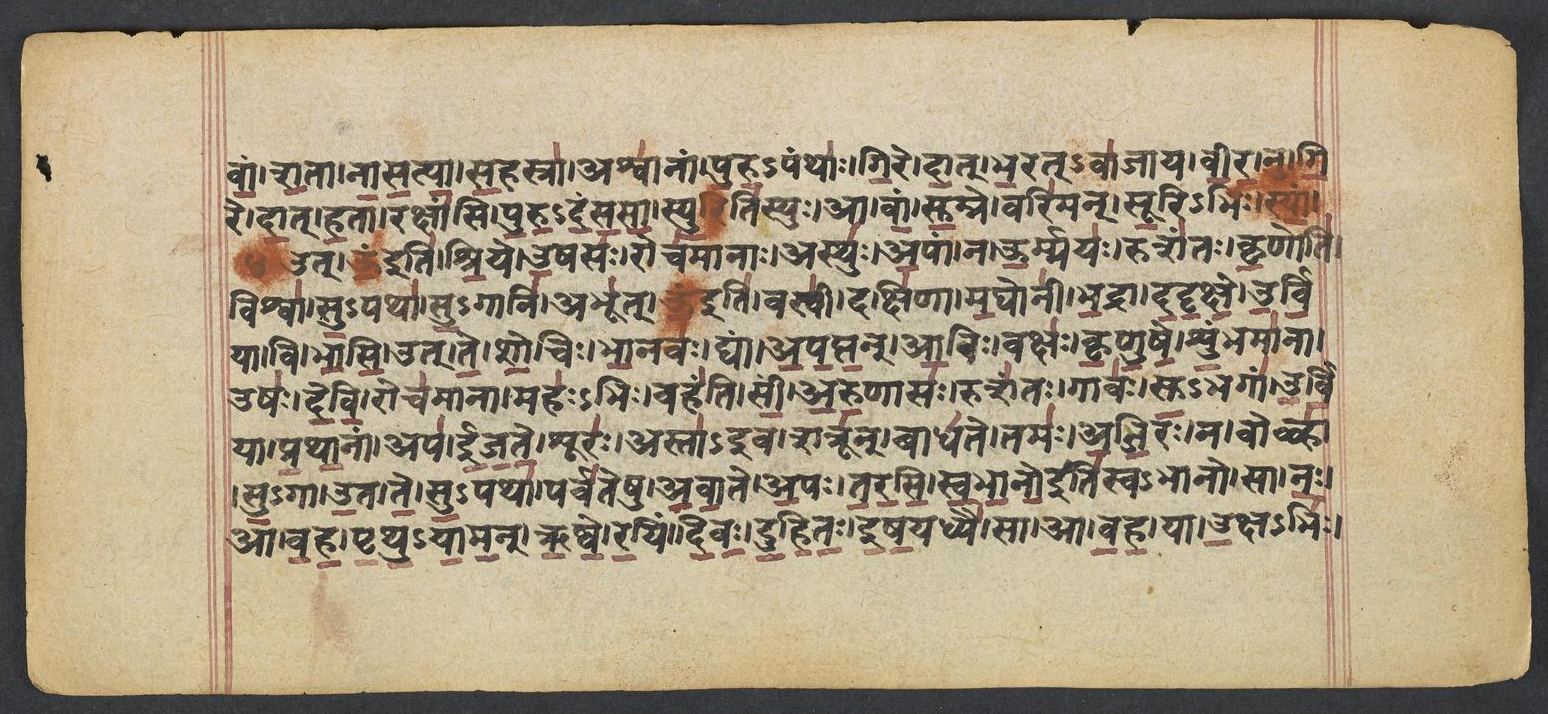
Where on the image
Penn Ms. Coll. 390 Item 41, fol. 483r (numbered 4r by the scribe) (OPenn image 483, lower leaf). Checked on the image: the Rigveda text on this page begins in RV 6.63.10 ‹vām śatā nāsatyā sahasrā›. The next page with Rigveda text, fol. 483v (numbered 4v by the scribe), begins in RV 6.64.5 ‹avātā uṣaḥ varam vahasi›. Verses 6.63.10-11 end on this page; 6.63.10 begins on fol. 482v (numbered 3v by the scribe).
10saṁ vā̍ṁ śa̱tā nā̍satyā sa̱hasrāśvā̍nām puru̱panthā̍ gi̱re dā̍t | bha̱radvā̍jāya vīra̱ nū gi̱re dā̍d dha̱tā rakṣā̍ṁsi purudaṁsasā syuḥ ||
11ā vā̍ṁ su̱mne vari̍man sū̱ribhi̍ḥ ṣyām ||
Compare: Padapāṭha (word-by-word text written in the manuscript; Sansknet e-text via GRETIL)
10sam | vām | śatā | nāsatyā | sahasrā | aśvānām | puru-panthāḥ | gire | dāt | bharat-vājāya | vīra | nu | gire | dāt | hatā | rakṣāṃsi | puru-daṃsasā | syuritisyuḥ
11ā | vām | sumne | variman | sūri-bhiḥ | syām
10Nâsatyas! Purupanthas offered hundreds, thousands of steeds to him who sang your praises, Gave, Heroes! to the singer Bharadvâja. Ye-Wonder-Workers, let the fiends be slaughtered.
11May I with princes share your bliss in freedom.
Notes
- Sanskrit: Aufrecht's edition (1877) with the Vedic accents, as entered by van Nooten and Holland (GRETIL).
- English: Ralph T. H. Griffith, The Hymns of the Rigveda (1889-1892; 2nd ed. 1896-1897), from the VedaWeb digital text; OCR slips in that text were corrected against the printed 2nd edition (data/sources/rigveda/griffith_errata.json).
- Padapāṭha (edition text): Sansknet e-text via GRETIL (CC BY-NC-SA 4.0).
Cite
Sources
- Source: Penn Ms. Coll. 390 Item 41 (undated (catalogued with Penn's 18th-19th c. Vedic manuscripts)), OPenn, Public Domain Mark + Aufrecht's accented text (GRETIL) + Griffith's English (VedaWeb) (holding institution)
- Critical edition: Aufrecht (1877), accented e-text via GRETIL
← previous · → next · v cycle view · l back to library