Rigveda 6.64: To Usas
Introduction
Rigveda 6.64 is a hymn of 6 verses addressed to Usas. It stands in book (maṇḍala) 6, the family book of Bharadvāja. The Rigveda is the oldest collection of Sanskrit hymns, composed in the second half of the second millennium BCE and handed down orally for many centuries before it was written down.
The manuscript shown is Penn Ms. Coll. 390 Item 41 (University of Pennsylvania), an undated paper manuscript of the padapāṭha (the word-by-word recitation text, in which every word is written separately and compounds are split) of the whole Ṛgveda in Devanāgarī, 884 leaves in fascicles, 7-9 lines to the page, accents in red; this hymn stands on fol. 483r-483v. Each section below gives the verses that end on one page; the page boundaries were read on the images (the opening words of every page), not counted out. Where the manuscript is a padapāṭha (the word-by-word recitation text), the section shows Aufrecht's continuous (saṃhitā) text first and, as the edition text, the padapāṭha of the same verses, which is the form written on the page.
How was this verified? (Provenance)
Where on the image
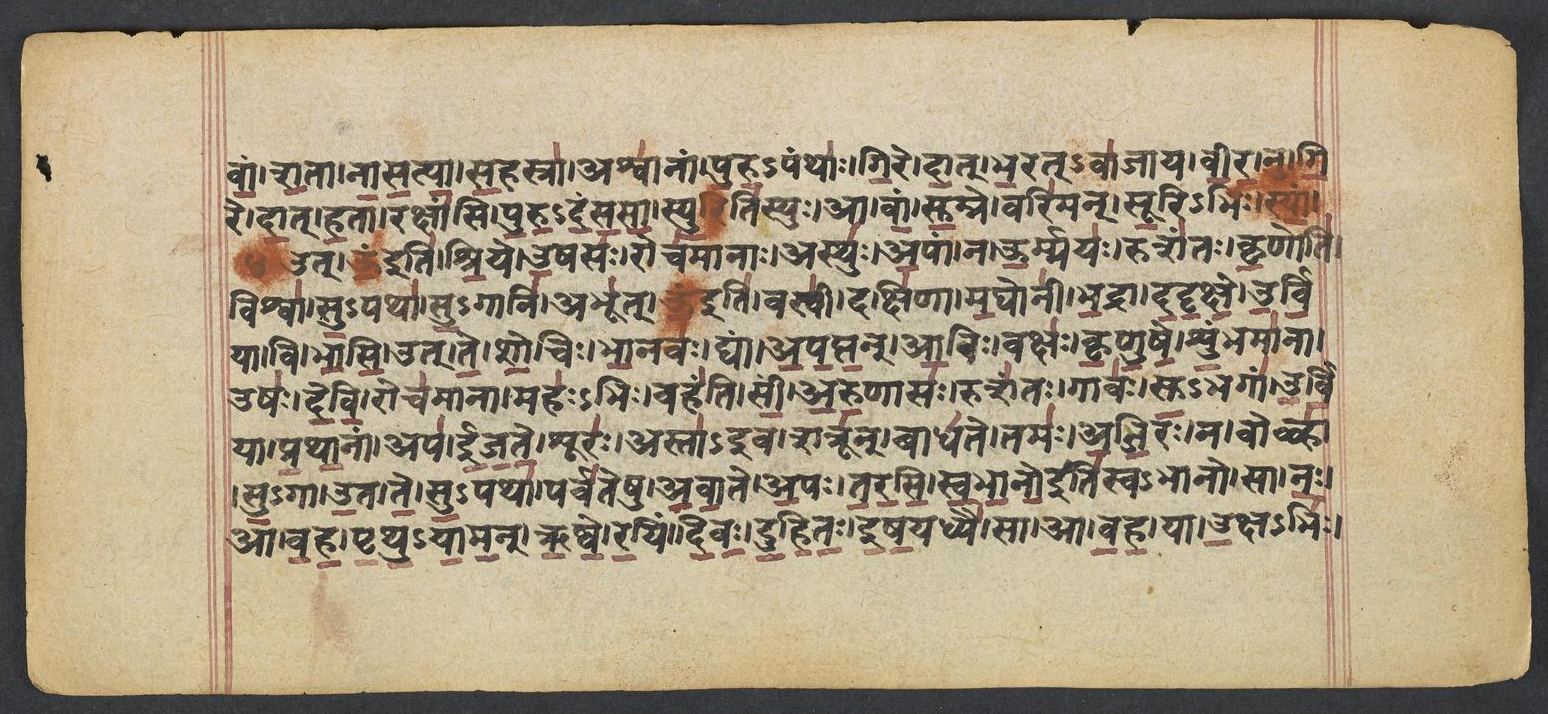
Penn Ms. Coll. 390 Item 41, fol. 483r (numbered 4r by the scribe) (OPenn image 483, lower leaf). Checked on the image: the Rigveda text on this page begins in RV 6.63.10 ‹vām śatā nāsatyā sahasrā›. The next page with Rigveda text, fol. 483v (numbered 4v by the scribe), begins in RV 6.64.5 ‹avātā uṣaḥ varam vahasi›. Verses 6.64.1-4 end on this page.
1ud u̍ śri̱ya u̱ṣaso̱ roca̍mānā̱ asthu̍r a̱pāṁ normayo̱ ruśa̍ntaḥ | kṛ̱ṇoti̱ viśvā̍ su̱pathā̍ su̱gāny abhū̍d u̱ vasvī̱ dakṣi̍ṇā ma̱ghonī̍ ||
2bha̱drā da̍dṛkṣa urvi̱yā vi bhā̱sy ut te̍ śo̱cir bhā̱navo̱ dyām a̍paptan | ā̱vir vakṣa̍ḥ kṛṇuṣe śu̱mbhamā̱noṣo̍ devi̱ roca̍mānā̱ maho̍bhiḥ ||
3vaha̍nti sīm aru̱ṇāso̱ ruśa̍nto̱ gāva̍ḥ su̱bhagā̍m urvi̱yā pra̍thā̱nām | ape̍jate̱ śūro̱ aste̍va̱ śatrū̱n bādha̍te̱ tamo̍ aji̱ro na voḻhā̍ ||
4su̱gota te̍ su̱pathā̱ parva̍teṣv avā̱te a̱pas ta̍rasi svabhāno | sā na̱ ā va̍ha pṛthuyāmann ṛṣve ra̱yiṁ di̍vo duhitar iṣa̱yadhyai̍ ||
Compare: Padapāṭha (word-by-word text written in the manuscript; Sansknet e-text via GRETIL)
1ut | oṃ iti | śriye | uṣasaḥ | rocamānāḥ | asthuḥ | apām | na | ūrmayaḥ | ruśantaḥ | kṛṇoti | viśvā | su-pathā | su-gāni | abhūt | oṃ iti | vasvī | dakṣiṇā | maghonī
2bhadrā | dadṛkṣe | urviyā | vi | bhāsi | ut | te | śociḥ | bhānavaḥ | dyām | apaptan | āviḥ | vakṣaḥ | kṛṇuṣe | śumbhamānā | uṣaḥ | devi | rocamānā | mahaḥ-bhiḥ
3vahanti | sīm | aruṇāsaḥ | ruśantaḥ | gāvaḥ | su-bhagām | urviyā | prathanām | apa | ījate | śūraḥ | astāiva | śatrūn | bādhate | tamaḥ | ajiraḥ | na | voḷhā
4su-gā | uta | te | su-pathā | parvateṣu | avāte | apaḥ | tarasi | svabhāno itisva-bhāno | sā | naḥ | ā | vaha | pṛthu-yāman | ṛṣve | rayim | divaḥ | duhitaḥ | iṣayadhyai
1THE radiant Dawns have risen up for glory, in their white splendour like the waves of waters. She maketh paths all easy, fair to travel, and, rich, hath shown herself benign and friendly.
2We see that thou art good: far shines thy lustre; thy beams, thy splendours have flown up to heaven. Decking thyself, thou makest bare thy bosom, shining in majesty, thou Goddess Morning.
3Red are the kine and luminous that bear her the Blessed One who spreadeth through the distance. The foes she chaseth like a valiant archer, like a swift warrior she repelleth darkness.
4Thy ways are easy on the hills: thou passest Invincible! Self-luminous! through waters. So lofty Goddess with thine ample pathway, Daughter of Heaven, bring wealth to give us comfort.
Where on the image
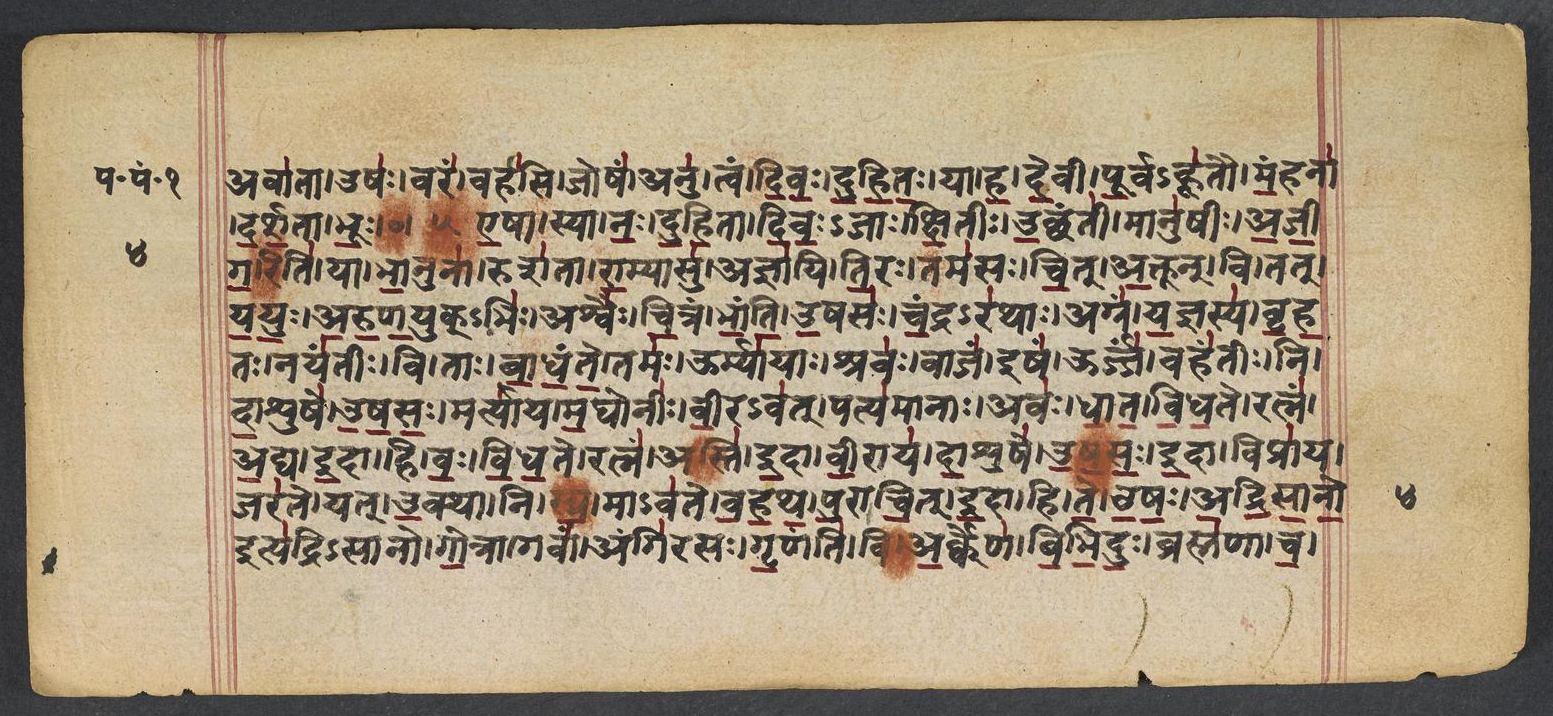
Penn Ms. Coll. 390 Item 41, fol. 483v (numbered 4v by the scribe) (OPenn image 484, upper leaf). Checked on the image: the Rigveda text on this page begins in RV 6.64.5 ‹avātā uṣaḥ varam vahasi›. The next page with Rigveda text, fol. 484r (numbered 5r by the scribe), begins in RV 6.65.5 ‹satyā nṛṇām abhavat deva-hūtiḥ›. Verses 6.64.5-6 end on this page; 6.64.5 begins on fol. 483r (numbered 4r by the scribe).
5sā va̍ha̱ yokṣabhi̱r avā̱toṣo̱ vara̱ṁ vaha̍si̱ joṣa̱m anu̍ | tvaṁ di̍vo duhita̱r yā ha̍ de̱vī pū̱rvahū̍tau ma̱ṁhanā̍ darśa̱tā bhū̍ḥ ||
6ut te̱ vaya̍ś cid vasa̱ter a̍papta̱n nara̍ś ca̱ ye pi̍tu̱bhājo̱ vyu̍ṣṭau | a̱mā sa̱te va̍hasi̱ bhūri̍ vā̱mam uṣo̍ devi dā̱śuṣe̱ martyā̍ya ||
Compare: Padapāṭha (word-by-word text written in the manuscript; Sansknet e-text via GRETIL)
5sā | ā | vaha | yā | ukṣa-bhiḥ | avātā | uṣaḥ | varam | vahasi | joṣam | anu | tvam | divaḥ | duhitaḥ | yā | ha | devī | pūrva-hūtau | maṃhanā | darśatā | bhūḥ
6ut | te | vayaḥ | cit | vasateḥ | apaptan | naraḥ | ca | ye | pitu-bhājaḥ | vi-uṣṭau | amā | sate | vahasi | bhūri | vāmam | uṣaḥ | devi | dāśuṣe | martyāya
5Dawn, bring me wealth: untroubled, with thine oxen thou bearest riches at thy will and pleasure; Thou who, a Goddess, Child of Heaven, hast shown thee lovely through bounty when we called thee early.
6As the birds fly forth from their restingplaces, so men with store of food rise at thy dawning. Yea, to the liberal mortal who rernaineth at home, O Goddess Dawn, much good thou bringest.
Notes
- Sanskrit: Aufrecht's edition (1877) with the Vedic accents, as entered by van Nooten and Holland (GRETIL).
- English: Ralph T. H. Griffith, The Hymns of the Rigveda (1889-1892; 2nd ed. 1896-1897), from the VedaWeb digital text; OCR slips in that text were corrected against the printed 2nd edition (data/sources/rigveda/griffith_errata.json).
- Padapāṭha (edition text): Sansknet e-text via GRETIL (CC BY-NC-SA 4.0).
Cite
Sources
- Source: Penn Ms. Coll. 390 Item 41 (undated (catalogued with Penn's 18th-19th c. Vedic manuscripts)), OPenn, Public Domain Mark + Aufrecht's accented text (GRETIL) + Griffith's English (VedaWeb) (holding institution)
- Critical edition: Aufrecht (1877), accented e-text via GRETIL
← previous · → next · v cycle view · l back to library