Rigveda 6.65: To Usas
Introduction
Rigveda 6.65 is a hymn of 6 verses addressed to Usas. It stands in book (maṇḍala) 6, the family book of Bharadvāja. The Rigveda is the oldest collection of Sanskrit hymns, composed in the second half of the second millennium BCE and handed down orally for many centuries before it was written down.
The manuscript shown is Penn Ms. Coll. 390 Item 41 (University of Pennsylvania), an undated paper manuscript of the padapāṭha (the word-by-word recitation text, in which every word is written separately and compounds are split) of the whole Ṛgveda in Devanāgarī, 884 leaves in fascicles, 7-9 lines to the page, accents in red; this hymn stands on fol. 483v-484r. Each section below gives the verses that end on one page; the page boundaries were read on the images (the opening words of every page), not counted out. Where the manuscript is a padapāṭha (the word-by-word recitation text), the section shows Aufrecht's continuous (saṃhitā) text first and, as the edition text, the padapāṭha of the same verses, which is the form written on the page.
How was this verified? (Provenance)
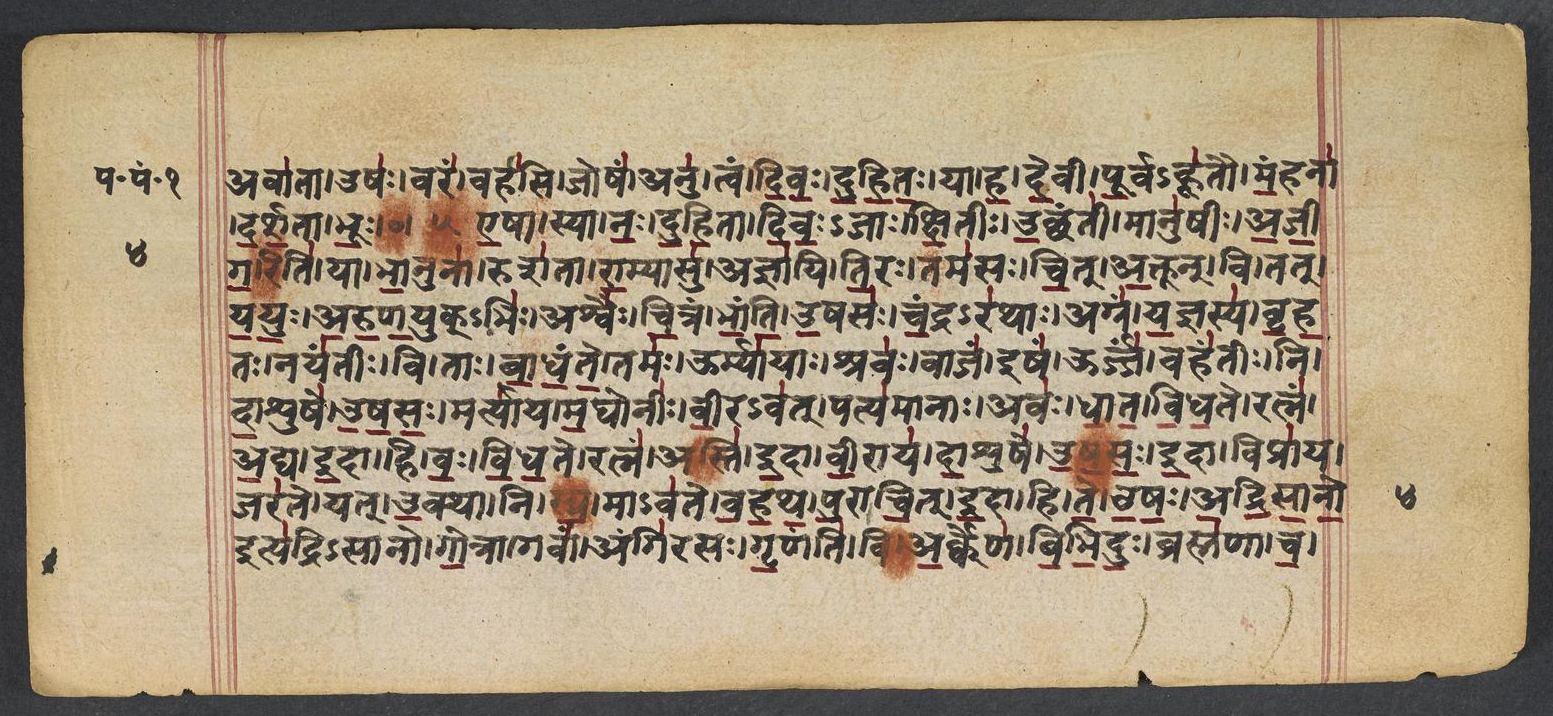
Where on the image
Penn Ms. Coll. 390 Item 41, fol. 483v (numbered 4v by the scribe) (OPenn image 484, upper leaf). Checked on the image: the Rigveda text on this page begins in RV 6.64.5 ‹avātā uṣaḥ varam vahasi›. The next page with Rigveda text, fol. 484r (numbered 5r by the scribe), begins in RV 6.65.5 ‹satyā nṛṇām abhavat deva-hūtiḥ›. Verses 6.65.1-4 end on this page.
1e̱ṣā syā no̍ duhi̱tā di̍vo̱jāḥ kṣi̱tīr u̱cchantī̱ mānu̍ṣīr ajīgaḥ | yā bhā̱nunā̱ ruśa̍tā rā̱myāsv ajñā̍yi ti̱ras tama̍saś cid a̱ktūn ||
2vi tad ya̍yur aruṇa̱yugbhi̱r aśvai̍ś ci̱tram bhā̍nty u̱ṣasa̍ś ca̱ndrara̍thāḥ | agra̍ṁ ya̱jñasya̍ bṛha̱to naya̍ntī̱r vi tā bā̍dhante̱ tama̱ ūrmyā̍yāḥ ||
3śravo̱ vāja̱m iṣa̱m ūrja̱ṁ vaha̍ntī̱r ni dā̱śuṣa̍ uṣaso̱ martyā̍ya | ma̱ghonī̍r vī̱rava̱t patya̍mānā̱ avo̍ dhāta vidha̱te ratna̍m a̱dya ||
4i̱dā hi vo̍ vidha̱te ratna̱m astī̱dā vī̱rāya̍ dā̱śuṣa̍ uṣāsaḥ | i̱dā viprā̍ya̱ jara̍te̱ yad u̱kthā ni ṣma̱ māva̍te vahathā pu̱rā ci̍t ||
Compare: Padapāṭha (word-by-word text written in the manuscript; Sansknet e-text via GRETIL)
1eṣā | syā | naḥ | duhitā | divaḥ-jāḥ | kṣitīḥ | ucchantī | mānuṣīḥ | ajīgariti | yā | bhānunā | ruśatā | rāmyāsu | ajñāyi | tiraḥ | tamasaḥ | cit | aktūn
2vi | tat | yayuḥ | aruṇayuk-bhiḥ | aśvaiḥ | citram | bhānti | uṣasaḥ | candra-rathāḥ | agram | yajñasya | bṛhataḥ | nayantīḥ | vi | tāḥ | bādhante | tamaḥ | ūrmyāyāḥ
3śravaḥ | vājam | iṣam | ūrjam | vahantīḥ | ni | dāśuṣe | uṣasaḥ | martyāya | maghonīḥ | vīra-vat | patyamānāḥ | avaḥ | dhāta | vidhate | ratnam | adya
4idā | hi | vaḥ | vidhate | ratnam | asti | idā | vīrāya | dāśuṣe | uṣasaḥ | idā | viprāya | jarate | yat | ukthā | ni | sma | māvate | vahatha | purā | cit
1SHEDDING her light on human habitations this Child of Heaven hath called us from our slumber; She who at night-time with her argent lustre hath shown herself e'en through the shades of darkness.
2All this with red-rayed steeds have they divided: the Dawns on bright cars shine in wondrous fashion. They, bringing near the stately rite's commencement, drive far away the night's surrounding shadows.
3Dawns, bringing hither, to the man who worships, glory and power and might and food and vigour, Opulent, with imperial sway like heroes, favour your servant and this day enrich him.
4Now is there treasure for the man who serves you, now for the hero, Dawns! who brings oblation; Now for the singer when he sings the praise-song. Even to one like me ye brought aforetime.
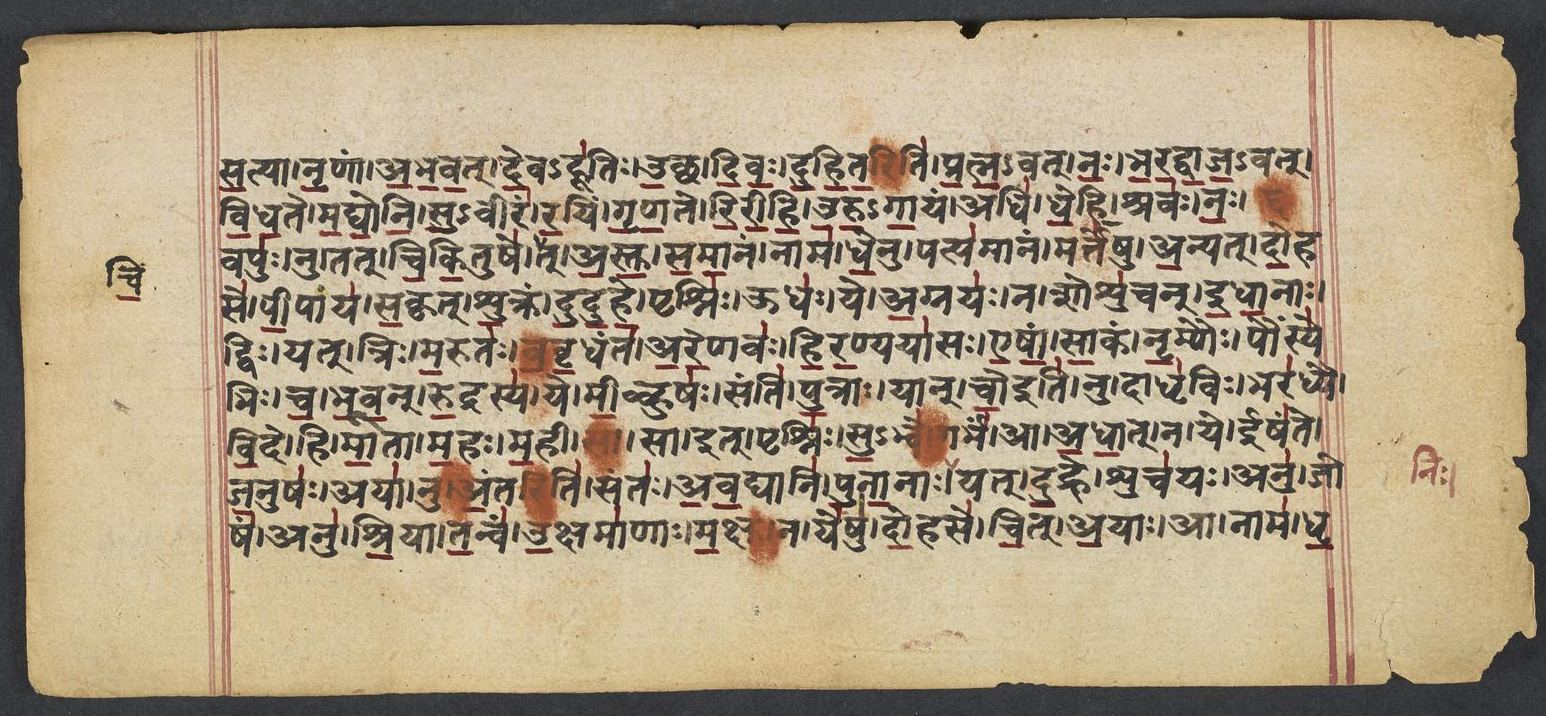
Where on the image
Penn Ms. Coll. 390 Item 41, fol. 484r (numbered 5r by the scribe) (OPenn image 484, lower leaf). Checked on the image: the Rigveda text on this page begins in RV 6.65.5 ‹satyā nṛṇām abhavat deva-hūtiḥ›. The next page with Rigveda text, fol. 484v (numbered 5v by the scribe), begins in RV 6.66.5 ‹-ghṛṣṇu mārutam dadhānāḥ na›. Verses 6.65.5-6 end on this page; 6.65.5 begins on fol. 483v (numbered 4v by the scribe).
5i̱dā hi ta̍ uṣo adrisāno go̱trā gavā̱m aṅgi̍raso gṛ̱ṇanti̍ | vy a1̱̍rkeṇa̍ bibhidu̱r brahma̍ṇā ca sa̱tyā nṛ̱ṇām a̍bhavad de̱vahū̍tiḥ ||
6u̱cchā di̍vo duhitaḥ pratna̱van no̍ bharadvāja̱vad vi̍dha̱te ma̍ghoni | su̱vīra̍ṁ ra̱yiṁ gṛ̍ṇa̱te ri̍rīhy urugā̱yam adhi̍ dhehi̱ śravo̍ naḥ ||
Compare: Padapāṭha (word-by-word text written in the manuscript; Sansknet e-text via GRETIL)
5idā | hi | te | uṣaḥ | adrisāno ity adri-sāno | gotrā | gavām | aṅgirasaḥ | gṛṇanti | vi | arkeṇa | bibhiduḥ | brahmaṇā | ca | satyā | nṛṇām | abhavat | deva-hūtiḥ
6uccha | divaḥ | duhitariti | pratna-vat | naḥ | bharadvāja-vat | vidhate | maghoni | su-vīram | rayim | gṛṇate | rirīhi | uru-gāyam | adhi | dhehi | śravaḥ | naḥ
5O Dawn who standest on the mountain ridges, Angirases now praise thy stalls of cattle. With prayer and holy hymn they burst them open: the heroes' calling on the Gods was fruitful.
6Shine on us as of old, thou Child of Heaven,on him, rich Maid! who serves like Bharadvâja. Give to the singer wealth with noble heroes, and upon us bestow wide-spreading glory.
Notes
- Sanskrit: Aufrecht's edition (1877) with the Vedic accents, as entered by van Nooten and Holland (GRETIL).
- English: Ralph T. H. Griffith, The Hymns of the Rigveda (1889-1892; 2nd ed. 1896-1897), from the VedaWeb digital text; OCR slips in that text were corrected against the printed 2nd edition (data/sources/rigveda/griffith_errata.json).
- Padapāṭha (edition text): Sansknet e-text via GRETIL (CC BY-NC-SA 4.0).
Cite
Sources
- Source: Penn Ms. Coll. 390 Item 41 (undated (catalogued with Penn's 18th-19th c. Vedic manuscripts)), OPenn, Public Domain Mark + Aufrecht's accented text (GRETIL) + Griffith's English (VedaWeb) (holding institution)
- Critical edition: Aufrecht (1877), accented e-text via GRETIL
← previous · → next · v cycle view · l back to library