Rigveda 6.66: To the Maruts
Introduction
Rigveda 6.66 is a hymn of 11 verses addressed to the Maruts. It stands in book (maṇḍala) 6, the family book of Bharadvāja. The Rigveda is the oldest collection of Sanskrit hymns, composed in the second half of the second millennium BCE and handed down orally for many centuries before it was written down.
The manuscript shown is Penn Ms. Coll. 390 Item 41 (University of Pennsylvania), an undated paper manuscript of the padapāṭha (the word-by-word recitation text, in which every word is written separately and compounds are split) of the whole Ṛgveda in Devanāgarī, 884 leaves in fascicles, 7-9 lines to the page, accents in red; this hymn stands on fol. 484r-485r. Each section below gives the verses that end on one page; the page boundaries were read on the images (the opening words of every page), not counted out. Where the manuscript is a padapāṭha (the word-by-word recitation text), the section shows Aufrecht's continuous (saṃhitā) text first and, as the edition text, the padapāṭha of the same verses, which is the form written on the page.
How was this verified? (Provenance)
Where on the image
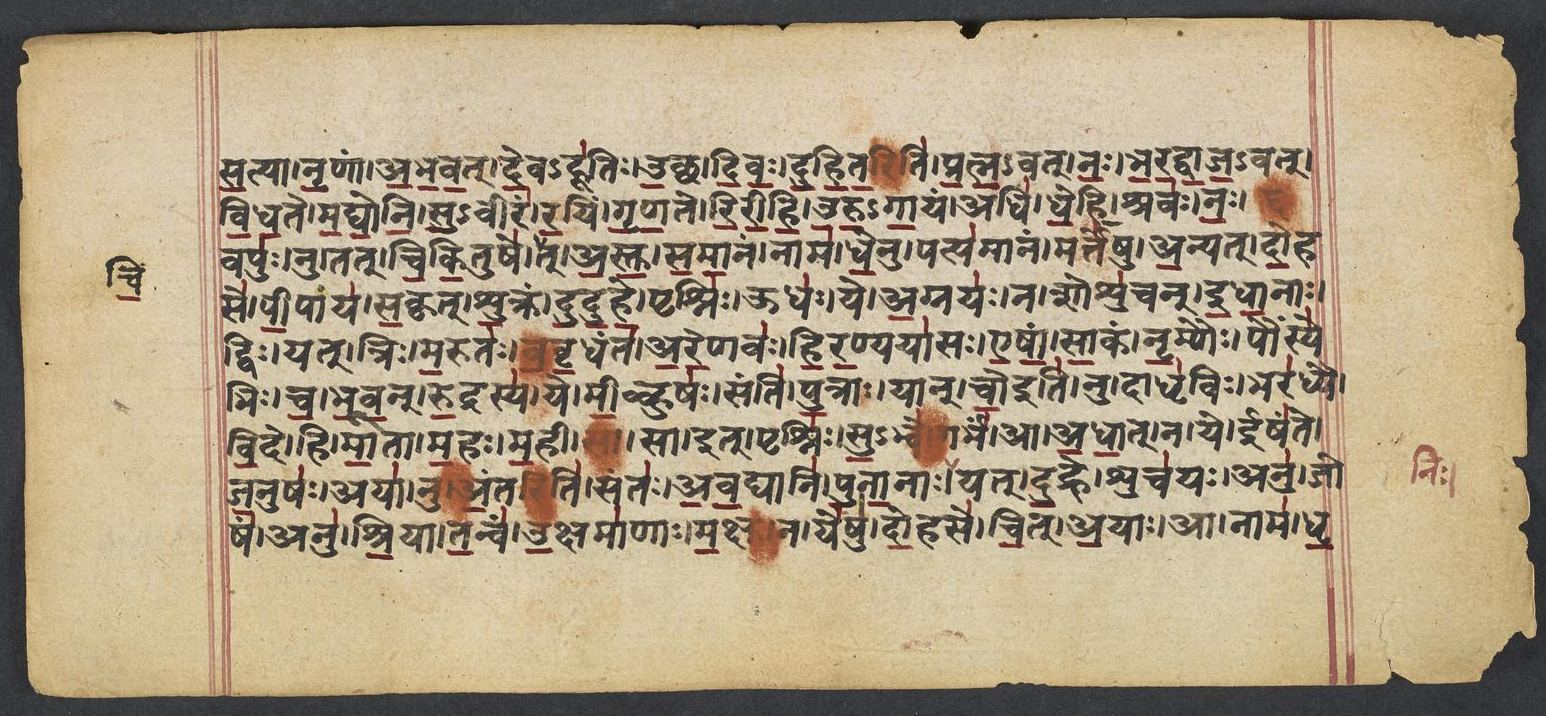
Penn Ms. Coll. 390 Item 41, fol. 484r (numbered 5r by the scribe) (OPenn image 484, lower leaf). Checked on the image: the Rigveda text on this page begins in RV 6.65.5 ‹satyā nṛṇām abhavat deva-hūtiḥ›. The next page with Rigveda text, fol. 484v (numbered 5v by the scribe), begins in RV 6.66.5 ‹-ghṛṣṇu mārutam dadhānāḥ na›. Verses 6.66.1-4 end on this page.
1vapu̱r nu tac ci̍ki̱tuṣe̍ cid astu samā̱naṁ nāma̍ dhe̱nu patya̍mānam | marte̍ṣv a̱nyad do̱hase̍ pī̱pāya̍ sa̱kṛc chu̱kraṁ du̍duhe̱ pṛśni̱r ūdha̍ḥ ||
2ye a̱gnayo̱ na śośu̍cann idhā̱nā dvir yat trir ma̱ruto̍ vāvṛ̱dhanta̍ | a̱re̱ṇavo̍ hira̱ṇyayā̍sa eṣāṁ sā̱kaṁ nṛ̱mṇaiḥ pauṁsye̍bhiś ca bhūvan ||
3ru̱drasya̱ ye mī̱ḻhuṣa̱ḥ santi̍ pu̱trā yām̐ś co̱ nu dādhṛ̍vi̱r bhara̍dhyai | vi̱de hi mā̱tā ma̱ho ma̱hī ṣā set pṛśni̍ḥ su̱bhve̱3̱̍ garbha̱m ādhā̍t ||
4na ya īṣa̍nte ja̱nuṣo 'yā̱ nv a1̱̍ntaḥ santo̍ 'va̱dyāni̍ punā̱nāḥ | nir yad du̱hre śuca̱yo 'nu̱ joṣa̱m anu̍ śri̱yā ta̱nva̍m u̱kṣamā̍ṇāḥ ||
Compare: Padapāṭha (word-by-word text written in the manuscript; Sansknet e-text via GRETIL)
1vapuḥ | nu | tat | cikituṣe | cit | astu | samānam | nāma | dhenu | patyamānam | marteṣu | anyat | dohase | pīpāya | sakṛt | śukram | duduhe | pṛśniḥ | ūdhaḥ
2ye | agnayaḥ | na | śośucan | idhānāḥ | dviḥ | yat | triḥ | marutaḥ | vavṛdhanta | areṇavaḥ | hiraṇyayāsaḥ | eṣām | sākam | nṛmṇaiḥ | paiṃsyebhiḥ | ca | bhūvan
3rudrasya | ye | mīḷhuṣaḥ | santi | putrāḥ | yān | co iti | nu | dādhṛviḥ | bharadhyai | vide | hi | mātā | mahaḥ | mahī | sā | sā | it | pṛśniḥ | su-bhve | garbham | ā | adhāt
4na | ye | īṣante | januṣaḥ | ayā | nu | antariti | santaḥ | avadyāni | punānāḥ | n iḥ | yat | duhre | śucayaḥ | anu | joṣam | anu | śṛiyā | tanvam | ukṣamāṇāḥ
1E'EN to the wise let that be still a wonder to which the general name of Cow is given. The one hath swelled among mankind for milking: Pr̥iṣni hath drained but once her fair bright udder.
2They who like kindled flames of fire are glowing,. the Maruts, twice and thrice have waxen mighty. Golden and dustless were their cars, invested with their great strength and their heroic vigour.
3They who are Sons of the rain-pouring Rudra, whom the long-lasting One had power to foster: The Mighty Ones whose germ great Mother Pr̥iṣni is known to have received for man's advantage.
4They shrink not from the birth; in this same manner still resting there they purge away reproaches. When they have streamed forth, brilliant, at their pleasure, with their own splendour they bedew their bodies.
Where on the image
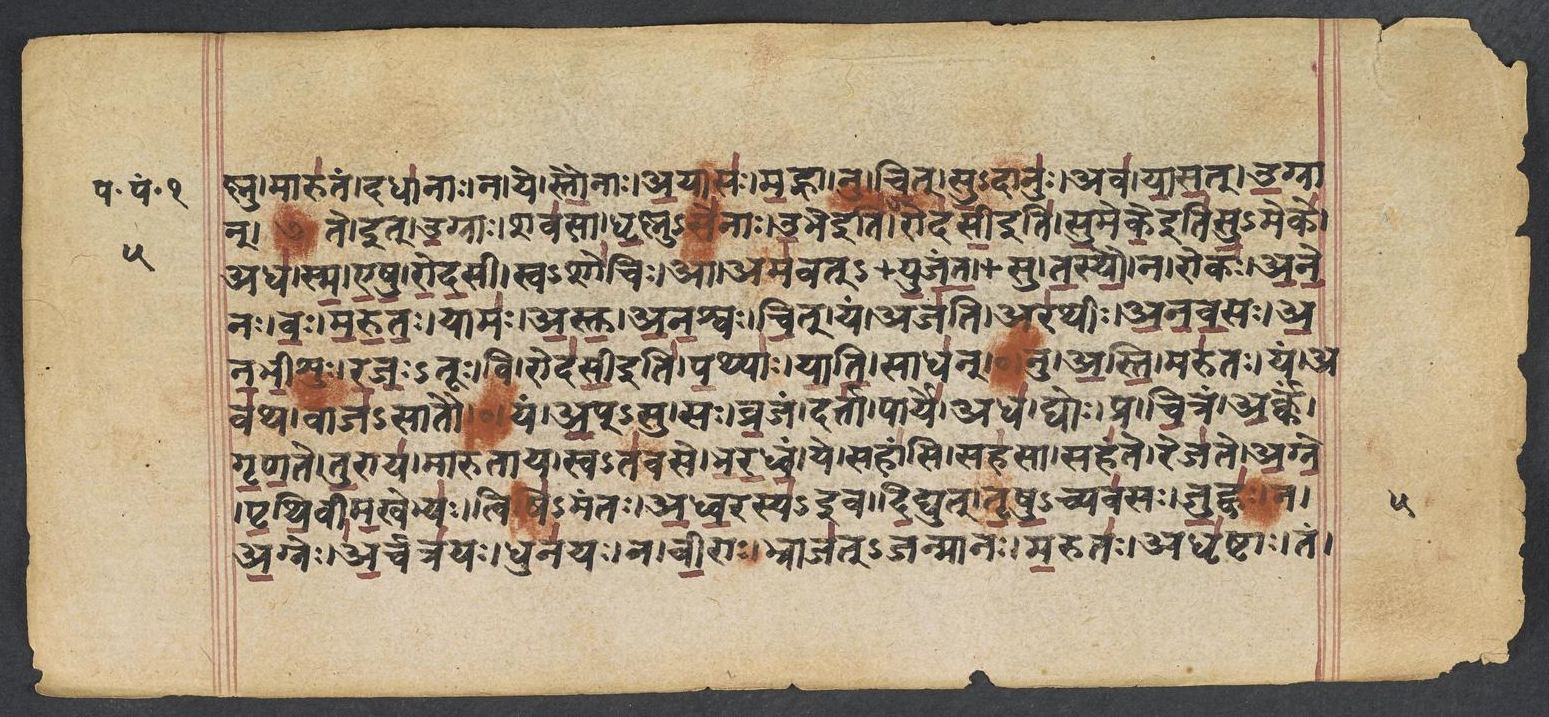
Penn Ms. Coll. 390 Item 41, fol. 484v (numbered 5v by the scribe) (OPenn image 485, upper leaf). Checked on the image: the Rigveda text on this page begins in RV 6.66.5 ‹-ghṛṣṇu mārutam dadhānāḥ na›. The next page with Rigveda text, fol. 485r (numbered 6r by the scribe), begins in RV 6.66.11 ‹vṛdhantam mārutam bhrājat-ṛṣṭim rudrasya›. Verses 6.66.5-10 end on this page; 6.66.5 begins on fol. 484r (numbered 5r by the scribe).
5ma̱kṣū na yeṣu̍ do̱hase̍ cid a̱yā ā nāma̍ dhṛ̱ṣṇu māru̍ta̱ṁ dadhā̍nāḥ | na ye stau̱nā a̱yāso̍ ma̱hnā nū ci̍t su̱dānu̱r ava̍ yāsad u̱grān ||
6ta id u̱grāḥ śava̍sā dhṛ̱ṣṇuṣe̍ṇā u̱bhe yu̍janta̱ roda̍sī su̱meke̍ | adha̍ smaiṣu roda̱sī svaśo̍ci̱r āma̍vatsu tasthau̱ na roka̍ḥ ||
7a̱ne̱no vo̍ maruto̱ yāmo̍ astv ana̱śvaś ci̱d yam aja̱ty ara̍thīḥ | a̱na̱va̱so a̍nabhī̱śū ra̍ja̱stūr vi roda̍sī pa̱thyā̍ yāti̱ sādha̍n ||
8nāsya̍ va̱rtā na ta̍ru̱tā nv a̍sti̱ maru̍to̱ yam ava̍tha̱ vāja̍sātau | to̱ke vā̱ goṣu̱ tana̍ye̱ yam a̱psu sa vra̱jaṁ dartā̱ pārye̱ adha̱ dyoḥ ||
9pra ci̱tram a̱rkaṁ gṛ̍ṇa̱te tu̱rāya̱ māru̍tāya̱ svata̍vase bharadhvam | ye sahā̍ṁsi̱ saha̍sā̱ saha̍nte̱ reja̍te agne pṛthi̱vī ma̱khebhya̍ḥ ||
10tviṣī̍manto adhva̱rasye̍va di̱dyut tṛ̍ṣu̱cyava̍so ju̱hvo̱3̱̍ nāgneḥ | a̱rcatra̍yo̱ dhuna̍yo̱ na vī̱rā bhrāja̍jjanmāno ma̱ruto̱ adhṛ̍ṣṭāḥ ||
Compare: Padapāṭha (word-by-word text written in the manuscript; Sansknet e-text via GRETIL)
5makṣu | na | yeṣu | dohase | cit | ayāḥ | ā | nāma | ghṛṣṇu | mārutam | dadhānāḥ | na | ye | staunāḥ | ayāsaḥ | mahnā | nu | cit | su-dānuḥ | ava | yāsat | ugrān
6te | it | ugrāḥ | śavasā | dhṛṣṇu-senāḥ | ubhe iti | yujanta | rodasī iti | sumeke itisu-meke | adha | sma | eṣu | rodasī | sva-śociḥ | ā | amavat-su | tasthau | na | rokaḥ
7anenaḥ | vaḥ | marutaḥ | yāmaḥ | astu | anaśvaḥ | cit | yam | ajati | arathīḥ | anavasaḥ | anabhīśuḥ | rajaḥ-tūḥ | vi | rodasī iti | pathyāḥ | yāti | sādhan
8na | asya | vartā | na | tarutā | nu | asti | marutaḥ | yam | avatha | vāja-sātau | toke | vā | goṣu | tanaye | yam | ap-su | saḥ | vrajam | dartā | pārye | adha | dyoḥ
9pra | citram | arkam | gṛṇate | turāya | mārutāya | sva-tavase | bharadhvam | ye | sahāṃsi | sahasā | sahante | rejate | agne | pṛthivī | makhebhyaḥ
10tviṣi-mantaḥ | adhvarasya-iva | didyut | tṛṣu-cyavasaḥ | juhvaḥ | na | agneḥ | arcatrayaḥ | dhunayaḥ | na | vīrāḥ | bhrājat-janmānaḥ | marutaḥ | adhṛṣṭāḥ
5Even those who bear the brave bold name of Maruts, whom not the active quickly wins for milking. Even the liberal wards not off those fierce ones, those who are light and agile in their greatness.
6When, strong in strength and armed with potent weapons, they had united wellformed earth and heaven, Rodasî stood among these furious Heroes like splendour shining with her native brightness.
7No team of goats shall draw your car, O Maruts, no horse no charioteer be he who drives it. Halting not, reinless, through the air it travels, speeding along its paths through earth and heaven.
8None may obstruct, none overtake, O Maruts, him whom ye succour in the strife of battle For sons and progeny, for kine and waters: he bursts the cow-stall on the day of trial.
9Bring a bright hymn to praise the band of Maruts, the Singers, rapid, strong in native vigour, Who conquer mighty strength with strength more mighty: earth shakes in terror at their wars, O Agni.
10Bright like the flashing flames of sacrifices, like tongues of fire impetuous in their onset, Chanting their psalm, singing aloud, like heroes, splendid from birth, invincible, the Maruts.
Where on the image
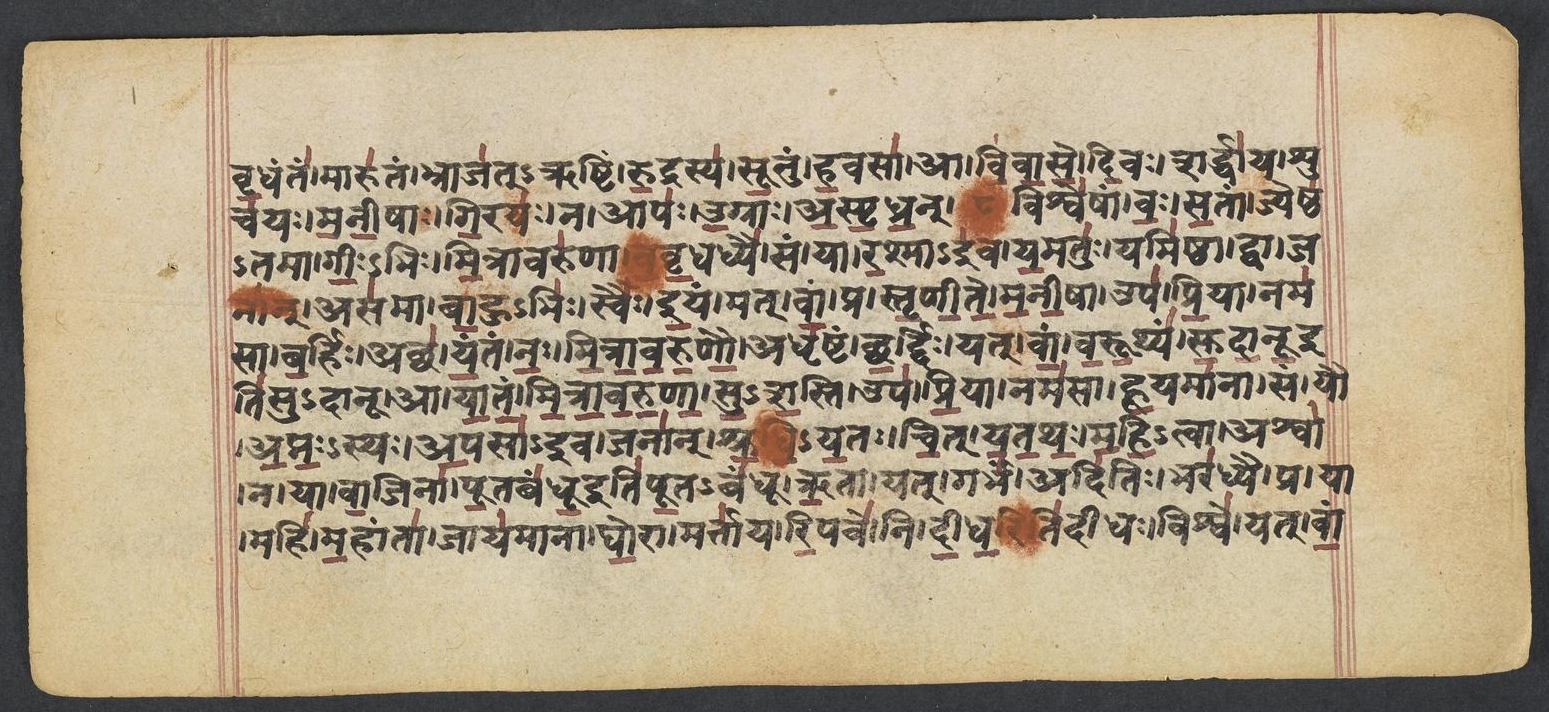
Penn Ms. Coll. 390 Item 41, fol. 485r (numbered 6r by the scribe) (OPenn image 485, lower leaf). Checked on the image: the Rigveda text on this page begins in RV 6.66.11 ‹vṛdhantam mārutam bhrājat-ṛṣṭim rudrasya›. The next page with Rigveda text, fol. 485v (numbered 6v by the scribe), begins in RV 6.67.5 ‹maṃhanā mandamānāḥ kṣatram devāsaḥ›. Verse 6.66.11 ends on this page; 6.66.11 begins on fol. 484v (numbered 5v by the scribe).
11taṁ vṛ̱dhanta̱m māru̍ta̱m bhrāja̍dṛṣṭiṁ ru̱drasya̍ sū̱nuṁ ha̱vasā vi̍vāse | di̱vaḥ śardhā̍ya̱ śuca̍yo manī̱ṣā gi̱rayo̱ nāpa̍ u̱grā a̍spṛdhran ||
Compare: Padapāṭha (word-by-word text written in the manuscript; Sansknet e-text via GRETIL)
11tam | vṛdhantam | mārutam | bhrājat-ṛṣṭim | rudrasya | sūnum | havasā | ā | vivāse | divaḥ | śardhāya | śucayaḥ | manīṣā | girayaḥ | na | āpaḥ | ugrāḥ | aspṛdhran
11That swelling band I call with invocation, the brood of Rudra, armed with glittering lances. Pure hymns are meet for that celestial army: like floods and mountains have the Strong Ones battled.
Notes
- Sanskrit: Aufrecht's edition (1877) with the Vedic accents, as entered by van Nooten and Holland (GRETIL).
- English: Ralph T. H. Griffith, The Hymns of the Rigveda (1889-1892; 2nd ed. 1896-1897), from the VedaWeb digital text; OCR slips in that text were corrected against the printed 2nd edition (data/sources/rigveda/griffith_errata.json).
- Padapāṭha (edition text): Sansknet e-text via GRETIL (CC BY-NC-SA 4.0).
Cite
Sources
- Source: Penn Ms. Coll. 390 Item 41 (undated (catalogued with Penn's 18th-19th c. Vedic manuscripts)), OPenn, Public Domain Mark + Aufrecht's accented text (GRETIL) + Griffith's English (VedaWeb) (holding institution)
- Critical edition: Aufrecht (1877), accented e-text via GRETIL
← previous · → next · v cycle view · l back to library