Rigveda 6.67: To Mitra and Varuna
Introduction
Rigveda 6.67 is a hymn of 11 verses addressed to Mitra and Varuna. It stands in book (maṇḍala) 6, the family book of Bharadvāja. The Rigveda is the oldest collection of Sanskrit hymns, composed in the second half of the second millennium BCE and handed down orally for many centuries before it was written down.
The manuscript shown is Penn Ms. Coll. 390 Item 41 (University of Pennsylvania), an undated paper manuscript of the padapāṭha (the word-by-word recitation text, in which every word is written separately and compounds are split) of the whole Ṛgveda in Devanāgarī, 884 leaves in fascicles, 7-9 lines to the page, accents in red; this hymn stands on fol. 485r-486r. Each section below gives the verses that end on one page; the page boundaries were read on the images (the opening words of every page), not counted out. Where the manuscript is a padapāṭha (the word-by-word recitation text), the section shows Aufrecht's continuous (saṃhitā) text first and, as the edition text, the padapāṭha of the same verses, which is the form written on the page.
How was this verified? (Provenance)
Where on the image
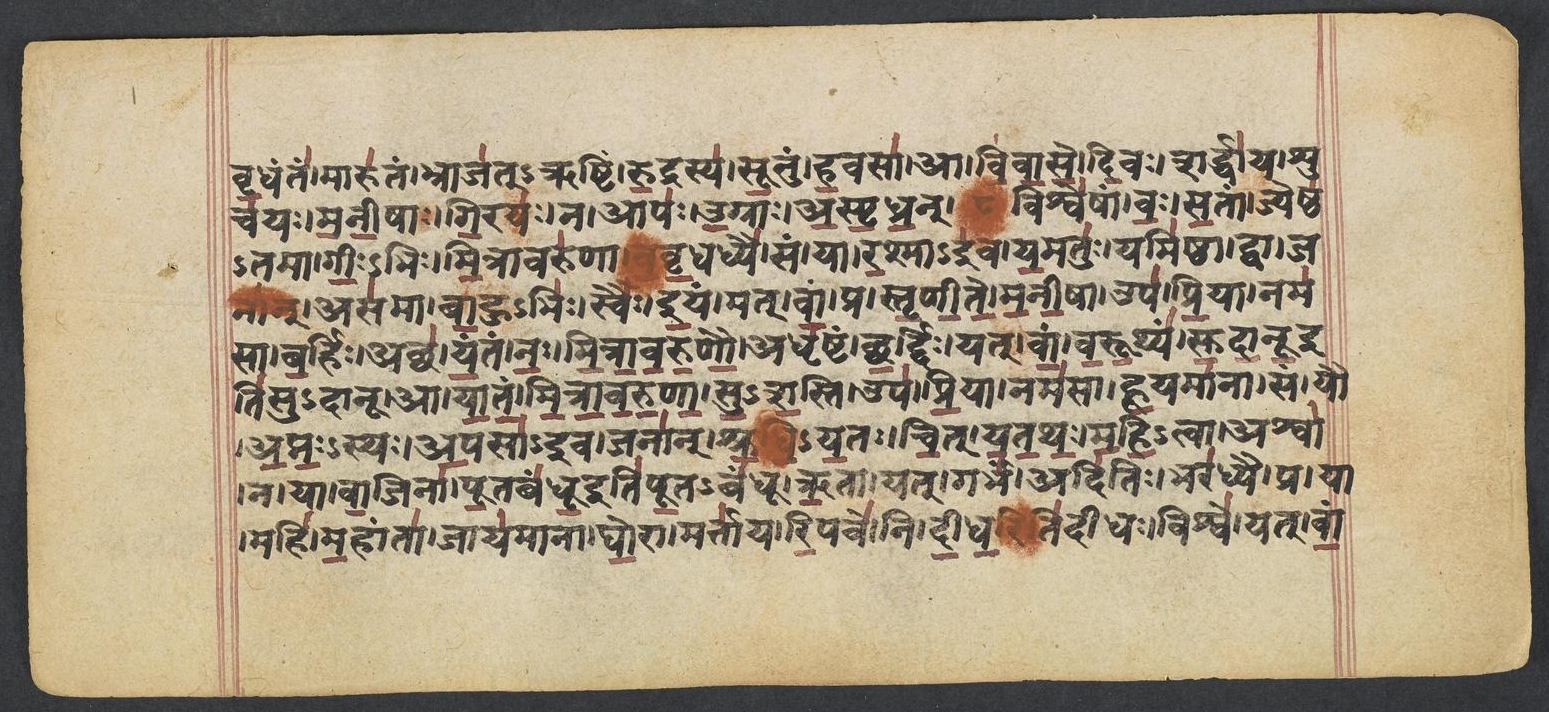
Penn Ms. Coll. 390 Item 41, fol. 485r (numbered 6r by the scribe) (OPenn image 485, lower leaf). Checked on the image: the Rigveda text on this page begins in RV 6.66.11 ‹vṛdhantam mārutam bhrājat-ṛṣṭim rudrasya›. The next page with Rigveda text, fol. 485v (numbered 6v by the scribe), begins in RV 6.67.5 ‹maṃhanā mandamānāḥ kṣatram devāsaḥ›. Verses 6.67.1-4 end on this page.
1viśve̍ṣāṁ vaḥ sa̱tāṁ jyeṣṭha̍tamā gī̱rbhir mi̱trāvaru̍ṇā vāvṛ̱dhadhyai̍ | saṁ yā ra̱śmeva̍ ya̱matu̱r yami̍ṣṭhā̱ dvā janā̱m̐ asa̍mā bā̱hubhi̱ḥ svaiḥ ||
2i̱yam mad vā̱m pra stṛ̍ṇīte manī̱ṣopa̍ pri̱yā nama̍sā ba̱rhir accha̍ | ya̱ntaṁ no̍ mitrāvaruṇā̱v adhṛ̍ṣṭaṁ cha̱rdir yad vā̍ṁ varū̱thya̍ṁ sudānū ||
3ā yā̍tam mitrāvaruṇā suśa̱sty upa̍ pri̱yā nama̍sā hū̱yamā̍nā | saṁ yāv a̍pna̱ḥstho a̱pase̍va̱ janā̍ñ chrudhīya̱taś ci̍d yatatho mahi̱tvā ||
4aśvā̱ na yā vā̱jinā̍ pū̱taba̍ndhū ṛ̱tā yad garbha̱m adi̍ti̱r bhara̍dhyai | pra yā mahi̍ ma̱hāntā̱ jāya̍mānā gho̱rā martā̍ya ri̱pave̱ ni dī̍dhaḥ ||
Compare: Padapāṭha (word-by-word text written in the manuscript; Sansknet e-text via GRETIL)
1viśveṣām | vaḥ | satām | jyeṣṭha-tamā | gīḥ-bhiḥ | mitrāvaruṇā | vavṛdhadhyai | sam | yā | raśmāiva | yamatuḥ | yamiṣṭhā | dvā | janān | asamā | bāhu-bhiḥ | svaiḥ
2iyam | mat | vām | pra | stṛṇīte | manīṣā | upa | priyā | namasā | barhiḥ | accha | yantam | naḥ | mitrāvaruṇau | adhṛṣṭam | chardiḥ | yat | vām | varūthyam | sudānūitisu-dānū
3ā | yātam | mitrāvaruṇā | su-śasti | upa | priyā | namasā | hūyamānā | sam | yau | apnaḥ-sthaḥ | apasāiva | janān | śrudhi-yataḥ | cit | yatathaḥ | mahitvā
4aśvā | na | yā | vājinā | pūtabandhūitipūta-bandhū | ṛtā | yat | garbham | aditiḥ | bharadhyai | pra | yā | mahi | mahāntā | jāyamānā | ghorā | martāya | ripave | ni | dīdharitidīdhaḥ
1NOW Mitra-Varuṇa shall be exalted high by your songs, noblest of all existing; They who, as 'twere with reins are best Controllers, unequalled with their arms to check the people.
2To you Two Gods is this my thought extended, turned to the sacred grass with loving homage. Give us, O Mitra-Varuṇa, a dwelling safe from attack, which ye shall guard, Boon-Givers!
3Come hither, Mitra-Varuṇa, invited with eulogies and loving adoration, Ye who with your might, as Work-Controllers, urge even men who quickly hear to labour.
4Whom, of pure origin, like two strong horses, Aditi bore as babes in proper season, Whom, Mighty at your birth, the Mighty Goddess brought forth as terrors to the mortal foeman.
Where on the image
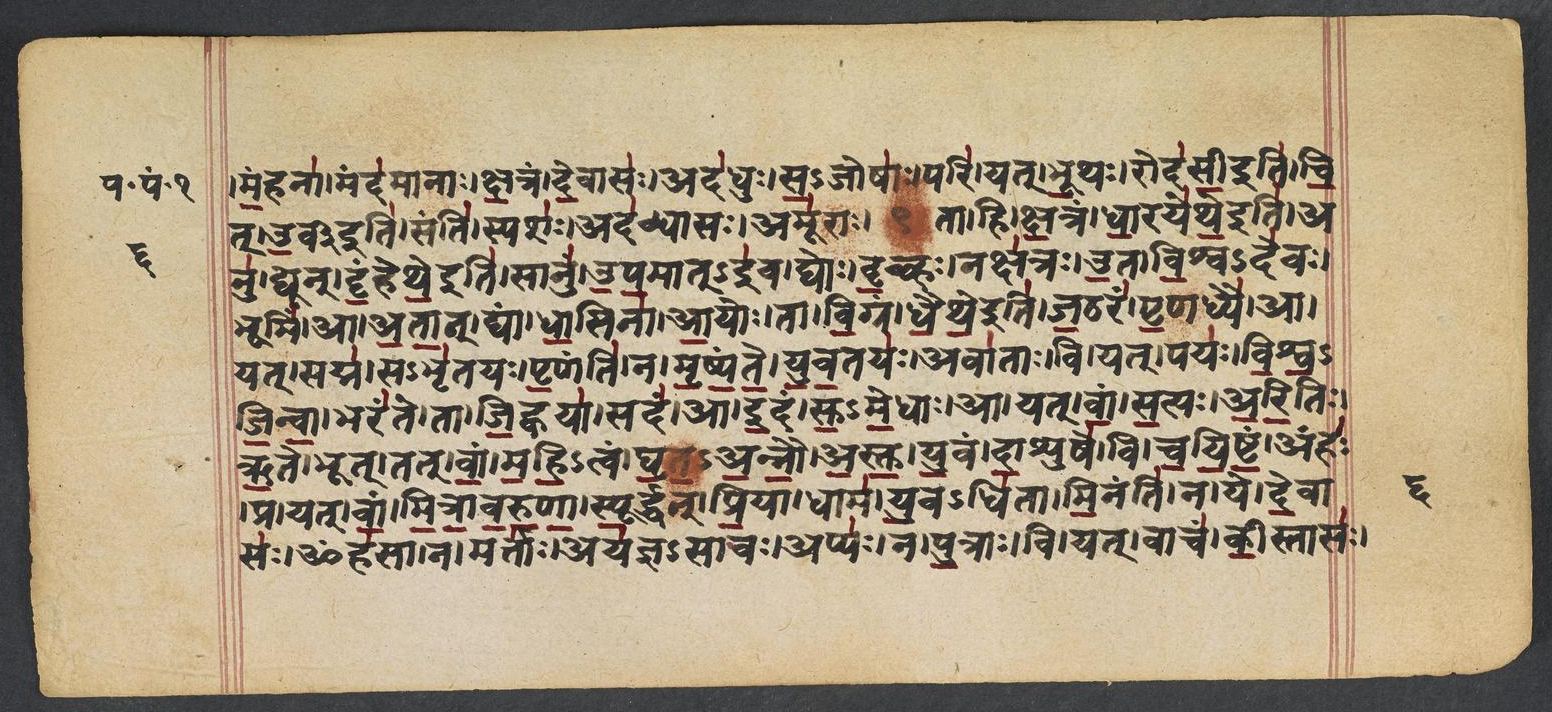
Penn Ms. Coll. 390 Item 41, fol. 485v (numbered 6v by the scribe) (OPenn image 486, upper leaf). Checked on the image: the Rigveda text on this page begins in RV 6.67.5 ‹maṃhanā mandamānāḥ kṣatram devāsaḥ›. The next page with Rigveda text, fol. 486r (numbered 7r by the scribe), begins in RV 6.67.10 ‹bharante śaṃsanti ke cit›. Verses 6.67.5-9 end on this page; 6.67.5 begins on fol. 485r (numbered 6r by the scribe).
5viśve̱ yad vā̍m ma̱ṁhanā̱ manda̍mānāḥ kṣa̱traṁ de̱vāso̱ ada̍dhuḥ sa̱joṣā̍ḥ | pari̱ yad bhū̱tho roda̍sī cid u̱rvī santi̱ spaśo̱ ada̍bdhāso̱ amū̍rāḥ ||
6tā hi kṣa̱traṁ dhā̱raye̍the̱ anu̱ dyūn dṛ̱ṁhethe̱ sānu̍m upa̱mād i̍va̱ dyoḥ | dṛ̱ḻho nakṣa̍tra u̱ta vi̱śvade̍vo̱ bhūmi̱m ātā̱n dyāṁ dhā̱sinā̱yoḥ ||
7tā vi̱graṁ dhai̍the ja̱ṭhara̍m pṛ̱ṇadhyā̱ ā yat sadma̱ sabhṛ̍tayaḥ pṛ̱ṇanti̍ | na mṛ̍ṣyante yuva̱tayo 'vā̍tā̱ vi yat payo̍ viśvajinvā̱ bhara̍nte ||
8tā ji̱hvayā̱ sada̱m edaṁ su̍me̱dhā ā yad vā̍ṁ sa̱tyo a̍ra̱tir ṛ̱te bhūt | tad vā̍m mahi̱tvaṁ ghṛ̍tānnāv astu yu̱vaṁ dā̱śuṣe̱ vi ca̍yiṣṭa̱m aṁha̍ḥ ||
9pra yad vā̍m mitrāvaruṇā spū̱rdhan pri̱yā dhāma̍ yu̱vadhi̍tā mi̱nanti̍ | na ye de̱vāsa̱ oha̍sā̱ na martā̱ aya̍jñasāco̱ apyo̱ na pu̱trāḥ ||
Compare: Padapāṭha (word-by-word text written in the manuscript; Sansknet e-text via GRETIL)
5viśve | yat | vām | maṃhanā | mandamānāḥ | kṣatram | devāsaḥ | adadhuḥ | sa-joṣāḥ | pari | yat | bhūthaḥ | rodasī iti | cit | urvī iti | santi | spaśaḥ | adabdhāsaḥ | amūrāḥ
6tā | hi | kṣatram | dhārayetheiti | anu | dyūn | dṛṃhetheiti | sānum | upamāt-iva | dyoḥ | dṛḷhaḥ | nakṣatraḥ | uta | viśva-devaḥ | bhūmim | ā | atān | dyām | dhāsinā | āyoḥ
7tā | vigram | dhaitheiti | jaṭharam | pṛṇadhyai | ā | yat | sadma | sa-bhṛtayaḥ | pṛṭṇanti | na | mṛṣyante | yuvatayaḥ | avātāḥ | vi | yat | payaḥ | viśva-jinvā | bharante
8tā | jihvayā | sadam | ā | idam | su-medhāḥ | ā | yat | vām | satyaḥ | aratiḥ | ṛte | bhūt | tat | vām | mahi-tvam | ghṛta-annau | astu | yuvam | dāśuṣe | vi | cayiṣṭam | aṃhaḥ
9pra | yat | vām | mitrāvaruṇā | spūrdhan | priyā | dhāma | yuva-dhitā | minanti | na | ye | devāsaḥ | ohasā | na | martāḥ | ayajña-sācaḥ | apyaḥ | na | putrāḥ
5As all the Gods in their great joy and gladness gave you with one accord your high dominion, As ye surround both worlds, though wide and spacious your spies are ever true and never bewildered.
6So, through the days maintaining princely power. ye prop the height as 'twere from loftiest heaven. The Star of all the Gods, established, filleth the heaven and earth with food of man who liveth.
7Take the strong drink, to quaff till ye are sated, when he and his attendants fill the chamber. The young Maids brook not that none seeks to win them, when, Quickeners of all! they scatter moisture.
8So with your tongue come ever, when your envoy, faithful and very wise, attends our worship. Nourished by holy oil! he this your glory: annihilate the sacrificer's trouble.
9When, Mitra-Varuṇa, they strive against you and break tlie friendly laws ye have established, They, neither Gods nor men in estimation, like Api's sons have godless sacrifices.
Where on the image
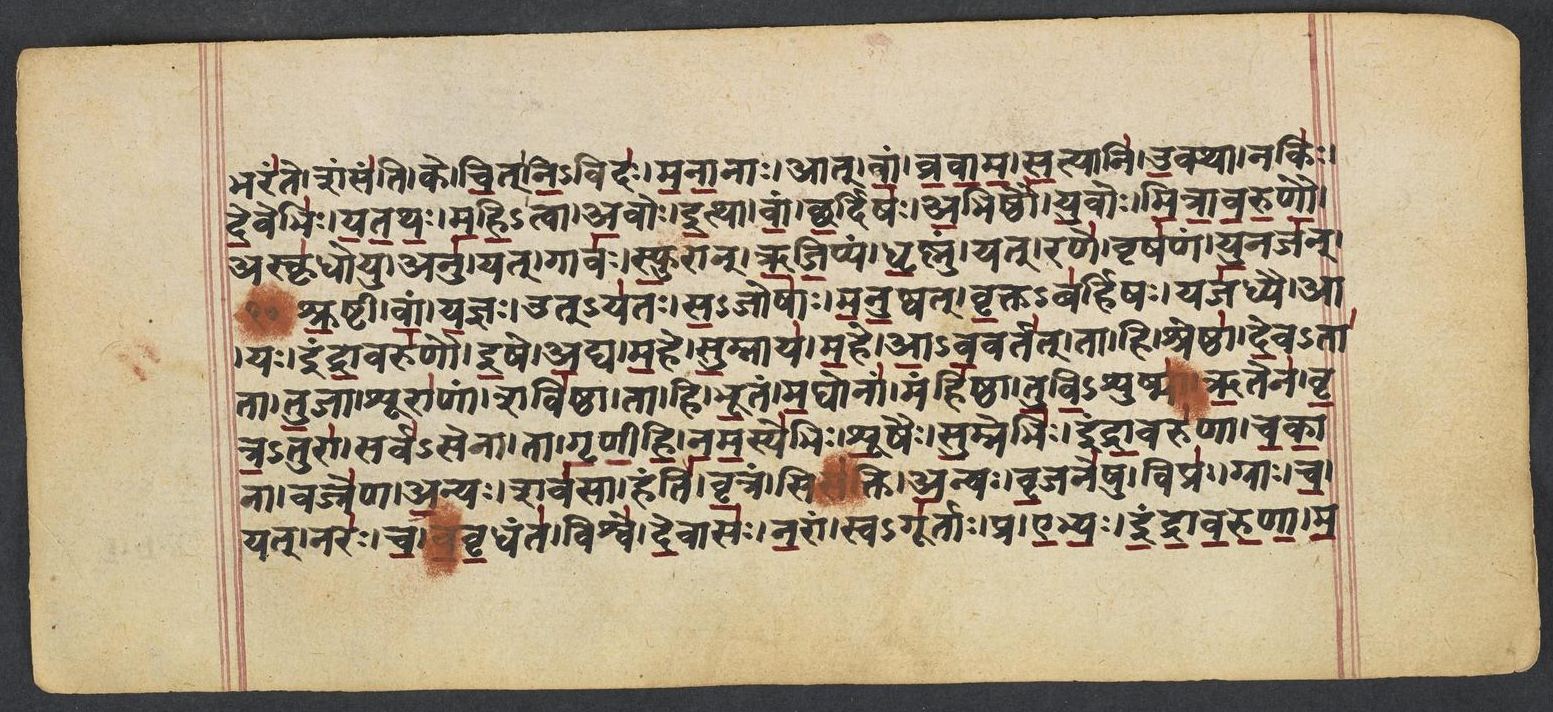
Penn Ms. Coll. 390 Item 41, fol. 486r (numbered 7r by the scribe) (OPenn image 486, lower leaf). Checked on the image: the Rigveda text on this page begins in RV 6.67.10 ‹bharante śaṃsanti ke cit›. The next page with Rigveda text, fol. 486v (numbered 7v by the scribe), begins in RV 6.68.4 ‹-mahi-tvā dyauḥ ca pṛthivi›. Verses 6.67.10-11 end on this page; 6.67.10 begins on fol. 485v (numbered 6v by the scribe).
10vi yad vāca̍ṁ kī̱stāso̱ bhara̍nte̱ śaṁsa̍nti̱ ke ci̍n ni̱vido̍ manā̱nāḥ | ād vā̍m bravāma sa̱tyāny u̱kthā naki̍r de̱vebhi̍r yatatho mahi̱tvā ||
11a̱vor i̱tthā vā̍ṁ cha̱rdiṣo̍ a̱bhiṣṭau̍ yu̱vor mi̍trāvaruṇā̱v askṛ̍dhoyu | anu̱ yad gāva̍ḥ sphu̱rān ṛ̍ji̱pyaṁ dhṛ̱ṣṇuṁ yad raṇe̱ vṛṣa̍ṇaṁ yu̱naja̍n ||
Compare: Padapāṭha (word-by-word text written in the manuscript; Sansknet e-text via GRETIL)
10vi | yat | vācam | kīstāsaḥ | bharante | śaṃsanti | ke | cit | ni-vidaḥ | manānāḥ | āt | vām | bravāma | satyāni | ukthā | nakiḥ | devebhiḥ | yatathaḥ | mahi-tvā
11avoḥ | itthā | vām | chardiṣaḥ | abhiṣṭau | yuvoḥ | mitrāvaruṇau | askṛdhoyu | anu | yat | gāvaḥ | sphurān | ṛjipyam | dhṛṣṇum | yat | raṇe | vṛṣaṇam | yunajan
10When singers in their song uplift their voices, some chant the Nivid texts with steady purpose. Then may we sing you lauds that shall be fruitful: dp ye not rival all the Gods in greatness?
11O Mitra-Varuṇa, may your large bounty come to us hither, near to this our dwelling, When the kine haste to us, and when they harness the fleet-foot mettled stallion for the battle.
Notes
- Sanskrit: Aufrecht's edition (1877) with the Vedic accents, as entered by van Nooten and Holland (GRETIL).
- English: Ralph T. H. Griffith, The Hymns of the Rigveda (1889-1892; 2nd ed. 1896-1897), from the VedaWeb digital text; OCR slips in that text were corrected against the printed 2nd edition (data/sources/rigveda/griffith_errata.json).
- Padapāṭha (edition text): Sansknet e-text via GRETIL (CC BY-NC-SA 4.0).
Cite
Sources
- Source: Penn Ms. Coll. 390 Item 41 (undated (catalogued with Penn's 18th-19th c. Vedic manuscripts)), OPenn, Public Domain Mark + Aufrecht's accented text (GRETIL) + Griffith's English (VedaWeb) (holding institution)
- Critical edition: Aufrecht (1877), accented e-text via GRETIL
← previous · → next · v cycle view · l back to library